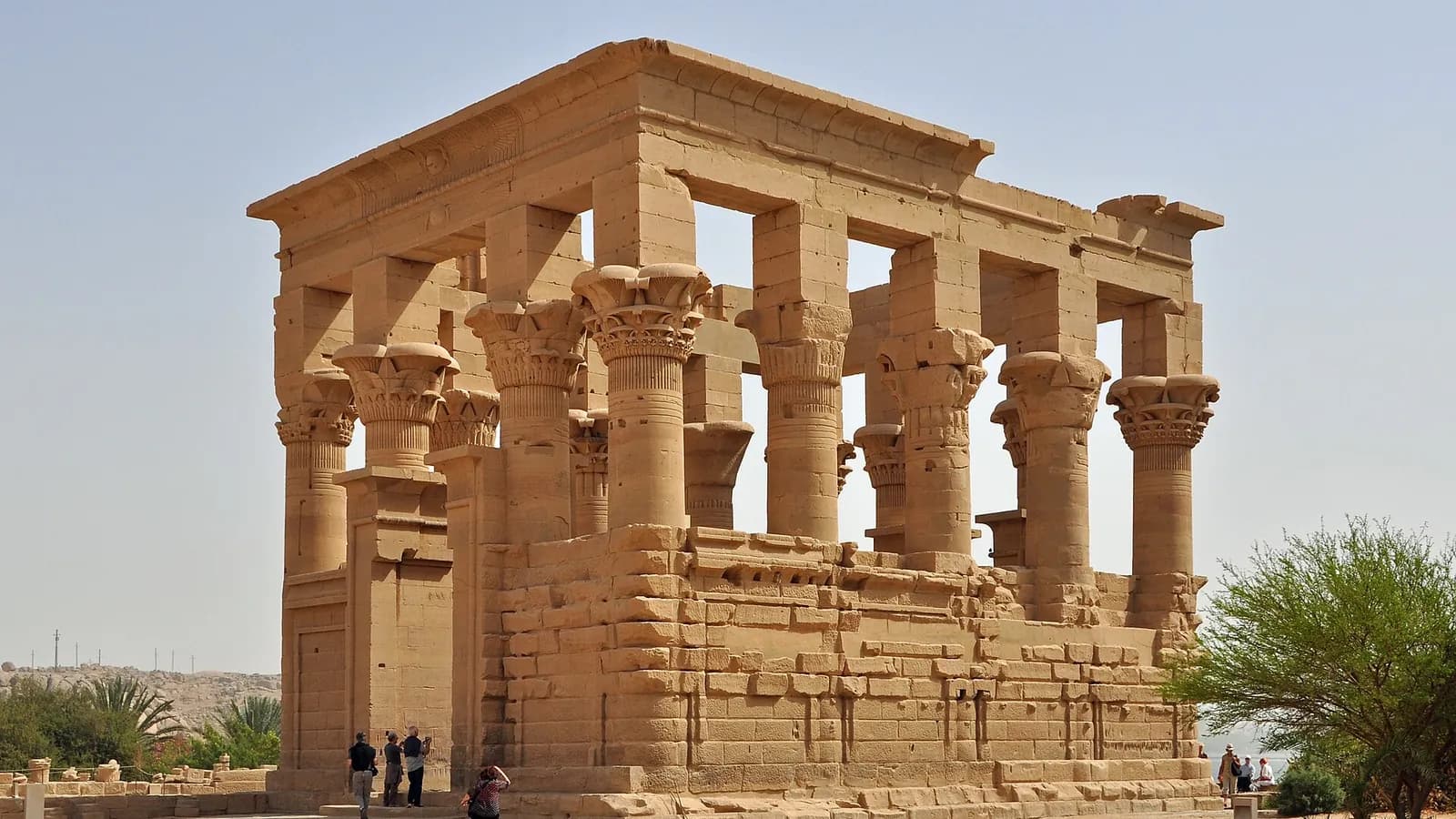
Philae Temple: The Island Temple of Isis in Aswan
How to visit Philae Temple near Aswan - the Temple of Isis, its rescue from the floodwaters, the short boat ride across, tickets, hours, and the best time to go.
Quick answer: Philae Temple sits on an island in the Nile just south of Aswan and is reached only by a short motorboat ride across open water. It's the great sanctuary of Isis - a graceful complex of pylons, colonnades and Roman-era kiosks that was cut apart and moved, block by block, to save it from the rising water behind the Aswan dams. Come in the morning for soft light and calm crowds, plan for two to three hours including the boat crossing, and expect to pay a temple ticket plus a few dollars for the boat. It's an easy half-day from Aswan and one of the most atmospheric temples in all of Egypt.
Why Philae is special
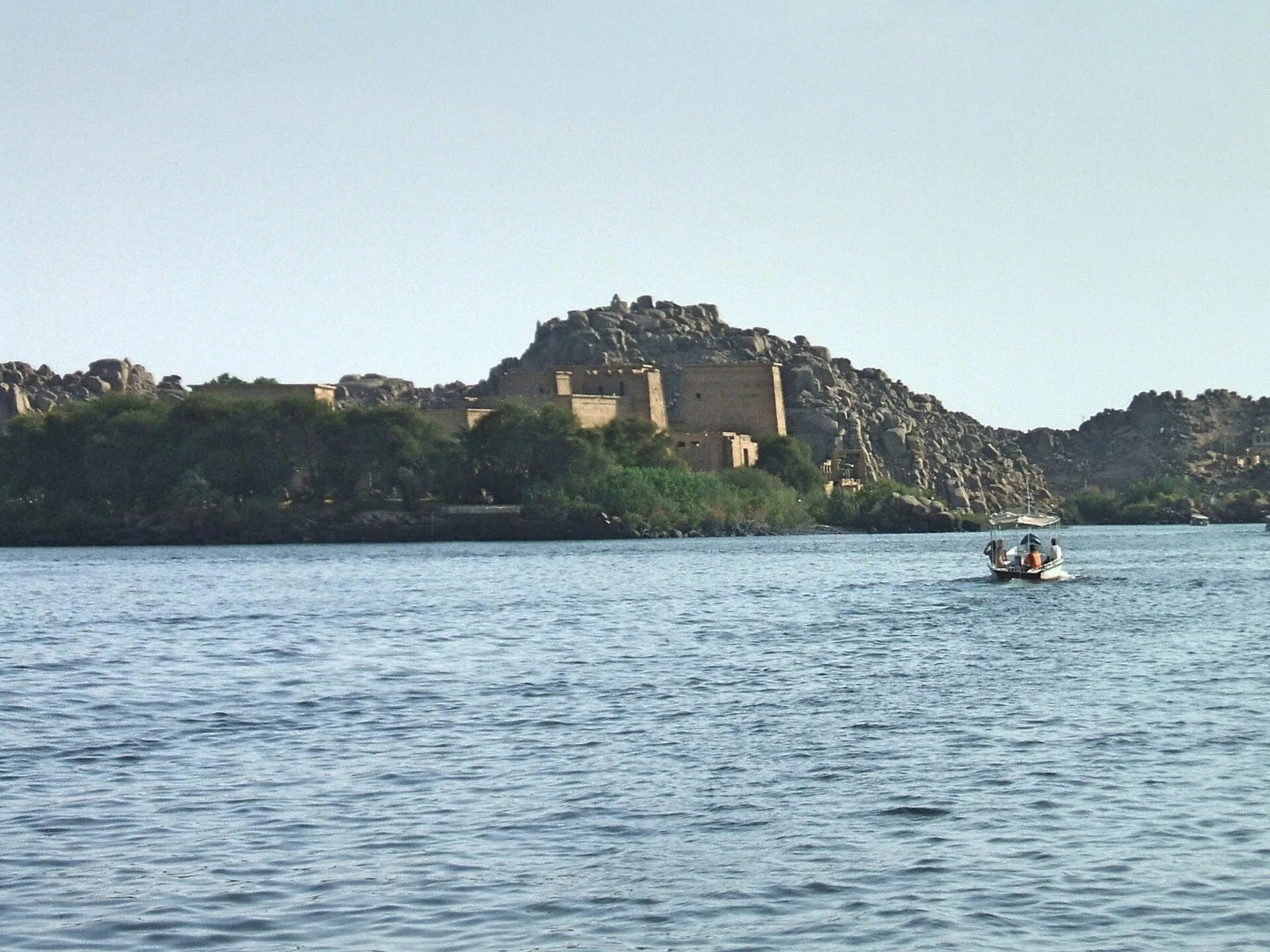 Most Egyptian temples you reach on foot. Philae you reach by water, and that changes everything. You buy your ticket at the Marina, climb into a small motorboat, and a few minutes later the temple rises out of the reservoir ahead of you - colonnades reflected in the blue, the whole thing ringed by rock and water. It is, deservedly, one of the most photographed settings in the country.
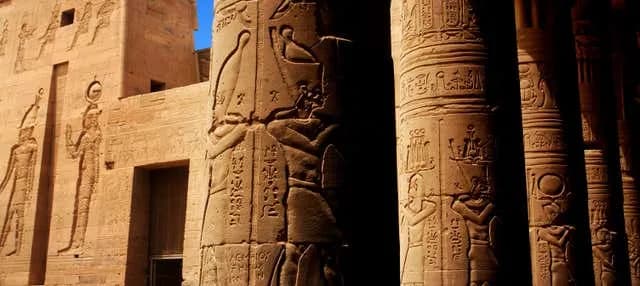
The temple is dedicated to Isis, the mother goddess of the ancient Egyptian world, wife of Osiris and mother of Horus. Philae was her most sacred cult centre, and it stayed a living, functioning temple far longer than almost anywhere else in Egypt - priests were still making offerings to Isis here into the Christian era, centuries after the old religion had faded elsewhere. That long twilight is part of what makes the place feel different. It isn't only Pharaonic; it's Ptolemaic and Roman too, built and decorated over roughly 700 years.
Belzoni, one of the first Europeans to describe it in detail, wrote in 1820 of "the small temple of Isis, in the island of Philoe" and praised its columns - some of the earliest to hint, he thought, at the origins of the Ionic order. The columns are still the first thing you notice: a long processional colonnade leading you toward the great pylons.
The rescue: from Philae Island to Agilkia
Here is the twist that makes Philae's story remarkable. The temple you visit today is not on its original island.
When the first Aswan Dam was built at the start of the 20th century, Philae Island sat right in the reservoir it created. For most of the year the temple stood partly underwater - early travellers rowed between the columns and looked down through the green water at drowned reliefs. When the much larger High Dam went up in the 1960s, the temple faced being submerged permanently.
So UNESCO and the Egyptian authorities did something extraordinary. In the same international campaign that saved Abu Simbel, engineers built a coffer dam around Philae, pumped the water out, and dismantled the entire complex - roughly 40,000 blocks - then reassembled it, stone by numbered stone, on higher, drier Agilkia Island nearby. They even reshaped Agilkia to resemble the original Philae so the temple would sit as it always had. The work ran through the 1970s and finished in 1980.
The result is seamless. Unless you know the story, you'd never guess the whole thing had been picked up and moved. It's one of the great feats of heritage rescue anywhere in the world - and, like Abu Simbel further south, a reason Aswan's monuments carry an outsized weight of history.
What you'll see on the island
| Feature | What it is |
|---|---|
| First Pylon | The huge twin-towered gateway that greets you, covered in reliefs of Ptolemy XII smiting enemies before the gods. |
| Colonnade / Dromos | The long processional courtyard of columns leading up to the temple - each capital carved differently. |
| Temple of Isis | The main sanctuary, with a hypostyle hall and inner rooms; look for reliefs of Isis nursing the infant Horus. |
| Mammisi (Birth House) | A small chapel celebrating the birth of Horus - central to the Isis-Osiris myth. |
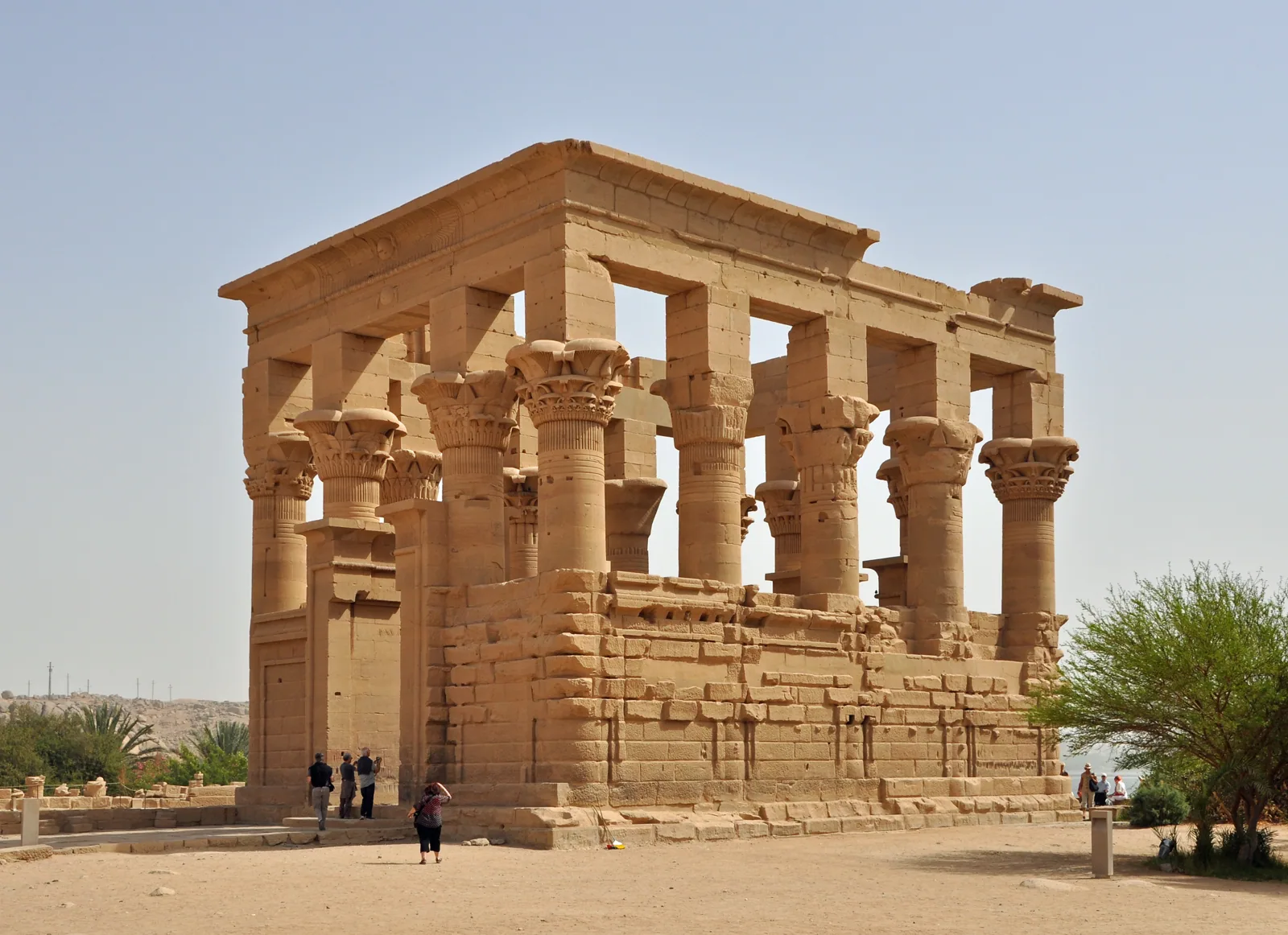
| Kiosk of Trajan | The elegant open pavilion known as "Pharaoh's Bed" - fourteen columns, no roof, the temple's most photographed corner. |
| Gate of Hadrian | A Roman gateway that carries the very last hieroglyphic inscription ever carved (see below). |
| Temple of Hathor | A smaller Roman-era temple with reliefs of musicians and the dwarf-god Bes. |
The Kiosk of Trajan is the image most people carry away from Philae: a rectangle of tall, floral-capitalled columns open to the sky, standing right at the water's edge. Built under the Roman emperor Trajan around AD 100, it once sheltered the sacred barque of Isis when it arrived by boat. In gentle late-afternoon light it's unforgettable.
The last hieroglyphs ever written
Philae holds a quiet, extraordinary distinction. On the Gate of Hadrian, a priest named Esmet-Akhom carved a short hieroglyphic text dated to AD 394 - the last dated inscription in Egyptian hieroglyphs anywhere in the world. After more than three thousand years, the script that built the pyramids fell silent here, at Isis's island, as the ancient religion finally gave way. Within a generation, no one alive could read it. Look for the small carved figure of the Nubian god Mandulis beside it. Standing in front of that stone, you're looking at the final full stop of a writing system that took the modern world until the 1820s to decipher again.
Getting there: the boat from the Marina
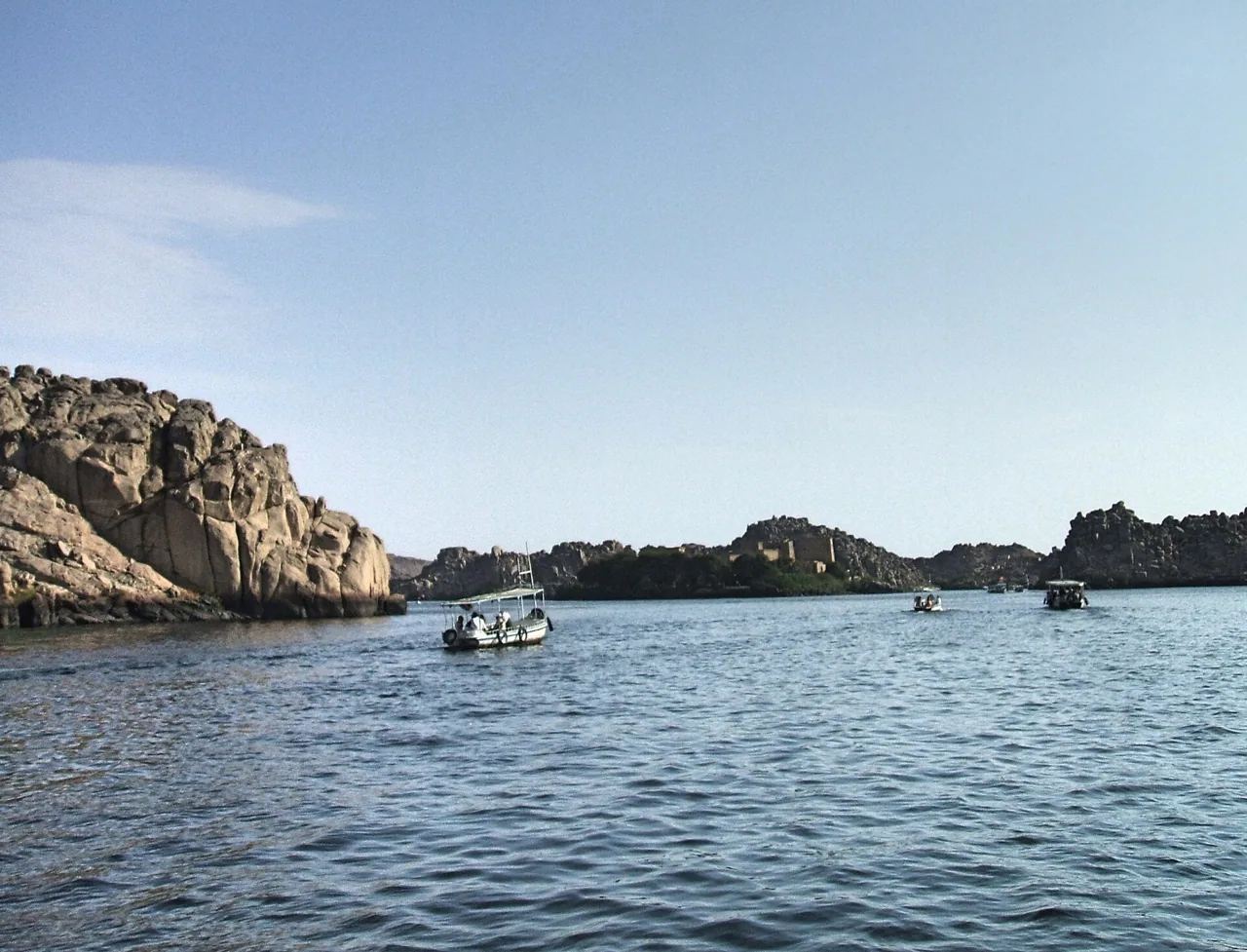 Philae is only reachable by boat. Here's how it works:
- Boats leave from the Marina (also called Shellal), on the eastern shore of the reservoir between the old Aswan Dam and the High Dam, about 8 km south of Aswan town.
- You buy your temple entrance ticket on shore first, then walk down to the jetty.
- Small motorboats run the short crossing - roughly 10-15 minutes each way. The same boat waits and brings you back.
- There's no fixed boat fare; you negotiate with the boatmen. Expect somewhere around US$1-5 per person depending on group size and your bargaining. Agree the price and the return before you get in.
Most visitors reach the Marina by taxi from Aswan (about 20-30 minutes), or as part of an organised half-day tour that usually bundles the taxi, the wait, and sometimes the boat into one price. If you're on a group tour, the boat is typically arranged for you.
Tickets, hours and the best time to go
| Detail | |
|---|---|
| Opening hours | Daily, roughly 7:00 to 16:00 (later in summer; the site closes before the evening show, then reopens for it). |
| Entrance ticket | Around 550 EGP (about US$11) for adults, roughly half for students. Confirm the current price on the day. |
| Boat crossing | Separate; negotiated at the Marina, roughly US$1-5 per person. |
| Sound & Light show | Around 350 EGP plus the boat; evenings, times vary by season. |
| How to pay | Egypt's sites are moving to card-only payment - bring a card, and some cash for the boat. Tickets can also be pre-booked via egymonuments.com. |
| Time needed | 2-3 hours including the crossing. |
Prices at government monuments change often and Egypt is shifting to card-only ticketing - treat the figures above as a guide and confirm on the day.
Best time of day: go early. The site opens around 7:00, and the first boats mean you get the island before the cruise groups and the midday heat arrive. Morning light hits the colonnade beautifully and the crossing is calm. Late afternoon is the other sweet spot - warm light on the Kiosk of Trajan and cooling temperatures. Midday in summer is fiercely hot with little shade, so carry water and a hat.
The Sound & Light show
After dark, Philae hosts one of Egypt's better Sound & Light shows. You cross by boat in the dark, and the temple is lit up while a narrated history of Isis plays across the walls and columns. The spoken language rotates by night - English, French, Spanish, German, Italian and others - but headsets with translations are usually available at the entrance. It's a genuinely atmospheric way to see the temple, and the boat ride back under the stars is a highlight in itself. Check the night's language and start time in advance.
Fitting Philae into your Aswan trip
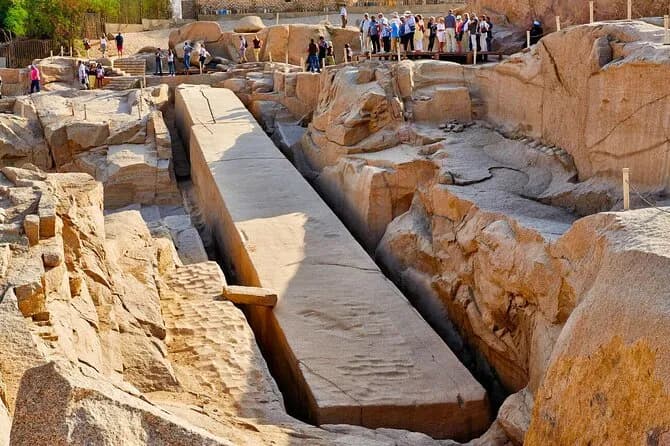
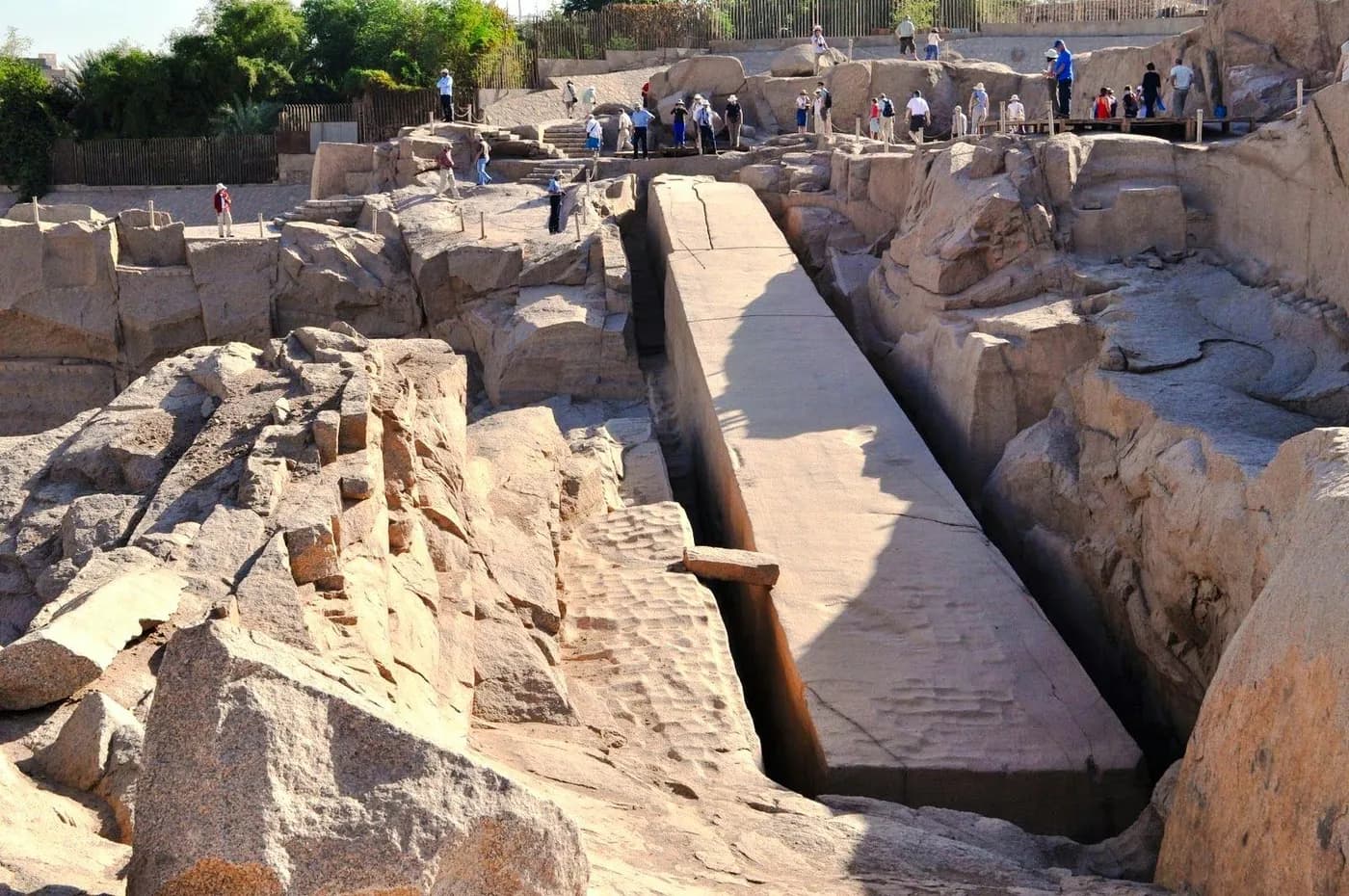
Philae pairs naturally with Aswan's other southern sights. A classic half-day combines the High Dam, the Unfinished Obelisk and Philae - all clustered south of town - with a felucca sail added on. For a fuller picture of the city, see our guide to the best things to do in Aswan.
If you're building a longer trip, Aswan is the natural southern anchor of a Nile journey. Most cruises between Luxor and Aswan include Philae as a shore excursion, and independent travellers slot it in easily around Abu Simbel and Kom Ombo. Our Egypt itinerary guide shows how the temples of the south fit into a week or two on the ground.
Practical tips
- Wear good shoes. There are steps up from the jetty and uneven stone throughout the island.
- Bring cash for the boat, even if you pay the ticket by card.
- Agree the boat price and return trip before boarding to avoid haggling at the far end.
- Sun protection matters - the island is exposed, with little shade.
- A guide adds a lot here. The Isis-Osiris-Horus story, the relocation, and the last-hieroglyph stone all come alive with someone who knows them.
Want Philae done right - early boat, a guide who knows the reliefs, and the rest of Aswan built around it? This is Egypt designs custom itineraries around the places you most want to see. Start planning your Aswan trip.
See it from the river. Aswan is where most Nile cruises begin or end, and Philae — the island temple reached by boat — is a classic stop. Compare Nile cruise ships and dahabiyas, or read the Nile cruise guide.
A real team available 24/7 to assist you — free
Seif and the team reply on WhatsApp 24/7 — trip questions, custom plans and booking help.
Ask Seif on WhatsAppCommon questions
How do you get to Philae Temple?
Only by boat. You drive to the Marina (Shellal), about 8 km south of Aswan, buy your temple ticket on shore, then take a short motorboat across the reservoir - roughly 10-15 minutes each way. The boat waits and brings you back.
How much does it cost to visit Philae Temple?
The entrance ticket is around 550 EGP (about US$11) for adults, roughly half for students, plus a separate negotiated boat fare of about US$1-5 per person. Prices change often, so confirm on the day; Egyptian sites are moving to card-only payment.
What are Philae Temple's opening hours?
Roughly 7:00 to 16:00 daily, a little later in summer. The site closes in the late afternoon and reopens in the evening for the Sound & Light show.
Why was Philae Temple moved?
Its original island was flooded by the reservoir behind the Aswan dams. In a UNESCO-led rescue in the 1970s, the entire temple - about 40,000 blocks - was dismantled and rebuilt stone by stone on higher Agilkia Island nearby, finishing in 1980.
Which god was Philae Temple dedicated to?
Isis, the ancient Egyptian mother goddess, wife of Osiris and mother of Horus. Philae was her most important cult centre and remained an active temple long into the Roman and early Christian era.
What is the Kiosk of Trajan at Philae?
An open, unroofed Roman pavilion of fourteen columns, built around AD 100 under the emperor Trajan and nicknamed 'Pharaoh's Bed.' It stands at the water's edge and is the temple's most photographed feature.
Is the Philae Sound and Light show worth it?
Yes, if you have an evening free. You cross by boat in the dark and the temple is lit while a narrated history of Isis plays across the walls. The language rotates nightly, with translation headsets usually available. Check the language and start time before you go.
What is the last hieroglyphic inscription at Philae?
On the Gate of Hadrian, a priest named Esmet-Akhom carved a text dated AD 394 - the last dated hieroglyphic inscription anywhere in the world, marking the end of the ancient Egyptian writing tradition.
How long do you need at Philae Temple?
Plan two to three hours including the boat crossing. That's enough to see the temple properly without rushing. Combined with the High Dam and Unfinished Obelisk, it makes a comfortable half-day from Aswan.
Book it on This is Egypt
Turn this guide into a trip





Egypt's bestsellers
The experiences travelers book most, across the country



Keep reading
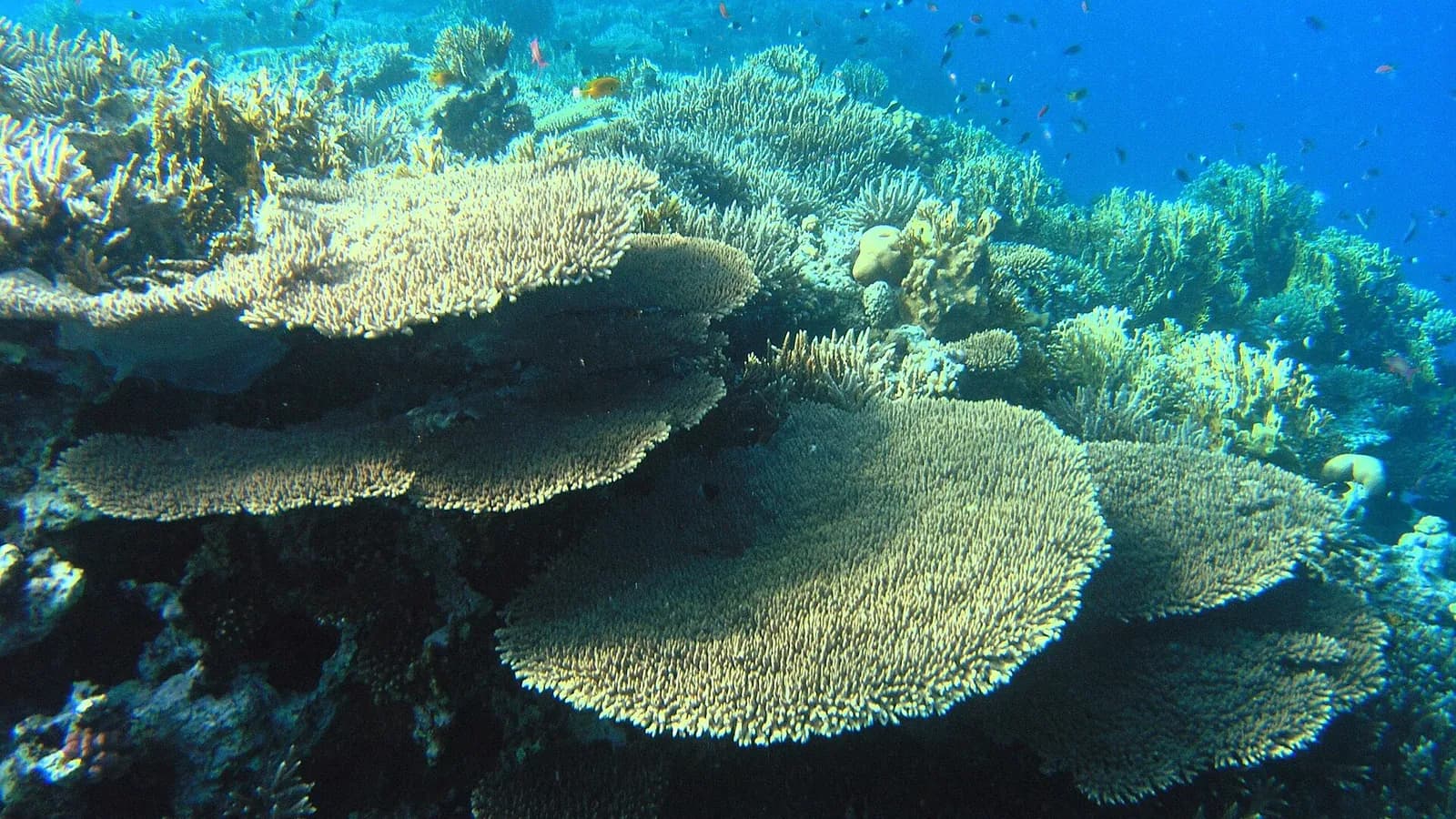
Hurghada Diving (2026): Best Sites, Packages & Prices
Diving in Hurghada — the best reefs (Giftun, Careless Reef, Dolphin House) and Abu Nuhas wrecks, Discover Scuba vs PADI courses, season and water temps, and real 2026 prices.
By TiE Editors7 min read
Hurghada Snorkeling Trips (2026): Best Reefs, Prices & How to Choose
Where to snorkel from Hurghada in 2026 — Orange Bay, Giftun, Mahmya, Utopia and Dolphin House — with boat types, marine life, month-by-month sea temperatures, family tips and real prices from 1,000+ bookable trips.
By TiE Editors7 min read
Egypt Tour Prices by Activity (2026): What Each Type Really Costs
What every type of Egypt experience costs — half day, full day or overnight — as a median and a mid-half range in US dollars, from 12,370 live bookable listings.
By TiE Editors6 min read