The Straits of Tiran: Diving the Four World-Class Reefs off Sharm el-Sheikh
Jackson, Woodhouse, Thomas and Gordon — four reefs in a narrow strait where the Gulf of Aqaba meets the Red Sea, dived as fast drifts on a day boat from Sharm el-Sheikh.
Book it on This is Egypt
Sharm El Sheikh · Turn this guide into a trip
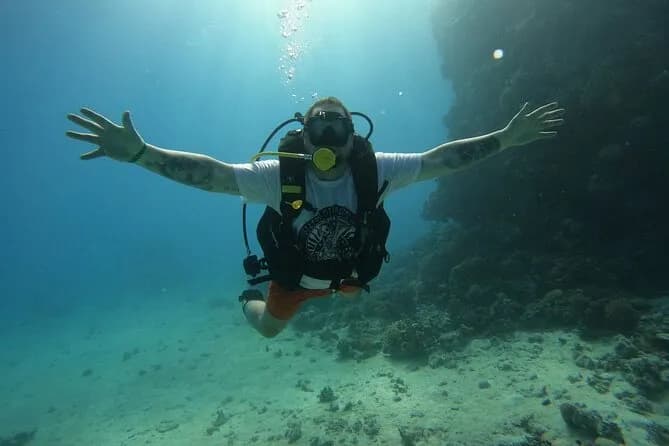
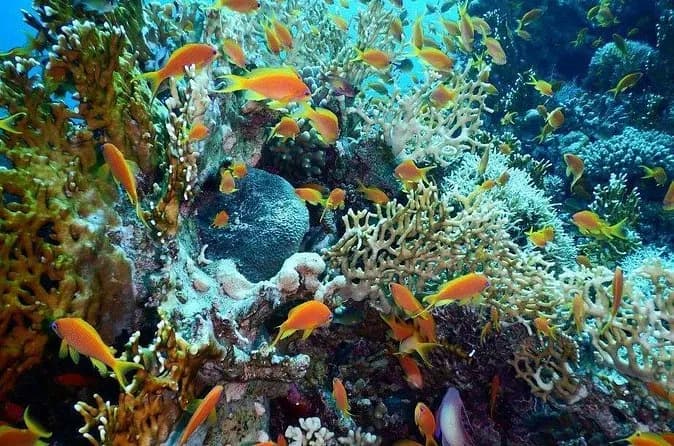
Quick answer: Between the tip of the Sinai Peninsula and the desert bulk of Tiran Island runs a narrow, deep channel that funnels the whole Gulf of Aqaba into the Red Sea. It is one of the most dramatic pieces of underwater terrain in Egypt: four steep-sided coral reefs, rising almost sheer from very deep water, set right in the path of moving currents. Divers know them by the names of the 19th-century British cartographers who charted the strait — Jackson, Woodhouse, Thomas and Gordon — and together they form the signature day trip out of Sharm el-Sheikh. This guide walks through the geography, what makes each reef worth the boat ride, the drift diving that defines them, and how to actually get in the water.
Where the Straits of Tiran are
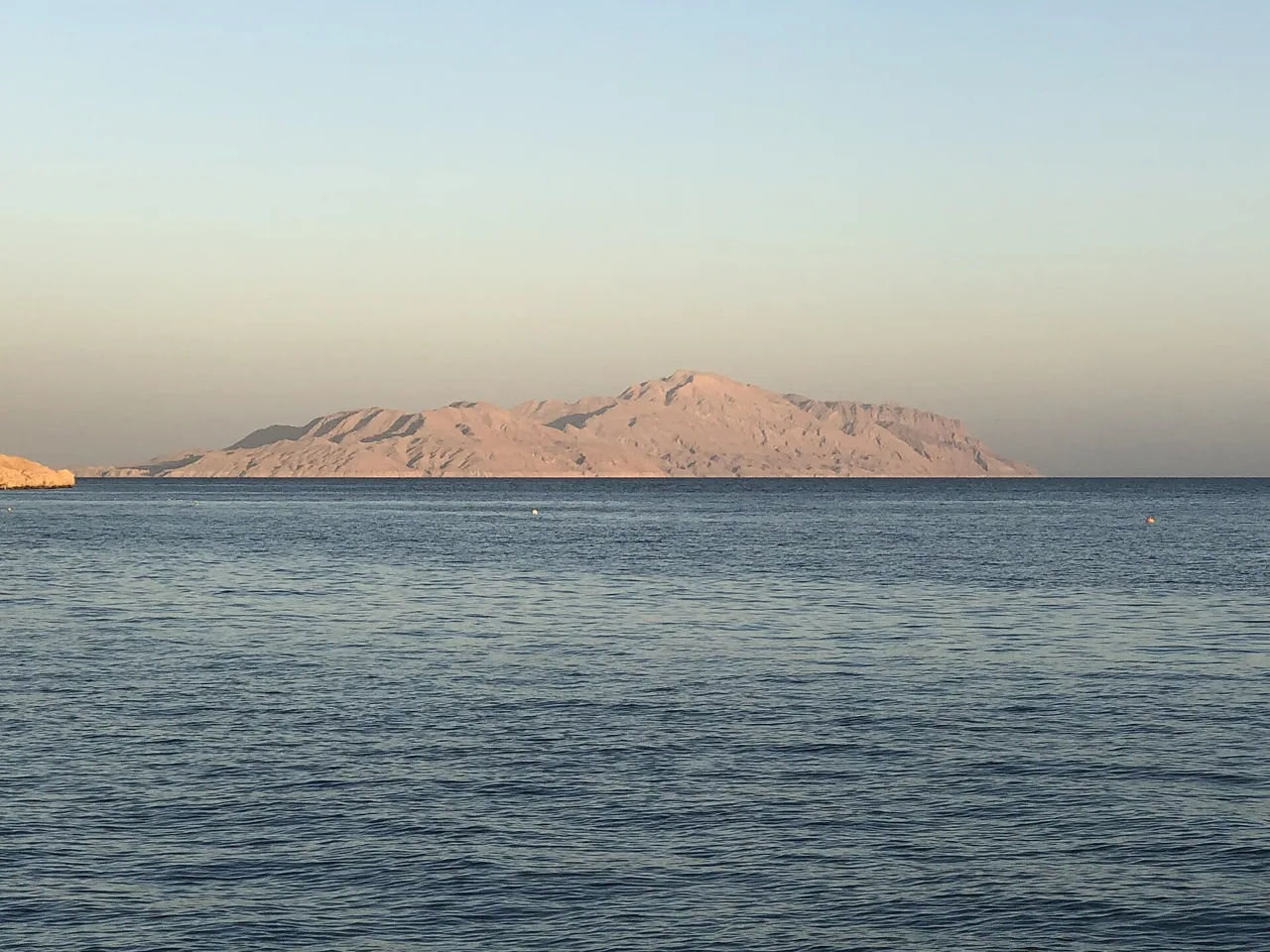 The strait sits at the mouth of the Gulf of Aqaba, the north-eastern finger of the Red Sea that reaches up towards Aqaba and Eilat. Here the gulf pinches to a channel only a few kilometres wide, squeezed between the South Sinai coast on the west and Tiran Island — a barren, uninhabited island belonging to Saudi Arabia — on the east. That geography does two things for divers. It concentrates water movement, so the reefs get flushed with nutrient-rich current and the fish life is dense. And it puts four reef systems close together in open, deep water, each with walls dropping far beyond recreational limits. The reefs lie roughly 20 to 40 minutes further north than the coastal sites off Sharm, which is why Tiran is almost always dived from a boat rather than the shore.
The four reefs at a glance
The four reefs line up on a rough northeast-to-southwest axis across the strait. Jackson is the northernmost, closest to Tiran Island and the open gulf; Gordon is the southernmost and the nearest to Sharm; Woodhouse and Thomas sit between them. On a typical day boat you dive two of the four, with the guide picking sites to match the day's wind, current and your certification level.
| Reef | Position in the strait | Known for | Typical dive style |
|---|---|---|---|
| Jackson | Northernmost, nearest Tiran Island | Hammerheads in the blue (summer/autumn), the deep Lara wreck, huge coral | Plateau and wall; exposed blue-water dive when calm |
| Woodhouse | Between Jackson and Thomas | Longest, wildest reef; a parallel canyon at ~30 m | Always a drift, south to north, no moorings |
| Thomas | Between Woodhouse and Gordon | Smallest but richest; the deep "Thomas Canyon" and its arches | Drift along a gorgonian wall; canyon is tec-only |
| Gordon | Southernmost, closest to Sharm | The Loullia shipwreck, shark-friendly plateau, easiest conditions | Sheltered plateau with a mooring; good for all levels |
Jackson Reef
Jackson is the star of the strait and the northernmost of the four, catching the full flow of the gulf. Its shallow reef top gives way to walls smothered in hard and soft coral and clouds of anthias and fusiliers. The reason experienced divers make the trip, though, is the northern side: when the sea is flat — usually in summer — guides run it as a "blue water" dive, hanging off the wall and looking out into open blue for scalloped hammerheads, which pass through the strait in the warmer months. High on the reef sits the rusting hull of the Lara, a 137 m Cypriot cargo ship that grounded here in 1982; the wreckage that recreational divers see is the shallow part, while the ship's main body tumbles down the wall to around 48 m and beyond, firmly in technical-diving territory. Jackson's exposure means it can also be the roughest of the four when wind gets up.
Woodhouse Reef
Woodhouse is the longest and narrowest of the four, lying along the same axis as the current with no lagoon to shelter a boat and no fixed moorings. That makes it, by nature, a drift dive: you roll in at the southern end and let the current carry you north along the wall while the boat follows your bubbles or your surface marker. Around 30 m a canyon cuts parallel to the reef, running to a sandy ledge where whitetip and other reef sharks sometimes rest. Because there is nowhere to tie up and no easy bail-out, Woodhouse is dived only when conditions are calm and is usually paired with a second, more sheltered site. It rewards divers comfortable with moving water and open-water navigation.
Thomas Reef
Thomas is the smallest reef of the four and, to many, the most beautiful. With no moorings it is always drifted, typically starting on the south-east corner where a wall drops away thick with gorgonian fans, whip corals and black coral. At around 25 m a ledge often holds resting whitetip reef sharks and the occasional leopard shark. The reef's showpiece is the Thomas Canyon: a deep cleft opening at roughly 35 m, running about 80 m parallel to the reef and crossed by three great stone arches — the "Thomas Arches" — formed by fallen rock. The canyon bottoms out near 90 m, so it is strictly the preserve of technical divers; recreational divers admire it from the rim while drifting the wall above.
Gordon Reef
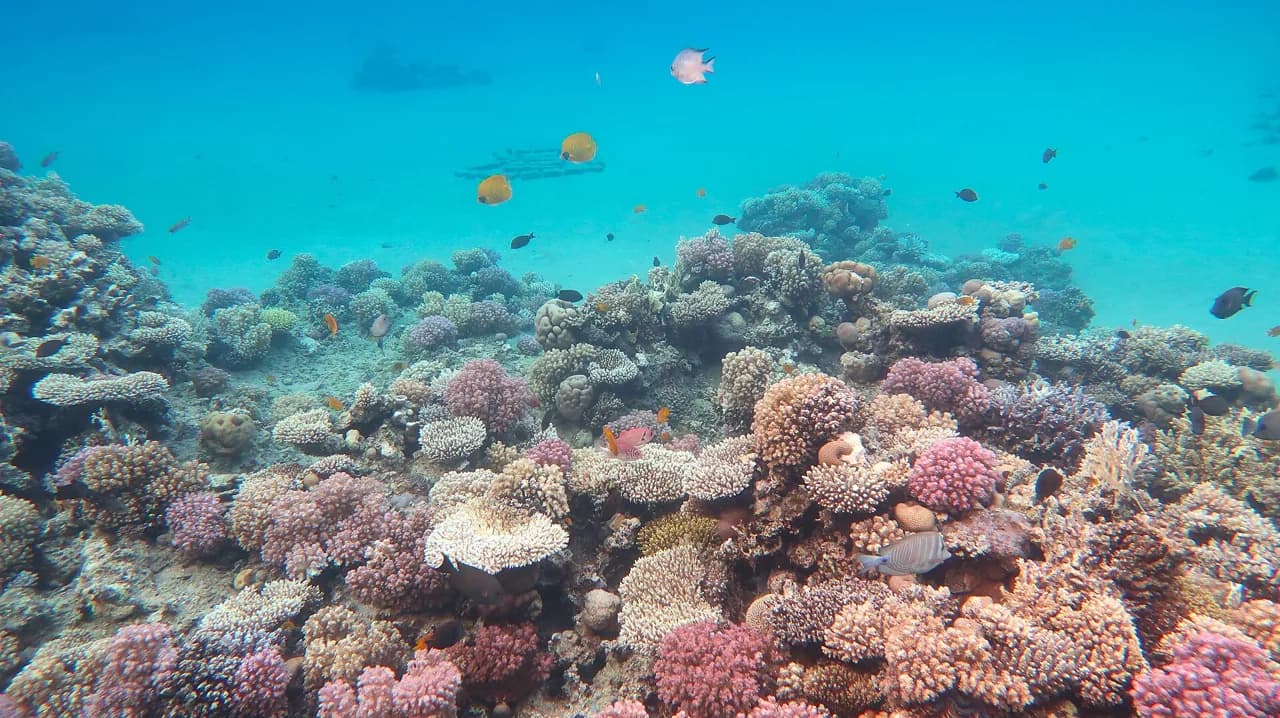
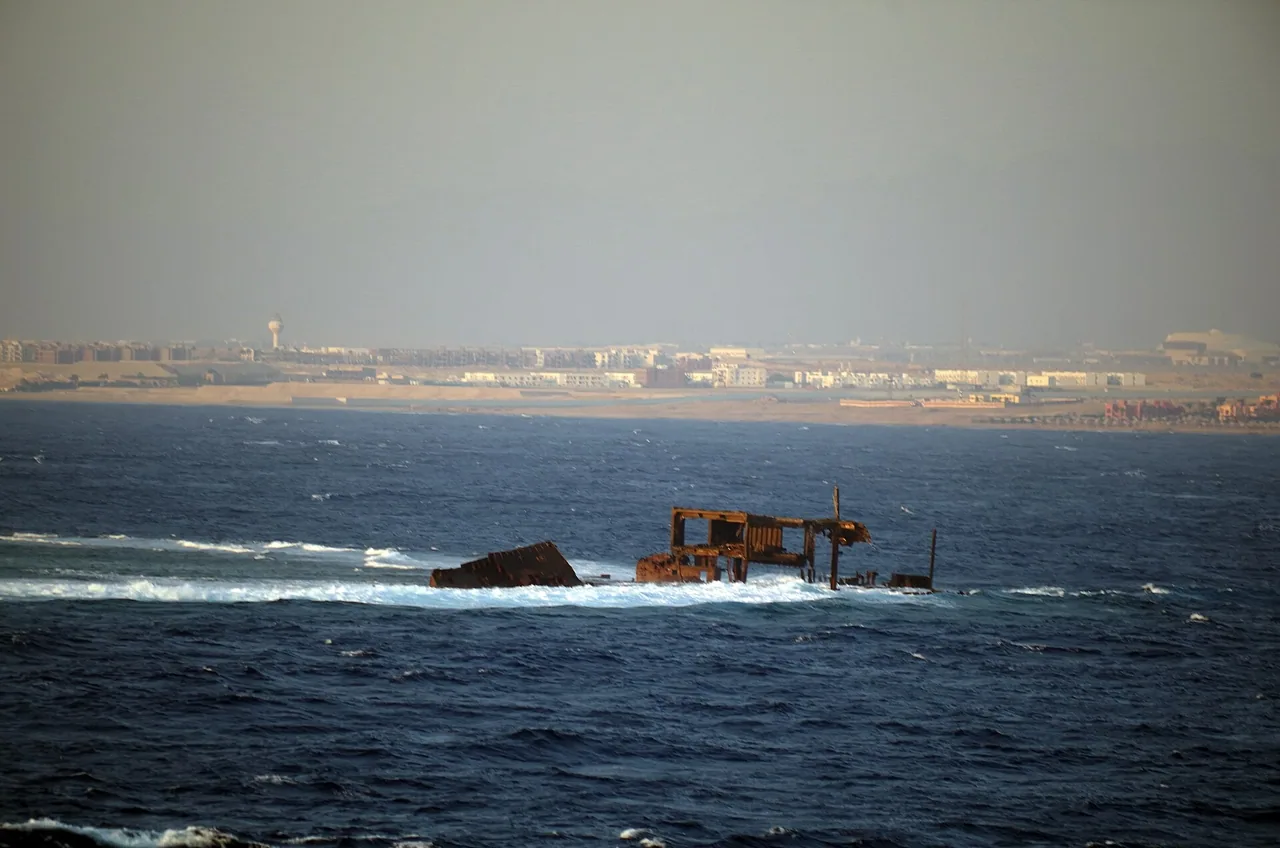 Gordon is the southernmost reef, the closest to Sharm, and the most forgiving. It is built around a broad, shallow plateau with a mooring, so boats can tie up and it can be dived without the commitment of a full drift — which makes it the friendliest of the four for less experienced divers and the usual choice when currents elsewhere are strong. Its unmistakable landmark is the Loullia, a Panamanian cargo ship that ran hard aground on the reef's northern edge in 1981 and still sits there, half-broken, above the waterline. The plateau is patrolled by reef sharks, and the "back" of Gordon, out in the blue in front of the wreck, is one of the better spots in the strait to see hammerheads schooling from roughly July to October. Turtles, rays, moray eels and vast fish schools round out the plateau.
Drift diving and currents
The strait is defined by moving water. Currents here can be strong, and on Woodhouse and Thomas they are the whole point — you plan the dive as a one-way drift and let the water do the work, deploying a surface marker buoy so the boat can track and collect you at the end. Currents can also switch direction or run down as well as along the wall, so good buoyancy, an SMB and a briefing you actually follow all matter more than usual. This is why Tiran is generally recommended for divers who are comfortable in current rather than absolute beginners, and why guides steer newer certified divers towards Gordon's sheltered plateau. A drift dive changes the rhythm of a dive: you are not swimming a route and returning to a mooring but flying along a wall while the boat shadows you, so the priorities become staying with the group, holding your depth off a wall that plunges far below safe limits, and finishing with a clean marker deployment and safety stop in open water. For a wider grounding in Red Sea conditions and seasons, see our Red Sea diving guide, and for the full menu of dive sites around the resort, the Sharm el-Sheikh diving guide.
Snorkelling the strait
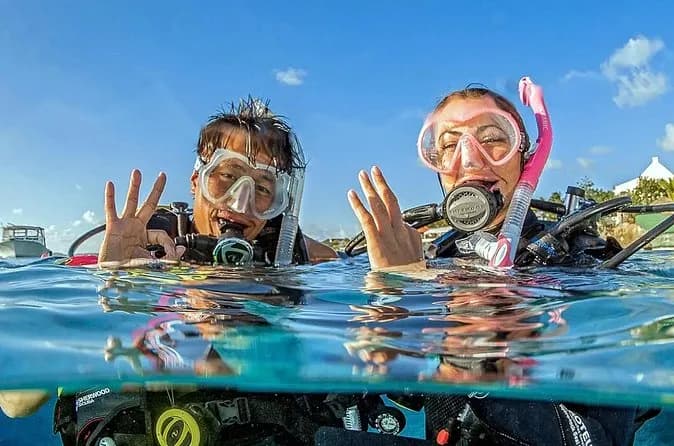
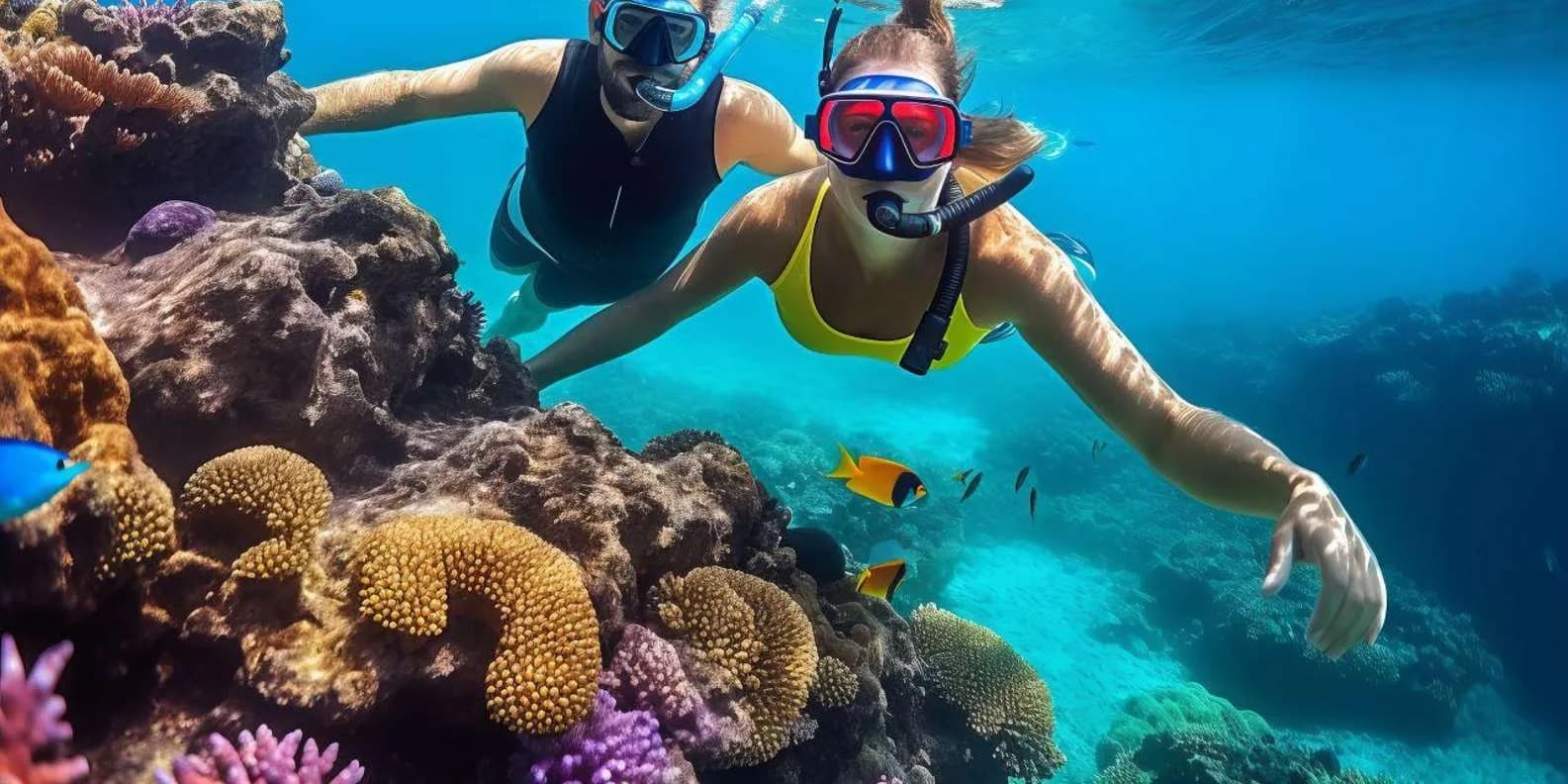
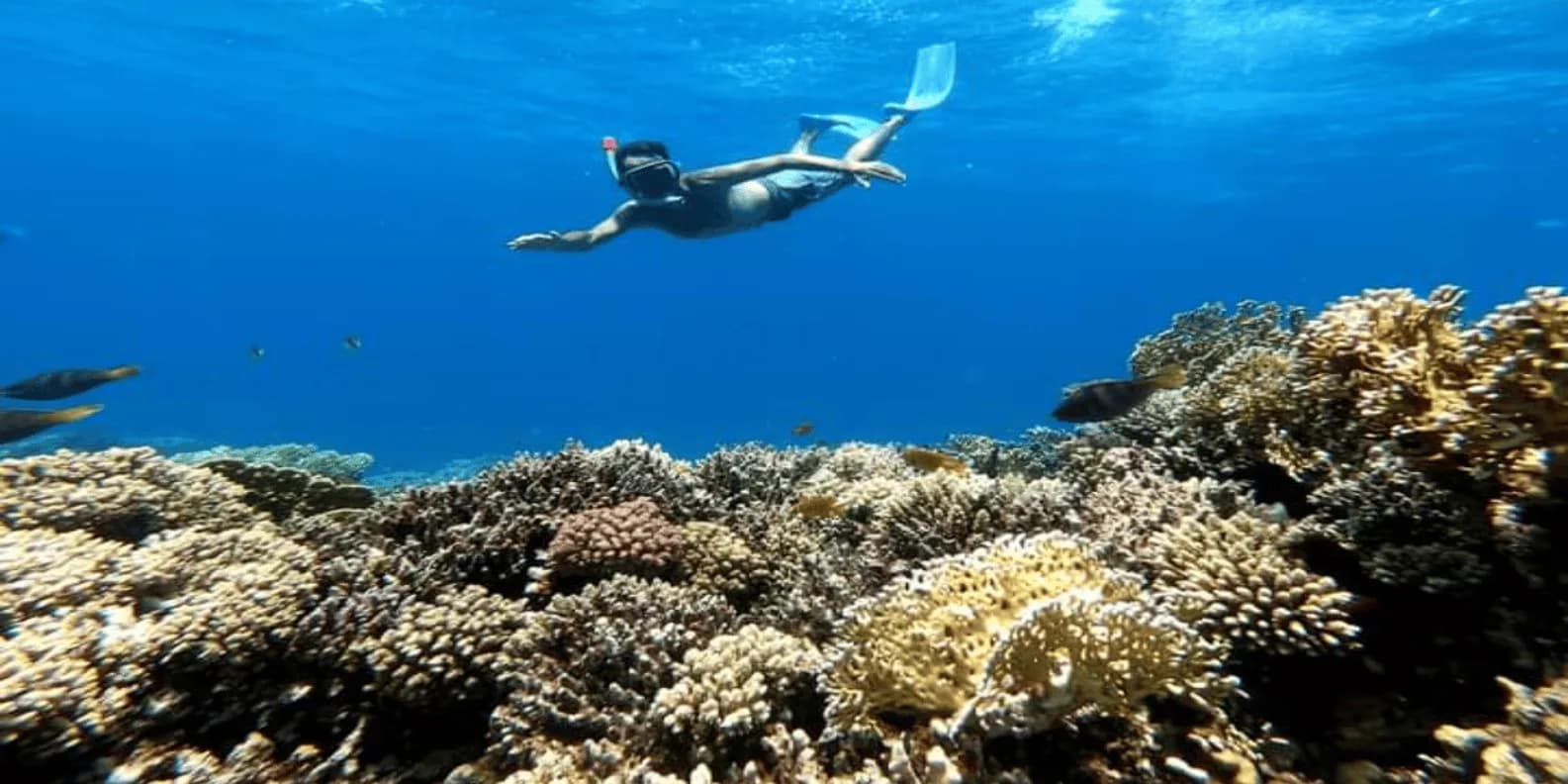
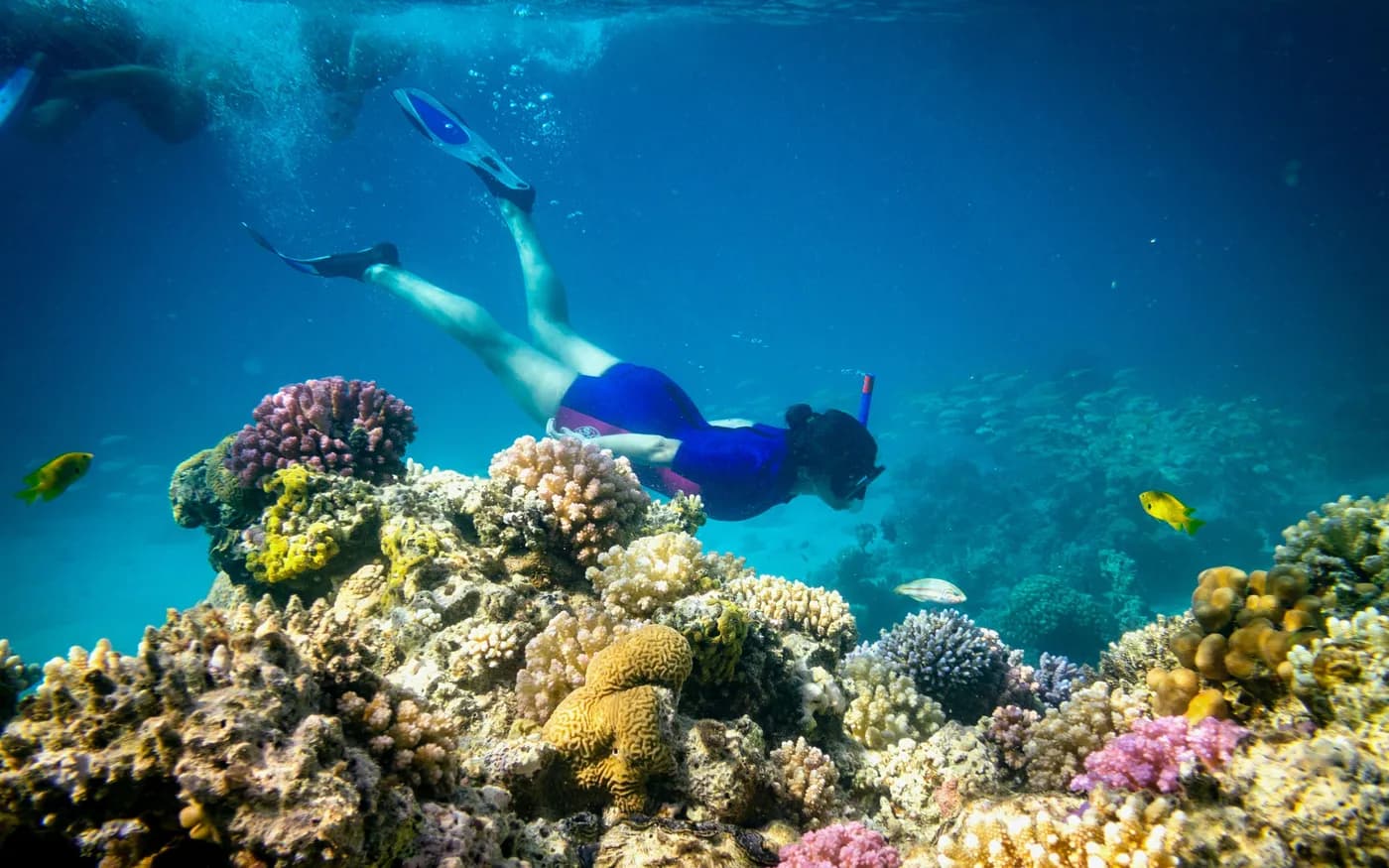
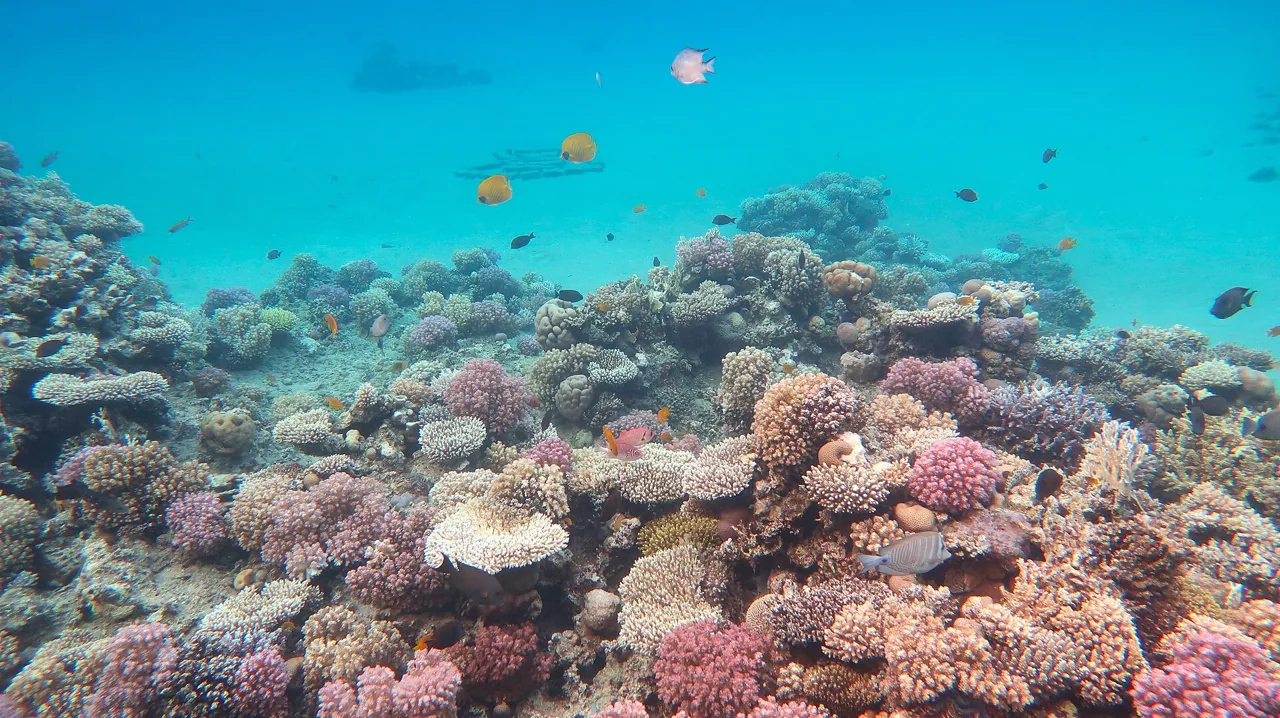 You do not have to be a diver to experience Tiran. The same reefs that draw divers make the strait one of the most popular snorkelling day trips from Sharm, and the boats anchor over shallow reef tops where the coral comes close to the surface. Snorkel-focused day cruises typically stop at two or three points along the reefs, and non-diving friends can join a dive boat and swim the shallows above while the divers descend. Gordon's plateau and the sheltered edges of the reefs are the usual snorkelling spots; the deep walls and canyons that thrill divers are, of course, out of reach from the surface, but the fish life on the reef tops is spectacular in its own right.
Marine life
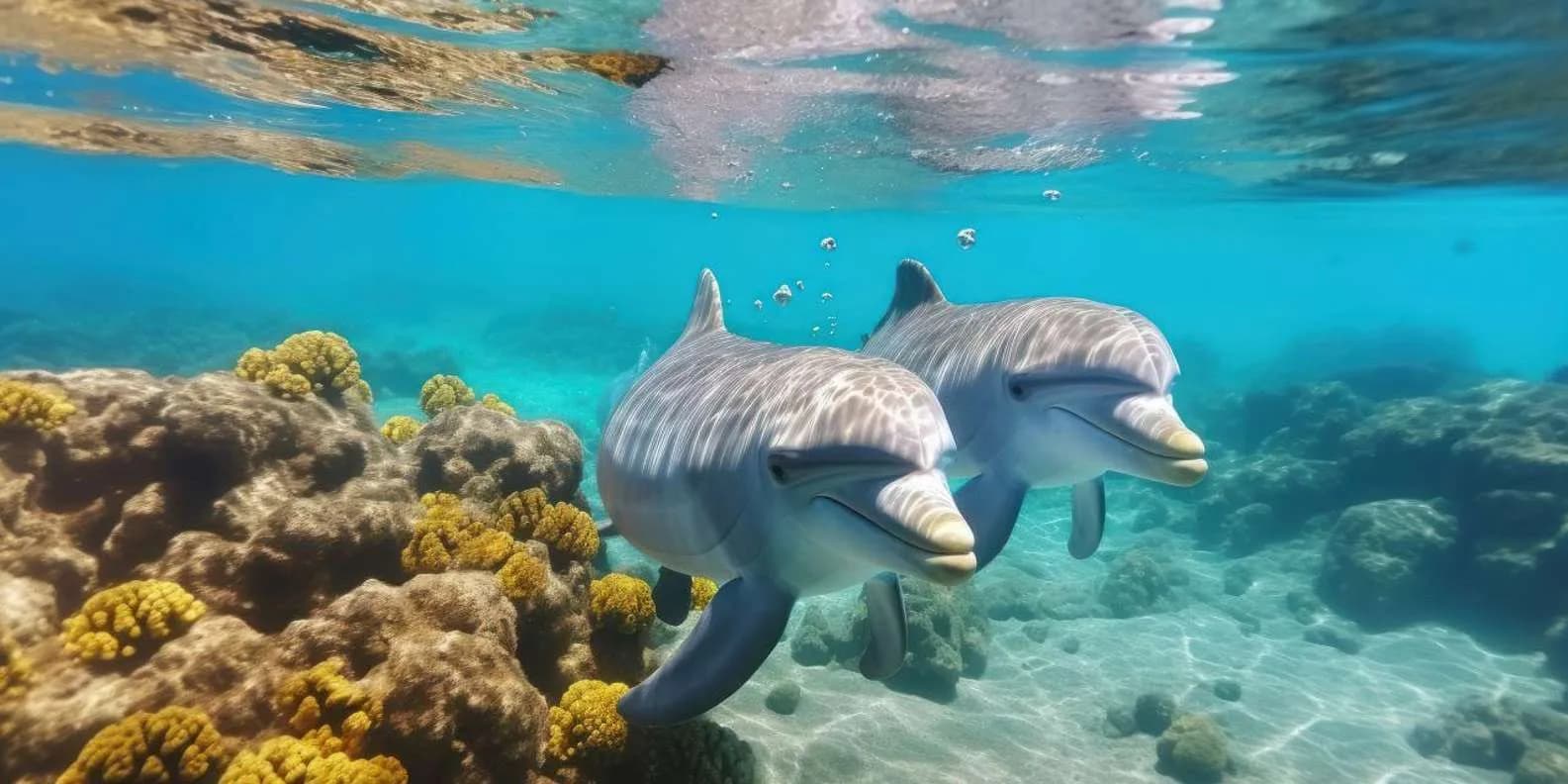
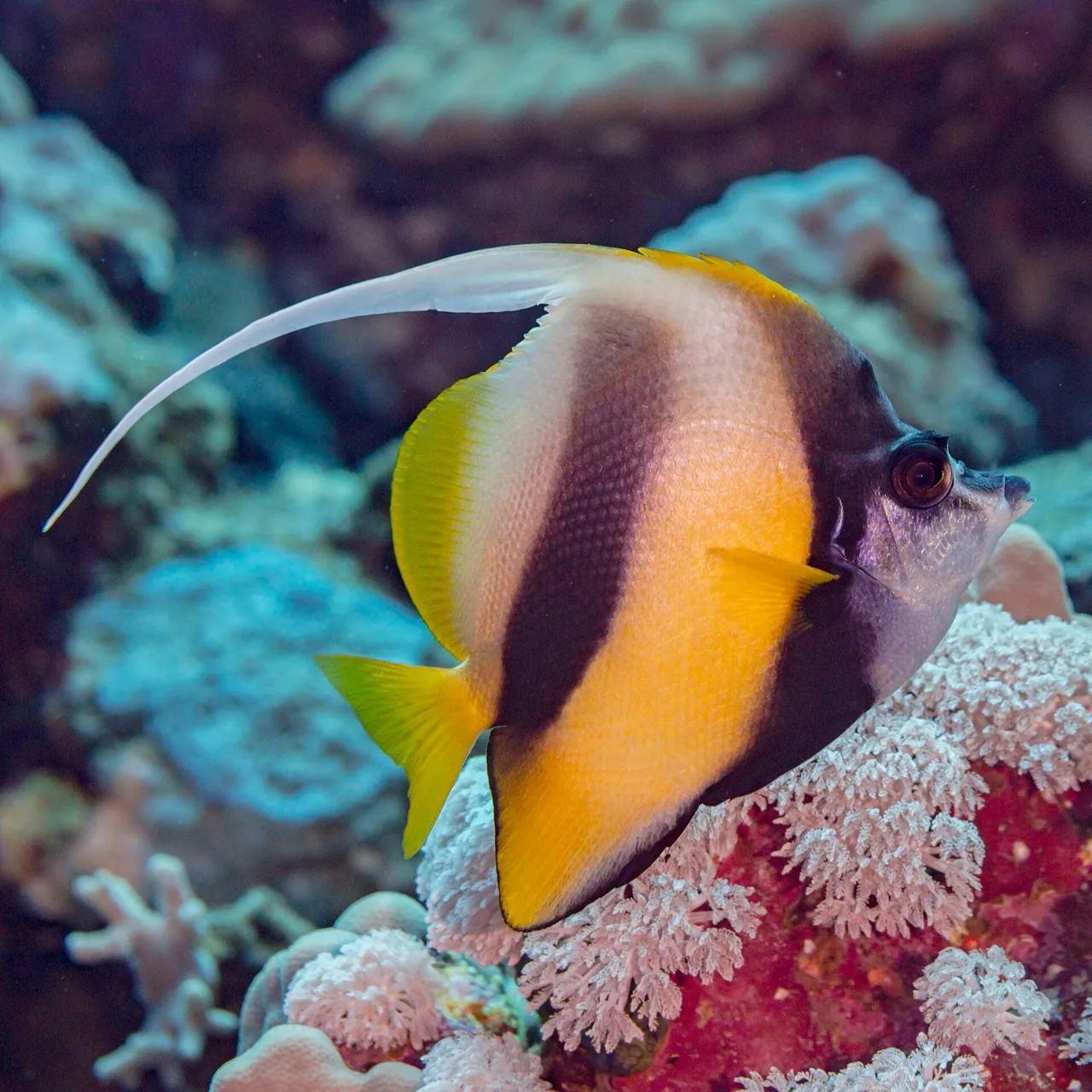 Tiran's position and current make it a magnet for big animals as well as reef fish. Scalloped hammerheads are the headline draw, passing through the strait and schooling off Jackson and the back of Gordon mainly in summer and autumn. Whitetip and grey reef sharks patrol the plateaus and ledges year-round, and leopard sharks are sometimes found resting on the sand. Green and hawksbill turtles are common, along with barracuda, tuna, jacks, trevally and other pelagics that hang in the current lines, plus moray eels, blue-spotted rays, octopus and dense schools of anthias and fusiliers over walls carpeted with hard and soft coral. The Red Sea's famous endemics turn up here too, from masked butterflyfish to Red Sea bannerfish and clownfish tucked into anemones on the reef top. Sightings of the big pelagics are never guaranteed — that is the nature of blue-water diving — but few Egyptian sites stack the odds as well, because the strait acts as a natural corridor that concentrates whatever is moving through the northern Red Sea into a channel only a few kilometres wide.
How to dive it: day boats, levels and logistics
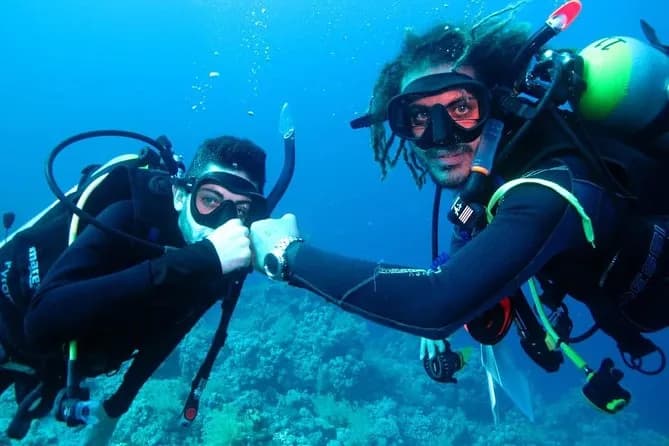
Tiran is dived as a day trip by boat from Sharm el-Sheikh. Boats leave from the marinas around the resort — Sharks Bay is the common departure for Tiran runs, along with the Old Port at Sharm el-Maya and the Naama Bay area — usually with a morning pickup around 8:00 and a return in the mid-afternoon, giving two guided dives with a surface interval and lunch on board. A national-park conservation fee applies to boat diving in the Sharm area (on the order of a few euros or dollars per diver per day) and is often bundled into the trip price; it funds the marine protected area. On the certification side, Tiran suits divers who are at least comfortable in current — many centres want Advanced Open Water or solid drift experience for the exposed reefs, while Gordon can be run for newer certified divers and even guided intro dives in calmer conditions. The deep canyons and the Lara and lower Loullia structures are technical dives, not recreational ones. Nitrox, computer rental and gear hire are usually available for an extra charge. If you are still choosing where to base a diving trip in Egypt, our Sharm el-Sheikh diving guide compares the resort's options.
Best season and conditions
The Red Sea is diveable all year, and Tiran is no exception, but conditions shift with the calendar. The best all-round months are the shoulder seasons — roughly March to May and September to November — when seas tend to be calm, water is warm and visibility is at its best. Calm summer seas are what open up Jackson's exposed northern blue-water dives and coincide with the hammerhead season, which runs broadly July to October. Winter is cooler and can be windier; the strait's exposed reefs are the first to be blown out when the wind picks up, so a flexible itinerary that can fall back to Gordon or the coastal sites is worth having. Visibility in the strait is typically excellent, often 20–40 m. For help lining a diving trip up with the wider travel calendar, see our guide to the best time to visit Egypt.
Combining Tiran with Ras Mohammed
Many divers pair a Tiran day with a day at Ras Mohammed, the national park at the very southern tip of the Sinai where the Gulf of Aqaba and the Gulf of Suez meet. The two make a natural two-day combination out of Sharm: Ras Mohammed's Shark and Yolanda reefs for sheer walls and the famous "toilet bowl" currents, and Tiran for its four-reef drift diving and blue-water sharks. Read more in our Ras Mohammed National Park guide. Between them they cover the best of what South Sinai has underwater — and explain why Sharm el-Sheikh remains one of the world's most reliable diving bases.
A real team available 24/7 to assist you — free
Seif and the team reply on WhatsApp 24/7 — trip questions, custom plans and booking help.
Ask Seif on WhatsAppCommon questions
What are the four reefs in the Straits of Tiran?
Jackson, Woodhouse, Thomas and Gordon, named after 19th-century British cartographers who charted the strait. Jackson is the northernmost and nearest Tiran Island; Gordon is the southernmost and closest to Sharm; Woodhouse and Thomas lie between them. A typical day boat dives two of the four, chosen for the day's wind, current and your certification level.
Do I need to be an experienced diver to dive Tiran?
Tiran is best suited to divers comfortable in current. The exposed reefs — Woodhouse and Thomas — are always drift dives with no moorings, so many centres want Advanced Open Water or solid drift experience. Gordon Reef, with its sheltered plateau and mooring, is the friendliest of the four and can be dived by newer certified divers, and even as a guided intro dive, in calm conditions.
Are there really shipwrecks in the Straits of Tiran?
Yes. Gordon Reef holds the Loullia, a Panamanian cargo ship that ran aground on its northern edge in 1981 and still sits half-broken above the waterline. Jackson Reef has the Lara, a 137 m Cypriot cargo ship that grounded in 1982; its shallow wreckage is visible to recreational divers, but the main hull tumbles down the wall past 48 m into technical-diving depths.
Can I see hammerhead sharks in Tiran?
Often, in season. Scalloped hammerheads pass through the strait mainly in summer and autumn, roughly July to October. The best chances are the blue-water dive off the northern side of Jackson Reef when seas are calm, and the "back" of Gordon Reef out in the blue in front of the Loullia wreck. As with all blue-water diving, sightings are never guaranteed.
What is the Thomas Canyon?
Thomas Canyon is a deep cleft on Thomas Reef that opens at around 35 m and runs roughly 80 m parallel to the reef, crossed by three stone arches (the "Thomas Arches") formed by fallen rock. It drops to near 90 m, so it is strictly a technical dive. Recreational divers drift the gorgonian-covered wall above and admire the canyon from its rim.
Can non-divers snorkel the Straits of Tiran?
Yes. Tiran is one of the most popular snorkelling day trips from Sharm el-Sheikh. Boats anchor over shallow reef tops where coral comes close to the surface, typically stopping at two or three points along the reefs. Non-diving companions can also join a dive boat and snorkel the shallows above while the divers descend. Gordon's plateau and the sheltered reef edges are the usual snorkelling spots.
When is the best time to dive the Straits of Tiran?
The shoulder seasons, roughly March–May and September–November, offer the best balance of calm seas, warm water and top visibility. Calm summer seas open up Jackson's exposed blue-water dives and coincide with hammerhead season (about July–October). Winter is cooler and windier, and the strait's exposed reefs are the first to be blown out, so keep a flexible itinerary that can fall back to Gordon or the coastal sites.
How do I get to the Straits of Tiran to dive?
Tiran is dived as a day trip by boat from Sharm el-Sheikh, usually leaving from Sharks Bay, the Old Port at Sharm el-Maya or Naama Bay. Expect a morning pickup around 8:00, a mid-afternoon return, two guided dives with lunch on board, and a national-park conservation fee (a few dollars per diver per day) that is often bundled into the price. Nitrox and gear rental are usually available for an extra charge.
Book it on This is Egypt
Turn this guide into a trip
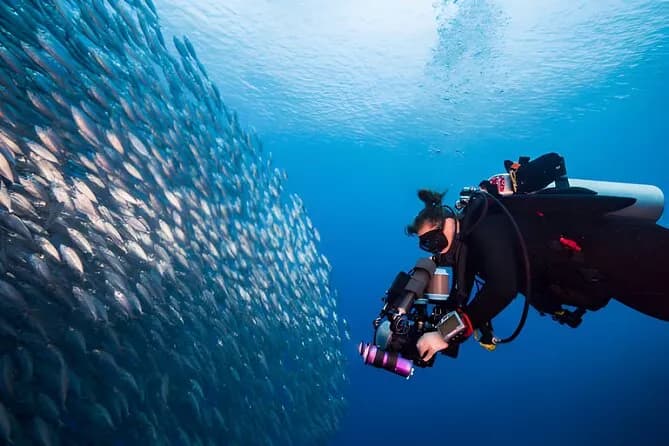

Egypt's bestsellers
The experiences travelers book most, across the country


Keep reading

Hurghada Diving (2026): Best Sites, Packages & Prices
Diving in Hurghada — the best reefs (Giftun, Careless Reef, Dolphin House) and Abu Nuhas wrecks, Discover Scuba vs PADI courses, season and water temps, and real 2026 prices.
By TiE Editors7 min read

Diving in Sharm El Sheikh (2026): Ras Mohammed, Reefs and the Best Trips
Sharm is Egypt's diving capital, with Ras Mohammed and White Island on the doorstep. The best dive and snorkel trips, real prices, and what non-divers can do too.
By TiE Editors9 min read

Liveaboard vs Day-Boat Diving in the Red Sea (2026): Which to Choose
A liveaboard reaches the remote reefs and wrecks day boats can't — the Brothers, Daedalus, deep-south Egypt — but a day boat is cheaper, flexible and beginner-friendly. Here's the honest choice.
By TiE Editors4 min read