
The Red Sea's Offshore Shark Reefs: Elphinstone, the Brothers and Daedalus
Egypt's remote offshore reefs are the Red Sea's ultimate shark diving. A guide to Elphinstone, the Brothers and Daedalus, who they suit and how to reach them by liveaboard.
Book it on This is Egypt
Marsa Alam · Turn this guide into a trip
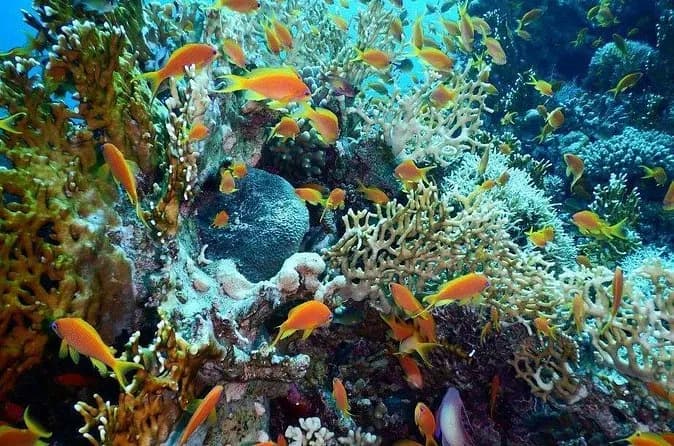

Quick answer: Somewhere out past the last day-boat, where the Egyptian Red Sea drops away into open ocean, three isolated reefs rise from water more than 500 metres deep. Elphinstone, the Brothers and Daedalus are the reason serious divers cross continents to reach Marsa Alam. These are the Red Sea's ultimate shark reefs: sheer coral walls swept by current, plateaus where hammerheads school in the blue and oceanic whitetips patrol the shallows, and two century-old wrecks draped down a vertical drop-off. This is advanced diving, and the reward is some of the most reliable big-animal encounters anywhere in the world.
This guide covers what makes each reef special, who they suit, the shark seasons, and how to reach them. If you are newer to Egyptian diving or want the calmer, reef-and-wreck classics first, start with our Red Sea diving guide and build your logbook before committing to a route out here.
Why these reefs are the Red Sea's ultimate shark diving
The magic is geography. All three reefs sit well offshore, surrounded by very deep open water rather than sheltered coastal shelf. They stand directly in the path of currents and upwellings that funnel nutrient-rich water up their walls, and they sit on a migratory corridor where pelagic species move between deep basins. That combination does two things: it grows exceptionally dense hard and soft coral, and it draws in big animals that rarely visit the coast.
Where Hurghada and Sharm el-Sheikh offer beautiful reefs with the chance of a shark, these three reefs are where sharks are the main event. Up to five species can be encountered across the route: scalloped hammerheads, oceanic whitetips, grey reef sharks, thresher sharks and silky sharks in the open blue. It is also, unavoidably, more demanding diving. The same currents that bring the sharks make the water unpredictable, and the walls plunge far beyond any safe recreational limit.
Elphinstone: the accessible wall off Marsa Alam
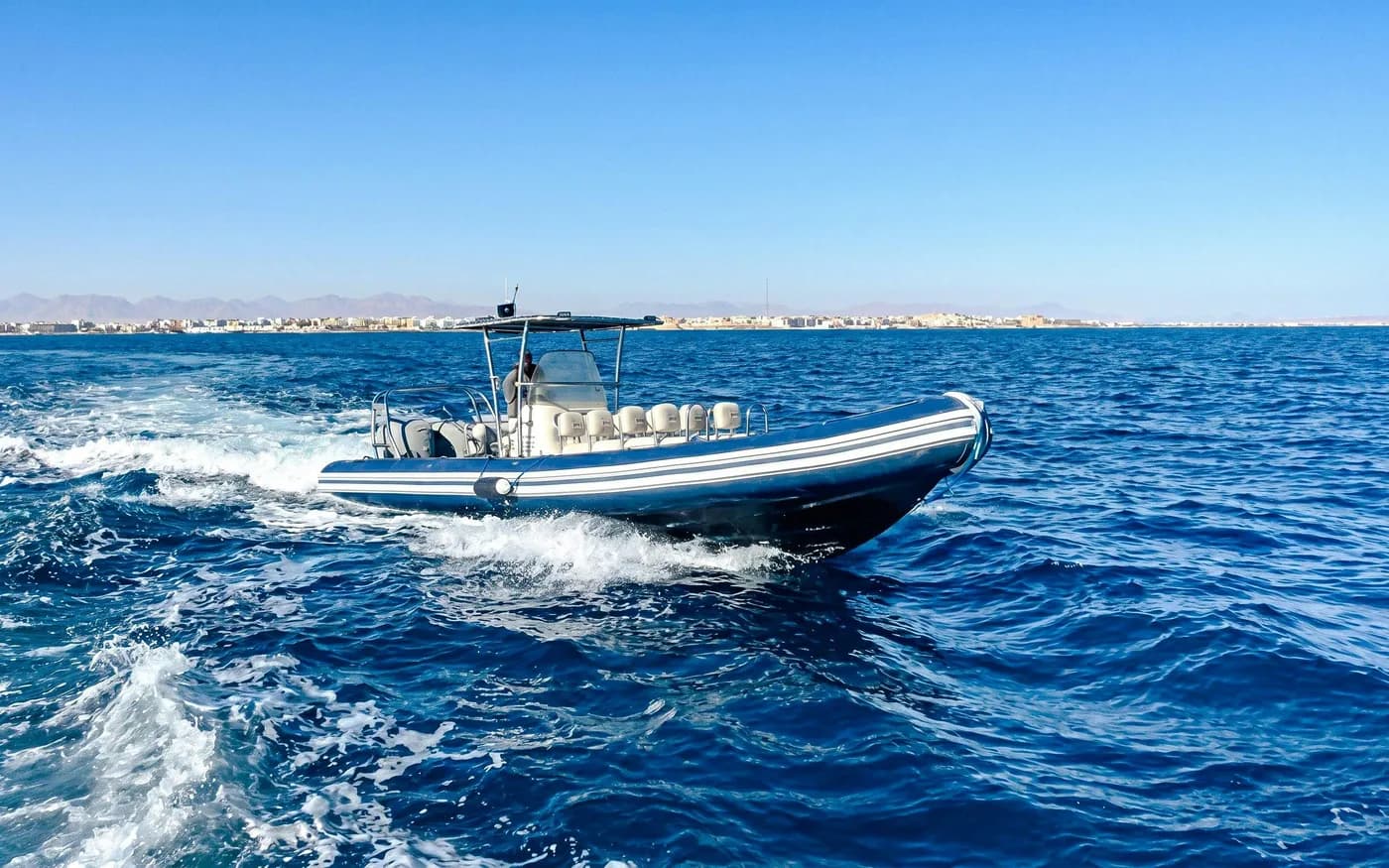
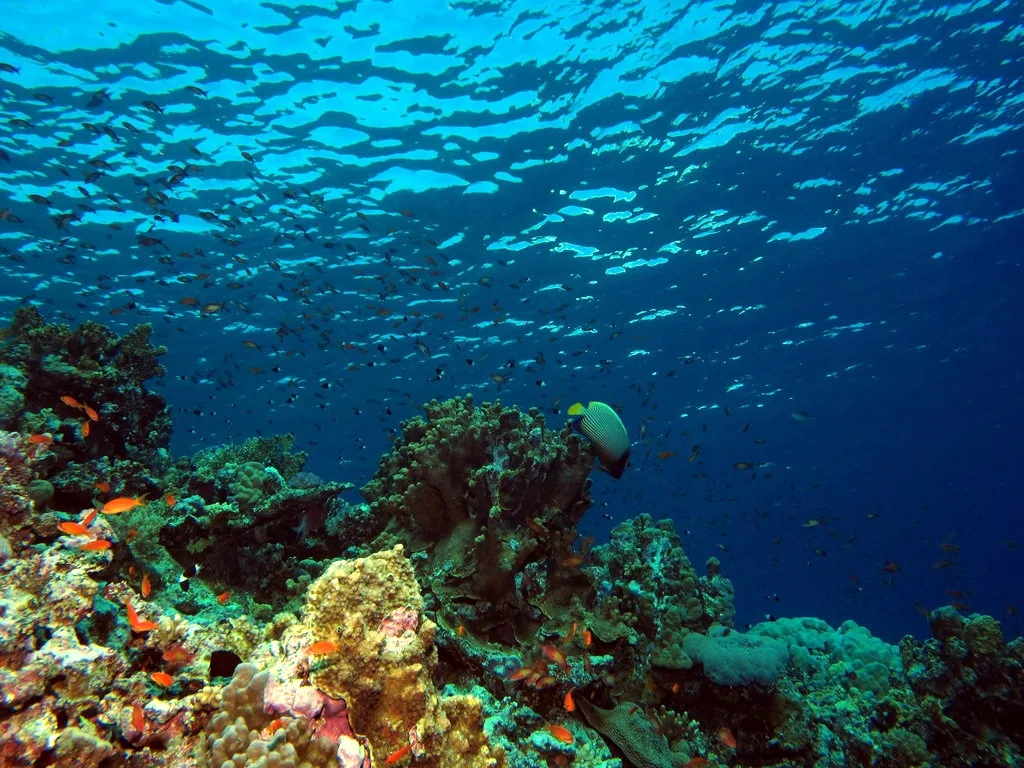 Elphinstone (Sha'ab Abu Hamra) is the one you can reach without sleeping on a boat. It lies roughly 30 km north of Marsa Alam and only about 9 km off the coast, so fast RIBs from the Port Ghalib and Marsa Alam area reach it in around 30-40 minutes on a calm day. That makes it a day-boat site for advanced divers, and the gateway drug for the offshore reefs proper.
The reef is a long, narrow ridge about 300 metres from north to south, with sheer walls dropping into the blue on both sides and a plateau at each end. Divers typically drift the east or west wall past forests of soft coral and gorgonians, with the northern and southern plateaus as the pelagic hotspots. Elphinstone's signature animal is the oceanic whitetip shark (Longimanus), a bold, curious open-ocean predator that cruises the shallows and often circles divers on the safety stop. Currents can be strong and downcurrents form off the plateau tips, so this is not a beginner site despite the short boat ride.
The usual plan is a negative entry off the RIB onto one of the plateaus, then a drift along the wall back toward the tender. Go early: the first boats of the day meet the calmest water and the best chance of sharks before the site fills up. Because Elphinstone can be dived from shore-based centres, it also works as a warm-up for divers who want to test their skills in offshore conditions before committing to a full liveaboard week further out.
The Brothers: walls, wrecks and every shark
The Brothers (El Akhawein, "the two brothers") are a pair of tiny, uninhabited rocky islets about 60 km offshore, reachable only by liveaboard. They are widely rated among the very best diving in Egypt, and they pack the most variety of the three.
Big Brother is the larger island, marked by a stone lighthouse, and it carries the route's two famous wrecks. The Numidia, a British cargo steamer that sank in 1901, lies draped down the north-west wall from around 10 metres to well past 80; she is nicknamed the "Railway Wreck" for the locomotive wheels she was carrying. Below and nearby lies the Aida, an Egyptian supply vessel lost in 1957, encrusted and running down the same steep drop-off. Both wrecks are now smothered in coral, effectively artificial walls of marine life.
Little Brother is smaller and better known for its gorgonian fan forests and its plateaus, where grey reef sharks patrol, thresher sharks appear on dawn dives (best in autumn and winter) and scalloped hammerheads school off the points. Oceanic whitetips turn up here too. Between the two islands, the Brothers can deliver every shark on the route in a single day.
Daedalus: the lighthouse and the hammerhead wall
Daedalus Reef, known in Arabic as Abu el-Kizan, is the most remote of the three, lying roughly 90-100 km off Marsa Alam, almost halfway to the Saudi coast. A large, near-circular reef, it is crowned by an operational lighthouse run by the Egyptian navy; the current structure dates to 1931, on a site lighted since the mid-1800s. Only a liveaboard reaches it, and only when the sea allows.
Daedalus is the Red Sea's premier schooling hammerhead site. Its exposed south and north plateaus, washed by upwelling current, are where scalloped hammerheads gather in numbers, most reliably on early-morning dives when divers hang at the edge of the wall and watch the school pass in the blue. The walls themselves are pristine, dropping from around 30-40 metres to some 500 metres, with a famous stand of anemones on the north side and thick coral everywhere. Because the reef sits alone in open ocean, currents are strong and sometimes unpredictable, and the deep, blue-water profiles are unforgiving of poor buoyancy or gas planning.
Comparing the three reefs
| Reef | Distance offshore | Access | Signature sharks | Standout feature |
|---|---|---|---|---|
| Elphinstone | ~9 km off Marsa Alam (~30 km N) | Day boat (RIB) or liveaboard | Oceanic whitetip | Sheer twin walls & two plateaus |
| The Brothers | ~60 km offshore | Liveaboard only | Hammerhead, thresher, grey reef, oceanic whitetip | Numidia & Aida wrecks; gorgonian walls |
| Daedalus | ~90-100 km off Marsa Alam | Liveaboard only | Schooling scalloped hammerhead | Lighthouse; hammerhead plateaus & anemone city |
Who these reefs suit
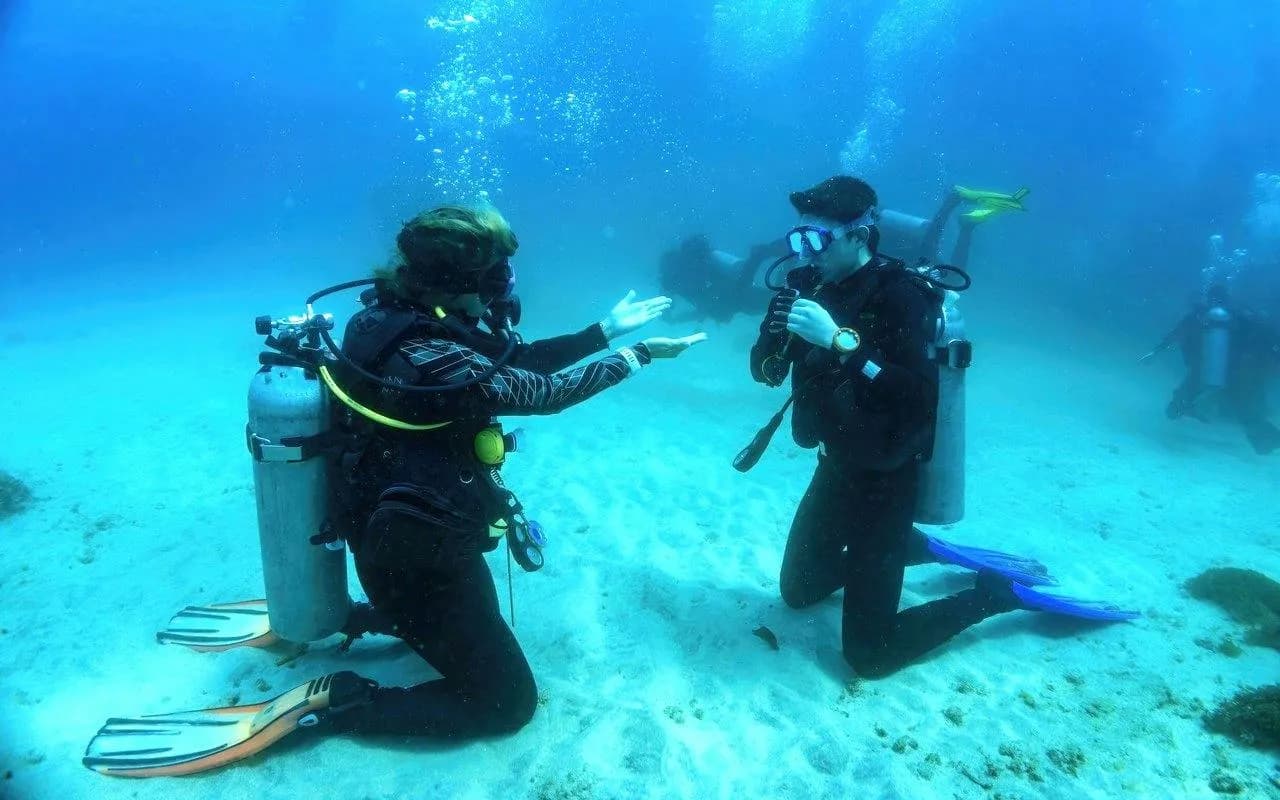
This is not diving for a fresh Open Water card. Operators on the offshore route typically require an Advanced Open Water certification and around 50 logged dives as a minimum, with a Deep specialty strongly recommended and nitrox useful for the depth and repetitive profiles. You need to be comfortable with:
- Current, including drift entries, negative entries off a fast boat, and the possibility of downcurrents off the plateaus.
- Depth and blue water, where there is no reef beneath you and it is easy to sink chasing a shark; disciplined buoyancy and depth awareness are essential.
- Self-reliance, carrying and deploying an SMB (surface marker buoy) and staying with your group and guide.
If that describes your diving, these reefs are a career highlight. If it does not yet, build up on the coastal and Sharm classics first, from the reefs of Ras Mohammed National Park to the wrecks around Hurghada, and come back with the logbook to match.
How to reach them: the liveaboard route
The standard way to dive all three in one trip is the "Brothers, Daedalus & Elphinstone" itinerary, often abbreviated BDE and marketed as the "Shark Golden Triangle" or "Simply the Best." It is a seven-night southern liveaboard, usually running between Port Ghalib / Marsa Alam and Hurghada, and it exists precisely because these reefs are too far apart and too far offshore to combine any other way.
A typical week sails out to the Brothers for a day or two, pushes on to Daedalus, and works Elphinstone on the way back toward port, with the exact order dictated by weather. Cruise directors schedule up to four dives a day (generally three day dives plus, where allowed, a sunset or night dive), and days at anchor off a single reef are common so you can dive it repeatedly. Because these are exposed sites, itineraries stay flexible and swap sites when the wind gets up. For getting to and around the region, our Marsa Alam travel guide covers airports, transfers and where to stay before and after the boat.
The shark seasons
Sharks are present on the route year-round, but odds shift by species and season, and this is where you should plan:
- Oceanic whitetips (Elphinstone & Brothers): peak late October to December, with a secondary pulse in April-May. This autumn window is the classic time to target Longimanus off Elphinstone.
- Scalloped hammerheads (Daedalus & Brothers): the big schools are most reliable in the warmer months, broadly May through October, on dawn dives at the plateaus.
- Thresher sharks (Big Brother): most likely on early dives in autumn and winter.
- Grey reef and silky sharks: seen across the route through much of the year.
Broadly, offshore liveaboard routes run through the warmer part of the year and quieten in deep winter, when seas are roughest. For a wider view of when Egypt's weather and water are at their best, see our guide to the best time to visit Egypt.
Conditions and what to expect underwater
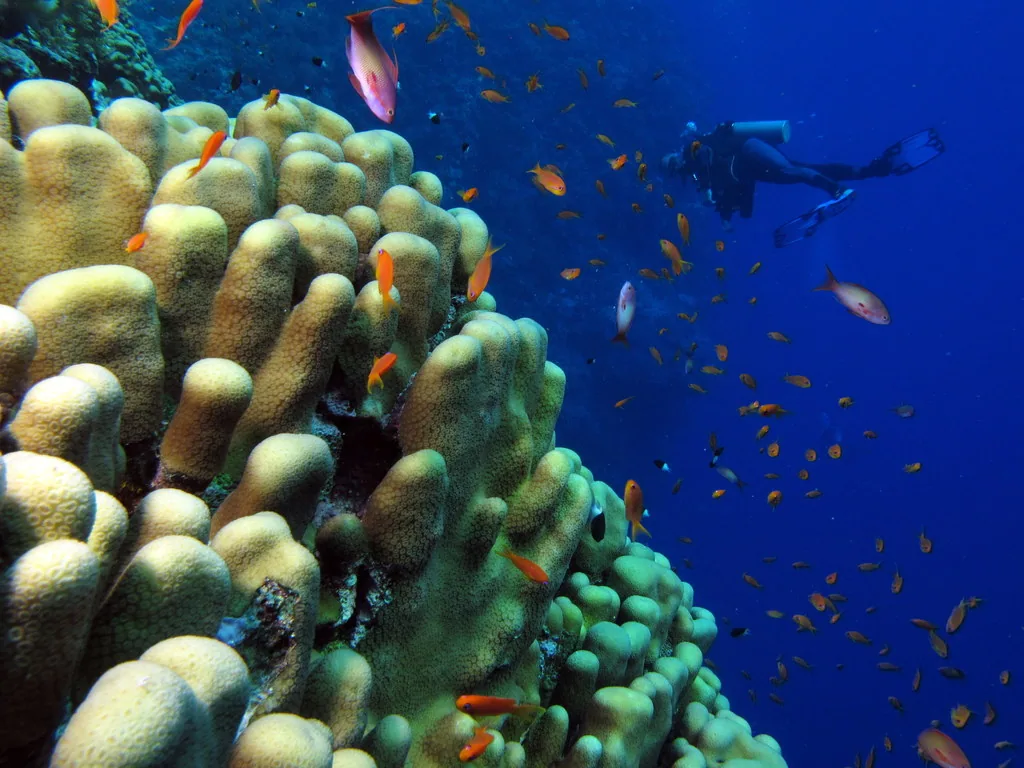 Expect visibility of roughly 20-40 metres, often superb, and water that ranges from the mid-20s Celsius in winter to around 28-30°C at the summer peak; most divers wear a 3mm to 5mm wetsuit depending on the month. Currents are the defining feature and can switch quickly, which is exactly why the sharks are there. Dives are usually run as drifts or as blue-water "hangs" at the plateau edge, and the coral, especially the gorgonian walls of the Brothers and the anemone gardens of Daedalus, is as much a draw as the sharks.
A word on technique: at the plateaus you often stop at the wall edge and wait, watching the blue rather than swimming after animals. Sinking below your planned depth to chase a passing hammerhead is the classic offshore mistake, and it eats into your no-decompression time fast. Nitrox helps stretch bottom time across three or four dives a day, and a good camera strap and a reef hook are worth packing. Surface conditions can be lively on the crossing between reefs, so pack seasickness precautions even if you rarely need them.
Safety and conservation
Remote diving raises the stakes. You are hours from port and further from a recompression chamber, so conservative profiles, good gas planning and honest dive limits matter more than usual. Carry an SMB, dive within your training, and respect the guide's calls on current and depth. Standard no-fly guidance applies before your flight home: allow at least 18-24 hours after repetitive, multi-day diving before flying.
These reefs also sit inside protected areas, and rules exist to keep them that way. Egyptian marine-park regulations, enforced by HEPCA (the Hurghada Environmental Protection and Conservation Association), prohibit night dives at both the Brothers and Daedalus, and boats use fixed moorings rather than dropping anchor on the coral. Marine-park fees are collected per diver and usually bundled into the liveaboard price. The oceanic whitetip, the star of Elphinstone, is a threatened species; keep your distance, never touch or feed, and let the animals set the terms of the encounter. Diving these reefs responsibly is part of the reason they remain the best in the Red Sea.
The bottom line
Elphinstone, the Brothers and Daedalus are the deep end of Egyptian diving in every sense. They demand experience, respect and a tolerance for current and blue water, and in exchange they offer walls, wrecks and shark encounters that coastal diving simply cannot match. Get your logbook and skills to the level these reefs require, pick your season for the sharks you most want to see, and book the liveaboard. Few dive trips on earth deliver this much.

A real team available 24/7 to assist you — free
Seif and the team reply on WhatsApp 24/7 — trip questions, custom plans and booking help.
Ask Seif on WhatsAppCommon questions
Do I need to be an advanced diver to dive Elphinstone, the Brothers and Daedalus?
Yes. Operators on the offshore route typically require an Advanced Open Water certification and around 50 logged dives as a minimum, with a Deep specialty strongly recommended. These are current-swept, deep, blue-water sites with walls dropping hundreds of metres, so solid buoyancy, drift-diving experience and self-reliance with an SMB are essential. They are not suitable for newly certified or occasional divers.
Can you dive these reefs on a day trip, or do you need a liveaboard?
Only Elphinstone is a realistic day trip. It sits about 9 km off Marsa Alam and fast RIBs reach it in roughly 30-40 minutes. The Brothers (about 60 km offshore) and Daedalus (about 90-100 km offshore) are far too remote for day boats and are reached only by liveaboard, usually on the seven-night 'Brothers, Daedalus & Elphinstone' itinerary.
When is the best time to see sharks on these reefs?
It depends on the species. Oceanic whitetips at Elphinstone and the Brothers peak from late October to December, with a smaller pulse in April-May. Schooling hammerheads at Daedalus and the Brothers are most reliable from roughly May through October on dawn dives. Thresher sharks at Big Brother are most likely on early dives in autumn and winter. Grey reef and silky sharks are seen across much of the year.
What wrecks are at the Brothers Islands?
Big Brother carries two famous wrecks down its steep wall. The Numidia, a British cargo steamer that sank in 1901, is nicknamed the 'Railway Wreck' for the locomotive wheels she carried; she runs from about 10 metres to well past 80. The Aida, an Egyptian vessel lost in 1957, lies encrusted on the same drop-off. Both are now heavily coral-covered.
Why is Daedalus Reef famous?
Daedalus, known in Arabic as Abu el-Kizan, is the Red Sea's premier site for schooling scalloped hammerheads, which gather on its exposed plateaus, especially on early-morning dives. It is the most remote of the three reefs, about 90-100 km off Marsa Alam, and is crowned by an operational lighthouse dating to 1931. Its walls are pristine and drop to around 500 metres.
What is the 'Brothers, Daedalus & Elphinstone' liveaboard itinerary?
It is the standard southern Red Sea liveaboard route, often abbreviated BDE and marketed as the 'Shark Golden Triangle.' It is a seven-night trip, usually running between Port Ghalib / Marsa Alam and Hurghada, that combines all three offshore reefs, with up to four dives a day and a flexible schedule that adapts to weather at these exposed sites.
How dangerous are the currents at these offshore reefs?
Currents are strong and can change quickly, and downcurrents can form off the plateau tips at Elphinstone and Daedalus. That water movement is exactly what draws the sharks, but it demands drift-diving competence, depth discipline and an SMB. Dives are run as drifts or as blue-water hangs at the wall edge, always with a guide who calls the conditions.
Are there conservation rules I should know about?
Yes. These reefs sit in protected areas managed under Egyptian marine-park rules enforced by HEPCA. Night dives are prohibited at both the Brothers and Daedalus, boats use fixed moorings instead of anchoring on coral, and marine-park fees are charged per diver (usually bundled into the trip price). The oceanic whitetip is a threatened species, so never touch, feed or chase the animals.
Book it on This is Egypt
Turn this guide into a trip

Egypt's bestsellers
The experiences travelers book most, across the country




Keep reading

Hurghada Diving (2026): Best Sites, Packages & Prices
Diving in Hurghada — the best reefs (Giftun, Careless Reef, Dolphin House) and Abu Nuhas wrecks, Discover Scuba vs PADI courses, season and water temps, and real 2026 prices.
By TiE Editors7 min read

Diving in Sharm El Sheikh (2026): Ras Mohammed, Reefs and the Best Trips
Sharm is Egypt's diving capital, with Ras Mohammed and White Island on the doorstep. The best dive and snorkel trips, real prices, and what non-divers can do too.
By TiE Editors9 min read

Liveaboard vs Day-Boat Diving in the Red Sea (2026): Which to Choose
A liveaboard reaches the remote reefs and wrecks day boats can't — the Brothers, Daedalus, deep-south Egypt — but a day boat is cheaper, flexible and beginner-friendly. Here's the honest choice.
By TiE Editors4 min read