Lazuli Dahabiya Cruises (2026): Fleet, Routes & How to Book
Lazuli runs one of the larger dahabiya fleets on the Nile — around eight sailing boats on the quiet Esna–Aswan reach, and the value end of the design-led market. Here's the fleet, the route and how to book.
Nile Cruises & Dahabiyas
Turn this guide into a trip
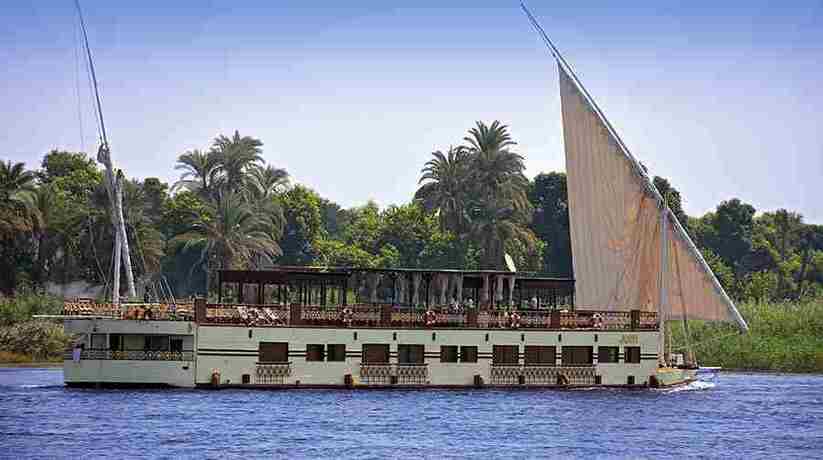
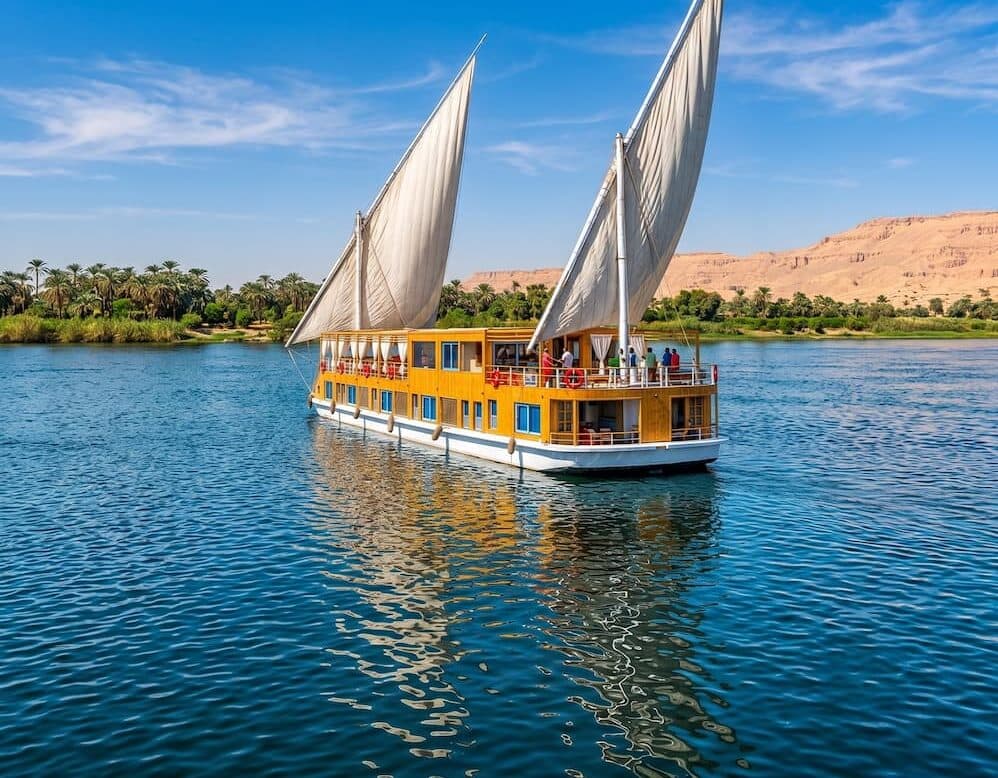
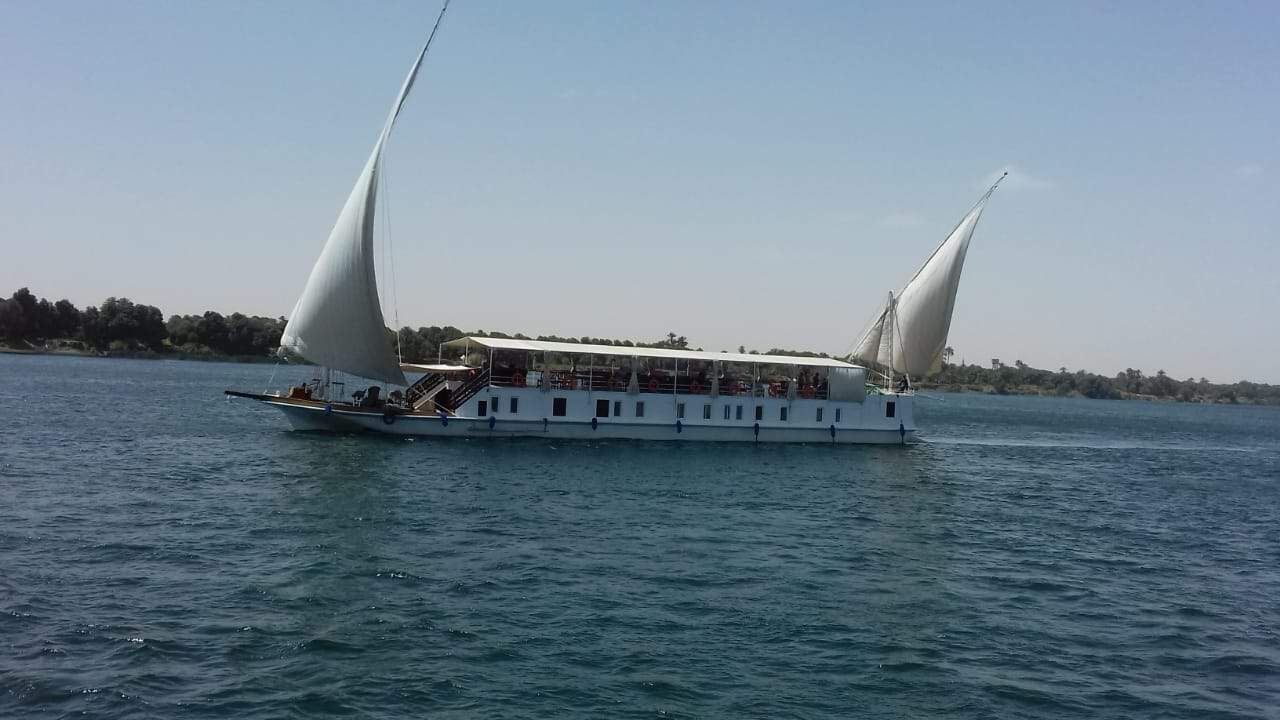
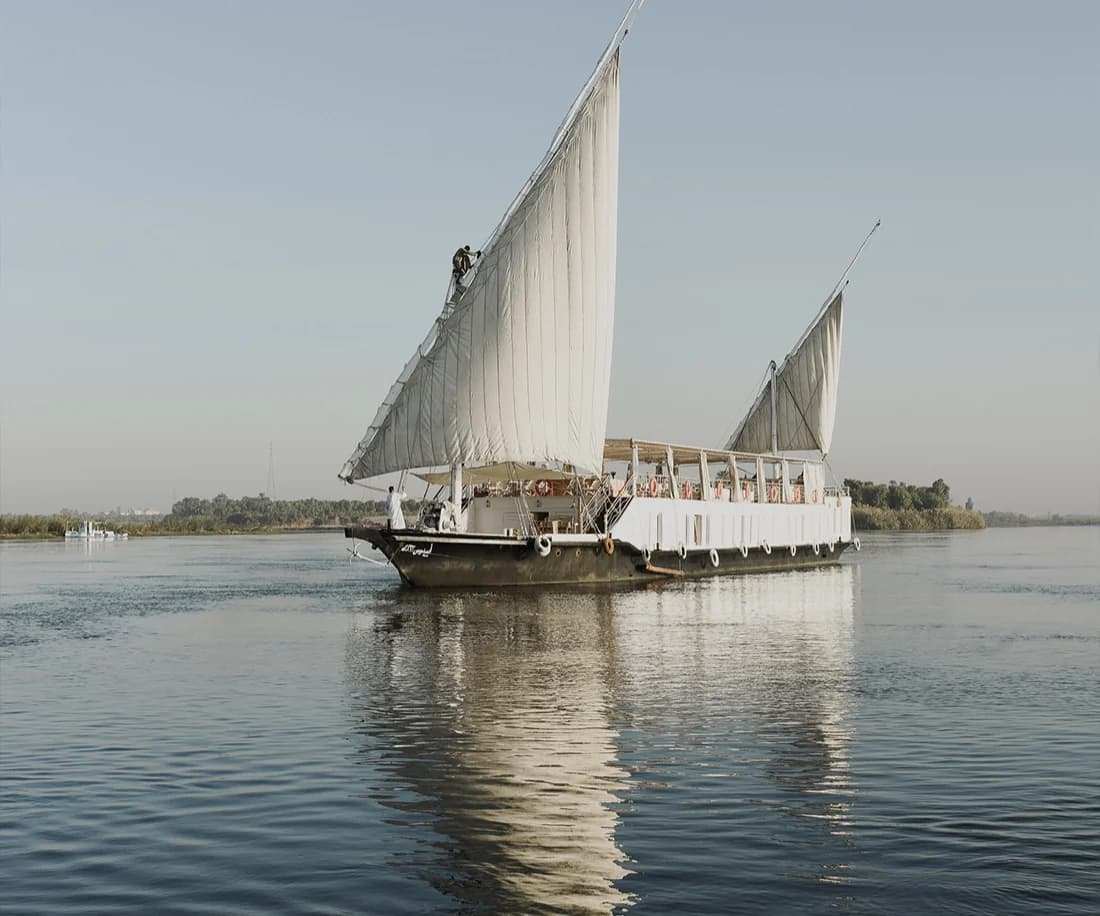
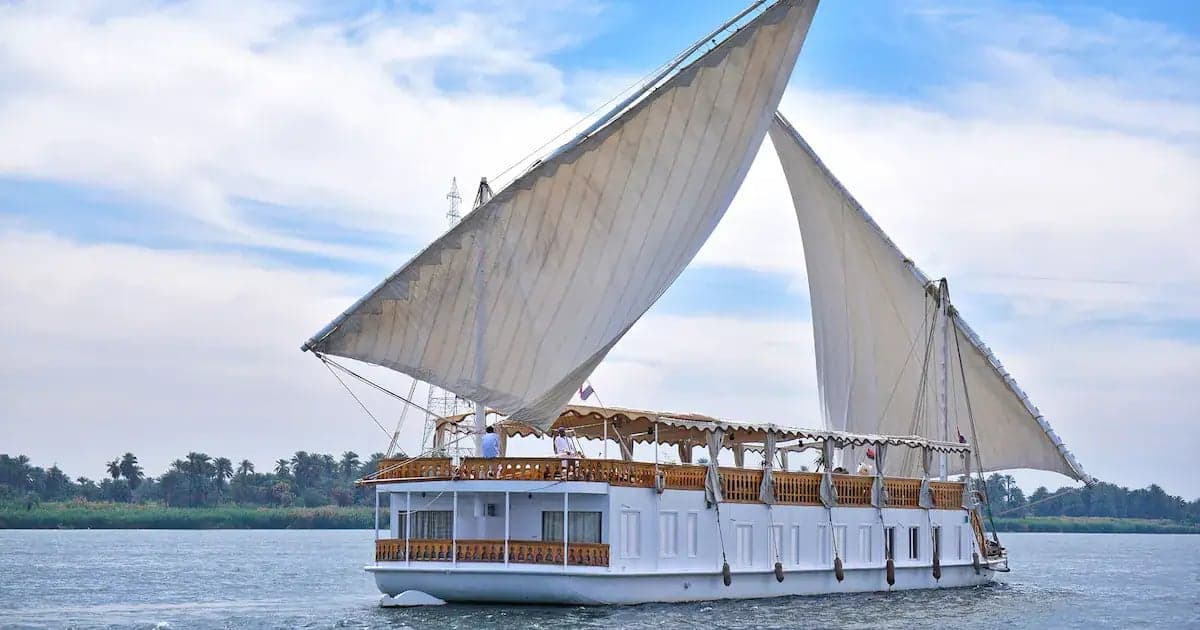
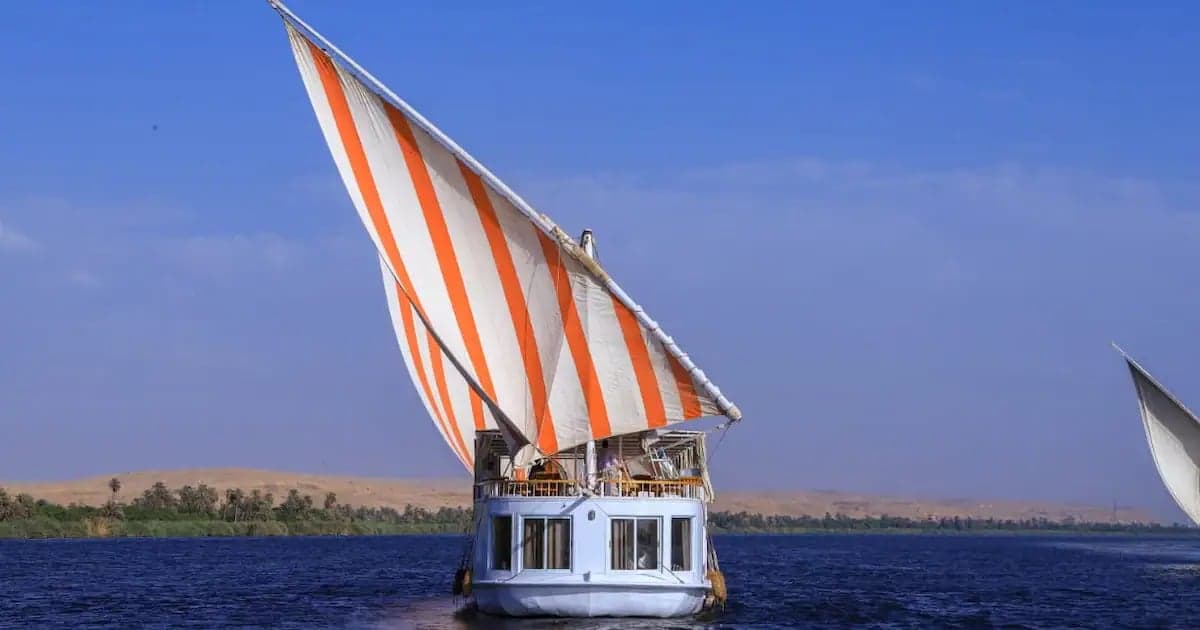
Quick answer: Lazuli (also written Lazulinil) is one of the larger dahabiya operators on the Nile, running a fleet of around eight traditional sailing boats on the classic Esna–Aswan reach. Boats range from intimate five-cabin sailers up to ten-cabin dahabiyas, and Lazuli is widely regarded as the value end of the design-led dahabiya market — the accessible Abydos starts from roughly US$370 per person for the sail. Rates are seasonal and quoted on request, so enquire early for the comfortable October–February season.
If you want the dahabiya experience — genuine sailing, quiet moorings, a boat you don't share with hundreds of strangers — without the flagship price tag, Lazuli is the name that comes up. It runs one of the bigger fleets on the river and spans a wide range of boat sizes, which makes it a flexible choice for couples, families and small groups alike.
What Lazuli is
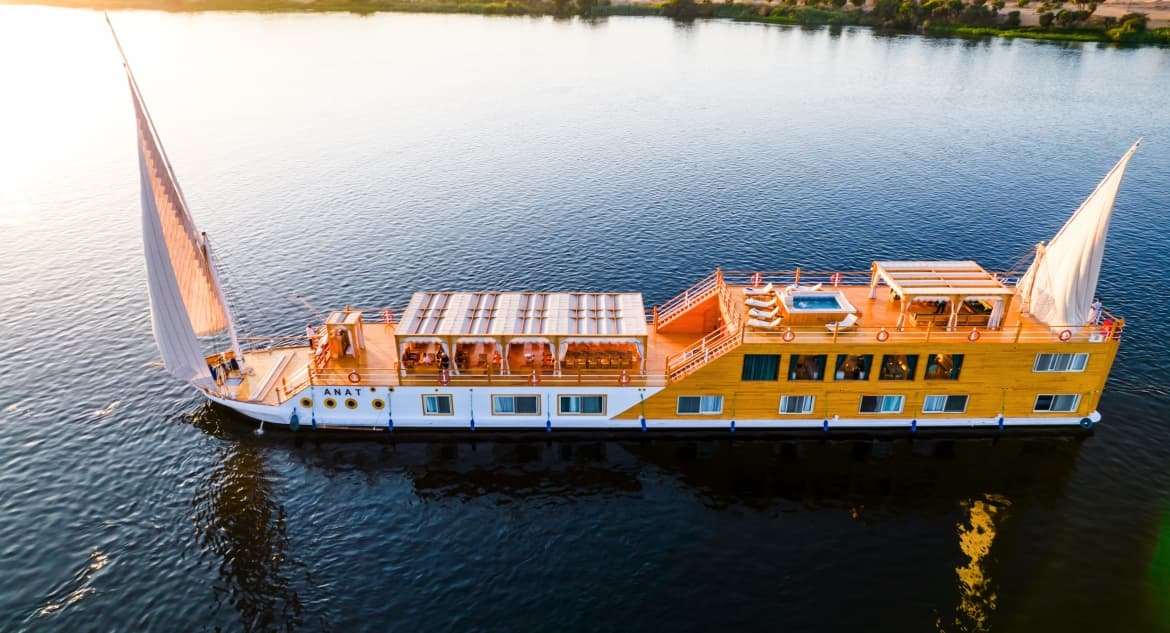
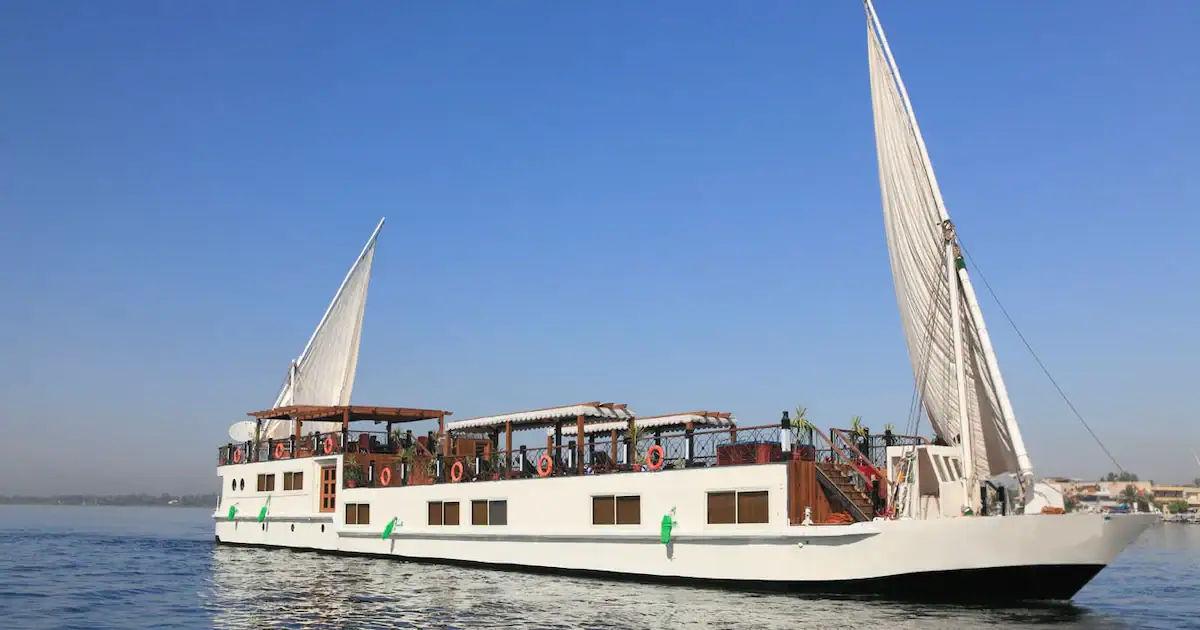
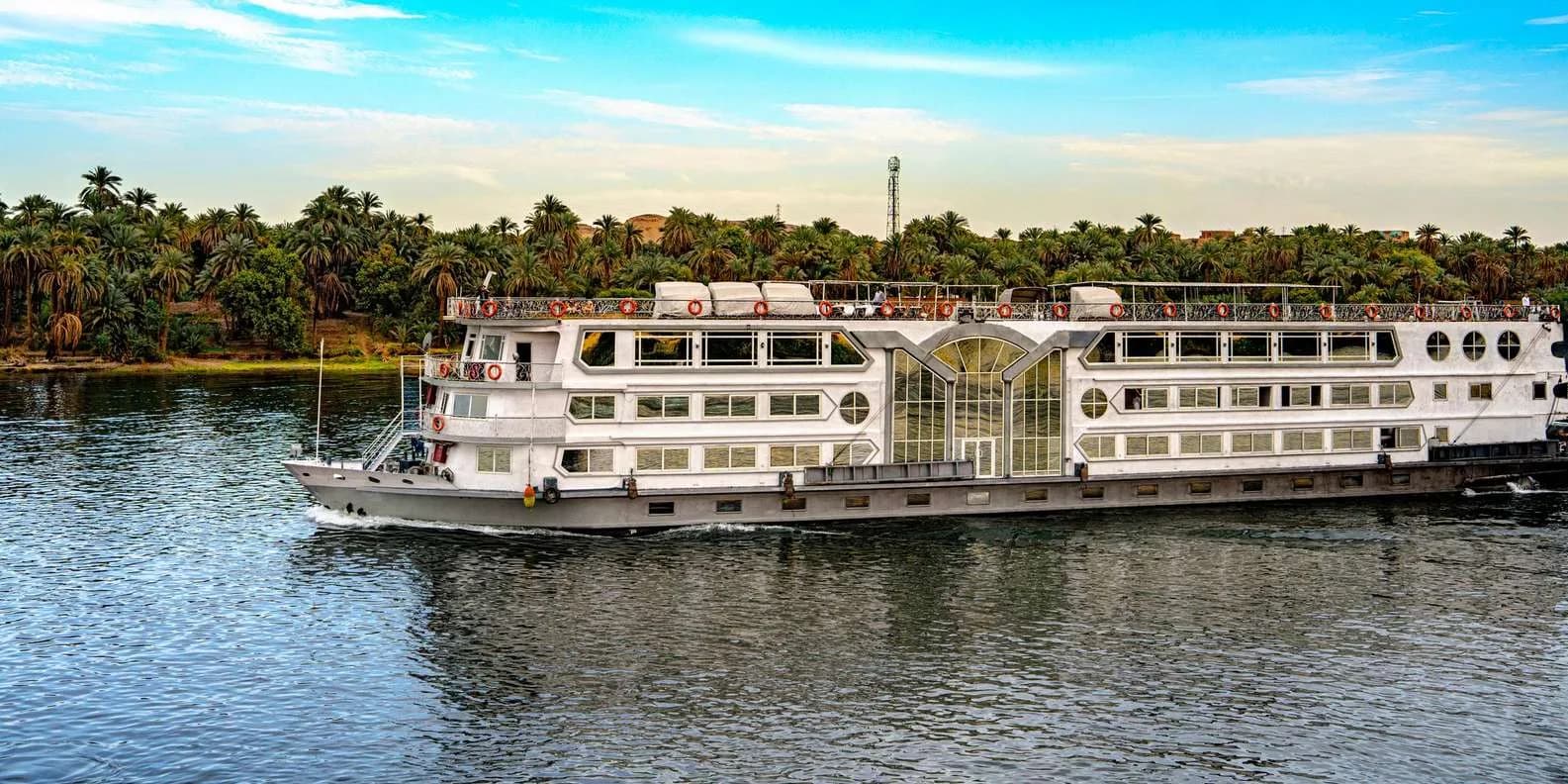
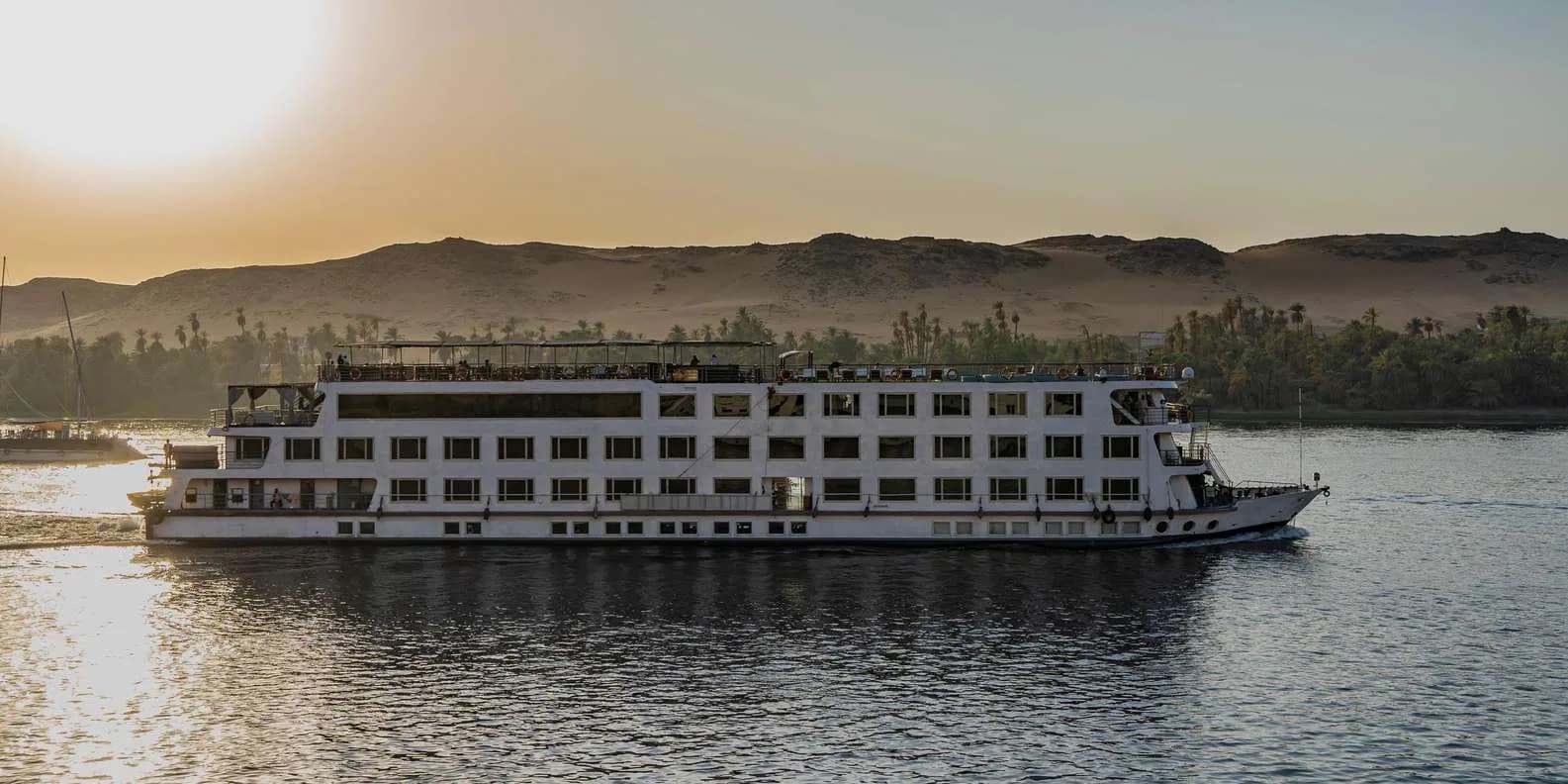
Lazuli, sometimes branded Lazulinil, is a dahabiya operator working the quiet stretch of the Nile between Esna and Aswan. A dahabiya is a traditional twin-masted sailing boat — far smaller than the big motor cruisers, carrying a few dozen guests at most across a handful of cabins, and able to moor at sandbanks, islands and small villages the large ships sail straight past. Lazuli's boats are classified by the agencies that sell them as five-star / deluxe, though like most dahabiya operators Lazuli publishes no official star rating of its own; the classification comes from resellers rather than a formal standard. What sets Lazuli apart within the category is breadth: rather than a single jewel-box boat, it operates a whole fleet at different sizes and price points, so there is usually a Lazuli boat available when the smaller, more famous fleets are booked out.
The fleet
Lazuli runs a fleet of around eight dahabiyas, ranging from five-cabin sailers to ten-cabin boats:
| Boat | Cabins | Notes |
|---|---|---|
| Lazuli Abydos | 10 | The accessible flagship; the value entry point |
| Lazuli Albatros | 8 | Mid-size |
| Lazuli Gordon Pacha | 6 | Smaller, more intimate |
| Lazuli Highness | 5 | Intimate, first-class fit-out |
| Lazuli Karnak | 10 | Larger boat, rated highly by some resellers |
| Lazuli Luxor | 5 | Intimate five-cabin dahabiya |
| Lazuli Roi Farouk | 5 | Intimate five-cabin dahabiya |
| Lazuli The East | — | Newer addition to the fleet |
The smaller five- and six-cabin boats — Highness, Luxor, Roi Farouk and Gordon Pacha — suit couples and travellers who want the quietest, most intimate sail; the larger ten-cabin boats, Abydos and Karnak, suit families and small groups and are the easiest to book onto as individual cabins rather than as a whole-boat charter. That spread is Lazuli's real advantage: whatever the size of your party, there is usually a boat in the fleet that fits.
The route
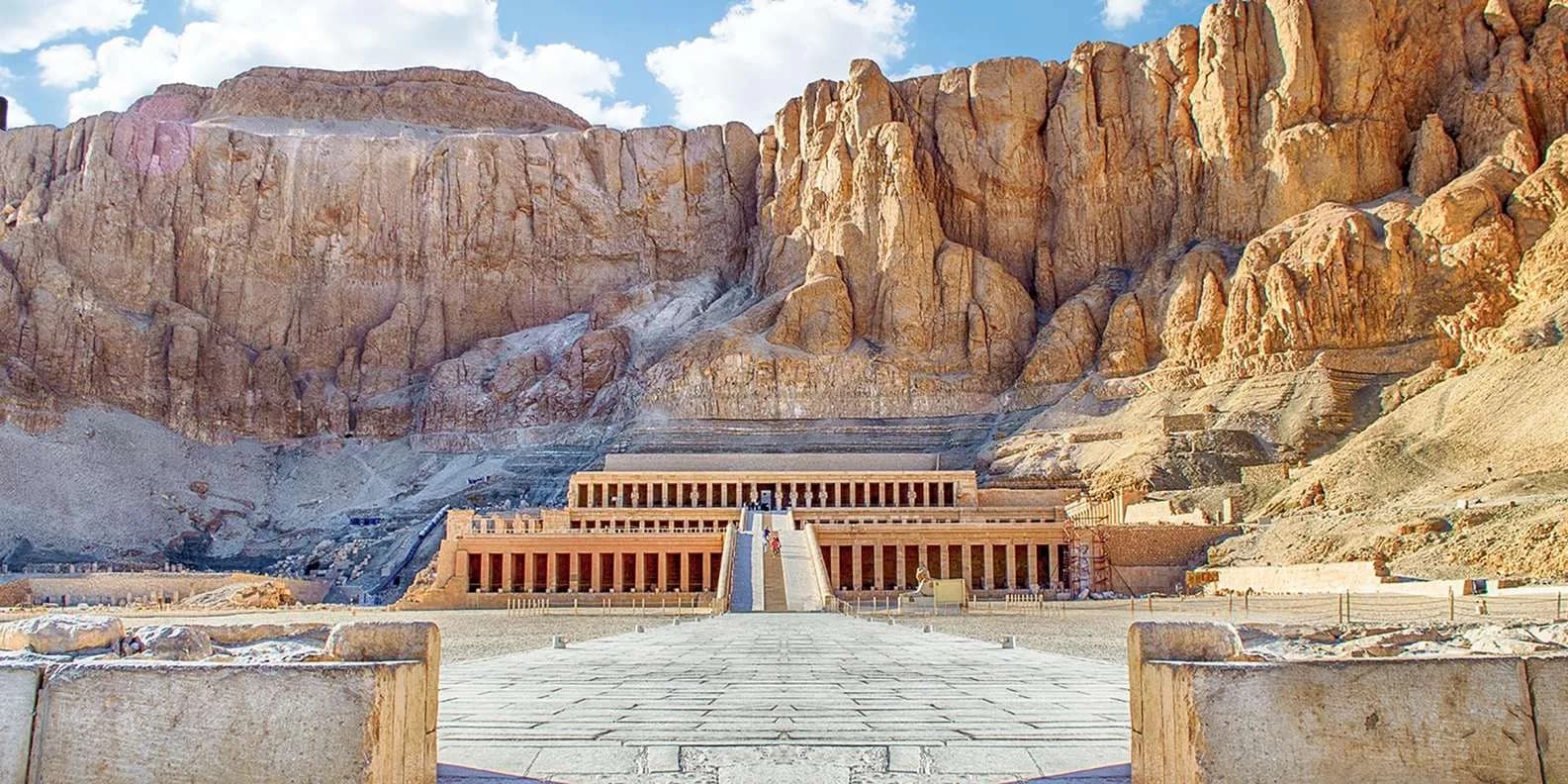
Like almost all dahabiyas, Lazuli's boats sail the Esna–Aswan reach — the stretch of the Nile that the big cruisers largely skip. A typical sailing calls at Esna, El Hegz, El Kab and Edfu (the superbly preserved Temple of Horus), the islands of Fawaza and Bassaw, Gebel Silsila, Kom Ombo, Daraw and Herdiab island, finishing at Aswan for Philae Temple and the High Dam. The Luxor land portion of the trip covers Karnak Temple and the Valley of the Kings. Because dahabiyas depend on the wind and moor at remote spots, the rhythm is slower and quieter than a motor cruise — the sailing itself is a large part of what you are paying for, not just the temples at either end.
Prices and how to book
Lazuli sits at the value end of the design-led dahabiya market: its accessible Abydos starts from around US$370 per person for the sail, which undercuts the flagship fleets while still delivering the genuine dahabiya experience. As with every small sailing fleet, rates are seasonal and quoted on request — the price depends on the boat, the dates, and how much of the boat is sold.
The cabin rate vs the all-in fare
Dahabiyas, like the motor cruisers, are usually quoted in two parts. The first is the cabin (accommodation) rate — per person, per night, full board. The second is a separate, optional sightseeing package of roughly US$400 per person, covering the guided temple visits, transport and entrance fees. Booked together they make the full "sail plus sightseeing" fare; the cabin rate on its own is what most operators quote first. As an approximate, indicative guide from real 2026 rates — seasonal, so treat them as ballpark — accessible dahabiyas start from a few hundred dollars per person for the sail, while a luxury dahabiya can run around US$600 per person per night for the cabin before the sightseeing package. Always confirm whether the number you've been quoted is cabin-only or already includes the guided sightseeing.
To book well: enquire early and stay flexible on dates; ask for both the per-cabin rate and the whole-boat charter rate, because a family or group often gets the best value per head by chartering a whole boat; and confirm exactly what is included — full board, the temple visits and the Egyptologist guide — and get the sailing dates and deposit and refund terms in writing before you transfer anything.
How Lazuli compares
Lazuli's edge is value and availability. Nour El Nil is the benchmark design-led fleet and the name most travellers ask for first, but it books out months ahead and sits well above Lazuli on price. Merit Dahabiyas runs larger boats — up to the twelve-cabin Merit Star — that suit groups and charters. Loulia is a six-cabin jewel-box at the luxury end, and the Ashranda boats, Eyaru and Nebyt, are ultra-luxury, closer to a private yacht. Against these, Lazuli is the one to enquire about when you want the real dahabiya experience without the flagship price, or when the smaller famous boats are already full for your dates.
See how the boat type compares in dahabiya vs Nile cruise ship, learn how booking works in how to book a dahabiya, compare the fleets in the best dahabiyas guide, and browse dahabiya sailings and enquire on This is Egypt.
A real team available 24/7 to assist you — free
Seif and the team reply on WhatsApp 24/7 — trip questions, custom plans and booking help.
Ask Seif on WhatsAppCommon questions
How many boats does Lazuli have?
Lazuli (also branded Lazulinil) runs a fleet of around eight dahabiyas, ranging from intimate five-cabin sailers to ten-cabin boats: Abydos (10), Albatros (8), Gordon Pacha (6), Highness (5), Karnak (10), Luxor (5), Roi Farouk (5) and the newer The East. The breadth of the fleet is Lazuli's advantage — there is usually a boat available when the smaller, more famous fleets are full.
What route do Lazuli dahabiyas sail?
Lazuli sails the classic Esna–Aswan reach of the Nile, calling at Esna, El Hegz, El Kab, Edfu (Temple of Horus), the islands of Fawaza and Bassaw, Gebel Silsila, Kom Ombo, Daraw and Herdiab island, finishing at Aswan for Philae Temple and the High Dam. The Luxor land portion covers Karnak Temple and the Valley of the Kings.
How much does a Lazuli dahabiya cost?
Lazuli is the value end of the design-led dahabiya market: the accessible Abydos starts from around US$370 per person for the sail. Prices are seasonal and quoted on request, and the guided sightseeing (temple visits, transport and entrance fees) is usually a separate, optional package of roughly US$400 per person. Treat these as approximate, indicative figures and confirm the exact inclusions in writing.
Is Lazuli a luxury dahabiya operator?
Resellers classify Lazuli's boats as five-star / deluxe, though Lazuli itself publishes no official star rating — the classification comes from the agencies that sell the boats rather than a formal standard. Within the design-led dahabiya category, Lazuli is best understood as the value option: genuine sailing and quiet moorings without the flagship price.
How long is a Lazuli sailing?
Dahabiya sailings on the Esna–Aswan reach typically run about four to five nights, with the great temples of Luxor covered on a land portion at one end. Exact length varies by boat and departure, so confirm the sailing dates and what is included before you book.
How do I book a Lazuli dahabiya?
Enquire early and stay flexible on dates, especially for the comfortable October–February season. Ask for both the per-cabin rate and the whole-boat charter rate — a family or group often gets the best value per head by taking a whole boat — and confirm what is included (full board, temple visits, the guide) and the deposit and refund terms in writing before transferring anything.
Book it on This is Egypt
Turn this guide into a trip



Egypt's bestsellers
The experiences travelers book most, across the country







Plan your Nile cruise
Dahabiyas featured in this guide
Free downloads
Take the Nile home with you
Two illustrated PDFs, no email required: our 12-page introduction to choosing between a cruise ship and a dahabiya, and the classic 4-night Luxor to Aswan itinerary, day by day.
Keep reading
Nile Cruise from Aswan to Luxor (or Luxor to Aswan): 2026 Guide
A 3 or 4 night cruise between Aswan and Luxor is the classic way to see Egypt's temples. The stops, real prices, why direction and boat choice matter, and how to avoid a bad one.
By TiE Editors9 min read
Jaz Nile Cruises (2026): Fleet, Routes & How to Book
Jaz is the Nile cruise arm of JAZ Voyages, part of Travco Group, and runs the largest fleet in our directory: twelve ships on the Luxor–Aswan route plus three Farouz El Nil dahabiyas.
By TiE Editors6 min read
Nile Cruise for the 2027 Solar Eclipse (Aug 2): Sail Egypt's Totality
On 2 August 2027 a total solar eclipse passes over Luxor with 6+ minutes of totality. A Nile cruise is the best way to see it — in the path, accommodation solved. How eclipse sailings work and why to book early.
By TiE Editors5 min read