
Valley of the Kings Tours & Tickets
Browse 249 tours of the royal tombs of Thebes in Louxor, starting from 411 EGP (about 8 USD), with an average rating of 4.8 out of 5. Real prices compared across booking platforms and updated for 2026.
Valley of the Kings tickets & opening hours (2026)
| General (any 3 tombs) | 750 EGP |
| Tutankhamun (KV62) | 750 EGP |
| Seti I (KV17) | 2,000 EGP |
| Ramesses V/VI (KV9) | 220 EGP |
| Photo permit / tram | ≈ 300 / 20 |
The general ticket covers any 3 open tombs. Tutankhamun, Seti I and Ramesses V/VI need separate tickets; a photo permit is extra.
Prices are site entry fees for foreign adults, updated 2026-07. Many tours below include tickets and skip-the-line entry.
Excursion d'une journée à Louxor depuis Hurghada en petit groupe avec la tombe de Toutânkhamon
Hurghada : Louxor Valley of the Kings & Toutankhamon Tomb Trip
Hurghada : visite de Louxor avec la vallée des Rois et Toutânkhamon
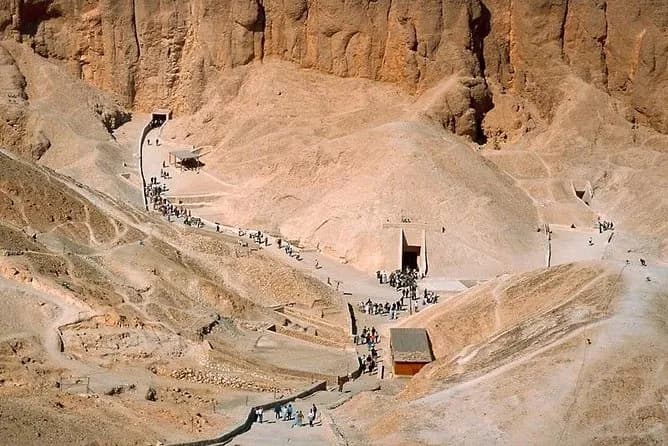
Excursion d'une journée à Louxor : Vallée des rois et des reines et temples d'Hatchepsout
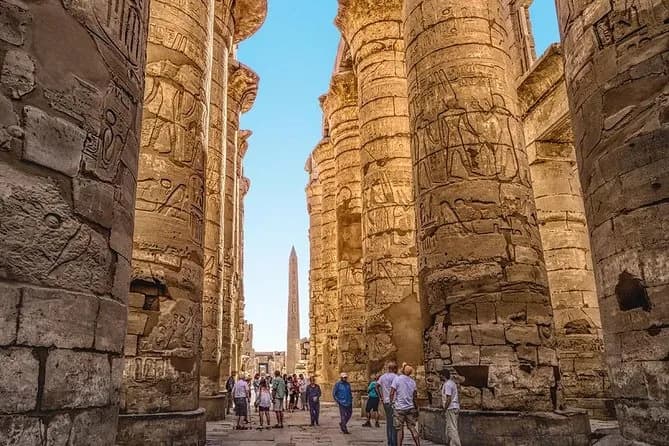
Louxor : Vallée des Rois, temple d'Hatchepsout, Karnak — excursion d'une journée
Visite d'une journée complète des temples et tombeaux de Louxor en Cisjordanie (privé)
Excursion d'une journée à Louxor, dans la Vallée des Rois et au tombeau de Toutankhamon au départ d'Hurghada
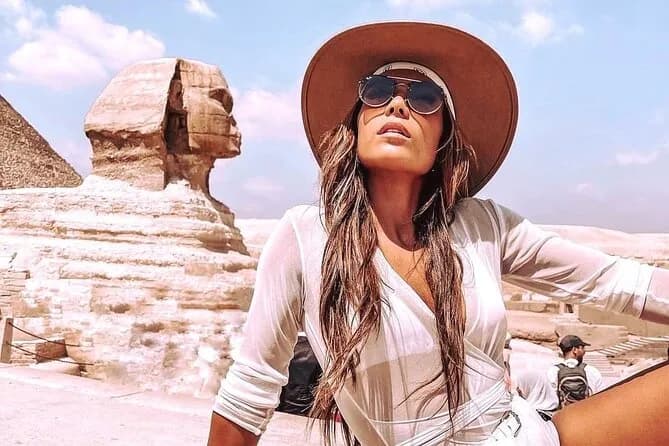
Visite privée complète des pyramides de Gizeh et du Sphinx avec accès à l'intérieur des pyramides et d'une tombe
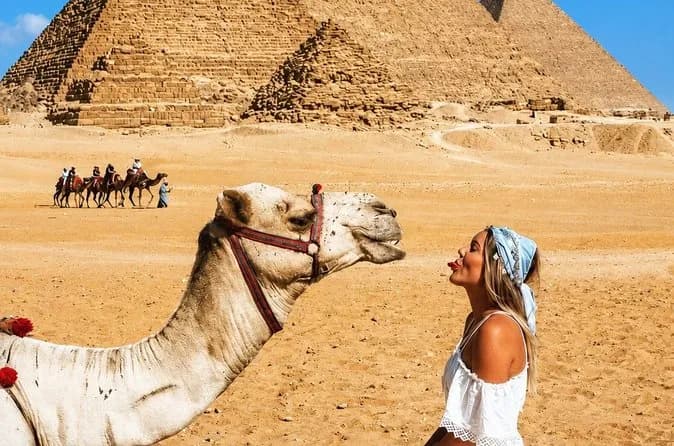
Visite privée des pyramides VIP de Gizeh + promenade en chameau + éviter les tracas

Excursion d'une demi-journée : Vallée des Rois, temple d'Hatchepsout et Mamnon
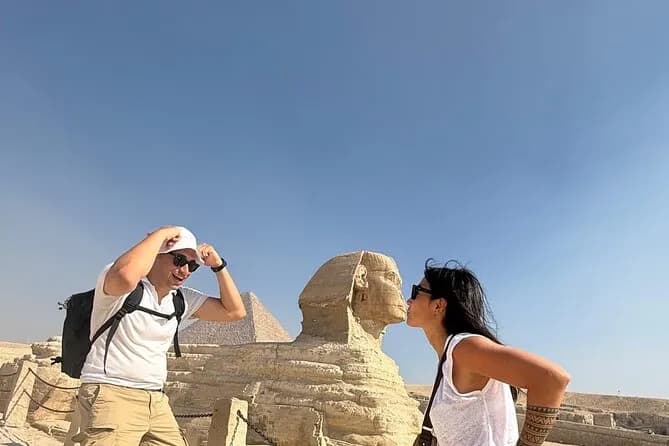
Visite expérience complète : pyramides de Gizeh, Sphinx, intérieur des pyramides et tombes
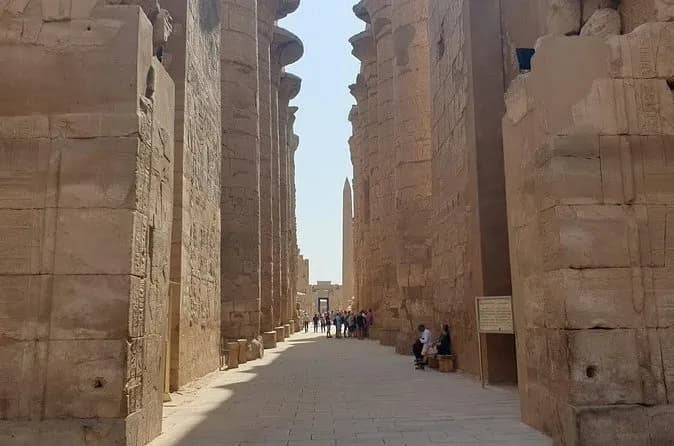
Depuis Hurghada : excursion individuelle à Louxor et à la Vallée des Rois
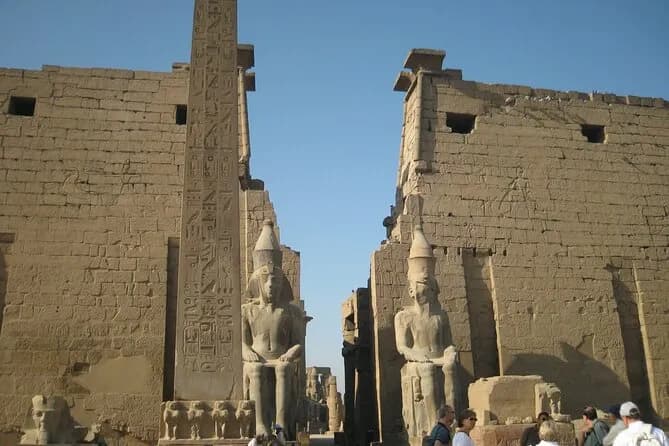
Day Trip to Luxor From Cairo By Flight, King Tut Tomb Included
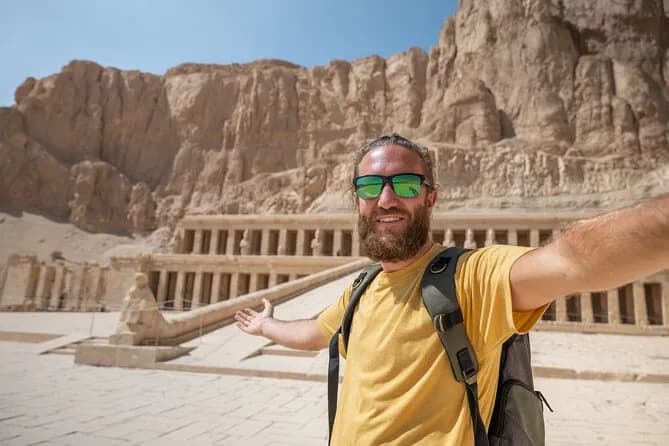
Excursion partagée d'une journée à la Vallée des Rois, Hatchepsout, Memnon et déjeuner

Private Half Day West Bank Tour to Valley of the Kings Queen Hatshepsut Temple and Colossi of Memnon

Visite privée d'une demi-journée à Louxor : Vallée des Rois et des Reines, Hatchepsout
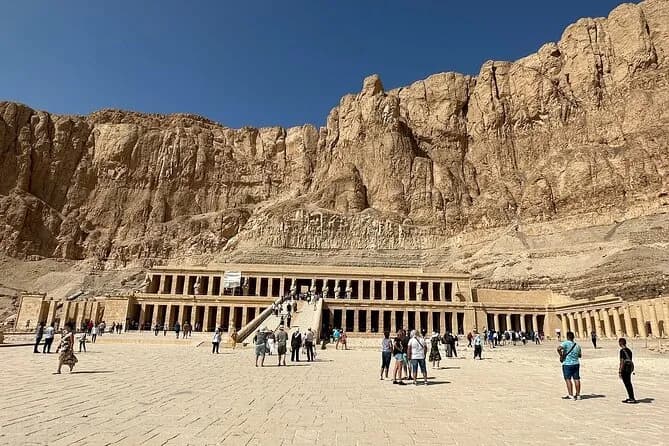
Visite privée d'une journée : Vallée des Rois, temple d'Hatchepsout et plus
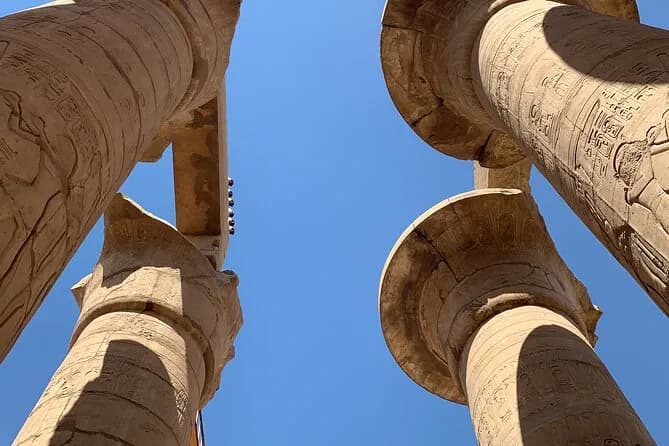
Louxor et la Vallée des Rois : visite privée VIP avec prise en charge
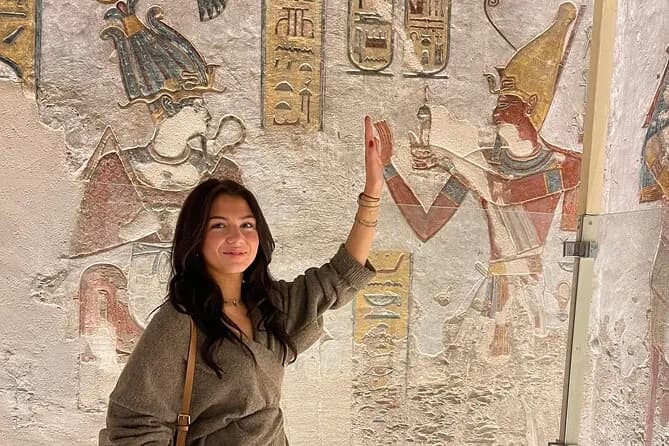
Excursion privée à Louxor et la Vallée des Rois au départ de Hurghada

Hurghada : Louxor Karnak, Hatchepsout et la vallée des Rois
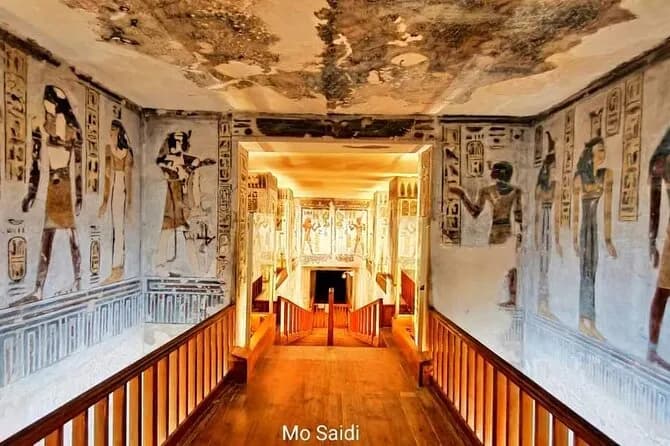
Excursion privée aux temples et tombeaux des rives est et ouest de Louxor
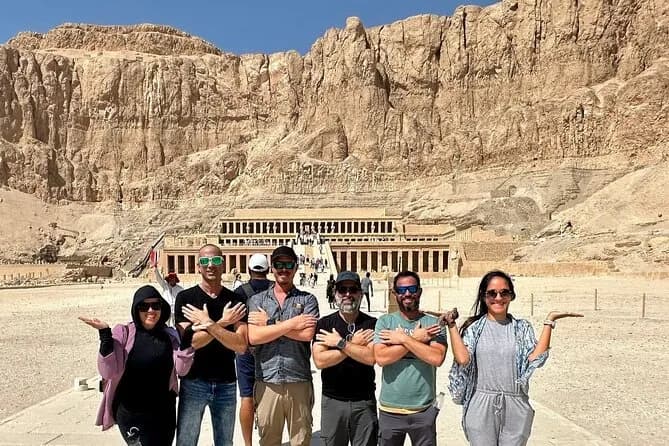
Excursion privée d'une journée aux tombeaux et temples de la rive ouest de Louxor

Louxor VIP : visite privée de 4 h de la Vallée des Rois, du temple d'Hatchepsout et déjeuner
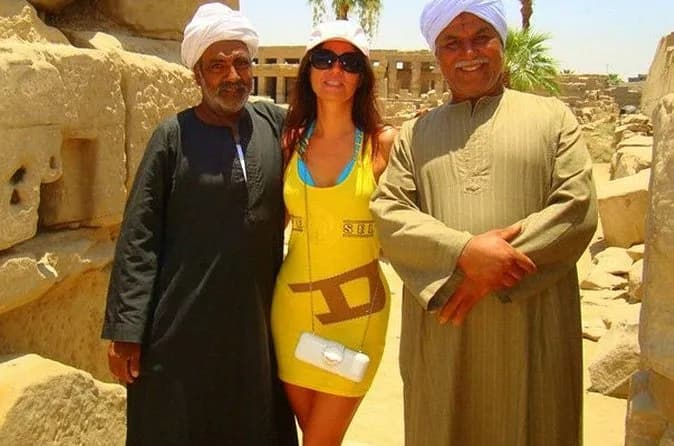
VIP : excursion privée d'Hurghada à Louxor - Vallée des Rois et plus
Short answer
Valley of the Kings: is it worth it, how long, how much, how far
The Valley of the Kings is the desert wadi on Luxor’s West Bank where Egypt’s New Kingdom pharaohs were buried in painted rock-cut tombs, and yes, it is worth it: no museum reproduces standing inside a decorated royal tomb. Allow two to three hours for three or four tombs. The standard ticket is EGP 750 for any three tombs open that day; Tutankhamun (EGP 700), Seti I (EGP 2,000) and Ramesses V/VI (EGP 220) are extra. It is about 12 km and 25 to 35 minutes from the East Bank hotels, and the gates open at 06:00. Go at opening.
- What it is
- 63 known New Kingdom royal tombs (KV1 to KV64) cut into the Theban cliffs; a rotating handful are open
- Worth it?
- Yes. Tripadvisor 4.7 from 7,160 reviews, and the painted tombs are the point of Luxor
- How long
- 2 to 3 hours for 3 or 4 tombs; a half-day with Hatshepsut and the Colossi
- How much
- EGP 750 standard (3 tombs) + optional add-ons; tours from about US$21 shared, US$55 to US$109 private
- How far
- 12 km from Luxor East Bank (25 to 35 min); 9 km from the West Bank ferry pier
- Hours
- 06:00 to 17:00 (Ministry); operators report a 16:00 winter close
Practical information
Valley of the Kings tickets, hours and logistics at a glance
Official Ministry of Tourism and Antiquities prices, undated on the Ministry site, checked 21 September 2026; other published figures shown where they differ.
| Item | Figure | Notes and other published figures |
|---|---|---|
| Standard ticket (foreign adult) | EGP 750 for any 3 tombs on the day's open list | Foreign student EGP 375. Add-on tombs are extra and stack on top of this ticket. |
| Tutankhamun (KV62) add-on | EGP 700 | Student EGP 350. Other published figures: EGP 360 (operators); EGP 500 (blogs). |
| Seti I (KV17) add-on | EGP 2,000 | No student reduction. Other published figures: EGP 1,800 (blogs); EGP 1,800 (operators). |
| Ramesses V and VI (KV9) add-on | EGP 220 | Student EGP 110. Other published figures: EGP 180 (blogs). |
| Tuf-tuf tram | EGP 20 return, per person | Other published figures: included in ticket (operators). |
| Photo permit | None. Personal photography is free; no flash anywhere | The old EGP 300 photo pass has been abolished (blogs, 2026); one operator still lists EGP 300 for professional cameras. One operator reports no photography inside KV62. |
| Payment | Card only (Visa, Mastercard) or e-ticket; cash not accepted at the ticket office | – |
| Opening hours | 06:00 to 17:00 daily (Ministry) | Ministry pages show 06:00 to 17:00 all year; tour operators and Wikivoyage report a 16:00 close in winter, so plan around the earlier time from November to February. |
| Time to allow | About 2 hours for 3 tombs; 3 hours for 6; 1 to 1.5 hours at the very least | – |
| Best time of day | At the 06:00 opening, or 1 to 2 hours before closing; crowds peak 10:00 to 14:00 | – |
| Distance from Luxor | About 12 km from East Bank hotels (25 to 35 minutes by road); 9 km from the West Bank ferry pier | – |
| Luxor Pass | Standard US$130 (student US$70); Premium US$250 (student US$130); 5 days | Blog-reported prices, article updated December 2025; the official ticket portal could not be reached. Premium adds Seti I and Nefertari. Cash in US dollars or euros only. |
Rows marked with blog or operator figures are labelled in the notes; where the Ministry publishes nothing, we say so rather than guess. Egyptian nationals pay a separate, lower tariff.
What a tour costs
How much is a Valley of the Kings tour?
A half-day West Bank tour that includes the Valley of the Kings is advertised from about US$10 to US$109 per person, with a median of US$21.50 on the OTAs; the cheapest figures are for large groups and usually exclude the EGP 750 entry ticket. A private tour with an Egyptologist and entry fees from a local operator costs about US$55 to US$109 per person for two. A private tour of the valley alone runs US$50 to US$65, normally without tickets.
| Tour type | Listings | From | Median | Up to |
|---|---|---|---|---|
| Half-day West Bank tour (tombs, Hatshepsut, Colossi) | 8 | US$10.53 | US$21.50 | US$109 |
| Full-day West Bank tour | 7 | US$17 | US$40 | US$105 |
| Private Valley of the Kings only | 3 | US$50 | US$60 | US$65 |
Per person, published “from” prices in US dollars across OTA and local operator listings, captured 21 September 2026. Group size, season and whether entry tickets are included vary by listing, so read the inclusions before you compare. The US$10.53 half-day listing claims to include entry fees, which we could not reconcile with the EGP 750 ticket; treat it as a large-group teaser price.
The bookable tours at the top of this page are live listings with current prices and free-cancellation terms; the table above is the market context for judging them.
What visitors say
Reviews of Valley of the Kings, in visitors’ own words
Tripadvisor 4.7 from 7,160 reviews, #7 of 147 things to do in Luxor. GetYourGuide 4.6 from 35,569 reviews. These are third-party ratings quoted for context; the quotes below are verbatim from the platforms named, with typos left as written.
Praise
“The quality of the tombs is exceptional, and it complemented visits to other sites and the main museums in Cairo.”
Tips
“Instead we paid for KV 9 Ramses V and VI, which is the most superbly decorated tomb, and just a feast for the eyes.”
“The entrance fee includes admittance to 3 tombs of your choice from a set list and you can pay an additional charge for extras like Tutankhamen or Setes 1 which we opted for as these are better preserved.”
“He gave me loads of info and let me walk the tombs at my own pace - no rushing, which was great as it was very hot out.”
Warnings
“It's very exposed, and gets hot even in the cooler months, so if you come in Summer be prepared for searing heat and no shade while you're queuing.”
“The valley area is very open so take plenty of water (the inside of the tombs can be sweltering) and sunscreen.”
Visiting Valley of the Kings: what to know
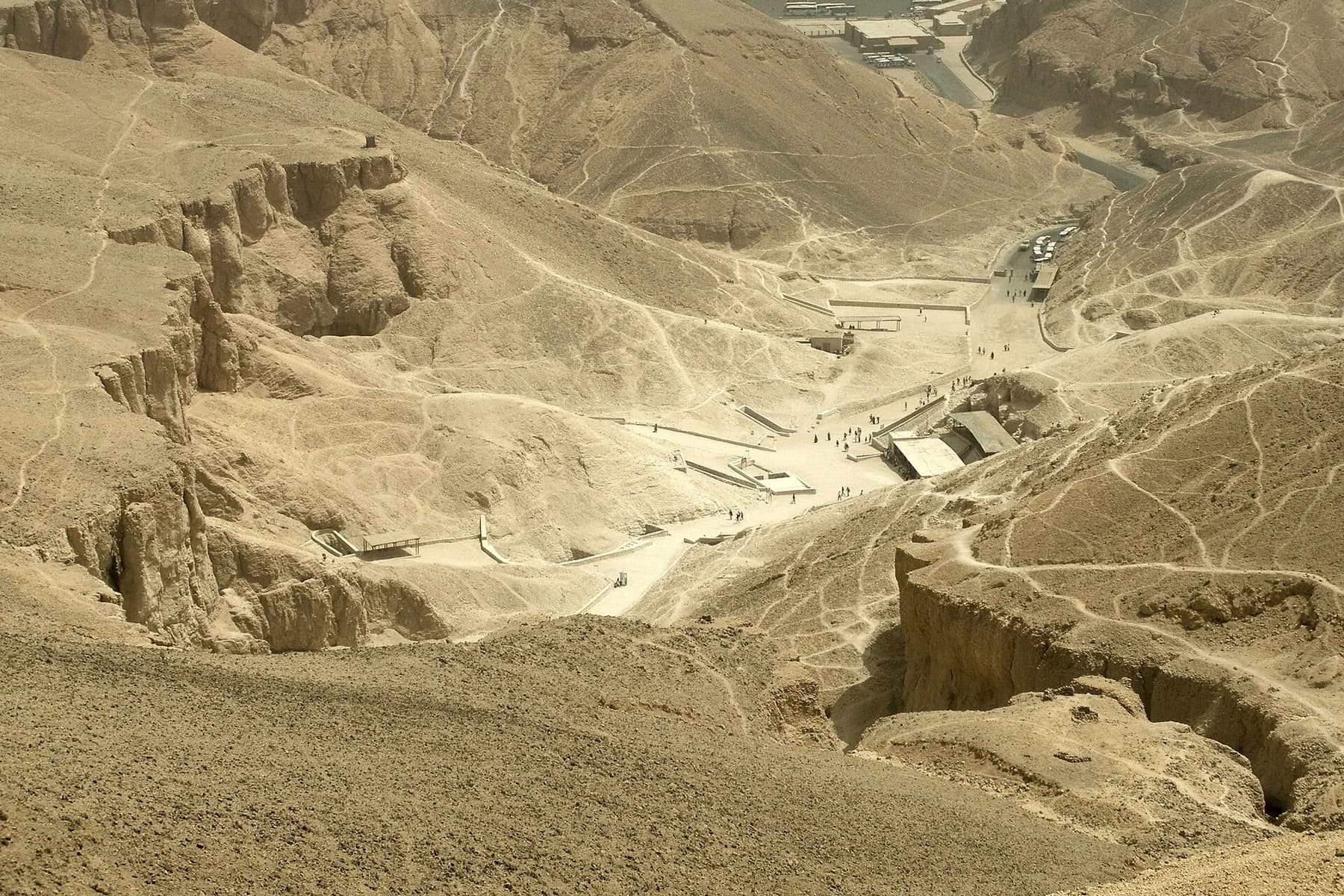
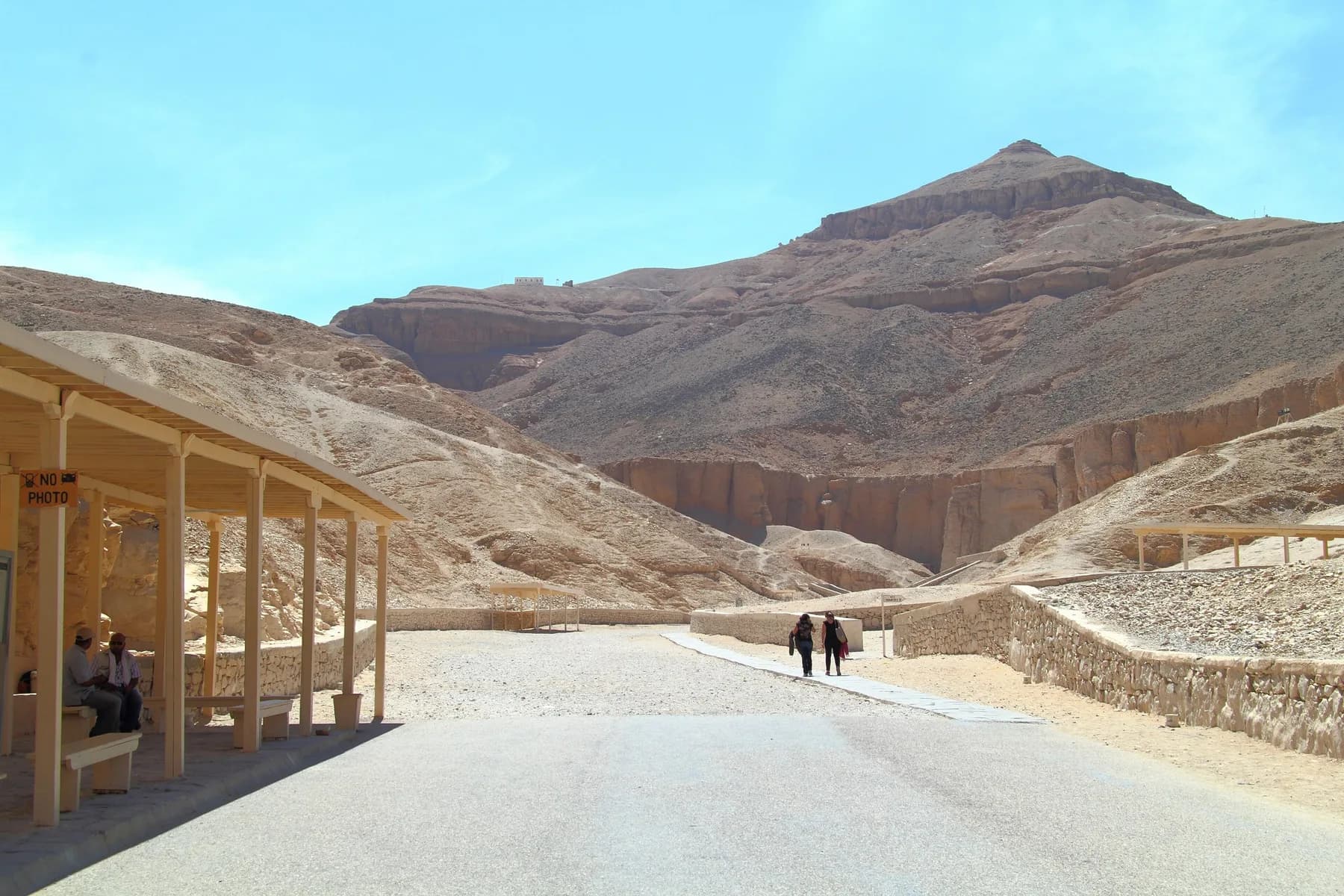
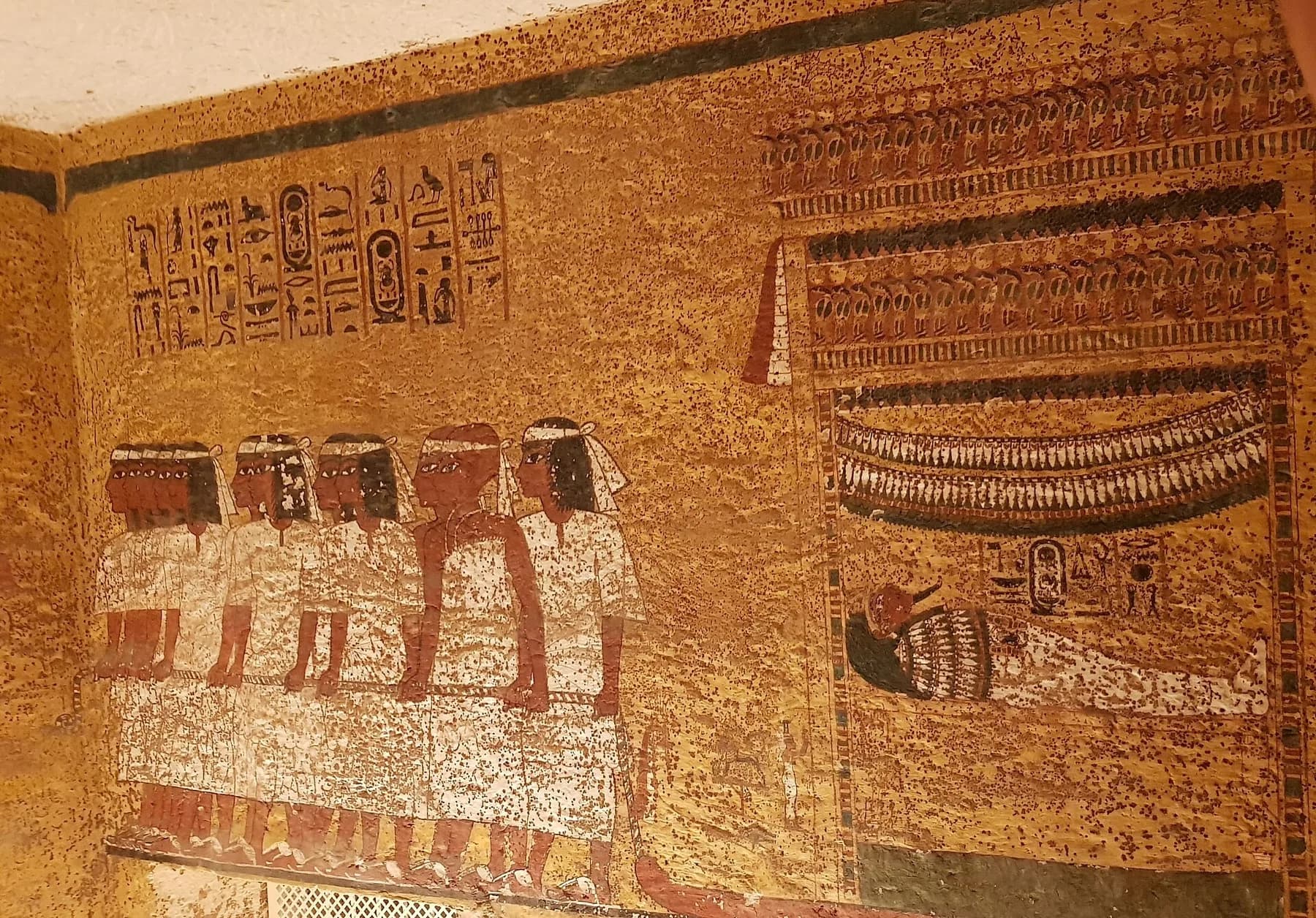
Updated 21 September 2026Nothing above ground prepares you for the Valley of the Kings. From the road it is a barren desert wadi behind the Theban cliffs, all glare and scree, watched over by a pyramid-shaped peak called al-Qurn. The treasure is entirely underground: 63 known tombs cut deep into the rock, the burial places of Egypt's New Kingdom pharaohs, their corridors painted with funerary texts in colours so fresh they look weeks old rather than three thousand years.
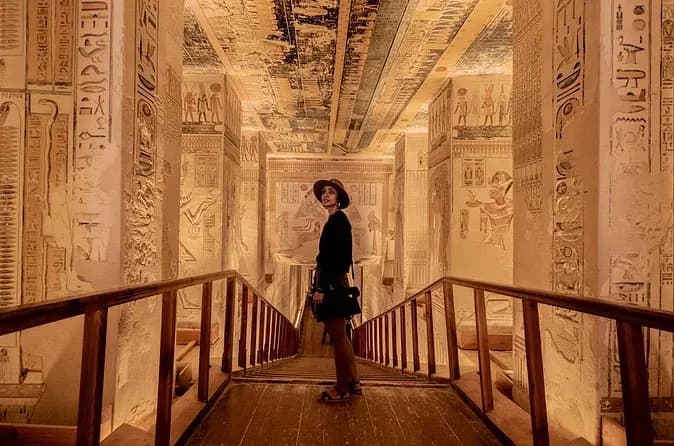
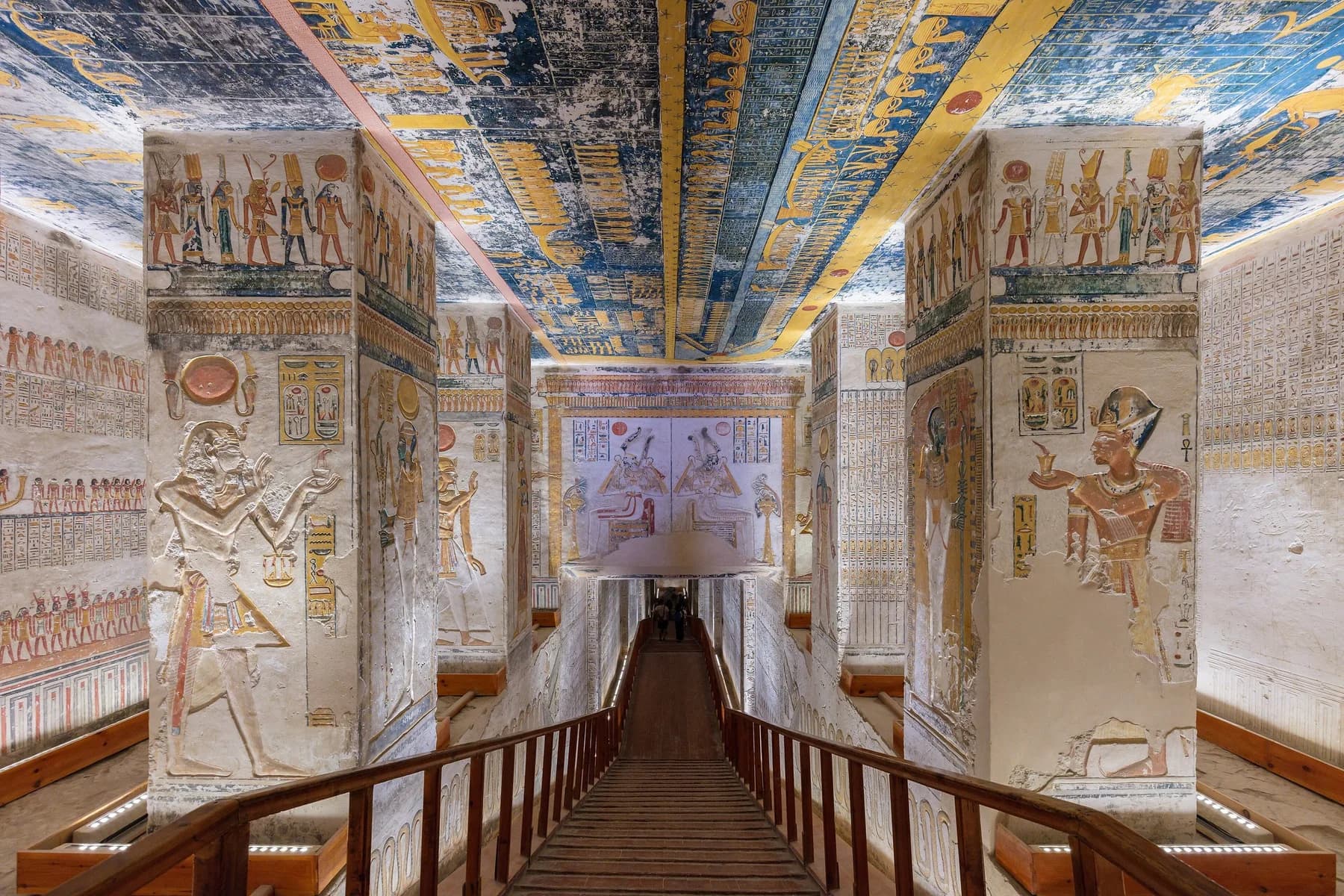
That contrast is the whole experience. You walk down a ramp out of blinding sunlight into cool, dim corridors where a sky goddess arches across the ceiling in blue and gold, gods take kings by the hand, and every surface carries the spells meant to steer a dead pharaoh through the night toward sunrise. No museum reproduces the feeling of standing inside a decorated royal tomb, and here you can do it several times in one morning.
The practical shape of a visit is worth understanding before you go. The standard ticket admits you to any three tombs from the list open that day, and a few celebrated tombs, Tutankhamun, Seti I and Ramesses V/VI among them, carry their own separate tickets on top. Arrive when the gates open at 6am, pick your tombs with a little strategy, and the valley will hand you one of the best mornings in Egypt.
Why the pharaohs went underground
For centuries Egyptian kings had built pyramids, and the pyramids had one fatal flaw: they told every robber in the country exactly where the gold was. Around 1500 BC the kings of the New Kingdom abandoned the whole idea. Instead they cut hidden tombs into a remote valley behind the cliffs of the west bank at Thebes, with nothing on the surface to mark them, and let the natural peak of al-Qurn, which happens to be shaped like a pyramid, stand over the necropolis as a kind of shared monument. Secrecy was the strategy; the workforce that cut and painted the tombs lived in the walled village of Deir el-Medina over the ridge, close enough to walk to work and, in theory, contained enough to keep the locations quiet. The move also concentrated everything: for close to five centuries, from Thutmose I to Ramesses XI, almost every king of Egypt was buried within this one fold of desert.
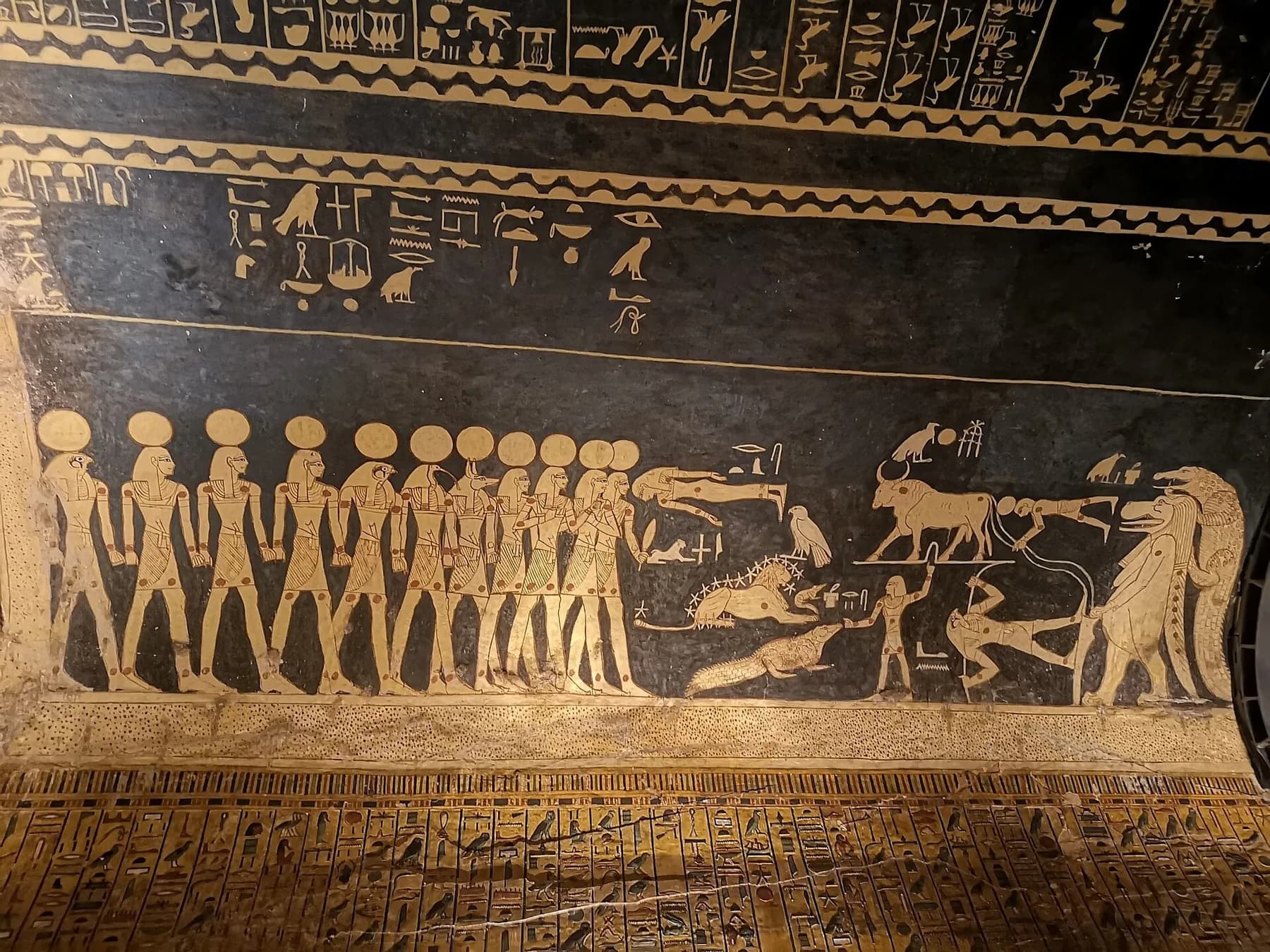
It mostly failed. Nearly every tomb in the valley was looted in antiquity, some within a generation or two of the burial. But the robbers wanted metal and oils, not paint, and the dry desert dark preserved the walls. What survived is some of the finest painting the ancient world ever produced: royal tombs decorated floor to ceiling with the great funerary compositions, the sun god's voyage through the hours of the night, gates and guardians, stars and judgement scenes, all of it painted for an audience of one dead king and never meant to be seen again.
The tombs follow a recognisable architecture. A doorway in the hillside leads to a sequence of descending corridors, sometimes interrupted by a deep well shaft, opening into pillared halls and finally the burial chamber where the sarcophagus lay. Early tombs bend and hide; later ones run straight and grand. The valley holds pharaohs from Thutmose I to Ramesses XI, along with a few favoured nobles and family members, and the tombs are numbered in order of discovery, KV1 through KV64, which is why every tomb you hear about carries a KV number.
Two discoveries dominate the valley's modern fame. The first is KV62, the tomb of Tutankhamun, found by Howard Carter in 1922, the only royal tomb here ever recovered largely intact. The gold now sits in the Grand Egyptian Museum outside Cairo, but the king himself remains: his mummy rests inside, which is a large part of why the smallest and plainest royal tomb in the valley still draws a queue. The second is KV17, the tomb of Seti I, the longest in the valley at around 137 metres and the most exquisitely decorated, its reliefs and painted ceilings barely faded. It carries the priciest extra ticket by a wide margin and, for many visitors, justifies every pound of it.
One more thing shapes your visit: conservation. Breath humidity and foot traffic damage the pigments, so only a rotating handful of tombs is open on any given day, letting the most fragile walls rest and recover. This is why nobody can promise you a specific tomb in advance, and why the star tombs sit behind their own turnstiles.
What to see: choosing your tombs
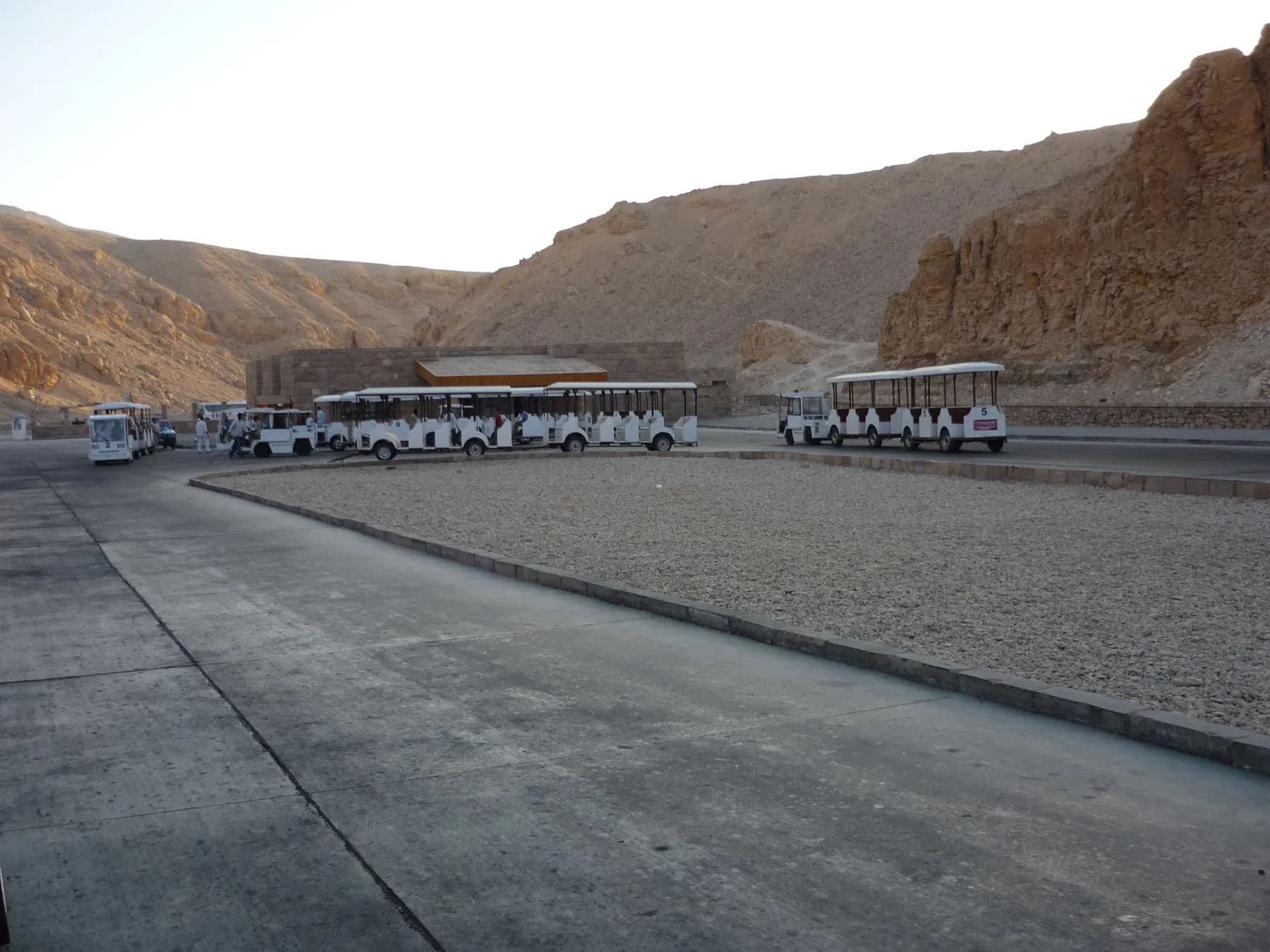
Everything starts at the visitor centre, where you buy the standard ticket, any extra tomb tickets and the photo permit; there are no ticket sellers up at the tombs themselves. From there the little electric train, the taftaf, covers the last stretch to the tomb clusters, a short ride that earns its small fare in the heat.
Then it is strategy. From the standard rotation, these are the reliable picks:
- Ramesses III (KV11) and Ramesses IX (KV6): colourful, spacious and beginner-friendly, with wide corridors and legible scenes. Either makes a perfect first tomb.
- Merenptah (KV8): a long, steep descent to a huge burial chamber, usually quieter than the famous names.
- Thutmose III (KV34), when open: reached by a staircase up a cliff cleft, with a burial chamber painted in a spare, almost diagrammatic style unlike anything else in the valley.
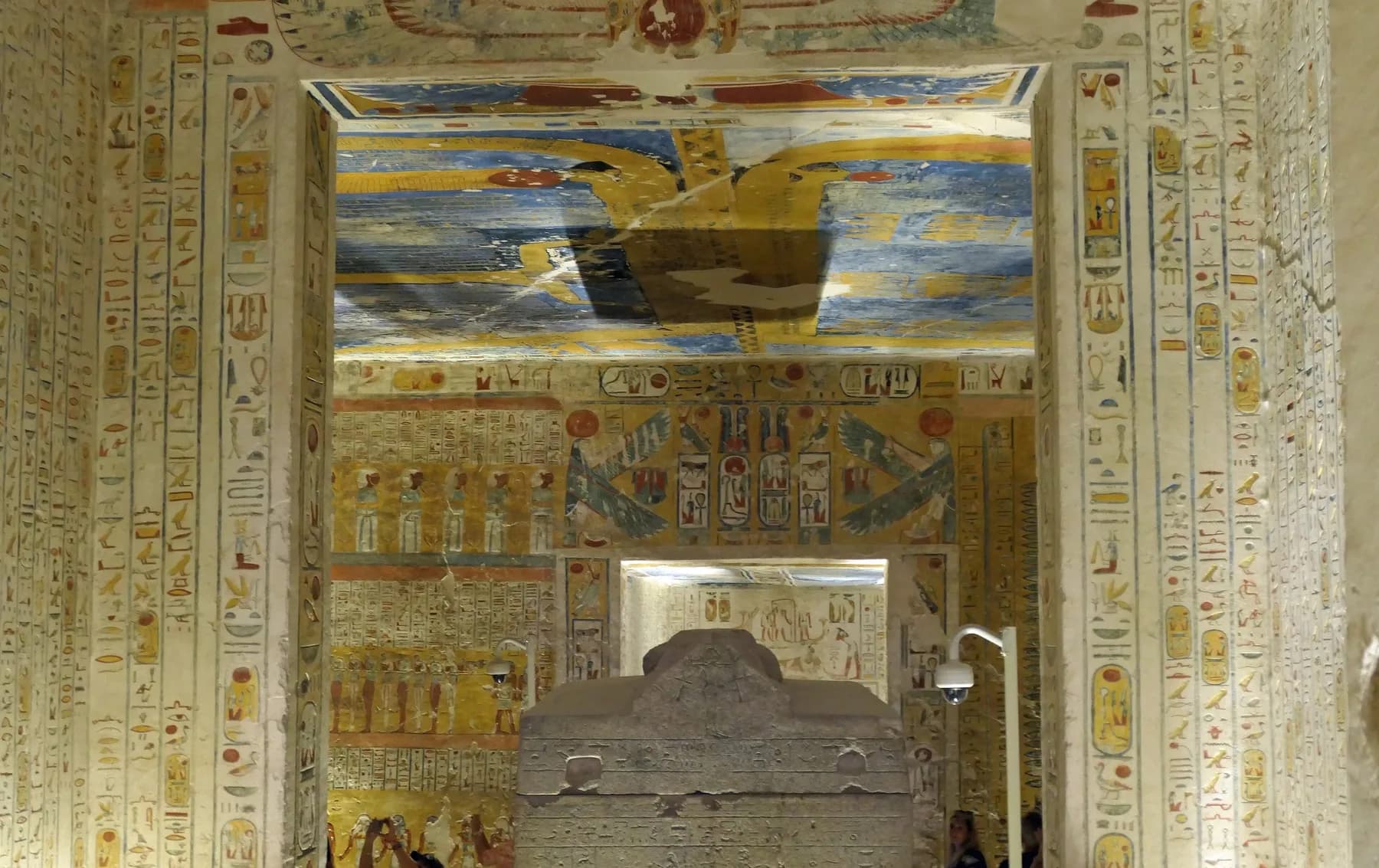
Among the extra-ticket tombs, Ramesses V/VI (KV9) is the outstanding value: a modest add-on for one of the greatest ceilings in Egypt, the sky goddess Nut swallowing the evening sun and giving birth to it at dawn, running the full length of the tomb in deep blue and gold. Seti I is the connoisseur's splurge if the budget stretches. Tutankhamun is small and plain after the others, and worth it mainly if standing in the actual tomb, near the actual king, matters to you.
A good first-visit rule: take your three standard tombs, add Seti I or Ramesses VI for the wow factor, and add Tutankhamun only if the name matters.
As for what first-timers miss: look up, because the best painting is often overhead; pause between tombs rather than marching through three in an hour, since the interiors get warm and close; and walk a few minutes beyond the busy central cluster, where the crowds vanish and you hear how silent the valley actually is. Over the ridge, and easy to add to the same morning, the Valley of the Queens holds the tomb of Nefertari, on a separate premium timed ticket and often called the most beautiful painted tomb in all of Egypt. Cut for the favourite wife of Ramesses II around 1255 BC and rediscovered in 1904, it was restored over years of painstaking work and reopened under tight controls: visitor numbers are capped, time inside is strictly limited, and it closes for conservation with little notice, so confirm it is open before you plan the morning around it.
Getting there
The valley is on Luxor's west bank, about a 20-minute drive from the town centre once you are across the river, and the crossing is half the fun. The cheap public ferry shuttles from central Luxor every 10 to 15 minutes; on the far side you pick up a taxi for the last stretch inland to the visitor centre. The alternative is a single taxi door to door over the Luxor Bridge, simplest but slower than it looks on the map, since the bridge sits south of town and the drive loops around: think 30 to 45 minutes.
Most visitors skip the juggling entirely and come on an organised west bank tour that pairs the valley with the temple of Hatshepsut and the Colossi of Memnon, which is the natural circuit: the three sites sit within a few kilometres of each other and share the same early-morning window before the heat. If you have a full day rather than a morning, the necropolis holds more within easy reach: Deir el-Medina, the village of the workers who actually cut and painted the royal tombs, and Medinet Habu, the colour-rich mortuary temple of Ramesses III, both far quieter than anything on the standard circuit. For the full spectacle, sunrise hot-air balloon flights drift over the whole necropolis at dawn, and landing from one then heading straight to the tombs is the classic west bank double.
Best time of day
Be there when the gates open at 6am. This is the single most important decision you will make about the valley. It is a natural sun-trap with almost no shade, and by mid-morning it bakes; at the same time the cruise-ship groups arrive in waves, because Luxor mornings run to the cruise excursion timetable, and the popular tombs turn hot, humid and shoulder to shoulder. At opening you get cool air, soft light on the cliffs, and painted corridors you may have entirely to yourself, which turns sightseeing into something closer to time travel.
The rush arrives mid-morning and hangs around into early afternoon, so if you are already inside the first tomb by 7am you stay a step ahead of it for the rest of the visit. Late afternoon is the quieter second-best if a dawn start fails you, with the groups gone and the light warming the cliffs again. The middle of the day is for the brave and the well-hatted, and the tombs themselves are at their stuffiest then.
Tips for your visit
- Wear closed shoes and carry water. The tombs mean steep ramps and uneven ground, and the valley floor is an oven by 10am.
- Bring a bank card. Luxor's major sites are largely cashless, and everything must be bought at the visitor centre before you head up.
- Sort everything at the visitor centre before boarding the taftaf: tickets, add-ons, the photo permit and your water. There is nothing to buy up at the tombs.
- Check the day's open-tomb list before you commit. The rotation changes, so if one specific tomb is the reason you are coming, confirm it is open first.
- Flash is banned in every tomb, no exceptions, because it damages the pigments. Camera and permit rules shift back and forth, so confirm the current policy at the ticket window.
- If you hire a guide, know the format: guides are not allowed to lecture inside the tombs, so they brief you at each entrance and you explore alone. It is still the best money you will spend here.
- Budget two to three hours for a focused visit, or a half-day to take the valley at leisure.
- Spending several days in Luxor? Run the numbers on the Luxor Pass: the standard version covers most east and west bank sites but not Seti I or Nefertari, while the premium version adds exactly those two, and both are valid for five days.
- Pair the valley with the temple of Hatshepsut and the Colossi of Memnon for the classic half-day, and add the Valley of the Queens if Nefertari is open.
Which tombs are open in 2026
The open list rotates so that the most fragile walls can rest, and nobody can promise a specific tomb in advance. As of July 2026 the standard ticket covered a choice of three from ten tombs: Ramesses VII (KV1), Ramesses IV (KV2), Ramesses IX (KV6), Merenptah (KV8), Ramesses III (KV11), Tausret and Setnakht (KV14), Seti II (KV15), Ramesses I (KV16), Thutmose IV (KV43) and Siptah (KV47). The four add-on tombs sat outside that list: Ramesses V and VI (KV9), Seti I (KV17), Tutankhamun (KV62) and, out in the West Valley, Ay (WV23), which blogs report at EGP 200 and which does not appear on the Ministry page.
Two things follow from that list. Thutmose III (KV34), the tomb reached by a staircase up a cliff cleft, was not on it, so if it is the reason you are coming, check at the visitor centre before buying. And the three standard picks we would make from the July list are Ramesses III (KV11) and Ramesses IX (KV6) for colour and legible scenes, then Merenptah (KV8) for its long descent to a huge burial chamber, with Ramesses IV (KV2) as the bright, wide reserve. One reviewer’s warning is fair: a few tombs on the list are in poorer condition after looting and flooding, so ask the ticket staff which are looking best that week rather than choosing by name alone.
Is the Luxor Pass worth it?
If you are spending several days in Luxor, run the numbers on the Luxor Pass before you buy tickets turnstile by turnstile. Blogs updated in December 2025 give the standard pass at US$130 (US$70 for students under 30) and the premium pass at US$250 (US$130 for students); the official ticket portal could not be reached when we checked, so treat those as reported rather than confirmed figures. Both are valid for five consecutive days. The standard pass covers essentially every East and West Bank site, including the valley with Tutankhamun and Ramesses V/VI, plus Karnak and Luxor Temple, but not Seti I or Nefertari. The premium pass adds exactly those two.
The arithmetic is simple enough. The valley’s standard ticket, Tutankhamun and Ramesses V/VI alone come to EGP 1,670; add Karnak at EGP 600, Luxor Temple at EGP 500, Hatshepsut, Medinet Habu and the Valley of the Queens and a three-day itinerary passes the standard pass price comfortably. Add Seti I at EGP 2,000 and Nefertari and the premium pass starts to pay for itself. For a single West Bank half-day it does not: buy individual tickets. Two practical notes from the same sources: the pass is paid for in cash, in US dollars or euros only, and you need a passport copy and a passport photograph to apply. Our Luxor travel guide lays out a multi-day plan to test the sum against.
Photography rules, and why your guide waits outside
Photography
The old EGP 300 photo pass has gone. Under a national cabinet decision, personal photography with a phone or camera is free at Egypt’s sites without a permit, and blogs updated in 2026 confirm that the valley no longer sells a pass and that DSLR photography is allowed. Two rules remain absolute: no flash anywhere, because it damages the pigments, and no tripods. One operator still lists EGP 300 for professional cameras, and another reports that photography is not permitted inside Tutankhamun’s tomb, so the premium tombs are where enforcement is tightest. Confirm at the ticket window on the day and, whatever the answer, keep the flash off.
A guide helps, but cannot come inside
A good private Egyptologist transforms this visit, with one catch worth knowing before you book: guides are not allowed to lecture inside the tombs. The format is that your guide briefs you thoroughly at each entrance, decoding the wall scenes and the funerary texts you are about to see, and then you go in and explore alone at your own pace. Reviewers who understood this in advance rate it as the best money spent on the West Bank; those who expected a walking commentary underground come away puzzled. Listen to the whole briefing first, then take your time inside.
Combine with
What to pair with Valley of the Kings
- Hatshepsut Temple Ten minutes away over the ridge; the terraces are the second stop on every West Bank half-day.
- Colossi of Memnon A free roadside stop on the way back; five minutes is enough.
- Luxor hot-air balloon at sunrise Land from a dawn flight over the necropolis and go straight to the tombs at opening.
- Valley of the Queens and Nefertari A separate premium timed ticket, often called the most beautiful painted tomb in Egypt.
- Karnak Temple The East Bank counterpart: temple day on one side of the river, tomb morning on the other.
- Nile cruise itineraries The valley is the standard West Bank excursion on every Luxor to Aswan cruise; see where it falls on each route.
- Nile cruise ships Compare the ships that moor at Luxor and include the West Bank in the fare.
Other Egypt attractions
Frequently asked questions
How much does it cost to visit Valley of the Kings?
Tours and tickets start from 411 EGP (about 8 USD), with a median price of about 3,464 EGP per person.
How many Valley of the Kings tours are available?
There are 249 bookable tours and tickets for Valley of the Kings.
What is the best Valley of the Kings tour?
A top-rated pick is "Excursion d'une journée à Louxor depuis Hurghada en petit groupe avec la tombe de Toutânkhamon".
Which tombs should you choose with the standard ticket?
From the tombs usually open, Ramesses III (KV11) and Ramesses IX (KV6) are dependable first picks: colourful, spacious and easy to read. Merenptah (KV8) or Thutmose III (KV34) round out a strong three. Then consider one paid add-on: Ramesses V/VI (KV9) is the best value for its astronomical ceiling, and Seti I (KV17) is the finest tomb in the valley if the budget stretches. The open list rotates, so have a second choice ready.
How long does a visit to the Valley of the Kings take?
A focused visit of three or four tombs runs two to three hours including the taftaf ride. Most people fold it into a west bank half-day with the temple of Hatshepsut and the Colossi of Memnon, which works comfortably if you start at opening and finish before the worst of the heat.
Is Tutankhamun's tomb worth the extra ticket?
It depends what you are after. The tomb itself is the smallest and plainest of the royal tombs, and its treasures now live at the Grand Egyptian Museum. What remains is the one thing no museum can move: the tomb, the sarcophagus and the king's own mummy. If standing in the actual place matters to you, buy the ticket; if painted walls matter more, put the money toward Seti I or Ramesses V/VI.
Is the Valley of the Kings worth visiting?
Yes. It is the one place in Egypt where you can stand inside several decorated royal tombs in a single morning, with paint that still looks fresh after three thousand years. Visitors rate it 4.7 from 7,160 reviews on Tripadvisor. The caveats are heat and crowds, both solved by arriving at the 06:00 opening.
How far is the Valley of the Kings from Luxor?
About 12 km from the East Bank hotels, or 25 to 35 minutes by road over the Luxor Bridge. From the West Bank ferry pier it is 9 km, so the cheap public ferry plus a taxi on the far side is the classic independent route. Most visitors come on a West Bank tour that handles the transport.
Can you take photos inside the tombs in the Valley of the Kings?
Yes, for personal use and without a permit: the old EGP 300 photo pass has been abolished, and phones and cameras are allowed. Flash and tripods are banned everywhere because flash damages the pigments. Enforcement is tightest in the premium tombs, and one operator reports no photography inside Tutankhamun's tomb, so confirm at the ticket window.
Is the Luxor Pass worth it for the Valley of the Kings?
Only as part of a multi-day Luxor plan. The standard pass (about US$130, reported by blogs) covers the valley with Tutankhamun and Ramesses V/VI plus Karnak, Luxor Temple and the other West Bank sites for five days, but not Seti I or Nefertari; the premium pass (about US$250) adds both. For a single West Bank half-day, individual tickets are cheaper. The pass is sold for cash in US dollars or euros.
How much does a Valley of the Kings tour cost?
Half-day West Bank tours are advertised from about US$10 to US$109 per person, median US$21.50 on the OTAs, with the lowest prices for large groups and usually excluding the EGP 750 entry ticket. Private tours with an Egyptologist and tickets from a local operator run about US$55 to US$109 per person for two. A private tour of the valley alone is US$50 to US$65 without tickets.
Can you pay cash at the Valley of the Kings?
No. The ticket office takes cards (Visa and Mastercard) or e-tickets bought in advance, and Egyptian banknotes are not accepted. Buy the standard ticket, any add-on tombs and the EGP 20 tram ticket at the visitor centre before you go up; there is nothing for sale at the tombs themselves.