Saqqara Tours & Tickets
Browse 394 tours to the Step Pyramid and necropolis in Giza, starting from 131 EGP (about 3 USD), with an average rating of 4.8 out of 5. Real prices compared across booking platforms and updated for 2026.
Saqqara tickets & opening hours (2026)
| Site entry (incl. Step Pyramid) | 600 EGP |
| Serapeum | 340 EGP |
| Tomb of Mereruka | 200 EGP |
The Step Pyramid of Djoser is included in the site ticket. The Serapeum and some individual tombs are separate.
Prices are site entry fees for foreign adults, updated 2026-07. Many tours below include tickets and skip-the-line entry.
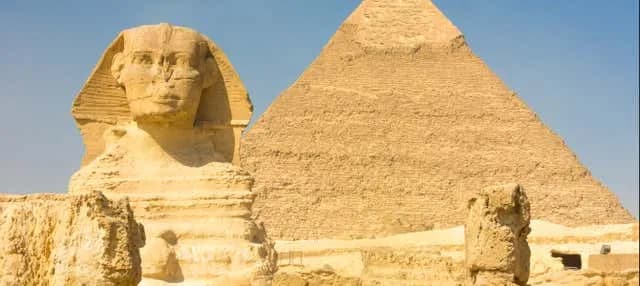
Pyramids of Giza Memphis and Saqqara Day Trip

From Cairo: Full-Day Guided Tour of Giza Pyramids, Sphinx, Saqqara & Memphis with Entry Tickets, Lunch & Hotel Transfers
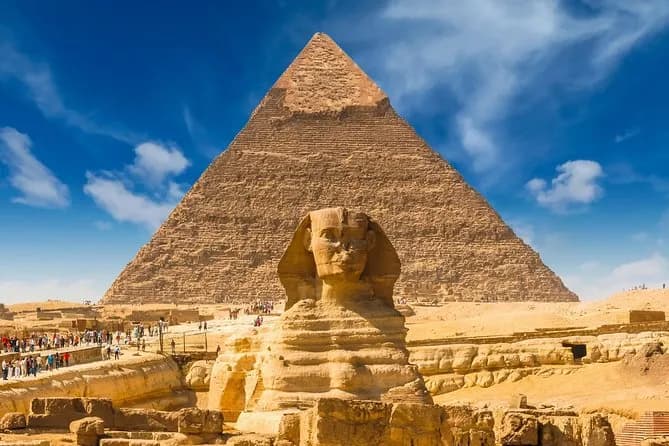
Private Day Tour Giza Pyramids, Sphinx, Memphis, and Saqqara
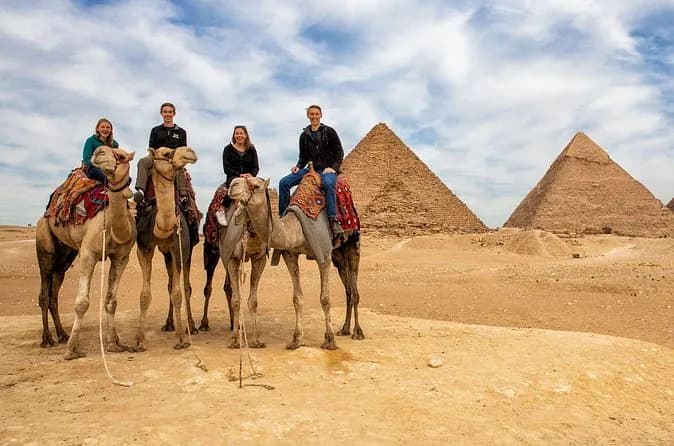
Private Full-Day Tour to Giza Pyramids,Sphinx,Memphis, and Saqqara

Saqqara , Memphis and Dahsur Day Tour

Giza Pyramids, Sphinx, Saqqara and Memphis Full-Day Cairo Tour

Private Day Tour Saqqara Pyramids, Memphis and Dahshur Pyramids
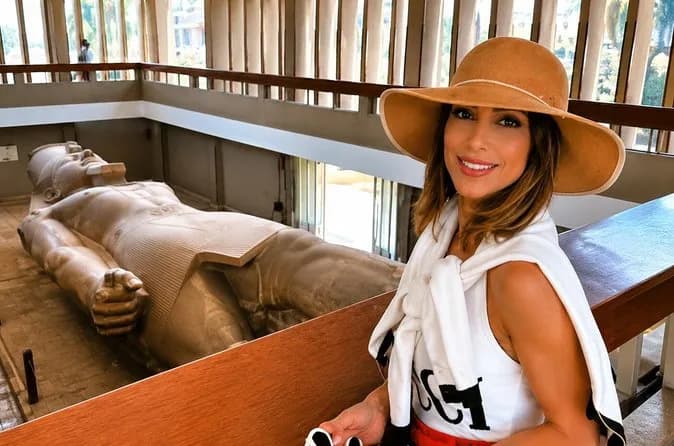
Ultimate VIP Giza, Saqqara,Memphis Tour,camel Tour with Guide

Top rated Giza Pyramids, Sphinx, Memphis and Saqqara Private Tour
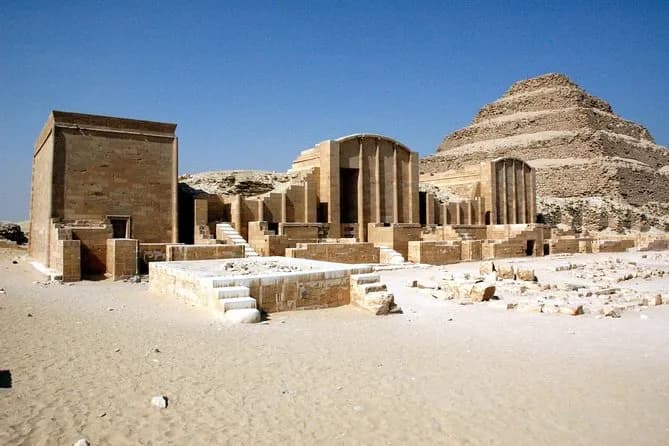
Half-Day private Tour to Dahshur Pyramids, Memphis & Saqqara

Giza Pyramids, Sphinx & Saqqara – Full Guided Private Day Tour

All Inclusive: Day Tour to Giza Pyramids, Saqqara and Dahshur

Full-Day Cairo Tour: Pyramids, Saqqara & Memphis / Grand Egyptian Museum & Khan el-Khalili Bazaar with Entry Tickets, Lunch & Transfers
Half-Day private Tour to Dahshur Pyramids, Memphis & Saqqara

private tour Giza Pyramids, Sphinx, Saqqara, Memphis +camel Ride
Private Giza Pyramids, Saqqara & Memphis Tour with Egyptologist

Private Day Tour Saqqara Pyramids, Memphis and Dahshur Pyramids

Private Tour To Giza Pyramids ,Memphis,Saqqara & Dahshur Pyramids
Ancient Egypt Journey: Giza, Saqqara & Dahshur Private Experience
Private Tour to Giza Pyramids, Sphinx, Saqqara Pyramids & Memphis

Private Full-Day Tour: Giza Pyramids, Sphinx, Saqqara & Dahshur

Full-Day Tour to Saqqara, Dahshur & Memphis

Private Giza Pyramids, Memphis & Saqqara Tour

Private full day tour in Pyramids of Giza, Memphis and Saqqara
Visiting Saqqara: what to know
Updated 3 September 2026Saqqara is the cemetery of ancient Memphis, Egypt's first capital: roughly six kilometres of desert plateau about 30 kilometres south of central Cairo, in use as a burial ground for more than 3,000 years. At its centre stands the Step Pyramid of Djoser, built around 2650 BC and the oldest large stone building on Earth. Every pyramid that came afterwards, including everything at Giza, descends from this one experiment in the sand.
Giza gives you the most famous silhouette in the world; Saqqara gives you the story behind it, and usually in something close to solitude. The tombs of the nobles here hold some of the finest relief carving in Egypt, with original colour still on the limestone after four and a half thousand years. Under the plateau runs the Serapeum, a gallery of granite sarcophagi so large that how they were moved into place is still argued over. And the site is still producing: Saqqara has been Egypt's most productive excavation of the past decade, and hardly a season passes without new tombs or caches of sealed coffins coming out of the ground.
Most visitors fold Saqqara into a half or full day from Cairo or Giza, usually with ancient Memphis and often with the pyramids of Dahshur, and travellers who make the trip regularly rank it above Giza itself. Below is the history that makes the site legible, a walkthrough of the highlights, and the logistics of doing it well.
Djoser, Imhotep and the invention of the pyramid
Memphis was founded around 3100 BC, where the Nile valley opens into the Delta, and for centuries it was the greatest city in the ancient world. Its dead went up onto the desert shelf to the west, and that shelf is Saqqara: burials run from Egypt's earliest dynasties down into the Ptolemaic era, layer over layer, which is why the digging here never stops.
Before Djoser, kings were buried under mastabas, low flat-topped rectangles of mud brick. Around 2650 BC Djoser's architect Imhotep, the first builder in history whose name we know, made two leaps at once: he worked in dressed limestone rather than mud brick, and he stacked six mastabas of decreasing size into a stepped tower about 60 metres high. It was the first monumental building in stone anywhere, a staircase for a dead king rising out of the desert, and its logic carried Egyptian architecture for the next thousand years. Egypt remembered the man as clearly as the monument: Imhotep was later deified, one of very few non-royals ever worshipped as a god. The pyramid stands inside a vast funerary complex whose entrance colonnade and courtyard have been restored, and a long restoration project reopened the interior in 2020, so you can now descend to the burial shaft and the star-carved chambers beneath.
The experiment did not stop there. Ten kilometres south at Dahshur, the pharaoh Sneferu built the Bent Pyramid, begun at about 54 degrees until cracks forced the builders to ease the slope to roughly 43, and then the Red Pyramid, the first true smooth-sided pyramid ever completed. His son Khufu raised the Great Pyramid at Giza within a generation. Walked in order, Saqqara, Dahshur and Giza read as a single 150-year arc of trial, error and mastery, which is why the best day tours sell the fields together, and why the Pyramids of Giza guide is really the final chapter of a story that starts here.
Two more monuments carry the site's depth. The Pyramid of Unas, a short walk from Djoser's enclosure, looks like a rubble mound from outside; inside, its chambers are carved floor to ceiling with the Pyramid Texts, spells cut around 2350 BC to guide the king into the afterlife and the oldest religious writings in the world. And northwest of the Step Pyramid, an unremarkable doorway drops into the Serapeum, the underground galleries where the sacred Apis bulls were mummified and entombed in granite sarcophagi weighing up to 70 tonnes each. The French archaeologist Auguste Mariette uncovered it in 1851, and the question of how two dozen of those boxes were manoeuvred through the tunnels has never been settled to everyone's satisfaction.
Then there is the news cycle. Since 2018, missions at Saqqara have unearthed hundreds of sealed, brightly painted coffins, more than 450 in one cluster alone, many still holding well-preserved mummies around 2,500 years old, along with gilded masks, animal mummies and intact mummification workshops with the tools and oils still in place. Pigments come out of the sand looking almost fresh. New Late-Period and Ptolemaic tombs have been opened to visitors in recent seasons, which means the Saqqara you visit is genuinely not the Saqqara of five years ago.
What to see
Start at the Imhotep Museum by the site entrance. It is small, it holds finds from across the necropolis, and twenty minutes here makes everything on the plateau more legible, which is why driving straight past it is the first mistake most first-timers make.
Then the Djoser complex. You enter through the reconstructed colonnade, a corridor of tall columns that opens suddenly into the great courtyard with the Step Pyramid filling the sky ahead. Circle the pyramid rather than just photographing the front: the stacked-mastaba construction reads clearly from the sides. If the interior is open, the descent to the burial shaft is worth the separate ticket for the strangeness alone.
The noble tombs are the highlight most people under-schedule. The Mastaba of Ti shows a 5th-Dynasty official supervising his estate in scene after vivid scene: cattle fording a canal, boat-builders at work, harvesters and fishermen in the marshes, daily life carved with a documentary eye. The Tomb of Mereruka, the largest at Saqqara with 33 rooms, adds hunting, dancing and craftsmen at work; look for the herds being driven through water. The Tomb of Kagemni next door keeps some of the crispest, deepest carving on the plateau, full of animals, birds and food offerings. Visitor numbers are a trickle by Giza standards, so you often have these walls to yourself.
Give the Serapeum its half hour. The gallery is cool, dim and slightly unnerving: two dozen black granite sarcophagi, each big enough to park a car in, standing in bays down a long rock-cut tunnel. It needs a small separate ticket and repays every step of the walk out to it.
Finally, ask what has opened recently. Saqqara is a working excavation, and newly restored tombs rotate onto the visitor circuit almost every season; the gate staff or your guide will know what is accessible that week, and the fresh openings are often the emptiest rooms on the plateau.
Getting there
Saqqara sits about 30 kilometres southwest of central Cairo, roughly an hour by road and closer to 40 minutes from Giza. The pyramid fields are spread along the desert edge with no public transport linking them, so a private car and driver, or an organised day tour with an Egyptologist, is close to essential. A budget DIY run is technically possible, Metro to El Monib and then microbuses and tuk-tuks toward Badrasheen, but you will spend the day negotiating rides and it is impractical for reaching Dahshur.
The classic combination is Saqqara plus Memphis in a half day of four to five hours, or a full day of seven to eight hours that adds Dahshur. Memphis, at the village of Mit Rahina, is a quick and rewarding stop directly on the route: an open-air museum whose centrepiece is a fallen limestone colossus of Ramesses II around 13 metres long, displayed on its back in a viewing pavilion so you can look it in the eye, with a graceful alabaster sphinx alongside. Half an hour is plenty. Dahshur adds the Bent and Red Pyramids with near-zero crowds and the chance to climb down inside the Red Pyramid, and it is the piece that completes the architectural story.
Plenty of operators also bolt Giza onto the same day. It can be done, since all the sites cluster on the same side of the city, but it is a lot; giving Giza its own morning lets each field breathe. Whatever you book, check that the itinerary names Dahshur explicitly, because the cheapest tours quietly stop at Saqqara. The dedicated Saqqara and Dahshur guide covers how the pieces fit together in more detail.
Best time of day
Come in the morning, and earlier than feels necessary. The air is cooler, which matters more than you expect once you are inside a pyramid passage or a deep tomb, and the low light models the desert and the stepped profile of Djoser's pyramid far better than the flat glare of midday. The organised coaches from Cairo hotels mostly land mid-morning, so the first hour or two after the gates open belong to a handful of independent travellers and almost nobody else.
Midday is the test. There is close to no shade anywhere on the plateau, and in summer the heat is punishing, so it is the natural slot for Memphis, where the colossus lies under a roof, or for lunch. If you are running the full-day loop, a rhythm that works well is Saqqara's tombs and the Serapeum early, Memphis around midday, then Dahshur in the afternoon, saving the Red Pyramid descent for last, since its deep chambers stay cool regardless of the hour. Late light on the plateau is lovely, but leave margin: distances between the tombs are real, and the last ticket window comes sooner than you think.
Tips for your visit
- Wear closed shoes. Sand, loose stone and steep, low passages are the terrain all day.
- Carry water and real sun cover. Shade is close to nonexistent between the monuments.
- Bring a torch. The Red Pyramid chambers and the dimmer tombs reward your own light; a phone works, a proper torch is better.
- Keep small banknotes for the tomb guardians who unlock chambers or point out scenes; a tip of 20 to 50 EGP is normal and entirely optional.
- Expect separate tickets for the Serapeum and some interiors on top of the general admission, and carry both card and cash, since major sites are moving toward card payment at the windows.
- The Red Pyramid descent is a long, low passage you take bent double, with an ammonia smell in the deepest chamber; skip it with bad knees or claustrophobia. The Bent Pyramid crawl is tighter still, about 80 metres.
- A half day covers the Step Pyramid, one or two noble tombs and Memphis; commit to the full day if you want the Serapeum, several tombs and Dahshur. The full day is the version you will remember.
- Pace the tombs. One chamber studied slowly beats five walked through; the carving rewards ten quiet minutes in a way a checklist never does.
- If Giza is also on your itinerary, try to walk the sites in historical order, Saqqara and Dahshur first and Giza after: the Great Pyramid makes far more sense as a finale than as an opener.
Other Egypt attractions
Frequently asked questions
How much does it cost to visit Saqqara?
Tours and tickets start from 131 EGP (about 3 USD), with a median price of about 3,138 EGP per person.
How many Saqqara tours are available?
There are 394 bookable tours and tickets for Saqqara.
What is the best Saqqara tour?
A top-rated pick is "Pyramids of Giza Memphis and Saqqara Day Trip".
If I am short on time, should I choose Saqqara or Giza?
They do different jobs. Giza has the iconic silhouette and belongs on a first trip; Saqqara has the older monuments, the painted tombs and a fraction of the crowds. If you have already seen Giza, or you care more about tomb art and going inside monuments than about the postcard view, go south: many travellers rank Saqqara and Dahshur above the plateau itself.
Can you combine Saqqara with Dahshur and Memphis in one day?
Yes, that is the standard full day of seven to eight hours from Cairo or Giza, and it is the version worth doing: Saqqara's tombs and the Serapeum, a short stop at Memphis, then Dahshur with the Red Pyramid interior. A half day of four to five hours covers Saqqara plus Memphis. Adding Giza to the same day is possible but heavy; giving it a separate morning treats each field properly.
Can you go inside any of the pyramids at Saqqara and Dahshur?
Yes, and more easily than at Giza. The Step Pyramid's interior reopened in 2020 after restoration, the Pyramid of Unas holds the oldest religious texts in the world on its chamber walls, and at Dahshur you can usually walk down into the Red Pyramid with no queue at all, plus crawl the Bent Pyramid's tighter passage. Bring a torch and expect steep, low descents.