
Beyond Giza: Saqqara, Dahshur & the First Pyramids (2026)
Giza is not where the pyramid began. Drive 40 minutes south to Saqqara's Step Pyramid (c.2650 BC) and Dahshur's Bent and Red Pyramids, where the true pyramid was invented, with a fraction of the crowds.
Book it on This is Egypt
Cairo · Turn this guide into a trip
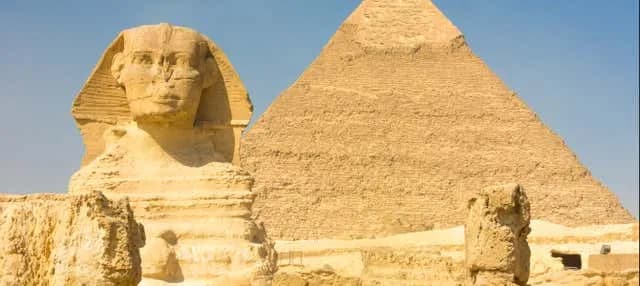
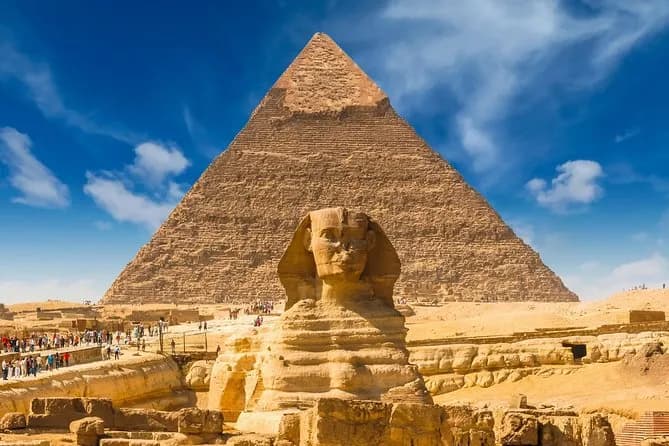
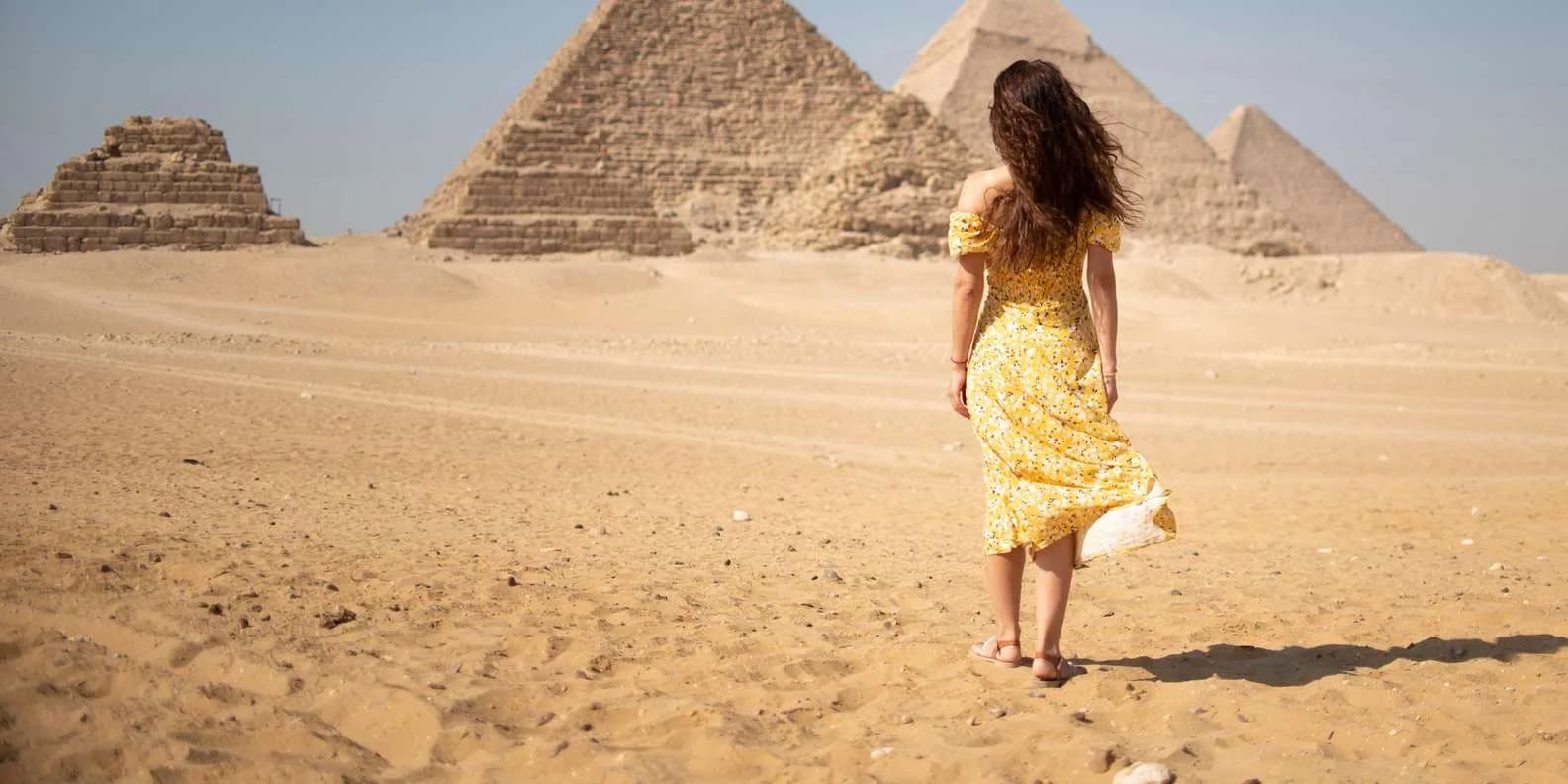
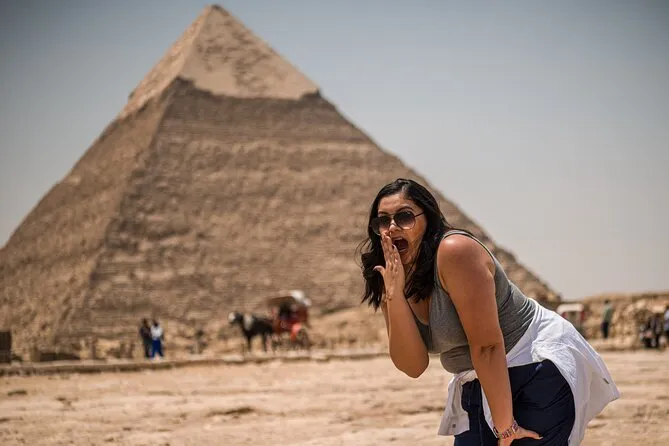
Quick answer: The pyramid was invented at Saqqara and perfected at Dahshur, both a short drive south of Giza and both far quieter than the famous plateau. Travellers who make the extra trip often rank it above Giza itself, because the sites are older, the tomb art is better preserved, and on many days you can walk them almost alone. A spare half-day in Cairo is best spent here.
At a glance: Saqqara holds Djoser's Step Pyramid (c.2650 BC), the oldest large stone building on Earth, plus painted noble tombs and the Serapeum. Dahshur, 10 km south, has Sneferu's Bent and Red Pyramids (c.2600 BC), the trial-and-error that led to the Great Pyramid. Both sit about 40 to 60 minutes south of Giza and pair with ancient Memphis in a half-day. A car and driver is close to essential; there is no reliable public transport.
Saqqara and the Step Pyramid
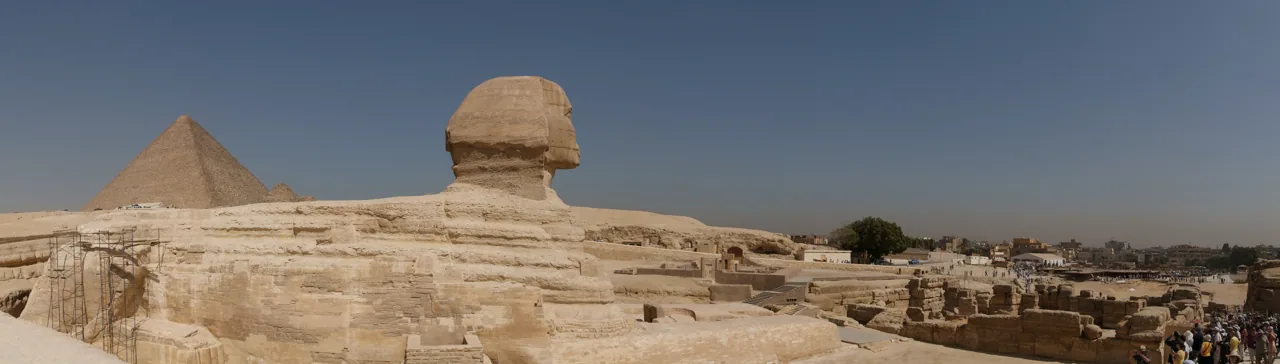
Saqqara was the burial ground of Memphis, Egypt's first capital, and it stayed in use for over 3,000 years. At its centre is the Step Pyramid of Djoser, built around 2650 BC by the architect Imhotep, the first builder in history known to us by name. It stacks six stone platforms about 60 metres high and is the oldest large-scale cut-stone building anywhere. Every later pyramid descends from this single experiment. Restoration reopened the interior passages in 2020, so you can now go inside and see the burial shaft and the star-carved chambers beneath.
Around it stand the tombs of the nobles, and this is Saqqara's quiet surprise. Tombs such as those of Kagemni and Mereruka carry carved and painted reliefs of hunting, fishing, farming and music, often with colour still on the limestone and far fewer people than Giza. Mereruka's tomb alone has more than 30 rooms; look for the scene of him painting the seasons and the herds of cattle being driven through water. The Serapeum, an underground gallery cut for the mummified Apis bulls, holds 24 granite sarcophagi weighing up to 70 tonnes each in a dim, cathedral-like tunnel; how the Egyptians manoeuvred those boxes into place is still argued over. Saqqara is a working excavation, and new tombs and sealed coffins turn up almost every season, so it changes year to year.
Dahshur: the Bent and Red Pyramids
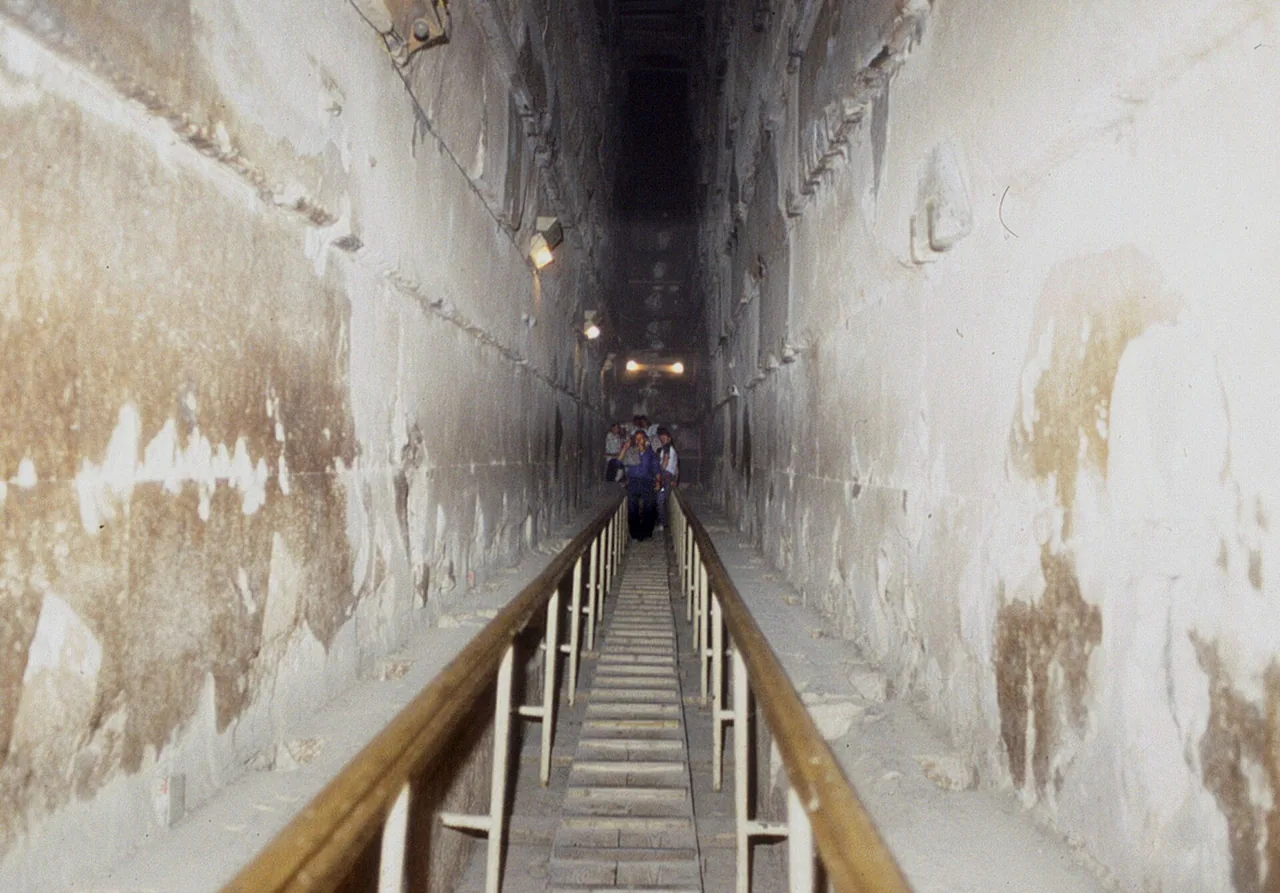
Ten kilometres further south, Dahshur holds the two pyramids of Sneferu, father of Khufu, that record the moment the true pyramid was worked out around 2600 BC. The Bent Pyramid visibly changes slope partway up: the builders started at about 54 degrees, saw cracks appear, and dropped to roughly 43 degrees to avoid collapse. It keeps most of its smooth outer casing, which the Giza pyramids lost, so it is the best place to see what a finished pyramid actually looked like. Beside it, the Red Pyramid is the first successful smooth-sided pyramid ever finished, the direct model for the Great Pyramid. You can usually climb down its entrance passage into three corbelled chambers, and on most days the crowd is close to zero. It is one of the quietest great monuments in Egypt, and going inside it, alone, with the smell of ammonia and the long descent, is a stranger and more memorable experience than the ticketed queue inside the Great Pyramid.
Why the order matters
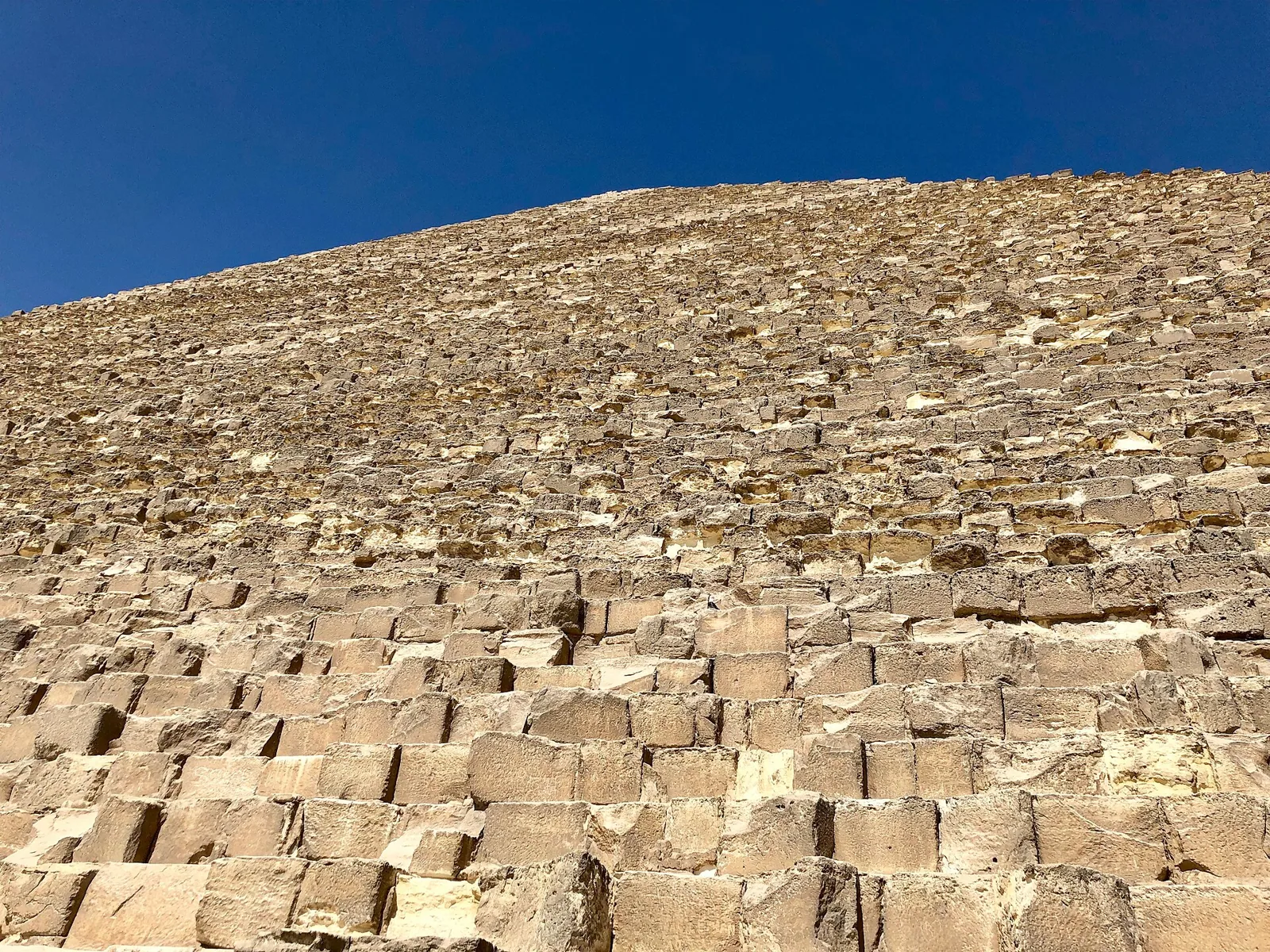
Seen in sequence the sites read as one story. Djoser's Step Pyramid at Saqqara (c.2650 BC) is the first attempt: six mastabas stacked into a stairway, still stepped and unfaced. Sneferu's Bent Pyramid at Dahshur is the failed experiment, where the geometry proved too steep. His Red Pyramid is the breakthrough, the first true pyramid. Only after all of that does Khufu's Great Pyramid at Giza become possible, built by Sneferu's son within a single generation. Visiting Saqqara and Dahshur before or after Giza turns four separate monuments into a 150-year arc of trial, error and mastery, which is why guides sell the three fields together.
Meidum and Abu Sir: the deeper cut
Two more sites reward anyone with a spare day and a real interest. Meidum, about 100 km south of Cairo, is Sneferu's first pyramid and the strangest of them all: a tower-like core rising from a mound of its own collapsed casing, the ruin of an early attempt that failed catastrophically and taught the lessons Dahshur then applied. It is remote, almost empty, and worth it for the sense of a real construction site frozen mid-disaster. Abu Sir, between Giza and Saqqara, holds a cluster of 5th-Dynasty pyramids and sun temples, badly weathered but almost never visited; you may well be the only tourist there. Neither is on the standard tour, so you need a private car and a guide willing to add them.
Abydos: the outlier worth the effort
Further south still, near Sohag and usually paired with Dendera as a long day trip from Luxor rather than Cairo, Abydos is one of Egypt's most sacred sites and holds the Temple of Seti I, famous for the finest raised relief in the country and the King List that helped scholars order the pharaohs. It is not a pyramid site, but it belongs in any "beyond the obvious" plan, and its carving quality rivals anything at Abu Simbel or Karnak. Treat it as a separate excursion, not part of the Cairo pyramid loop.
Ancient Memphis
The Cairo trip usually adds Memphis, the vanished capital, now an open-air museum at Mit Rahina. Its centrepiece is a fallen limestone colossus of Ramesses II, over 10 metres long, displayed on its back in a viewing hall, alongside an alabaster sphinx of about 80 tonnes. Half an hour here is enough and it sits directly on the route between Saqqara and Cairo.
How the sites compare
| Site | Distance from Giza | Highlight | Crowds |
|---|---|---|---|
| Saqqara | ~40 min | Step Pyramid, noble tombs, Serapeum | Moderate |
| Dahshur | ~50–60 min | Bent & Red Pyramids, interior nearly alone | Very low |
| Abu Sir | ~30 min | 5th-Dynasty pyramids, sun temples | Almost none |
| Meidum | ~90 min | Sneferu's collapsed first pyramid | Almost none |
| Memphis | ~30 min | Ramesses II colossus, alabaster sphinx | Low |
How to visit
Saqqara and Dahshur are about 40 to 60 minutes south of the Giza plateau by car. A private car and driver, or a guide, is the simplest way, and many operators sell a "three pyramid fields" day that links Giza, Saqqara and Dahshur, sometimes with Memphis. There is no reliable public transport, so a car is close to essential. Expect separate entry tickets at each site (paid by card at official windows) plus extra fees for the Serapeum and the interior tombs, which are not sold as one combined pass, so budget a few hundred EGP more than the headline admission. Go in the morning for cooler air and better light, carry water and sun cover since there is almost no shade, and wear closed shoes for sand and loose stone. Allow a full day if you want the Serapeum and several tombs; a half-day covers the Step Pyramid, one noble tomb and the Red Pyramid interior.
Pair the day with Giza and the pyramids of Giza guide, and see the new Grand Egyptian Museum to connect the tombs with their treasures. It slots neatly into the Cairo leg of the 10-day Egypt itinerary, and ranks among the best things to do in Egypt for anyone who wants the story behind the pyramids rather than just the postcard. When you are ready to book a private driver and guide for the fuller loop, browse Cairo and Giza day tours and pick one that names Dahshur explicitly, since the cheapest tours often stop at Saqqara.
What's On in Egypt
Events in Cairo

A Trade In Dreams Exhibition
Tahrir Cultural Center (AUC) · Downtown (Wust El Balad)

Egypt Press Photo Exhibition
Tahrir Cultural Center (AUC) · Downtown (Wust El Balad)

Exhibition Open Call
Tahrir Cultural Center (AUC) · Downtown (Wust El Balad)
A real team available 24/7 to assist you — free
Seif and the team reply on WhatsApp 24/7 — trip questions, custom plans and booking help.
Ask Seif on WhatsAppCommon questions
Is Saqqara worth visiting?
Yes. Saqqara has the Step Pyramid of Djoser (c.2650 BC), the oldest large stone building on Earth, plus noble tombs like Mereruka's with vivid painted reliefs and the Serapeum with its 70-tonne bull sarcophagi, all with far smaller crowds than Giza. The interior of the Step Pyramid reopened in 2020.
What are the Bent and Red Pyramids at Dahshur?
They are Sneferu's two pyramids from around 2600 BC. The Bent Pyramid changes slope partway up from 54 to 43 degrees where builders adjusted the design and still keeps its smooth casing; the Red Pyramid beside it is the first true smooth-sided pyramid ever completed and the model for the Great Pyramid. You can usually go inside the Red Pyramid nearly alone.
Which pyramid is the oldest?
The Step Pyramid of Djoser at Saqqara, built around 2650 BC by the architect Imhotep, is the oldest large pyramid and the oldest large stone building in the world, predating the Giza pyramids by roughly a century.
Can you visit Saqqara and Dahshur from Cairo?
Yes. Both are about 40 to 60 minutes south of the Giza plateau and combine into a half or full day, often with ancient Memphis. A private car with a driver or guide is the easiest way, since there is no reliable public transport; several operators sell a three pyramid fields day covering Giza, Saqqara and Dahshur.
How much time do you need for Saqqara and Dahshur?
A half day covers the highlights: the Step Pyramid and a noble tomb at Saqqara, the Red Pyramid interior at Dahshur, and a short stop at Memphis. A full day lets you add the Serapeum, more tombs, and even Abu Sir or Meidum without rushing.
What is the difference between Meidum and Dahshur?
Meidum is Sneferu's first pyramid, about 100 km south of Cairo, which partly collapsed and now looks like a tower rising from its own rubble. Dahshur came next: the Bent Pyramid fixed the too-steep angle, and the Red Pyramid finally got it right. Meidum is remote and rarely visited; Dahshur is closer and easy to add to a Saqqara day.
Is Abydos part of a Cairo pyramids trip?
No. Abydos, home of the Temple of Seti I with its superb relief and King List, is near Sohag and is normally visited as a long day trip from Luxor, often paired with Dendera. Treat it as a separate excursion rather than part of the Saqqara and Dahshur loop from Cairo.
Do you need separate tickets for the tombs and the Serapeum at Saqqara?
Yes. Saqqara charges a general site ticket plus extra fees for the Serapeum and for certain interior noble tombs, and Dahshur is a separate ticket again. They are not sold as one combined pass, so budget a few hundred EGP more than the base admission and pay by card at the official windows.
Book it on This is Egypt
Turn this guide into a trip
Egypt's bestsellers
The experiences travelers book most, across the country





Attractions in this guide
Keep reading

Hurghada Diving (2026): Best Sites, Packages & Prices
Diving in Hurghada — the best reefs (Giftun, Careless Reef, Dolphin House) and Abu Nuhas wrecks, Discover Scuba vs PADI courses, season and water temps, and real 2026 prices.
By TiE Editors7 min read

Hurghada Snorkeling Trips (2026): Best Reefs, Prices & How to Choose
Where to snorkel from Hurghada in 2026 — Orange Bay, Giftun, Mahmya, Utopia and Dolphin House — with boat types, marine life, month-by-month sea temperatures, family tips and real prices from 1,000+ bookable trips.
By TiE Editors7 min read

Egypt Tour Prices by Activity (2026): What Each Type Really Costs
What every type of Egypt experience actually costs — from a 1,700 EGP camel ride to a 48,500 EGP Nile cruise — based on 29,710 real bookable tours across seven platforms.
By TiE Editors6 min read