The Great Sphinx Tours & Tickets
Browse 1007 tours to the Sphinx and the Giza plateau in Giza, starting from 78 EGP (about 2 USD), with an average rating of 4.8 out of 5. Real prices compared across booking platforms and updated for 2026.
The Great Sphinx tickets & opening hours (2026)
| Giza plateau entry (incl. Sphinx) | 700 EGP |
The Sphinx is viewed from within the Giza plateau enclosure — the standard plateau ticket covers it; no separate Sphinx ticket for daytime viewing.
Prices are site entry fees for foreign adults, updated 2026-07. Many tours below include tickets and skip-the-line entry.
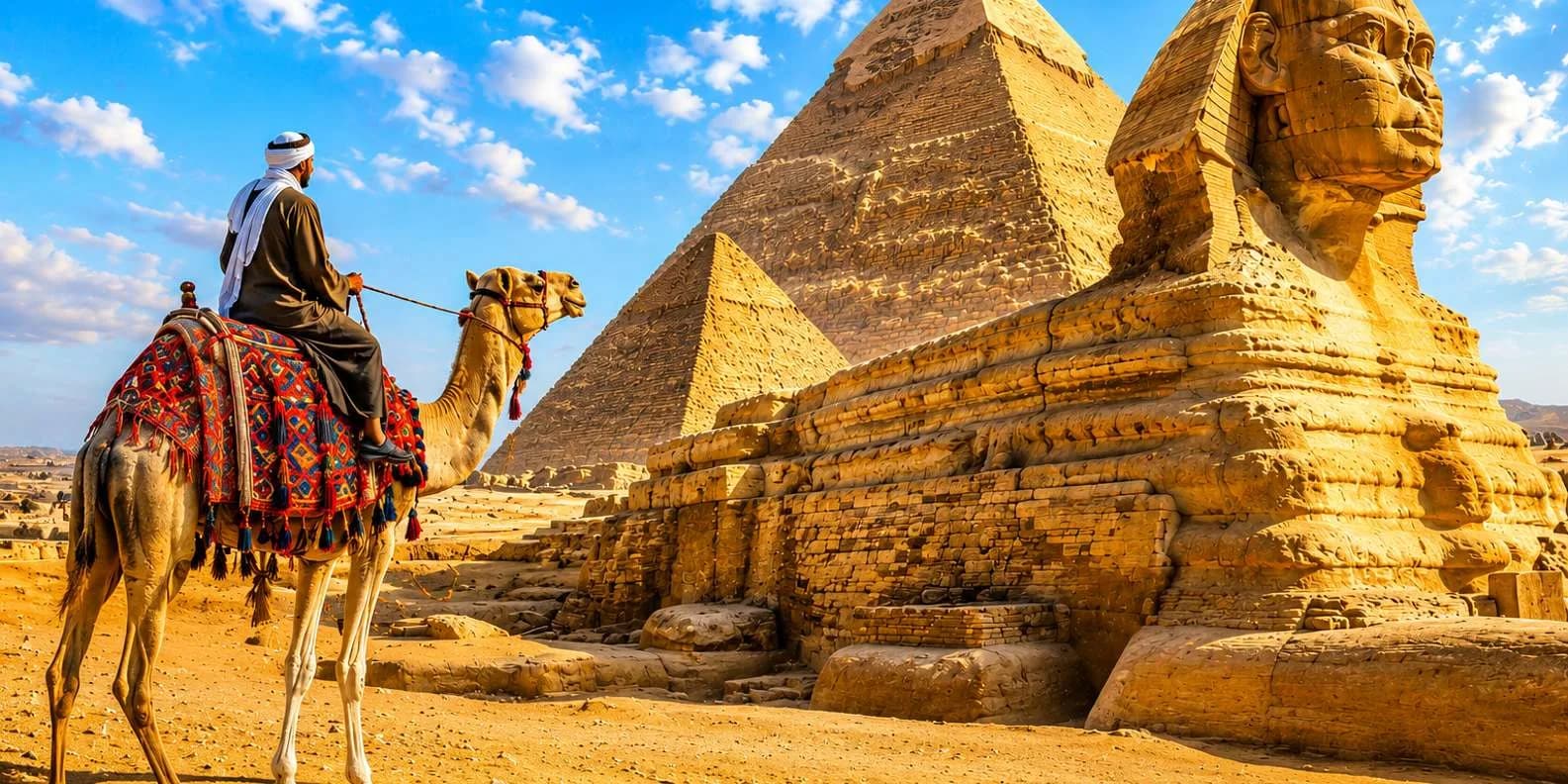
Cairo: Pyramids & Great Sphinx Private Tour with Camel Ride
Cairo: Grand Egyptian Museum, Pyramids, Sphinx Tour & Lunch
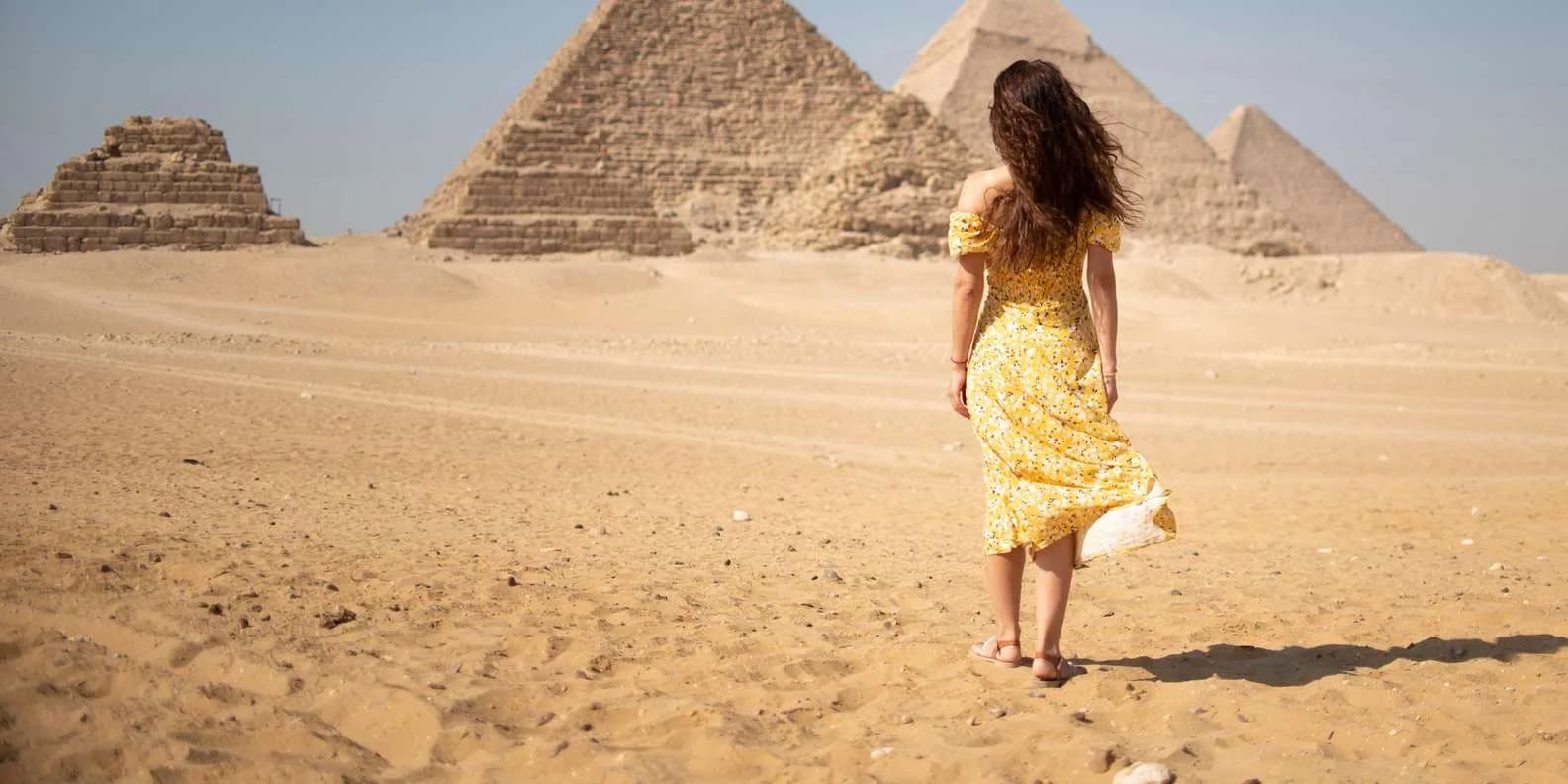
From Cairo: Half-Day Tour to Pyramids of Giza and the Sphinx
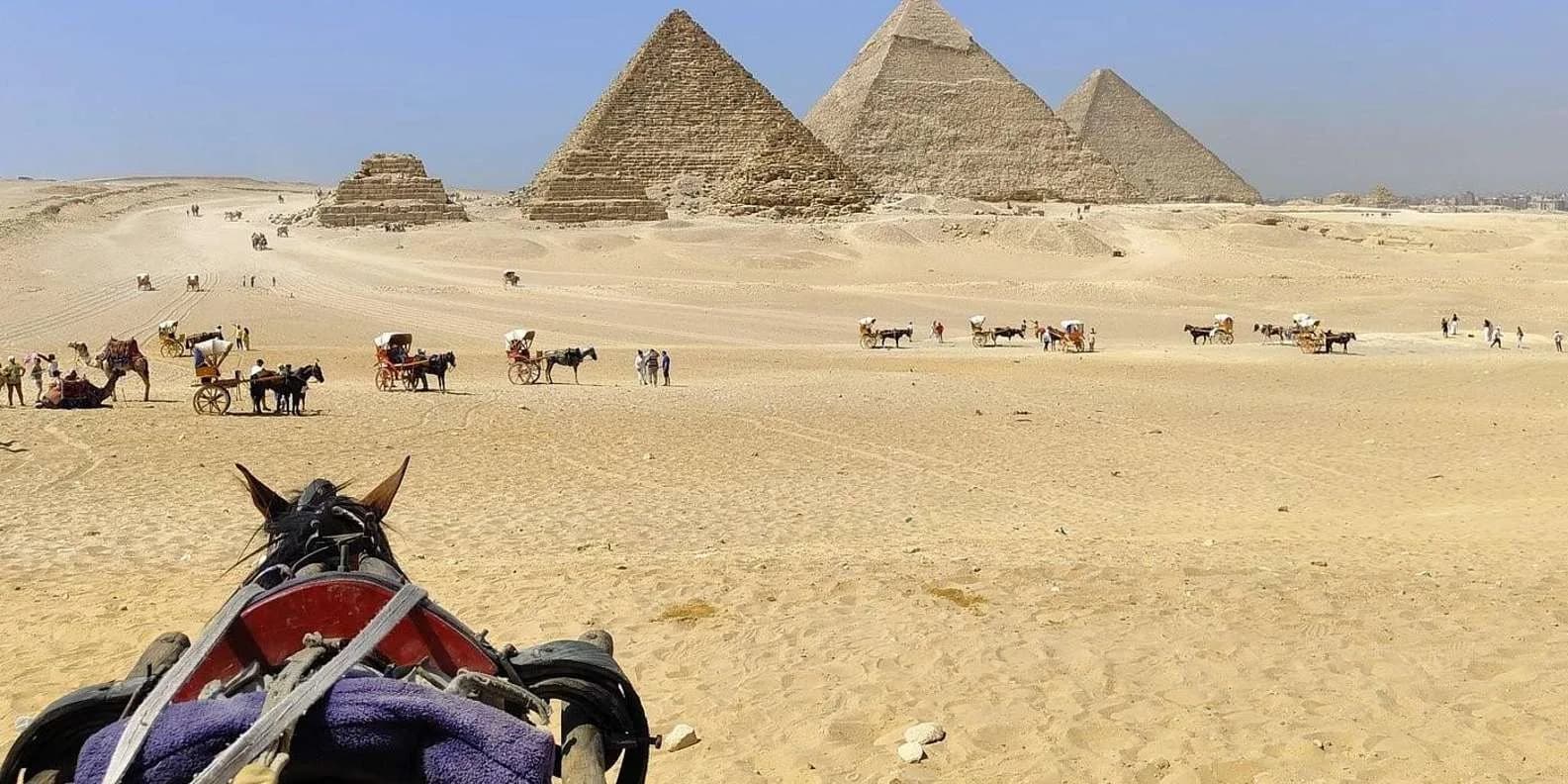
Hurghada: Cairo Day Trip by Flight, Pyramids,sphinx & Museum
Half Day Tour Giza Pyramids& Great Sphinx with Private Tour Guide
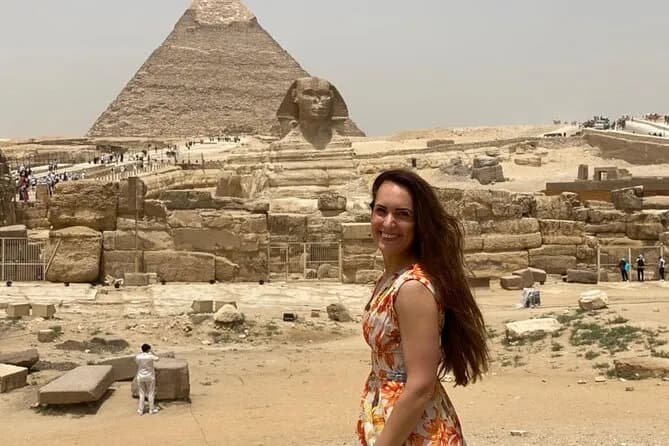
Half Day Tour Giza Pyramids &Great Sphinx with Private Tour Guide
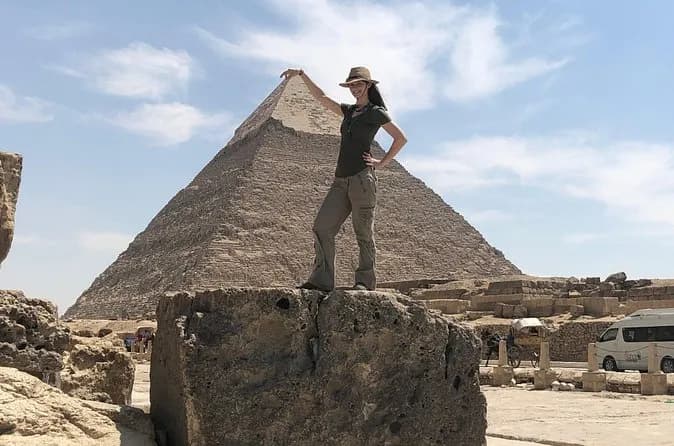
Best of Cairo Private Giza Pyramids, Sphinx and Grand Museum Tour
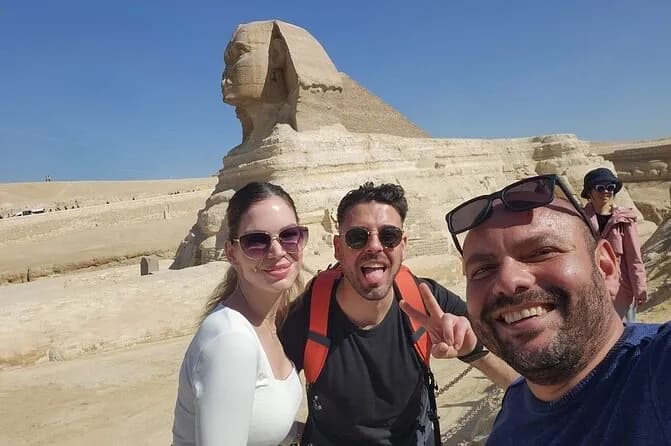
VIP Private Giza Pyramids, Sphinx Tour –Inside the Pyramids&More
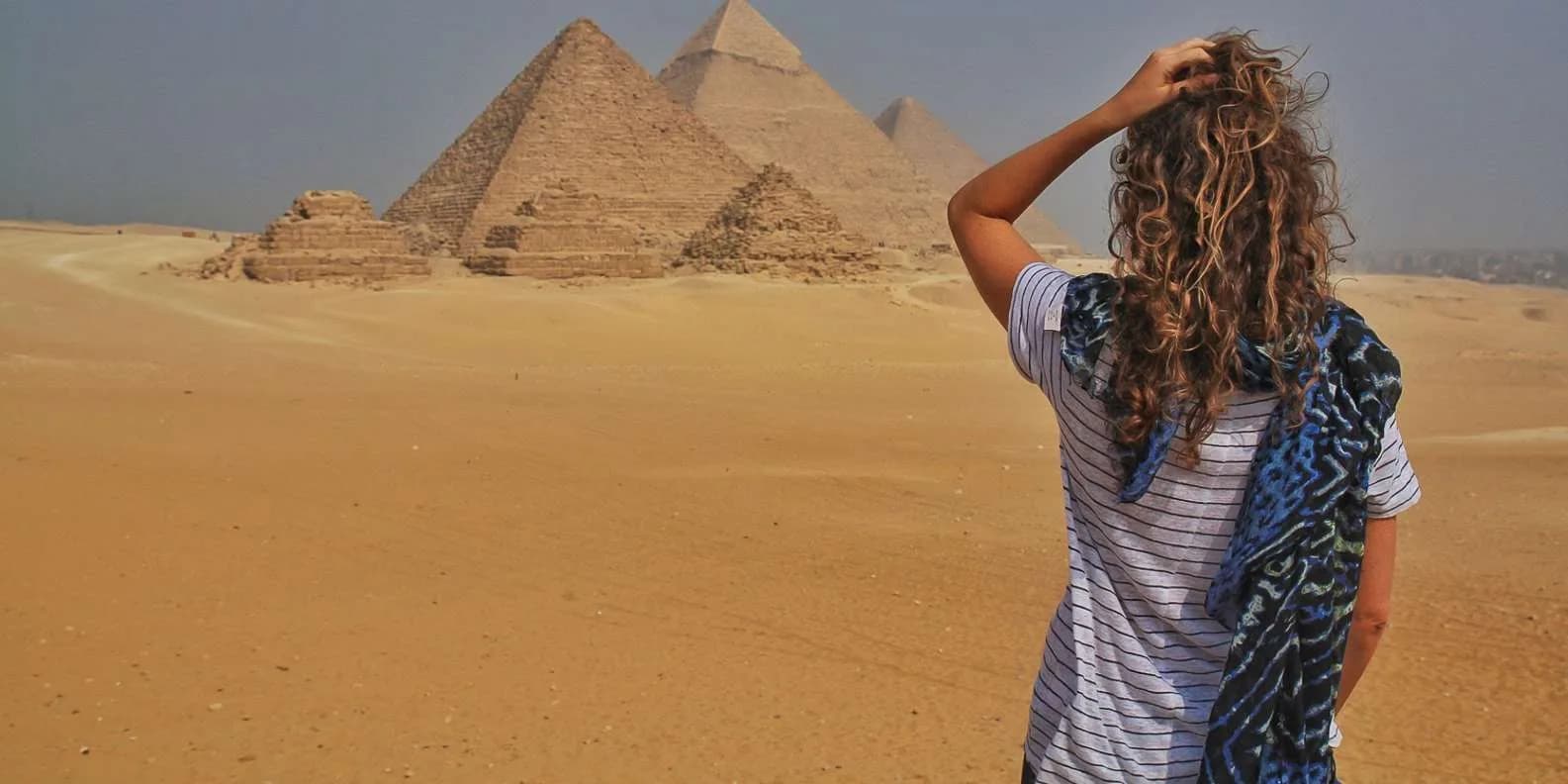
Giza Pyramids and Sphinx: Half-Day Private or Group Tour
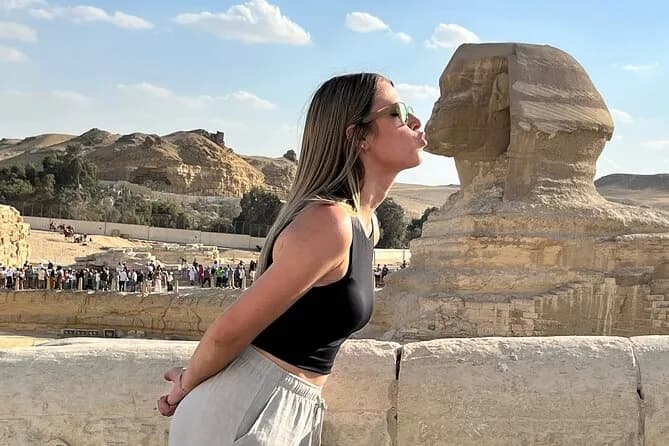
Giza Pyramids all inclusive,Sphinx,lunch,Camel,insid pyramid
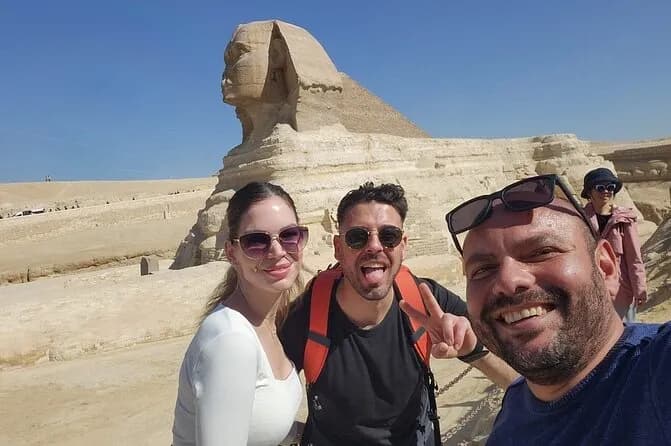
VIP Private Giza Pyramids, Sphinx Tour –Inside the Pyramids&More

From Cairo: Full-Day Guided Tour of Giza Pyramids, Sphinx, Saqqara & Memphis with Entry Tickets, Lunch & Hotel Transfers

Giza Pyramids, Sphinx, Camel, ATV Bike, Shopping & Dinner Cruise
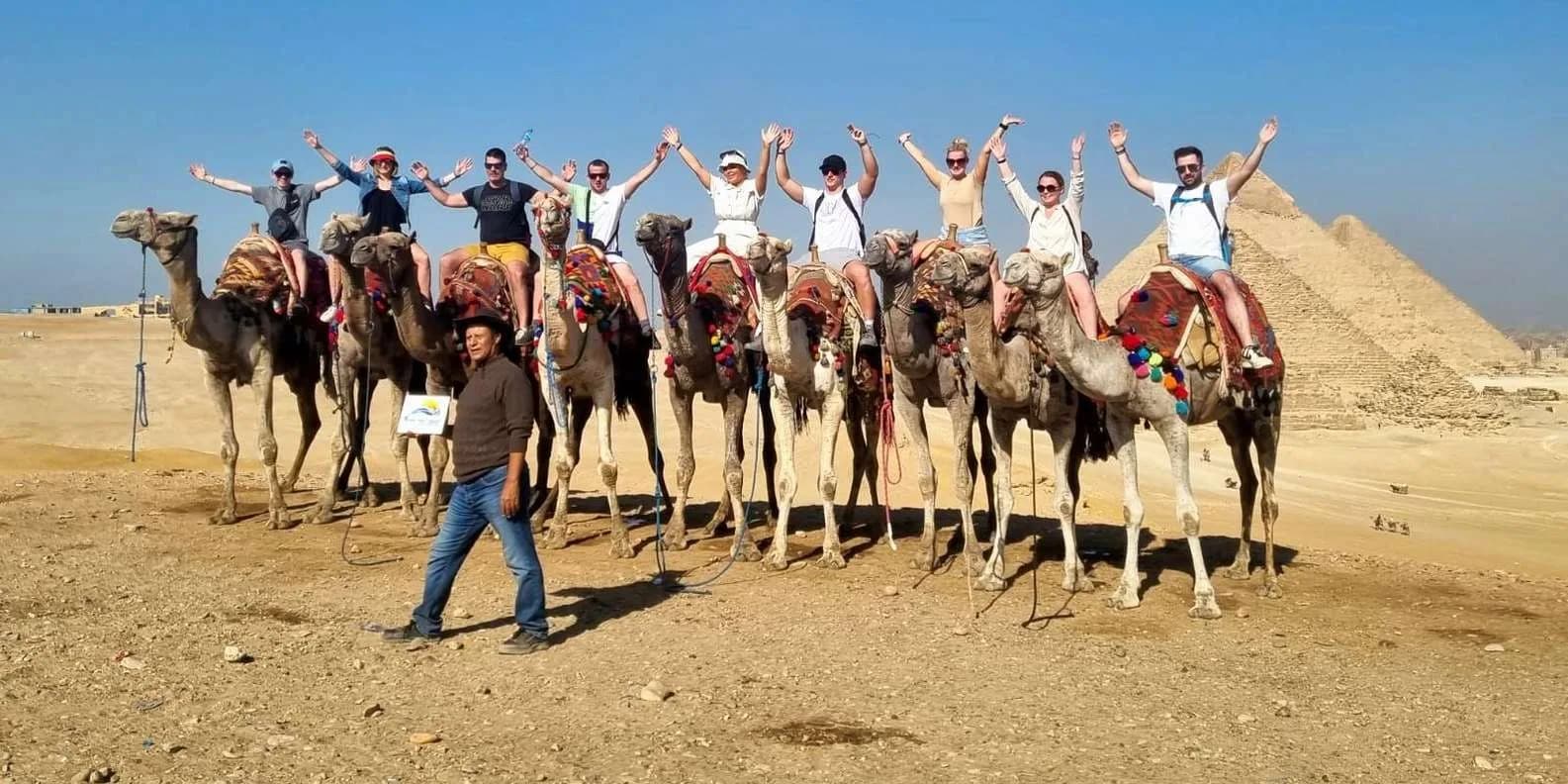
Sharm El Sheikh: One Day Trip to Cairo, Pyramids, Sphinx & GEM by Bus

Giza Pyramids,Sphinx,Camel Ride,ATV Bike,Shopping, Dinner cruise
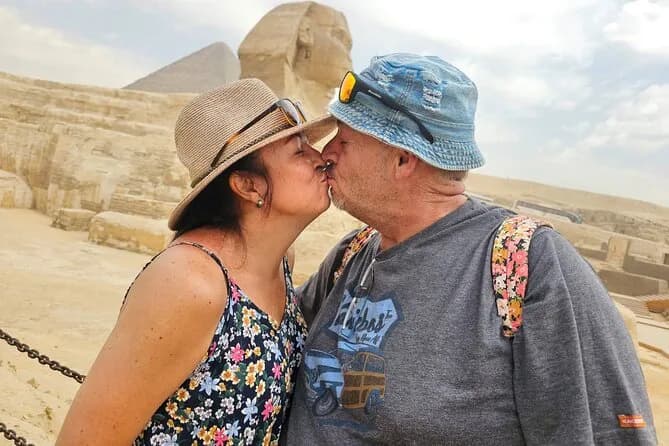
All-in-One Giza Tour, inside Pyramid, sphinx, Camel ride & lunch
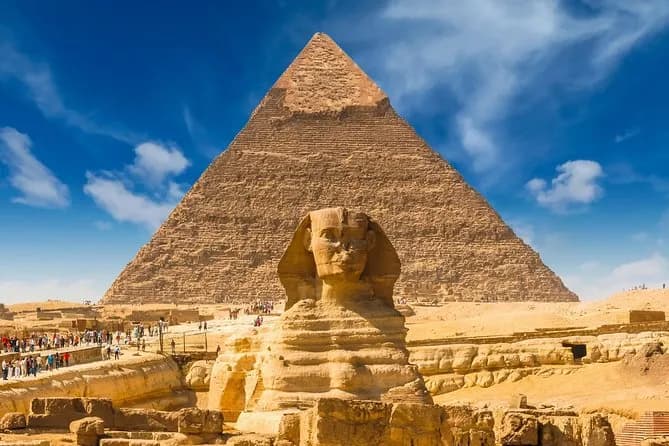
Private Day Tour Giza Pyramids, Sphinx, Memphis, and Saqqara

From Cairo: Half-Day Giza Pyramids & Sphinx Guided Tour with Nile Felucca Ride & Hotel Transfers
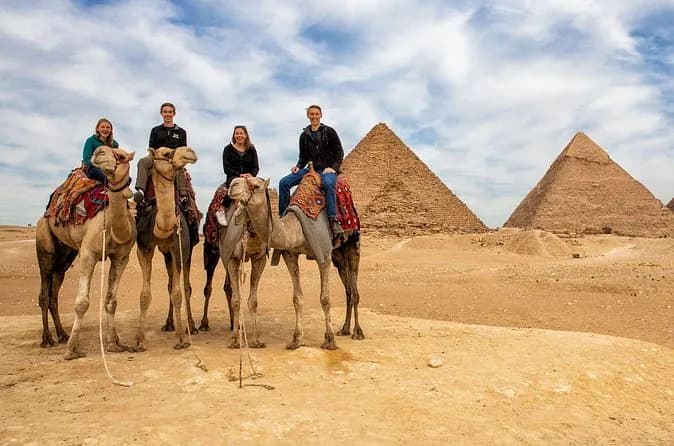
Private Full-Day Tour to Giza Pyramids,Sphinx,Memphis, and Saqqara
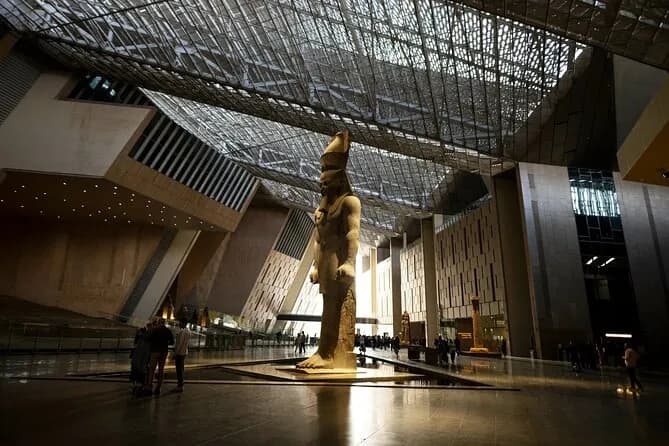
Pyramids Sphinx and Grand Egyptian Museum Nile Felucca or Bazaar
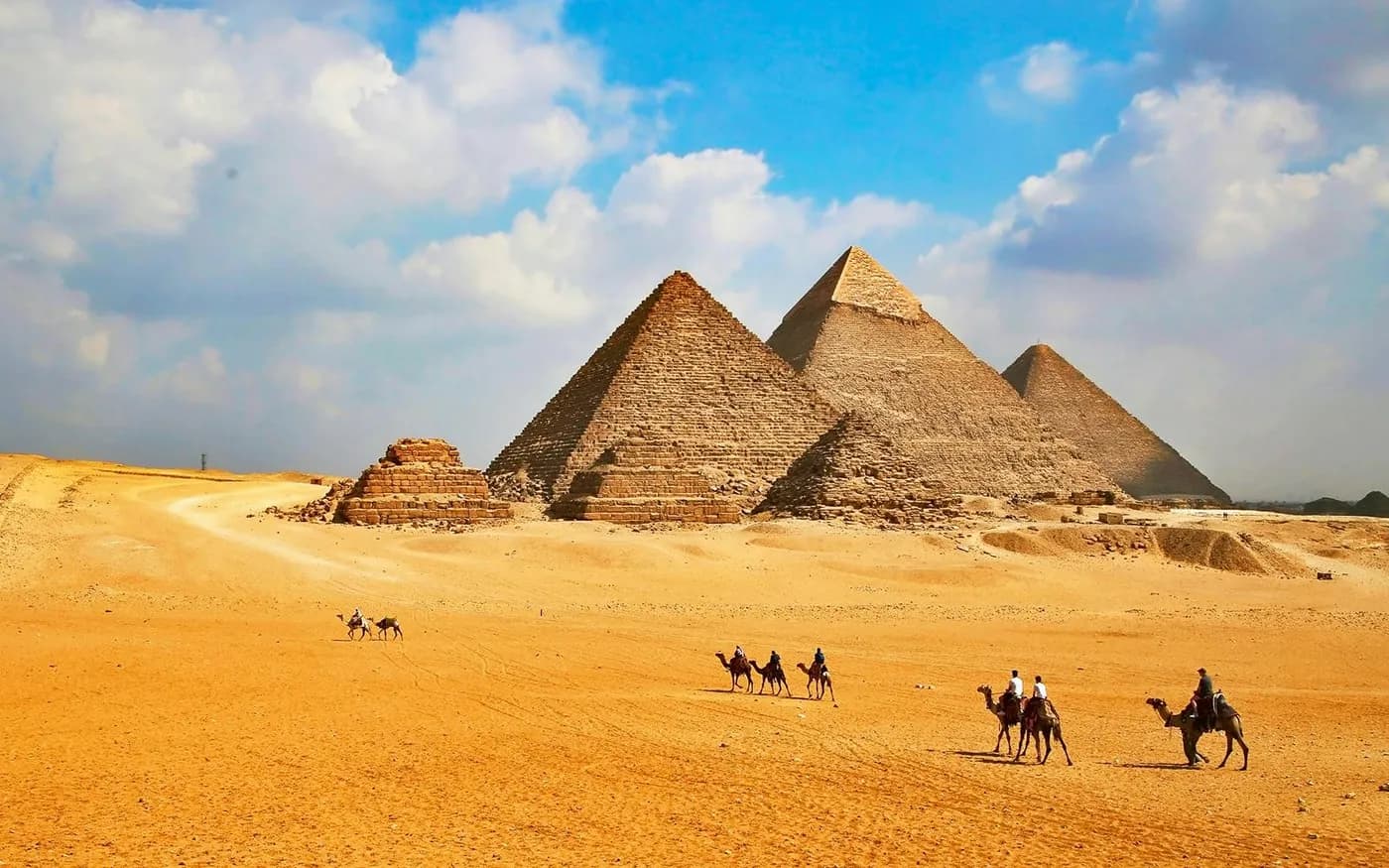
From Cairo: Half-Day Guided Tour of Giza Pyramids & Sphinx with Entry Tickets & Hotel Transfers
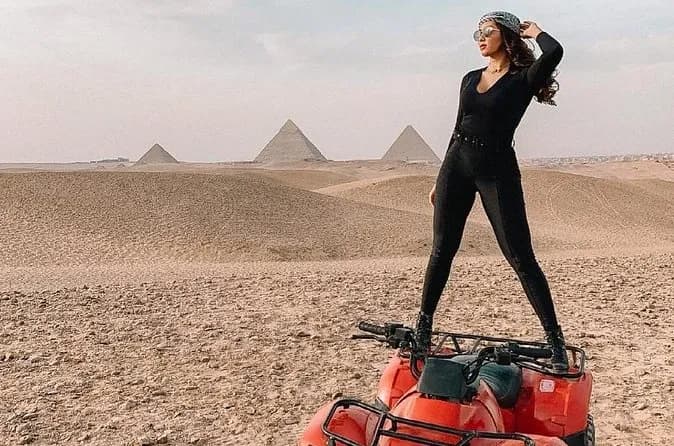
Giza Pyramids Sphinx Camel Ride ATV Bike Shopping Dinner cruise

Cairo By Big Bus full day From Hurghada (Pyramids-sphinx-Egyptian Museum-Lunch)

Giza Pyramids,Sphinx &Grand Egyptian Museum Tour Full Experience
Visiting The Great Sphinx: what to know
Updated 3 September 2026The Great Sphinx is the largest monolithic statue on earth: a lion's body with a king's head, about 73 metres long and 20 metres high, carved straight out of the bedrock of the Giza plateau around four and a half thousand years ago. It was never built and never moved. The sculptors cut a horseshoe of trench into a ridge of limestone and shaped what was left standing in the middle, which is why the Sphinx sits in a hollow below the level of the surrounding desert rather than on top of it, and why archaeologists talk about the Sphinx enclosure rather than a pedestal.
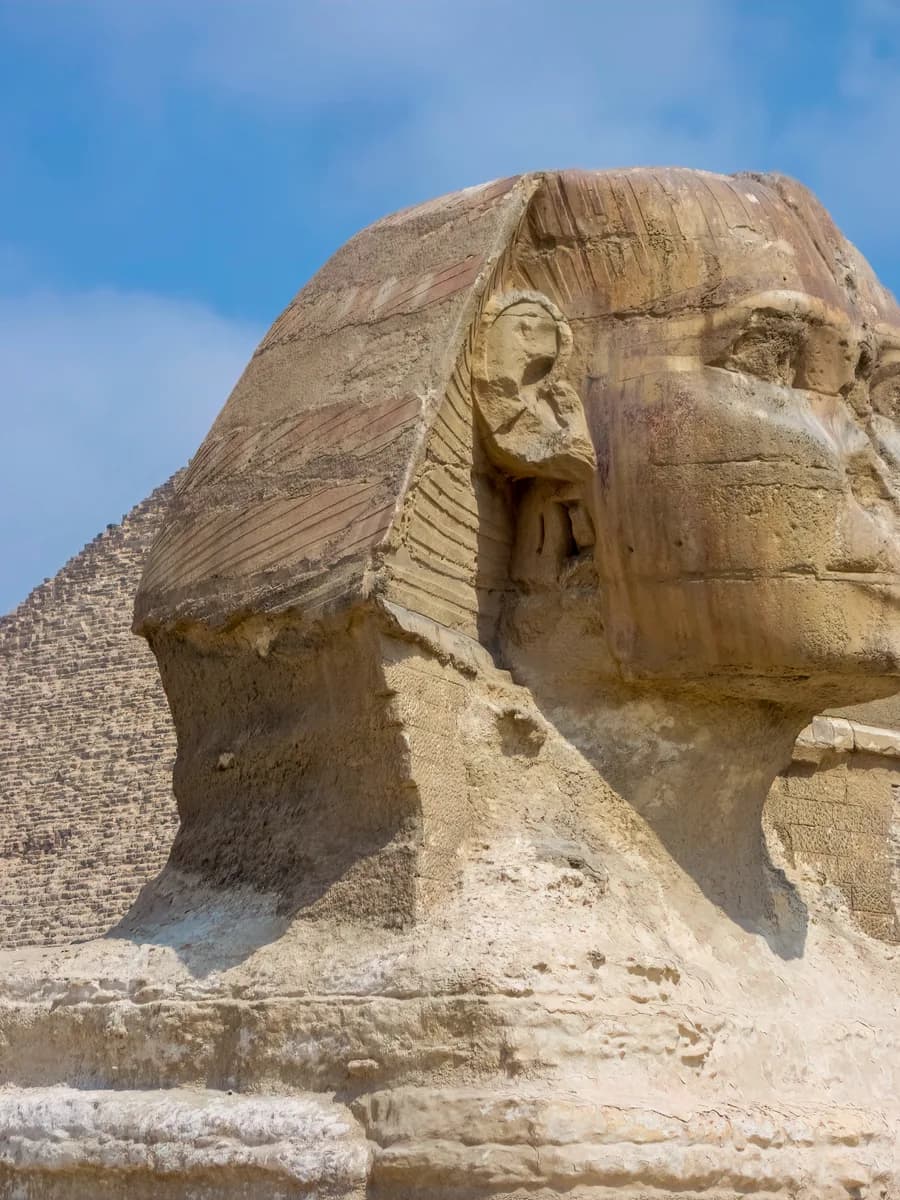
Up close, the statue is stranger and more human than the postcards suggest. The face, about four metres wide, still wears the royal nemes headdress and carries traces of the red paint that once coloured it. The body, cut from softer layers of rock, has weathered into deep ribs and hollows and is patched with repair masonry from restorations that began in antiquity and have never really stopped. Most visitors are surprised twice: first by how worn the Sphinx is, then by how much presence it has anyway.
You will almost certainly see it as part of a pyramids visit. The Sphinx stands at the eastern edge of the plateau, the standard plateau ticket covers it, and there is no separate daytime Sphinx ticket to buy. So this page skips the general Giza logistics, which the Pyramids of Giza guide already covers, and concentrates on the statue itself: who carved it, what happened to its nose, and where to stand to actually see it well.
Carving the Sphinx
Mainstream Egyptology attributes the Sphinx to the pharaoh Khafre, builder of the second Giza pyramid, around 2500 BC. Nobody left an inscription saying so, which is why careful books write likely rather than certain, but the circumstantial case is strong. The Sphinx sits directly beside Khafre's causeway and valley temple and was quarried from the same rock as the temple's blocks; the proportions of the face broadly match his other statues; and when excavators cleared the temple next to it in the 19th century, they found a superb statue of Khafre inside, a discovery that settled the association for most Egyptologists then and since.
The choice of site did the sculptors a favour and lasting damage at the same time. The head was carved from a hard band of limestone and has kept its features for four and a half millennia. The body was cut from the softer layers beneath, which erode quickly; that is what gives the flanks their deeply grooved, layered look, and it is what has kept restorers employed from the pharaohs to the present day. The finished statue was painted, and it once carried a ceremonial false beard: fragments of it sit in the British Museum and in Cairo's collections.
To later Egyptians the statue was a god in its own right. A thousand years after the carving they knew it as Hor-em-akhet, Horus of the Horizon, a solar deity facing the sunrise, and pharaohs built shrines and left offerings in front of it. The name we use is Greek, borrowed from their own riddle posing creature and attached to the statue much later; the Egyptian original was nothing so sinister.
You will also hear that the Sphinx is far older than Egyptology admits, an idea usually argued from erosion patterns on the enclosure walls that some attribute to heavy rain in a much earlier age. The claim has circulated for decades and mainstream archaeology does not accept it: wind, sand and the plateau's famously soft limestone account for the weathering without rewriting history. It is worth knowing the debate exists; it is not worth treating it as settled fact.
The missing nose
The story everyone arrives with, that Napoleon's soldiers shot the nose off with a cannon, is flatly false. Drawings made before Napoleon ever reached Egypt already show the Sphinx without its nose. The most cited account comes from the 15th century historian al-Maqrizi, who blames a Sufi named Muhammad Sa'im al-Dahr for defacing the statue around 1378 AD, supposedly enraged at locals leaving offerings to it. Even that is uncertain, written down decades after the event. What the stone itself shows is unambiguous: chisel marks around the nasal cavity prove the nose was deliberately levered off with tools. It did not erode and it was not blown away. Someone climbed up and removed it on purpose.
The Dream Stele
Between the front paws stands a granite slab called the Dream Stele, set up by the pharaoh Thutmose IV around 1400 BC, more than a thousand years after the statue was carved. Its inscription tells how the young prince, resting from a hunt, fell asleep in the shadow of the Sphinx, which by then was buried up to its neck in sand. In a dream the Sphinx promised him the throne of Egypt if he cleared the sand choking its body. He did, he became king, and the stele records the bargain. It is one of the earliest accounts of monument restoration anywhere, and the neatest possible proof that the Sphinx was already ancient history to the ancient Egyptians.
Buried, dug out, repaired, repeat
For most of its existence the Sphinx has been buried to the shoulders, because sand pours back into the hollow whenever nobody is clearing it. Thutmose IV dug it out; the Romans dug it out again; and the statue was only fully excavated in the 20th century, when the paws, the terrace and the temples in front of it were finally exposed. Conservation has run more or less continuously since. The pale blockwork sheathing parts of the body and paws spans many eras, some of it ancient repair in its own right, and once you notice it you can read the statue's whole biography in the patches.
What to see
You cannot cross the enclosure floor or touch the statue. The Sphinx is viewed from a raised terrace beside Khafre's valley temple, roughly level with the paws, and that turns out to be the perfect height: head on, slightly below the face, with Khafre's pyramid rising directly behind. Nearly every famous photograph of the Sphinx was taken within a few metres of this spot.
Give the terrace more than the standard five minutes. Look for the Dream Stele standing between the forepaws; the erosion ribs running the length of the body; the visibly different generations of repair masonry along the flanks; and the way the head sits sharper and finer than everything below it, the hard stone band doing its work across four and a half thousand years. This is also where the forced perspective photos happen, the kissing and head pinching shots, so expect a slow shuffle of poses around you at busy hours.
The route to the terrace runs through Khafre's valley temple, and the temple deserves attention rather than a walk through. It is a severe, beautiful hall of enormous granite blocks, one of the best preserved buildings of the Old Kingdom, and the place where that statue of Khafre was found. Most groups hurry through it while talking about something else; slow down for five minutes and you will have it largely to yourself.
Then work the angles. The terrace gives you the classic portrait. For the profile, and for the postcard composition with a pyramid stacked directly behind the head, walk up the plateau paths south and west of the enclosure and line the shot up yourself, or ask a guide to place you; the alignment shifts surprisingly fast as you move. From the higher ground near Khafre's causeway you can look down into the enclosure and understand the statue as what it is, a sculpture standing in its own quarry. A camel or horse loop around the plateau adds long views of the Sphinx with the whole necropolis behind it that you cannot get on foot.
What first timers miss: the valley temple they walked through, the stele between the paws, and the view down into the enclosure from above. What they remember anyway is the first head on look from the terrace, which lands harder than two centuries of photographs suggest it should.
Getting there
The Sphinx stands at the lowest, easternmost point of the Giza plateau, a few hundred metres downhill from the Great Pyramid and immediately inside the Sphinx gate, the site's lower entrance beside the valley temple. That geography gives you two clean options. If the Sphinx is your priority, enter at the Sphinx gate and see it first, in morning light with the terrace nearly empty. If you are doing the classic circuit, enter at the main gate uphill, take the pyramids and the panorama first, and let the Sphinx be the finale on the way out through the bottom of the site; most tours run it in that order.
The practicalities are the same as for the pyramids: about 40 minutes by car from downtown Cairo, about 20 from the Grand Egyptian Museum, and ride hailing apps work well for the trip. There is no separate Sphinx admission during the day; the plateau ticket covers it. Gate strategy, tour comparisons and the rest of the plateau logistics live in the pyramids guide linked above, so they are not repeated here.
The one Sphinx specific decision is the evening. The Sound and Light show is watched from seating that faces the statue, so a return after dark brings you back to the Sphinx side of the site. Arrange your transport home in advance rather than improvising it at night.
Best time of day
The Sphinx faces due east, and that single fact organises the whole photographic day. In the first hour after the gates open, the low sun lights the face straight on: warm, soft, every feature legible, with the haze at its thinnest and the terrace at its emptiest. That is the hour for portraits. By mid morning the coach groups arrive in waves and the terrace becomes the busiest bottleneck on the plateau, with the classic viewpoint operating like a slow queue.
Midday flattens the face into glare and washes the stone to a single colour; if you are on the plateau then, spend those hours on the pyramids or over lunch rather than at the terrace. Late afternoon reverses the geometry. The sun drops behind the plateau, the face falls into shadow, and the light turns gold on the pyramids behind, which suits silhouettes and wide compositions more than portraits. The site closes in the late afternoon, so that golden window is short.
After dark the Sphinx takes on the strangest job in Egyptian tourism: narrating the Sound and Light show, its recorded voice walking the audience through the plateau's history while the monuments glow under coloured floodlights. The show runs most evenings, rotates through several languages on a schedule, and lasts about 45 minutes to an hour on a separate evening ticket. Check which language plays on your night before booking. It is kitsch, and from a good seat it works. If your evening is free after a plateau morning and a Grand Egyptian Museum afternoon, it rounds off the full Giza day.
Tips for your visit
- Go to the terrace first thing or near closing; the hours in between belong to the crowds.
- Shoot the head on classic from the terrace, then walk the plateau paths to line up the profile with Khafre's pyramid stacked behind the head.
- You cannot touch the Sphinx or enter the enclosure floor, and anyone offering to get you closer for a tip is selling something that does not exist.
- Walk the valley temple slowly instead of treating it as a corridor; it is one of the finest surviving buildings of the Old Kingdom.
- Find the Dream Stele between the forepaws and the different generations of repair masonry along the body; together they are the statue's biography in stone.
- Expect the size to sneak up on you. The Sphinx sits in a hollow beneath far larger monuments, so the first distant glance can read small; judge it from the terrace, not from the road.
- Thirty to 45 minutes at the terrace and temple is enough for most visits; photographers chasing the light should budget more.
- For the Sound and Light show, check the language schedule for your evening and book return transport before you go.
- The terrace has no shade; carry water and a hat even for a short stop.
Other Egypt attractions
Frequently asked questions
How much does it cost to visit The Great Sphinx?
Tours and tickets start from 78 EGP (about 2 USD), with a median price of about 1,865 EGP per person.
How many The Great Sphinx tours are available?
There are 1007 bookable tours and tickets for The Great Sphinx.
What is the best The Great Sphinx tour?
A top-rated pick is "Cairo: Pyramids & Great Sphinx Private Tour with Camel Ride".
Is the Sphinx older than the pyramids?
Mainstream Egyptology says no. The evidence points to it being carved around 2500 BC for the pharaoh Khafre, as part of the same building programme as the second pyramid and its valley temple. A fringe theory reads the enclosure's erosion as proof of a far older date, but archaeologists explain that weathering through wind, sand and the plateau's soft limestone. Treat the older Sphinx idea as a curiosity, not a finding.
Can you touch the Sphinx or get close to it?
No. The enclosure floor is closed, and the statue is viewed from a raised terrace beside Khafre's valley temple, roughly level with the paws and close enough to fill a camera frame. That is the same viewpoint the famous photographs use, so you lose nothing, and any offer to sneak you closer is a scam.
How long does the Sphinx take, and is it worth it if you have already seen the pyramids?
Thirty to 45 minutes covers the terrace, the Dream Stele view and the valley temple without rushing. It is worth the stop: the Sphinx is the one monument at Giza with a human face, and meeting it head on from the terrace feels entirely different from spotting it across the sand. There is a reason almost every tour saves it for last.