
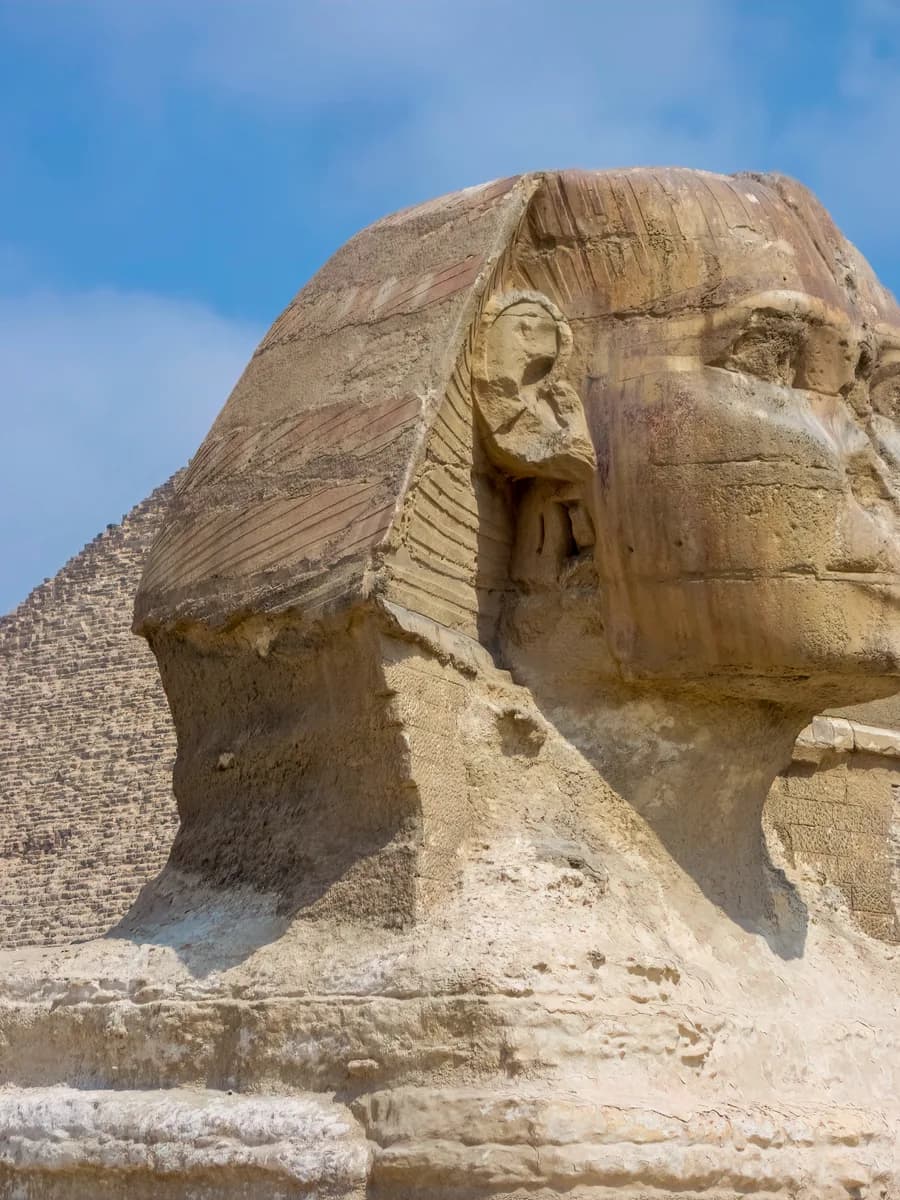
Grand Egyptian Museum Tours & Tickets
Browse 503 tickets and tours of the world's largest museum in Gizeh, starting from 104 EGP (about 2 USD), with an average rating of 4.8 out of 5. Real prices compared across booking platforms and updated for 2026.
Grand Egyptian Museum tickets & opening hours (2026)
| Adult (all-inclusive) | 1,450 EGP |
| Student / child (6–24) | 730 EGP |
Tickets are timed and must be booked online in advance. The all-inclusive ticket covers the Tutankhamun Galleries and Khufu's Solar Boat — no separate add-on.
Prices are site entry fees for foreign adults, updated 2026-07. Many tours below include tickets and skip-the-line entry.
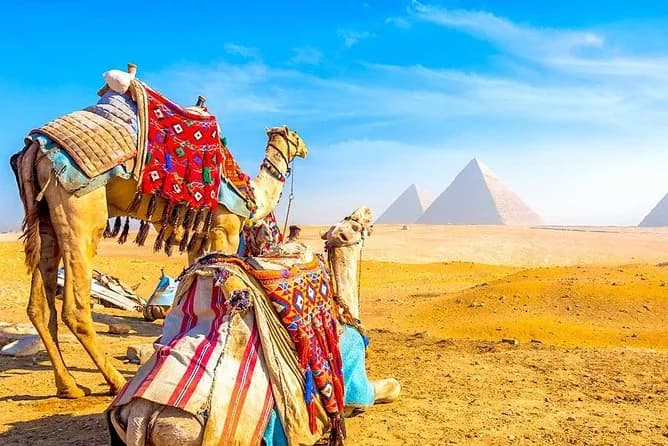
Visite des pyramides et du Grand Musée égyptien
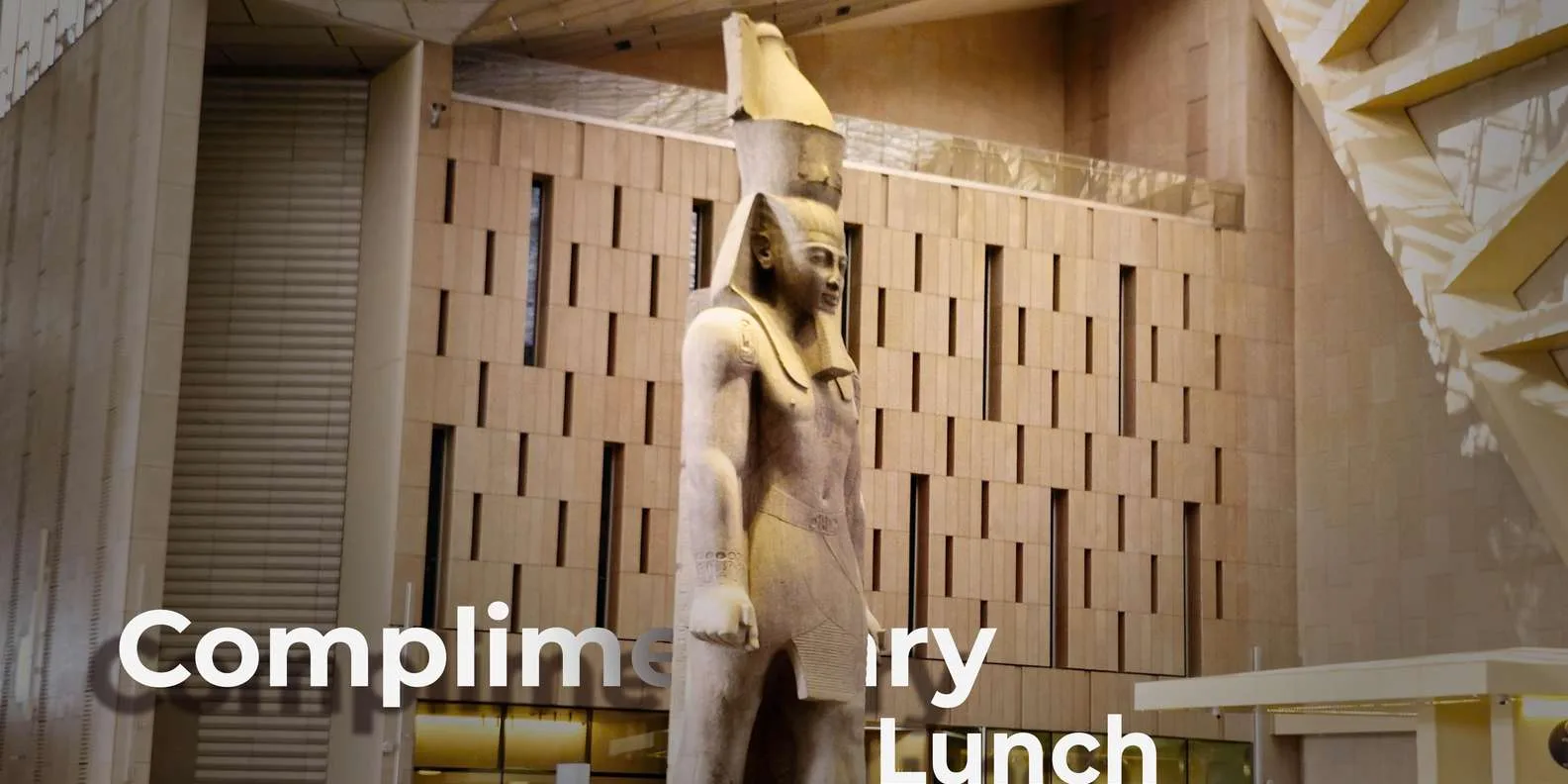
Le Caire : visite du Grand Musée égyptien, des pyramides et du Sphinx avec déjeuner
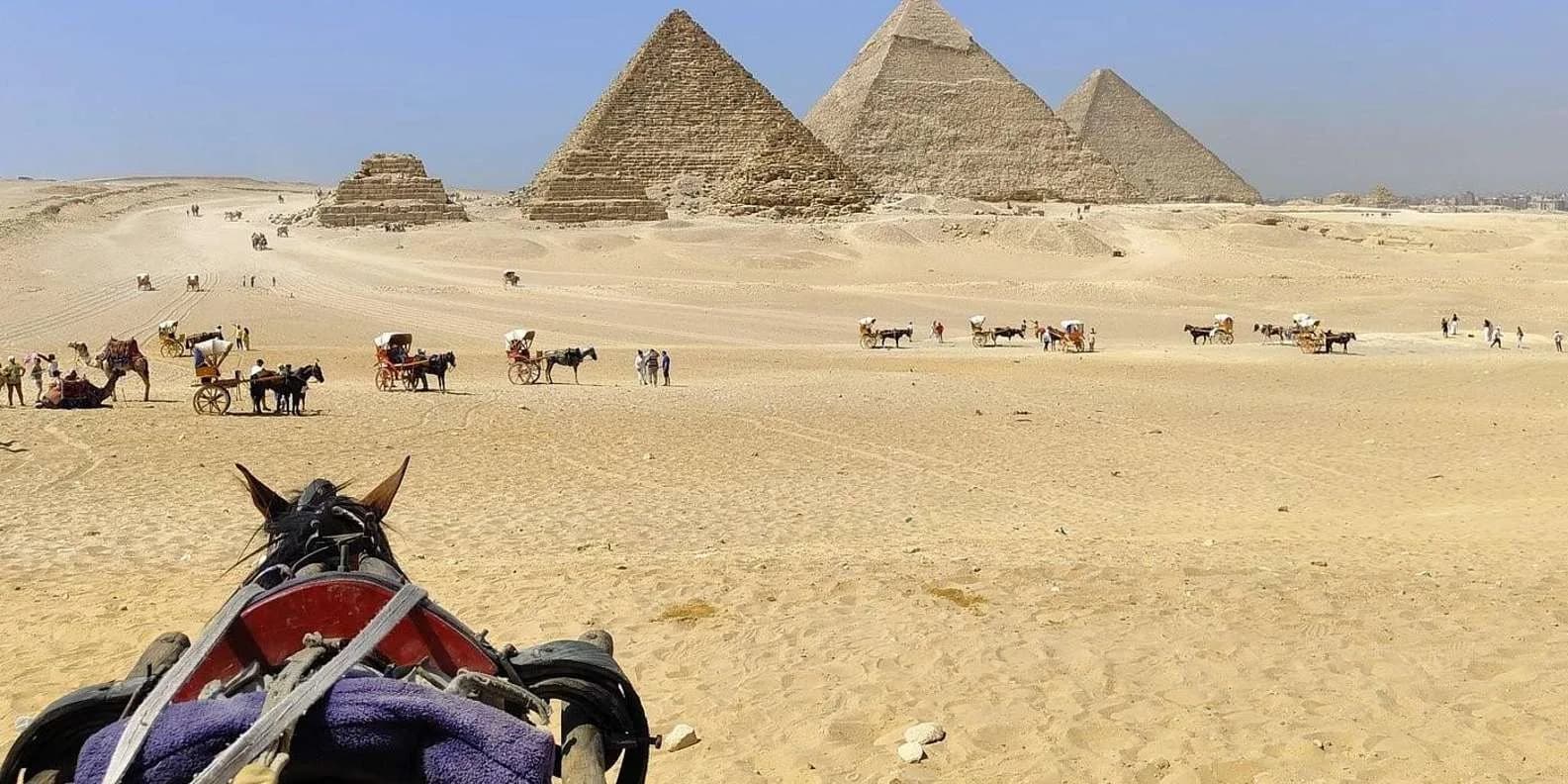
Hurghada : excursion d'une journée au Caire en avion — pyramides, Sphinx et musée
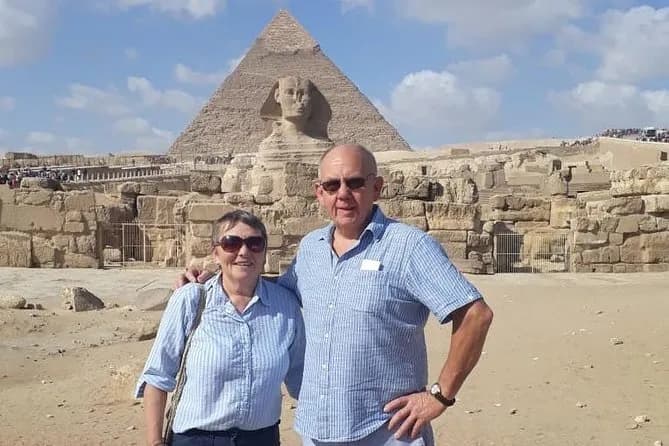
Le Caire : visite privée de 8 heures des pyramides et du Grand Musée égyptien
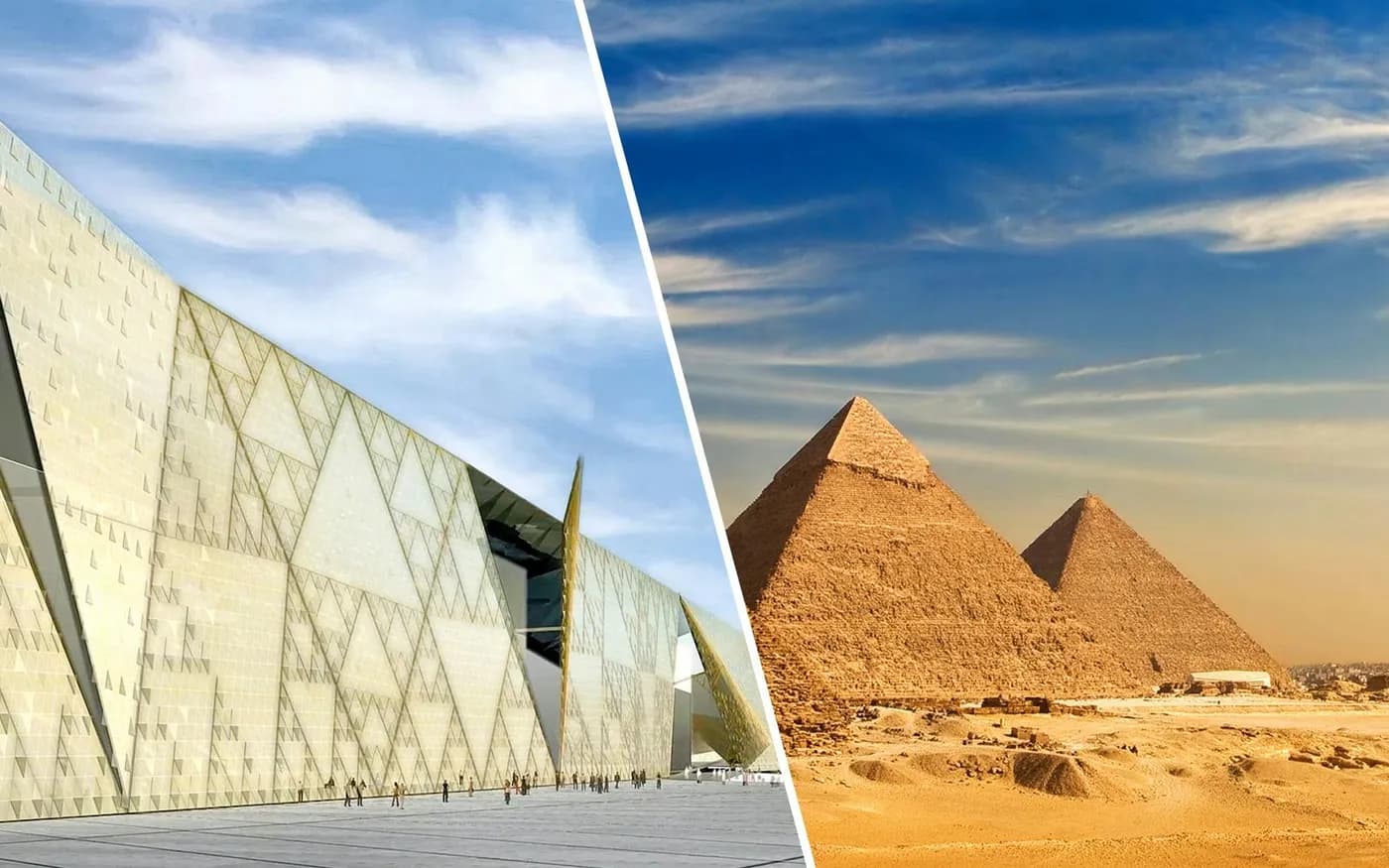
Combo (-8 %) : entrée coupe-file au complexe de Gizeh + billets coupe-file pour le Grand Musée égyptien
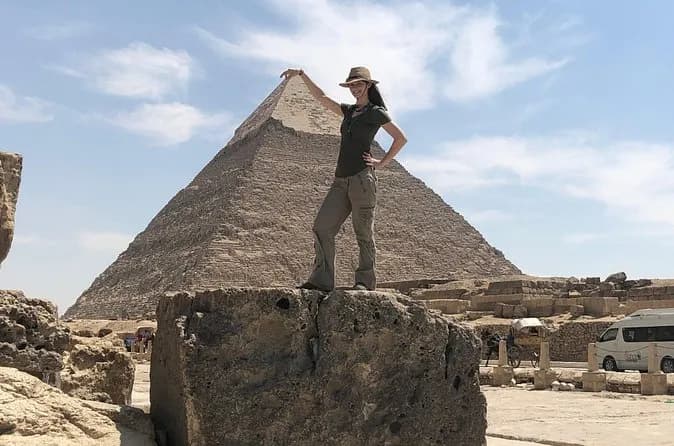
Le meilleur du Caire : visite privée des pyramides de Gizeh, du Sphinx et du Grand Musée
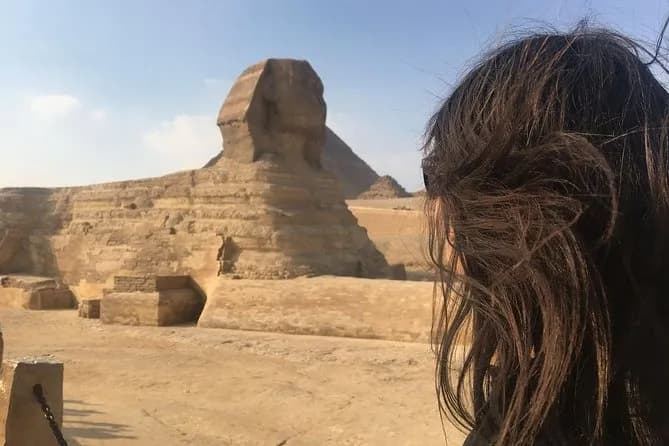
Hurghada : Excursion au Caire avec vol, visite des pyramides ou du musée antique
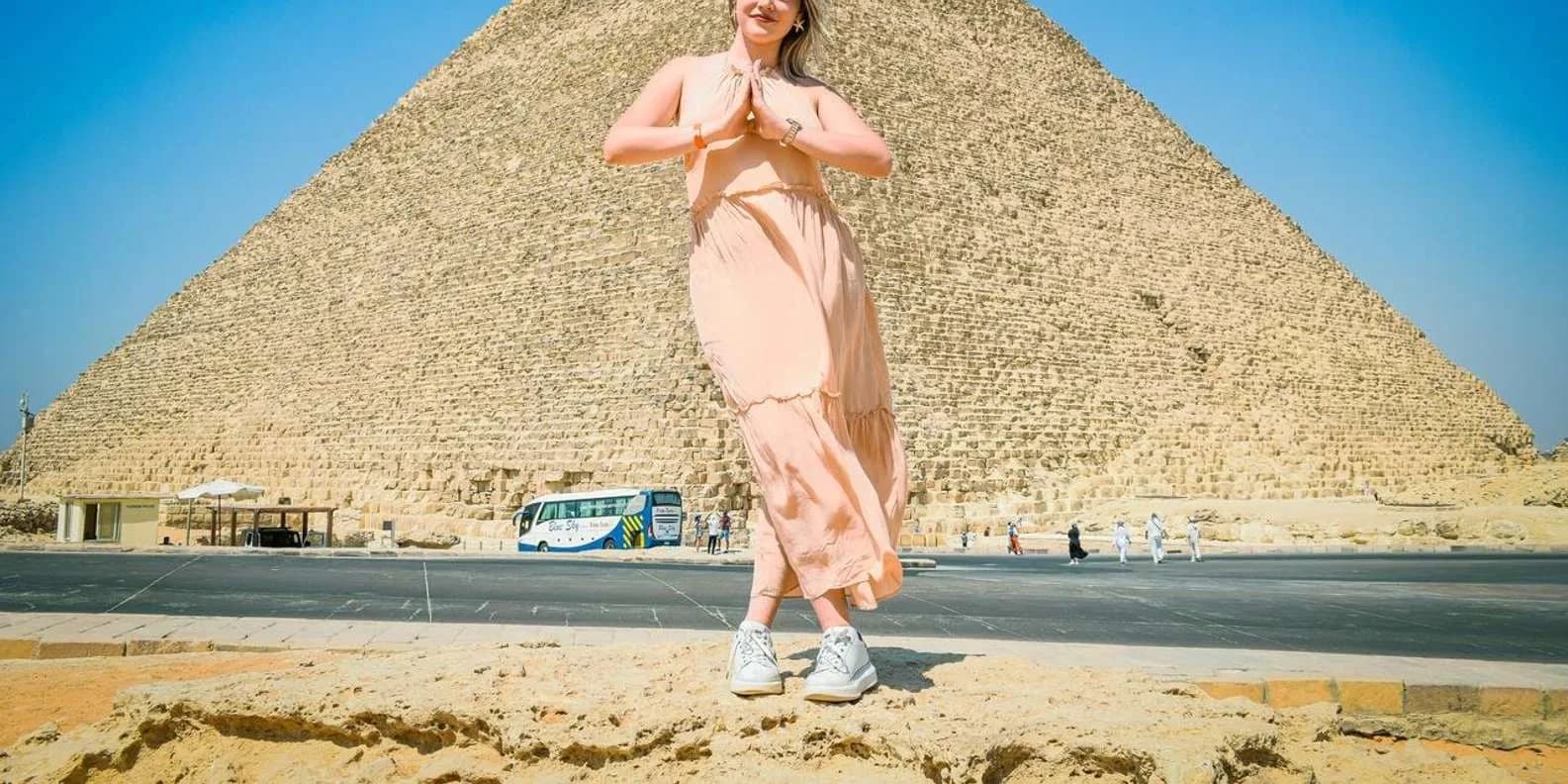
D'Hurghada au Caire : pyramides et musée pour les nouveaux visiteurs

Billets coupe-file pour le Grand Musée égyptien

Combo (-10 %) : billets coupe-file pour le Grand Musée égyptien + croisière-dîner sur le Nil

Combo (-2 %) : billets coupe-file pour le Grand Musée égyptien + Musée égyptien des Antiquités
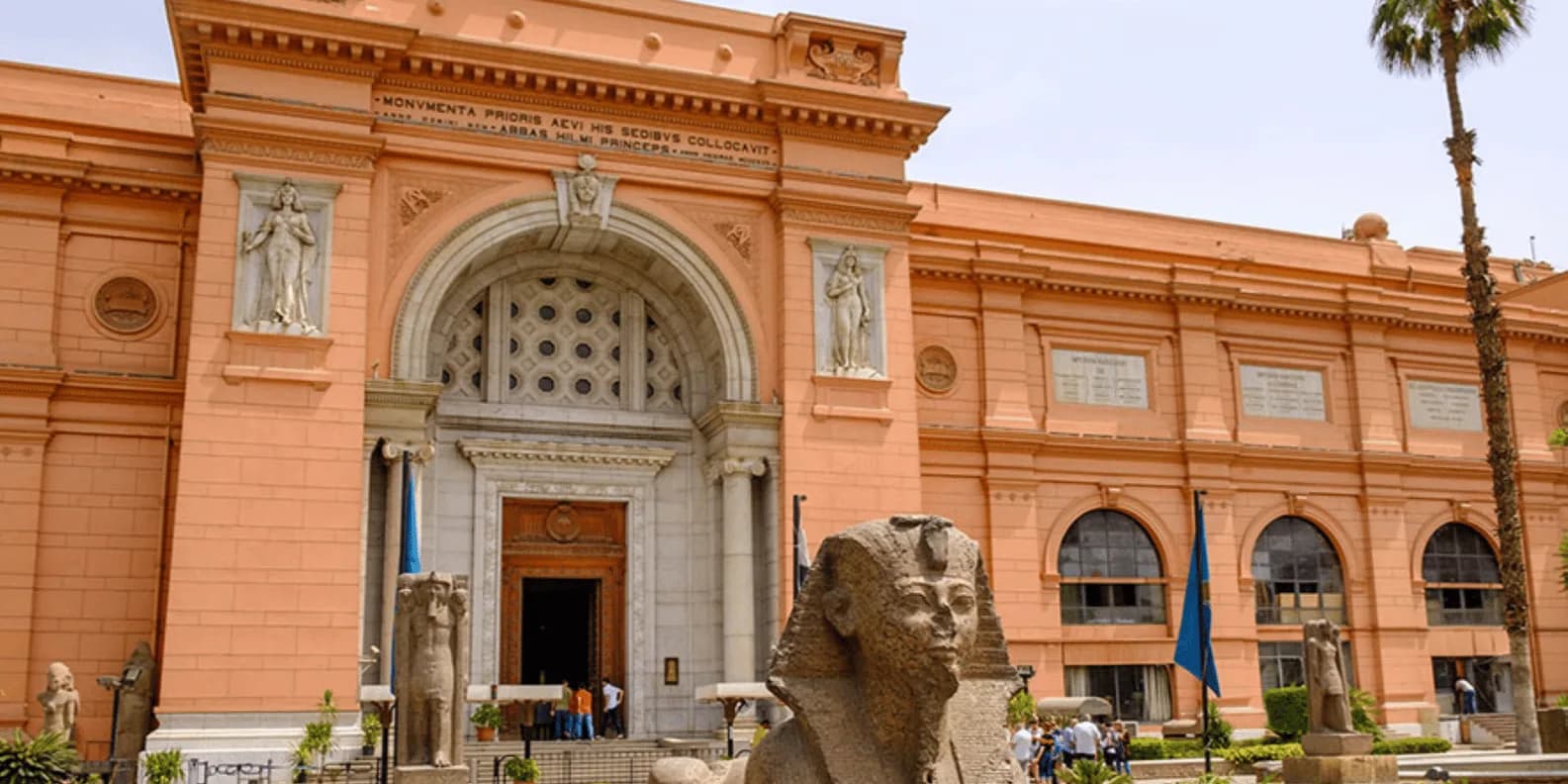
Le Caire : visite guidée du musée égyptien, de la citadelle et du vieux Caire
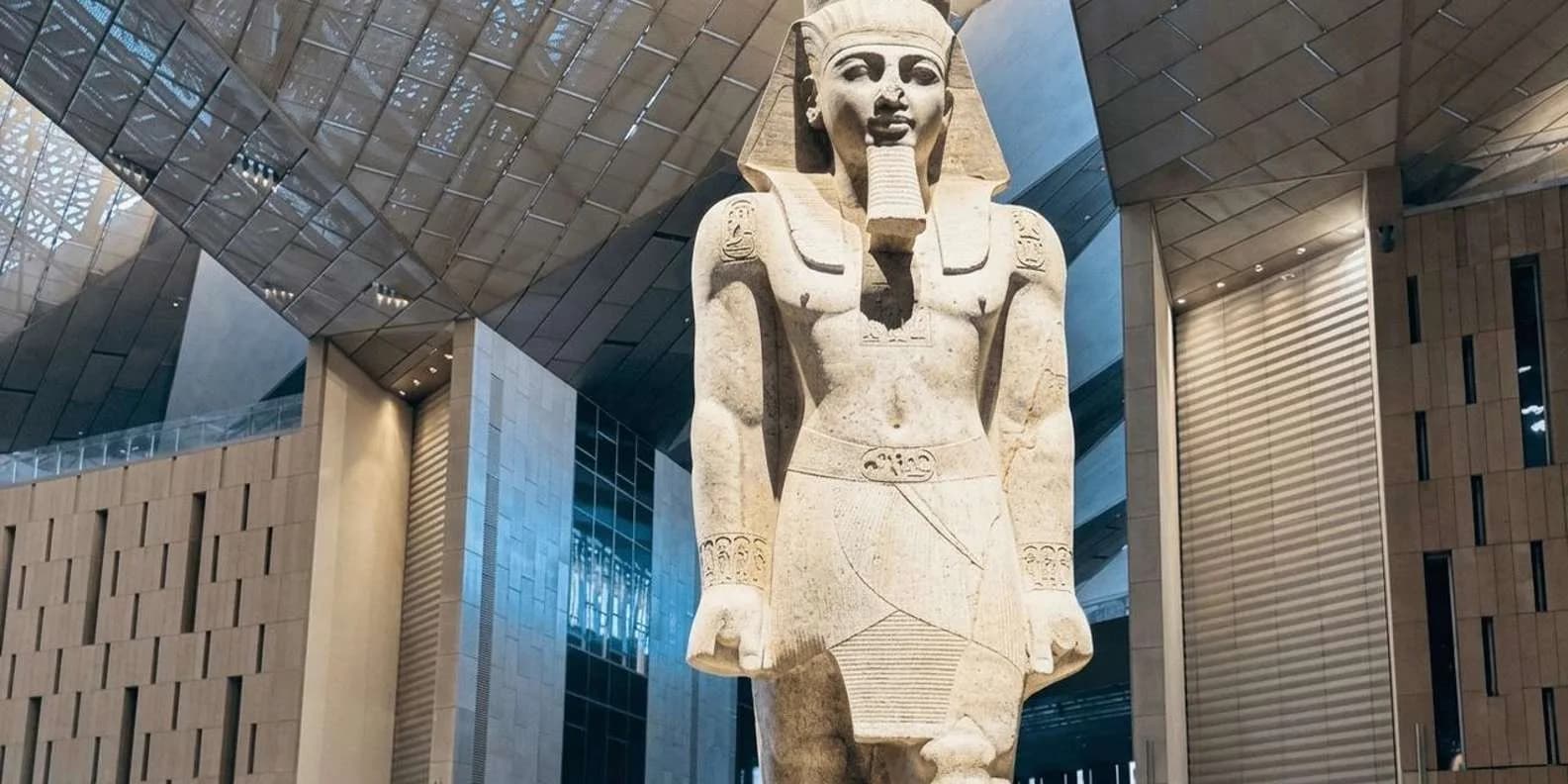
De Hurghada au Caire : pyramides et Grand Musée égyptien en bus
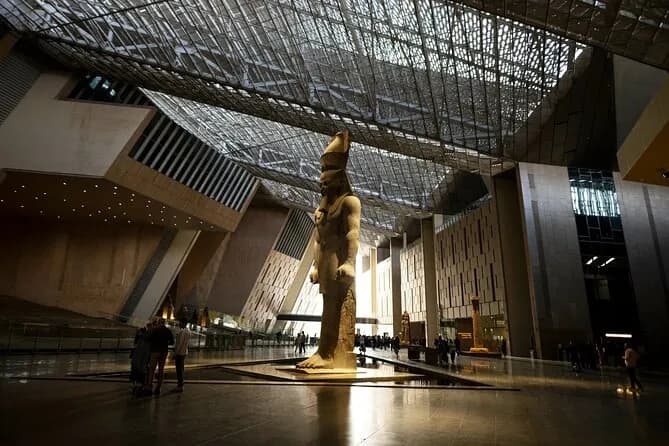
Pyramides, Sphinx et Grand Musée égyptien, felouque sur le Nil OU bazar

Excursion d'une journée au Caire vieux musée égyptien et pyramides avec déjeuner

Le Caire en gros bus toute la journée depuis Hurghada (pyramides-sphinx-musée égyptien-déjeuner)

Pyramides de Gizeh,Sphinx et Grand Musée égyptien Visite complète Expérience

Partez à la découverte des pyramides et du grand musée du Caire
Depuis Hurghada : excursion d'une journée au Caire — Grand Musée égyptien et pyramides

De Hurghada au Caire : pyramides et musée pour les primo-visiteurs

Visite du Grand Musée égyptien — billets et transfert à l'hôtel

Tout en un : Pyramides de Gizeh, Sphinx, Grand Musée égyptien et Toutânkhamon

Charm el-Cheikh : visite des grandes pyramides, du Sphinx et du musée en bus

Excursion d'une journée de Hurghada au Caire en avion et Grand Musée égyptien
Visiting Grand Egyptian Museum: what to know
Updated 3 September 2026The Grand Egyptian Museum, GEM to almost everyone, is the largest archaeological museum in the world: a vast, angular building of stone and glass on the desert edge of the Giza plateau, about two kilometres from the pyramids it was built to face. After two decades of construction it opened in full in November 2025, and it now holds more than 100,000 artefacts, headlined by the complete treasure of Tutankhamun, shown together for the first time since Howard Carter began emptying the tomb in the 1920s.
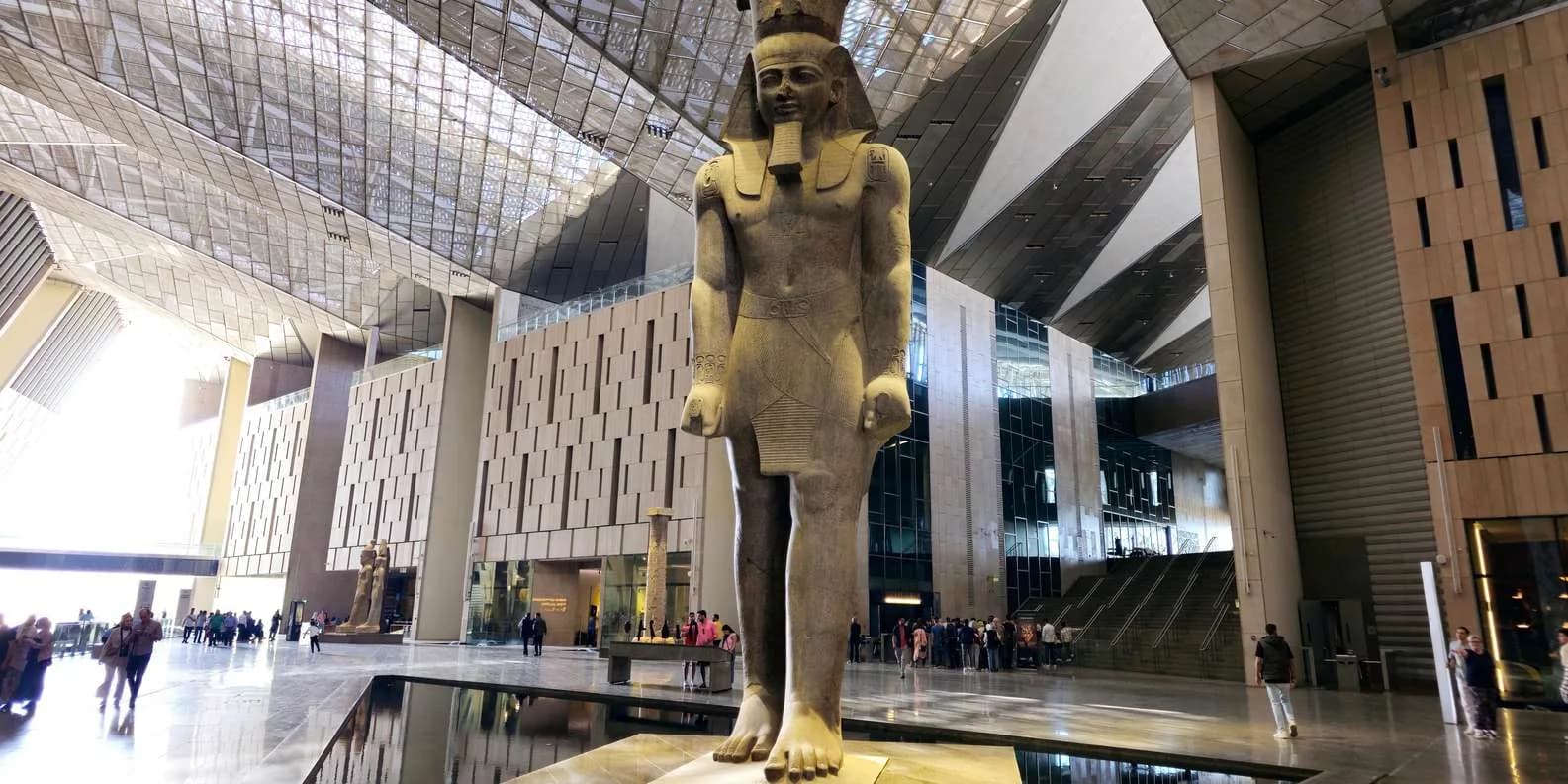
What makes it worth your time is not only what sits in the cases. The building itself is organised as a slow climb toward the pyramids: you enter beneath a hanging obelisk, pass a colossus of Ramses II in the atrium, ascend a staircase lined with dozens of royal statues, and arrive at a wall of glass with the pyramids of Giza standing on the horizon, exactly where the architects intended them to appear. No other museum ends its main axis with a view like that, and no other museum could.
Two practical truths shape every visit, so absorb them now. First, tickets are timed and sold online only, so you book a slot before you go rather than queueing at a window. Second, the museum is genuinely enormous, so a visit is closer to a hike than a stroll: plan at least half a day, wear proper shoes, and accept in advance that you will not see everything.
Twenty years in the making
The project was announced in 2002, when Egypt concluded that its century-old museum on Tahrir Square could no longer hold, conserve or display what the country kept digging up. An international design competition drew more than 1,500 entries and was won by Heneghan Peng, then a small Dublin practice, with a scheme whose defining idea still works on you today: the building sits on the escarpment between Cairo and Giza, and its long angled walls radiate outward on sightlines aimed at the pyramids themselves. The museum does not just display ancient Egypt; it points at it.
Then came the long wait. Construction crawled through the 2011 revolution and the unstable years that followed, through funding crunches bridged largely by Japanese development loans, and finally through the pandemic. Opening dates were announced and missed for the better part of a decade, long enough that "when the GEM opens" became a running joke among Egypt travellers. The work never actually stopped. The museum's conservation centre opened on site years ahead of the galleries and quietly restored tens of thousands of objects, including Tutankhamun's most fragile textiles, beds and chariots, before a single visitor arrived. Landmarks fell one by one: in 2018 the 11-metre, 83-tonne granite colossus of Ramses II, which had spent half a century breathing traffic fumes outside Cairo's main railway station, was moved into the atrium as the first object in place, and in 2021 the Khufu solar boat followed, carried overnight from its old home beside the Great Pyramid in a purpose-built transporter. The atrium and Grand Staircase began receiving visitors in 2023, the twelve main galleries opened in late 2024, and the Tutankhamun galleries arrived with the full state opening in November 2025.
Those Tutankhamun galleries are the heart of the museum. When Carter found the tomb in the Valley of the Kings in 1922, the clearance took a decade, and the finds were never displayed as a whole: the old Tahrir museum showed a famous fraction while the rest sat in storage. Here, for the first time, the complete collection of more than 5,000 objects is together in two dedicated galleries: the solid gold funerary mask, the nested gilded shrines that filled the burial chamber, the chariots, thrones, beds and jewellery, and the small personal things that make the boy king feel less like a brand and more like a person.
The other two anchors deserve their own history. The Grand Staircase is the museum's spine: a monumental ascent lined with roughly sixty statues and sarcophagi of kings, rising level by level until the glass wall at the top frames the pyramids. And the Khufu solar boat, displayed in its own building, is among the oldest and largest wooden vessels to survive from antiquity: a full-size cedar ship around 4,600 years old, found in 1954 dismantled into more than a thousand pieces in a sealed pit at the foot of the Great Pyramid, then painstakingly reassembled over the years that followed. A second boat from a neighbouring pit is still being conserved, a reminder that this museum's story is not finished.
What to see
You cannot see 100,000 objects in a visit, so walk a deliberate line through the best of it.
Begin outside: the obelisk on the entrance plaza is raised on supports so that you can stand beneath it and look up at its underside, something no pharaoh ever intended. Inside, the atrium belongs to the Ramses II colossus; give it a slow circle before the crowds bunch up. Then take the Grand Staircase on foot, reading the statues as you climb, and pause at the top for the glass wall with the pyramids beyond. It is the museum's defining view and it lands hardest the first time.
From the top, work through the twelve main galleries. They are arranged by era but organised by theme, kingship, society and belief, rather than as one strict timeline, which is worth knowing so you do not backtrack trying to walk in date order. If your attention is finite, pick two or three halls and take them slowly rather than skimming all twelve.
If your slot gives you only a couple of hours, run the priority order the museum itself rewards: the colossus, the staircase, the window, then the Tutankhamun galleries, with the solar boat as the bonus if time remains. That sequence covers the headline moments in a focused visit and leaves the afternoon free for the plateau. Enthusiasts should simply double the time on everything and add the halls they skipped.
Save a clear, unhurried hour for the Tutankhamun galleries. They sit slightly apart from the main run, the crowds are thickest there from late morning, and rushing them defeats the purpose of coming. The gold mask rewards patience: let the first scrum move on and the room clears in waves. The Khufu solar boat is the other detached stop, in its own building, so treat it as a final chapter rather than squeezing it between halls.
Two footnotes from experience. First, distances inside are long, the grounds run to roughly 81 hectares, so a surprising share of your visit is spent simply walking; budget for it. Second, if you are travelling with children, this is the Egyptian museum that holds their attention: bright, spacious and paced by the gold of the Tutankhamun rooms, with cafes along the entrance concourse for when energy dips.
Getting there
The museum stands beside the Cairo to Alexandria desert road on the edge of Giza, about 45 minutes by car from central Cairo in normal traffic and only minutes from the pyramids themselves. Uber and Careem are the simplest independent options and remove any fare negotiation; there is ample paid parking if you drive. Most guided visits include hotel pickup, which is the least stressful way to deal with Cairo traffic, and combined tours pair the museum with the pyramids and Sphinx in a single day with an Egyptologist. If you are doing both sites independently, arrange transport that covers the whole day from the start: the two entrances are minutes apart by car, but no metro line reaches the museum, and finding a fair ride on the plateau side mid-afternoon involves more negotiation than most people want.
That pairing is the key logistical decision, and the answer is easy: do both on the same day, museum in the cooler morning and plateau in the afternoon, or the reverse if you want early light on the pyramids. The two sites are two kilometres apart, so nothing is wasted on transfers. For the plateau half of the day, the Pyramids of Giza guide covers routes and timing.
If you are based on the Red Sea rather than in Cairo, the GEM is still reachable: it is one of the most popular long day trips from Hurghada, Sharm El Sheikh, El Gouna and Marsa Alam. Coach tours are the budget option and make for a very long day, roughly four to five hours of driving each way from Hurghada with a pre-dawn start; day trips by domestic flight cost more and turn the same itinerary into a relaxed outing. Either way, you can sleep by the beach and still stand in front of Tutankhamun's mask by mid-morning.
Best time of day
Entry works on timed arrival windows through the day, and the one you pick shapes the whole visit. The opening slot is the connoisseur's choice: walk in at 9am, go straight to the Tutankhamun galleries while the building is still quiet, and you will have the gold nearly to yourself before the first coach wave lands at around 11am. From late morning to mid-afternoon the museum runs at full tide, with the crush concentrated in the Tutankhamun rooms and at the top of the staircase. Fridays and Saturdays, the Egyptian weekend, add local families to the daytime mix, which makes the midweek evening openings all the more valuable.
The other calm window is the end of the day, and the quietest of all are the two late evenings: the museum stays open into the evening on Wednesdays and Saturdays, when the coach groups are long gone, the atrium is dramatically lit and the Tutankhamun galleries feel almost private. If your dates line up with one of those evenings, take it and give your morning to the pyramids instead.
Heat is the other factor. The museum is the indoor half of any Giza day, so in summer let it shelter you through the hottest hours and do the plateau early or late. In winter the order matters less, though mornings remain the busiest period everywhere during Egypt's high season.
Tips for your visit
- Book your timed ticket online before you travel. There are no sales at the door, and turning up unbooked means being turned away.
- The standard ticket is all-inclusive, covering the Tutankhamun galleries and the solar boat, so ignore anyone offering to sell you separate access to either.
- Arrive near the start of your window, and go to the Tutankhamun galleries first if you have a morning slot; save them for the late lull if you come in the evening.
- Allow three hours as a floor and half a day to do it justice. Long distances, not long queues, are what eat the time.
- Build in buffer: security screening at the entrance and the walk from the gate to the galleries can eat a quarter of an hour before you see a single artefact.
- Wear comfortable shoes, carry water and expect to pay by card; the staircase and galleries add up to serious walking.
- Take the official guided tour or bring an Egyptologist if you can. The labelling is modern and clear, but in the Tutankhamun galleries context is what turns a wall of gold into a story.
- Photography without flash is generally fine, though tripods are restricted and some galleries limit cameras.
- Travelling with children, lean on the museum's scale: it is bright and spacious, and the concourse cafes make natural break points.
- Deciding between this museum and the old one on Tahrir? They now do different jobs; the GEM vs the Egyptian Museum guide settles it honestly.
Other Egypt attractions
Frequently asked questions
How much does it cost to visit Grand Egyptian Museum?
Tours and tickets start from 104 EGP (about 2 USD), with a median price of about 3,118 EGP per person.
How many Grand Egyptian Museum tours are available?
There are 503 bookable tours and tickets for Grand Egyptian Museum.
What is the best Grand Egyptian Museum tour?
A top-rated pick is "Visite des pyramides et du Grand Musée égyptien".
How long do you need at the Grand Egyptian Museum?
Plan on two to three hours for a focused visit covering the atrium, the Grand Staircase, a few of the main galleries and the Tutankhamun rooms, and half a day if you are an enthusiast. The building is enormous, so a surprising share of your time goes on simply walking between halls. Whatever you allow, give the Tutankhamun galleries a clear hour of it.
Can you visit the GEM and the Pyramids of Giza on the same day?
Yes, and you should: the museum sits about two kilometres from the plateau. The classic plan is the museum in the cooler morning and the pyramids in the afternoon, or the reverse if you want early light on the plateau. Combined guided tours cover both with a single hotel pickup.
Do you need a guide at the GEM?
Less than at Egypt's older museums, because the labelling and layout are modern and clear. Where a guide earns their keep is the Tutankhamun galleries, where context turns the gold into a story; the museum also runs official guided tours, and many visitors fold the GEM into an Egyptologist-led day with the pyramids. Self-guiding works well if you arrive with a shortlist and walk it in order.