
Khan el-Khalili Tours & Tickets
Browse 242 bazaar and old city tours in Cairo, starting from 234 EGP (about 5 USD), with an average rating of 4.7 out of 5. Real prices compared across booking platforms and updated for 2026.

4-hours private Tour Islamic Mosque,Coptic Cairo &Khan el-Khalili

Cairo VIP Guided Shopping Tour Khan El-Khalili Market with Lunch

Cairo Private Day Tour to Egyptian Museum Citadel and Khan Khalili Bazaar
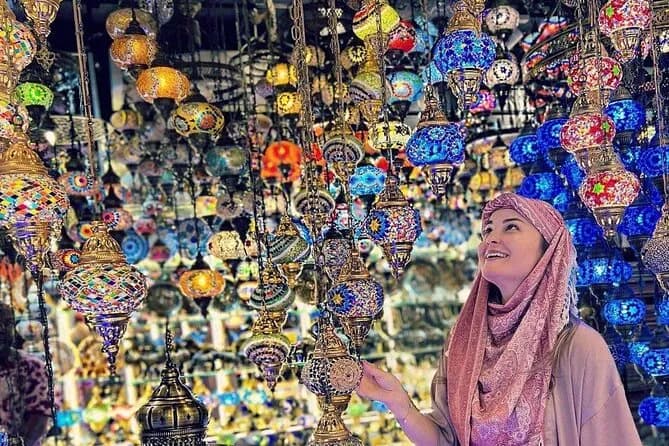
Cairo night tour : Khan ElKhalili,mosque,dinner + faluca sunset

Full-Day Cairo Tour: Pyramids, Saqqara & Memphis / Grand Egyptian Museum & Khan el-Khalili Bazaar with Entry Tickets, Lunch & Transfers
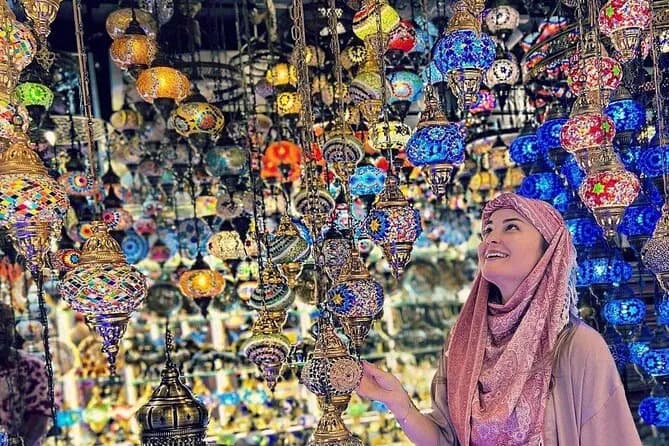
Cairo night tour : Khan ElKhalili,mosque,dinner + faluca sunset

Private Grand Gem Egyptian Museum and Khan el-Khalili Bazar Tour

Private Tour: Giza Pyramids, Sphinx, Egyptian Museum, Khan el-Khalili Bazaar
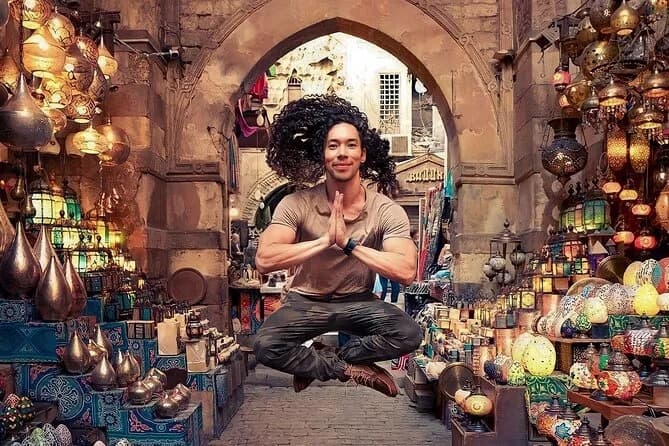
Old Cairo Tour: Khan El Khalili, Shops, Al-Muizz Street & Mosque

4 hours private Islamic Mosque, Coptic Cairo & Khan El Khalili

Private Guided Tour to Giza Pyramids Egyptian Museum & Khan El Kahlili Bazaar
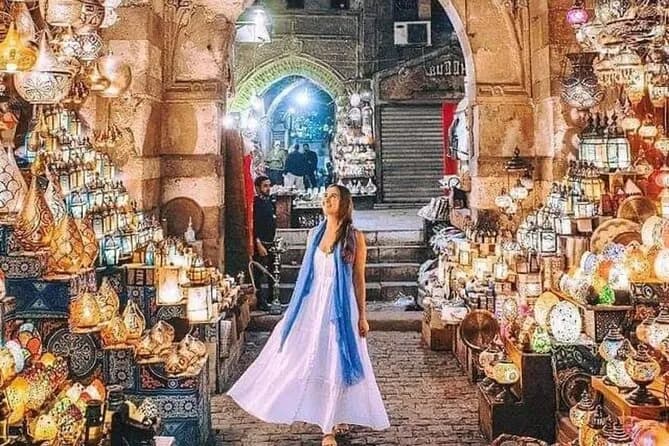
Visiting old Egyptian Museum Citadel and Old market of Khan

Islamic Cairo Walking Tour: Khan el Khalili, Al-Azhar Mosque

Private Coptic& Islamic Cairo Tour with Citadel & Khan el-Khalili

Giza Pyramids, Sphinx & Grand Egyptian Museum with Khan Bazaar
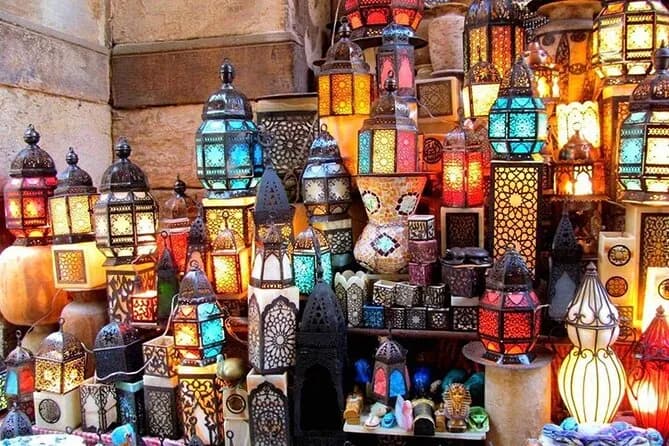
Guided Shopping Tour in Cairo And Khan Al-Khalili Market

Day Tour To Giza Pyramids old Egyptian Museum and Khan Khalili
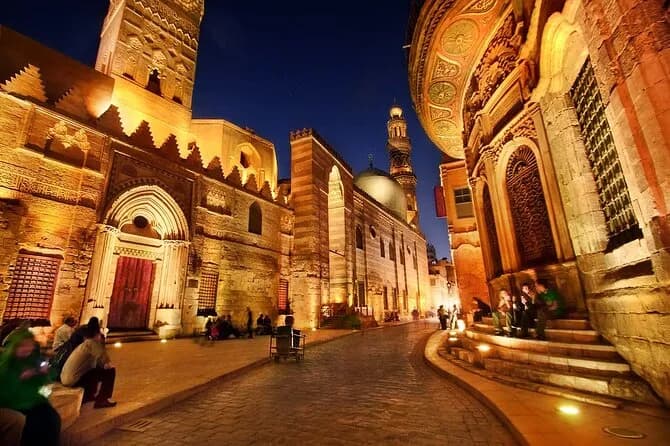
Private Tour to Khan el-Khalili from Cairo International Airport
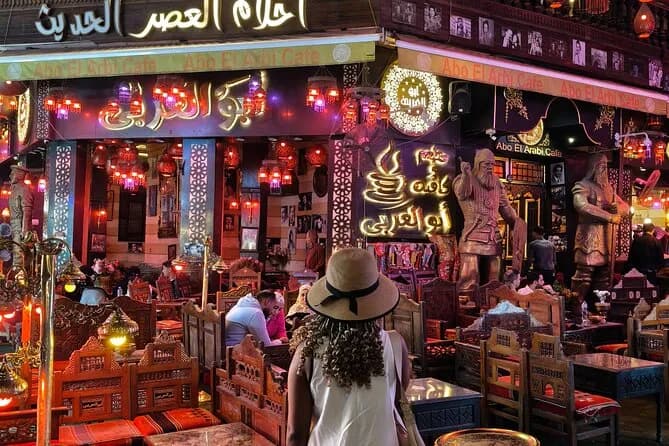
VIP Cairo Night Tour: Al Muizz Street & Khan El Khalili Bazaar

Giza: Egyptian Museum & Optional Khan el-Khalili Tour

Cairo Day Tour visit Old Egyptian museum, Citadel and Khan Khalil

Half Day Tour to Khan Elkhalili & Islamic Cairo

Full Day Tour to Giza Pyramids, Sphinx, Egyptian Museum, Khan el-Khalili Bazaar

Shopping Tour Cairo: Discover Khan El Khalili & More
Visiting Khan el-Khalili: what to know
Updated 3 September 2026Khan el-Khalili is the great bazaar of Cairo: a knot of covered lanes, stone gateways and stacked shopfronts in the heart of the medieval city, trading continuously since the 14th century. It is not a reconstruction and not a heritage precinct. Gold is still weighed out here for Cairene weddings, spice merchants still scoop karkade and cumin from open sacks, and coppersmiths still hammer lanterns in alleys their trades have occupied for centuries, all of it inside the UNESCO-listed zone of Historic Cairo.
Every honest description has to hold two ideas at once: it is touristy, and it is wonderful. The first couple of hundred metres off the main square are a gauntlet of plastic pyramids and printed scarves, and if you stop there you will conclude the whole place is a trap. Push two alleys deeper and the theatre gives way to workshops, wholesale rows and cafes full of locals, because underneath the souvenir crust this is still a working market serving a vast city.
The bazaar also keeps different hours from the monuments around it. Mornings are slow and half-shuttered, afternoons busy, and the evenings are the point: cool air, floodlit facades, packed coffeehouses and the lanes at full volume. Plan it as the second half of an old-city day and you will catch both of its faces, the working market and the night bazaar, in a single visit.
Six centuries of trade: from Mamluk caravanserai to living bazaar
The name records the founder. In 1382 Jaharkas al-Khalili, a senior emir under the Mamluk sultan Barquq, built a khan here: a caravanserai, which is to say a fortified commercial inn, with storerooms and stables below and lodging for travelling merchants above. Caravans arriving from Africa, Asia and the Mediterranean unloaded, stabled their camels and did their dealing in the courtyard. To clear the site, al-Khalili demolished the cemetery of the fallen Fatimid dynasty, an act the medieval chroniclers were still complaining about generations later. Commerce settled in and never left: the khan gave its name to the district, and the district became the trading heart of a city that sat astride the spice and silk routes between East and West.
In the early 1500s the sultan al-Ghuri rebuilt much of the quarter in grander style, and the monumental stone gateways that still span the central lanes date from that Mamluk rebuild; the arches you walk beneath today, with layers of Ottoman construction above them, are the bazaar's six centuries showing in cross-section. The old souk logic survives too. Trades cluster by street, so you move through a goldsmiths' quarter, then coppersmiths, then spice dealers, rather than a random mix, and that clustering is your best navigation aid in lanes that otherwise look alike.
Its most famous institution is not a shop but a coffeehouse. El Fishawy, in an alley near the centre of the bazaar, has been pouring mint tea since 1797, a year before Napoleon reached Egypt, has been run by seven generations of the same family, and famously stays open around the clock. Wedged between mirrored walls under brass lamps, it has hosted everyone from merchants to Naguib Mahfouz, the Nobel laureate who grew up in the surrounding district, titled one of his novels Khan al-Khalili, and drank his coffee here.
The bazaar has been on the traveller's circuit for a very long time as well. European visitors were writing home about its crowds and its salesmanship in the nineteenth century, and the mix has barely changed since: pilgrims bound for the shrine of al-Hussein next door, Cairenes on errands, and foreigners slowly working out that the theatre is half the point.
And the crafts continue. In the goldsmiths' lanes you can have a cartouche engraved with your name in hieroglyphs while you wait; nearby alleys turn out pierced brass and copper lanterns, boxes inlaid with mother-of-pearl, alabaster and hand-blown Muski glass; and in the spice rows Cairene families buy hibiscus, cumin and saffron by the scoopful, much of the hibiscus grown around Aswan. For the full old-city context around the bazaar, the Islamic Cairo and Khan el-Khalili guide walks the whole quarter.
What to see
Start at Al-Hussein square, the usual drop-off point, with the mosque of al-Hussein along one side. It holds one of Egypt's most revered shrines and is generally not open to non-Muslim visitors, but it anchors the geography, and its square is where the bazaar spills out in the evening. From there, dive into the main spine of the market and accept that the first stretch is souvenir theatre. Your job is to keep walking.
The reward is the working bazaar behind it. Watch a goldsmith engrave a cartouche letter by letter; stand in a lantern alley while the hammering rings off the stone; look into workshops where mother-of-pearl is set into wood a chip at a time; sniff your way along the spice rows, where the scoops are for locals doing the weekly shopping, not for show. This is also where the buying is worth doing: silver and gold cartouches, brass and copper lanterns, inlaid boxes, alabaster, hand-blown glass and spices are the genuine article here, while the plastic sphinxes and machine-printed papyrus near the entrances are not.
When the lanes close in, stop at El Fishawy. Order a mint tea or a karkade, take whichever marble table you are offered, and let the bazaar flow past you for half an hour. It is loud, chaotic and completely essential.
Then walk out of the bazaar's western edge onto Al-Muizz Street, the spine of Fatimid Cairo and an open-air museum of mosque facades, madrasas and sabil-kuttabs (a public fountain at street level with a Quran school in the room above, charity built in stone), often called the greatest concentration of medieval Islamic architecture in the world. Head south and you reach Bab Zuwayla, the 11th-century city gate whose twin minarets you can climb for the best rooftop view of the old city, a forest of domes and minarets rolling toward the Citadel. Head north instead and the street ends at the military gates of Bab al-Futuh and Bab al-Nasr, their stones still carrying masons' marks and crusader-era graffiti. What first-timers miss is simple: they never look up, at the mashrabiya screens and carved stone above the shop line, and they leave before dark, when the floodlights come on and the whole quarter changes character.
Getting there
Khan el-Khalili sits in Islamic Cairo, east of downtown, and the practical answer is a car: from most central hotels it is a 15 to 30 minute taxi or ride-hail depending on traffic. Uber and Careem both work well in Cairo and spare you any fare discussion; ask for Al-Hussein square or the Al-Azhar mosque side, the two natural entry points, linked by a pedestrian underpass beneath the traffic of Al-Azhar Street. If you flag a street taxi instead, agree the fare before you get in; the apps exist precisely so you do not have to.
There is no useful door-to-door public transport from the hotel districts, and inside the quarter everything is on foot in any case: the lanes are narrow, cobbled and uneven, and that is the pleasure of them. When you move on, hop a short cab south to the Citadel and the Sultan Hassan mosque if you are building a fuller Islamic Cairo day, or ride down to Coptic Cairo to pair the medieval city with the older Christian quarter.
The other legitimate option is a guided old-city walk. Guides here earn their fee twice over: once by turning an attractive maze into a thousand-year story, and once by absorbing the tout attention that otherwise lands on you. If it is your first visit, or you are travelling solo, a half-day walking tour that strings together the bazaar, Al-Muizz Street and a mosque or two is the easiest introduction the old city offers.
Best time of day
Khan el-Khalili is really two places, and the clock decides which one you get. In the morning the lanes are quiet and half-shuttered: good light for photographs, empty archways, workshops starting up, and the mosques of the surrounding quarter cool and calm, which is why the classic old-city plan is monuments early, bazaar late. Early birds get one small edge too: many shopkeepers like to land the first sale of the day and will bargain more sweetly for it. By midday everything is open and the sun is overhead; in summer those hours are punishing, and the covered lanes become the only sensible place to be.
The bazaar hits its stride from late afternoon into the evening. The heat breaks, the facades of Al-Muizz Street are floodlit, the cafes fill, local families come out, and the lanes run at full volume late into the night. If you can only come once, come then: daytime is better for unhurried shopping and for watching the craftsmen at work, but the evening is when the district is most itself. During Ramadan the rhythm shifts later still, and the quarter stays awake half the night. And if your dates coincide with the moulid of al-Hussein, the saint's festival centred on the mosque next door, expect the square to become one of Cairo's biggest street celebrations: joyous, intensely crowded, and best experienced with a local.
Two scheduling notes. Fridays are busier around midday prayers, when some mosques pause tourist visits for an hour or two, so plan mosque stops for early morning or mid-afternoon that day. And season matters: winter, November to March, is the ideal window, while in high summer you should aim your visit squarely at the evening.
Tips for your visit
- Haggle, and enjoy it. The opening price is theatre: counter at roughly a third to a half of it, settle somewhere in the middle, and treat the exchange as banter rather than combat. A smile gets a better price than a scowl.
- Walking away is your strongest move and reliably produces a better number. You are never obliged to buy: browsing with a polite "just looking" is normal, and nobody genuinely minds.
- Prices and quality both improve as you move deeper into the market. Do your buying in the working alleys, not in the first hundred metres of souvenir stalls.
- Worth buying: engraved cartouches from the goldsmiths, pierced brass and copper lanterns, mother-of-pearl inlay, alabaster, hand-blown Muski glass, and spices, especially karkade, from the spice rows.
- Skip the plastic pyramids, machine-printed papyrus (often banana leaf), mass-produced figurines and counterfeit brands near the entrances. Anything offered as a genuine ancient artefact is either a reproduction or illegal to buy and export, so walk away from both.
- Handle touts with a polite, firm "la, shukran" (no, thank you) and keep moving. Never accept an unsolicited escort to a shop; commission is the whole game.
- Keep valuables zipped and bags in front of you in the evening crush. The crowds are dense, and pickpocketing is the main, if rare, risk.
- Carry small notes. Many stalls and cafes are cash-only, and exact change speeds up small purchases.
- Dress for the district: comfortable shoes for uneven cobbles, and modest cover with a scarf in the bag if you plan to add mosques along Al-Muizz Street.
- Eat while you are here: this is prime territory for koshary, taameya and fresh fiteer, with konafa for afters; the where to eat in Cairo guide has specific picks.
- Solo women report the bazaar as manageable but attention-heavy. Going with a guide, or timing your visit for early evening when families fill the lanes, cuts the hassle noticeably.
Other Egypt attractions
Frequently asked questions
How much does it cost to visit Khan el-Khalili?
Tours and tickets start from 234 EGP (about 5 USD), with a median price of about 2,338 EGP per person.
How many Khan el-Khalili tours are available?
There are 242 bookable tours and tickets for Khan el-Khalili.
What is the best Khan el-Khalili tour?
A top-rated pick is "4-hours private Tour Islamic Mosque,Coptic Cairo &Khan el-Khalili".
Is Khan el-Khalili a tourist trap?
The first couple of hundred metres are, and the rest is not. Push past the souvenir gauntlet and you are in a working district where Cairenes buy wedding gold, spices and lanterns, as they have for six centuries. Go in the evening, sit at a coffeehouse, and it stops feeling like a trap and starts feeling like the city.
Do you need a guide for Khan el-Khalili?
You can wander safely on your own, and plenty of travellers do. A guide adds two things: the history that turns a pretty maze into a thousand-year story, and a buffer against touts, which solo visitors, especially women, tend to appreciate. For a first visit, a walk that pairs the bazaar with Al-Muizz Street is the easiest introduction.
How long do you need at Khan el-Khalili?
A couple of hours covers the bazaar itself, including a coffee stop at El Fishawy. Give it half a day to add Al-Muizz Street, Bab Zuwayla and a mosque or two, and a full day if you want the Citadel or Coptic Cairo as well. If you can, let the visit run into the evening, when the quarter is at its best.