Islamic Cairo & Khan el-Khalili Guide (2026): The Old City on Foot
Medieval mosques, the great bazaar and a thousand years of history packed into a few walkable streets. What to see in Islamic and Coptic Cairo, and the tours that do it well.
Quick answer: Islamic Cairo is the medieval old city at the heart of the modern capital: a dense, still-inhabited quarter of mosques, madrasas, mansions, fountains and monumental gates that has been lived in for more than a thousand years. It is the human counterpart to the ancient stone out at Giza, and its centrepiece is Khan el-Khalili, a 14th-century bazaar that still trades every day. Most people come to Cairo for the Pyramids and leave without seeing it, which is a genuine mistake: a half day here, ideally with a guide and an evening walk down a floodlit Al-Muizz Street, is the richest non-pharaonic experience in the country. Guided old-city walks in our catalogue start from about 1,624 EGP (roughly 34 USD) per person and draw more than 6,700 reviews between them, so plenty of travellers are already catching on. For the wider context of the capital, pair this with our Cairo travel guide.
What and where it is
"Islamic Cairo" is the loose name for the historic core that grew up east of the Nile after the Arab conquest, layer by layer, through the Fatimid, Ayyubid, Mamluk and Ottoman dynasties. It is not a museum precinct but a working district, where medieval walls back onto tea houses, workshops and apartment blocks. UNESCO inscribed the whole zone as "Historic Cairo" in 1979, calling it one of the world's oldest Islamic cities, with its famous mosques, madrasas, hammams and fountains, and one of the densest concentrations of medieval architecture anywhere. The protected heart runs from the Citadel and the Mosque of Ibn Tulun in the south up to Al-Azhar and the tangle of markets around Khan el-Khalili in the north. You can walk the spine of it in an afternoon, though you could spend a week and not exhaust it.
Khan el-Khalili: the great bazaar
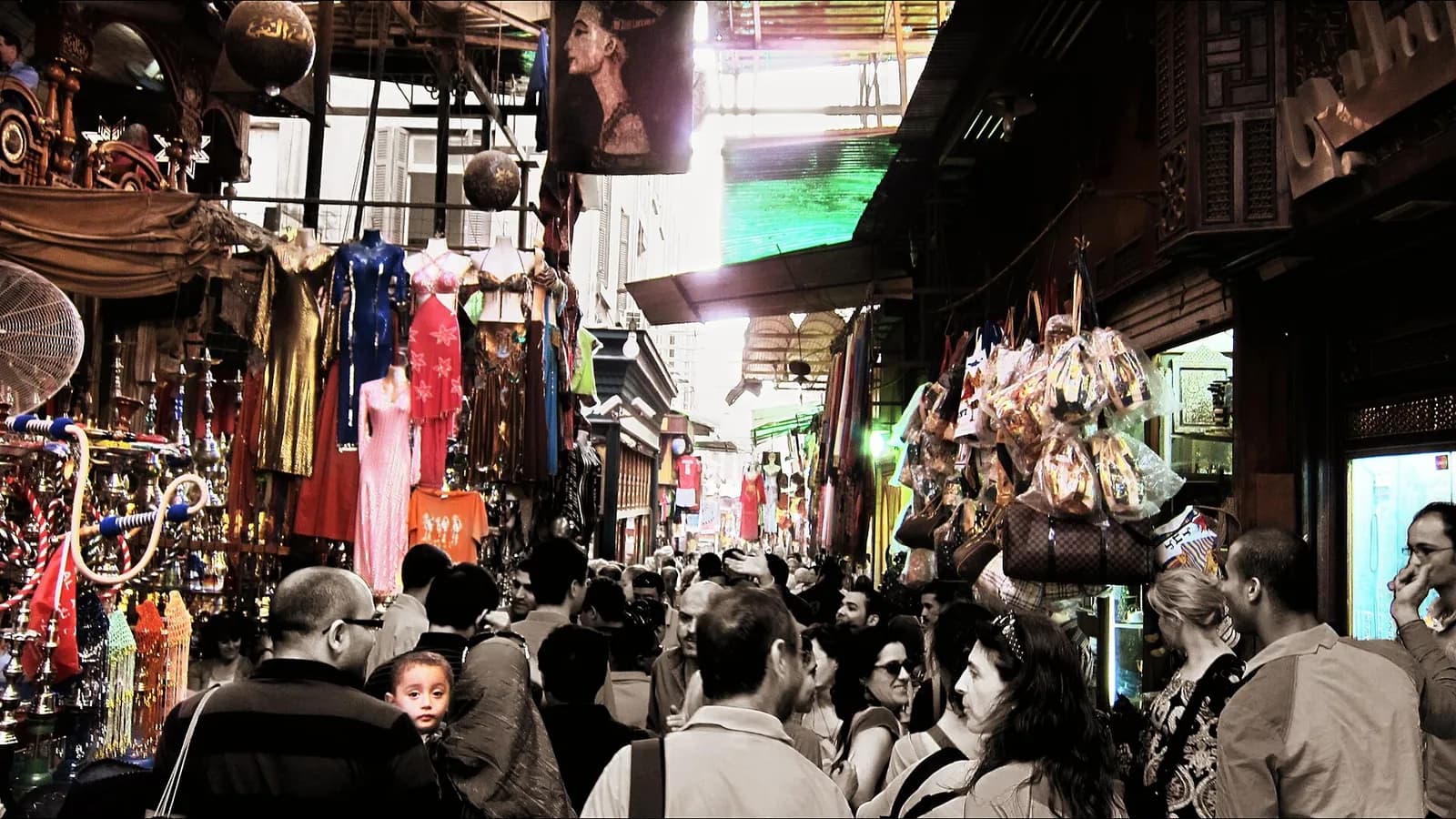
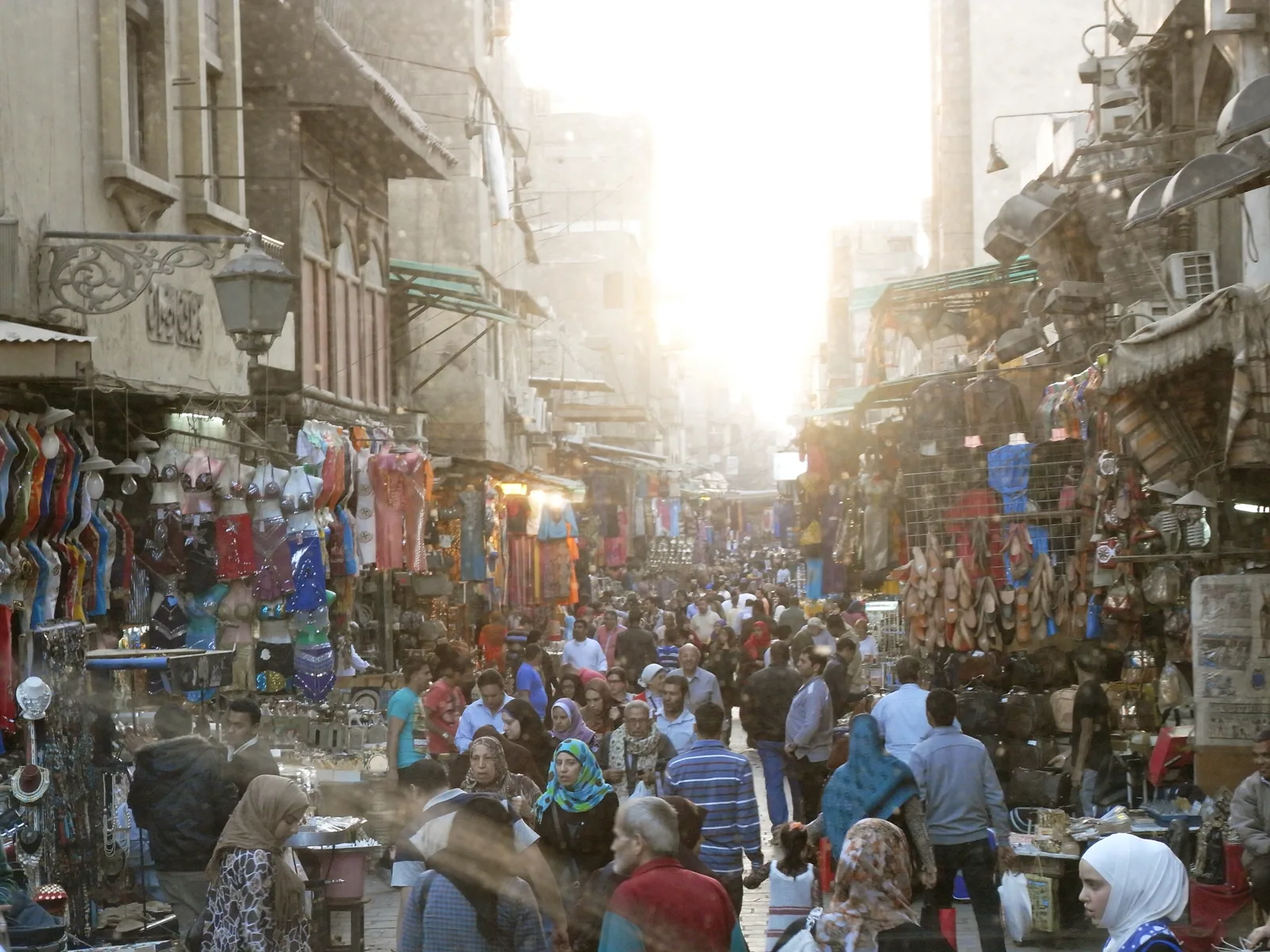 Khan el-Khalili began in 1382 as a caravanserai, a walled inn where merchants from Africa, Asia and the Mediterranean stabled their camels and stored their goods. Emir Jaharkas al-Khalili built it during the Mamluk era, and more than six centuries later it is still a labyrinth of covered lanes, Mamluk and Ottoman archways, and shopfronts stacked to the ceiling. It is touristy and it is wonderful, and both things are true at once.
The trick is knowing what is worth buying. Genuinely good souvenirs here include hand-engraved silver and gold cartouches (your name spelled in hieroglyphs, made while you wait in the goldsmiths' quarter), pierced brass and copper lanterns, inlaid mother-of-pearl boxes, alabaster, hand-blown Muski glass, and spices from the Attarine market, where Cairene families buy their hibiscus (karkade), cumin and saffron by the scoopful. What to skip: the plastic pyramids, machine-printed "papyrus" (often banana leaf), Chinese-made pharaonic figurines and counterfeit-brand goods that crowd the first couple of hundred metres. Anything sold to you as a "genuine ancient artefact" is either a reproduction or, if it truly were real, illegal to buy and export. Push past the front stalls into the working alleys and prices and quality both improve sharply.
Haggling is expected and, done right, enjoyable. Egyptians treat bargaining as banter rather than combat, so go in with a smile. A rough rule: the opening price is theatre; counter at roughly a third to a half of it and settle somewhere in the middle. Walking away almost always produces a better number. Never feel rushed into the first shop that grabs your sleeve, and be relaxed about "just looking" — nobody actually minds.
Al-Muizz Street: the open-air museum
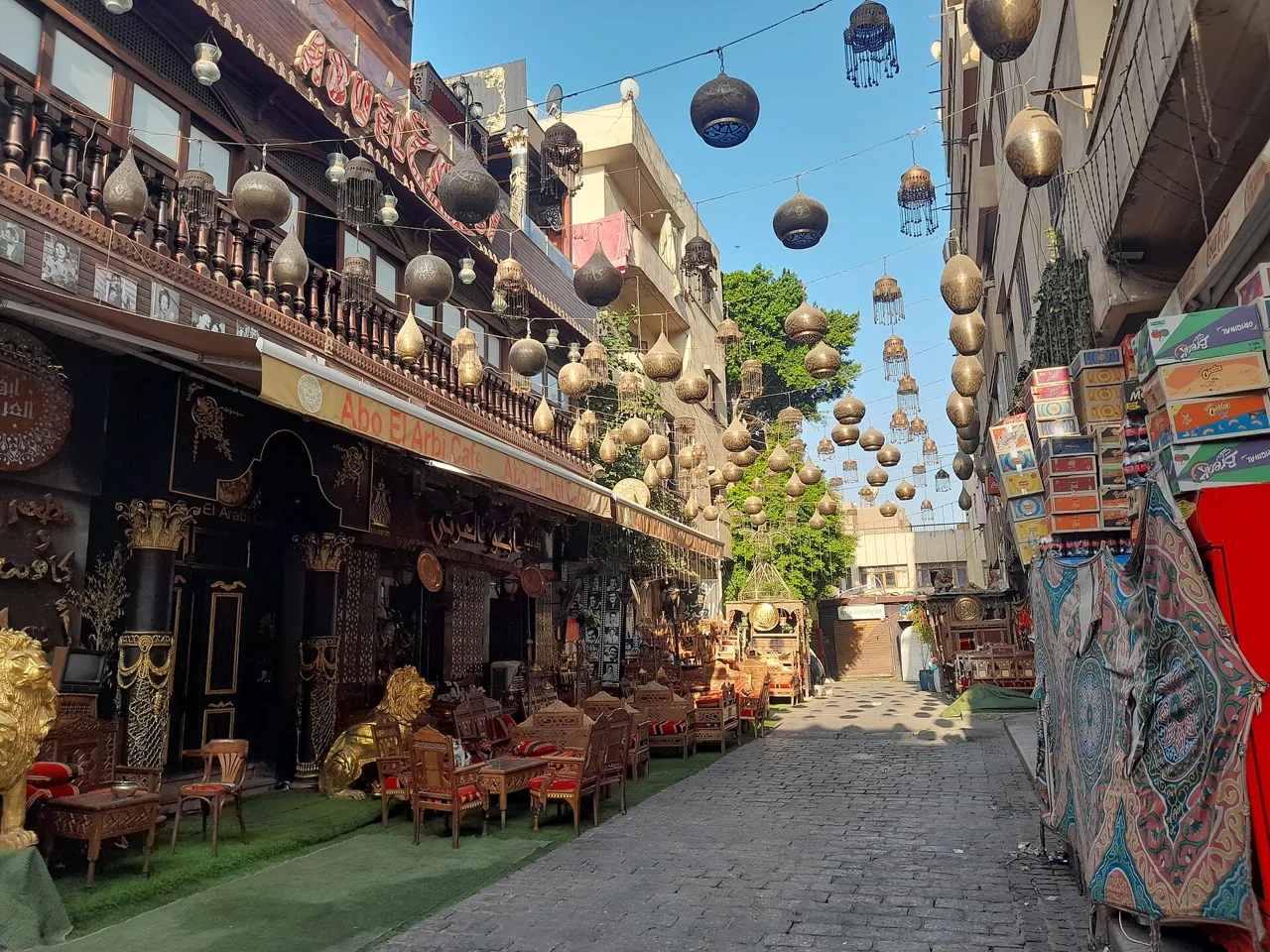 If Khan el-Khalili is where you shop, Al-Muizz Street (Sharia al-Muizz li-Din Allah) is where you stare upward. Named after the Fatimid caliph who founded Cairo in the 10th century, this one long thoroughfare holds what is often called the greatest concentration of medieval Islamic architecture in the world: mosque after madrasa after sabil-kuttab (a fountain with a Quran school above it), spanning a thousand years of styles. A major restoration around 2008 turned it into a pedestrian open-air museum, and after dark the honey-coloured facades are floodlit and the crowds thin — it is the single most atmospheric stretch of the old city. The street runs north to south between two of Cairo's surviving medieval gates, Bab al-Futuh (the Gate of Conquests) at the top and Bab Zuwayla at the bottom, with Al-Azhar Street cutting across the middle.
Bab Zuwayla and the city gates
Bab Zuwayla is the great southern gate of Fatimid Cairo, an eleventh-century stone gatehouse crowned by the twin minarets of the adjoining al-Mu'ayyad mosque. For a small fee you can climb the towers for one of the best rooftop panoramas of the old city — a forest of minarets and domes rolling toward the Citadel. At the northern end, Bab al-Futuh and its neighbour Bab al-Nasr are the massive military gates of the original walled city, their stonework still bearing masons' marks and crusader-era graffiti. These gates are the bookends that make sense of the whole quarter: everything between them was, for centuries, the walled royal city.
The great mosques and the Citadel
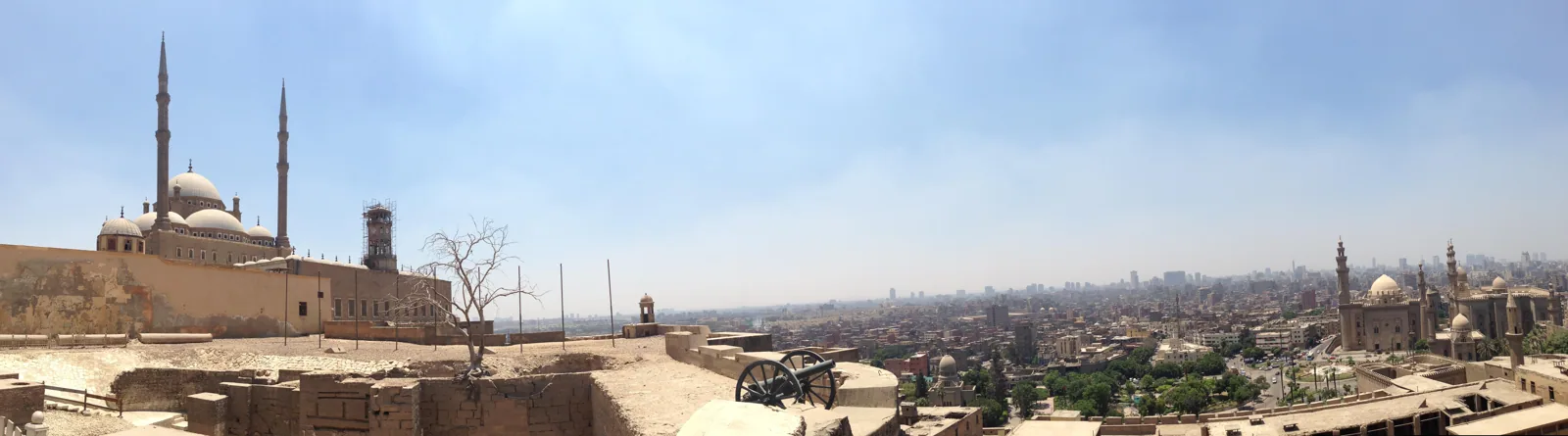 Islamic Cairo's skyline is minarets, and a handful of mosques are unmissable. The Mosque of Ibn Tulun (879 AD) is the oldest surviving in its original form and one of the largest — a vast, austere courtyard of brick arcades wrapped by a spiral minaret you can climb, gloriously empty compared with the bazaar. Al-Azhar (970 AD), founded with the Fatimid city, is both a working mosque and one of the oldest universities on earth, still the intellectual centre of Sunni Islam; entry is free. The soaring Mosque-Madrasa of Sultan Hassan and the 19th-century Al-Rifa'i mosque face each other across a stone canyon below the Citadel and share a combined ticket; Sultan Hassan's sheer vertical scale is one of the wonders of Mamluk building.
Crowning it all is the Citadel of Salah al-Din, the medieval fortress that guarded Cairo for 700 years. Inside sits the great alabaster Mosque of Muhammad Ali (1830–1848), its Ottoman domes and slender pencil minarets visible across the whole city. Its terrace gives the finest panorama in Cairo — on a clear, un-hazy day you can see the Pyramids on the horizon. Entry to the mosque is included with the Citadel ticket.
Coffeehouses and street food
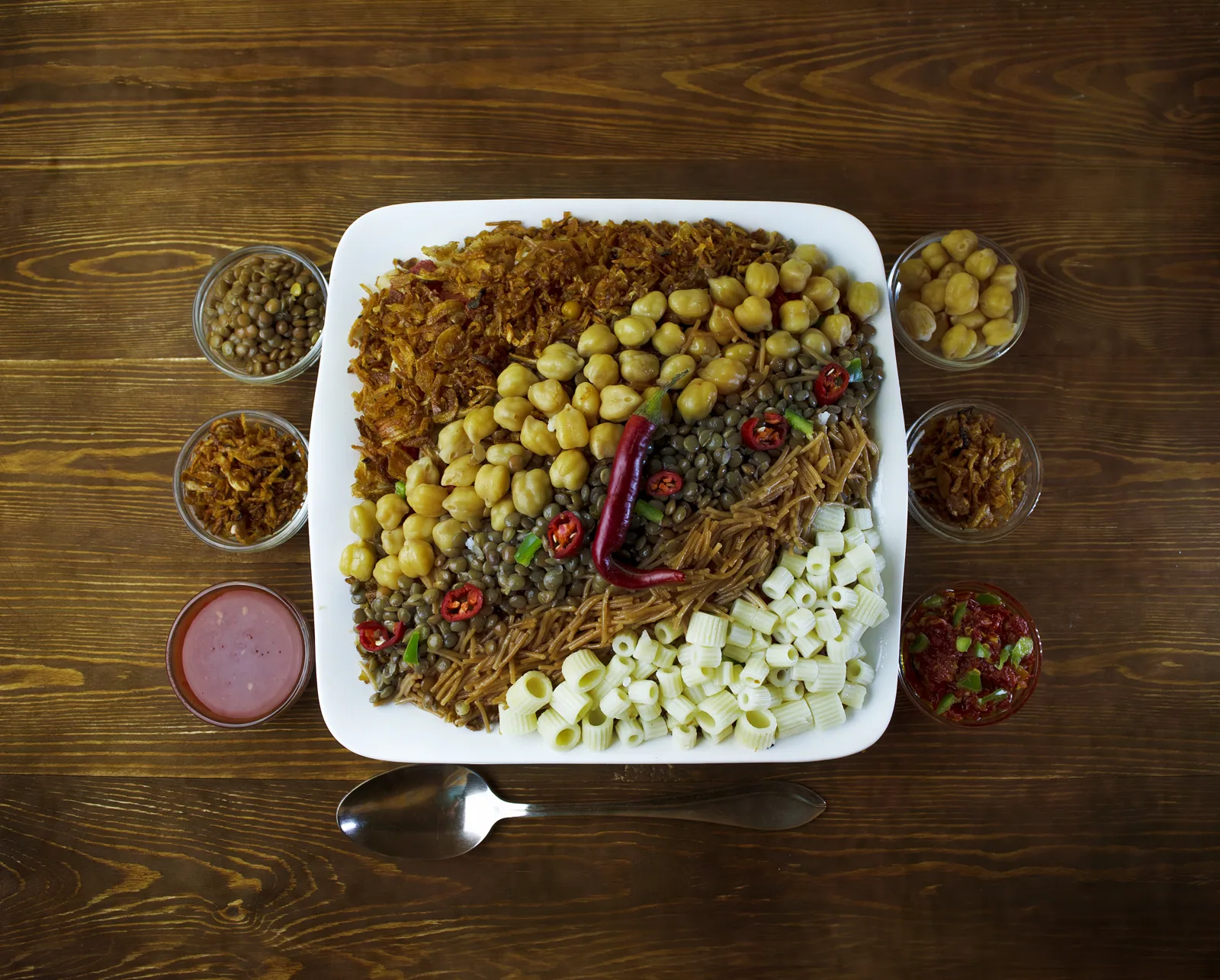 The old city runs on tea and sugar. El Fishawy, tucked in an alley off Khan el-Khalili, has been pouring mint tea and shisha since 1797 — a year before Napoleon arrived — run by seven generations of the same family and famously open around the clock. Wedged between mirrored walls and hung with brass lamps, it is touristy, chaotic and completely essential; order a mint tea (shai bi na'na') or a karkade and let the street theatre wash over you. For food, this is prime territory for koshary (the national bowl of rice, lentils, pasta and fried onion in a tangy tomato-and-vinegar sauce), taameya (Egyptian fava-bean falafel), fresh fiteer pastry and sticky trays of konafa and basbousa. A good guide will steer you to the stalls locals actually use — and for more ideas beyond the bazaar, see our guide on where to eat in Cairo.
Getting there and getting around
Islamic Cairo sits east of downtown; from most central hotels it is a 15–30 minute taxi or ride-hail (Uber and the local Careem both work well and remove any fare haggling). The most walkable plan is to be dropped near Al-Azhar mosque or the Al-Hussein square end of Khan el-Khalili, explore the bazaar and Al-Muizz Street on foot, then take a short cab to the Citadel and Sultan Hassan, which are slightly apart to the south. Coptic Cairo — the older Christian quarter with the Hanging Church and Ben Ezra Synagogue inside a Roman fortress — is a further ride south and easiest reached on the metro (Mar Girgis station) or by cab; many tours pair it with the Islamic sites for a fuller picture of the city between the pharaohs and Islam. Wear comfortable shoes: the ground is uneven, cobbled and often crowded.
Best time of day and dress code
Go early for the mosques, when Ibn Tulun and Al-Azhar are quiet and cool, and save Al-Muizz Street and Khan el-Khalili for late afternoon into evening, when the facades are lit, temperatures drop and the bazaar hits full swing. Winter (roughly November to March) is the ideal season; summer middays are punishing. Fridays are busier around midday prayers, when some mosques limit tourist access for an hour or two.
For the mosques, dress modestly: both men and women should cover shoulders and knees, and women should carry a scarf for the head. You remove your shoes before stepping onto the prayer-hall carpet (some sites lend canvas overshoes). Nobody expects perfection, but arriving covered up spares you being turned away or wrapped in a communal robe at the door.
Safety, touts and how long you need
Islamic Cairo is generally safe and welcoming, and violent crime against tourists is rare. The real friction is commercial: persistent shopkeepers, self-appointed "guides" who attach themselves to you, and papyrus-shop or perfume-shop touts working on commission. A polite, firm "la, shukran" (no, thank you) and no eye contact usually settles it; never accept an unsolicited escort to a shop, and agree taxi fares or use a ride-hail app before you get in. Keep valuables zipped in the crush of the bazaar. Solo women travellers report the area as manageable but attention-heavy — a guide noticeably reduces the hassle.
As for time: give the old city a half day at minimum to see Khan el-Khalili, Al-Muizz Street and one or two mosques, or a full day to add the Citadel and Coptic Cairo. Going once with a guide turns a pretty maze into a thousand-year story, and it is the single easiest way to handle the bazaar. If Cairo is one stop on a longer trip, our Egypt travel guide maps out how it fits with Luxor, Aswan and the coast. When you are ready to book, search old-city and Cairo experiences to compare prices, ratings and reviews in one place.
What's On in Egypt
Events in Cairo

Egypt Press Photo Exhibition
Tahrir Cultural Center (AUC) · Downtown (Wust El Balad)

Exhibition Open Call
Tahrir Cultural Center (AUC) · Downtown (Wust El Balad)

Career Circles
Tahrir Cultural Center (AUC) · Downtown (Wust El Balad)
A real team available 24/7 to assist you — free
Seif and the team reply on WhatsApp 24/7 — trip questions, custom plans and booking help.
Ask Seif on WhatsAppCommon questions
What is there to do in Islamic Cairo?
Wander Khan el-Khalili bazaar and floodlit Al-Muizz Street, the world's densest stretch of medieval Islamic architecture; visit the great mosques of Ibn Tulun, Al-Azhar and Sultan Hassan, and the alabaster Mosque of Muhammad Ali crowning the Citadel; climb the Bab Zuwayla gate for a rooftop view; and stop at the 18th-century El Fishawy cafe for mint tea. Nearby Coptic Cairo adds the Hanging Church and Ben Ezra Synagogue inside a Roman fortress.
Is Khan el-Khalili worth visiting, and what should I buy?
Yes. It is a 14th-century bazaar founded in 1382, part of UNESCO's Historic Cairo, touristy but genuinely atmospheric, especially after dark. Good buys are hand-engraved silver cartouches, brass and copper lanterns, inlaid boxes, alabaster and spices like karkade from the Attarine market. Skip plastic pyramids, fake papyrus and any 'ancient artefact' — those are reproductions or illegal to export. Push past the front stalls into the working alleys for better quality and prices.
How do you haggle at Khan el-Khalili?
Treat it as friendly banter, not a battle — go in with a smile. The first price quoted is theatre, so counter at roughly a third to a half and settle in the middle. Walking away almost always brings the price down, and you should never feel pressured to buy from the first vendor who grabs your sleeve. Browsing without buying is completely normal.
What should I wear in Islamic Cairo?
For the mosques, dress modestly: both men and women should cover shoulders and knees, and women should carry a scarf to cover the head. You remove your shoes before stepping onto the prayer-hall carpet, and some sites lend canvas overshoes. Comfortable walking shoes matter too — the lanes are cobbled and uneven. Fridays are busier around midday prayers, when tourist access may be limited briefly.
How much does an Old Cairo tour cost?
A guided Old Cairo walking tour with history and street food starts from about 1,624 EGP (roughly 34 USD) per person, rated 4.64 across more than 1,100 reviews. A fuller Islamic-and-Coptic tour runs near 3,528 EGP, and a private Citadel, Old Cairo and Khan el-Khalili combination sits around 4,209 EGP (about 87 USD). Evening versions can be paired with a Nile dinner cruise.
Can I visit Islamic Cairo without a guide?
Yes — it is generally safe and walkable, and independent visitors do fine. But a guide turns a confusing maze into a thousand-year story, explains the mosques, steers you to the best street-food stalls and defuses the bazaar's touts. Most travellers do a guided walk at least once. Solo women in particular find a guide noticeably reduces unwanted attention.
How long do I need in Islamic Cairo, and when is the best time to go?
Give it a half day at minimum for Khan el-Khalili, Al-Muizz Street and a mosque or two, or a full day to add the Citadel and Coptic Cairo. Go early for the quiet, cool mosques and return to Al-Muizz Street and the bazaar in the late afternoon and evening, when the facades are floodlit and the market is at full tilt. Winter (November to March) is the most comfortable season.
How do I get to Islamic Cairo and get around?
It sits east of downtown, a 15–30 minute taxi or ride-hail (Uber or Careem) from most central hotels. Get dropped near Al-Azhar mosque or Al-Hussein square, explore the bazaar and Al-Muizz Street on foot, then cab a short distance south to the Citadel and Sultan Hassan. Coptic Cairo is a further ride south, easiest by metro to Mar Girgis station or by cab.
Book it on This is Egypt
Turn this guide into a trip



Egypt's bestsellers
The experiences travelers book most, across the country





Attractions in this guide
Keep reading

Hurghada Diving (2026): Best Sites, Packages & Prices
Diving in Hurghada — the best reefs (Giftun, Careless Reef, Dolphin House) and Abu Nuhas wrecks, Discover Scuba vs PADI courses, season and water temps, and real 2026 prices.
By TiE Editors7 min read
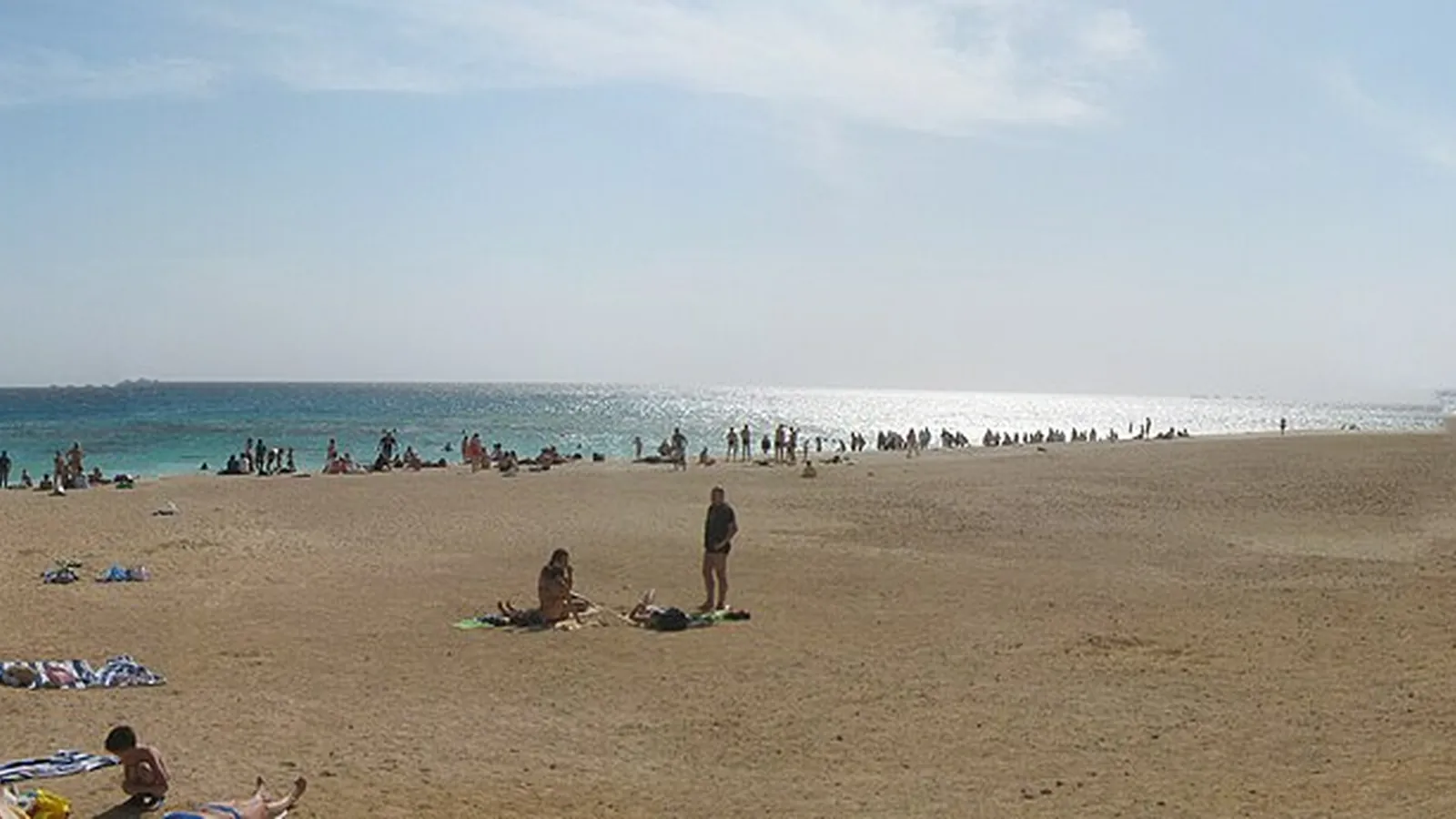
Hurghada Snorkeling Trips (2026): Best Reefs, Prices & How to Choose
Where to snorkel from Hurghada in 2026 — Orange Bay, Giftun, Mahmya, Utopia and Dolphin House — with boat types, marine life, month-by-month sea temperatures, family tips and real prices from 1,000+ bookable trips.
By TiE Editors7 min read
Egypt Tour Prices by Activity (2026): What Each Type Really Costs
What every type of Egypt experience costs — half day, full day or overnight — as a median and a mid-half range in US dollars, from 12,370 live bookable listings.
By TiE Editors6 min read