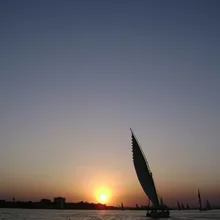
 Photo by Vyacheslav Argenberg (vascoplanet.com), via Wikimedia Commons, CC BY 4.0
Valley of the Kings: Tombs Guide & Which to See (2026)
How to actually do Luxor's royal necropolis, how the rotating ticket works, which tombs justify the extra fee (Seti I, Nefertari, Ramesses VI), and how to beat the heat and crowds.
Book it on This is Egypt
Luxor · Turn this guide into a trip
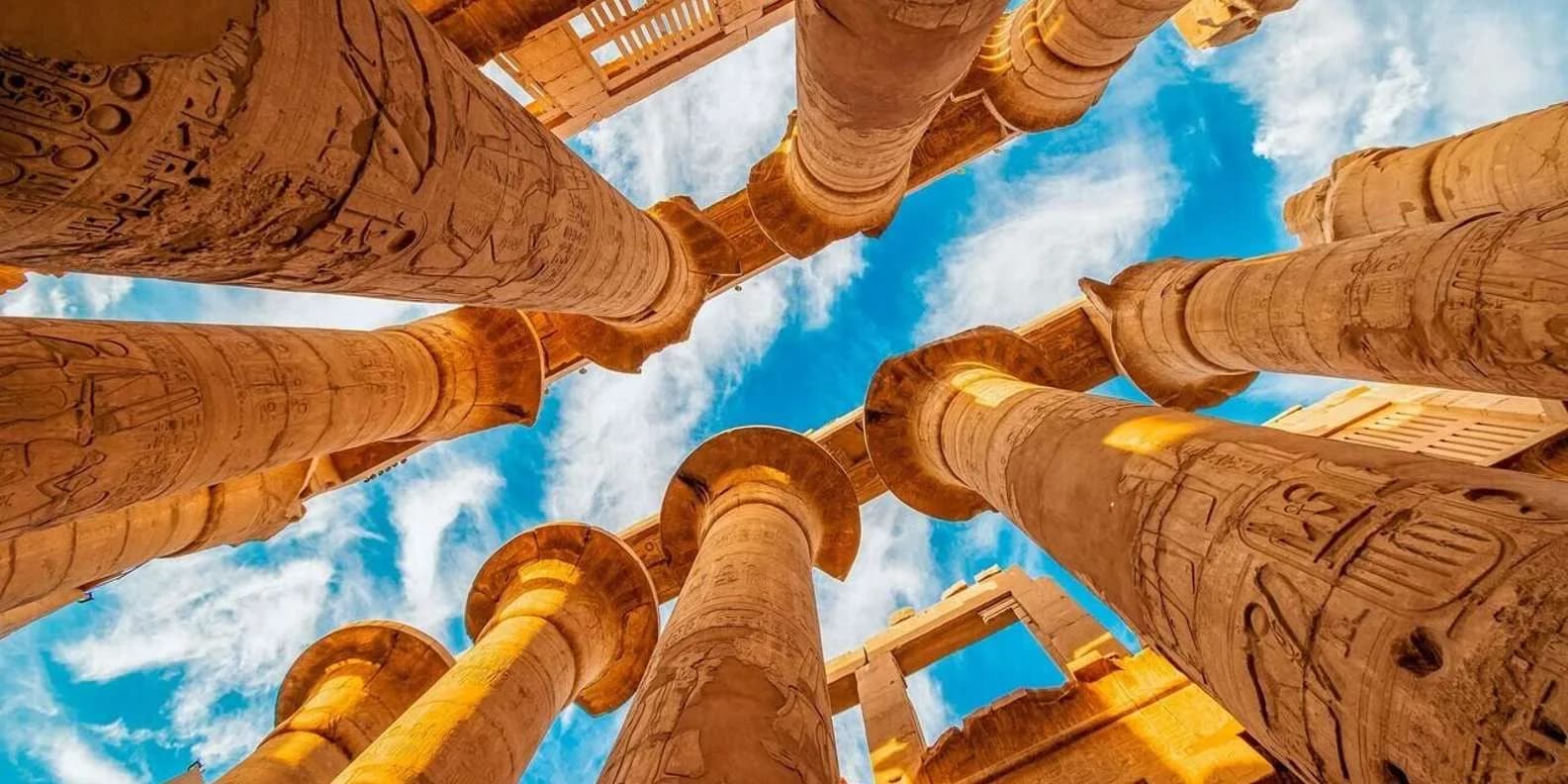
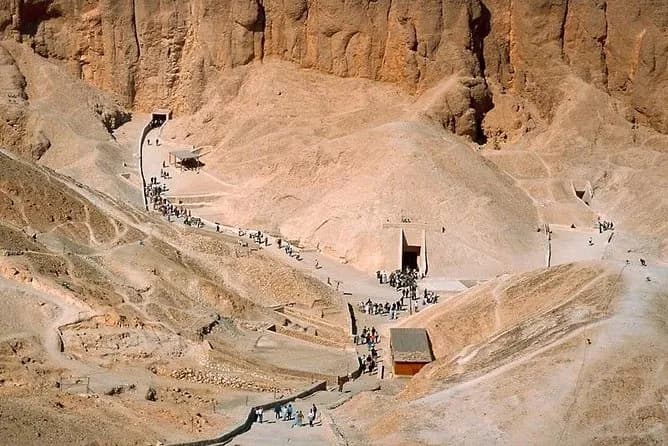
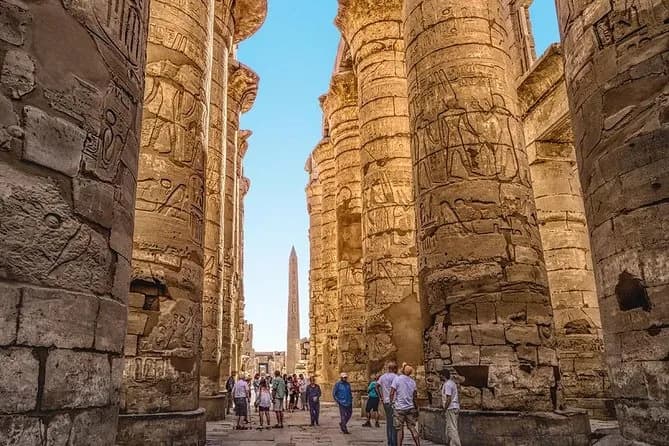
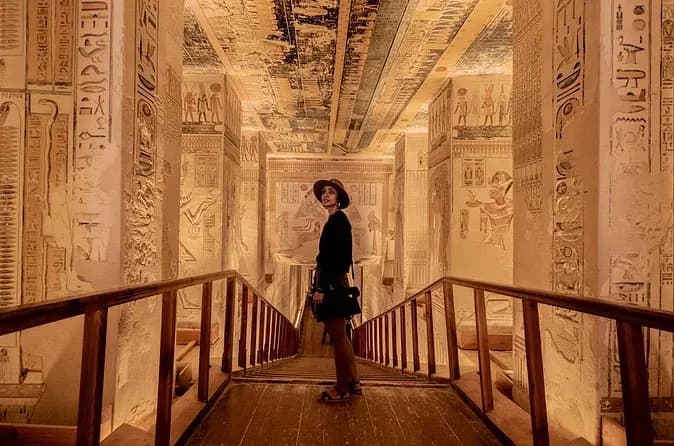
Quick answer: Cut into a barren desert valley behind Luxor's West Bank, the Valley of the Kings hid the tombs of Egypt's New Kingdom pharaohs for three thousand years, and their painted walls remain so vivid they look freshly finished. Here is the short version: buy the standard ticket (it covers three tombs of your choice from whatever is open that day), decide whether to add one or two of the extra-fee stars like Seti I or Tutankhamun, and get there at opening before the valley turns into an oven. The rest of this guide fills in exactly how the tomb system works, which tombs earn their keep, and how to fold the visit into a proper West Bank morning.
What it is and why it matters
After centuries of building pyramids that practically advertised "rob me," the New Kingdom kings tried a new strategy around 1500 BC: hidden rock-cut tombs in a remote valley, watched over by a pyramid-shaped natural peak, al-Qurn. It didn't entirely work; almost every tomb was looted in antiquity. But the dry desert dark preserved some of the finest painting the ancient world ever produced. There are 63 known tombs here (numbered KV1 through KV64, hence "KV" for Kings' Valley), holding pharaohs from Thutmose I to Ramesses XI, plus nobles and royal favourites. Only a rotating handful are open on any given day, so the walls that get the heaviest foot traffic and breath-humidity can rest and recover.
Where it is and getting there
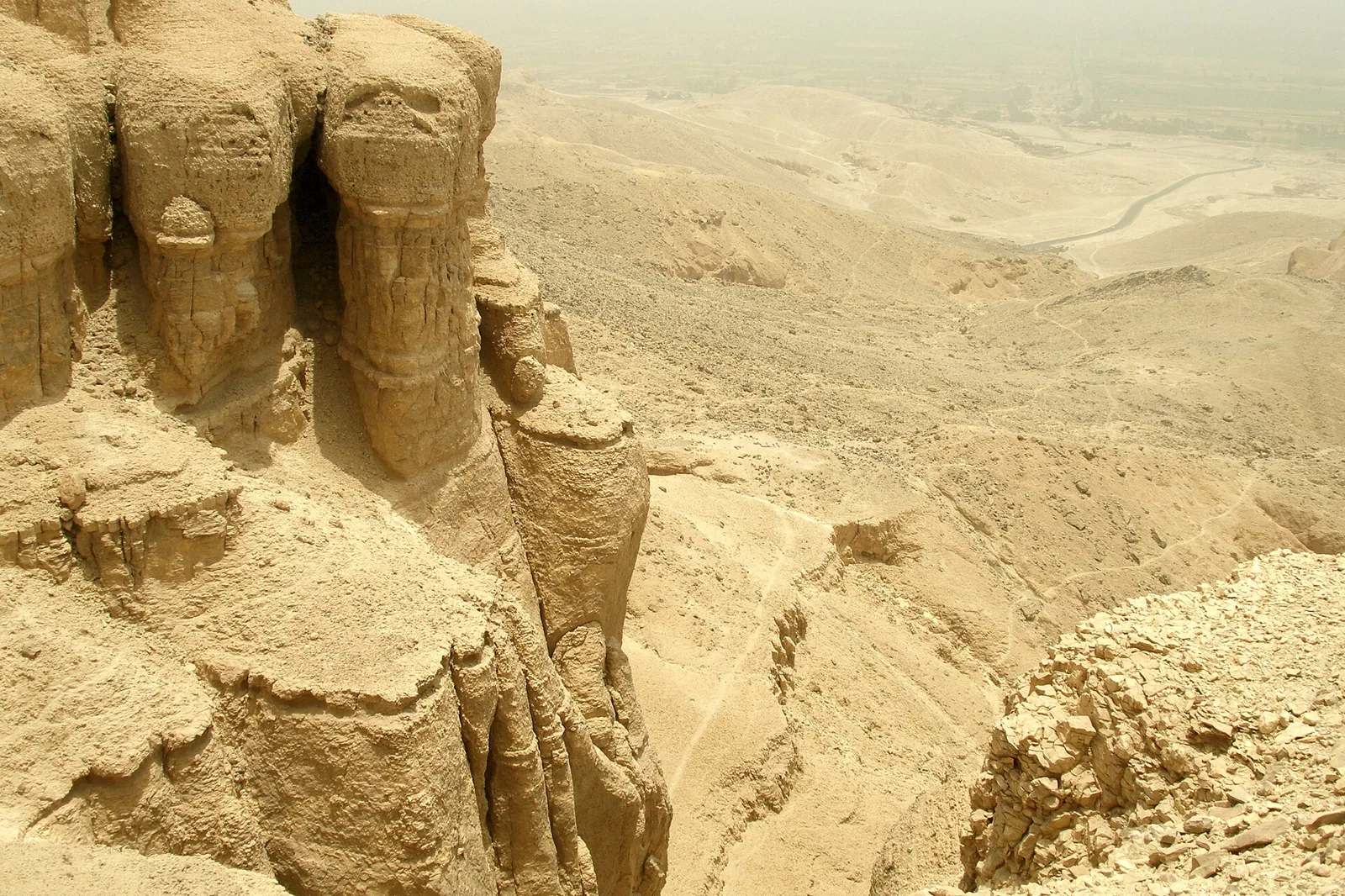 The valley sits on Luxor's West Bank, roughly a 20-minute drive from the town centre on the East Bank. The classic route is to cross the Nile and hire a taxi up to the visitor centre, and there are two ways to make that crossing:
- Local ferry. A cheap public ferry shuttles across from central Luxor every 10 to 15 minutes for a few pounds. On the West Bank you grab a taxi for the last stretch (about 3 km) to the visitor centre. It is the most local, and most fun, way to arrive.
- Taxi over the Luxor Bridge. A single taxi door-to-door is the simplest option, though the bridge is south of town, so the drive loops around and takes longer (think 30 to 45 minutes) than the map distance suggests.
Most visitors come as part of a West Bank tour that also stops at Hatshepsut's temple and the Colossi of Memnon, which saves the transport juggling entirely. You can browse West Bank and Valley of the Kings tours here.
How the ticket works
A standard ticket admits you to three open tombs. You pick any three from the day's open list at the turnstiles, and which tombs are open rotates periodically so the authorities can rest the most fragile painted ones. A few celebrated tombs carry separate, additional fees at their own turnstiles, most notably Seti I (KV17), Tutankhamun (KV62) and Ramesses V/VI (KV9). Crucially, those extra tickets don't replace the standard ticket, they stack on top of it, so even if you only care about Seti I you still buy the general entry first.
One practical note that trips people up: Luxor has gone largely cashless at its major sites, so bring a bank card. Buy everything, standard ticket, extra-fee tombs and the photo pass, at the visitor centre before you ride the little electric train (the taftaf) up to the tomb clusters. There are no ticket sellers at the tombs themselves.
Which tombs to prioritise
The rotation means you won't always get your first choice, but these are the ones to aim for:
- Seti I (KV17), extra fee (the priciest add-on by a wide margin), and worth it if the budget stretches: the longest tomb in the valley at around 137 metres and the most exquisitely decorated, with reliefs and ceilings barely faded. If it's open and you only splurge on one extra tomb, make it this one.
- Ramesses V/VI (KV9), a modest extra fee and outstanding value: famous for its astronomical ceiling showing the sky goddess Nut swallowing and giving birth to the sun, running the full length of the tomb in deep blue and gold.
- Tutankhamun (KV62), extra fee: small and plain after the grander tombs, since his treasure now lives at the Grand Egyptian Museum. But it's the Tutankhamun, and his mummy is still here in the tomb, so many visitors decide the name alone justifies the ticket.
- Among the standard three included, Ramesses III (KV11) and Ramesses IX (KV6) are reliably colourful, spacious and beginner-friendly. Merenptah (KV8) and Thutmose III (KV34), when open, are also excellent, the latter reached by a fun set of stairs up a cliff.
- Just over the ridge, the Valley of the Queens holds the tomb of Nefertari (QV66), a separate premium ticket with timed, limited entry, and often called the most beautiful painted tomb in all of Egypt. It's a different site, but easy to add on the same morning.
A good rule for a first visit: take your three standard tombs, add Seti I or Ramesses VI for the wow factor, and only add Tutankhamun if the name matters to you.
Opening hours and the best time of day
The valley opens at 6:00 am and closes late afternoon, roughly 5:00 pm in summer and 4:00 pm in winter (last entry a little before closing). Go at opening. This is the single most important tip. The valley is a natural sun-trap with almost no shade, and by mid-morning it bakes; the tombs themselves get hot, humid and shoulder-to-shoulder as the cruise-ship groups roll in. Arrive at 6 am and you get cooler air, softer light on the cliffs, and tombs you might have almost to yourself. Late afternoon is a quieter second-best if a dawn start isn't possible.
Is the Luxor Pass worth it?
If you're doing Luxor properly over several days, run the Luxor Pass math. The standard pass (around $130, or about $70 for students under 30) covers essentially every East and West Bank site, but not Seti I or Nefertari. The premium pass (around $250, or about $130 for students) adds exactly those two. Both are valid for five days. The break-even is real: if your itinerary includes the big temples, several tomb valleys and you want Seti I plus Nefertari, the premium pass can pay for itself and saves you buying add-on tickets one turnstile at a time. For a two-site day trip, individual tickets are cheaper. Weigh it against your full Luxor plan, laid out in our Luxor travel guide.
Photography and phone rules
Phone photography is generally fine in the standard tombs, and flash is banned everywhere (it damages the pigments). Historically a photo pass (around 300 EGP) covered one camera for the standard tombs and excluded the premium ones like Seti I and Tutankhamun, where cameras were forbidden outright. Enforcement and the pass itself have shifted back and forth in recent years, with some visitors reporting they shot freely with a phone or even a DSLR, others being asked for the pass or told to put the camera away in the premium tombs. Policies change, so confirm the current rule at the ticket window and never use flash regardless.
A guide helps, but can't come inside
A good private Egyptologist transforms this visit, but there's a catch worth knowing: guides aren't allowed to lecture inside the tombs. So the format is that your guide briefs you thoroughly outside each tomb entrance, decoding the wall scenes and the funerary texts, and then you go in and explore alone. It's still the single best upgrade you can make, because raw painted walls mean far less without someone to read them for you.
Practical tips
- Wear closed shoes and bring water. The tombs involve steep descending ramps and a lot of walking on hot, uneven ground with no cover.
- Expect closures. The open-tomb list changes; if a specific tomb is a must-see for you, check it's open before you commit your visit around it.
- The taftaf train covers the walk from the visitor centre up to the tombs. It's a short ride but welcome in the heat.
- Budget your time. A focused visit to the tombs runs 2 to 3 hours; a half-day covers the valley comfortably.
Combine it with the rest of the West Bank
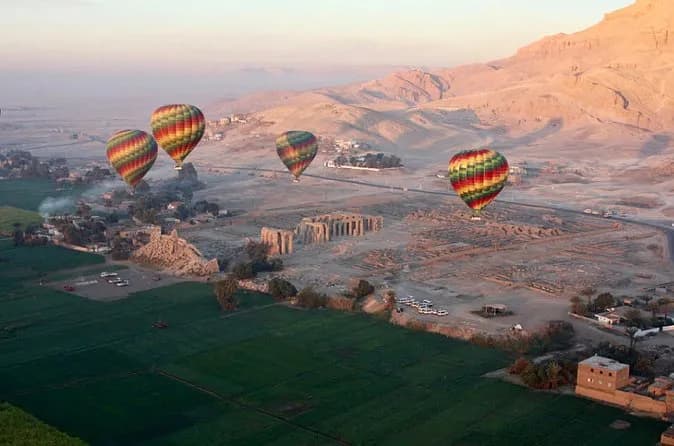
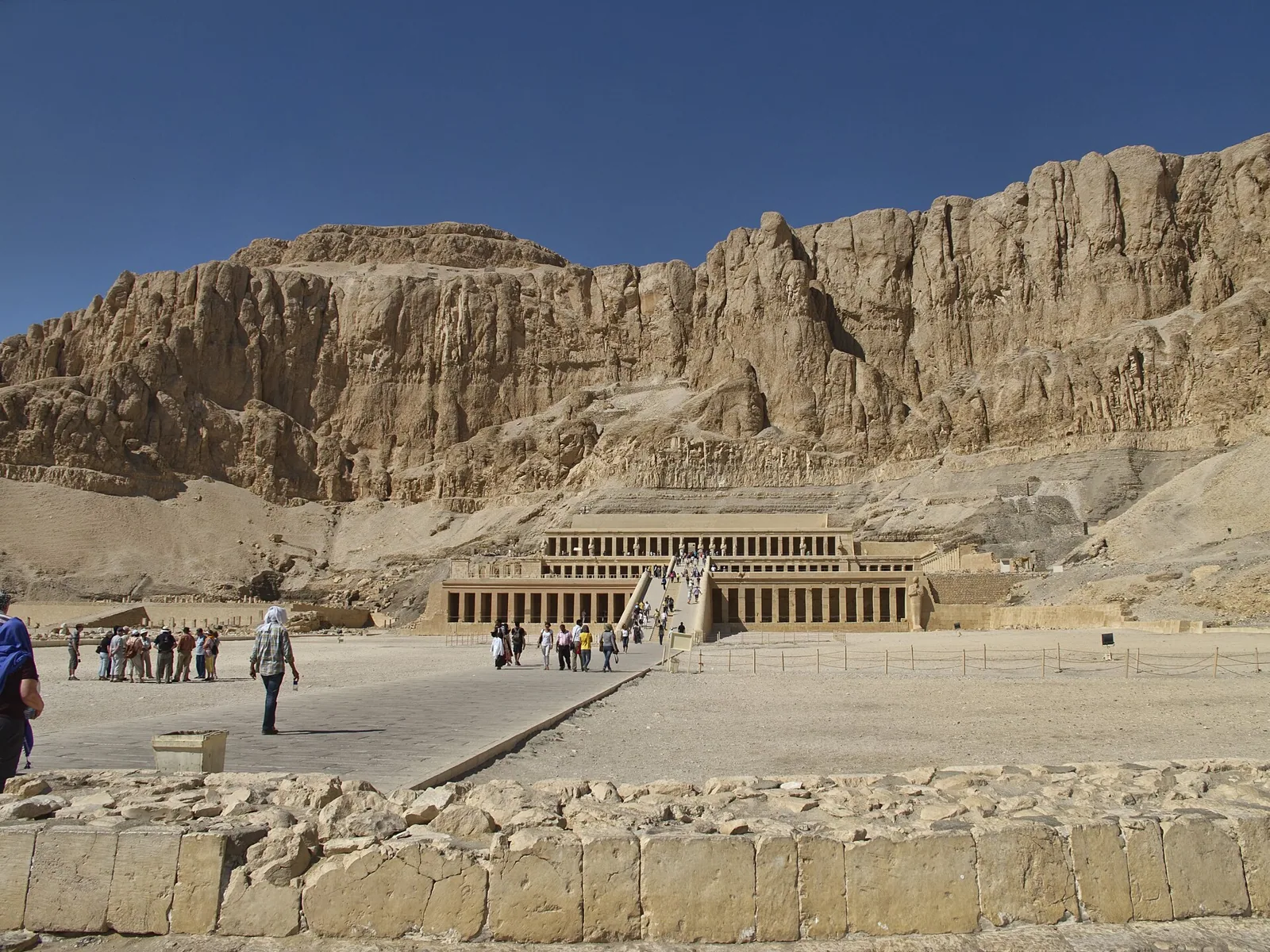 The Valley of the Kings is the headline, but the West Bank holds much more within a few kilometres: the terraced Temple of Hatshepsut, the artisans' village of Deir el-Medina, the colour-rich mortuary temple of Medinet Habu, and the lone, towering Colossi of Memnon. Above all of it, the unbeatable sunrise hot-air balloon floats over the whole necropolis as the sun clears the eastern desert, our Luxor hot-air balloon guide covers how to book that. A half-day covers the tombs; a full day does the West Bank justice. For the wider trip, see our Egypt travel guide. When you're ready to lock it in, compare Valley of the Kings tours and West Bank day trips here.
See it from the river. The great temples of Luxor bookend the classic Nile cruise between Luxor and Aswan — every cruise ship and sailing dahabiya moors here. Compare Nile cruise ships and dahabiyas, or read the Nile cruise guide.
Related guides: which tombs are included · Tutankhamun's tomb (KV62) · Seti I's tomb (KV17) · Ramesses VI's tomb (KV9) · Nefertari's tomb (QV66) · Valley of the Queens

A real team available 24/7 to assist you — free
Seif and the team reply on WhatsApp 24/7 — trip questions, custom plans and booking help.
Ask Seif on WhatsAppCommon questions
How does the Valley of the Kings ticket work?
A standard ticket admits you to three open tombs, chosen from a rotating list of whatever's open that day. Several celebrated tombs, Seti I (KV17), Tutankhamun (KV62) and Ramesses V/VI (KV9), carry separate additional fees at their own turnstiles, and those add-ons stack on top of the standard ticket rather than replacing it. Luxor is largely cashless now, so bring a bank card.
Which tombs are the best in the Valley of the Kings?
Seti I (KV17) is the longest and most beautifully decorated (a pricey extra fee); Ramesses V/VI (KV9) has a stunning astronomical ceiling and is great value. Among the standard three included tombs, Ramesses III (KV11) and Ramesses IX (KV6) are reliably colourful. Over the ridge, Nefertari's tomb (QV66) in the Valley of the Queens is often called the most beautiful in Egypt.
Is Tutankhamun's tomb worth visiting?
It's small and plain next to the grander tombs and carries an extra fee, but it's the Tutankhamun, and his mummy is still on site, so many visitors want to stand inside. His actual treasure is now displayed at the Grand Egyptian Museum in Giza, so if you're short on budget, skip KV62 and put the money toward Seti I or Ramesses VI instead.
What is the best time to visit the Valley of the Kings?
As early as possible. The valley is a shadeless sun-trap that becomes fiercely hot by mid-morning, and the tombs fill with cruise groups. It opens at 6:00 am, so arriving at opening means cooler air, softer light on the cliffs, and tombs you may have nearly to yourself. Late afternoon is a quieter second-best.
What are the Valley of the Kings opening hours?
The valley opens at 6:00 am and closes in the late afternoon, roughly 5:00 pm in summer and 4:00 pm in winter, with last entry shortly before closing. Hours can shift seasonally, so confirm on the day if you're planning a late-afternoon visit.
How do I get to the Valley of the Kings from Luxor?
It's on Luxor's West Bank, about a 20-minute drive from the town centre. You can cross the Nile on the cheap local ferry (every 10 to 15 minutes) and grab a taxi for the last 3 km, or take a single taxi over the Luxor Bridge, which loops south and takes 30 to 45 minutes. Most visitors come on a West Bank tour that handles the transport.
Can a guide go inside the tombs with you?
No. Guides aren't permitted to lecture inside the tombs, so a good private Egyptologist briefs you thoroughly outside each tomb entrance, then you explore the interior yourself. It's still one of the best upgrades you can make, since the painted walls mean far more with someone to interpret them.
Is the Luxor Pass worth it for the Valley of the Kings?
It depends on your itinerary. The standard Luxor Pass (about $130, or $70 for students) covers most East and West Bank sites but not Seti I or Nefertari; the premium pass (about $250, or $130 for students) adds both. Both last five days. For a multi-day Luxor trip that includes the big temples plus Seti I and Nefertari, the premium pass can pay for itself. For a quick two-site day trip, buy individual tickets.
Book it on This is Egypt
Turn this guide into a trip



Egypt's bestsellers
The experiences travelers book most, across the country




Attractions in this guide
Keep reading

Hurghada Diving (2026): Best Sites, Packages & Prices
Diving in Hurghada — the best reefs (Giftun, Careless Reef, Dolphin House) and Abu Nuhas wrecks, Discover Scuba vs PADI courses, season and water temps, and real 2026 prices.
By TiE Editors7 min read

Hurghada Snorkeling Trips (2026): Best Reefs, Prices & How to Choose
Where to snorkel from Hurghada in 2026 — Orange Bay, Giftun, Mahmya, Utopia and Dolphin House — with boat types, marine life, month-by-month sea temperatures, family tips and real prices from 1,000+ bookable trips.
By TiE Editors7 min read

Egypt Tour Prices by Activity (2026): What Each Type Really Costs
What every type of Egypt experience actually costs — from a 1,700 EGP camel ride to a 48,500 EGP Nile cruise — based on 29,710 real bookable tours across seven platforms.
By TiE Editors6 min read