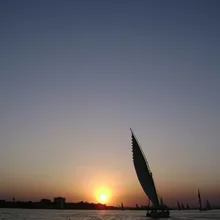
 Photo by Marc Ryckaert (MJJR), via Wikimedia Commons, CC BY 3.0
Luxor Travel Guide: Temples, Tombs & the Nile (2026)
The world's greatest open-air museum, where ancient Thebes split its life across the Nile: temples for the living on the East Bank, tombs for the dead on the West. A complete guide to Luxor's sights, a sunrise balloon, where to stay, and how long to give it.
Book it on This is Egypt
Luxor · Turn this guide into a trip
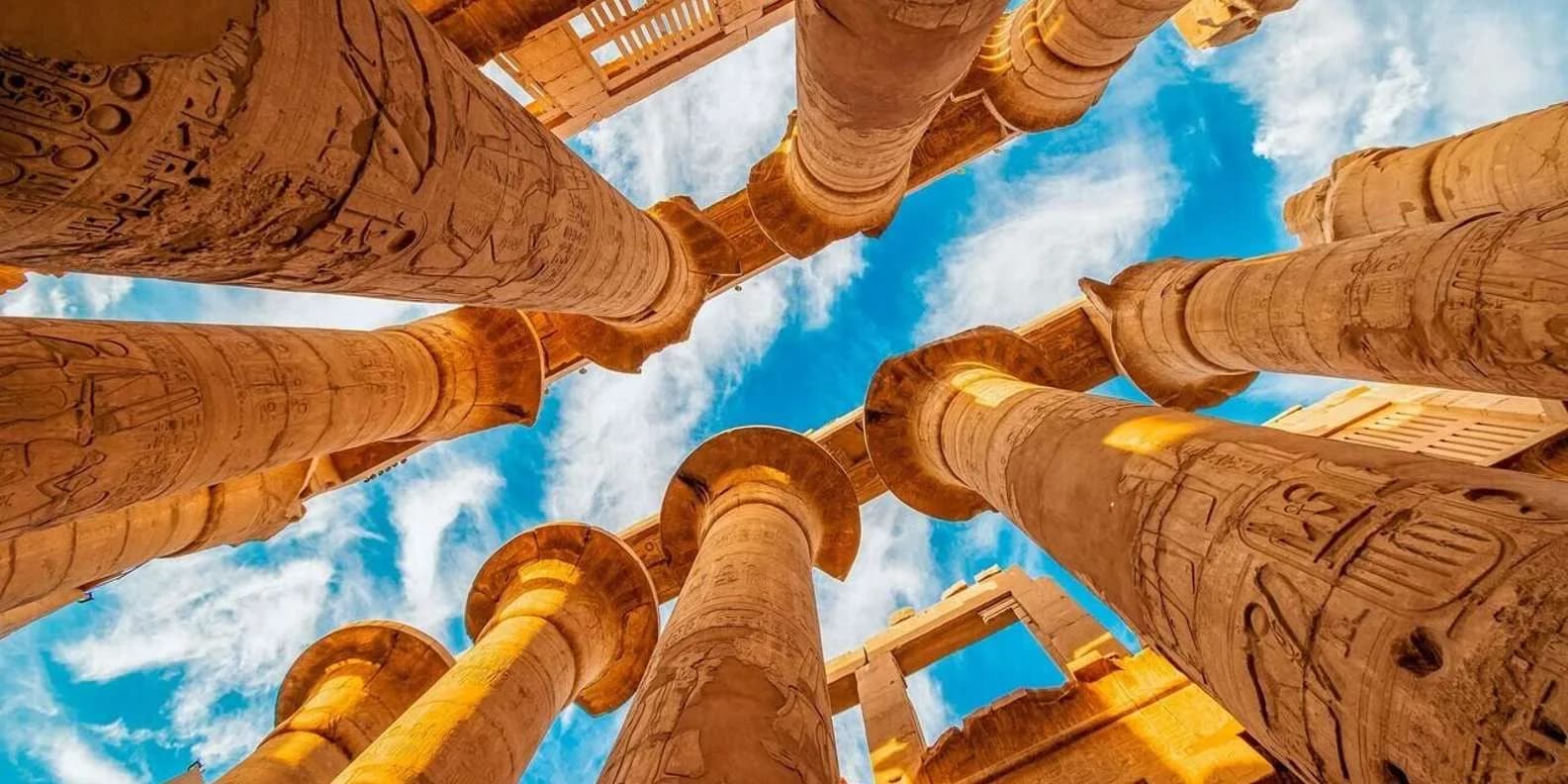
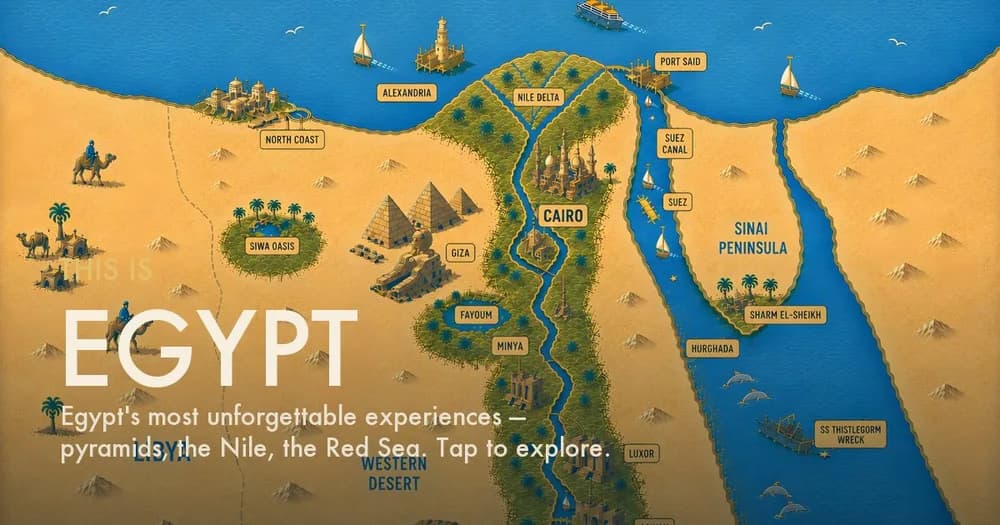
Quick answer: Give Luxor two to three days and it will hand you more standing antiquity than anywhere else on earth. Built over ancient Thebes, the capital at the height of pharaonic power, this is the destination people mean when they call Egypt "the world's greatest open-air museum" — and the phrase, for once, undersells it. The city organises itself with almost theatrical clarity: temples for the living on the East Bank, tombs for the dead on the West, the Nile running between them like a border between two states of being. Spend a day on each, add a sunrise balloon, and you have one of the finest short trips in the world. Everything below is planned around that rhythm, and each site sits on the interactive map if you want to trace the two banks facing each other before you go.
Why Luxor is the greatest open-air museum on earth
Cairo is Egypt's present; Luxor is its past made visible. Roughly a third of the world's surviving ancient monuments stand in and around this one Upper Egyptian city, and unlike a museum they remain where the ancients built them — columns still holding up sky, tomb paint still bright three thousand years after the brush was set down. What makes Luxor extraordinary is not any single ruin but the completeness of the picture. You can walk a pharaoh's temple in the morning and stand in his burial chamber that afternoon, and understand, in a way no glass case allows, exactly how the Egyptians divided the world into the realm of the sun and the realm beyond it.
East Bank: temples of the living
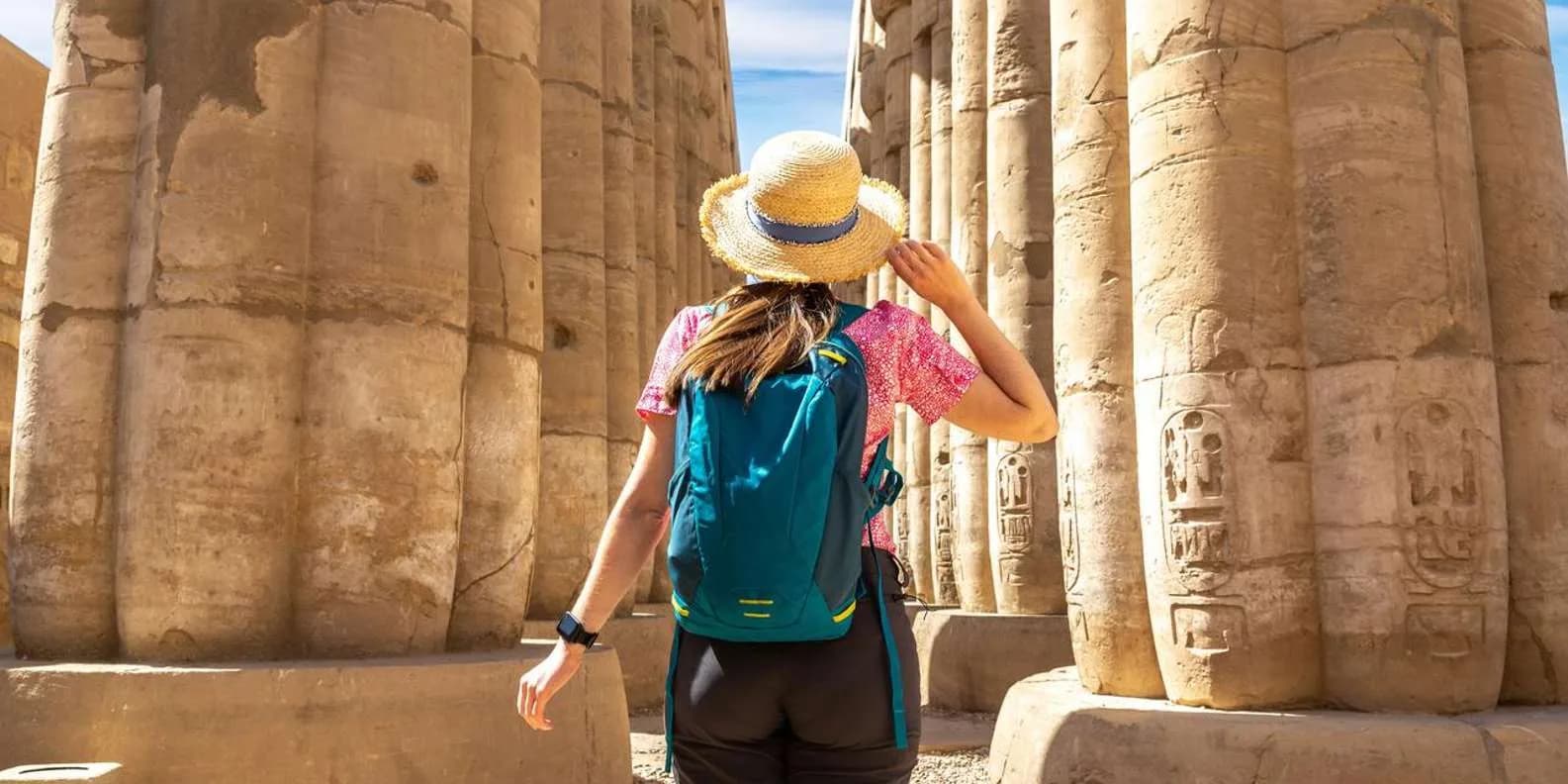
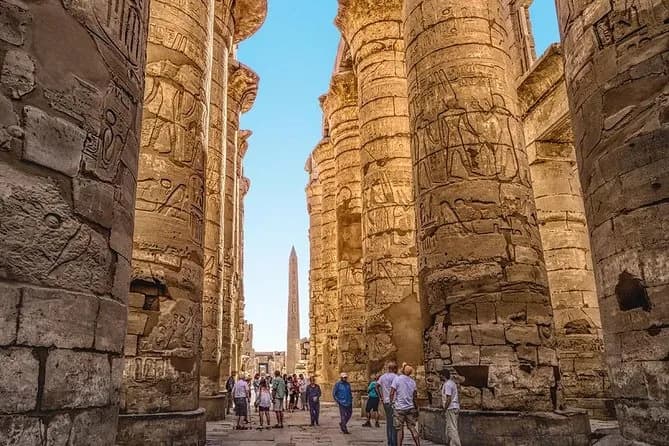
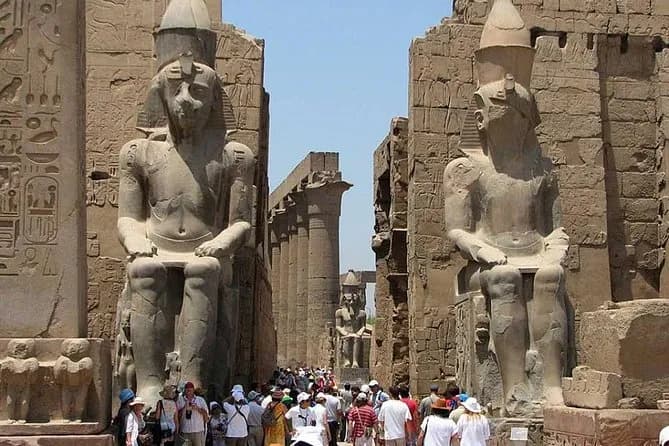
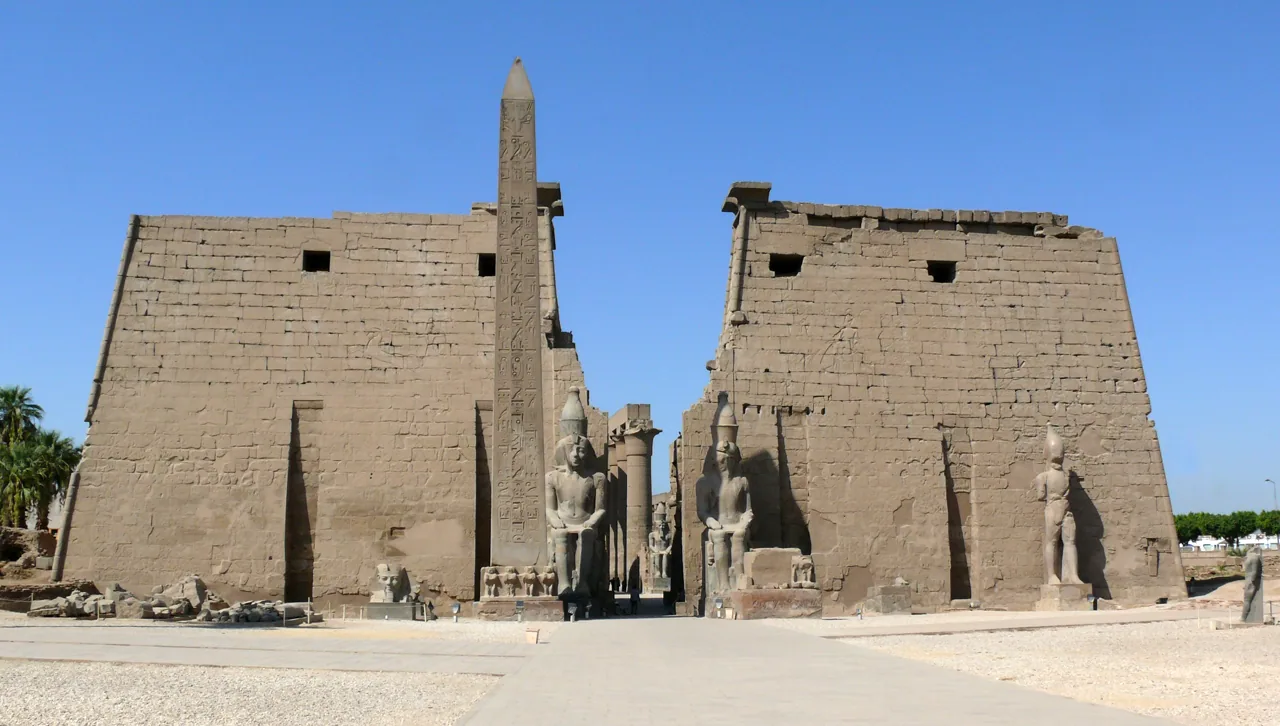 Karnak is the headline, and it is enormous. Not one temple but a vast sacred precinct that grew for nearly two thousand years as pharaoh after pharaoh tried to outbuild the last, it climaxes in the Great Hypostyle Hall, where 134 sandstone columns — the tallest more than 20 metres — stand so close together that visitors fall silent walking among them. Look for Hatshepsut's obelisk, still the tallest ancient obelisk standing in Egypt, the sacred lake, and the avenue of ram-headed sphinxes that once ran the full three kilometres to Luxor Temple and reopened in 2021. Karnak opens around 6am; go at opening, before the heat and the tour buses arrive together. Tickets run roughly 300–350 EGP.
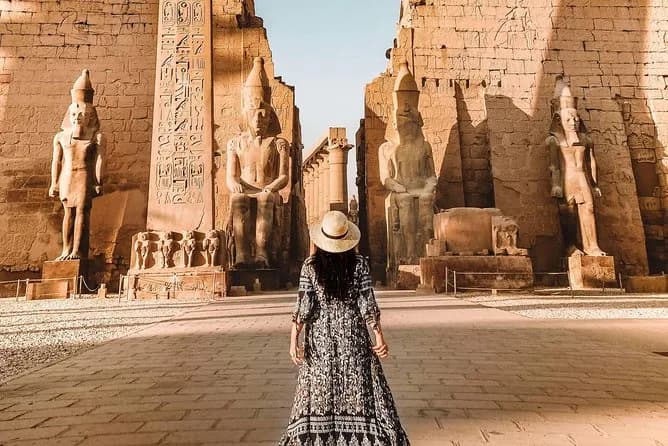
A short way south, Luxor Temple is smaller, more graceful, and best saved for the evening. Floodlit after dark, its colonnades glow gold, the crowds thin and the heat lifts — it is the finest-value night out in Upper Egypt, and the short walk along the reopened sphinx avenue between the two temples is a pleasure in its own right. Our Karnak and Luxor Temples guide goes deeper on the history, the best photo angles, and how to time both in a single day.
The Luxor Museum: small, superb, and overlooked
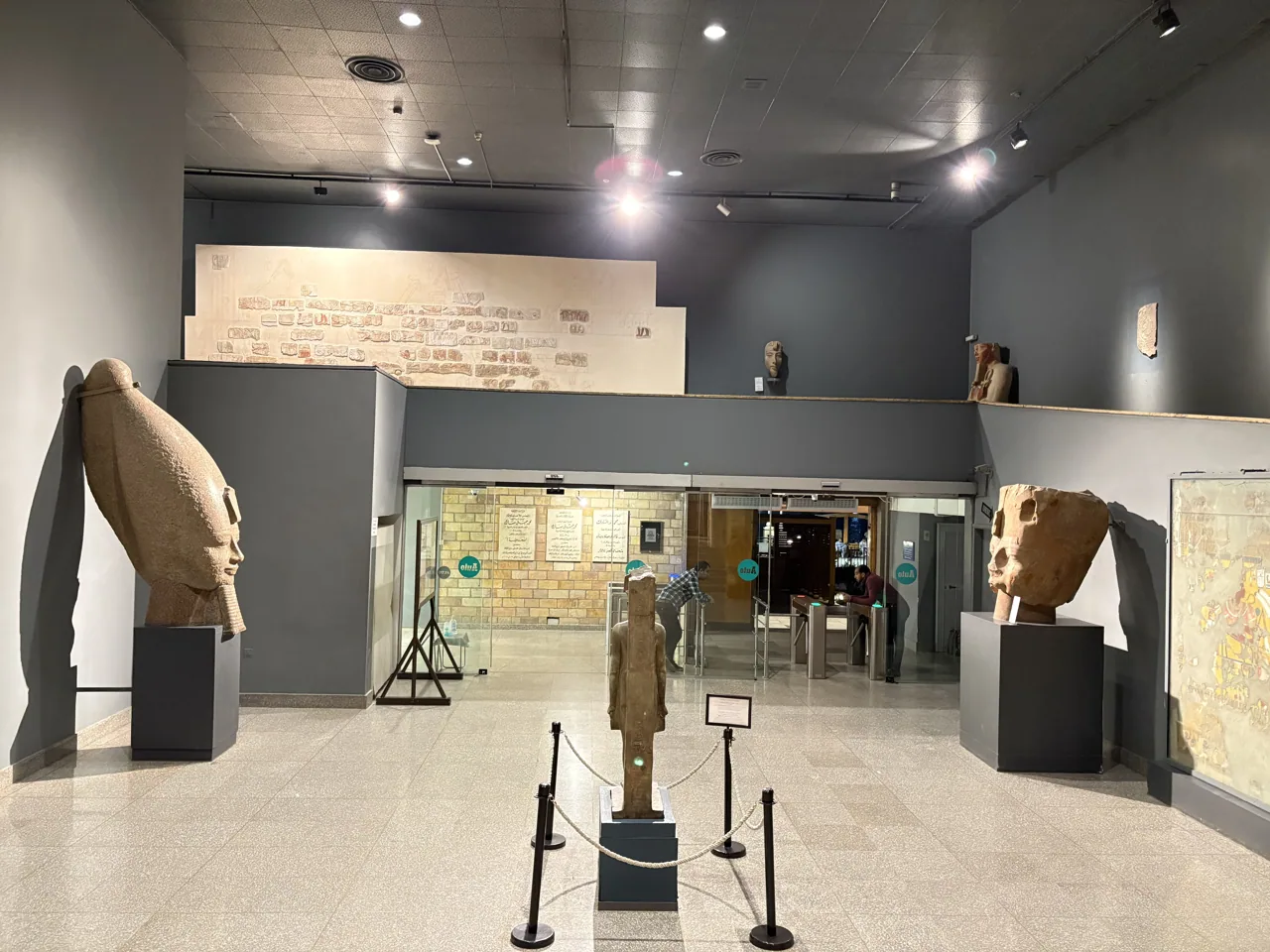 Between the two temples on the Corniche sits the Luxor Museum, and skipping it is a common mistake. Where Cairo's collections overwhelm by sheer volume, Luxor's is curated, beautifully lit, and comfortably seen in an hour or two. The stars are a serene statue of Amenhotep III, the cache of 26 New Kingdom statues unearthed beneath Luxor Temple's court in 1989, objects from Tutankhamun's tomb, and the royal mummies of Ahmose I and Ramesses I. On a scorching afternoon it doubles as air-conditioned refuge between morning and evening temple visits. Entry is modest at around 100 EGP.
West Bank: the realm of the dead
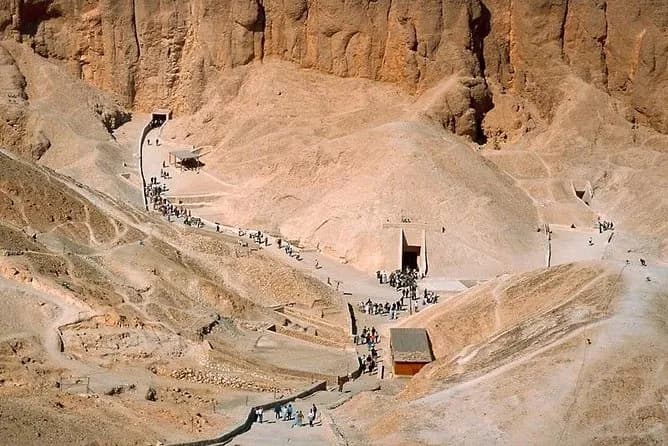
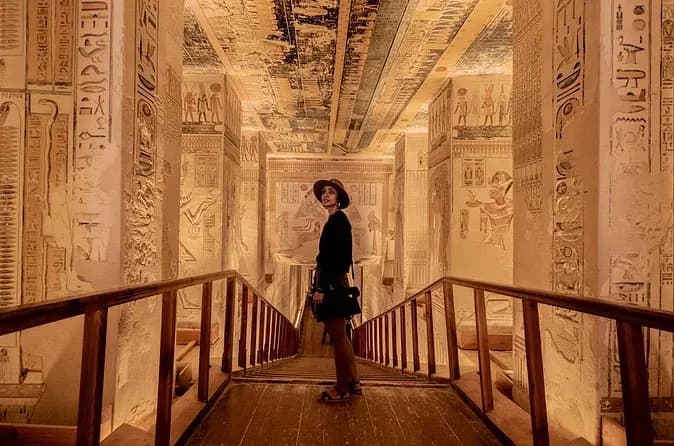
 Cross the river to the necropolis, where the ancient Egyptians buried their kings out of sight of the rising sun. The Valley of the Kings hides the rock-cut tombs of New Kingdom pharaohs, their painted ceilings and hieroglyphs still vivid after three millennia. A standard ticket covers three tombs from a rotating selection, with Seti I, Tutankhamun and Ramesses VI charging separate fees; our Valley of the Kings guide explains exactly which are worth the surcharge and which to save your legs for.
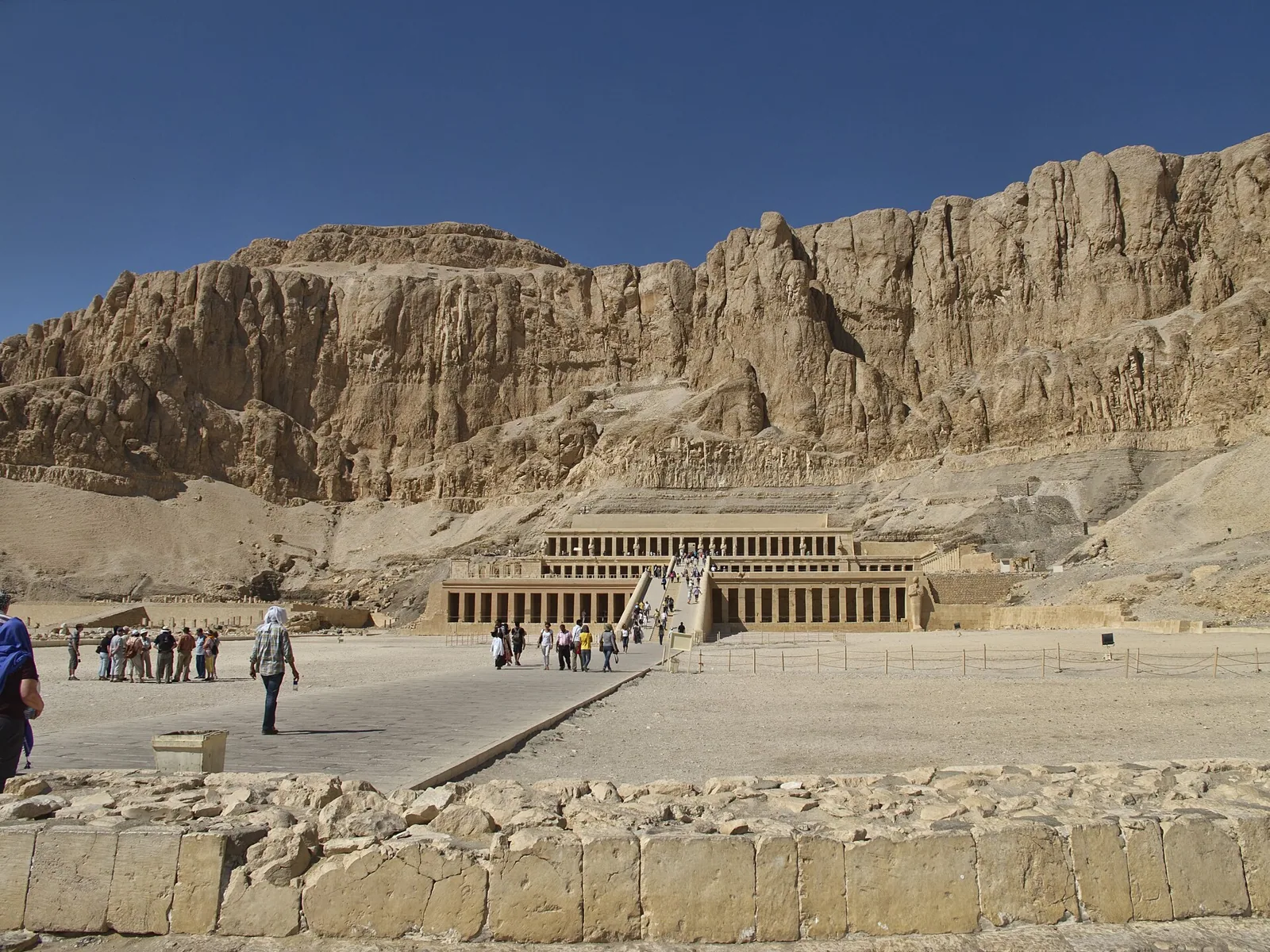
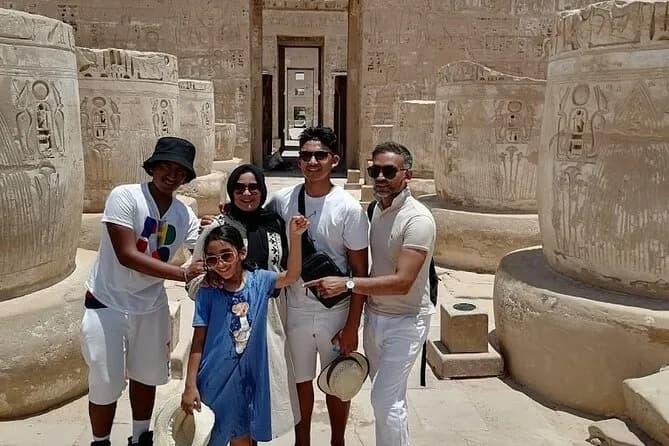
The West Bank rewards a full day, because the valley is only the beginning. Nearby rise the terraced Temple of Hatshepsut, cut into a cliff so cleanly it reads like architecture imitating geology; the artisans' village of Deir el-Medina, home to the workers who dug the royal tombs; and the mortuary temple of Medinet Habu, where colour still clings to the walls in a way the more famous sites have lost. The Tombs of the Nobles — the burial places of viziers, scribes and priests rather than kings — are quieter and, to many visitors, more moving, their painted scenes of daily life warmer than royal ceremony. On the way in or out, stop at the lone Colossi of Memnon, two 18-metre seated statues of Amenhotep III standing guard over the floodplain, all that survives above ground of what was once the largest temple in Egypt. Over the ridge, the Valley of the Queens holds the tomb of Nefertari, widely called the most beautiful painted tomb in Egypt — worth its premium ticket and strict visitor limit.
Float over it all at sunrise
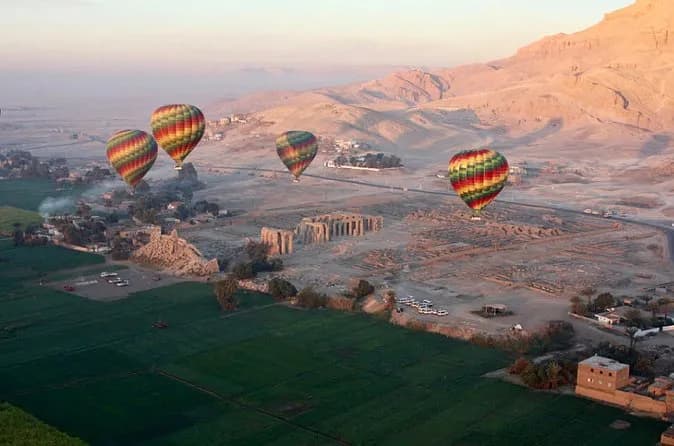
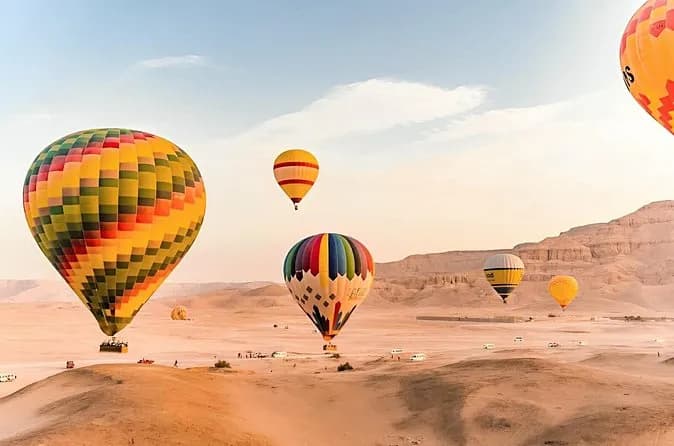
 The one experience that lives up to its photographs is the hot-air balloon. You lift off in the cool dark and climb as the sun crests the Theban hills, the Valley of the Kings, the Ramesseum, Hatshepsut's terraces and the green ribbon of the Nile resolving into a single map beneath you. Flights last 45 minutes to an hour and reach around 450 metres; expect to pay roughly $50 and up per person, more for premium operators and smaller baskets. Book the earliest slot for the calmest air and the softest light, and you are back on the ground for breakfast. Our Luxor hot-air balloon guide covers operators, safety, timing and what to wear.
Luxor as the gateway to the Nile
Luxor is the northern hub of the classic Nile cruise to Aswan, calling at temples that are awkward to reach any other way: Esna and its lock, Edfu with its superbly preserved Temple of Horus, and the riverside double temple of Kom Ombo. Cruising is not just transport but a mood — the desert sliding by, the same felucca sails the pharaohs would recognise — and for many travellers it is the highlight of the whole trip. Most itineraries pair Luxor and Aswan as bookends, so plan the two together.
How many days do you need?
Two full days is the honest minimum: one for the East Bank (Karnak in the morning, the museum in the heat of the afternoon, Luxor Temple after dark) and one for the West Bank (the valleys, Hatshepsut, the Colossi). Add a pre-dawn morning for the balloon and you have a rounded three days. Anything less means choosing what to skip; anything more, and Luxor happily absorbs it — there are lesser temples, the far tombs, and day trips north to Dendera and Abydos for those who catch the fever.
Getting to Luxor
Three good options. A domestic flight from Cairo takes about an hour, runs several times daily, and — booked ahead — often costs no more than the train. The overnight sleeper train is the romantic, hotel-saving alternative: board in Cairo in the evening, sleep across the desert in a private cabin, and wake in central Luxor around nine hours later, ready to walk to Karnak. And Luxor is a natural Nile-cruise hub, so many visitors simply arrive or depart by boat. From Luxor, the onward leg to Aswan is best enjoyed on the water rather than the road.
Getting around
Luxor's two banks are joined by the river, and crossing it is half the fun. The public ferry leaves roughly every half hour from the Corniche near the museum and costs only a few pounds each way — cheap, quick and full of locals going about their day. On the West Bank, the sites are scattered across several kilometres of desert and farmland, so the practical move is to hire a taxi for the day (bargain first; expect somewhere around 250 EGP hired from the East Bank, less if you arrange it after crossing). Some visitors rent a bicycle, but summer heat and the distances make a car the sensible default. On the East Bank, everything of interest is walkable along the Corniche, with taxis and caleches on hand when it is too hot to stroll.
Where to stay and eat
The East Bank puts you on the Corniche, steps from the temples, the museum and the restaurants — the convenient choice for a short trip. The West Bank is quieter, more rural and closer to the tombs, with charming small hotels tucked among the sugarcane and mango groves; it trades nightlife for waking to the sound of the necropolis. For old-world grandeur, the Sofitel Winter Palace brings 1880s Belle Époque to the East Bank riverfront — this is where Howard Carter announced the discovery of Tutankhamun's tomb. For food, seek out grilled pigeon, koshari and clay-pot tagines at local spots away from the Corniche, or dine on a hotel terrace as the sun goes down over the west.
Best time to visit and practical tips
Come between October and April, when temple days are comfortable and evenings pleasant. Summer, from May to September, is punishing — heat regularly tops 40°C, and the sun over the West Bank's shadeless sites is relentless — but it brings the lowest prices and thinnest crowds if you can bear it. Whenever you go, treat the heat seriously: start at opening time, carry more water than you think you need, wear a hat and real sun protection, and plan the shadeless West Bank for the morning. Bring small cash for tickets, ferries, tips and taxis, and expect a little friendly hustle at every gate — a firm, good-humoured no is all it takes.
Pair Luxor with Aswan for the full sweep of Upper Egypt, see where it fits a first trip in the Egypt travel guide, and when you are ready to book tombs, temples and that sunrise balloon, browse and compare Luxor experiences in one place.
See it from the river. The great temples of Luxor bookend the classic Nile cruise between Luxor and Aswan — every cruise ship and sailing dahabiya moors here. Compare Nile cruise ships and dahabiyas, or read the Nile cruise guide.
Related guides: which Valley of the Kings tombs are included · Seti I's tomb (KV17)
A real team available 24/7 to assist you — free
Seif and the team reply on WhatsApp 24/7 — trip questions, custom plans and booking help.
Ask Seif on WhatsAppCommon questions
How many days do you need in Luxor?
Two full days is the honest minimum — one for the East Bank (Karnak, Luxor Temple and the Luxor Museum) and one for the West Bank (Valley of the Kings, Hatshepsut and the Colossi of Memnon). Add a pre-dawn morning for the hot-air balloon for a well-rounded three days. Luxor is also the starting point for most Nile cruises to Aswan.
Why is Luxor called the world's greatest open-air museum?
Roughly a third of the world's surviving ancient monuments stand in and around Luxor, built over ancient Thebes. Unlike a museum, they remain where the pharaohs raised them — temples still holding up sky, tomb paintings still bright after three thousand years. You can walk a king's temple and stand in his burial chamber the same day.
How do you get from Cairo to Luxor?
A domestic flight takes about an hour and, booked ahead, often costs no more than the train. The overnight sleeper train is the scenic, hotel-saving alternative — you board in the evening and wake in central Luxor around nine hours later. Luxor is also a Nile-cruise hub, so many travellers arrive or leave by boat.
Is the Luxor hot-air balloon worth it?
For most travellers, yes. A sunrise flight over the Valley of the Kings, Hatshepsut's terraces and the Nile is a genuine bucket-list experience and surprisingly affordable, from around $50 per person. Book the earliest slot for the calmest air and softest light, and you are back for breakfast.
What is the difference between the East Bank and the West Bank?
The East Bank, where the sun rises, held the temples of the living — Karnak, Luxor Temple and the modern city with its hotels and restaurants. The West Bank, where the sun sets, was the realm of the dead: the Valley of the Kings and Queens, mortuary temples like Hatshepsut and Medinet Habu, and the Colossi of Memnon.
How do you get around Luxor and across to the West Bank?
A public ferry crosses the Nile roughly every half hour from the Corniche for a few pounds each way. The West Bank sites are spread over several kilometres, so the practical option is to hire a taxi for the day — bargain first. On the East Bank, the temples, museum and restaurants are walkable along the Corniche.
When is the best time to visit Luxor?
October to April, when temple days are comfortable and evenings pleasant. Summer (May to September) is punishing, with heat often above 40°C over the shadeless West Bank, but it brings the lowest prices and thinnest crowds. Whenever you go, start at opening time and carry plenty of water.
Should you visit Luxor or Aswan?
They complement each other rather than compete. Luxor has the greater concentration of monuments; Aswan is gentler and more scenic. The classic trip does both, linked by a Nile cruise between them that calls at Edfu and Kom Ombo along the way.
Book it on This is Egypt
Turn this guide into a trip


Egypt's bestsellers
The experiences travelers book most, across the country




Keep reading

Hurghada Diving (2026): Best Sites, Packages & Prices
Diving in Hurghada — the best reefs (Giftun, Careless Reef, Dolphin House) and Abu Nuhas wrecks, Discover Scuba vs PADI courses, season and water temps, and real 2026 prices.
By TiE Editors7 min read

Hurghada Snorkeling Trips (2026): Best Reefs, Prices & How to Choose
Where to snorkel from Hurghada in 2026 — Orange Bay, Giftun, Mahmya, Utopia and Dolphin House — with boat types, marine life, month-by-month sea temperatures, family tips and real prices from 1,000+ bookable trips.
By TiE Editors7 min read

Egypt Tour Prices by Activity (2026): What Each Type Really Costs
What every type of Egypt experience actually costs — from a 1,700 EGP camel ride to a 48,500 EGP Nile cruise — based on 29,710 real bookable tours across seven platforms.
By TiE Editors6 min read