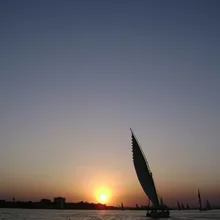
 Photo by Diego Delso (delso.photo), via Wikimedia Commons, CC BY-SA 4.0
Karnak & Luxor Temples: A Visitor's Guide (2026)
Luxor's two great East Bank temples explained: Karnak's Great Hypostyle Hall of 134 columns, the 3km avenue of sphinxes, and why Luxor Temple is best seen floodlit after dark.
Book it on This is Egypt
Luxor · Turn this guide into a trip
Quick answer: Luxor's East Bank holds the two temples that once ran ancient Thebes, and between them they carry most of the story of Egyptian religion and kingship. You can see both in a single day, but they reward a little context first, so that you find yourself reading the walls rather than simply admiring them. Karnak was the god's house, the sprawling estate of Amun-Ra that pharaohs enlarged for two millennia. Luxor Temple, three kilometres south, was where kingship itself was renewed each year. Do Karnak in the cool of the morning and Luxor Temple after dark when it is floodlit, and you will have seen the finest pairing of monuments in Egypt.
At a glance: Karnak grew for nearly 2,000 years and centres on the Great Hypostyle Hall, 134 columns up to about 21 metres tall; allow two to three hours and arrive at opening. Luxor Temple is smaller, more graceful, and best seen floodlit at night; allow around an hour. A restored 2.7 km avenue of ram-headed sphinxes links the two and reopened in 2021. Tickets are separate at each gate: expect roughly EGP 600 for Karnak and EGP 400 for Luxor Temple, with the Karnak sound-and-light show ticketed on its own. Prices change often, so treat these as a guide and confirm at the booth.
What they are, and why they matter
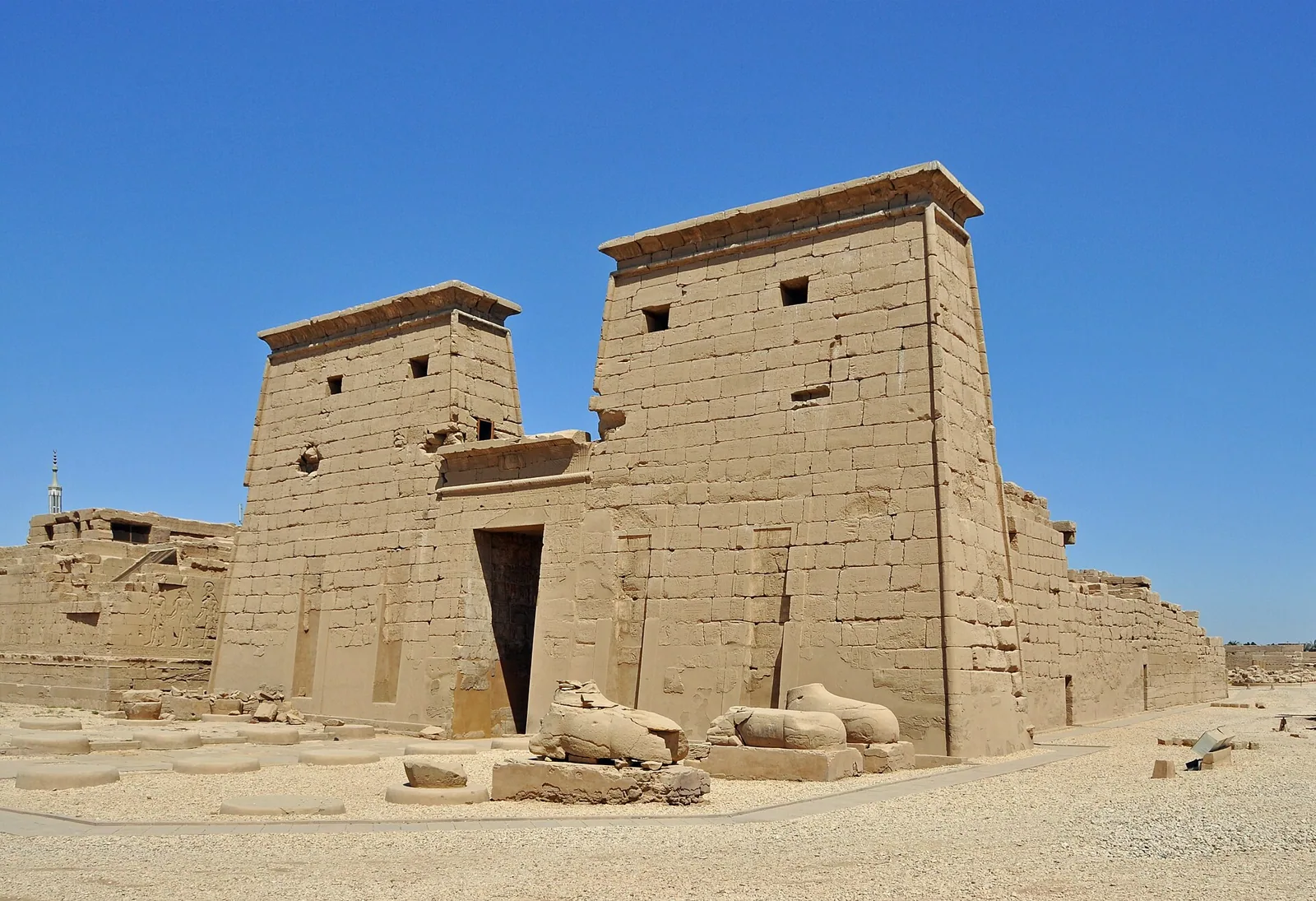 These are the two great temples of the ancient capital the Greeks called Thebes, the city that dominated Egypt for much of the New Kingdom. They were never rivals but partners in a single religious machine. Karnak was the permanent home of the god Amun; Luxor Temple, its southern counterpart, was the setting for the annual Opet festival, when the god's statue travelled between the two and the living pharaoh's right to rule was renewed. The processional avenue that joined them made the whole East Bank one vast stage for that ritual. To stand in either temple is to stand where the ideology of divine kingship was performed, year after year, for well over a thousand years. That continuity is the reason they feel less like ruins than like a religion frozen mid-sentence.
Karnak: the largest religious site of the ancient world
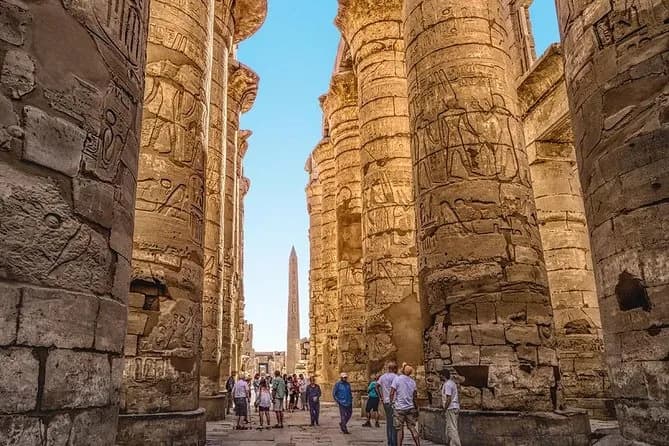
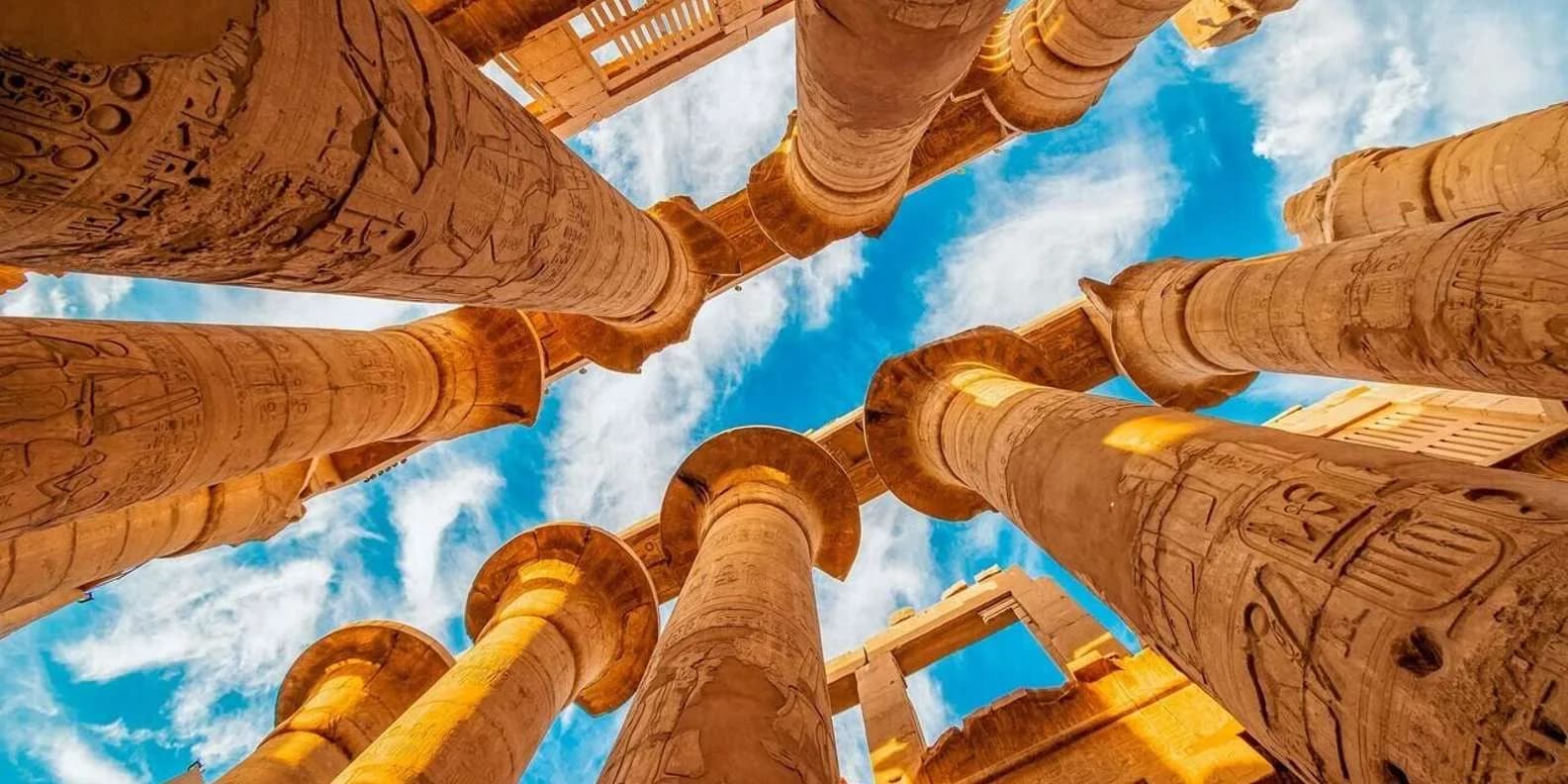
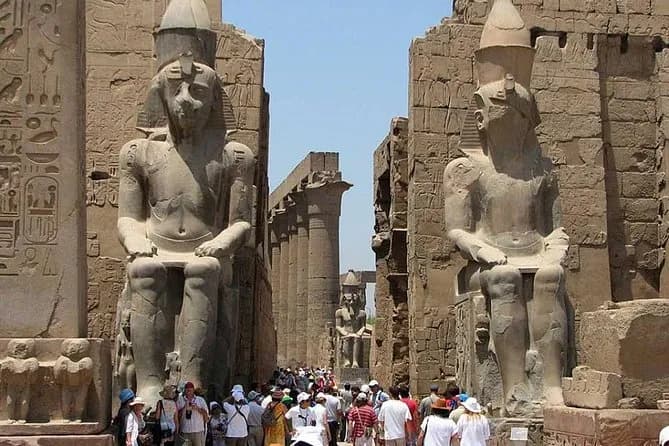
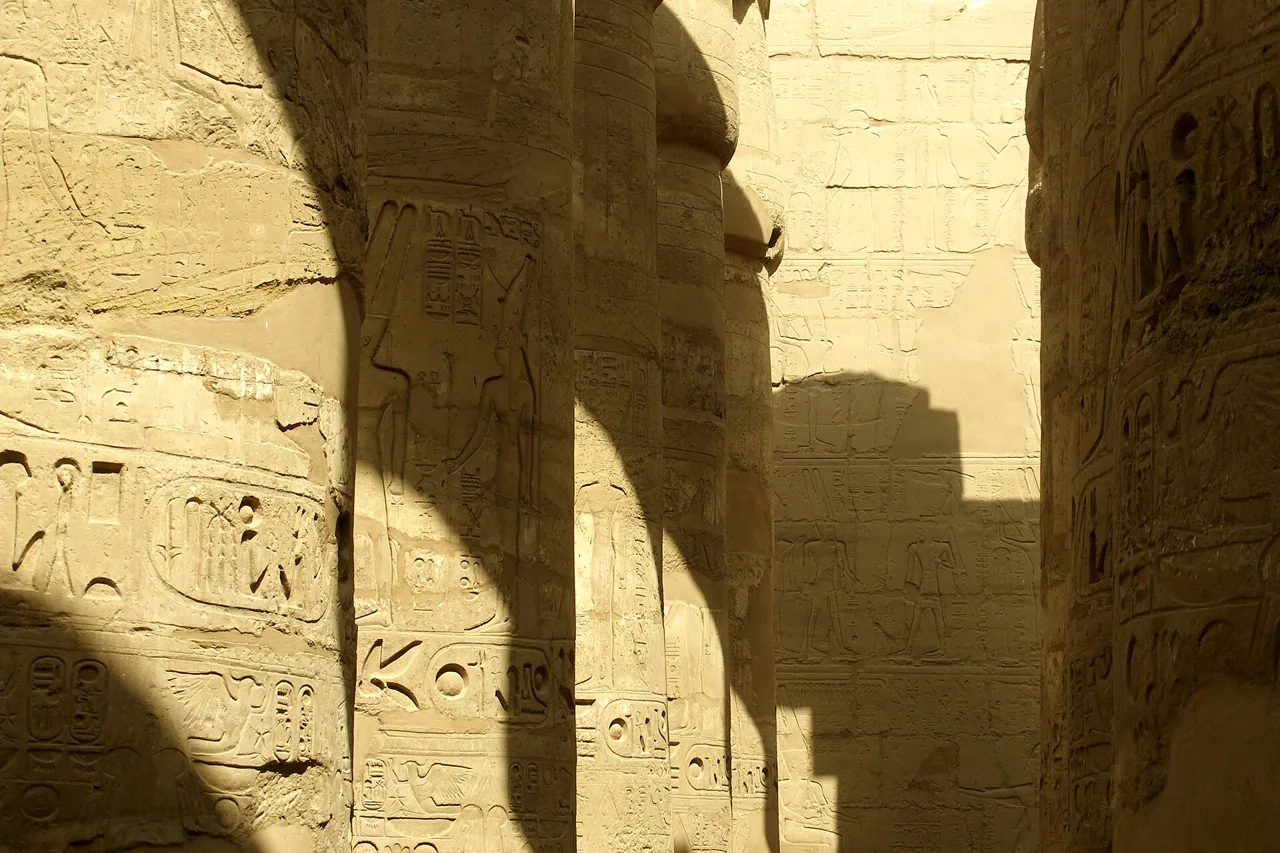 Karnak is not one temple but a whole precinct, and pharaohs expanded it for almost 2,000 years, each adding pylons, halls, obelisks and chapels to honour Amun-Ra and outshine the last. The showpiece is the Great Hypostyle Hall, built mainly under Seti I and Ramesses II in the 13th century BC: 134 sandstone columns spread across roughly half a hectare, the central twelve about 21 metres tall and so thick that several adults linking hands cannot reach around a single shaft. They once carried a stone roof and stood in near-darkness; now they are open to the sky, and the low, raking light between them at opening or closing is the single best reason to time your visit well. Walk the central aisle slowly and look up: the papyrus-bud capitals still hold traces of the paint that once made the whole forest blaze with colour.
Beyond the hall, seek out the standing obelisk of Hatshepsut, about 29 metres tall and one of the tallest surviving in Egypt; the sacred lake, where priests purified themselves before ritual and where the sound-and-light show now seats its audience; the giant scarab statue of Amenhotep III that visitors circle for luck; and the avenue of ram-headed sphinxes guarding the entrance. That avenue once ran roughly 2.7 km all the way to Luxor Temple, and it was excavated and reopened to the public in 2021.
Karnak rewards wandering well past the Hypostyle Hall. The Open-Air Museum in the northwest corner, on a separate ticket, gathers reassembled early shrines including the White Chapel of Senusret I, whose crisp carved reliefs are among the finest in the country. The Cachette Court is where excavators pulled more than 17,000 buried statues from the ground in the early 1900s. Near the sacred lake lies the fallen upper half of a second Hatshepsut obelisk, toppled on its side and close enough to read the inscriptions. It is a vast, shadeless site, so the plan is simple: arrive at opening, give it two to three hours, and leave before the heat and the tour buses peak.
The Karnak sound-and-light show
Most evenings, Karnak stages a sound-and-light show that walks you through the darkened precinct in several languages before seating you facing the floodlit sacred lake. It runs a little over an hour, the Hypostyle Hall's columns lighting one by one, and it offers a second, cooler, and quite different visit to a temple you have already seen by day. It is theatrical rather than scholarly, but on a warm Luxor night that is exactly the point. Buy the show ticket separately from daytime admission, and check the current showtimes and language schedule locally, as they shift with the season.
Luxor Temple: best after dark
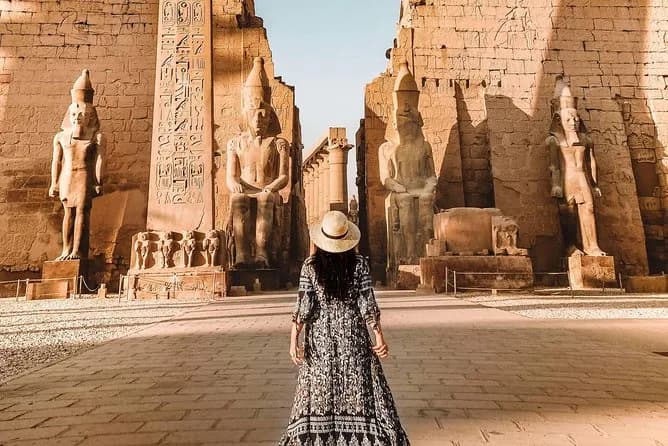
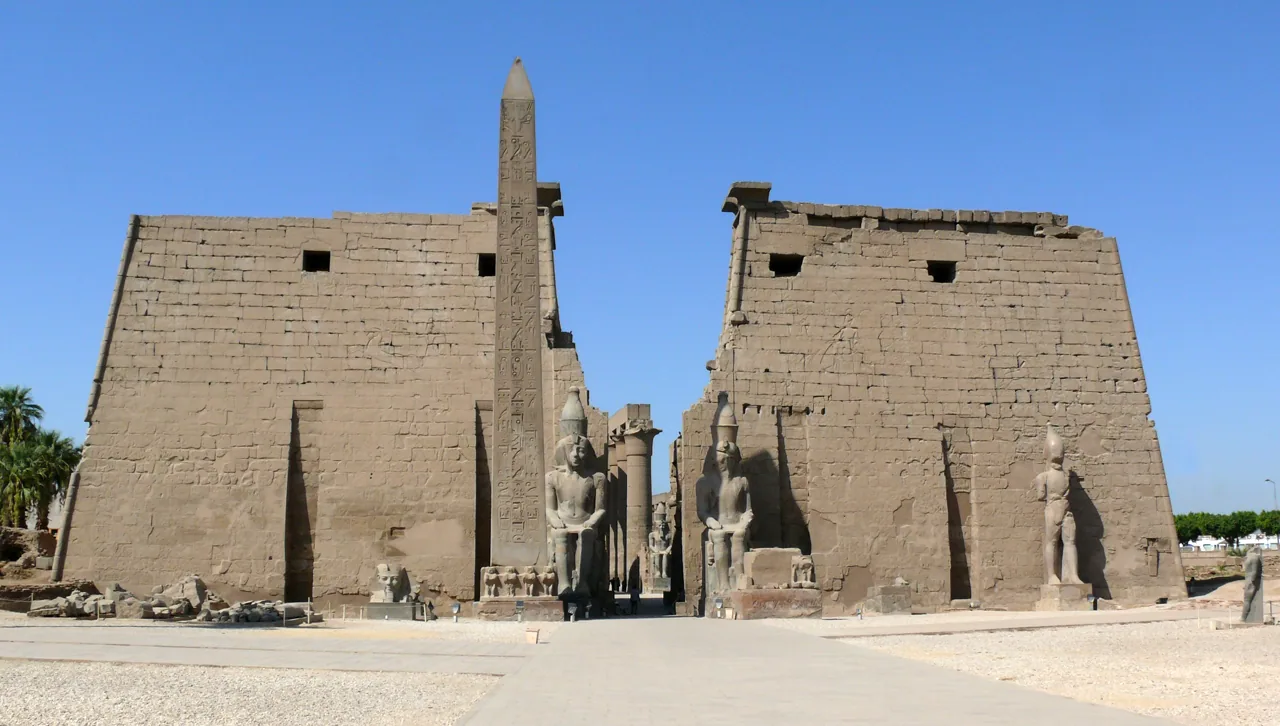 A short way south, on the edge of the modern town, Luxor Temple is smaller and more elegant, and it was dedicated less to a single god than to kingship itself. Pharaohs renewed their rule here during the Opet festival, Alexander the Great rebuilt part of the sanctuary, Roman legions turned a hall into a shrine, and a working mosque still stands built into the upper walls, so the site layers some 3,000 years of continuous worship into one compact space. A single granite obelisk stands at the entrance; its twin was given to France in the 1830s and rises today over the Place de la Concorde in Paris. The colonnade of Amenhotep III, a double row of towering columns, is the temple's grandest stroke.
The great atmospheric bonus is the Mosque of Abu el-Haggag, perched high on the ancient walls of the Court of Ramesses II. Built in the Ayyubid period, roughly the 13th century, on the ruins of an earlier Christian church, it means the very same spot has been a place of worship almost without a break for thirty-five centuries. When the medieval mosque was raised, the temple below still lay buried in sand, which is why the mosque's door now hangs improbably in mid-air above the excavated court.
Come to Luxor Temple in the evening. As the sun drops, the floodlights bring the sandstone up in warm gold, the day's heat lifts, and the crowds thin to a trickle. Walking the colonnade after dark, with the mosque lit above and the obelisk sharp against the sky, is the best-value night out in Upper Egypt.
The Avenue of Sphinxes
The Avenue of Sphinxes is the ceremonial road that once linked Karnak and Luxor Temple, about 2.7 km long and lined originally with more than a thousand ram-headed and human-headed statues. Buried for decades under the modern town, it was painstakingly excavated and reopened in November 2021 with a televised "Golden Parade" that carried royal mummies through Luxor by night. Today you can walk stretches of it and trace the exact processional route the god's barque followed each year, a rare case of an ancient street returned, more or less, to daylight.
Tickets, hours and the best time to visit each
Karnak opens around 6am and closes in the late afternoon, roughly 5 to 5:30pm in winter, a little later in summer. Foreign-adult admission runs around EGP 600, with the Open-Air Museum and Cachette Court on extra tickets, and the sound-and-light show ticketed separately in the evening. Visit in the morning: the light between the columns is best, the air is cool, and you beat the coach parties.
Luxor Temple keeps longer hours, typically from about 6am until 9pm or later, precisely so you can see it lit. Foreign-adult admission is around EGP 400, with student rates roughly half. Visit in the evening, when the floodlights do their work.
Prices and closing times shift with the season and with official revisions, so use these as a planning guide and confirm the current rates at each gate. Students with a valid international card get a substantial discount at both.
How to combine them, and getting there
The classic day is easy: Karnak at opening, a break through the hot middle of the day, then floodlit Luxor Temple after dinner. Both sit on the East Bank within an easy stroll of the Corniche hotels, or a short and cheap taxi ride. Luxor is reached by a one-hour flight from Cairo, an overnight sleeper train, or, most memorably, as the final stop on a Nile cruise from Aswan to Luxor; many visitors first glimpse Karnak from the deck.
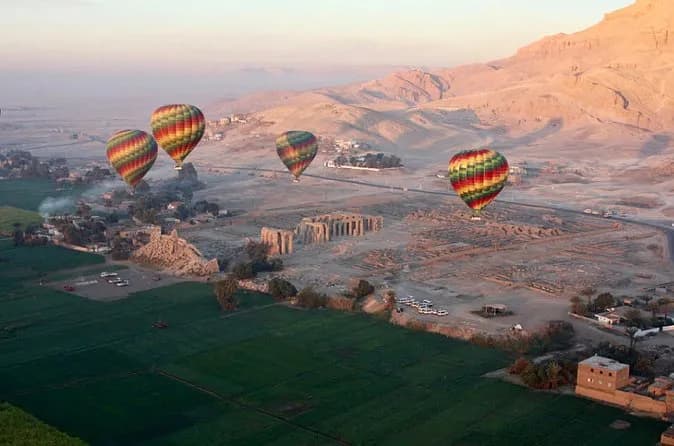
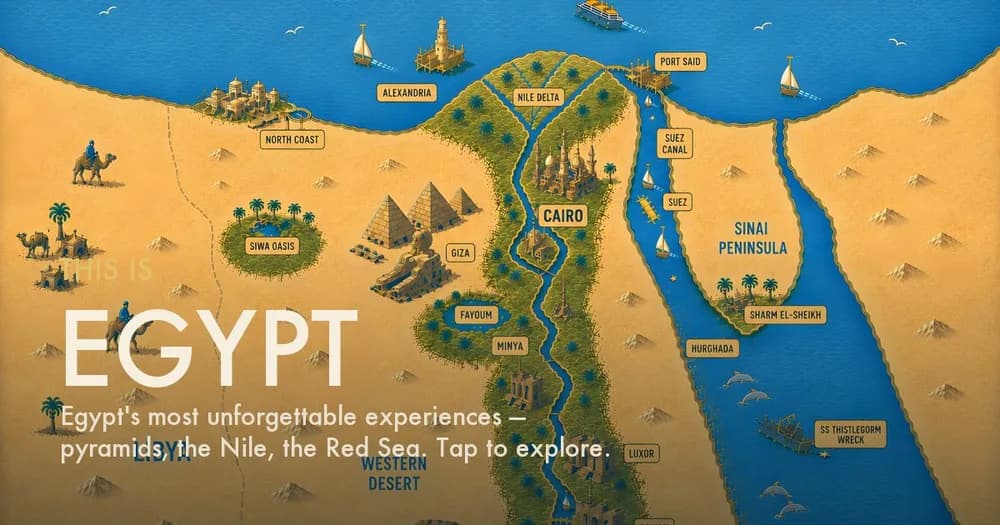
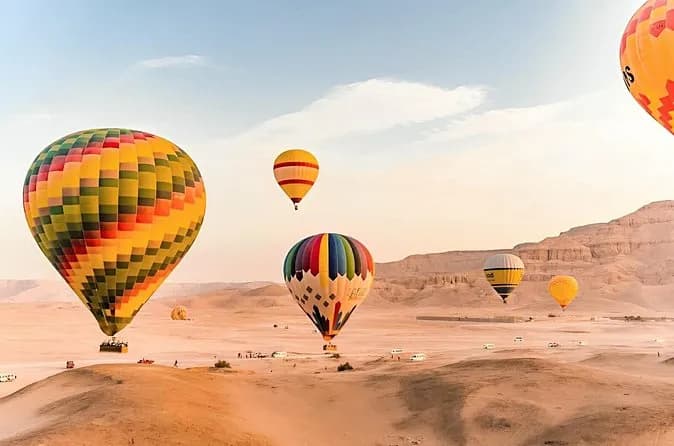
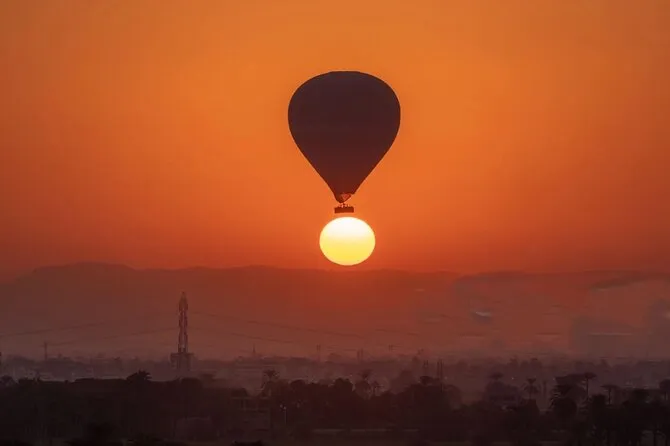
The East Bank temples are only half of Luxor. Across the river lie the royal tombs of the Valley of the Kings, the terraced Temple of Hatshepsut, and the Colossi of Memnon, often crowned by a dawn hot-air balloon flight. The tidy formula is a temple day on the East Bank and a tomb day on the West Bank. See the Luxor travel guide for how to structure a two- or three-day stop, and the wider Egypt travel guide for fitting Luxor into a full itinerary.
Practical tips
Buy tickets at each gate; they are separate, and add-ons like the Open-Air Museum are extra again. A licensed Egyptologist guide is the upgrade most worth its cost here, turning a bewildering forest of columns into a story you can follow, hall by hall. Wear a hat, carry more water than you think you need, and expect very little shade at Karnak. Go early, go late, and skip the worst of the midday sun. When you are ready to line up guides, tickets and a floodlit-temple evening, browse Luxor experiences and build your day around the light.
See it from the river. The great temples of Luxor bookend the classic Nile cruise between Luxor and Aswan — every cruise ship and sailing dahabiya moors here. Compare Nile cruise ships and dahabiyas, or read the Nile cruise guide.
A real team available 24/7 to assist you — free
Seif and the team reply on WhatsApp 24/7 — trip questions, custom plans and booking help.
Ask Seif on WhatsAppCommon questions
What is Karnak Temple famous for?
Karnak is the largest religious complex of the ancient world, built up over nearly 2,000 years to honour the god Amun-Ra. Its most famous space is the Great Hypostyle Hall, a forest of 134 sandstone columns up to about 21 metres tall. It also holds Hatshepsut's 29-metre obelisk, a sacred lake, a giant scarab statue and the avenue of ram-headed sphinxes.
Is Luxor Temple better at night?
For most visitors, yes. Luxor Temple is floodlit after dark, when the sandstone glows warm gold, the crowds thin and the daytime heat lifts. The evening is the standout time to see it, and the temple stays open late precisely so you can. Karnak, by contrast, is best in the cool morning light.
How long do you need at Karnak and Luxor Temple?
Allow two to three hours for Karnak, which is vast and easy to get lost in, and about one hour for the smaller, more compact Luxor Temple. The usual plan is Karnak at opening in the morning and Luxor Temple after dark once the floodlights are on.
Are Karnak and Luxor Temple connected?
Yes. An avenue of ram-headed and human-headed sphinxes about 2.7 km long once linked the two temples, carrying the god's procession during the annual Opet festival. Buried for decades, it was excavated and reopened to the public in 2021, so you can now trace the ancient processional route between them.
How much are tickets for Karnak and Luxor Temple?
Foreign-adult admission runs around EGP 600 for Karnak and roughly EGP 400 for Luxor Temple, with add-ons such as Karnak's Open-Air Museum and the evening sound-and-light show ticketed separately. Student rates are about half. Prices change often, so confirm the current fare at each gate.
What are the opening hours?
Karnak opens around 6am and closes in the late afternoon, roughly 5 to 5:30pm in winter and a little later in summer. Luxor Temple keeps longer hours, typically from about 6am until 9pm or later, so it can be seen floodlit at night. Times shift with the season.
Do you need a guide for Karnak and Luxor Temple?
You can visit independently, but a licensed Egyptologist guide is the upgrade most worth its cost here. Without one the reliefs and layout are hard to read; with one you understand what each hall, obelisk, pylon and chapel was actually for, which transforms Karnak in particular from a maze into a narrative.
What is the Abu el-Haggag mosque doing inside Luxor Temple?
The Mosque of Abu el-Haggag, built in the Ayyubid period around the 13th century, sits high on the walls of the Court of Ramesses II. It went up while the temple was still buried in sand, so when the court was excavated the mosque was left perched above it. It means the same spot has hosted worship almost continuously for some 3,500 years.
Book it on This is Egypt
Turn this guide into a trip

Egypt's bestsellers
The experiences travelers book most, across the country




Attractions in this guide
Keep reading

Hurghada Diving (2026): Best Sites, Packages & Prices
Diving in Hurghada — the best reefs (Giftun, Careless Reef, Dolphin House) and Abu Nuhas wrecks, Discover Scuba vs PADI courses, season and water temps, and real 2026 prices.
By TiE Editors7 min read

Hurghada Snorkeling Trips (2026): Best Reefs, Prices & How to Choose
Where to snorkel from Hurghada in 2026 — Orange Bay, Giftun, Mahmya, Utopia and Dolphin House — with boat types, marine life, month-by-month sea temperatures, family tips and real prices from 1,000+ bookable trips.
By TiE Editors7 min read

Egypt Tour Prices by Activity (2026): What Each Type Really Costs
What every type of Egypt experience actually costs — from a 1,700 EGP camel ride to a 48,500 EGP Nile cruise — based on 29,710 real bookable tours across seven platforms.
By TiE Editors6 min read