
The Ramesseum Tours & Tickets
Browse 25 visits to the mortuary temple of Ramesses II in Luxor, starting from 1,449 EGP (about 30 USD), with an average rating of 4.9 out of 5. Real prices compared across booking platforms and updated for 2026.

Tour to Ramesseum, Habu Temples, and the Valley of the Nobles

Private Tour: valley of the queens,Carter House,Temple of Seti, Ramesseum Temple

Luxor Day Tour to Valley of the Queens, Habu & Ramesseum Temples

Private Tour of Ramesseum, Tombs of the Nobles and Carter's House

Luxor West Bank 2: Habu Temple, Ramesseum Temple and Deir El Madina

Howard Carter House & Ramesseum Temple Half-day Tour From Luxor

Ramesseum Ramesses II Temple & Howard Carter House tour in Luxor

Private Tour of Ramesseum Temple and Carter House from Luxor

Guided tour of Valley of the Nobles, Medinat Habu and The Ramesseum from Luxor
Private Luxor Tour to Queens Valley, Habu and Ramesseum Temples

Howard Carter House and Ramesseum Temple in Luxor

Ramesseum Temple and Carter House in Luxor

Luxor Day Tour to Valley of the Queens, Habu & Ramesseum Temples
Private tour To Ramesseum +Seti temple and Nobles valley

Private Luxor Tour: Medinet Habu, Ramesseum & Nobles Valley
Private West Bank: Kings Valley, Habu, Ramesseum & Nobles

Private Tour: valley of the queens,Carter House,Temple of Seti, Ramesseum Temple
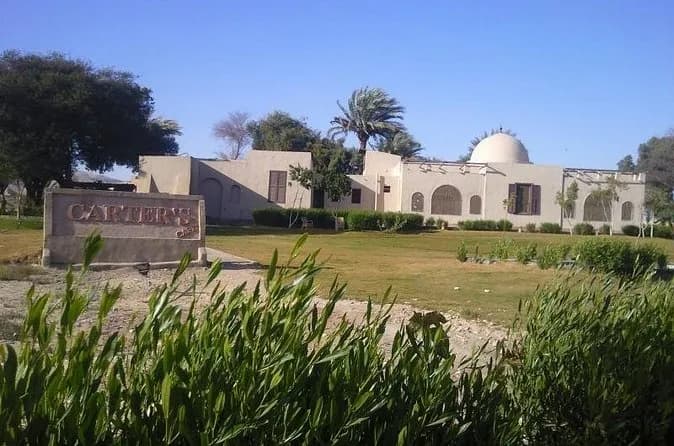
Howard Carter House and Ramesseum Temple in Luxor

Tour to Ramesseum, Habu Temples, and the Valley of the Nobles

Ramesseum Temple, Habu Temple and Valley Of The Nobles
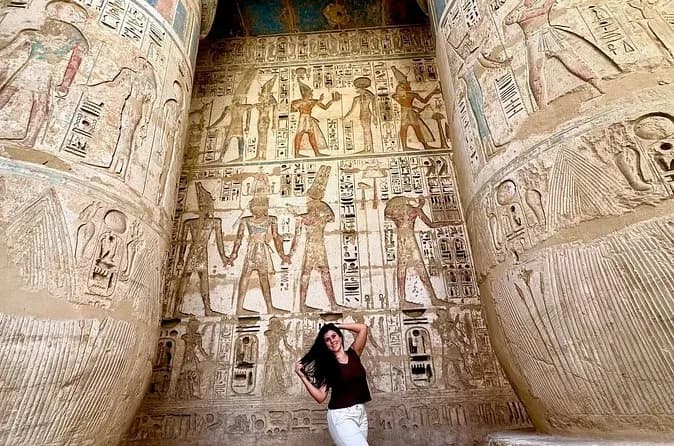
Private Medinet Habu Valley of the Nobles and Ramesseum Tour

Tour to Ramesseum Temple & Medenit Habu Tour

Ramesseum Ramesses II Temple & Howard Carter House tour in Luxor

Luxor West Bank 2: Habu Temple, Ramesseum Temple and Deir El Madina
Visiting The Ramesseum: what to know
Updated 26 September 2026The Ramesseum is the most famous ruin in Egypt that almost nobody visits. It sits on the Luxor west bank between the Colossi of Memnon and the Valley of the Kings, on the road every tour bus takes, and the buses do not stop. Most mornings you can walk the whole site nearly alone, which is a strange thing to say about the temple that gave the English language one of its most quoted poems.
Ramesses II built it as his mortuary temple, the place where his cult would be maintained after death, and he built it on the scale he built everything. What is left is a ruin, and the ruin is the point. The Nile flood undermined the foundations over centuries and the great structures came down. You are looking at collapse, and collapse is precisely what makes this site land.
Ozymandias
In the courtyard lies the wreck of what was once the largest free-standing statue in Egypt: a seated colossus of Ramesses in granite, broken into pieces, the head and torso separated, the face turned up at the sky. Estimates put its weight around a thousand tonnes.
In 1816 Giovanni Belzoni removed a different, smaller head of Ramesses from this site and shipped it to England, where it entered the British Museum as the Younger Memnon. The news reached Percy Bysshe Shelley, who had never been to Egypt, and in 1818 he published a sonnet about a shattered colossus in the desert bearing an inscription boasting of works that no longer exist. The traveller's tale in the poem is loose with the facts and exact about the feeling. "Look on my Works, ye Mighty, and despair" is the line everyone remembers, and the joke Shelley built into it is that there is nothing left to look at.
Standing next to the actual stone gives the poem a second life. The face is not ruined. It is calm, and rather beautiful, and lying on its side in the dirt.
What else is here
Enough survives to read the plan. Two pylons, badly damaged but carrying reliefs of the Battle of Kadesh, the engagement against the Hittites that Ramesses spent his reign advertising as a great victory and which was closer to a draw. The account here is one of several he had carved across Egypt, and comparing the versions is how historians caught the spin.
Part of the hypostyle hall still stands, and the surviving columns give a sense of the height. Behind and around the temple run mudbrick storerooms, long vaulted magazines that held grain, oil, wine and temple equipment. They are the best-preserved structures on the site, which tells you something about mudbrick vaulting: the granite came down, and the mud is still standing.
There is also a smaller temple of Ramesses's mother Tuya, and the remains of a palace on the south side of the first court, where the king would have stayed when he came to take part in festivals.
Why it is so ruined when Medinet Habu is not
The comparison is instructive and visitors ask it constantly. Medinet Habu, the mortuary temple of Ramesses III a short drive away, stands almost intact. The Ramesseum, built earlier and bigger, is rubble.
The difference is water. The Ramesseum sits closer to the floodplain, and centuries of annual inundation worked at the foundations until the heavy stonework failed. Medinet Habu sits higher and drier. Egyptian stone buildings are extraordinarily durable in the desert and vulnerable at the edge of the river, and the two temples are the cleanest illustration of that anywhere in Luxor.
How to fit it in
The Ramesseum takes forty-five minutes and it is on the way. A standard west bank morning runs Valley of the Kings, then Hatshepsut, then the Colossi of Memnon as a photo stop, and the Ramesseum sits inside that triangle. Adding it costs you one short stop and it is the quietest thing you will do all morning.
Go late in the morning if you can, after the tombs. The site faces the rising sun and the light on the fallen colossus is better once it is high.
If you are choosing between the Ramesseum and Medinet Habu and can only do one, take Medinet Habu for the standing architecture and painted ceilings. Take the Ramesseum if you would rather be alone with a broken statue and a poem.
Other Egypt attractions
Frequently asked questions
How much does it cost to visit The Ramesseum?
Tours and tickets start from 1,449 EGP (about 30 USD), with a median price of about 3,881 EGP per person.
How many The Ramesseum tours are available?
There are 25 bookable tours and tickets for The Ramesseum.
What is the best The Ramesseum tour?
A top-rated pick is "Tour to Ramesseum, Habu Temples, and the Valley of the Nobles".
What is the Ramesseum famous for?
It is the mortuary temple of Ramesses II on the Luxor west bank, and it is best known for the shattered granite colossus lying in its courtyard. News of a Ramesses head removed from the site in 1816 inspired Shelley's sonnet Ozymandias, published in 1818, which is why the ruin is familiar to people who have never been to Egypt.
Is the Ramesseum worth visiting?
Yes, particularly because almost nobody does. It sits inside the standard west bank circuit between the Valley of the Kings, Hatshepsut and the Colossi of Memnon, takes about forty-five minutes, and is usually near empty while the other sites are busy.
Why is the Ramesseum in ruins when Medinet Habu is not?
Water. The Ramesseum sits closer to the floodplain and centuries of annual Nile inundation undermined its foundations until the heavy stonework collapsed. Medinet Habu stands on higher, drier ground and survived largely intact.
How long does the Ramesseum take?
About forty-five minutes, which covers the fallen colossus, the Kadesh reliefs on the pylons, the surviving columns of the hypostyle hall and the mudbrick storerooms behind.
Is the Ramesseum the same as the Colossi of Memnon?
No. The Colossi of Memnon are two seated statues that once fronted the mortuary temple of Amenhotep III, a separate temple nearby that has almost entirely disappeared. The Ramesseum belongs to Ramesses II and is a short distance away.