Viking Nile Cruises: The Egypt Fleet Explained (2026)
How Viking's eleven near-identical Nile ships work, what the 12-day Pharaohs & Pyramids trip includes, and how it compares to Egyptian-run boats and to Uniworld and AmaWaterways.
Nile Cruises & Dahabiyas
Turn this guide into a trip
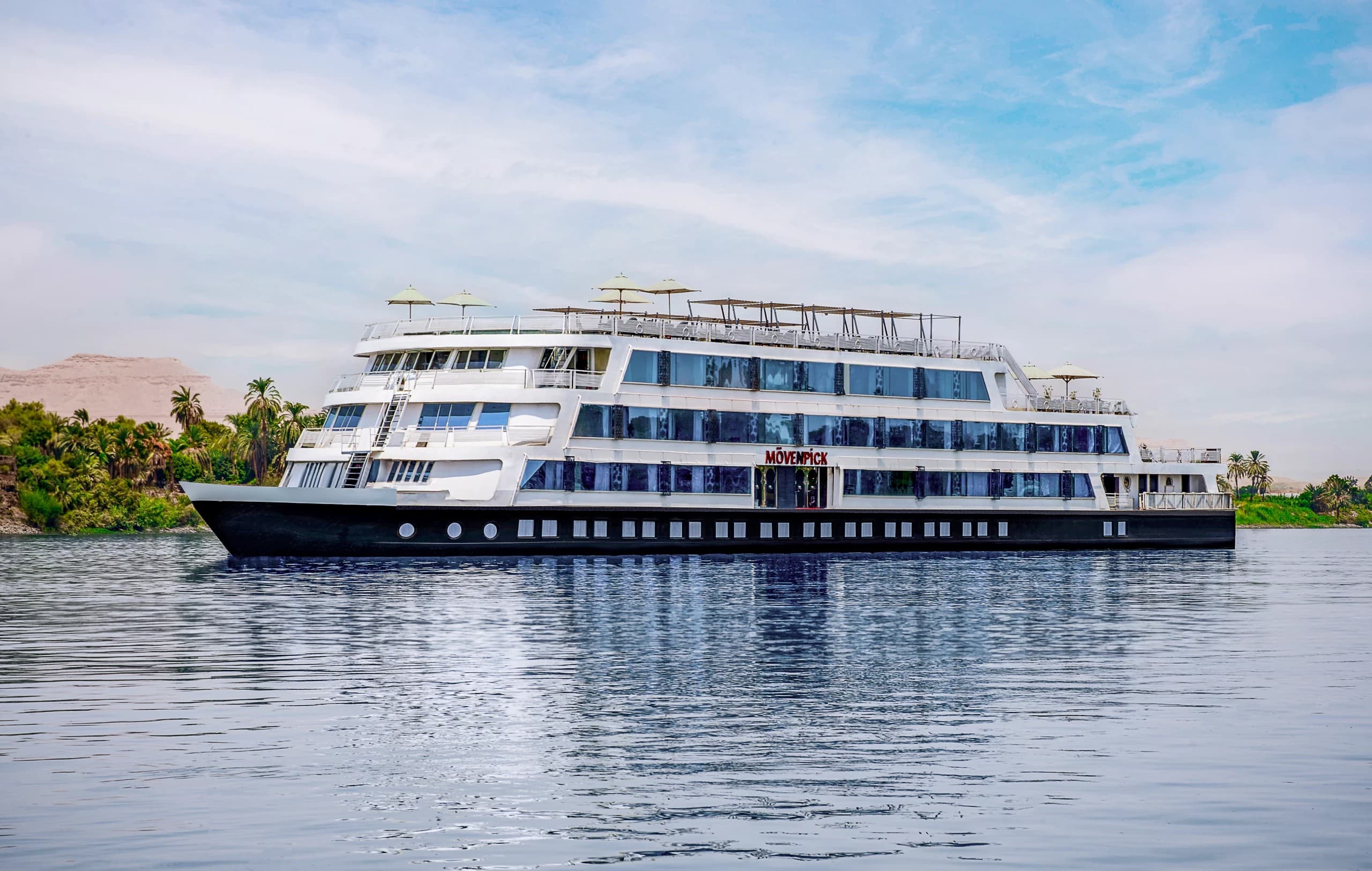
Quick answer: A Viking Nile cruise means one journey: the 12-day “Pharaohs & Pyramids” round-trip from Cairo aboard one of eleven near-identical Scandinavian-designed river ships. Fares start around US$6,999 per person for a genuinely all-inclusive, English-speaking, adults-focused trip — Egyptian-run boats cost far less for the same temples.
A Viking Nile cruise means one journey: the 12-day «Pharaohs & Pyramids» itinerary, round-trip from Cairo, aboard one of eleven nearly identical Scandinavian-designed river ships. Fares start around US$6,999 per person (roughly 340,000 EGP), and that price buys a genuinely all-inclusive, English-speaking, adults-focused trip that pairs a Cairo hotel stay with a seven-night sail between Luxor and Aswan. If you have cruised Viking anywhere else, you already know the rhythm — calm, uncrowded, no add-on selling at every turn — and Egypt is where the brand has invested most heavily.
This guide explains the part most people find confusing: why Viking runs so many ships with almost the same specs, what you actually get for the money, and how the experience differs from an Egyptian-operated cruise or from Viking's two international rivals, Uniworld and AmaWaterways.
What a Viking Nile cruise actually is
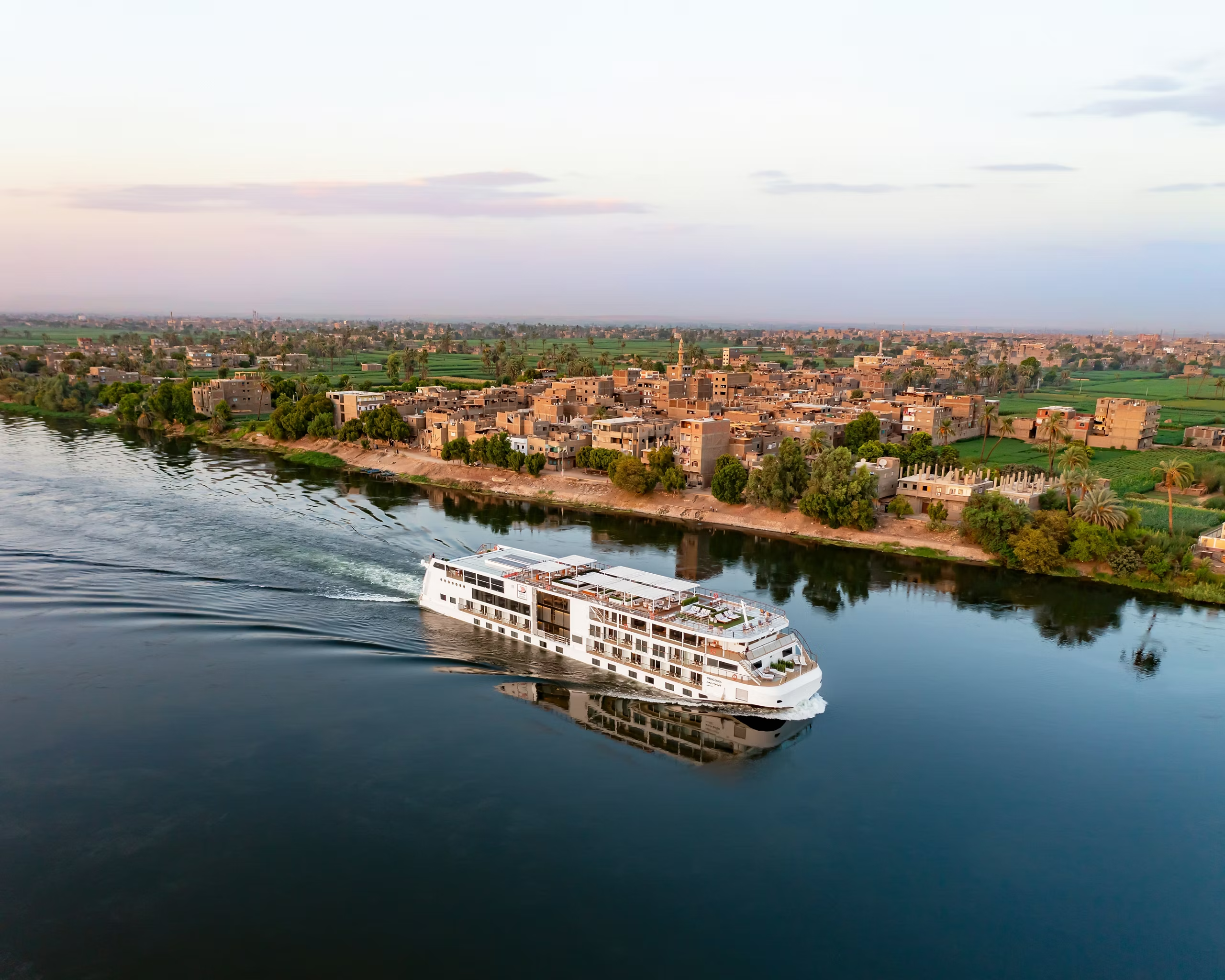
Most boats on the Nile are Egyptian-owned floating hotels sold cabin-by-cabin through dozens of agents. Viking works the opposite way. It owns and operates its own Egypt fleet, and it sells one product: a complete, door-to-door package. Your fare covers the ship, the Cairo hotel nights, every guided tour, the internal flights between Cairo and Upper Egypt, and the drinks at lunch and dinner. You book one thing and Viking handles the logistics end to end.
That single-package model is the reason the line feels so different from booking a cabin on, say, a Mövenpick or Sonesta boat. There is no separate Cairo tour to arrange, no domestic flight to chase, no wondering which local guide you will be handed. It is also the reason it costs several times more.
The identical-sister-ship model, explained
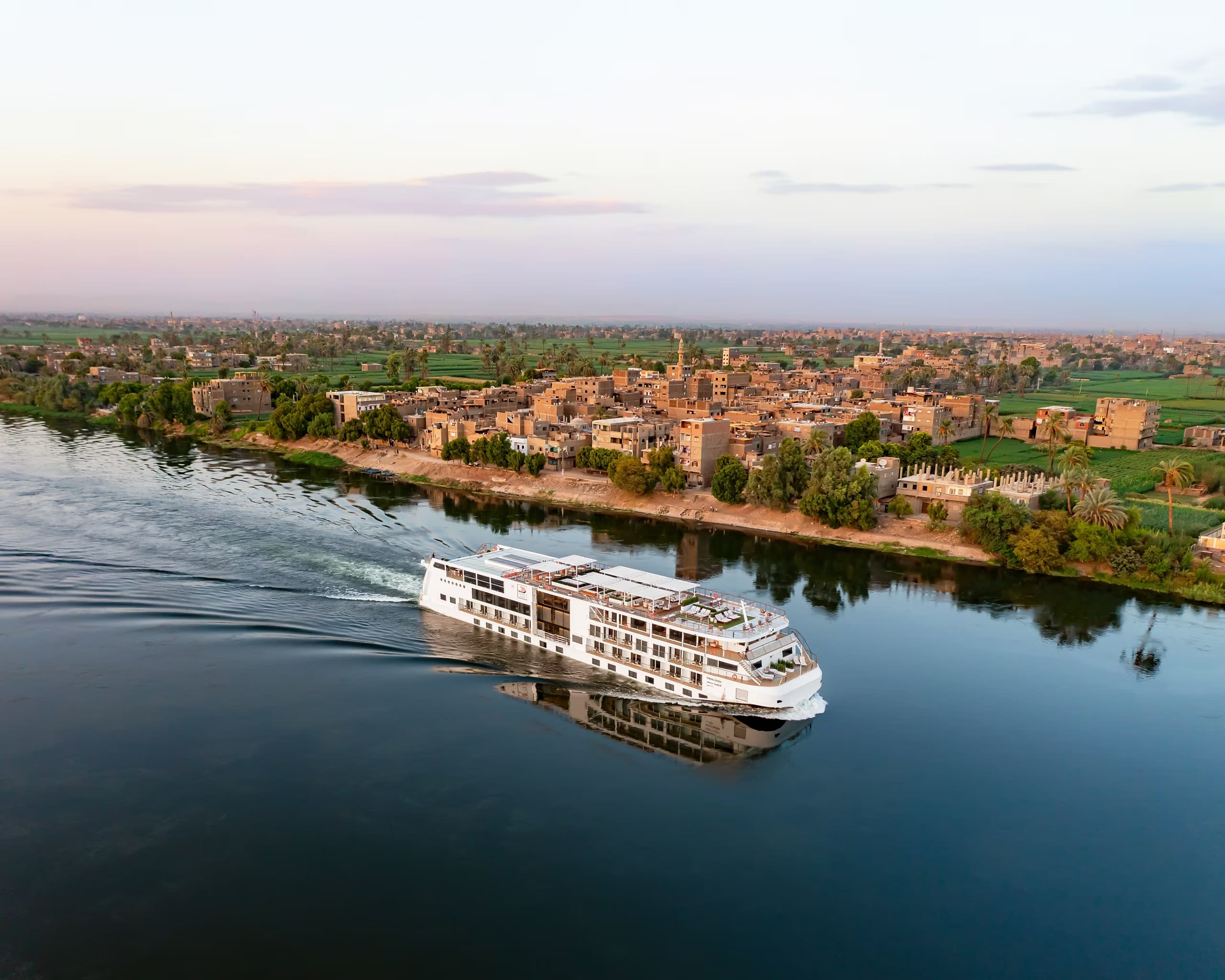
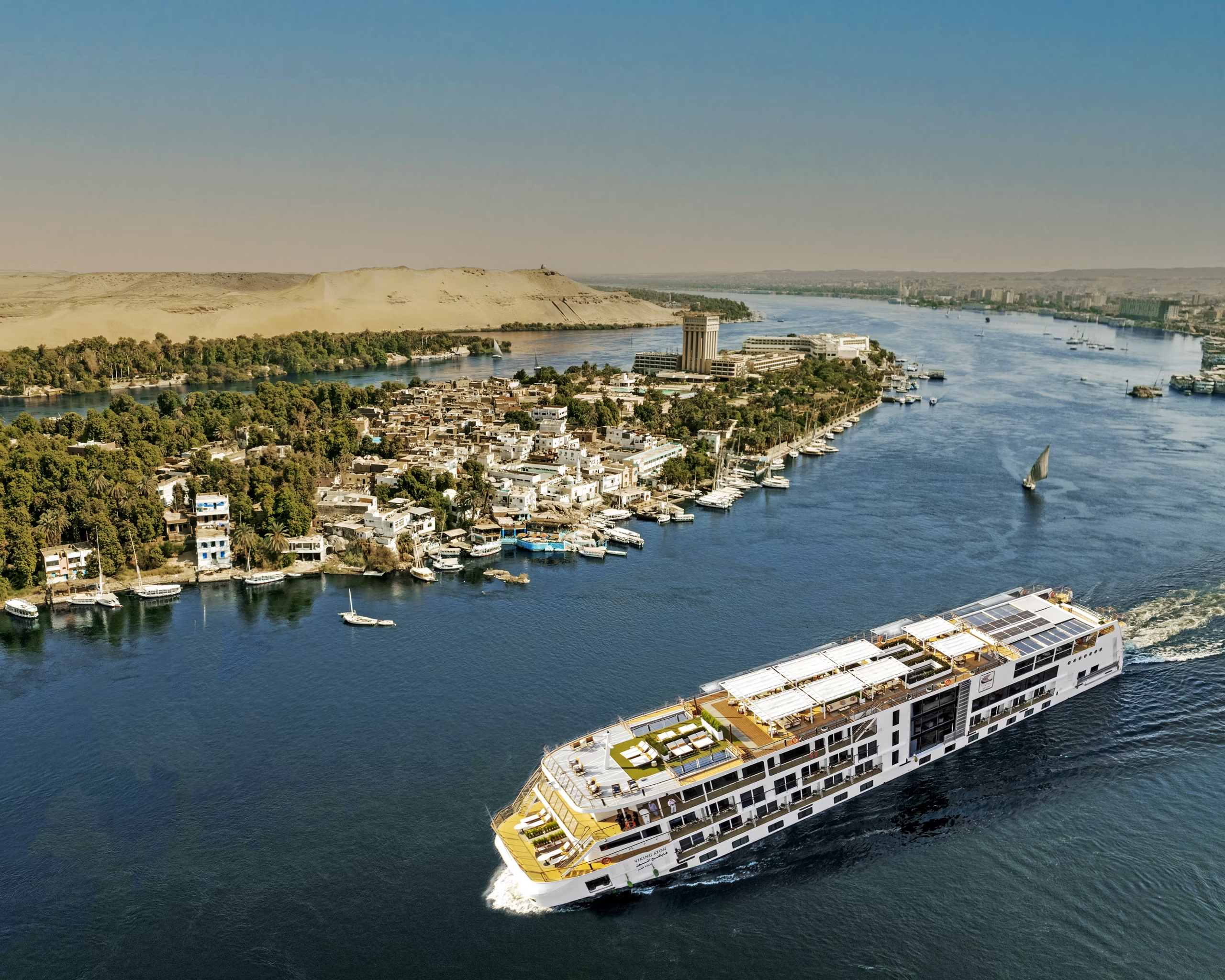
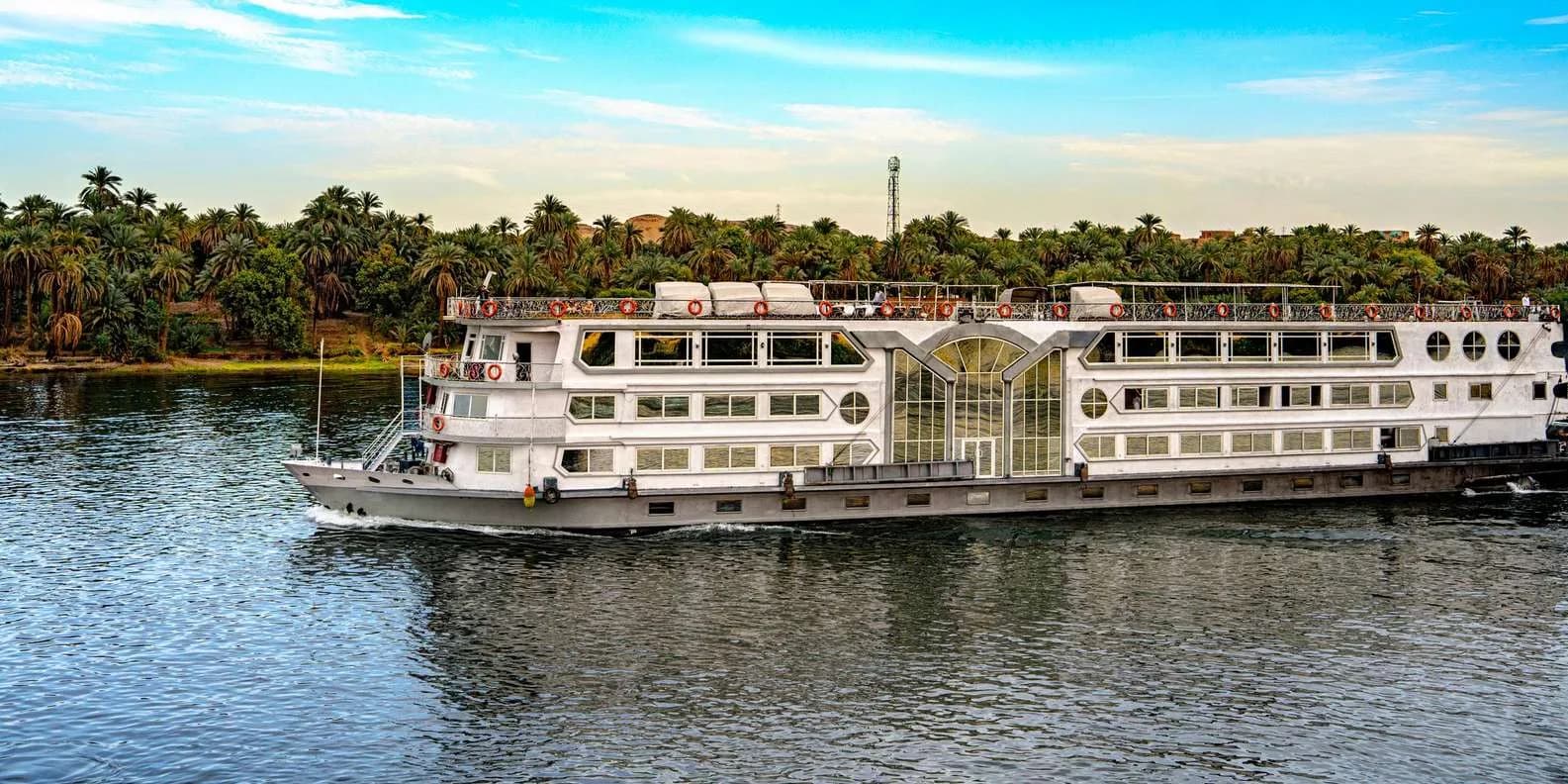
Here is the thing that trips people up when they compare Viking ships: they are supposed to be the same. Viking builds its Egypt vessels as a single class of purpose-built sisters — the same 72-metre hull, the same 82-guest capacity, the same 41 staterooms, the same public rooms in the same places. The lead ship, Viking Osiris, launched in 2022 and earned a perfect 5.0 editor rating from Cruise Critic. Every ship built since is a copy of it.
Why do it this way? Standardisation. When every ship is identical, Viking can train crew to one playbook, guarantee the same layout and cabin whatever the sailing, scale up fast to meet demand, and hold quality steady across the fleet. For you, it means the answer to «which Viking ship is best?» is mostly «it does not matter» — you will get the same room, the same Aquavit Terrace, the same sun-deck pool on any of the current sisters. Pick your ship by departure date, not by features.
The one genuine outlier is Viking Ra, the older and smaller 2018 vessel with just 24 staterooms and 52 guests. Its cabins are actually larger on average (a 27m² minimum versus 21.6m² on the sisters), and it carries fewer people, so some travellers seek it out. Everything from Osiris onward follows the standard template.
The Viking Egypt fleet
| Ship | Built | Staterooms / Guests | Notes |
|---|---|---|---|
| Viking Ra | 2018 | 24 / 52 | The original, smaller ship; larger average cabins |
| Viking Osiris | 2022 | 41 / 82 | Lead sister; Cruise Critic 5.0 editor rating |
| Viking Aton | 2023 | 41 / 82 | Standard sister |
| Viking Hathor | 2024 | 41 / 82 | Standard sister |
| Viking Sobek | 2024 | 41 / 82 | Standard sister |
| Viking Amun | 2025 | 41 / 82 | Standard sister |
| Viking Thoth | 2025 | 41 / 82 | Standard sister |
| Viking Ptah | 2026 | 41 / 82 | Standard sister |
| Viking Sekhmet | 2026 | 41 / 82 | Standard sister |
| Viking Anubis | 2027 | 41 / 82 | New sister (launching) |
| Viking Geb | 2027 | 41 / 82 | New sister (launching) |
All eleven sail the same route and the same itinerary. That is the whole point.
The 12-day Pharaohs & Pyramids itinerary
Every Viking ship in Egypt runs one signature journey, round-trip from Cairo, with 11 guided tours built in. The shape of it:
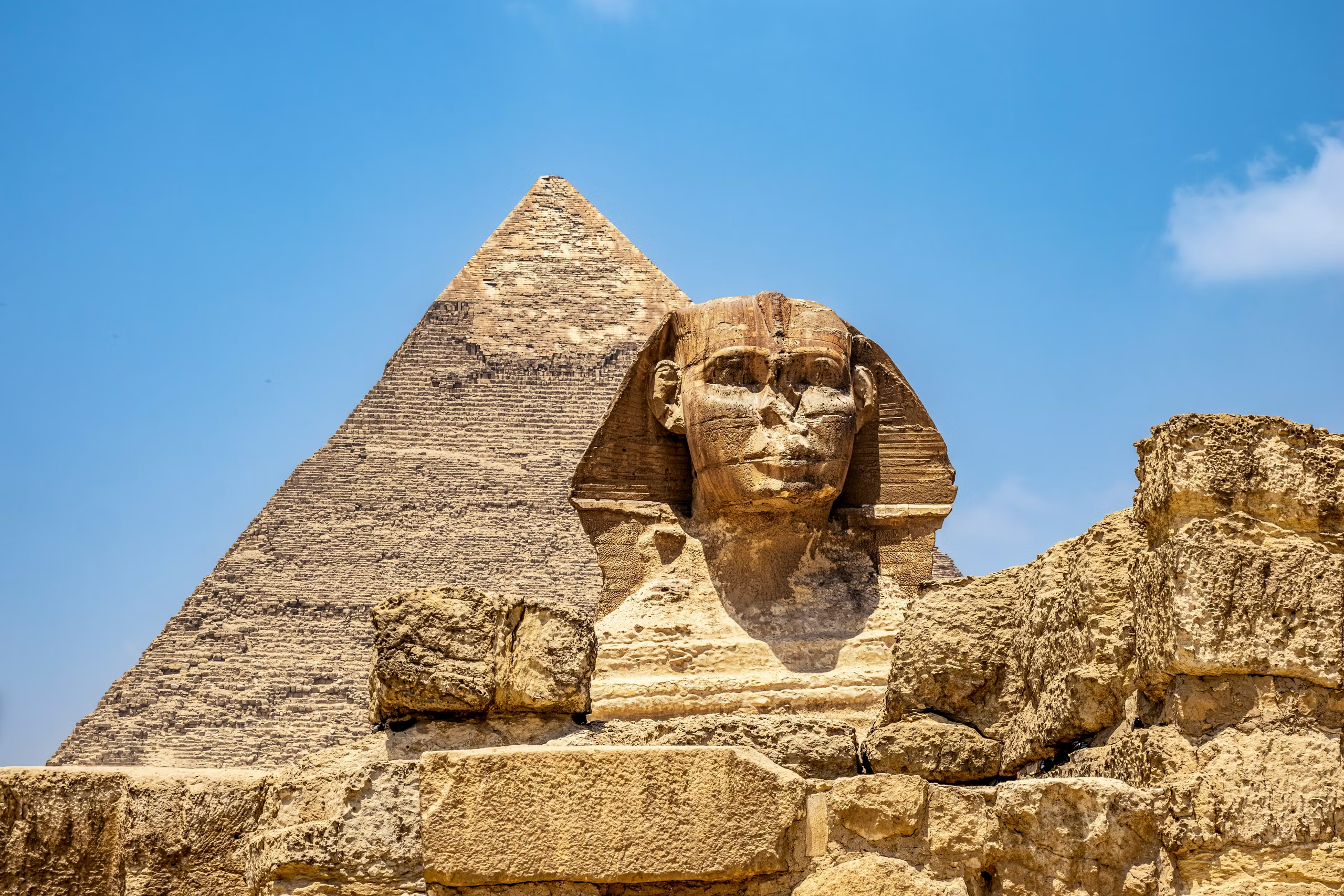
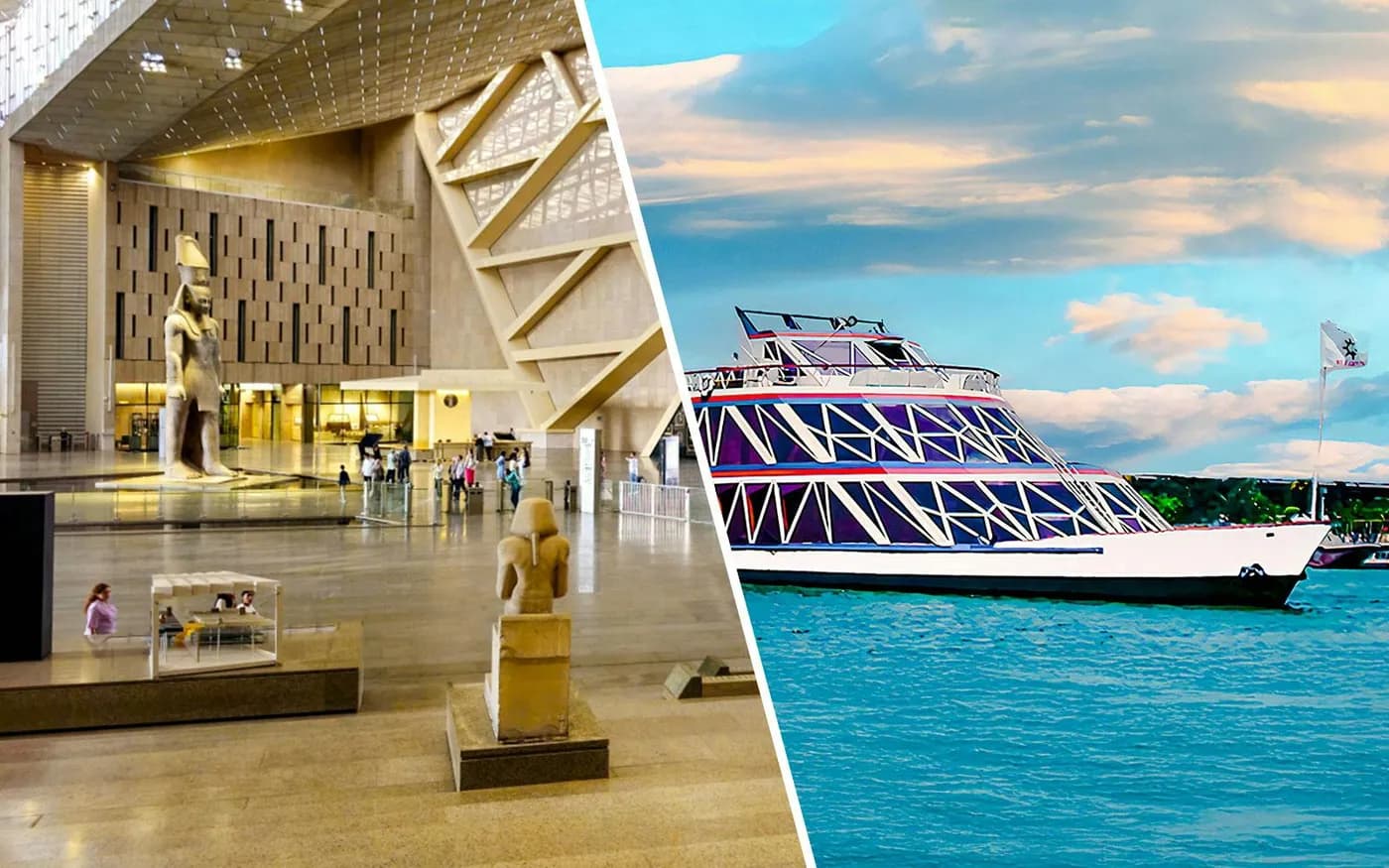
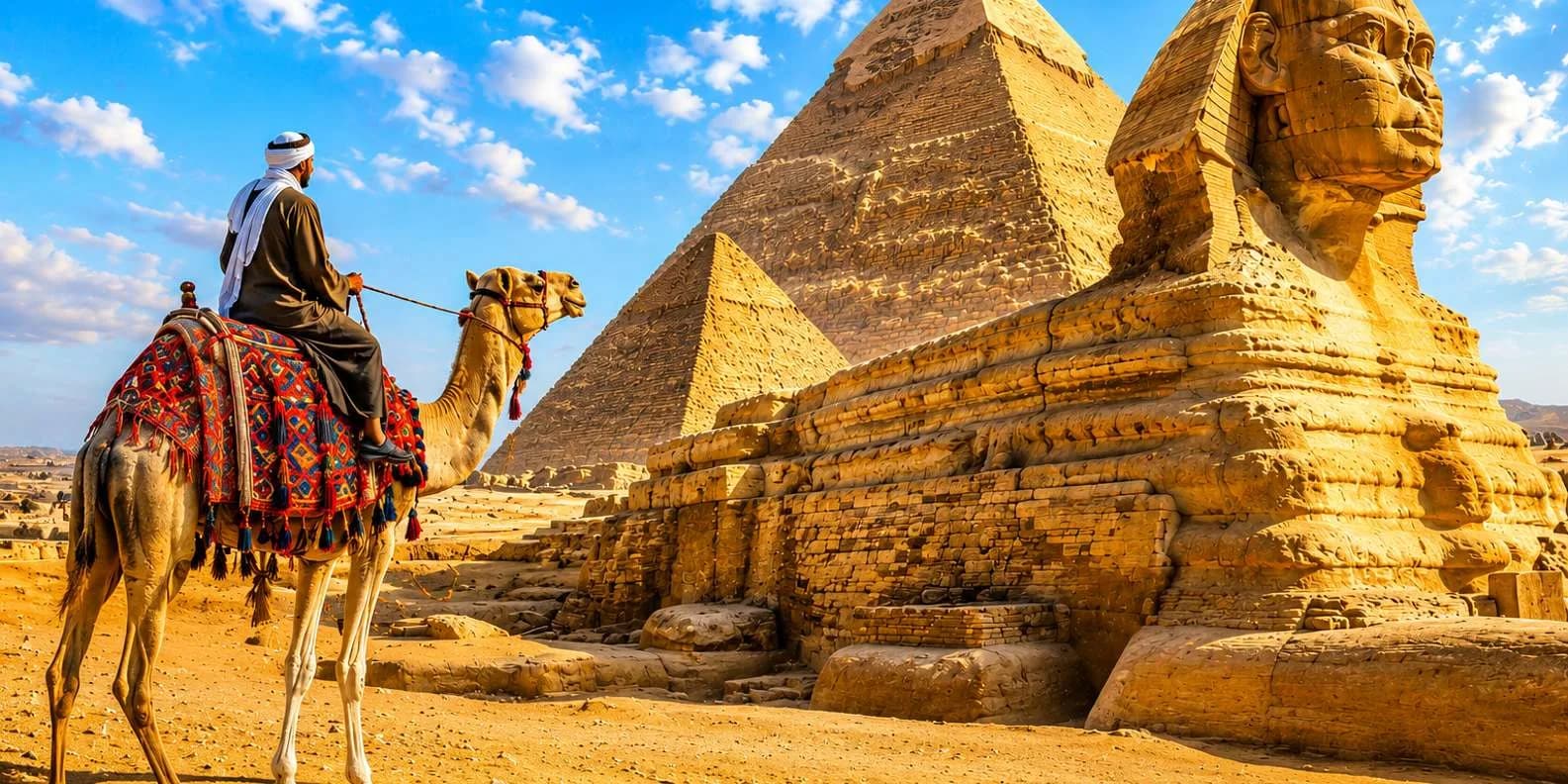
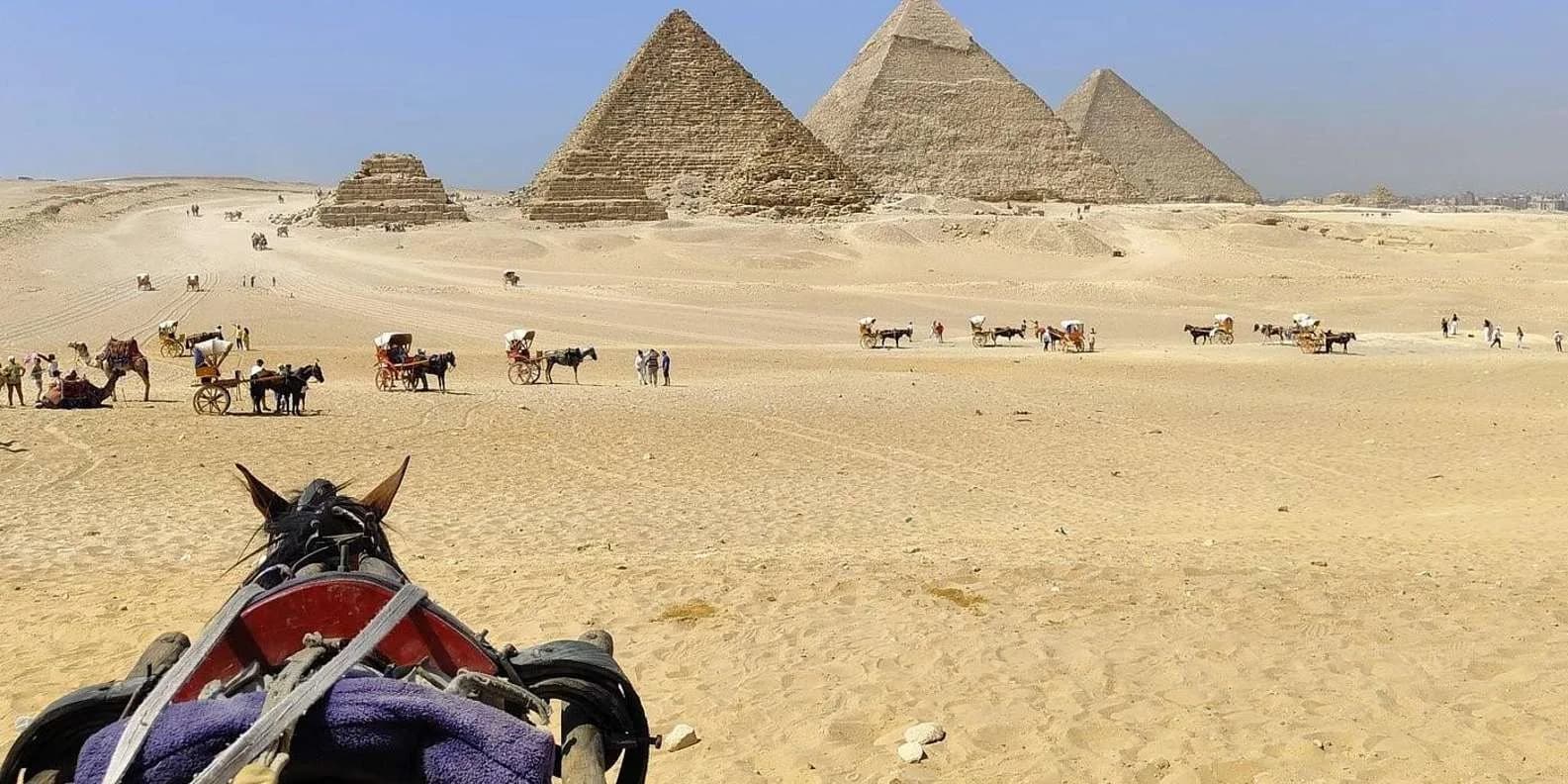
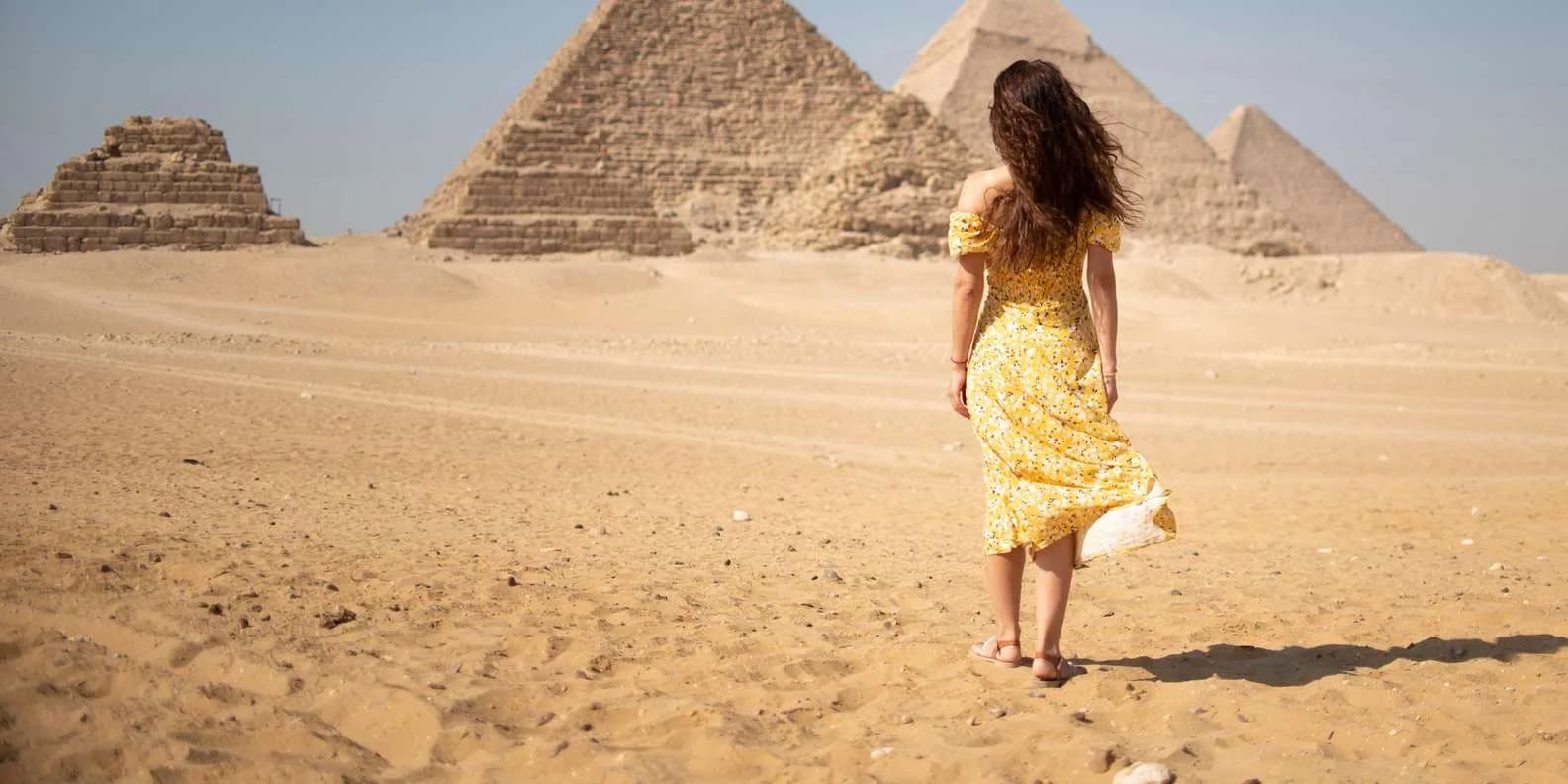
- Cairo (hotel, three nights): the Pyramids of Giza and the Sphinx, plus the Grand Egyptian Museum near Giza — fully open since its grand opening in late 2025, and now home to the complete Tutankhamun collection, the largest in the world.
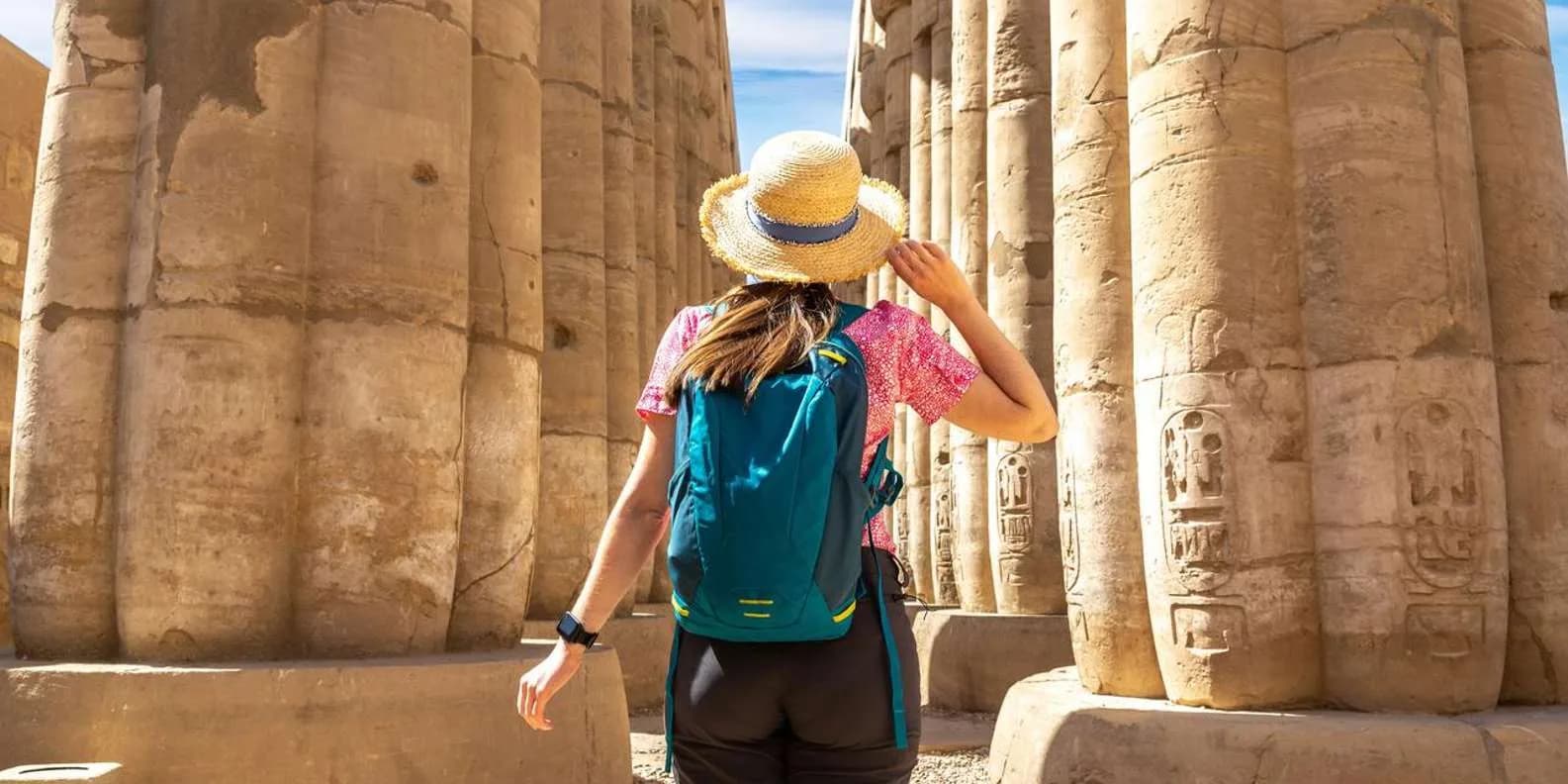
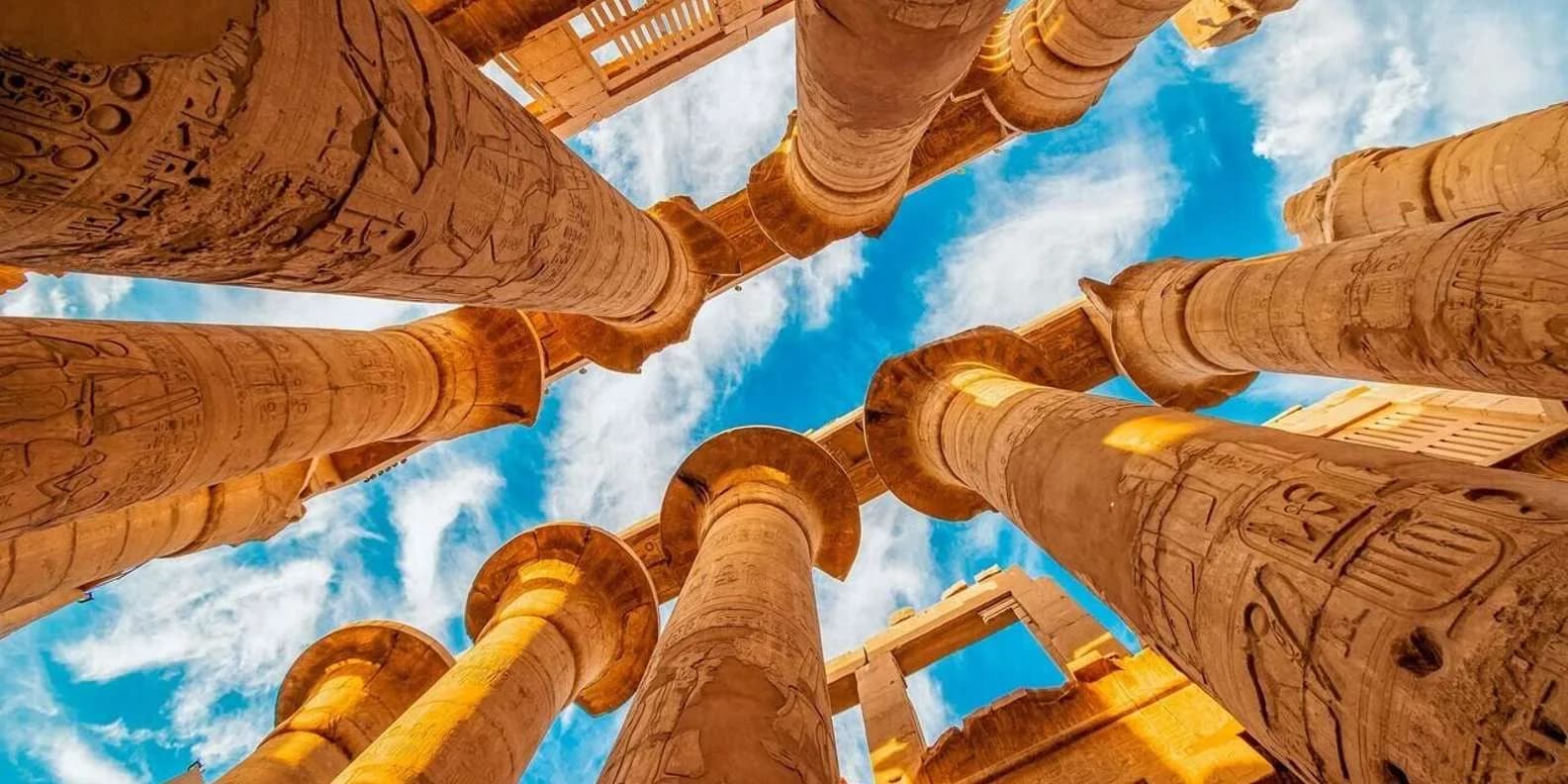
- Fly to Luxor and embark: Karnak and Luxor Temple on the east bank, the Valley of the Kings and Hatshepsut's temple on the west.
- Sail south: Qena for the temple of Dendera, then Esna's lock, Edfu's Temple of Horus, and Kom Ombo's riverside double temple.
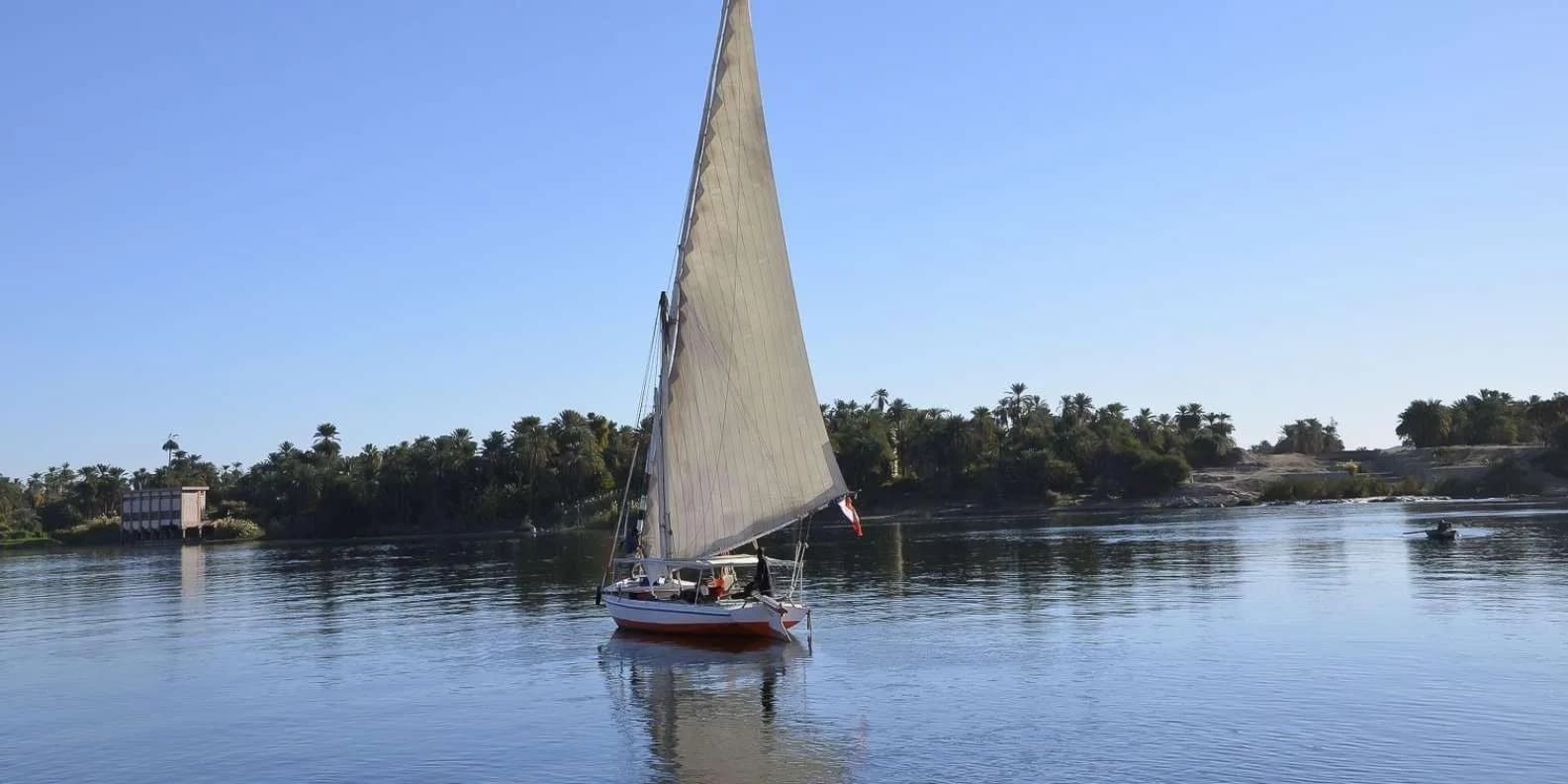
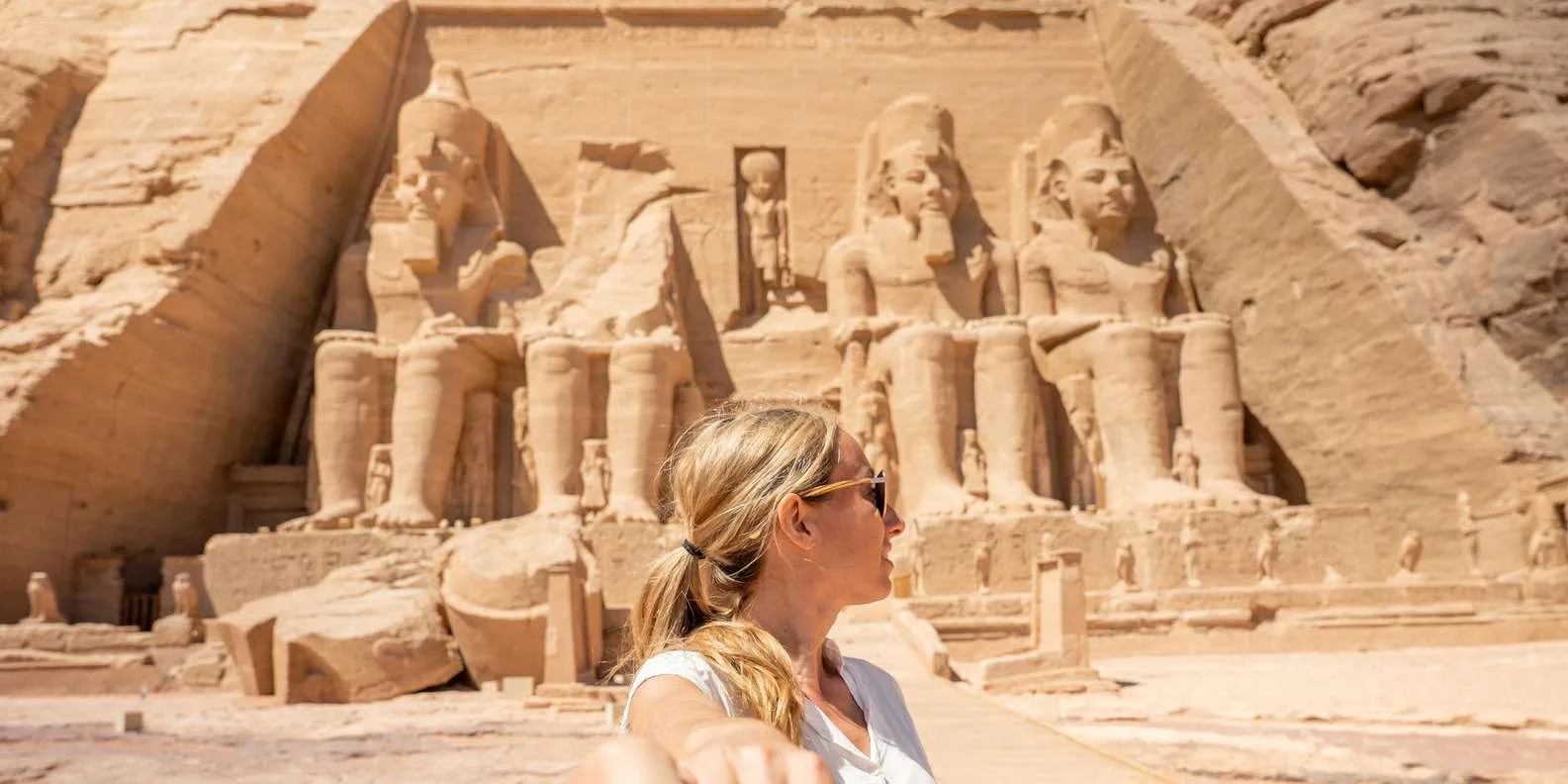
- Aswan: the High Dam, the Philae temple complex, and a felucca sail; Abu Simbel is a common optional add-on.
- Return north to Luxor, then a flight back to Cairo to close the loop.
Because the cruise is bracketed by Cairo on both ends, you see Lower and Upper Egypt in one trip — the pyramids and the pharaonic south — without stitching together separate bookings.
What is included
Viking's pitch is that the headline fare is close to the final number. In the package you can expect:
- Hotel nights in Cairo and all seven nights aboard the ship
- Every guided shore tour with Viking's own guides and quiet-vox headsets
- Internal flights within Egypt (Cairo to Luxor, Aswan back to Cairo)
- Beer, wine and soft drinks with lunch and dinner, plus 24-hour speciality coffee and bottled water
- Onboard Wi-Fi and port charges
What is not included: international airfare to Cairo, the Egyptian visa (an e-visa runs about US$25 — check visa2egypt.gov.eg), travel insurance, optional excursions such as Abu Simbel, and the Silver Spirits premium drinks package. Gratuities are typically extra. It is not quite «everything», but it is far closer to all-in than a cabin-only Egyptian booking.
Cabins and suites
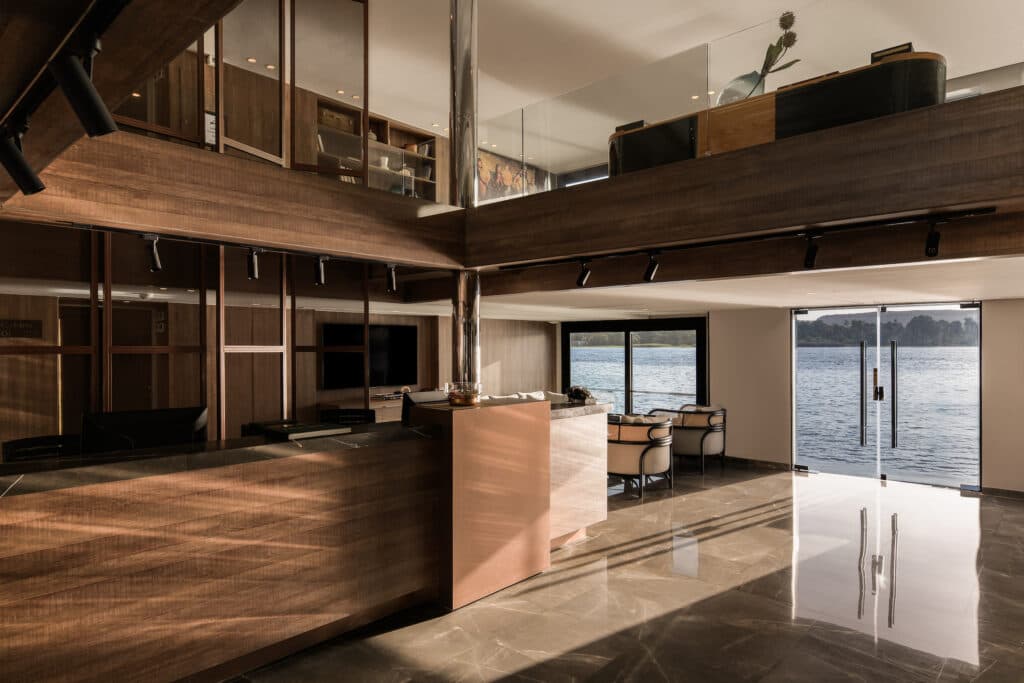
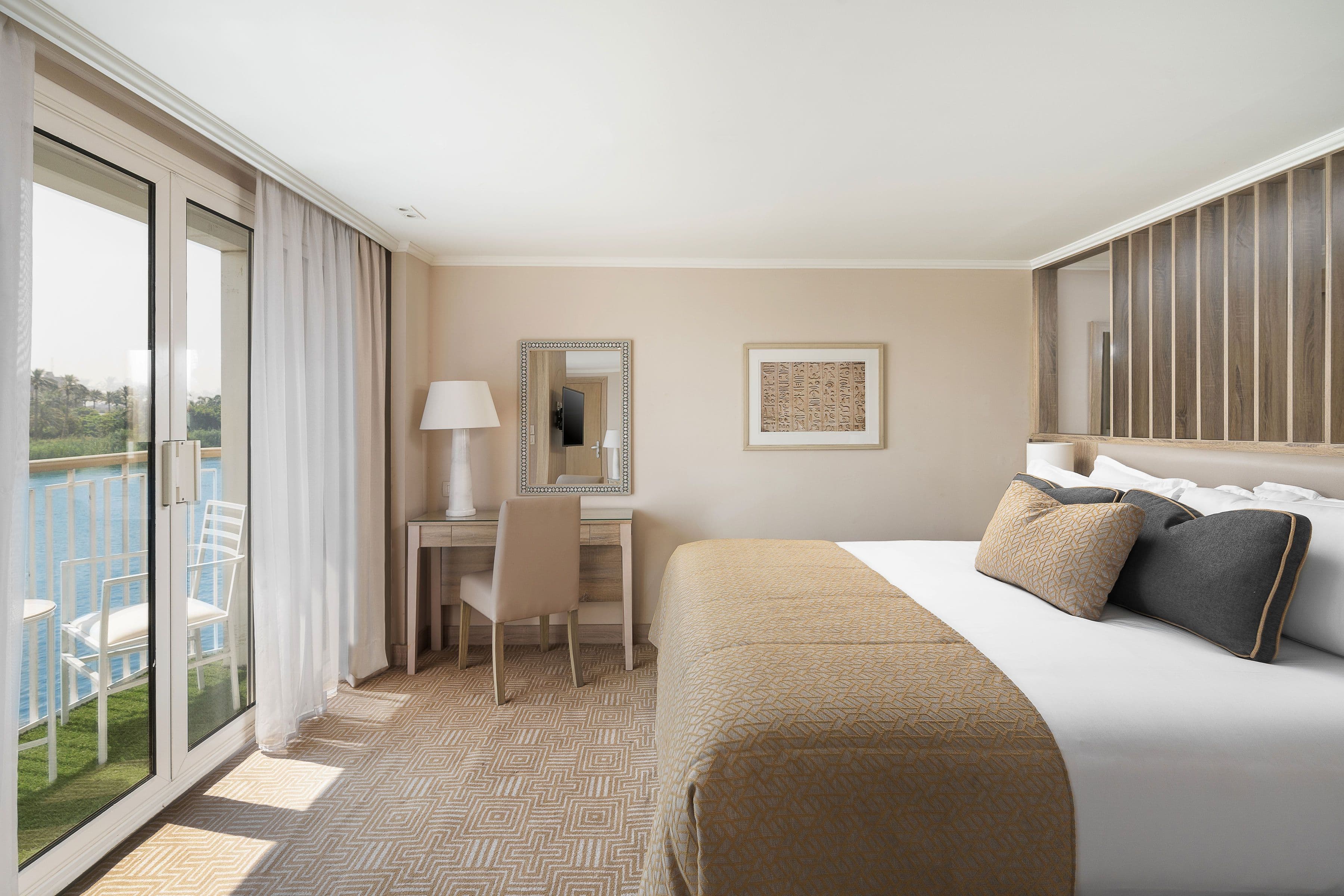
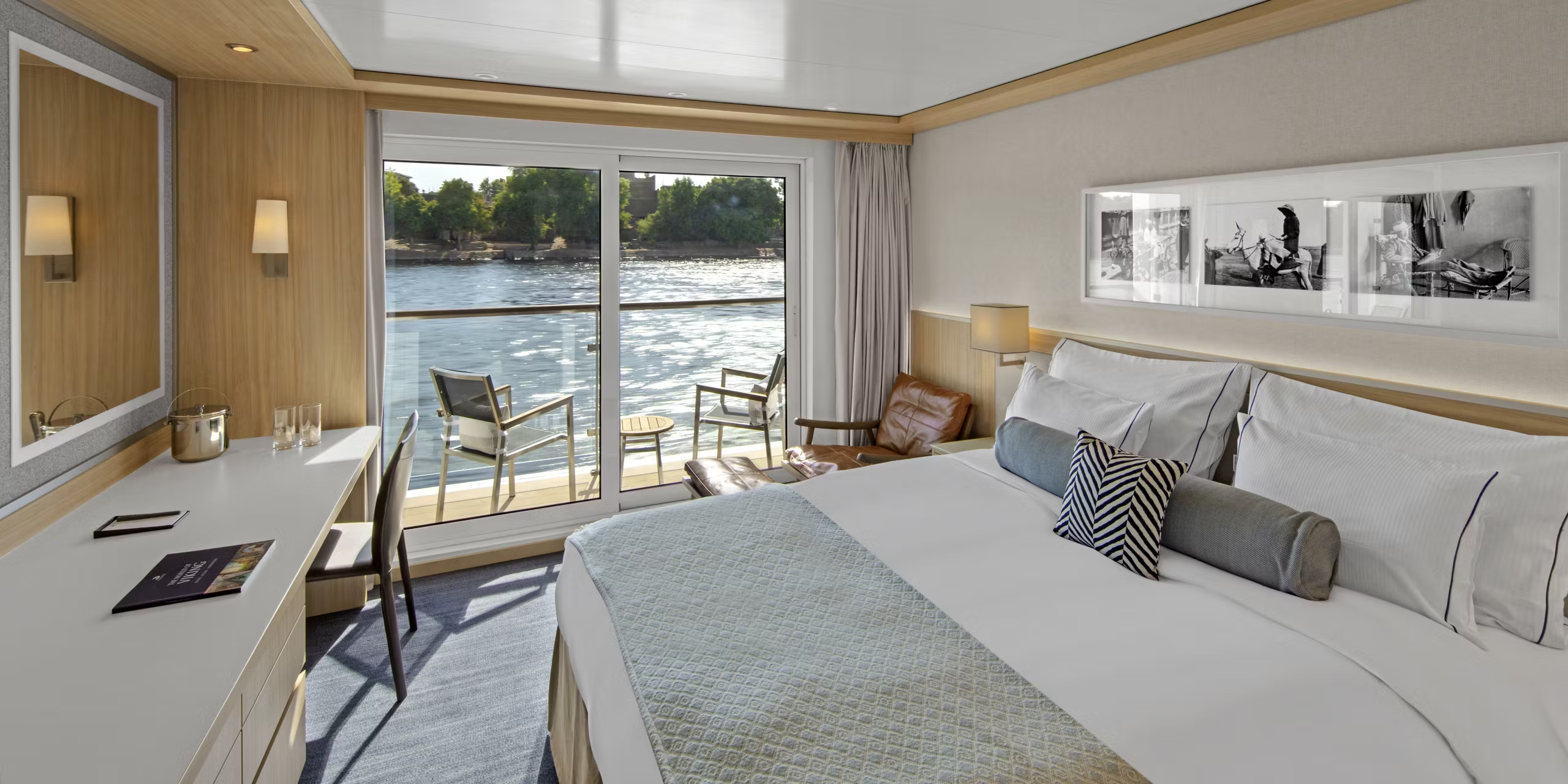
Every stateroom on the modern sisters faces the river and has its own veranda or window — there are no interior cabins. The tiers run from the entry-level Veranda Stateroom (around 21.6m²) up through Veranda Suites to the Explorer Suites, which are the largest rooms and sit at the corners with wraparound views. The look is unmistakably Viking: pale wood, clean lines, understated Scandinavian restraint rather than gilt and brocade. Bathrooms have heated floors, and the beds convert to twins on request.
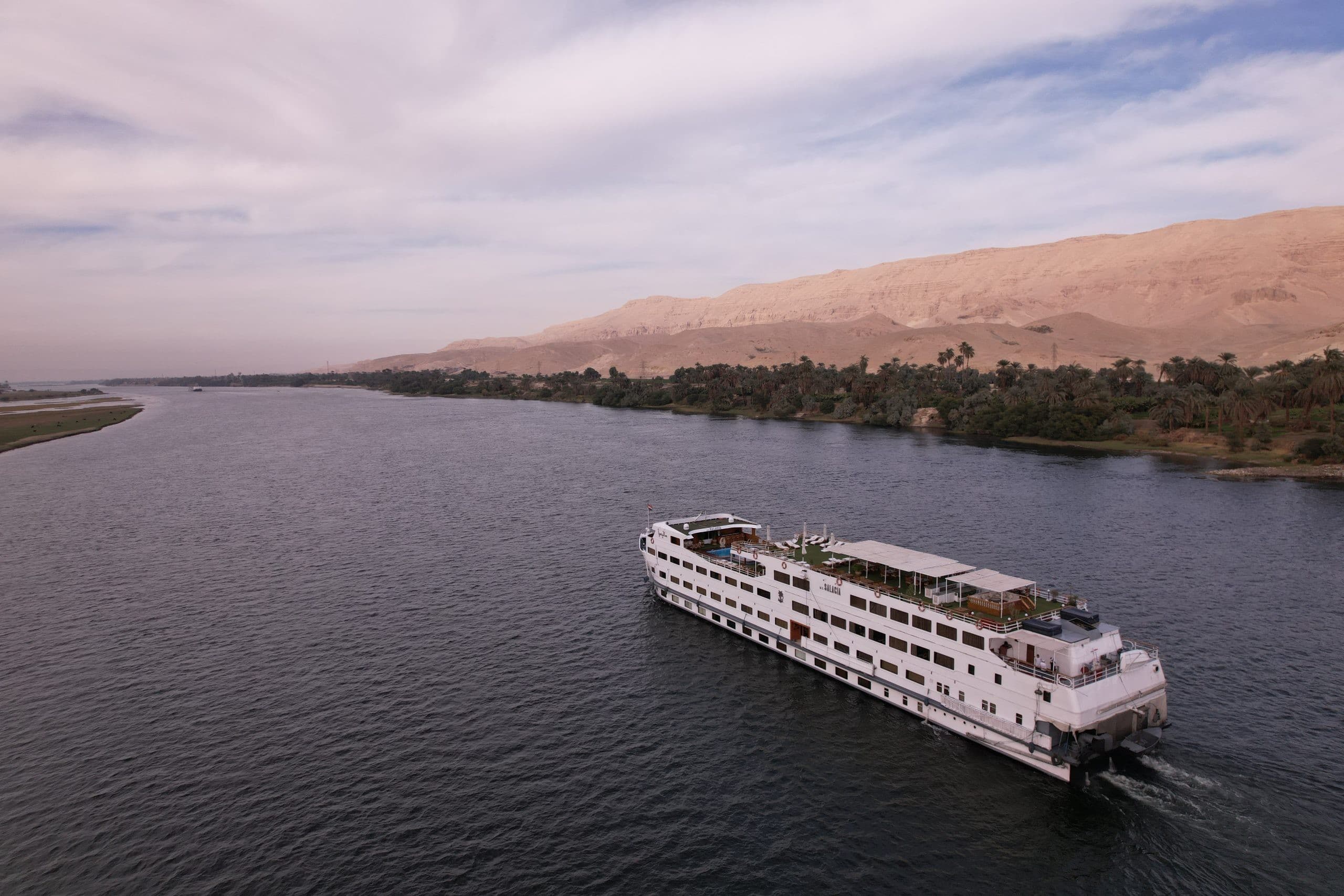
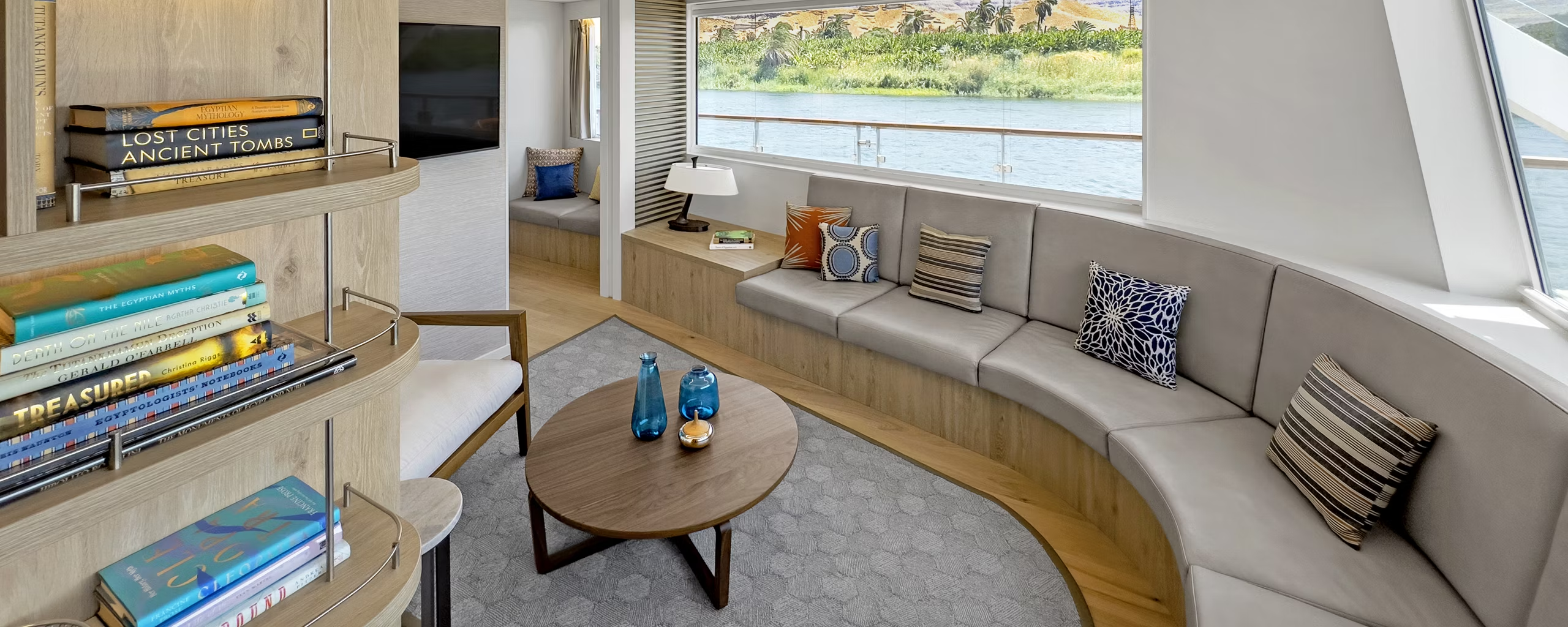
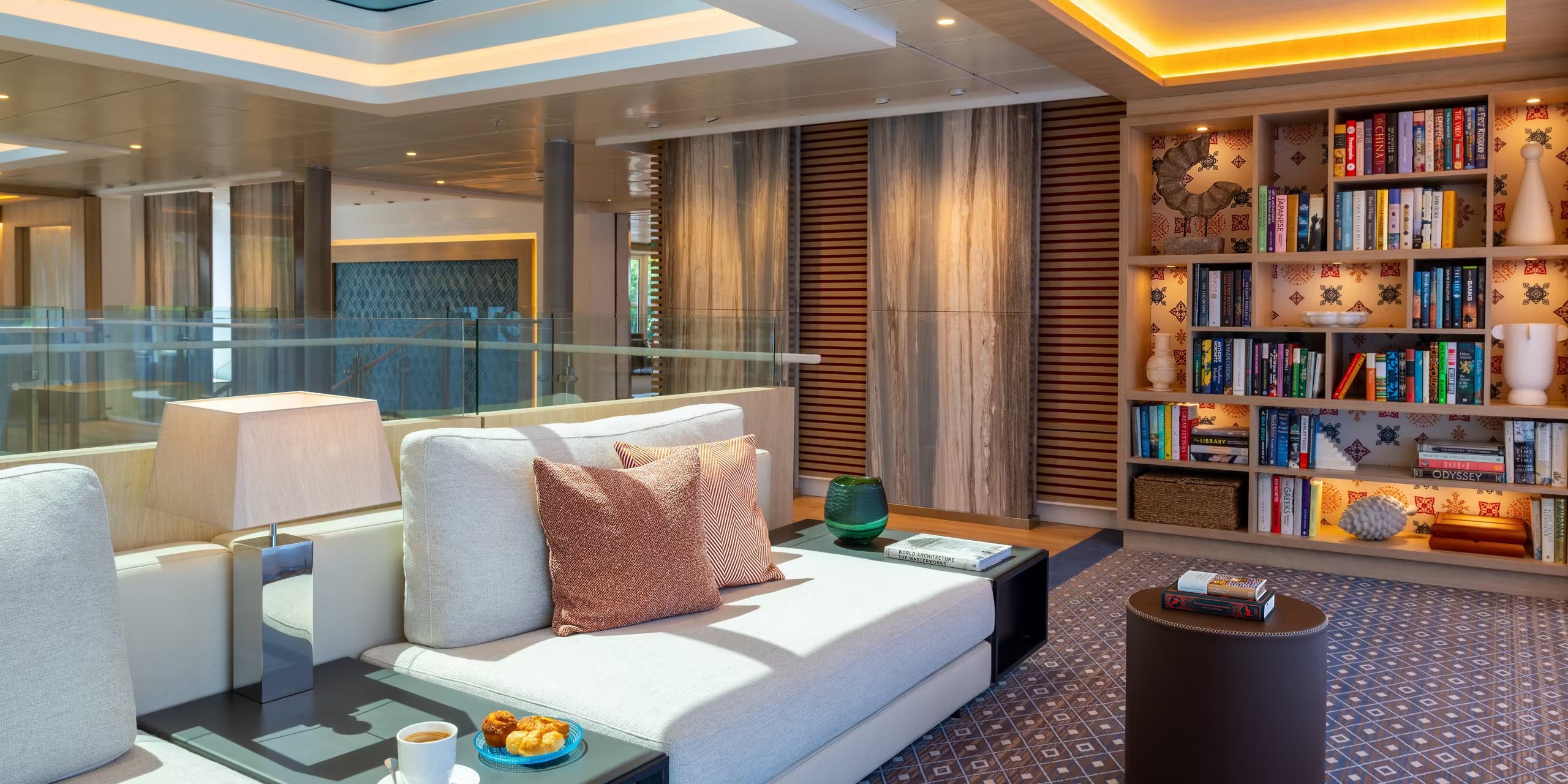
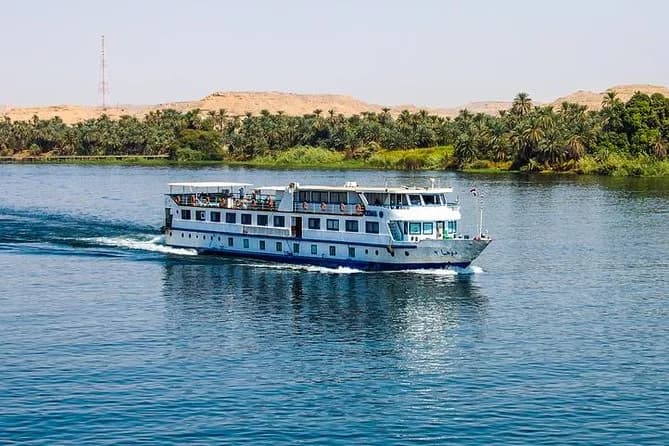
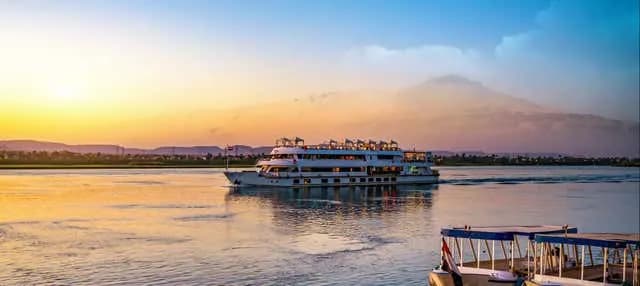
Onboard, the two dining rooms are The Restaurant, the main venue with floor-to-ceiling windows, and the casual Aquavit Terrace and Lounge for lighter, al-fresco meals. The sun deck carries a pool, a pair of Jacuzzis and 360-degree views. Because capacity tops out at 82 guests, none of it ever feels crowded.
Who a Viking Nile cruise suits
Be honest with yourself about the fit. Viking is built for a specific traveller:
- English-speaking guests who want the whole trip guided in English, with Western service norms.
- People who want zero logistics. One booking, one operator, flights and hotels folded in.
- Adults. Viking is strictly an over-18 line — there are no children aboard, by design. If you are travelling with kids, this is not your cruise.
- First-time Egypt visitors who value comfort, safety and predictability over local texture or a bargain.
It suits far less well if you are price-sensitive, if you want a lively mixed-nationality boat, if you crave flexibility to change plans on the fly, or if you specifically want an Egyptian-run experience with Egyptian crew and cooking front and centre.
Viking versus Egyptian-operated ships
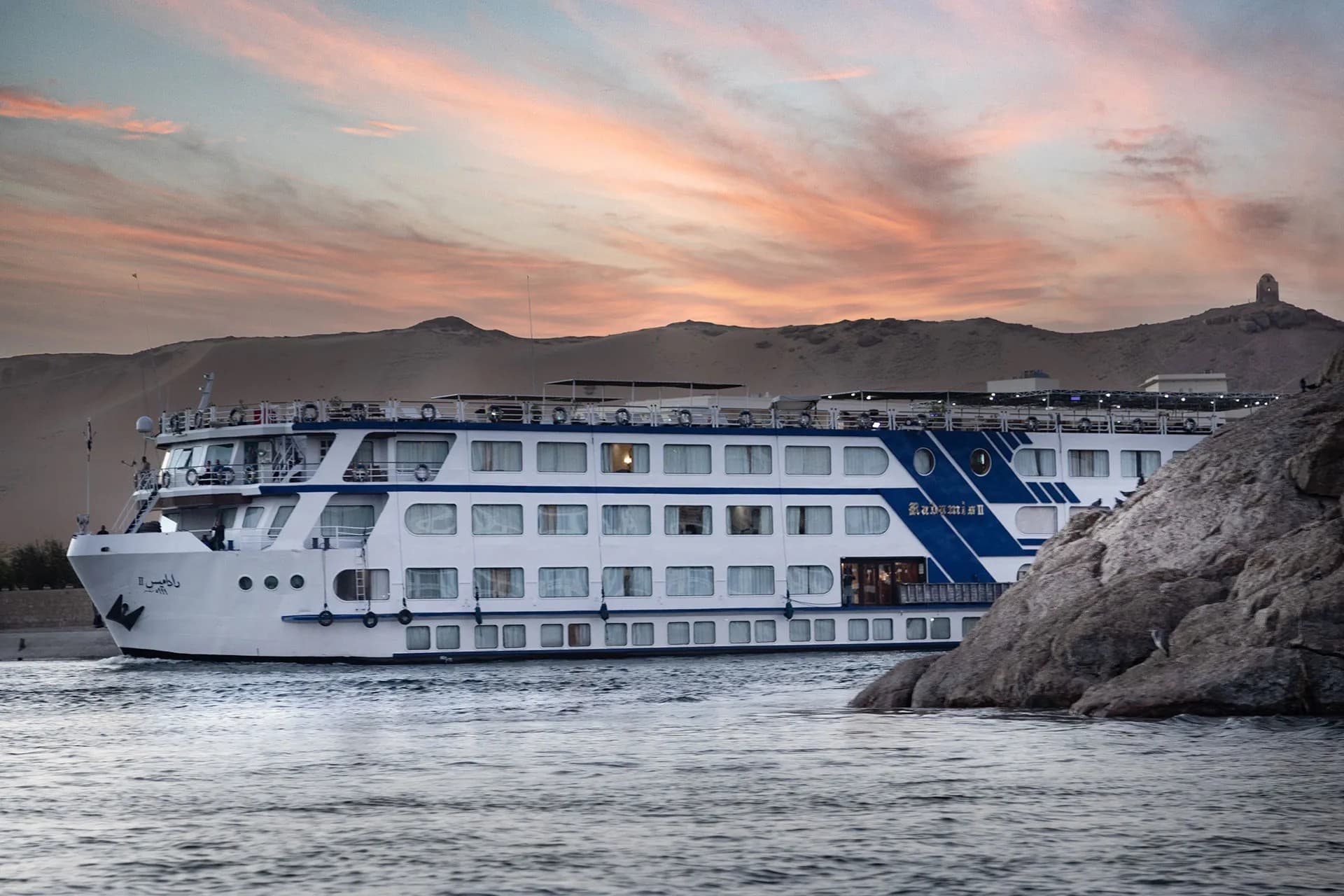
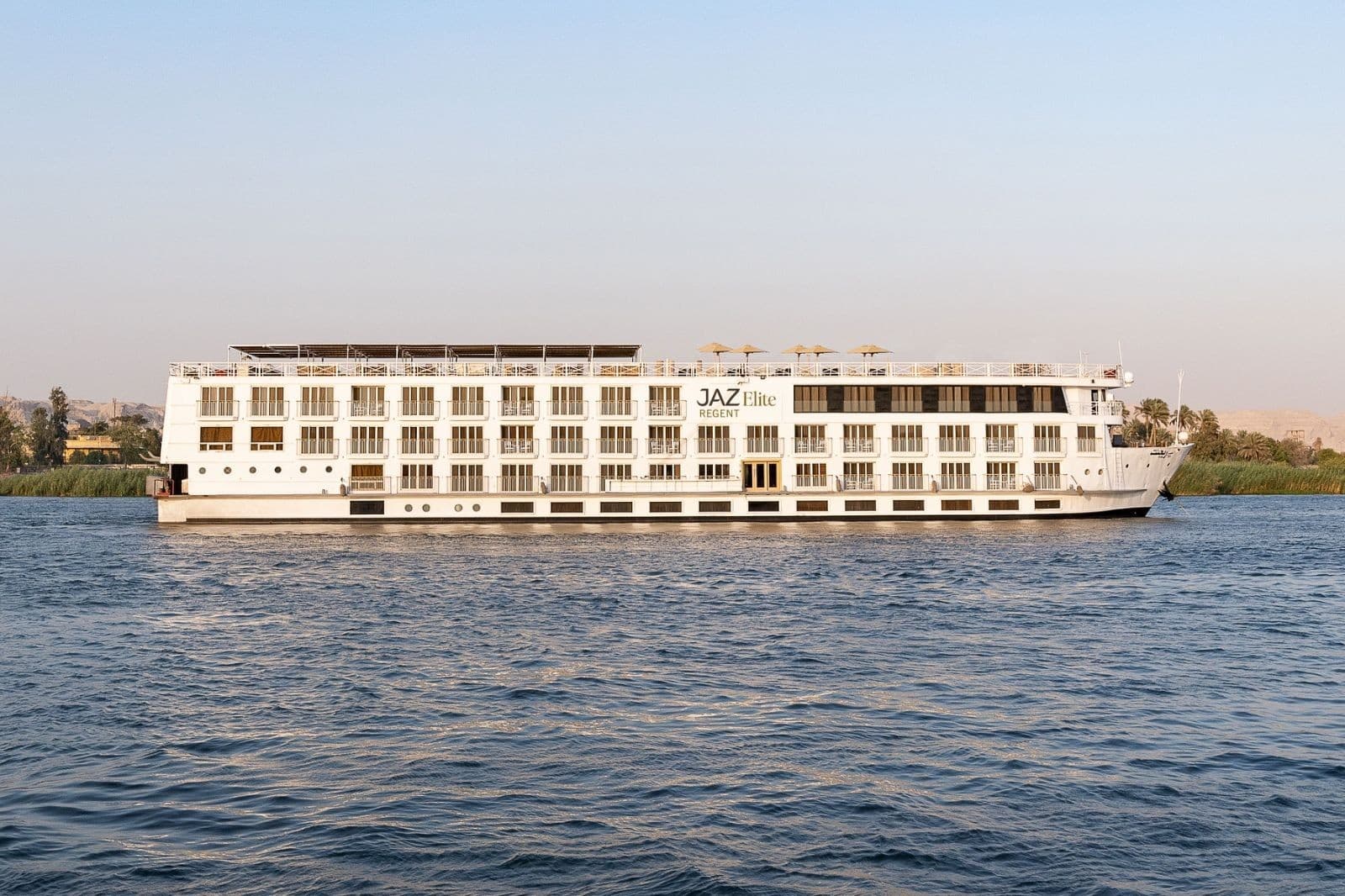
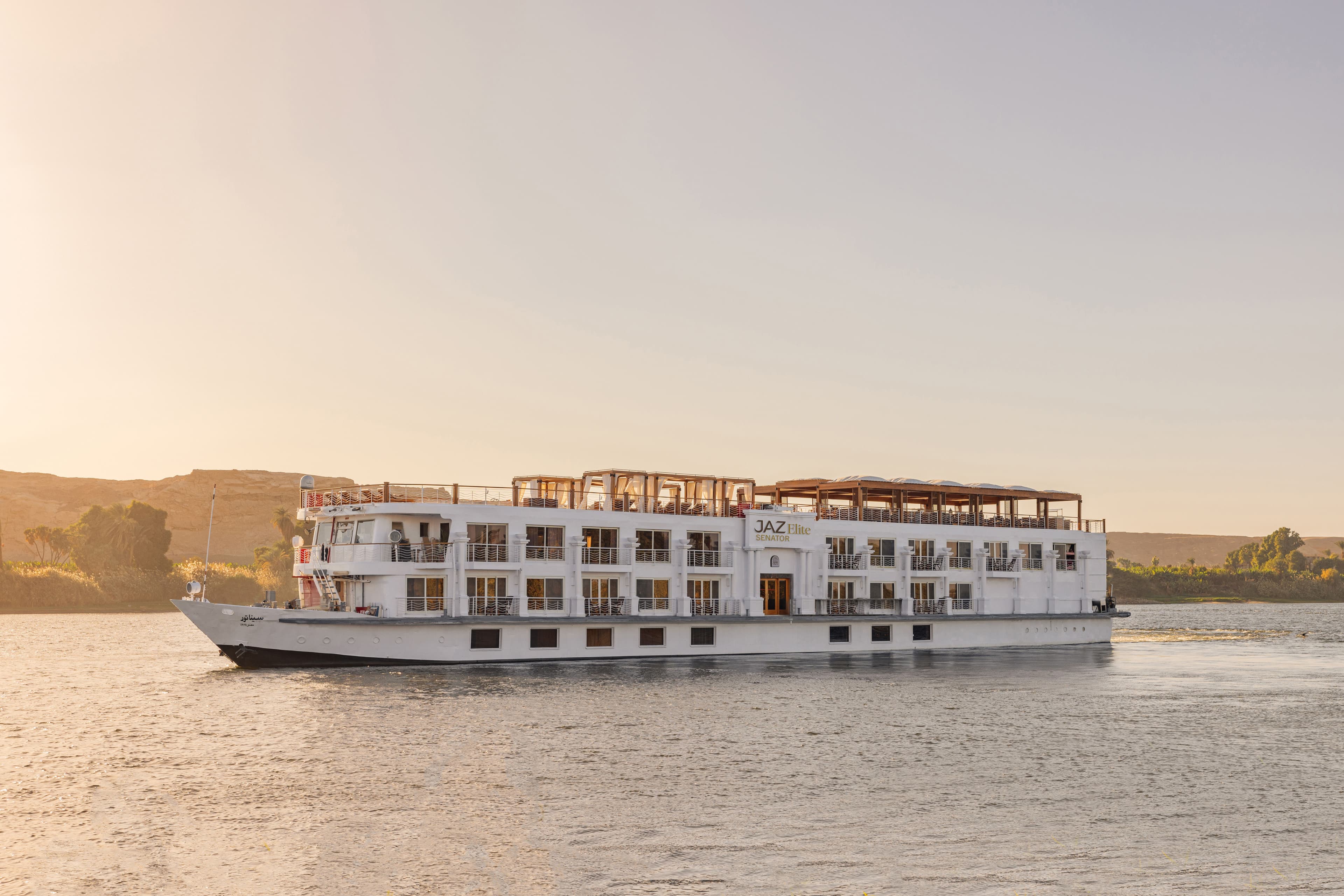
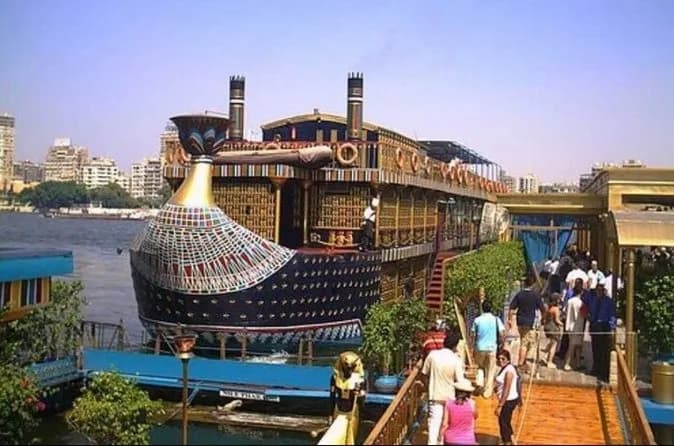
The cheaper, and far more numerous, option is an Egyptian-flagged cruise — the Mövenpick, Sonesta, Jaz, Oberoi and boutique boats that make up most of the roughly 68-ship Nile fleet. The differences are structural, not just cosmetic.
Egyptian ships almost all sail the classic Luxor–Aswan corridor only, in 3-, 4- or 7-night blocks, and they are sold cabin-only. You arrange your own Cairo hotel, your own domestic flights, and often your own guide, or you buy those from a local agent as a separate bundle. Fares are a fraction of Viking's — commonly US$500 to US$2,500 per person for the sailing itself, with our own catalogue putting the median Nile cruise experience around 13,900 EGP. The boats carry a mix of nationalities and welcome families.
Viking flips every one of those trade-offs: it costs several times more, but it removes the assembly work, keeps the ship adults-only and quiet, and holds the standard identical across the fleet. If you want luxury on an Egyptian-flag ship without going full Viking, the Oberoi Zahra and Oberoi Philae, and Uniworld's Egyptian-registered S.S. Sphinx, are the closest home-grown equivalents. For a fuller survey of the market, see our guides to Nile cruise ships in 2026 and the best luxury Nile cruises.
Viking versus Uniworld and AmaWaterways
Only a handful of international river lines run their own ships in Egypt, and the three that matter are Viking, Uniworld and AmaWaterways. All three sell a roughly 12-day, Cairo-to-Cairo, all-inclusive package covering both the pyramids and the Luxor–Aswan sail. Where they part ways is style, scale and price.
| Viking | Uniworld | AmaWaterways | |
|---|---|---|---|
| Egypt ship(s) | 11-strong fleet (Osiris, Aton, etc.) | S.S. Sphinx | AmaDahlia, AmaLilia, AmaNubia |
| Guests | 82 (52 on Ra) | 84 | 72–82 |
| Design | Understated Scandinavian | Opulent, ornate all-suite | Contemporary, warm |
| Signature trip | Pharaohs & Pyramids, 12 days | Splendors of Egypt & the Nile, 12 days | Secrets of Egypt & the Nile, 12 days |
| Indicative fare (pp) | from ~US$6,999 | ~US$6,349–6,999 | ~US$5,839–6,749 |
| Best for | Most departures, adults-only calm | Highest-touch, butler service | Standout dining, newest ships |
In practice: choose Viking if you want the widest choice of dates, an adults-only atmosphere and the reassurance of a proven, standardised product. Choose Uniworld if you want the plushest, most decorated interiors and the most attentive, butler-led service, and do not mind paying for it. Choose AmaWaterways if food is your priority — the Chef's Table tasting menu is a genuine draw — or if you want one of the very newest hulls. The gaps between them are real but modest; all three sit at the top of the Nile market.
What it costs
The entry fare for Pharaohs & Pyramids sits around US$6,999 per person, or roughly 340,000 EGP at about 48–49 EGP to the dollar, for a Veranda Stateroom. Move up to a suite and prices climb steeply — Explorer Suites and peak dates on ships like Osiris and Sobek have listed as high as US$12,000 to US$16,000 per person. Viking runs frequent air-inclusive and early-booking promotions, so the number you are quoted on any given day can swing; always price the exact sailing rather than the brochure headline.
Set against an Egyptian-operated cruise, Viking is a big premium. Set against booking Cairo, internal flights, guides and a luxury boat separately, the gap narrows, because the fare absorbs all of that. Whether it is worth it comes down to how much you value handing over the logistics entirely.
Planning your Nile trip
If a Viking cruise is out of budget, or you would rather keep your itinerary flexible, an Egyptian-operated boat plus a separately booked Cairo stay covers the same temples at a fraction of the cost. Our complete Nile river cruise guide walks through routes, seasons and how to choose a ship. When you are ready to compare real sailings, dahabiyas and Cairo-and-Nile packages side by side, browse Nile cruises and Egypt experiences on This is Egypt and book the trip that fits how you actually want to travel.

A real team available 24/7 to assist you — free
Seif and the team reply on WhatsApp 24/7 — trip questions, custom plans and booking help.
Ask Seif on WhatsAppCommon questions
How much is a Viking Nile cruise?
The 12-day Pharaohs & Pyramids itinerary starts around US$6,999 per person (roughly 340,000 EGP) for an entry-level Veranda Stateroom. Suites and peak dates can run US$12,000–16,000 per person. Frequent air-inclusive and early-booking offers move the real price, so quote the exact sailing.
Which Viking ship is best for the Nile?
For most travellers it barely matters — the current ships are near-identical sisters with the same cabins, layout and service. Viking Osiris (the 2022 lead ship) holds a perfect Cruise Critic editor rating. The main exception is the older, smaller Viking Ra, which carries just 52 guests in slightly larger cabins.
Are all the Viking Egypt ships the same?
Almost. From Viking Osiris (2022) onward, each ship is a purpose-built copy of the last — same 72-metre hull, 82 guests, 41 staterooms and public rooms. That standardisation is deliberate: it keeps quality consistent across the fleet. Viking Ra, the 2018 vessel, is the one true outlier with 24 cabins and 52 guests.
Is Cairo included in a Viking Nile cruise?
Yes. The Pharaohs & Pyramids package is round-trip from Cairo and includes hotel nights there, guided tours of the Pyramids, the Sphinx and the Grand Egyptian Museum, and the internal flights between Cairo and Upper Egypt. You do not book Cairo separately.
What is included in the Viking fare?
The ship and Cairo hotel nights, all guided shore tours with Viking guides and headsets, internal Egypt flights, beer, wine and soft drinks at lunch and dinner, and onboard Wi-Fi. Not included: international airfare, the e-visa (about US$25), insurance, optional excursions like Abu Simbel, the premium drinks package, and usually gratuities.
How long is the Viking Nile cruise?
The journey is 12 days in total, with seven nights sailing between Luxor and Aswan and the balance spent in Cairo at the start and end. It includes 11 guided tours across Giza, Luxor, Edfu, Kom Ombo, Aswan and more.
Can children go on a Viking Nile cruise?
No. Viking is strictly an adults-only line with a minimum age of 18 across its fleet, Egypt included. Families travelling with children should look at Egyptian-operated ships such as Mövenpick, Sonesta or Jaz, which welcome kids.
How does Viking compare to Uniworld and AmaWaterways?
All three run their own ships on a similar 12-day Cairo round-trip. Viking offers the largest fleet and most departures with calm, adults-only Scandinavian style. Uniworld's S.S. Sphinx is plusher and more butler-led. AmaWaterways stands out for its Chef's Table dining and very new ships. Fares are broadly comparable, roughly US$5,800–7,000 per person to start.
Is a Viking cruise worth it versus an Egyptian ship?
It depends what you value. An Egyptian-operated cruise costs a fraction as much (often US$500–2,500 for the sailing) but is sold cabin-only, so you arrange Cairo and flights yourself and sail with a mixed-nationality crowd. Viking bundles everything, keeps the ship adults-only and predictable, and charges several times more for that convenience and consistency.
How many Viking ships sail the Nile?
Viking operates one of the largest luxury fleets on the Nile — 11 Viking ships feature in This is Egypt's directory of 68 five-star cruise ships. They are modern, all-balcony vessels sailing the Luxor-Aswan route.
Book it on This is Egypt
Turn this guide into a trip





Egypt's bestsellers
The experiences travelers book most, across the country



Plan your Nile cruise
Viking ships on the Nile
Free downloads
Take the Nile home with you
Two illustrated PDFs, no email required: our 12-page introduction to choosing between a cruise ship and a dahabiya, and the classic 4-night Luxor to Aswan itinerary, day by day.
Keep reading
Nile Cruise from Aswan to Luxor (or Luxor to Aswan): 2026 Guide
A 3 or 4 night cruise between Aswan and Luxor is the classic way to see Egypt's temples. The stops, real prices, why direction and boat choice matter, and how to avoid a bad one.
By TiE Editors9 min read
Jaz Nile Cruises (2026): Fleet, Routes & How to Book
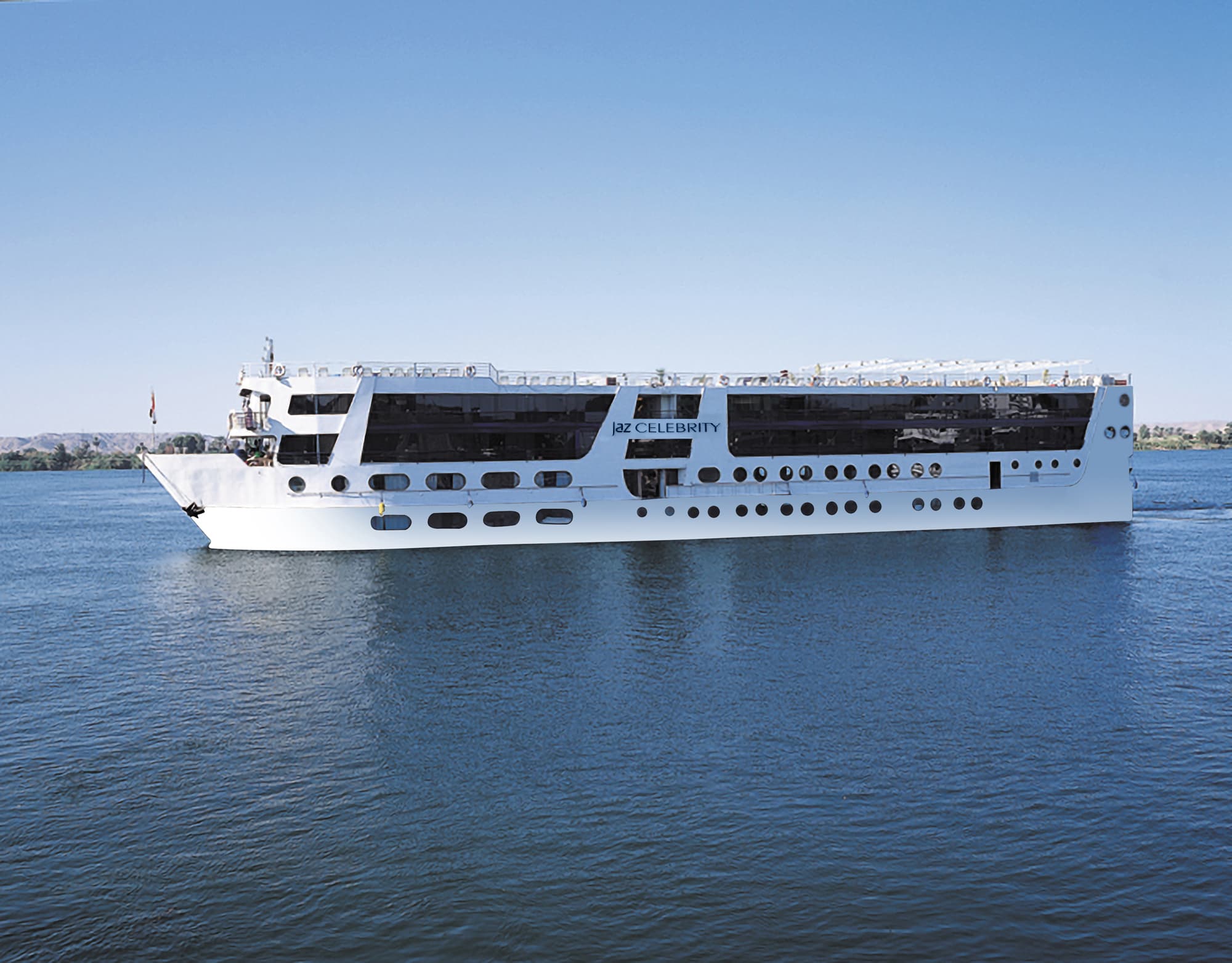
Jaz is the Nile cruise arm of JAZ Voyages, part of Travco Group, and runs the largest fleet in our directory: twelve ships on the Luxor–Aswan route plus three Farouz El Nil dahabiyas.
By TiE Editors6 min read
Nile Cruise for the 2027 Solar Eclipse (Aug 2): Sail Egypt's Totality
On 2 August 2027 a total solar eclipse passes over Luxor with 6+ minutes of totality. A Nile cruise is the best way to see it — in the path, accommodation solved. How eclipse sailings work and why to book early.
By TiE Editors5 min read