Toilets in Egypt (2026): Toilet Paper, Tips and Sights
Yes, bring tissues. What public toilets in Egypt are really like in 2026: attendant tips in EGP, the shatafa, and the toilets at Giza, the GEM and Luxor.
Yes, bring a small pack of tissues: many public toilets in Egypt, including some at the big sights, have no paper, and when there is an attendant they often hand out a few sheets for a tip. You do not need full rolls. Pack pocket tissues, hand sanitiser and a few 5 and 10 EGP notes, and you are covered for almost every toilet stop on a typical trip.
Quick answer: Carry tissues and sanitiser. Keep 5 and 10 EGP notes (about US$0.10 to US$0.20, approximate at ~52 EGP/USD) for attendants; most visitors give 5 or 10 EGP (checked 17 October 2026). If there is a bin beside the toilet, used paper goes in it. The hose or nozzle next to the bowl is the shatafa, a bidet spray. Hotel and restaurant toilets are the most reliable.
Toilets at the main sights: site by site
| Site | What we know (checked 17 October 2026) | Plan |
|---|---|---|
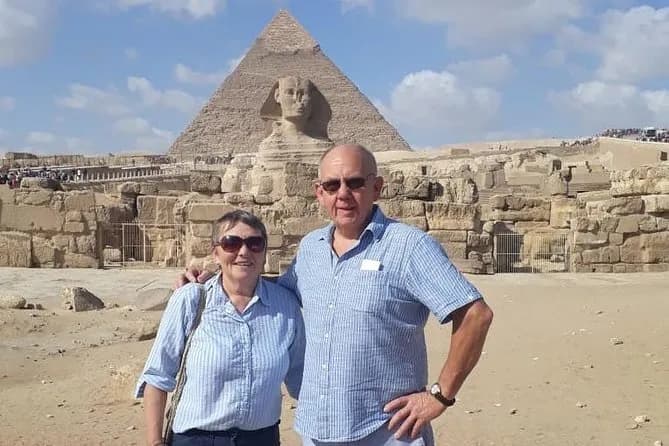
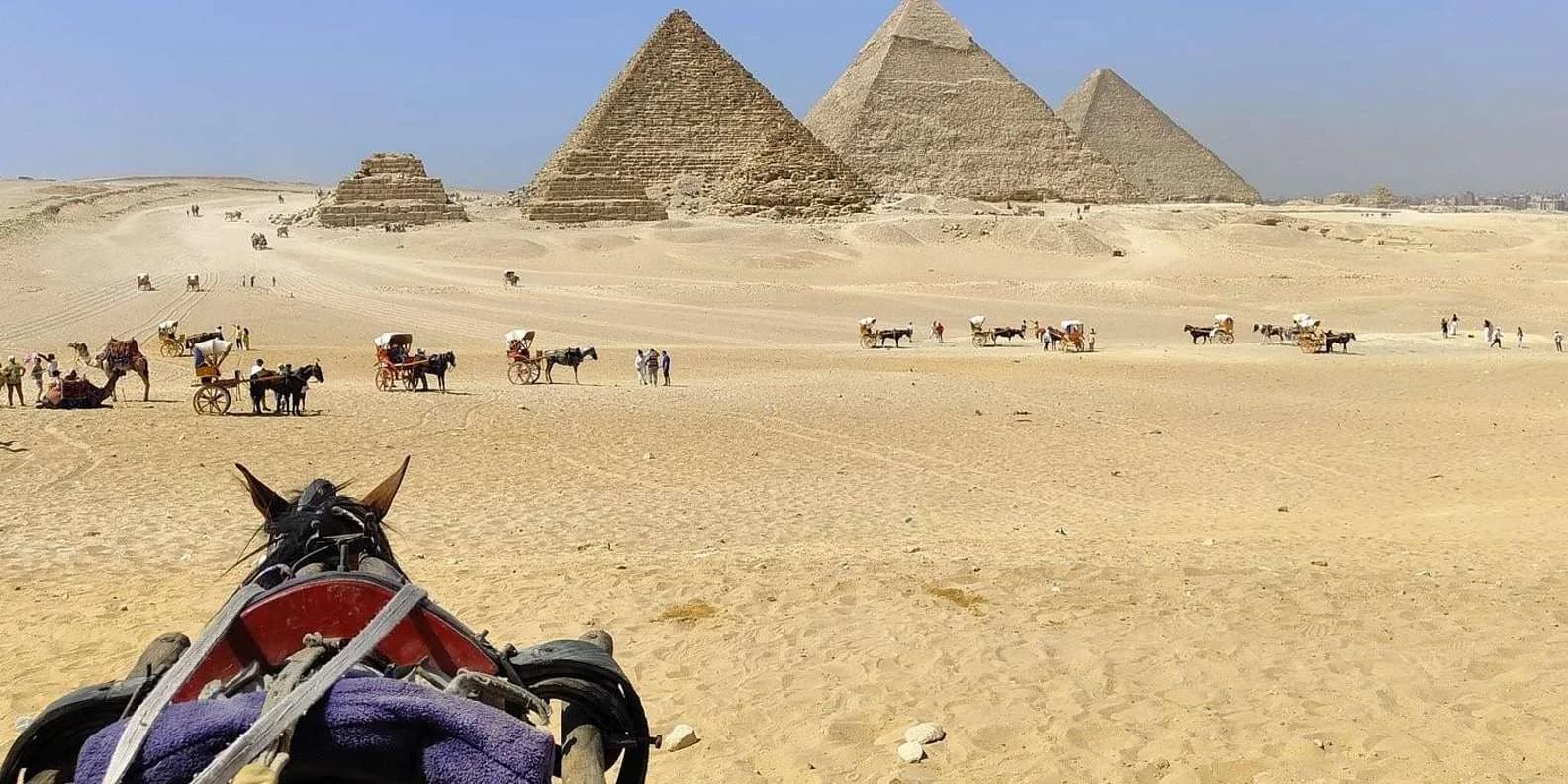
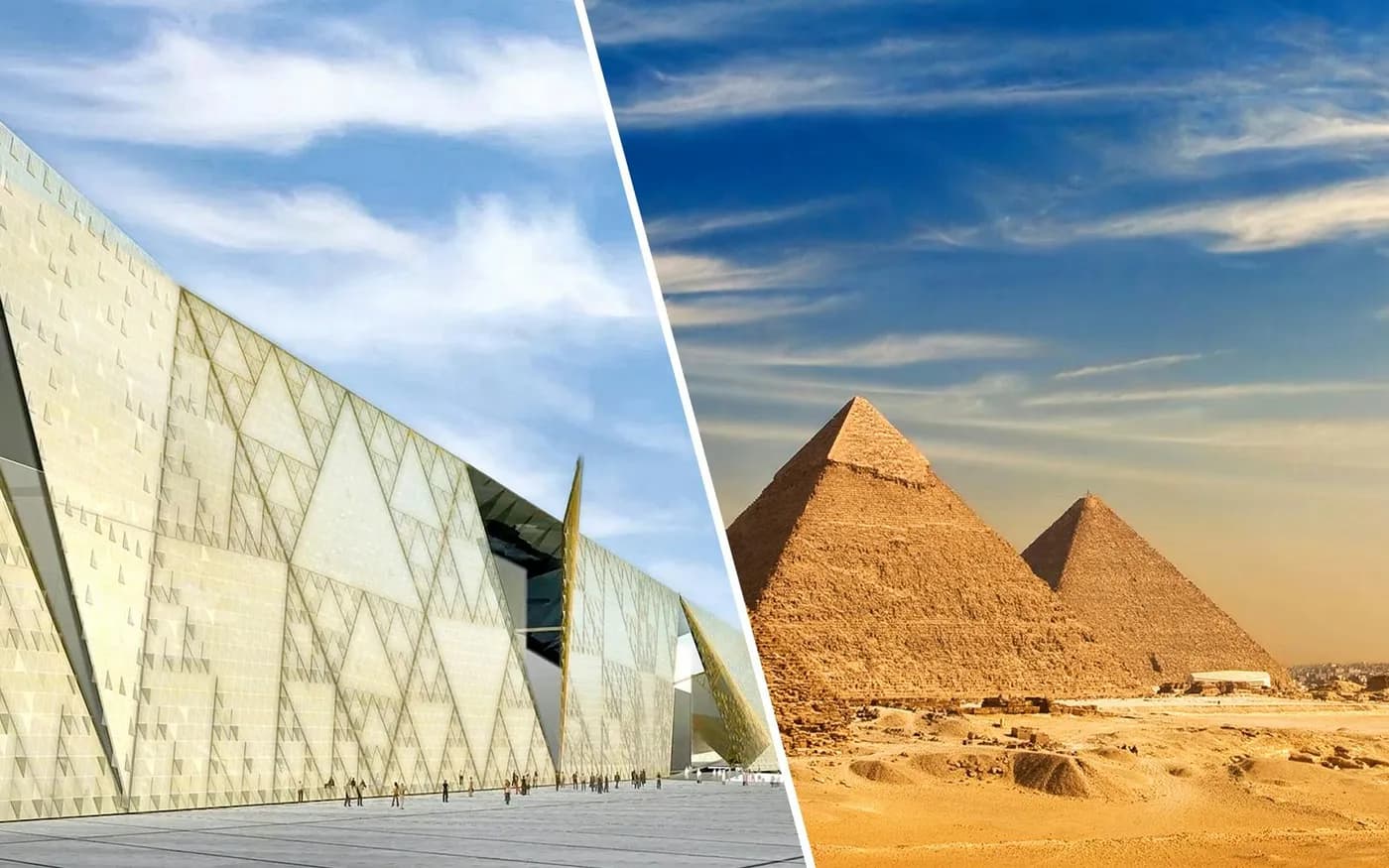
| Giza plateau (Pyramids and Sphinx) | A visitor centre with bathrooms at the new main gate on the Cairo to Fayoum Road was planned in 2024; the plateau is large and spread out | Go at your hotel or the GEM first; carry tissues and 5 to 10 EGP |
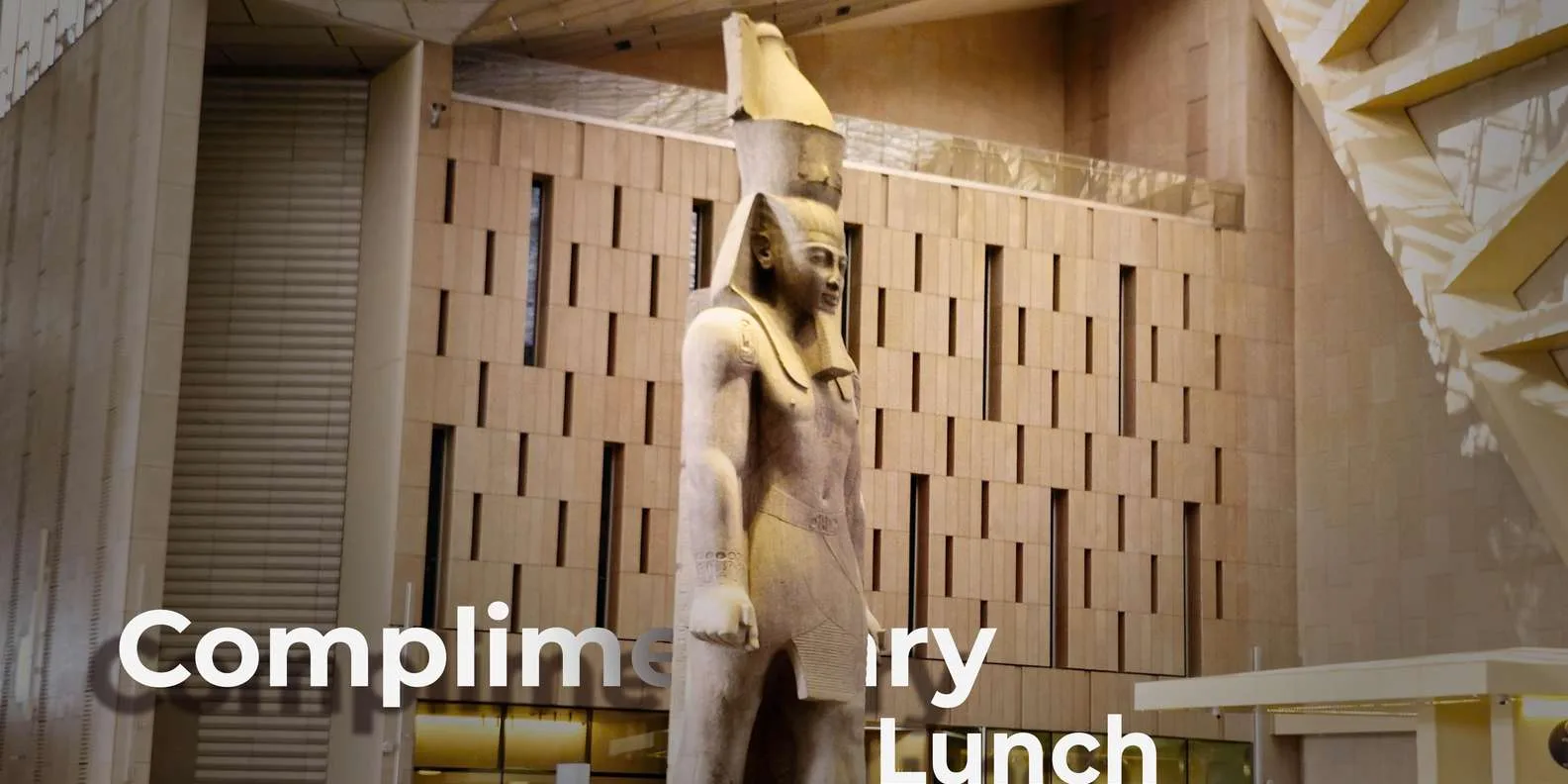
| Grand Egyptian Museum (GEM) | The museum's own facilities page lists clean, accessible visitor restrooms | Use one before the Tutankhamun Galleries |
| Egyptian Museum, Tahrir | The Ministry lists a toilet among the museum's services, with a café, elevator and ramped entrance | Bring tissues and small notes |
| Valley of the Kings | The Ministry page lists no services | Go before you leave your hotel or boat; bring your own paper |
| Karnak Temple | The Ministry lists a toilet as Karnak's one service | Ask at the entrance before heading deep into the complex |
| Luxor Temple | The Ministry page lists no services | Go before you arrive; bring your own paper |
| Nile cruise boats | Your cabin bathroom | Go right before each shore excursion |
| Desert road rest stops | Squat toilets are more common out in the desert | Assume no paper; carry tissues, sanitiser and small notes |
| Airports | No official details found | Go airside before a long transfer |
| Hotels and restaurants | The most reliable option on any day out | Plan your stops around them |
Ministry details are from the Ministry of Tourism and Antiquities' official site pages and GEM details from the museum's official website. Where an official page lists no services, we say so rather than guess.
Do you need to bring toilet paper to Egypt?
Yes, but only a little. Public toilets at tourist sites are often not stocked with paper, and hand sanitiser is hard to buy in Egypt, so bring your own from home (checked 17 October 2026). Where an attendant is on duty, they usually keep the paper and hand you a few sheets, and how many can depend on the tip.
Many cafés have no toilet at all, so the simplest habit is to use your hotel toilet before you leave in the morning and a restaurant toilet at lunch. Our Egypt packing list covers the rest of the day bag.
What to carry each day:
- One or two pocket packs of tissues
- A small bottle of hand sanitiser
- Wet wipes if you prefer them, but do not flush them
- A few 5 and 10 EGP notes kept apart from your main cash
Can you flush toilet paper in Egypt?
In big hotels and resorts, usually yes. Elsewhere, the pipes can clog easily, so if you see a bin beside the toilet, put used paper in it. The shatafa is there so you can wash with water; paper is mostly for drying.
Attendant tips: how much to give in 2026
Plan on 5 to 10 EGP per visit (about US$0.10 to US$0.20, approximate). Most visitors give 5 or 10 EGP. A few guides quote up to 15 EGP (about US$0.30, approximate) at the busiest sites (checked 17 October 2026). A 5 EGP note is usually fine for a quick stop.
Two things make this easier:
- Keep small notes separate. Small change is hard to come by, so break larger notes at a supermarket or your hotel and hold the 5s and 10s for toilets.
- Do not overthink the amount. A small note with a thank you is plenty.
You may meet an attendant even where you have already paid a ticket, at museums, restaurants and big temples, and at that point it is a tip rather than a fee. For the full picture of who expects what, see how much to tip in Egypt and our money and tipping guide.
The shatafa: what the hose next to the toilet is for
The shatafa (also written shattaf) is a bidet spray. It is either a small nozzle built into the back of the bowl or a hand hose on the wall beside it. A tap, often on the left side of the toilet, controls the water.
Turn it on gently. The pressure can be strong, and a full turn can soak the floor, the seat and you. Water is the main way to clean; paper is for drying.
Western or squat toilets?
Sit-down Western toilets are the norm in hotels, restaurants, museums and most places a visitor goes, and most of them have a shatafa. Squat toilets turn up more often in the desert and other dry areas. If you are uneasy with squatting, use the facilities at your hotel or lunch stop before a long drive.
Toilets at the Pyramids of Giza
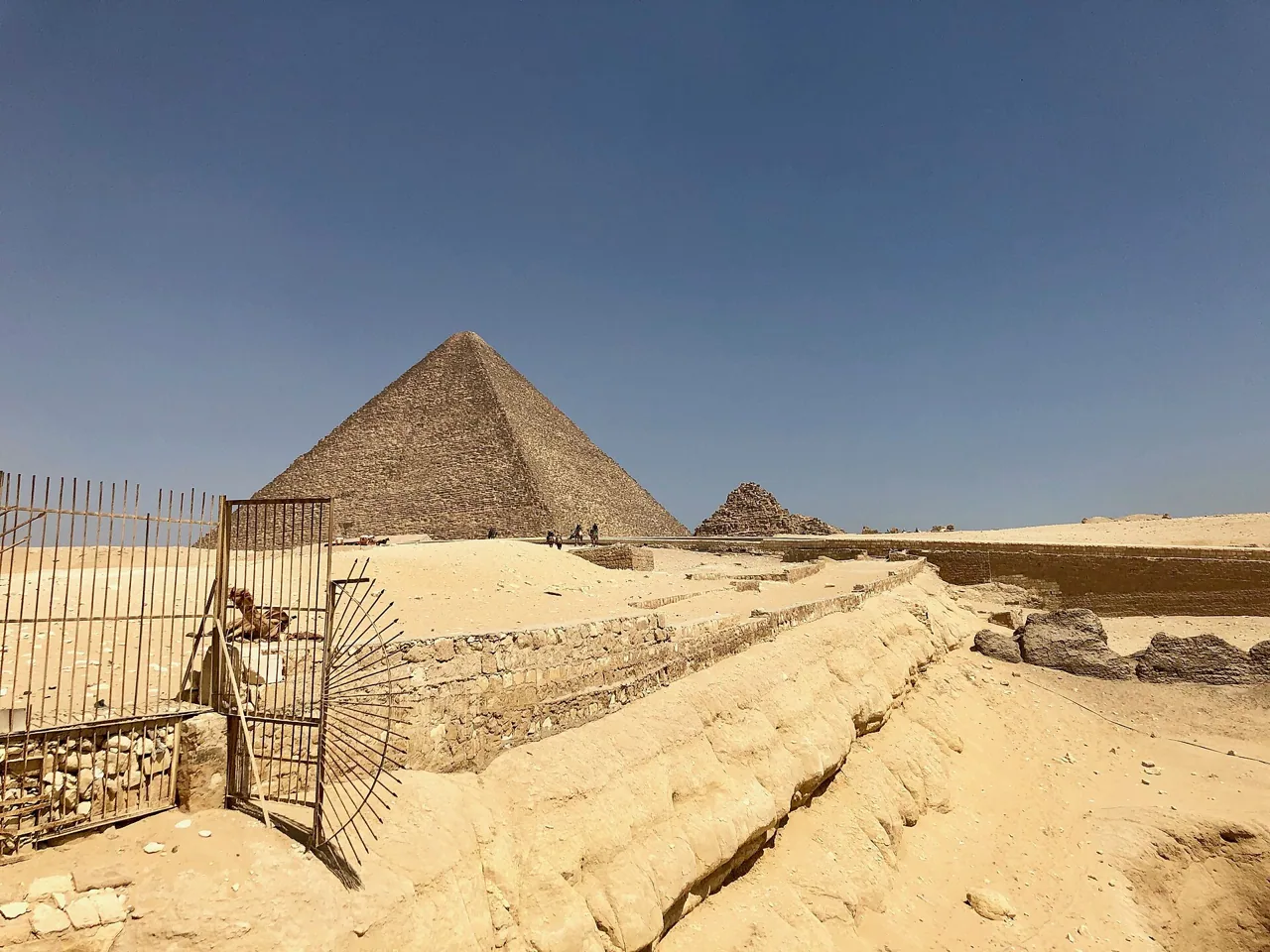
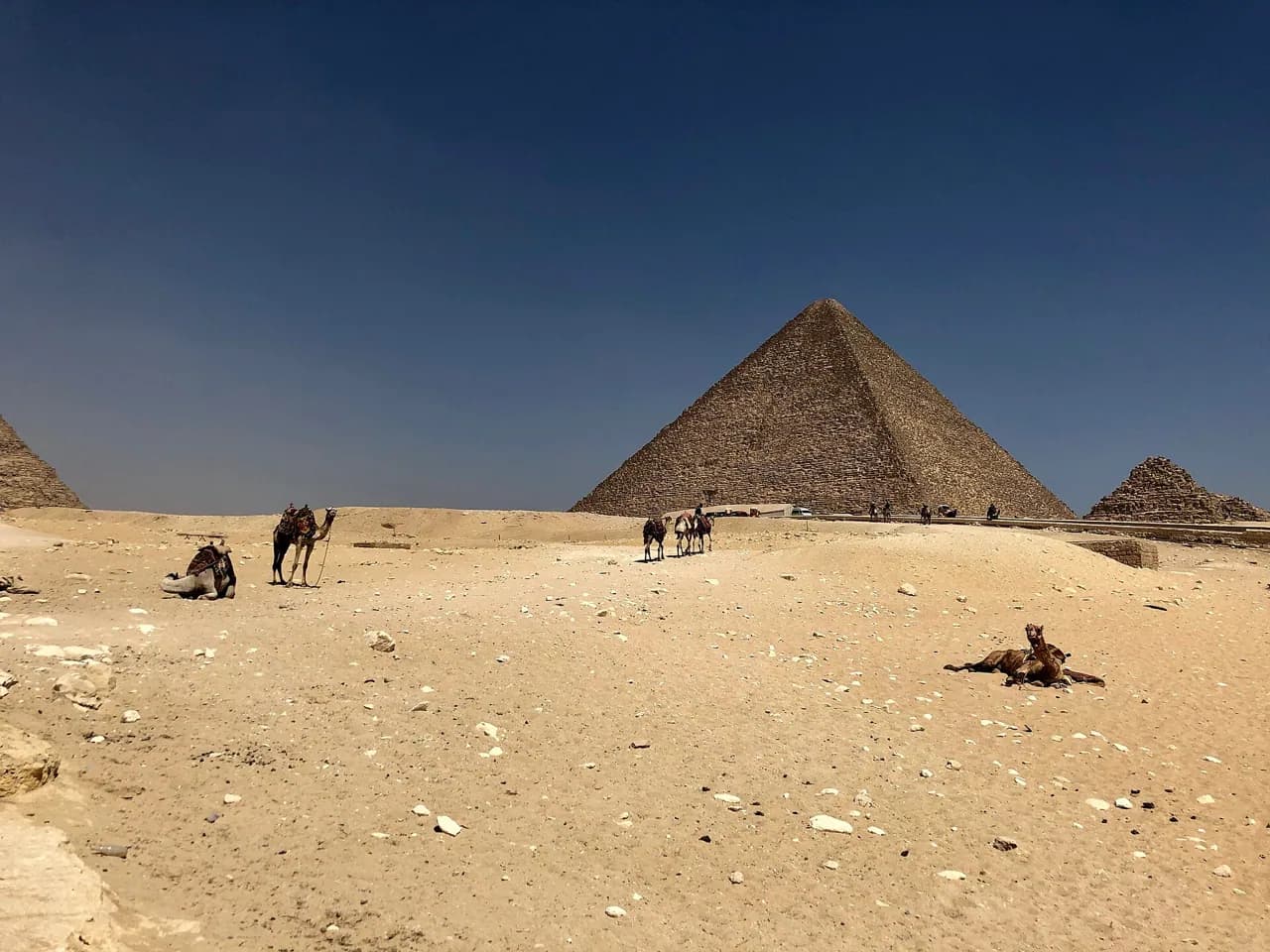
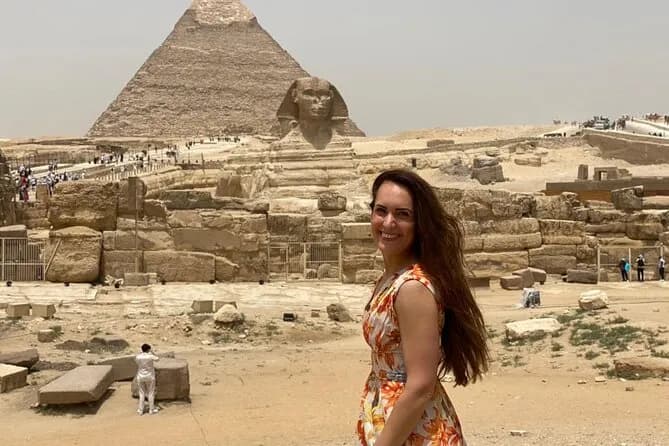
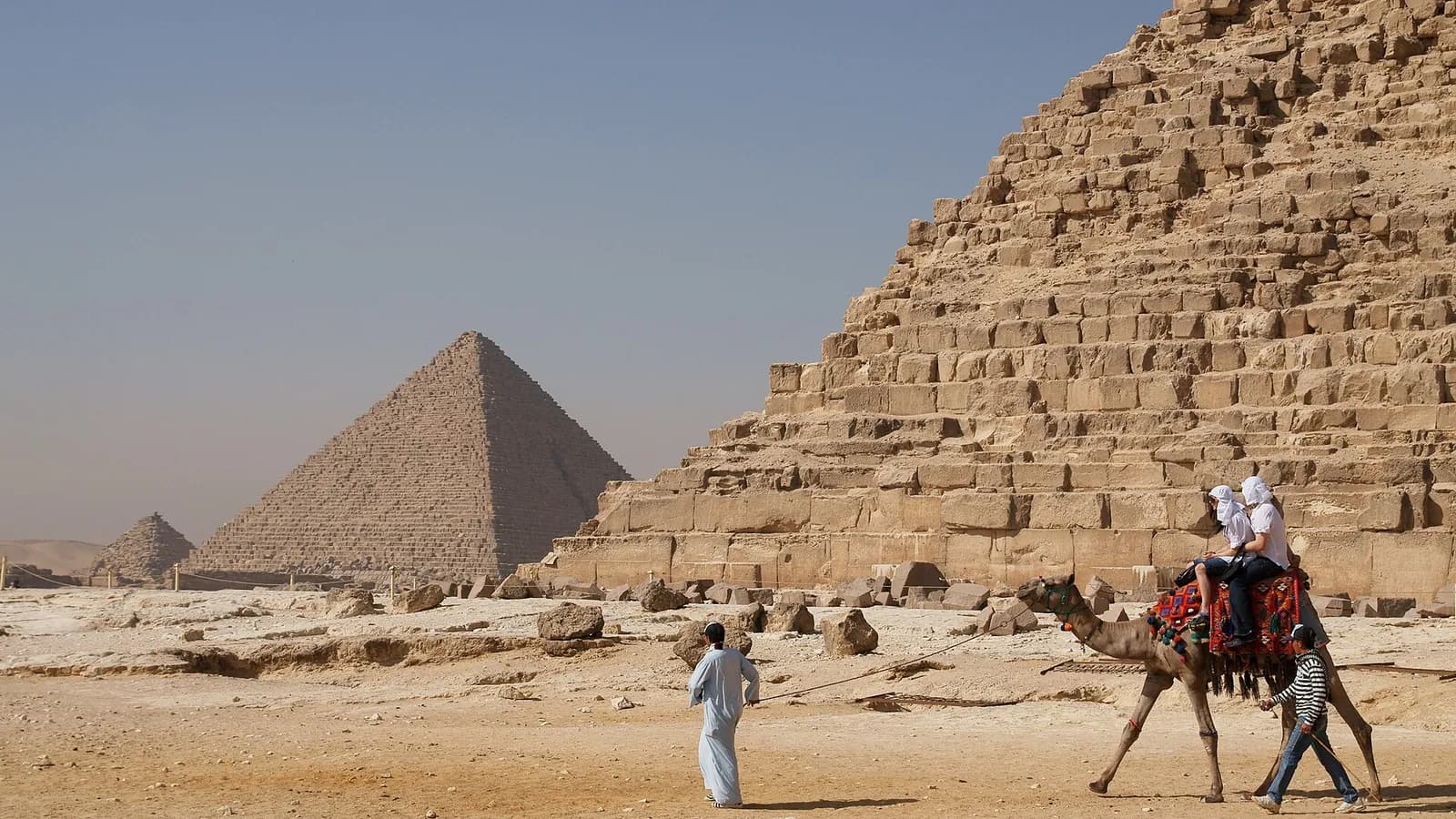
Plan to use the toilet at the GEM or your hotel before you go: facilities on the plateau itself are spread out and not guaranteed where you happen to be. Visitor services on the plateau are run by Orascom Pyramids (Egypt Independent, 12 May 2026). In August 2024 the government said the new main gates on the Cairo to Fayoum Road would include a tourist service centre with bathrooms, alongside a centre for older visitors, a medical centre and electric transport inside the plateau (Egypt Independent, 13 August 2024). We found no official page or press report confirming where the toilets are today, including at the Sphinx side or the panorama (checked 17 October 2026).
Walking between the pyramids, the panorama and the Sphinx takes time, so:
- Go before you start, and again before you buy a pyramid interior ticket.
- Ask at the gate where the nearest toilet is before you set off.
- Carry tissues and 5 to 10 EGP.
Our Pyramids of Giza guide covers tickets, the Great Pyramid interior ticket and how to get around the plateau.
Toilets at the Grand Egyptian Museum (GEM)
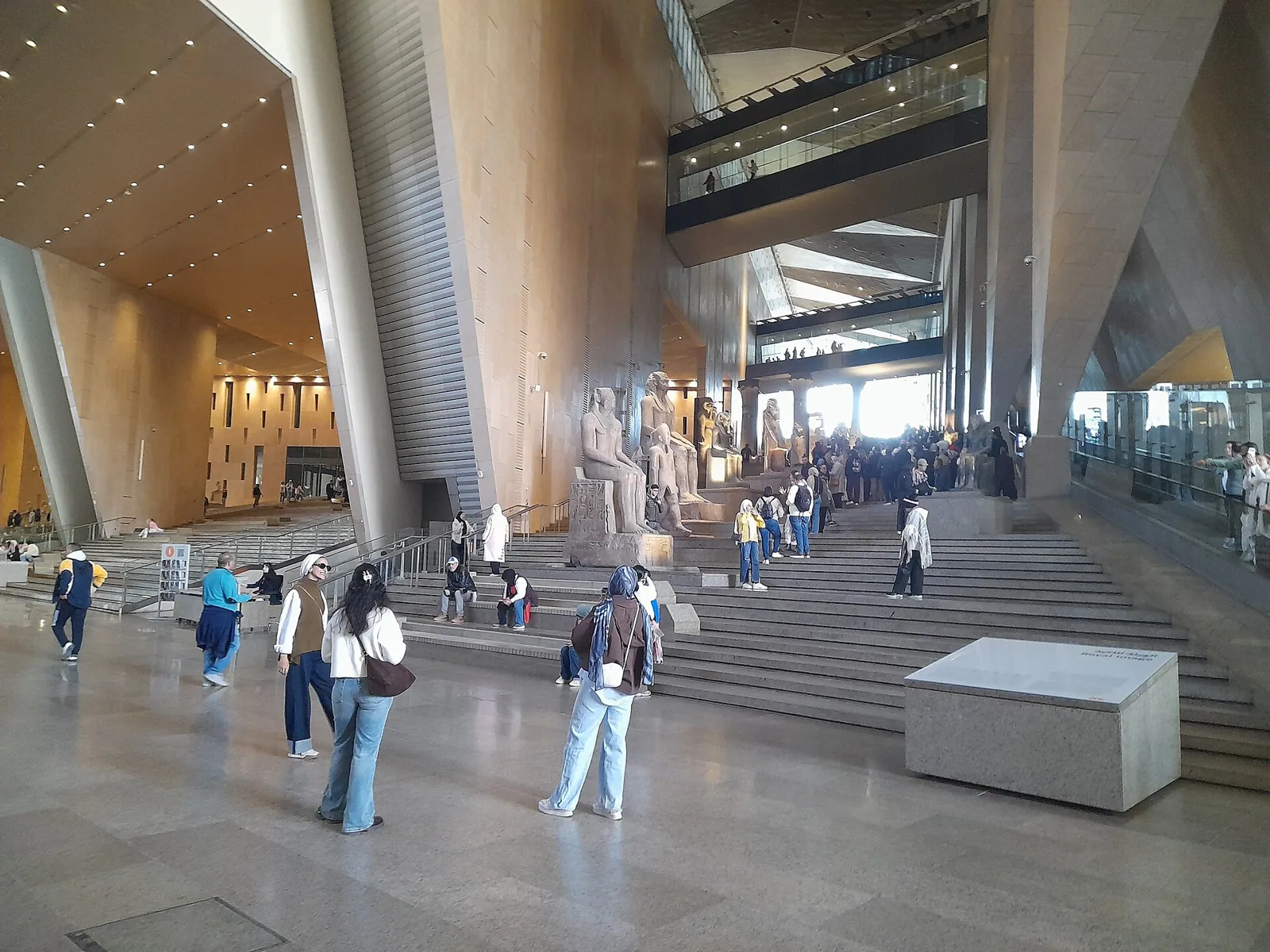
The museum's own facilities page describes clean, accessible visitor restrooms, along with free lockers, a prayer room, a clinic, an ATM, charging stations and an information desk, and its accessibility page lists accessible restrooms, wheelchairs and golf carts (checked 17 October 2026). That makes it the best-documented big sight for toilets. The museum does not say exactly where each restroom sits, so use one before you enter the Tutankhamun Galleries, which take a while.
The GEM pairs well with Giza on the same day. See our Grand Egyptian Museum guide for timed entry and what to see first.
Toilets at the Egyptian Museum in Tahrir
The Ministry of Tourism and Antiquities lists a toilet among the Egyptian Museum's services, together with a café, an elevator and a ramped entrance (checked 17 October 2026). Bring tissues and small notes in case there is no paper or an attendant is on duty. More on the museum itself in our Egyptian Museum Cairo guide.
Toilets in Luxor: Valley of the Kings and Karnak
Valley of the Kings. Go before you leave your hotel or boat and carry your own paper: the Ministry page lists no services for the valley. It lists hours of 06:00 to 17:00 daily; the site may close earlier in winter, so check on the day (checked 17 October 2026). Drink water, but time it. See our Valley of the Kings guide.
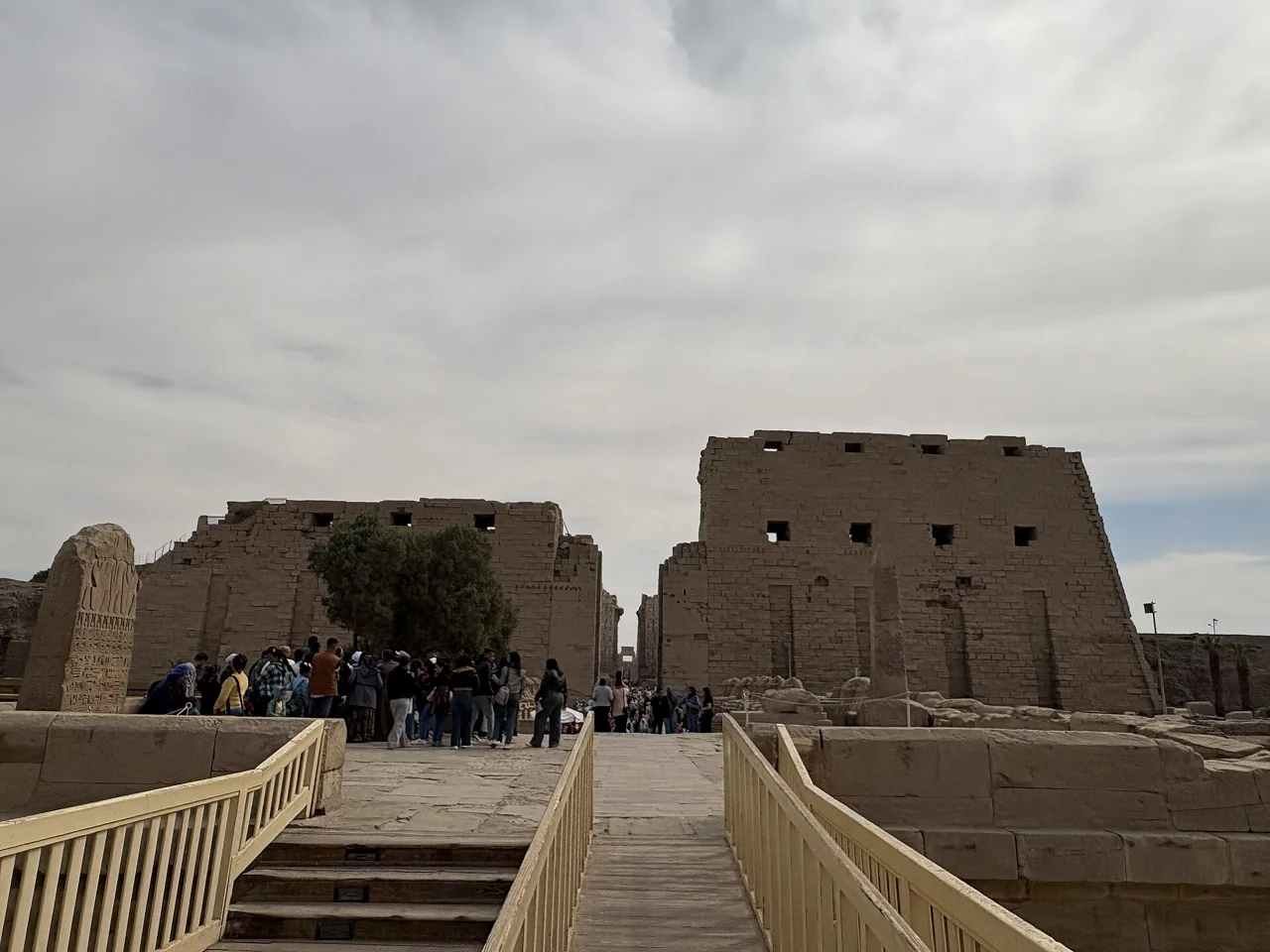
Karnak Temple. The Ministry lists a toilet as Karnak's one service, but not where it is or whether it is free (checked 17 October 2026). Karnak is huge, so ask at the entrance before you head deep into the complex. Our Karnak guide has tickets, hours and the highlights to see.
Luxor Temple. The Ministry page lists hours (06:00 to 20:00) and tickets but no services, so go before you arrive.
Toilets on Nile cruises
On a cruise day the boat is your base, so the simplest plan is to use your cabin bathroom right before each shore excursion. If you or someone you travel with needs grab rails or step-free access, ask the boat before you book; our Nile cruise for seniors guide lists what to check, and a typical day on a Nile cruise shows how the shore trips fit around the boat.
Toilets on long drives
Long road days, like Cairo to Hurghada, Hurghada to Luxor or Luxor to Aswan, mean stopping at petrol stations and rest stops along the way. Conditions vary from stop to stop, and squat toilets are more common out in the desert. Assume there is no paper, bring tissues or wipes and sanitiser, and carry small notes in case an attendant is on duty. Our Hurghada to Luxor day trip guide shows where the drive time goes.
Toilets at Egypt's airports
Use the toilet airside before you collect your bags if a long transfer follows. Keep tissues and a few small notes in your hand luggage, as you would anywhere else.
Ramadan and mosques
Plan your stops around places you know will be open, like your hotel, the big museums and the restaurant where you have lunch. See Egypt during Ramadan for what stays open in the holy month.
For women and families
Use hotel, restaurant and museum toilets whenever you can, rather than counting on a coffee stop in the city. With children, go whenever there is a good toilet, not when someone needs one, and pack tissues, wipes, sanitiser and a spare pair of underwear for younger children.
Accessibility
The GEM is the strongest site here: the museum lists accessible restrooms, wheelchairs and golf carts. The Ministry lists an elevator and a ramped entrance at the Egyptian Museum in Tahrir. At Giza, a centre for older visitors and electric transport inside the plateau were planned in 2024; we could not confirm that either is running, or any accessible toilets there.
For a day built around reduced mobility, the Pyramids Secrets wheelchair-accessible full-day tour includes ramps and special wheelchairs, from EGP 7,846 per person (about US$151, approximate, checked 17 October 2026).
Before you go
Our first-time Egypt travel tips and the Egypt safety guide cover the rest of what to know before you land.
For a private day with the pyramids, the Sphinx and the GEM, the Best of Cairo private tour starts from EGP 1,242 per person (about US$24, approximate, checked 17 October 2026; entry tickets only in the all-inclusive option).
If you are planning a private day at Giza and the GEM for a family, older parents or someone who needs step-free access, tell us who is travelling on WhatsApp and we will suggest a pace and a route that works.
A real team available 24/7 to assist you — free
Seif and the team reply on WhatsApp 24/7 — trip questions, custom plans and booking help.
Ask Seif on WhatsAppCommon questions
Should I bring toilet paper to Egypt?
Yes, a little. Many public toilets, including some at tourist sites, have no paper. Pocket tissues, hand sanitiser and a few 5 and 10 EGP notes for attendants are enough; you do not need full rolls. Hotels and restaurants are the most reliable places to go.
Do you have to pay to use toilets in Egypt?
Often, yes, as a tip rather than a fee: an attendant may expect a small tip, even at sites where you have paid a ticket. Plan on 5 to 10 EGP per visit (about US$0.10 to US$0.20, approximate, checked 17 October 2026); a few guides quote up to 15 EGP at the busiest sites. Hotel and restaurant toilets are the most reliable option.
Can you put toilet paper in the toilet in Egypt?
In big hotels and resorts, usually yes. Elsewhere the pipes can clog, so if there is a bin next to the toilet, put used paper in the bin. Never flush wet wipes.
What do Egyptians use instead of toilet paper?
The shatafa, a bidet spray built into the bowl or on a hose beside it, is there so you can wash with water; paper is mostly for drying. Turn the tap gently because the pressure can be strong.
Are there toilets at the Pyramids of Giza?
Plan to use the toilet at the GEM or your hotel before you go: facilities on the plateau are spread out and not guaranteed where you happen to be. In August 2024 the government said the new main gates on the Cairo to Fayoum Road would include a tourist service centre with bathrooms (Egypt Independent, 13 August 2024); we found no source confirming where the toilets are today (checked 17 October 2026). Ask at the gate, and carry tissues and 5 to 10 EGP.
Does the Grand Egyptian Museum have good toilets?
The museum's own facilities page describes clean, accessible visitor restrooms, plus free lockers, a clinic and a prayer room (checked 17 October 2026), which makes it the best-documented big sight for toilets. Use one before the Tutankhamun Galleries.
Are there toilets at the Valley of the Kings?
The Ministry page lists no services for the valley, so do not count on one. It lists hours of 06:00 to 17:00 daily, but the site may close earlier in winter; check on the day (checked 17 October 2026). Use the toilet at your hotel or boat before you go and bring your own paper.
Are toilets in Egypt Western or squat?
Mostly Western sit-down toilets in hotels, restaurants and museums, usually with a shatafa. Squat toilets are more common in the desert and other dry areas.
Book it on This is Egypt
Turn this guide into a trip

Egypt's bestsellers
The experiences travelers book most, across the country
Keep reading
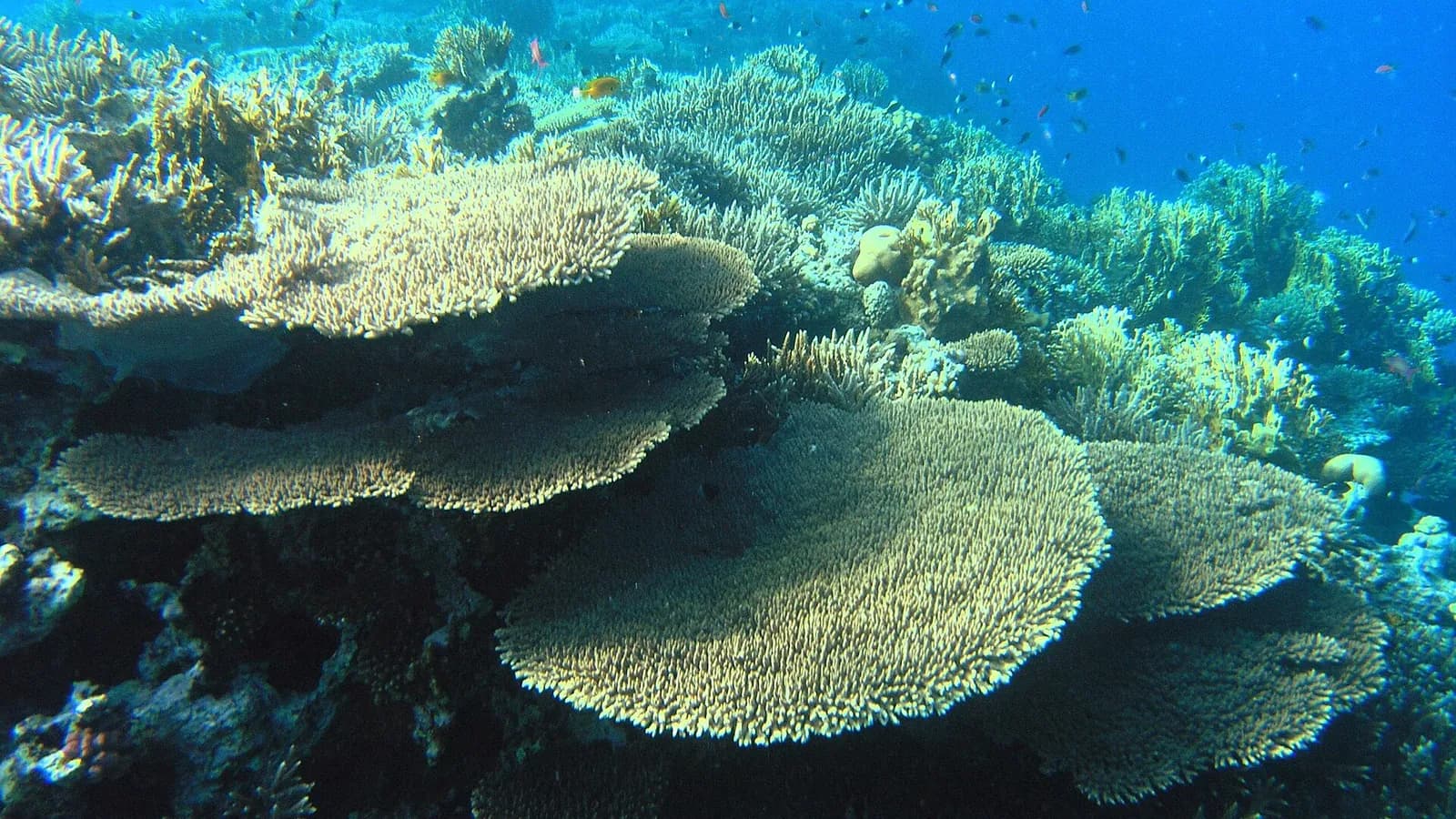
Hurghada Diving (2026): Best Sites, Packages & Prices
Diving in Hurghada — the best reefs (Giftun, Careless Reef, Dolphin House) and Abu Nuhas wrecks, Discover Scuba vs PADI courses, season and water temps, and real 2026 prices.
By TiE Editors7 min read
Hurghada Snorkeling Trips (2026): Best Reefs, Prices & How to Choose
Where to snorkel from Hurghada in 2026 — Orange Bay, Giftun, Mahmya, Utopia and Dolphin House — with boat types, marine life, month-by-month sea temperatures, family tips and real prices from 1,000+ bookable trips.
By TiE Editors7 min read
Egypt Tour Prices by Activity (2026): What Each Type Really Costs
What every type of Egypt experience costs — half day, full day or overnight — as a median and a mid-half range in US dollars, from 12,370 live bookable listings.
By TiE Editors6 min read