Karnak Temple: Visiting Earth's Largest Temple (2026)
The complete guide to Karnak Temple in Luxor: the Great Hypostyle Hall, Hatshepsut's obelisk, the sacred lake, tickets, hours, and how long to spend.
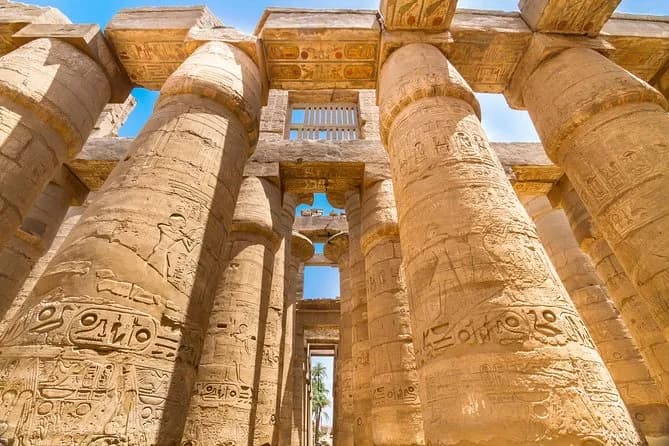
Quick answer: Karnak is the largest religious complex ever built by human hands, and its scale is genuinely hard to take in until you're standing inside it. Spread over roughly 247 acres on Luxor's east bank, it isn't one temple but a walled city of them, added to by more than thirty pharaohs across nearly 2,000 years. Its dedicated heart is the Precinct of Amun-Ra, and its single most overwhelming space is the Great Hypostyle Hall, a forest of 134 sandstone columns so massive that people wandering beneath them look like insects. Give it two to three hours, go at opening or in the late afternoon, and pair it with the Sound and Light Show if you can.
This is the dedicated Karnak deep dive. If you want the wider east-bank picture, including its smaller, more graceful sibling downtown, read our Luxor Temple guide and our roundup of the best things to do in Luxor.
What Karnak is, and why it matters
 The ancient Egyptians called this place Ipet-Isut — "the most select of places." It was the cult centre of Amun-Ra, king of the gods, and for centuries it functioned as the spiritual capital of the whole country. But calling it a temple undersells it. Karnak was also an economic engine: within its mudbrick walls sat treasuries, granaries, bakeries, breweries, workshops, priests' quarters and administrative offices. At its peak it employed tens of thousands of people and controlled vast estates up and down the Nile.
What you see today is really three walled precincts. The huge central one belongs to Amun-Ra and is where nearly all visitors spend their time. To the south lies the smaller Precinct of Mut (Amun's consort), reached by its own avenue of sphinxes, and to the north the rarely-visited Precinct of Montu. Most tickets and tours cover only the Amun-Ra precinct plus the Open-Air Museum, which is more than enough for one visit.
The reason Karnak feels so layered is that no single pharaoh built it. Each ruler wanted to leave his or her mark, so they added pylons, courts, obelisks, chapels and colonnades in front of and around what came before. The result is a stone timeline of Egyptian power that you literally walk through from the Middle Kingdom to the Ptolemies.
The Great Hypostyle Hall
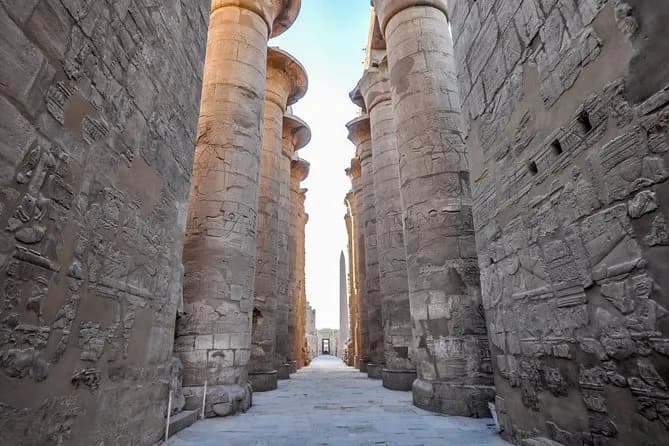
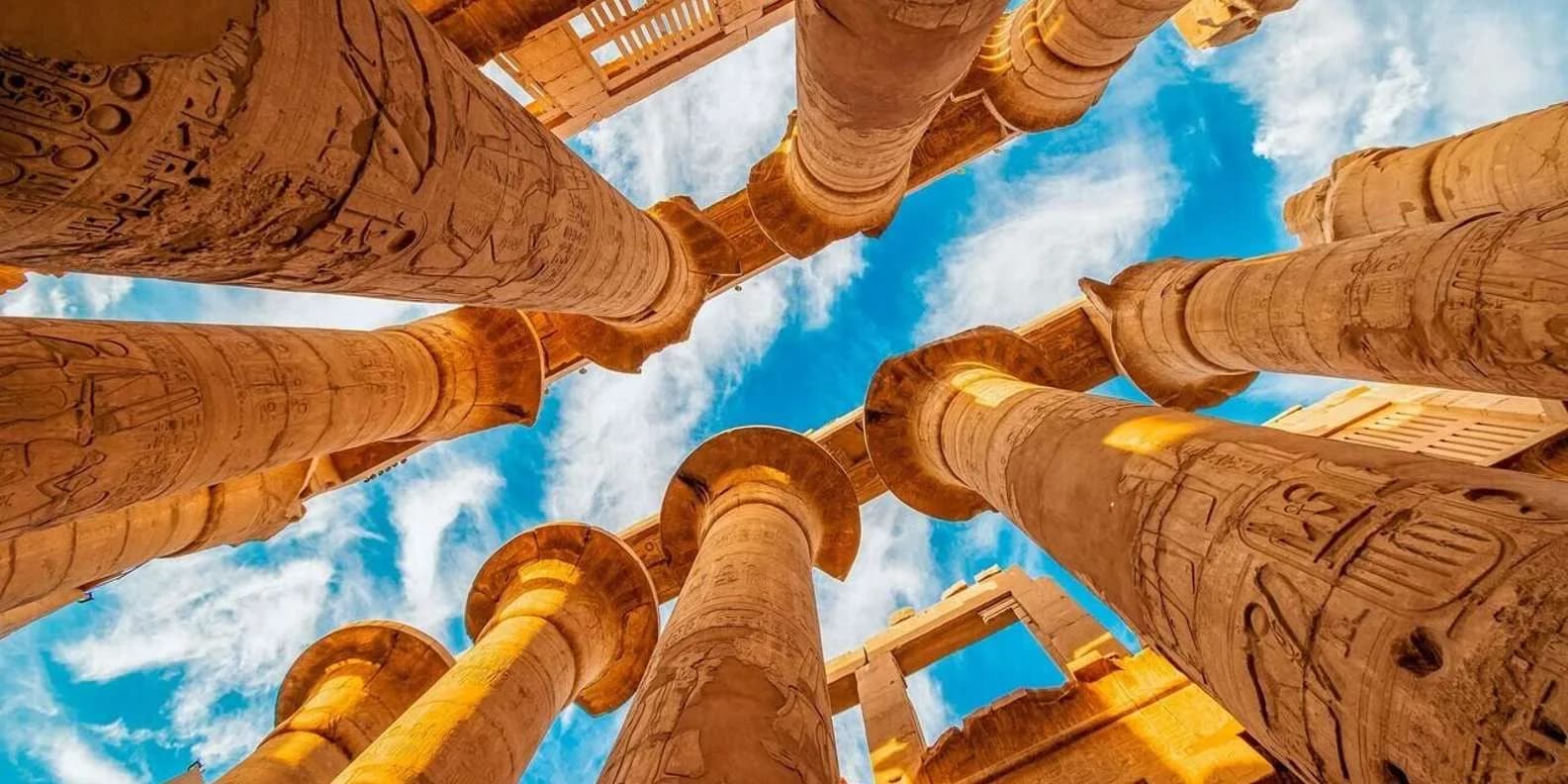
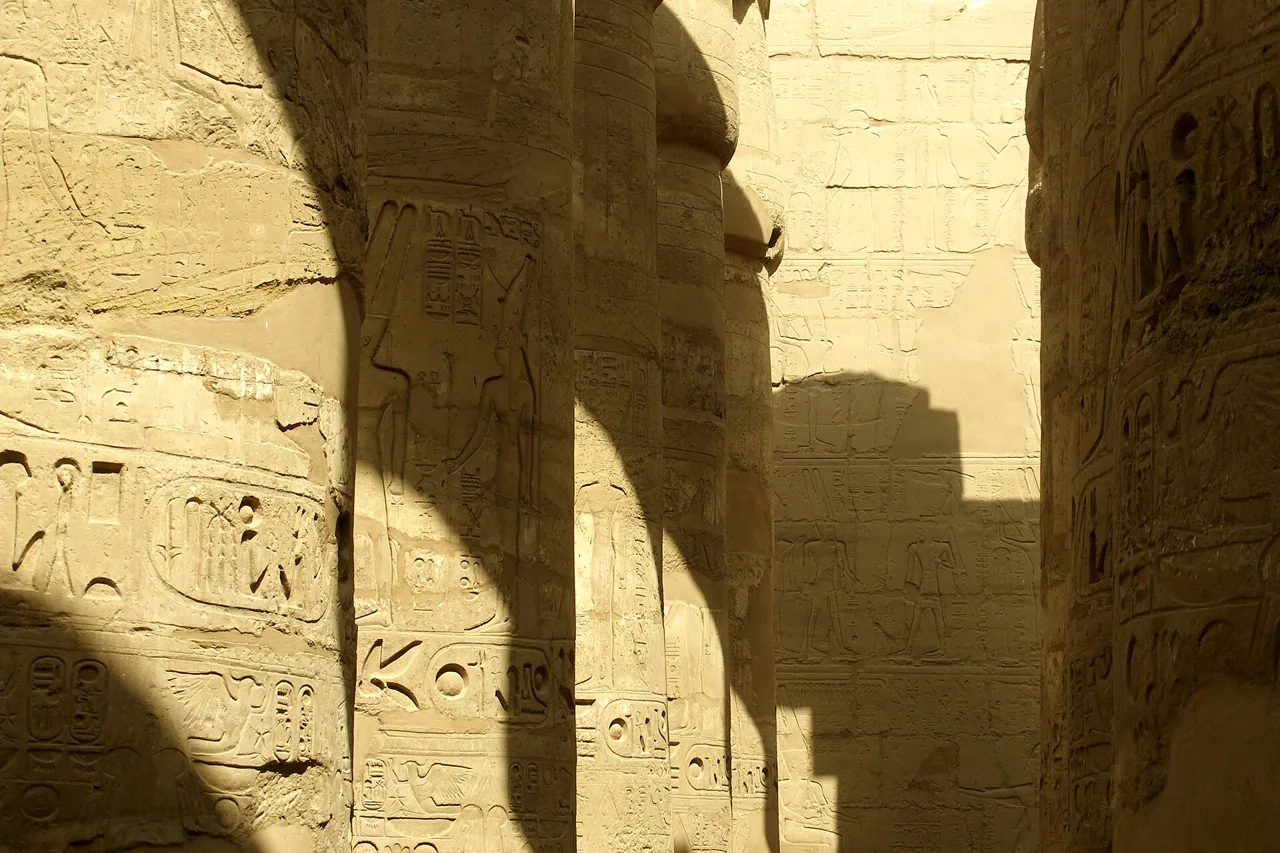 This is the moment people travel to Luxor for. The Great Hypostyle Hall covers about 5,000 square metres — roughly 103 metres wide by 52 metres deep — and packs in 134 columns arranged in 16 rows. The twelve columns lining the central processional aisle are the giants: around 21 metres tall, topped with open-papyrus capitals wide enough for dozens of people to stand on. The 122 columns flanking them are shorter, with closed papyrus-bud capitals, and the difference in height once let clerestory windows flood the nave with light while the aisles stayed in shadow.
The hall was begun by Seti I and finished by his son Ramesses II in the 13th century BC, and the carving competes with the architecture. Seti's reliefs, on the northern side, are exquisite raised carving; Ramesses switched to faster, cheaper sunk relief. Look up and you'll still find patches of original paint clinging to the underside of the architraves — a reminder that all of this was once brilliantly coloured, not the honeyed stone you see now.
Go early and you may get a few quiet minutes here before the tour groups arrive. It's the single best photo in Egypt after the Pyramids, and it rewards standing still as much as walking through.
Pylons, obelisks, the sacred lake and the Open-Air Museum
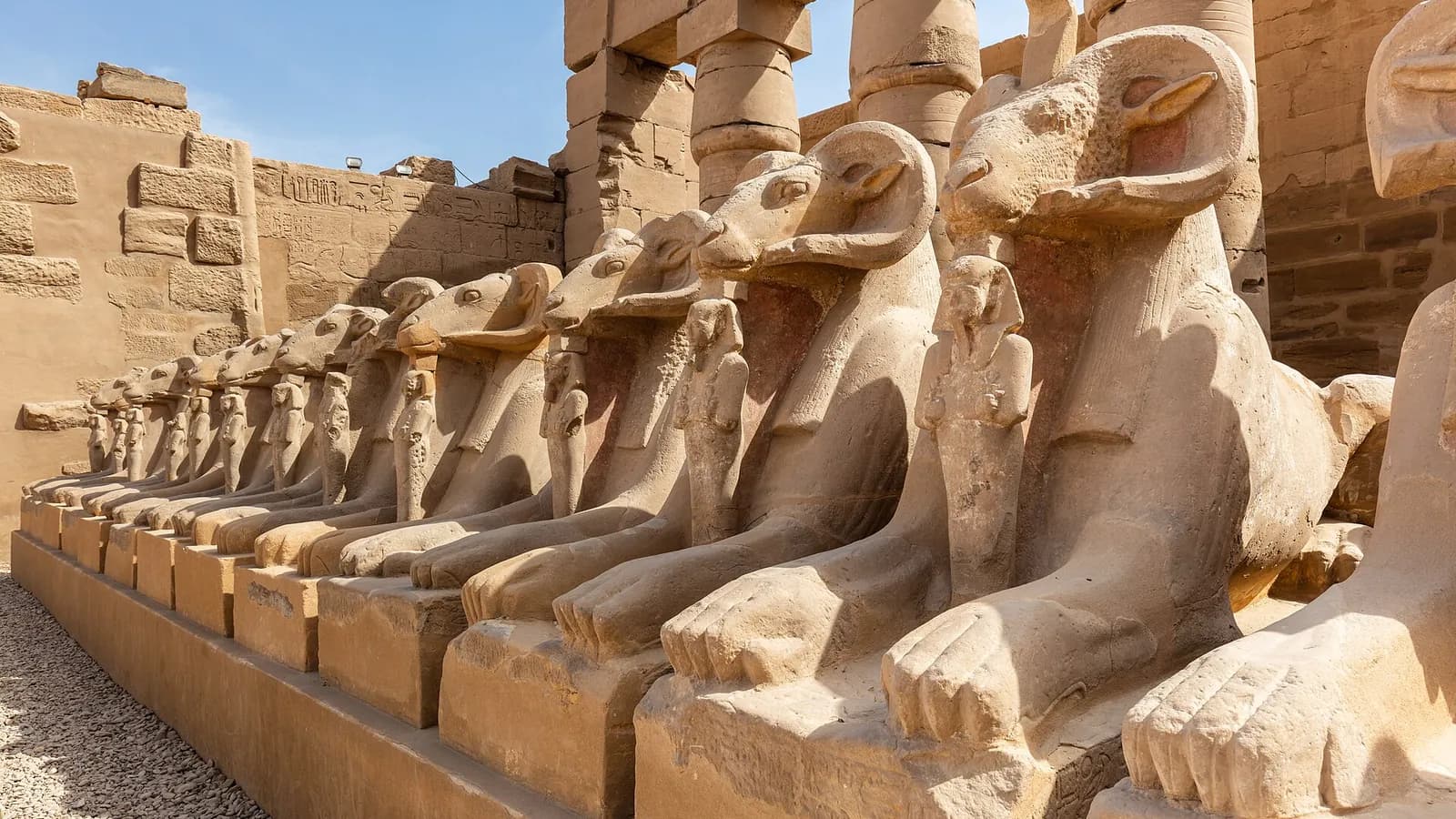
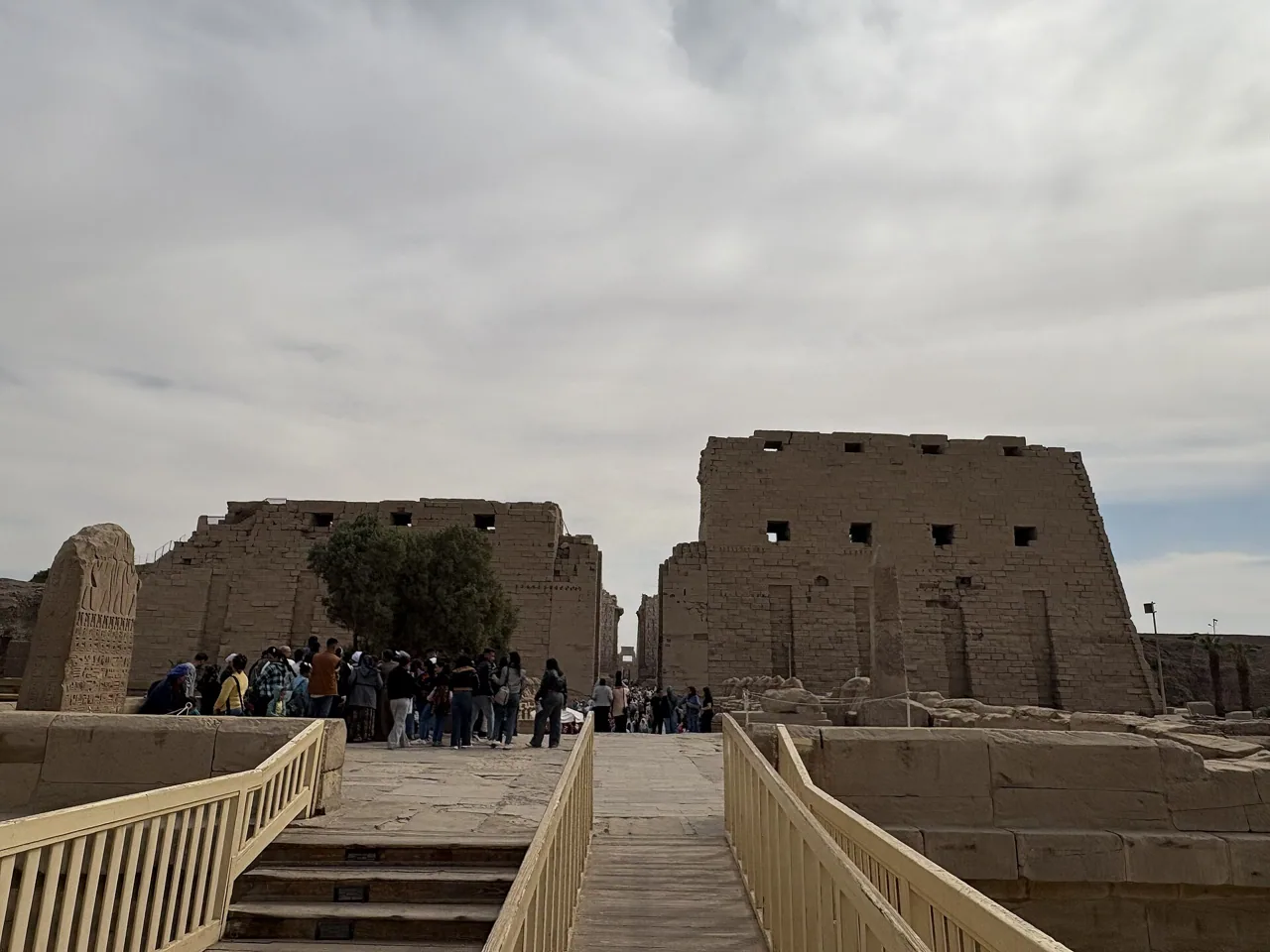
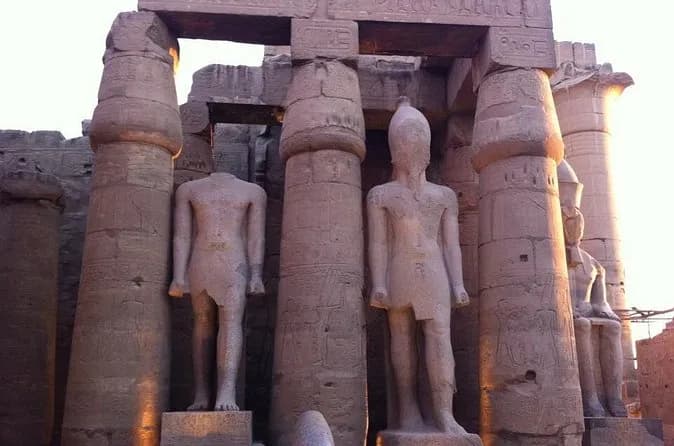
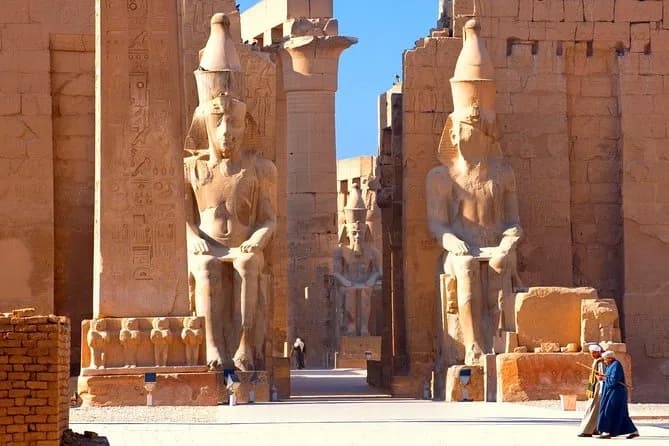
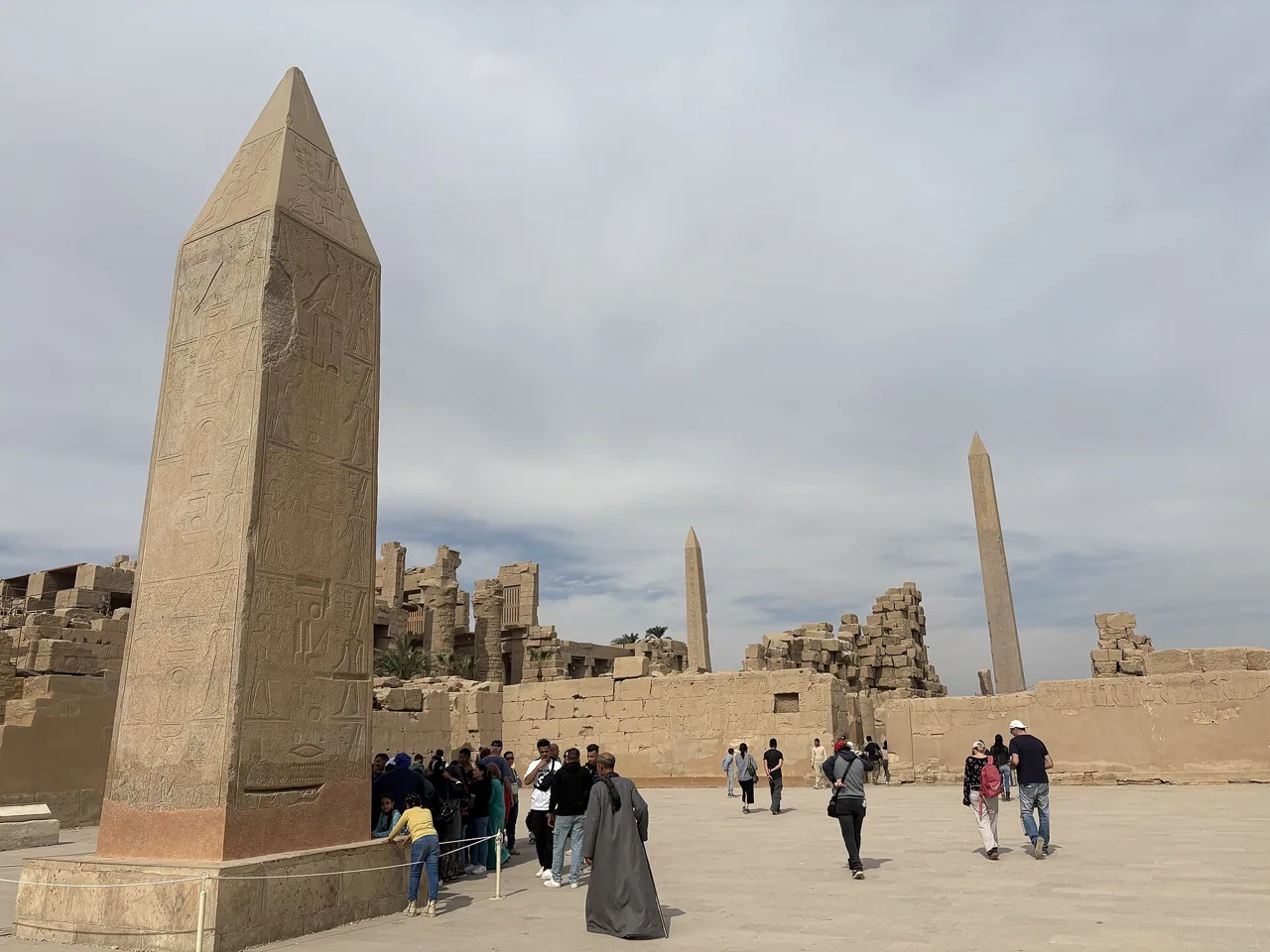 The pylons. You enter through the First Pylon, the largest and, tellingly, the least finished — you can still see the mudbrick construction ramp behind it. Karnak has ten pylons in total, the earlier ones marching deeper into the complex along two axes. Before the First Pylon stands a short avenue of ram-headed sphinxes (criosphinxes, sacred to Amun), each with a small statue of the king protected between its front paws.
The obelisks. Two great obelisks still stand. The one raised by Hatshepsut is the tallest surviving ancient obelisk in Egypt at about 29.5 metres and roughly 340 tonnes of single-piece Aswan granite — a staggering feat of quarrying and transport. Nearby stands the older obelisk of her father, Thutmose I. A fallen obelisk of Hatshepsut lies on its side near the sacred lake, its tip broken off, and is one of the best places to actually read hieroglyphs at eye level.
The sacred lake. Behind the main temple is a large rectangular sacred lake, where priests purified themselves before rituals. It's a calm counterpoint to the crowded halls, and the low wall around it is a good spot to rest in shade.
The Open-Air Museum. Tucked to the north-west of the great court, and included in your entry ticket, this is where reconstructed early shrines have been reassembled from thousands of scattered blocks. The star is the White Chapel of Senusret I, a jewel of Middle Kingdom limestone carving, alongside the elegant "Red Chapel" of Hatshepsut. Many people skip it. Don't — it's quiet and holds some of the finest carving on the site.
Worth seeking out too: the botanical garden of Thutmose III, a room walled with reliefs of the exotic plants and animals he brought back from his military campaigns in Syria.
A very short history of a very long build
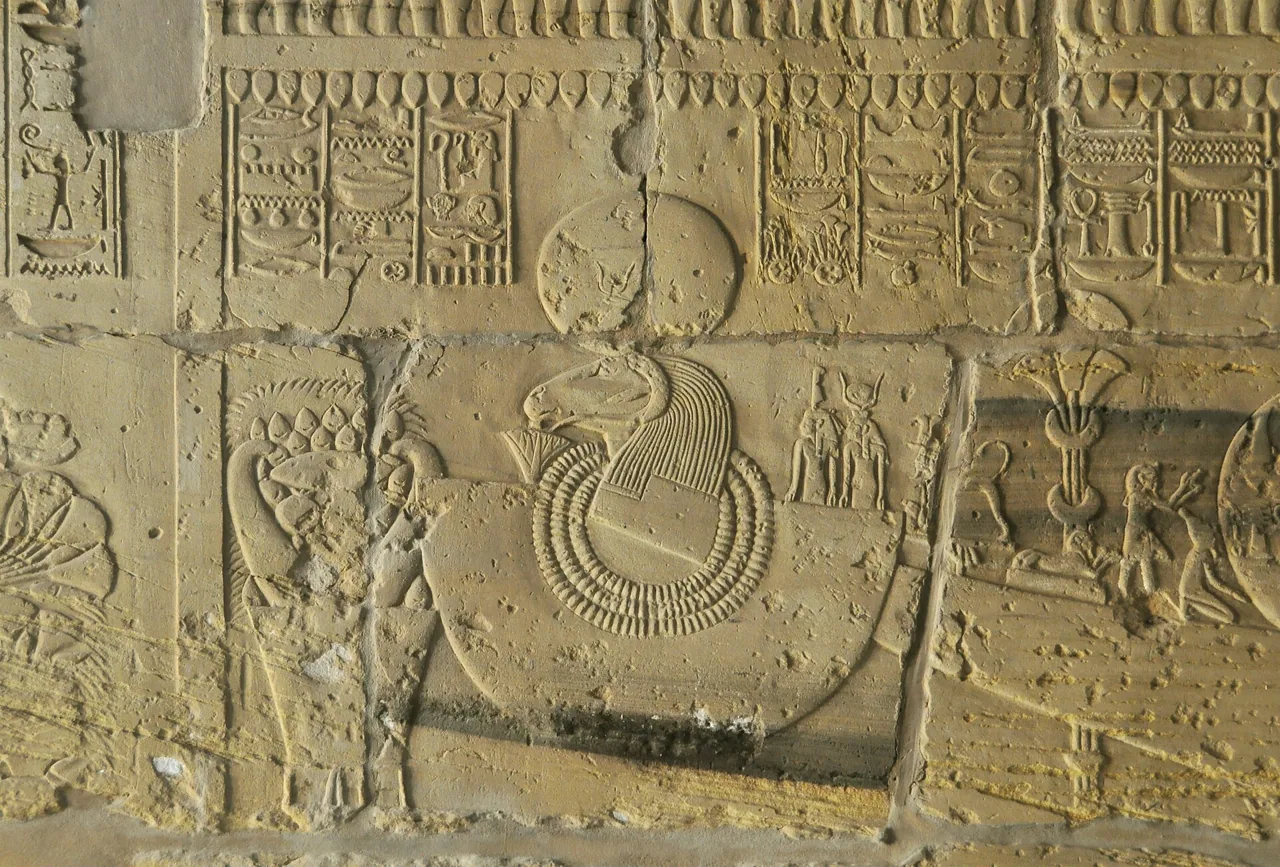
| Era | Roughly | What was added |
|---|---|---|
| Middle Kingdom | c. 2000–1700 BC | The first Amun temple and the White Chapel of Senusret I |
| New Kingdom (18th Dyn.) | c. 1550–1300 BC | Obelisks of Thutmose I and Hatshepsut; Thutmose III's festival hall and botanical garden |
| New Kingdom (19th Dyn.) | c. 1290–1200 BC | The Great Hypostyle Hall (Seti I and Ramesses II) |
| Late Period / Kushite | c. 750–650 BC | The Taharqa kiosk in the great court |
| Ptolemaic | c. 300–30 BC | The First Pylon and final gateways — still unfinished when Rome arrived |
By the time the Ptolemies stopped work, Karnak had been under near-continuous construction for close to two millennia. Napoleon's soldiers, marching up the Nile in 1799, reportedly stopped in their tracks and presented arms when it rose out of the desert ahead of them. Champollion, the Frenchman who cracked hieroglyphs, put it best: he said the builders must have designed Karnak "for men one hundred feet tall."
Tickets, hours and the Sound and Light Show
Karnak opens daily from 6:00 am to 5:00 pm (Ministry of Tourism and Antiquities, checked 17 October 2026; confirm on the day, as hours can change seasonally). Entry for foreign adults is around 600 EGP (about US$12), with students at roughly 300 EGP on a valid international student card; that ticket covers the Amun-Ra precinct and the Open-Air Museum. The separate Temple of Mut costs around 200 EGP extra and is skippable on a first visit.
One important 2026 note: Karnak, like most major Egyptian sites, has gone card-only at the gate — cash is no longer accepted. Bring a working Visa or Mastercard, or buy in advance through the official portal at egymonuments.gov.eg. Prices at government sites are reviewed regularly, so confirm the day's rate before you go.
The Sound and Light Show runs after dark, usually in three sittings (around 7:00, 8:15 and 9:30 pm), each roughly 75 minutes, with narration rotating through English, Arabic, French, Spanish, German, Italian and Japanese. Tickets are separate from daytime entry, typically around 300 EGP. The show walks you through the temple by night while a narrated history plays over the illuminated columns — a little theatrical, but the experience of moving through the Hypostyle Hall under the stars is worth it. Check the current language schedule with your hotel, as it changes nightly.
| Cost (foreign adult) | Notes | |
|---|---|---|
| Karnak day ticket (Amun-Ra + Open-Air Museum) | ~600 EGP | Card only at gate |
| Student day ticket | ~300 EGP | Valid international student ID |
| Temple of Mut (add-on) | ~200 EGP | Optional |
| Sound and Light Show | ~300 EGP | Separate ticket, evening |
| Guided half-day tour (Karnak + Luxor Temple) | ~4,500–5,000 EGP | Guide, transport, sometimes lunch |
How to visit: timing, and combining with Luxor Temple
Best time of day. Go right at 6:00 am opening or from about 3:00 pm onward. Midday in Luxor is brutally hot and the site is largely unshaded, so early or late saves you both heat and the peak of the cruise-boat crowds. Early morning also gives you the softest light on the columns.
How long. Budget two to three hours. An hour barely scratches the Hypostyle Hall and the main axis; three lets you reach the sacred lake, the Open-Air Museum and the quieter southern precinct, and simply sit with the scale of the place.
A guide helps here. Karnak is where a good Egyptologist pays for itself — without one, most of the reliefs and precincts read as beautiful but blank. If you're weighing it up, our take on whether you need a guide in Egypt applies squarely to Karnak.
Combining with Luxor Temple. Karnak and Luxor Temple were once physically linked by a 2.7-kilometre Avenue of Sphinxes, lined with hundreds of statues. That processional way was fully excavated and reopened in November 2021, and you can now trace much of it on foot. A classic east-bank morning is Karnak first, then the shorter Luxor Temple, either walking the avenue or taking a short taxi between them. If you're slotting all of this into a wider trip, our Egypt itinerary shows how Luxor fits between Cairo and Aswan.
What a Karnak visit costs
On a DIY basis, a solo daytime visit runs about 600 EGP for entry plus a taxi from central Luxor. Add the evening show and you're near 900 EGP. Most travellers, though, see Karnak as part of a guided east-bank half-day that also covers Luxor Temple; those run roughly 4,500–5,000 EGP through local operators and include a licensed guide, air-conditioned transport and sometimes lunch — good value given how much context you gain and how much the guide unlocks. Full-day tours that add the west-bank tombs cost more.
Make this a highlight of your trip. This is Egypt builds custom itineraries around the places you most want to see — start planning your Luxor days.
Sources
Opening hours, ticket prices and Sound and Light Show details verified via egymonuments.gov.eg and 2026 Luxor visitor listings (July 2026). Historical and architectural detail drawn from the official Luxor tourism guide and standard Egyptological references.
See it from the river. The great temples of Luxor bookend the classic Nile cruise between Luxor and Aswan — every cruise ship and sailing dahabiya moors here. Compare Nile cruise ships and dahabiyas, or read the Nile cruise guide.
A real team available 24/7 to assist you — free
Seif and the team reply on WhatsApp 24/7 — trip questions, custom plans and booking help.
Ask Seif on WhatsAppCommon questions
How long do you need at Karnak Temple?
Allow two to three hours. One hour only covers the Great Hypostyle Hall and main axis; two to three lets you reach the sacred lake, obelisks, Open-Air Museum and the quieter southern precinct without rushing.
How much does it cost to enter Karnak in 2026?
Around 600 EGP (about US$12) for foreign adults and roughly 300 EGP for students with a valid international ID. That ticket includes the Amun-Ra precinct and the Open-Air Museum. The Temple of Mut is an extra ~200 EGP. Confirm the current rate on the day.
Can you pay cash at Karnak?
No. As of 2026 Karnak and most major Egyptian sites are card-only at the gate. Bring a working Visa or Mastercard, or buy tickets in advance through egymonuments.gov.eg.
What are Karnak's opening hours?
Daily from 6:00 am to 5:00 pm, per the Ministry of Tourism and Antiquities (checked 17 October 2026). Arrive at opening or from mid-afternoon to avoid the heat and the largest crowds.
What is the Great Hypostyle Hall?
It's Karnak's most famous space: a roofed hall of 134 giant sandstone columns covering about 5,000 square metres. The twelve central columns stand around 21 metres tall. It was begun by Seti I and completed by Ramesses II in the 13th century BC.
Is the Sound and Light Show at Karnak worth it?
Yes, if you want to see the temple after dark. It runs in the evening in three roughly 75-minute sittings across several languages, costs around 300 EGP separately from daytime entry, and lets you walk through the illuminated Hypostyle Hall under the stars.
Can you walk from Karnak to Luxor Temple?
Yes. The 2.7 km Avenue of Sphinxes linking the two reopened in November 2021, and much of it can now be walked. Many visitors do Karnak first, then Luxor Temple, either on foot along the avenue or by a short taxi.
Do you need a guide for Karnak?
It isn't required, but it transforms the visit. Without an Egyptologist, most of Karnak's reliefs, precincts and obelisks read as impressive but unexplained. A guided east-bank half-day covering Karnak and Luxor Temple typically runs 4,500–5,000 EGP.
Is Karnak the same as Luxor Temple?
No. They're two separate temples on Luxor's east bank, about 2.7 km apart and once joined by the Avenue of Sphinxes. Karnak is the vast complex dedicated to Amun-Ra; Luxor Temple is smaller and sat in the ancient town centre.
Book it on This is Egypt
Turn this guide into a trip


Egypt's bestsellers
The experiences travelers book most, across the country





Keep reading
Hurghada Diving (2026): Best Sites, Packages & Prices
Diving in Hurghada — the best reefs (Giftun, Careless Reef, Dolphin House) and Abu Nuhas wrecks, Discover Scuba vs PADI courses, season and water temps, and real 2026 prices.
By TiE Editors7 min read
Hurghada Snorkeling Trips (2026): Best Reefs, Prices & How to Choose
Where to snorkel from Hurghada in 2026 — Orange Bay, Giftun, Mahmya, Utopia and Dolphin House — with boat types, marine life, month-by-month sea temperatures, family tips and real prices from 1,000+ bookable trips.
By TiE Editors7 min read
Egypt Tour Prices by Activity (2026): What Each Type Really Costs
What every type of Egypt experience costs — half day, full day or overnight — as a median and a mid-half range in US dollars, from 12,370 live bookable listings.
By TiE Editors6 min read