Luxor Temple: Visiting the Heart of Ancient Thebes
How to visit Luxor Temple - its great pylon and lone obelisk, the Avenue of Sphinxes, and why the East Bank's centrepiece is best seen floodlit at night.
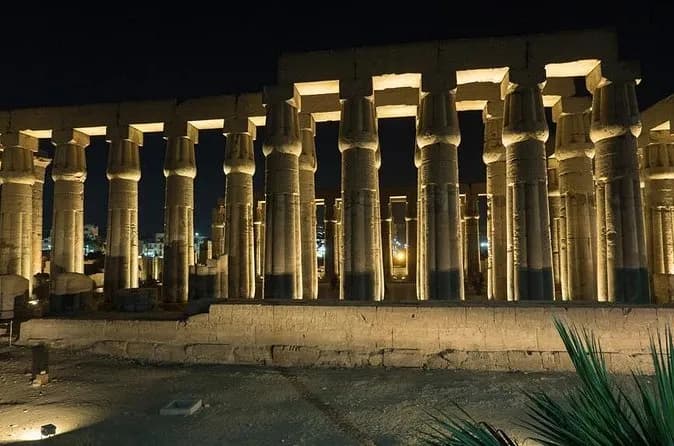
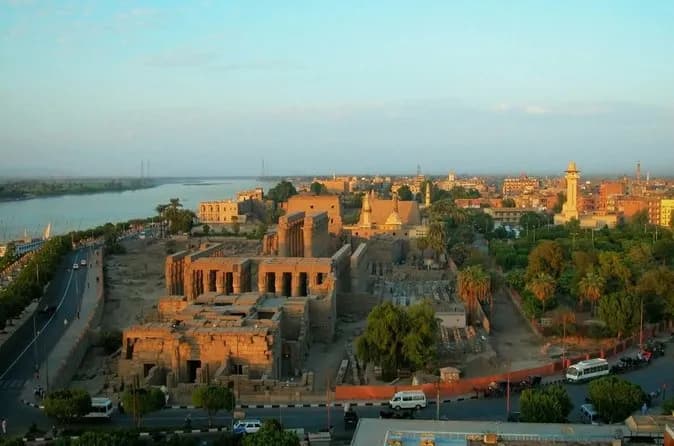
Quick answer: Luxor Temple stands in the middle of the modern city, on the East Bank of the Nile, its main axis running parallel to the river. Unlike almost every other pharaonic site in Egypt, it stays open into the evening, and that is when you should come: after dark, floodlit, the sandstone glows and the crowds thin. Built mainly by Amenhotep III and Ramesses II and dedicated to the Theban triad, it's compact enough to see properly in an hour or two, and you can walk to it from most corniche hotels. Go late afternoon, watch the light change at sunset, and stay on as the floodlights take over.
This guide covers what you're looking at, how the temple connects to Karnak up the road, tickets and hours current to 2026, and how to time a visit for the best of it.
A temple to Amun, and a coronation stage
 To its ancient inhabitants this whole place was Waset, "The City" - the capital the Greeks later called Thebes. Luxor Temple wasn't a tomb or a treasury but a sacred stage. It was where the divine essence of kingship was renewed each year, and where several pharaohs were symbolically crowned.
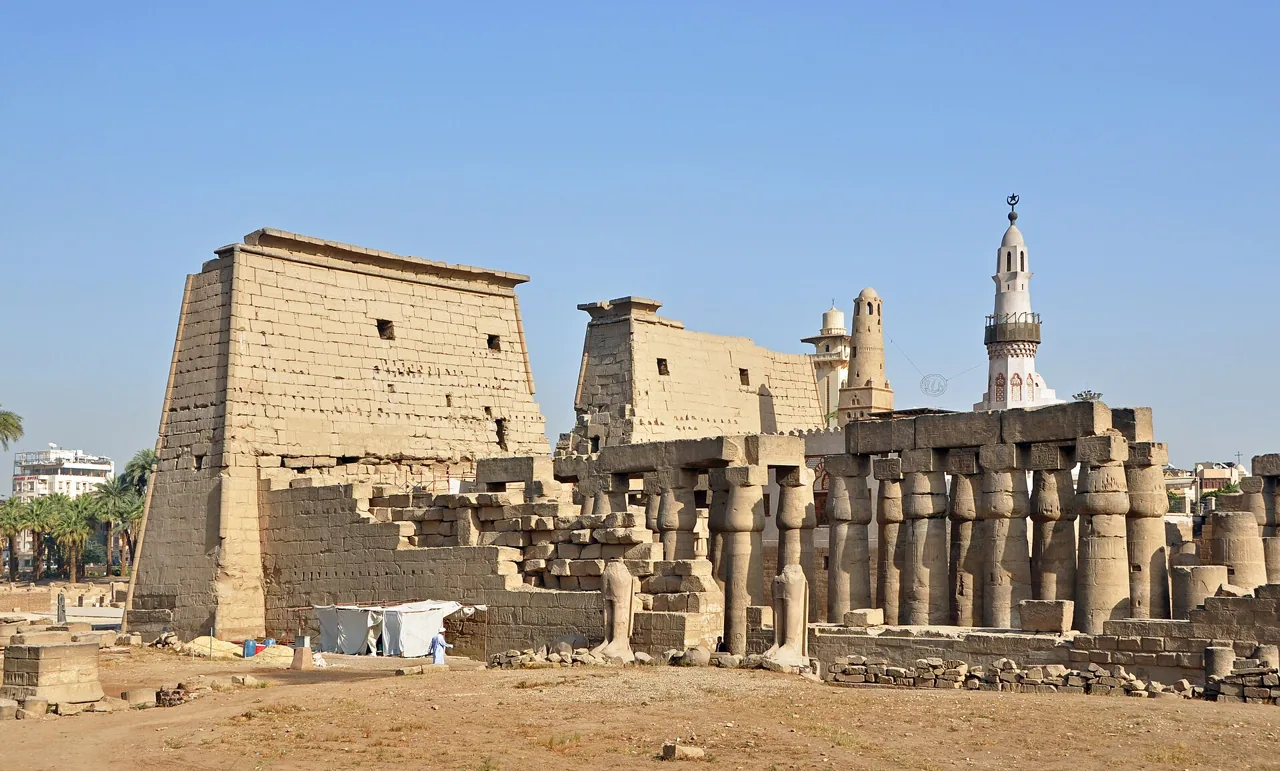
Most of what stands today is the work of two builders. Amenhotep III, in the 14th century BC, raised the elegant colonnade and the inner courts. A century later Ramesses II added the great forecourt and the towering front pylon, stamping the whole facade with his own image and titles - as he did across most of Egypt. Later rulers left their marks too: Tutankhamun completed and decorated Amenhotep's processional colonnade, and Alexander the Great rebuilt the inner sanctuary as a chapel for the sacred barque of Amun.
The temple was dedicated to a form of Amun tied to fertility and rebirth. That idea of renewal is the key to everything here, and it links Luxor directly to Karnak.
The Opet festival: why Luxor and Karnak are one story
Once a year, during the flood season, ancient Thebes held the Opet festival. The cult statues of Amun, his consort Mut and their son Khonsu were carried out of Karnak in gilded barque-shrines and paraded south to Luxor Temple, where rites renewed the king's divine power and the god's own vitality. After days of celebration the procession returned north.
The road they travelled was the Avenue of Sphinxes. So Luxor and Karnak were never two separate attractions - they were the two poles of a single sacred axis. Seeing both, in that order, is the way the ancient Egyptians intended it. For the northern half of the story, read our Karnak Temple guide.
What to see at Luxor Temple
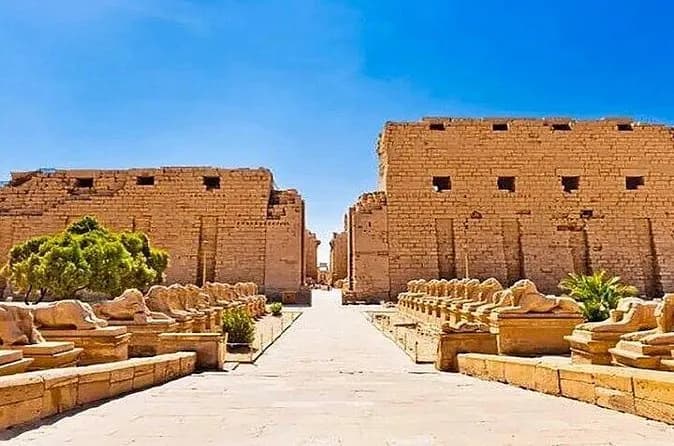
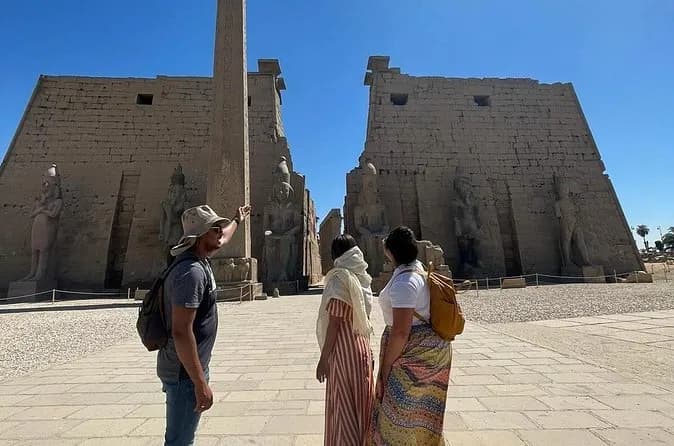
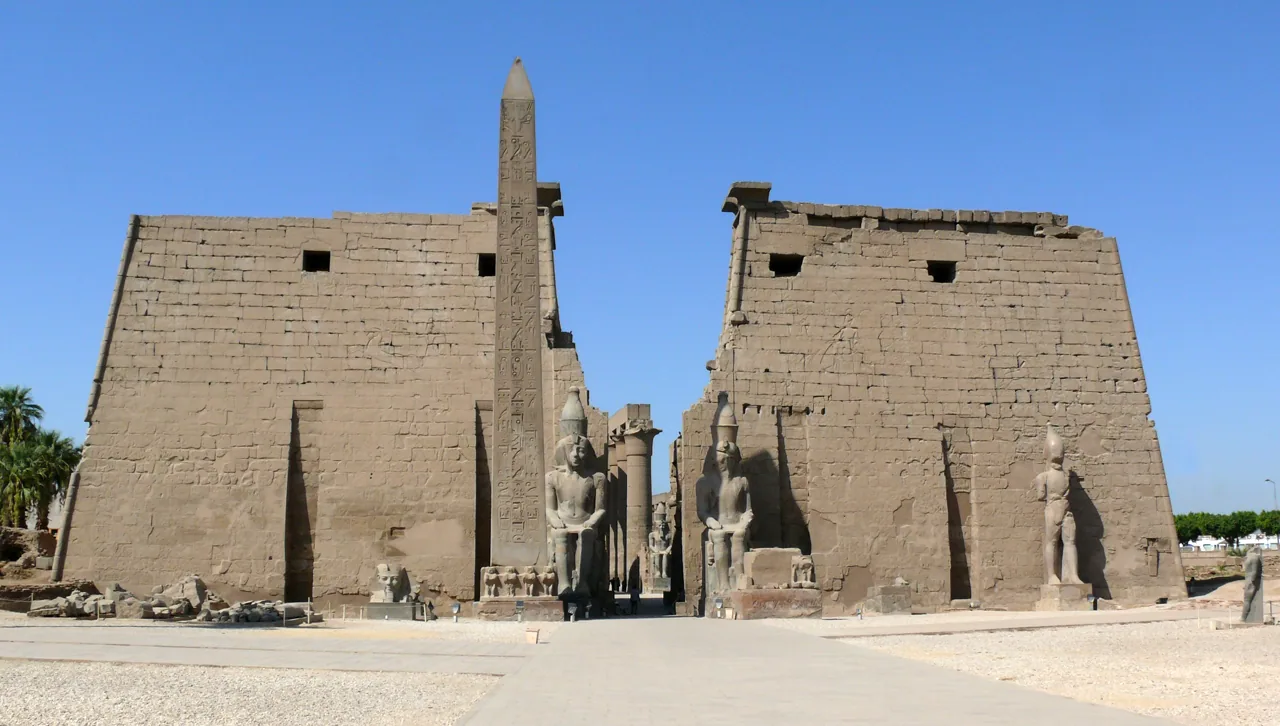 The great pylon and the obelisk. The temple front is a massive twin-towered gateway raised by Ramesses II, its walls carved with his victory at the Battle of Kadesh. In front once stood two pink-granite obelisks and a row of colossal statues of the king. Only one obelisk remains. The other was gifted to France in the 1830s and now stands at the centre of the Place de la Concorde in Paris - so the pair that framed this doorway are split between two continents.
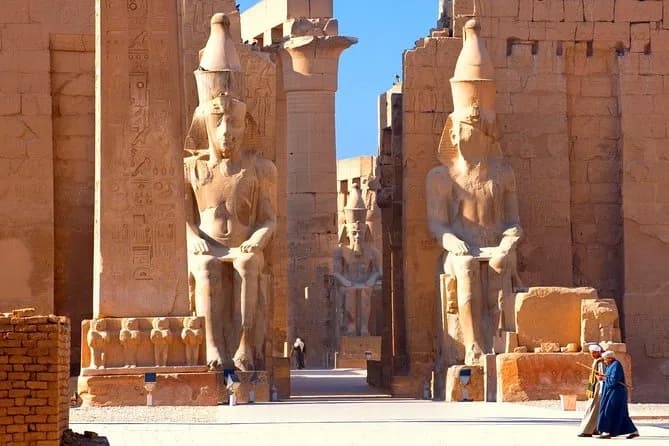
The colossi of Ramesses II. Seated and standing statues of the pharaoh flank the entrance, some carved from single blocks of granite, towering over you as you pass beneath the pylon. They set the scale for everything inside.
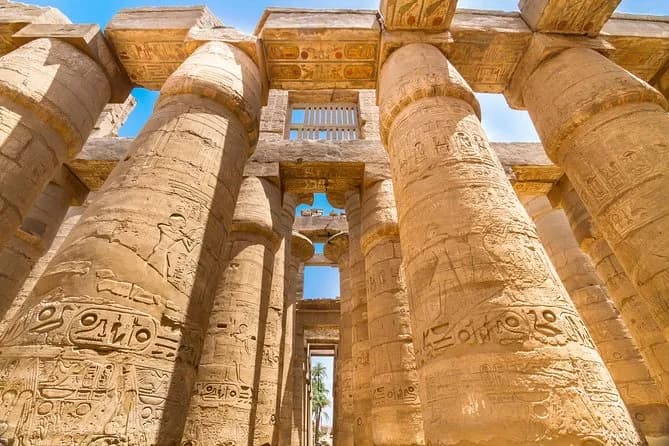
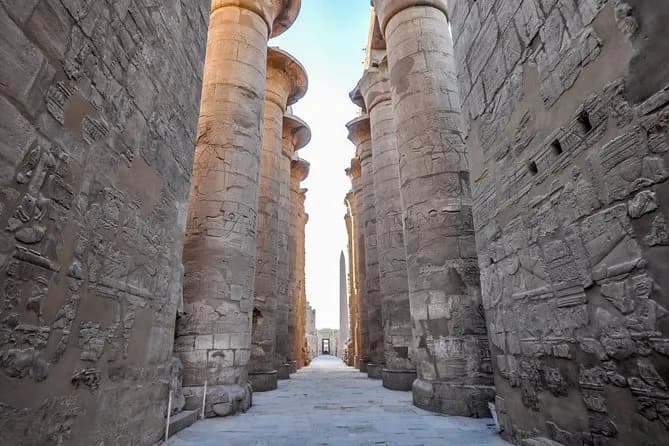
Amenhotep III's colonnade. Beyond Ramesses' forecourt runs a magnificent avenue of fourteen giant columns with papyrus-bud capitals, their side walls decorated - largely under Tutankhamun - with scenes of the Opet festival itself. It leads into the graceful sun court of Amenhotep III and the inner sanctuaries.
The Roman and Christian layers. Luxor Temple had a long afterlife. Under the emperor Diocletian around 300 AD it became a Roman military camp, and a chamber near the sanctuary still carries rare Roman-era wall paintings, restored in recent years. A couple of centuries later, parts of the temple were reworked into churches. Few sites let you read so many chapters of Egypt's history in one set of walls.
The Abu Haggag Mosque, built on the temple
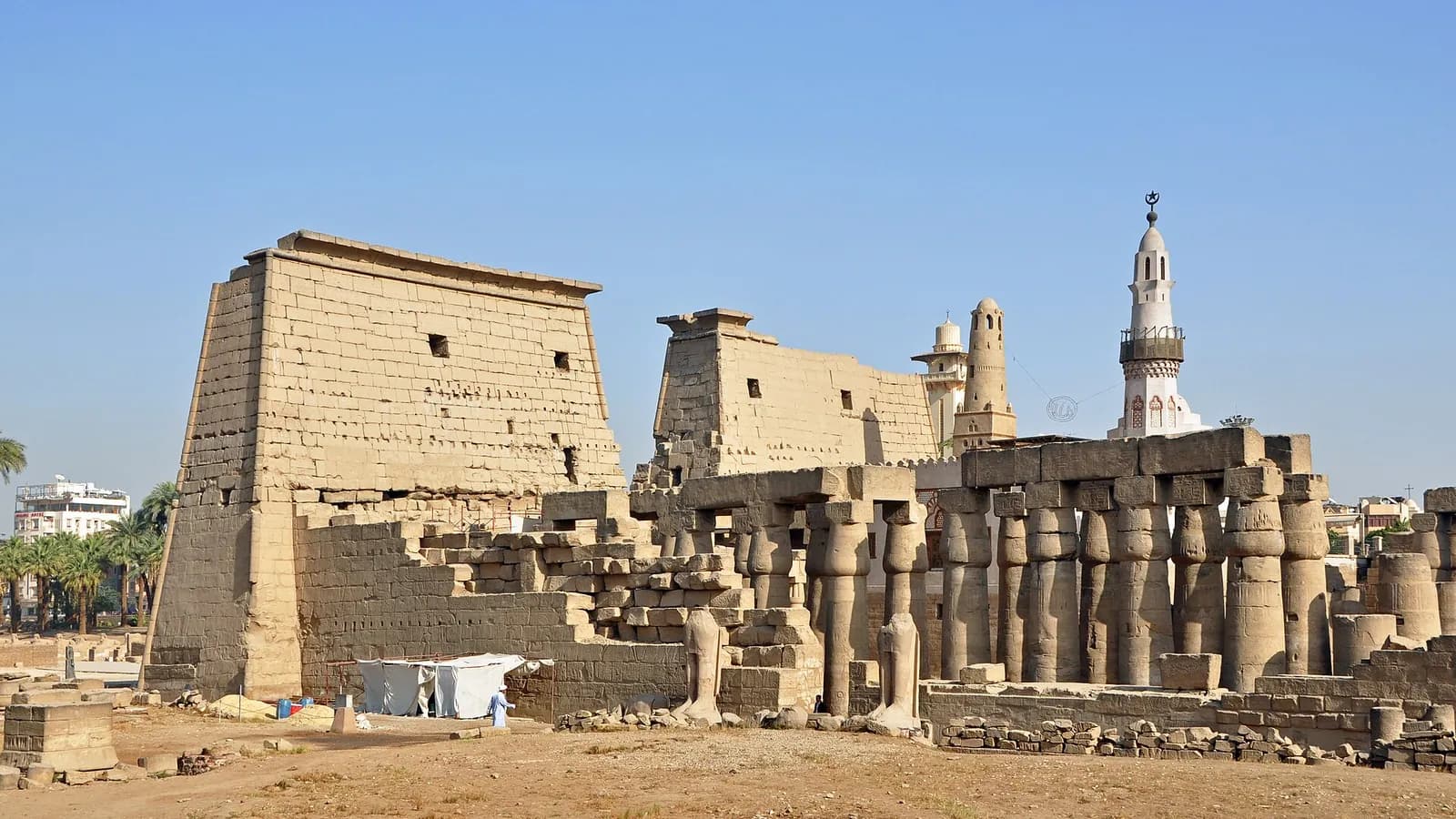
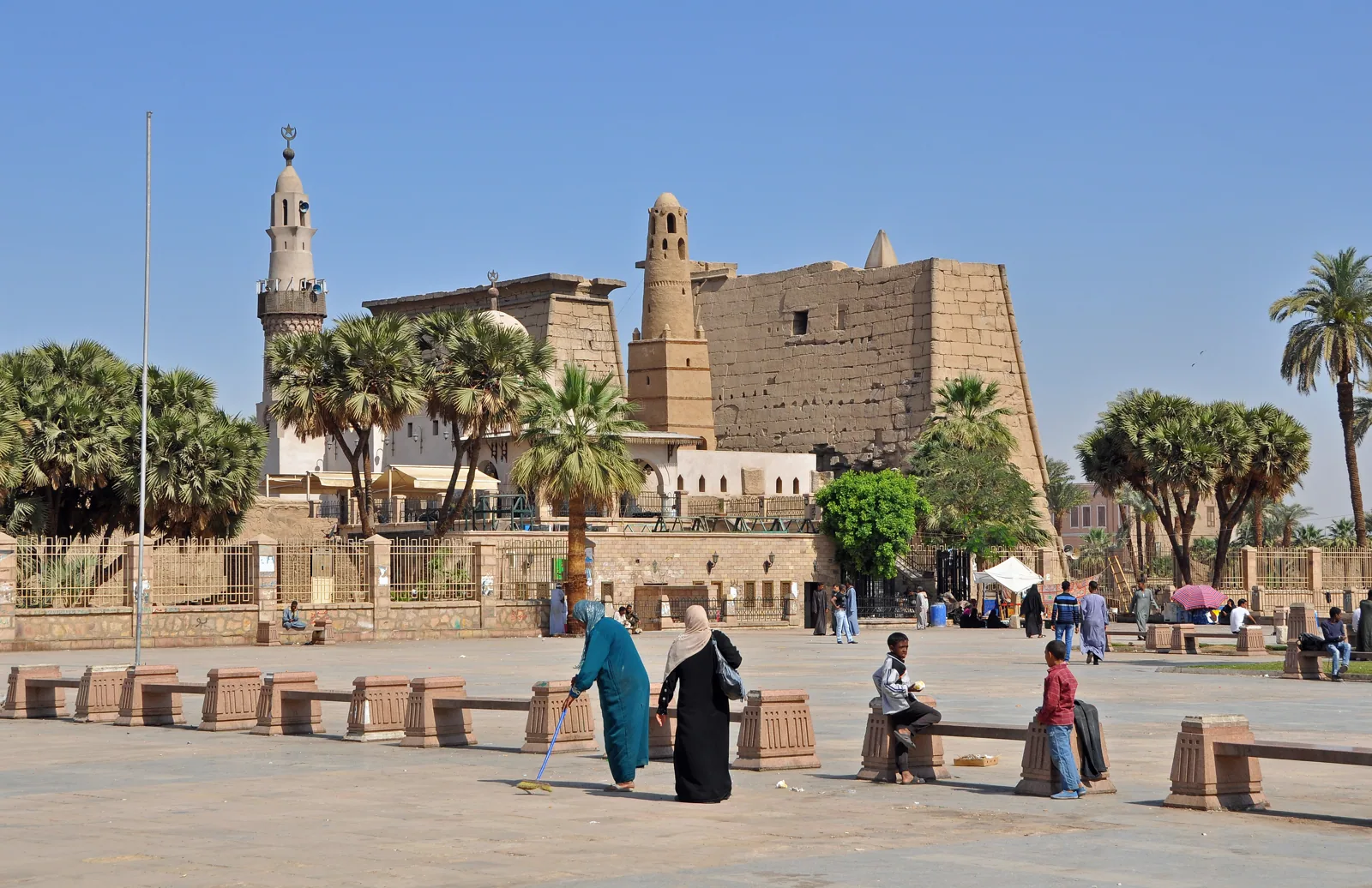 Look up in the northern court and you'll see something that surprises first-time visitors: a working mosque perched high on the temple wall. This is the Mosque of Abu al-Haggag, named for a 12th-century Sufi saint from Baghdad who settled and died in Luxor. It was built when the temple lay buried in sand, so its floor sits at the level the ground once reached - and when archaeologists dug the temple out, they left the mosque in place.
Today it's still in use, and the saint's annual moulid festival includes a procession of boats through the streets - an echo, some believe, of the ancient barque parades that once passed the very same spot. Roman camp, Christian church, living mosque, pharaonic temple: all stacked in one place.
The Avenue of Sphinxes, reopened in 2021
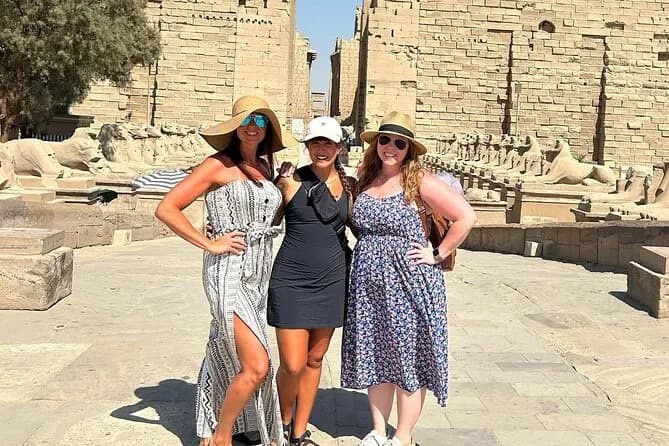
The processional road between Luxor and Karnak - about 2.7 km lined with more than a thousand ram- and human-headed sphinxes - was buried under the modern city for centuries. After decades of excavation it was ceremonially reopened in November 2021 with a re-enactment of the Opet procession, and you can now see long restored stretches of it running north from the temple's front.
Stand at the pylon at night, with the avenue lit and stretching away toward Karnak, and the whole sacred geography of Thebes suddenly makes sense.
Why night is the right time
Most of Luxor's monuments close by late afternoon. Luxor Temple stays open into the evening, and it's one of the few places in Egypt you can wander after dark. The floodlighting throws deep shadows across the reliefs and picks out the colossi and columns against a black sky. It's also far cooler than the midday sun, which in an Upper Egyptian summer is no small thing.
The best plan: arrive an hour or so before sunset, watch the sandstone turn gold, then let the floodlights take over. Bring a little cash for the ticket booth and go slowly.
Quick facts
| Where | East Bank, central Luxor, on the Corniche |
| Built by | Mainly Amenhotep III & Ramesses II (14th-13th c. BC) |
| Dedicated to | Amun and the Theban triad (Amun, Mut, Khonsu) |
| Hours | 6am to 8pm daily, so open after dark (Ministry, checked 17 Oct 2026; confirm on the day) |
| Ticket | 500 EGP adults, 250 EGP students (approx. US$9.60; Ministry, checked 17 Oct 2026) |
| How long | 1-2 hours |
| Best time | Late afternoon into evening, floodlit |
| Getting there | Walkable from most corniche hotels; taxi or caleche otherwise |
Tickets are sold at the gate; some Luxor hotels also handle them electronically. Egypt's monuments are steadily moving to card-only payment, but a cash back-up never hurts. Prices change - confirm current rates when you arrive or on egymonuments.com.
Combining it with Karnak
Do Karnak in the morning while it's cooler and quieter, take the middle of the day for Luxor Museum or lunch, then finish at Luxor Temple in the golden hour and after dark. That mirrors the Opet route (Karnak north, Luxor south) and saves the most atmospheric site for last. If you'd rather, flip it and start with Luxor Temple.
For the wider city - the West Bank tombs, the museum, felucca rides and how many days to give Luxor - see our things to do in Luxor and full Luxor travel guide.
Make this a highlight of your trip - This is Egypt builds custom itineraries around the sites you most want to see, day guides included. Start planning your Luxor days.
See it from the river. The great temples of Luxor bookend the classic Nile cruise between Luxor and Aswan — every cruise ship and sailing dahabiya moors here. Compare Nile cruise ships and dahabiyas, or read the Nile cruise guide.
A real team available 24/7 to assist you — free
Seif and the team reply on WhatsApp 24/7 — trip questions, custom plans and booking help.
Ask Seif on WhatsAppCommon questions
What are Luxor Temple's opening hours?
The Ministry of Tourism and Antiquities lists Luxor Temple as open from 6am to 8pm daily (checked 17 October 2026), later than most Egyptian sites. Its evening opening is the whole point - it's one of the few monuments you can visit after dark. Confirm exact closing time on the day, as it shifts slightly between summer and winter.
How much is a ticket to Luxor Temple?
Foreign adults pay 500 EGP and students 250 EGP (Ministry of Tourism and Antiquities, checked 17 October 2026) with a valid international student card - around US$8-10. Prices rise periodically, so treat this as a guide and confirm current rates at the gate or on egymonuments.com. Payment is increasingly card-only.
Is Luxor Temple worth seeing at night?
Yes - it's the best way to see it. After dark the temple is floodlit, the reliefs and colossi stand out in dramatic shadow, the air is cooler, and the crowds are thinner. Arrive before sunset, watch the light change, and stay on into the evening.
How long do you need at Luxor Temple?
One to two hours is plenty. It's compact and laid out along a single axis, so you can see the pylon, the colossi, the colonnade and the inner courts without rushing. Add time if you want to linger for the sunset-to-floodlight transition.
What's the difference between Luxor Temple and Karnak?
Karnak is a vast temple complex about 2.7 km to the north; Luxor Temple is smaller and sits in the city centre. In antiquity they were linked by the Avenue of Sphinxes and joined each year by the Opet procession. Most visitors see both - Karnak in the morning, Luxor Temple in the evening.
Where is the second Luxor obelisk?
In Paris. Two pink-granite obelisks once framed the temple's entrance. One still stands here; the other was given to France in the 1830s and now rises at the centre of the Place de la Concorde.
Can you visit the Avenue of Sphinxes?
Yes. The ancient processional road between Luxor and Karnak, buried for centuries, was ceremonially reopened in 2021 after long excavation. Restored stretches run north from Luxor Temple's front, and it's especially striking floodlit at night.
Is there really a mosque inside Luxor Temple?
Yes - the Mosque of Abu al-Haggag, named for a 12th-century Sufi saint, sits high on the temple's northern court. It was built while the temple lay buried in sand and left in place when the site was excavated. It's still an active mosque today.
Book it on This is Egypt
Turn this guide into a trip

Egypt's bestsellers
The experiences travelers book most, across the country





Keep reading
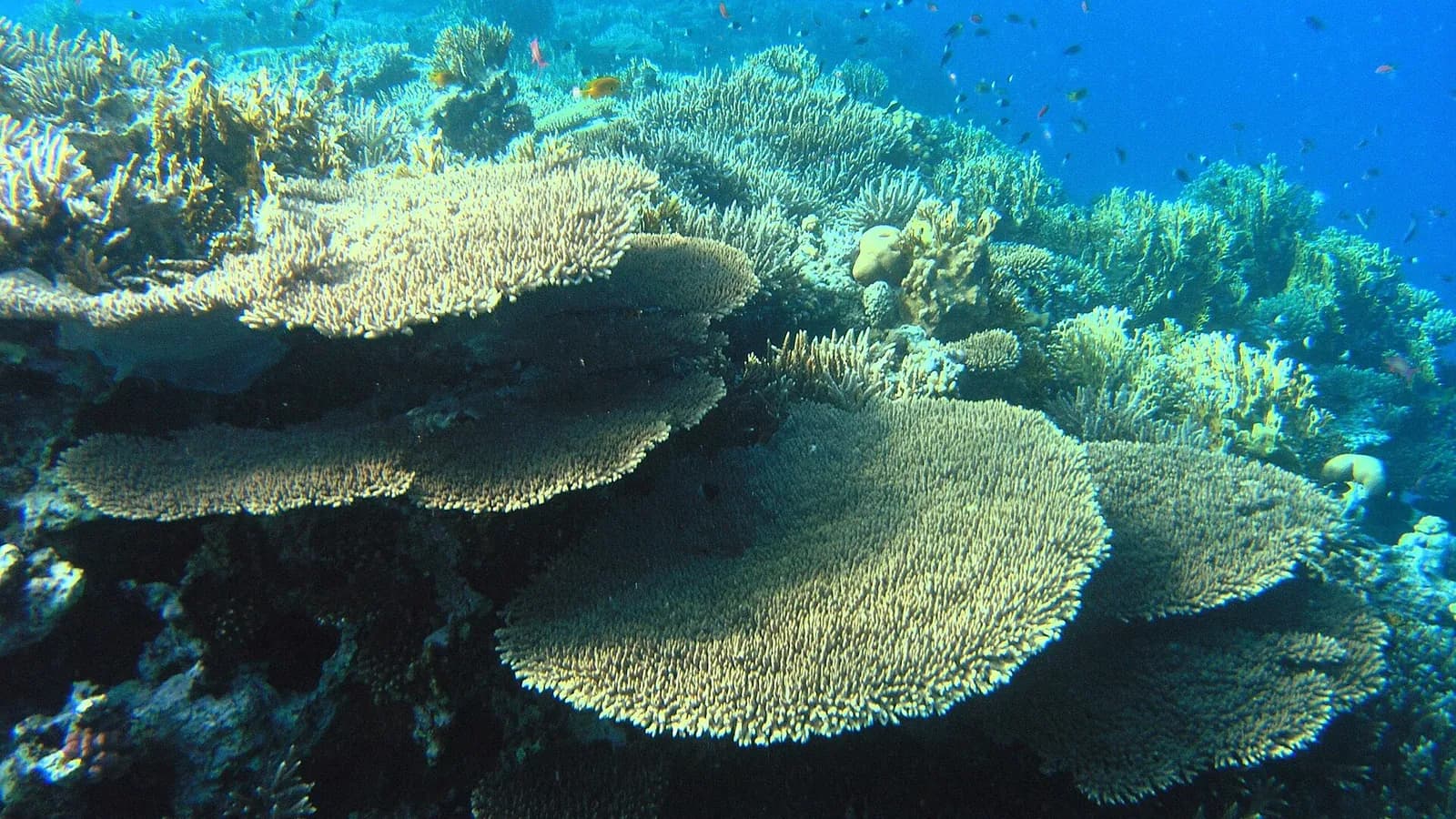
Hurghada Diving (2026): Best Sites, Packages & Prices
Diving in Hurghada — the best reefs (Giftun, Careless Reef, Dolphin House) and Abu Nuhas wrecks, Discover Scuba vs PADI courses, season and water temps, and real 2026 prices.
By TiE Editors7 min read
Hurghada Snorkeling Trips (2026): Best Reefs, Prices & How to Choose
Where to snorkel from Hurghada in 2026 — Orange Bay, Giftun, Mahmya, Utopia and Dolphin House — with boat types, marine life, month-by-month sea temperatures, family tips and real prices from 1,000+ bookable trips.
By TiE Editors7 min read
Egypt Tour Prices by Activity (2026): What Each Type Really Costs
What every type of Egypt experience costs — half day, full day or overnight — as a median and a mid-half range in US dollars, from 12,370 live bookable listings.
By TiE Editors6 min read