16 Best Things to Do in Luxor, Egypt (2026)
The world's greatest open-air museum: the best things to do in Luxor, from the Valley of the Kings and Karnak to a sunrise balloon over the Nile.
Quick answer: Luxor is the greatest open-air museum on earth, built on top of ancient Thebes. Everything divides along the river. The east bank holds the temples of the living: mighty Karnak, the largest religious complex ever built, and graceful Luxor Temple, best seen floodlit after dark. The west bank holds the tombs of the dead: the Valley of the Kings, the Valley of the Queens, Hatshepsut's cliff-hugging temple at Deir el-Bahari, and the Colossi of Memnon. Give it two full days at a minimum, three if you can, and start at least one of them before dawn in a hot-air balloon.
The ancients called this city Waset, "The City" — no other name needed. The Greeks knew it as Thebes, the "city of a hundred gates," and at its height around 1400 BC it may have held a million people. When Herodotus turned up in 450 BC, its golden age was already ancient history. Some Egyptologists still reckon 70% of Luxor lies buried under the fields and sand. What's already out of the ground is enough to fill a week.
Here are the 16 things worth your time, grouped so you can plan bank by bank.
East Bank: the temples of the living
The east bank is where you'll sleep, eat, and catch the ferry. It's compact enough to walk, and its two great temples sit at either end of the reborn Avenue of Sphinxes.
1. Karnak Temple
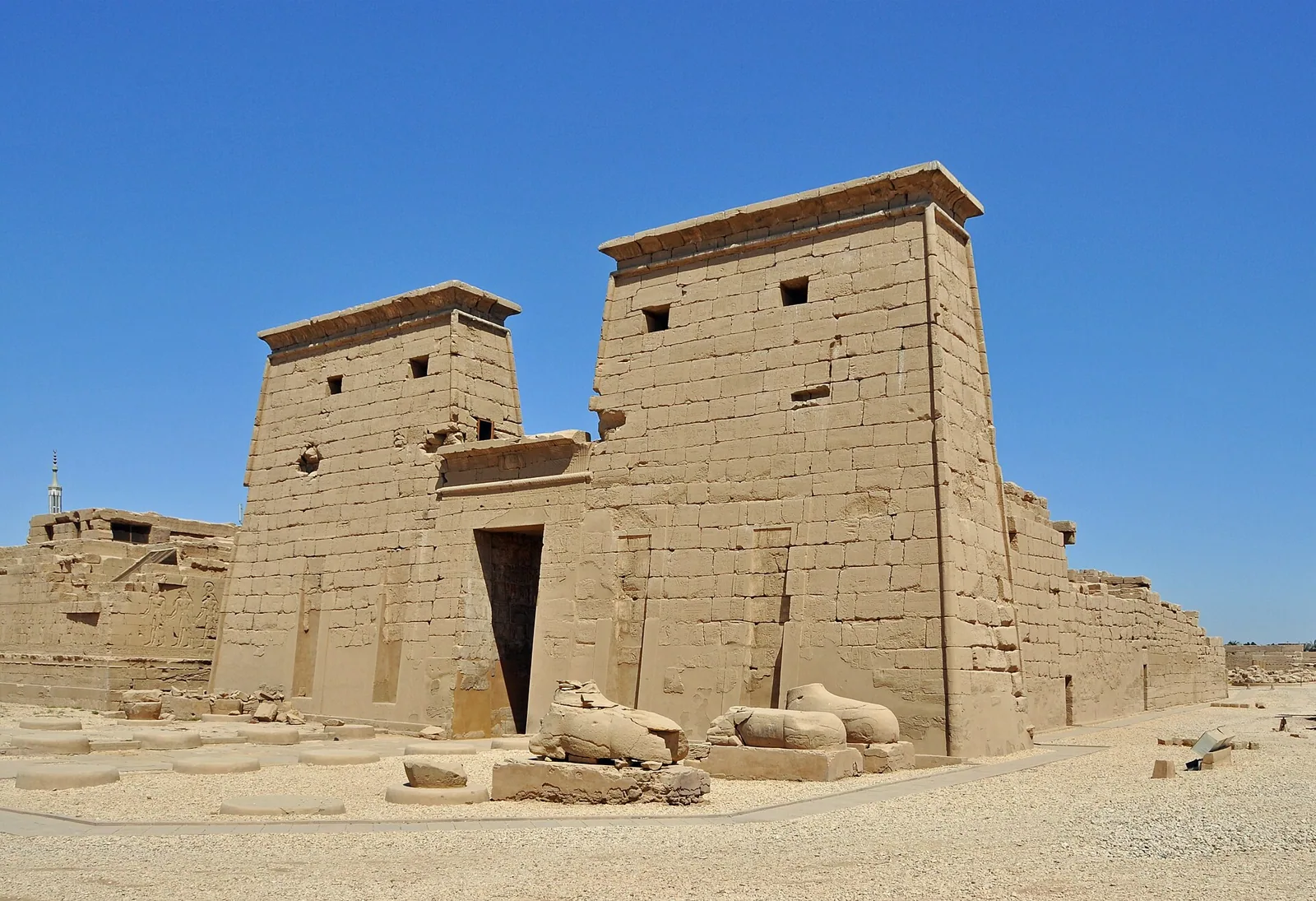
Karnak isn't a temple so much as a city of temples, added to by around thirty pharaohs over two thousand years until it sprawled across roughly 100 hectares. Its ancient name, Ipet-Isut, meant "the most select of places." Champollion, the Frenchman who first cracked hieroglyphs, said the Egyptians must have built it "for men one hundred feet tall."
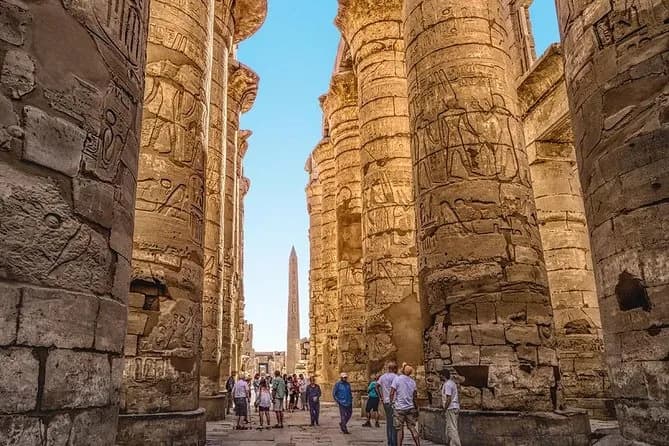
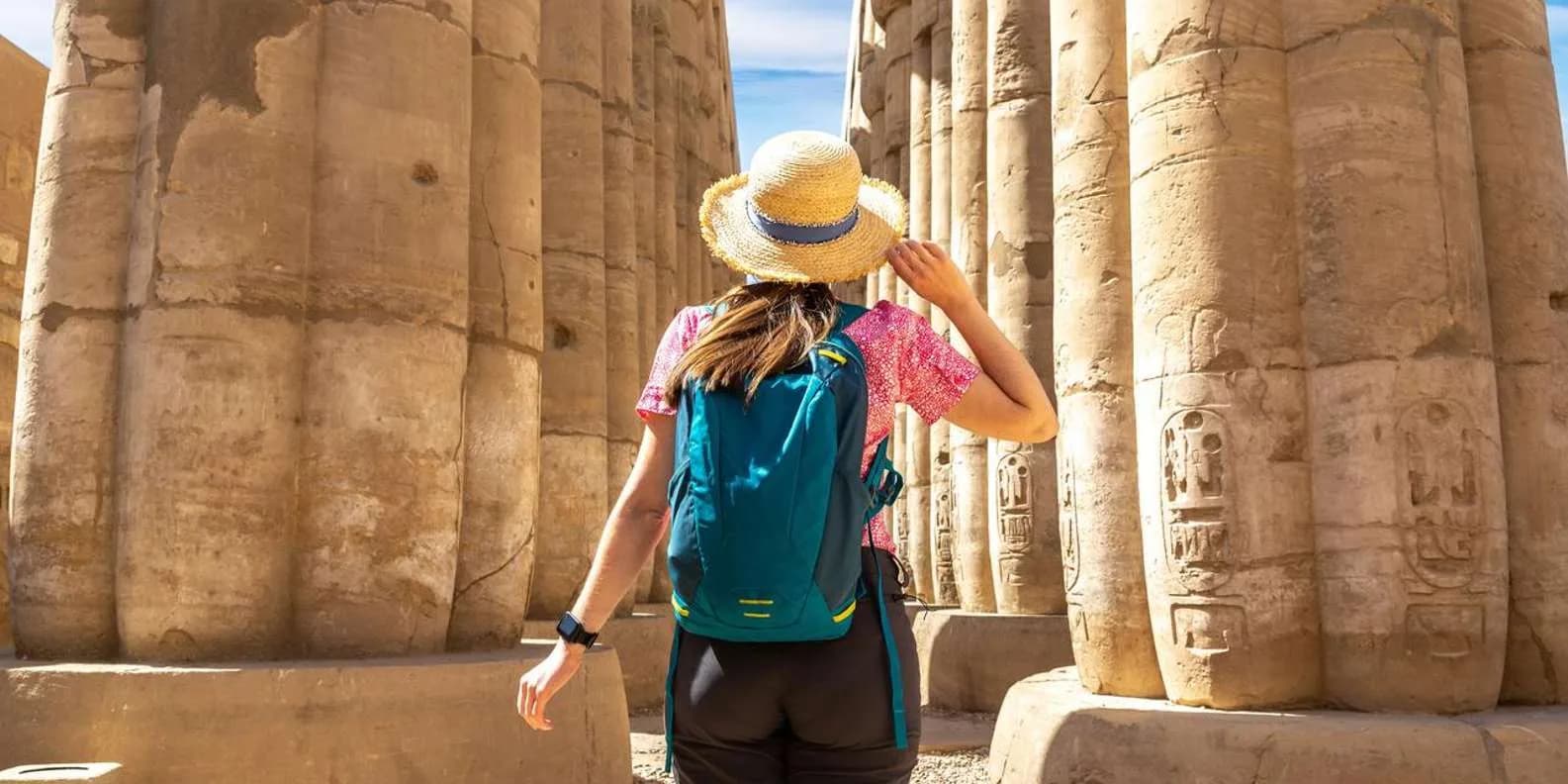
The showstopper is the Great Hypostyle Hall: 134 sandstone columns crowded into a forest, the tallest 21 metres high, still carrying flecks of their original paint where the sun doesn't reach. Walk out to the sacred lake, find the fallen top of Hatshepsut's obelisk, and give yourself time to wander the quieter perimeter, where inscribed blocks still lie in the dust waiting to be pieced back together. Come at opening or in the last hour before close to dodge the tour-bus crush. Allow two hours; keen visitors stay half a day.
2. Luxor Temple after dark
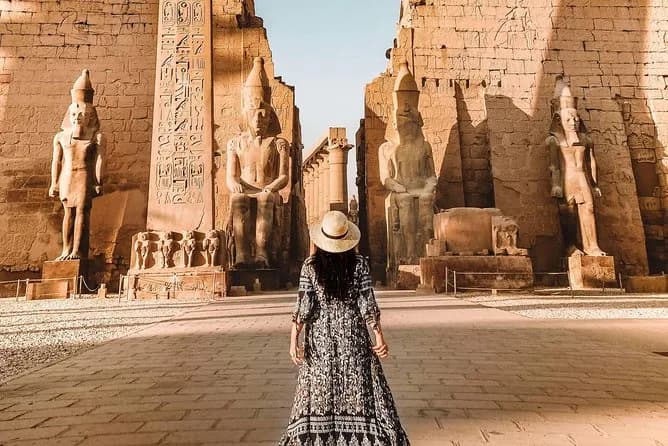
Luxor Temple sits right in the middle of town, and unlike almost everywhere else, it stays open into the evening — which is exactly when to go. Floodlit, the colonnade of Amenhotep III glows honey-gold and the crowds thin to nothing. Built mainly by Amenhotep III and Ramses II, the temple is a palimpsest of everyone who came after: Alexander the Great rebuilt a sanctuary here, the Romans turned it into a fort, early Christians carved a church into it, and the 13th-century Mosque of Abu Haggag still stands on top of the ancient walls, its door now floating well above the excavated floor. That mosque still holds its own festival, the Moulid of Abu Haggag, complete with a boat carried aloft in an echo of pharaonic processions.
3. The Avenue of Sphinxes
For 2,700 years, a 2.7-km processional road lined with human-headed and ram-headed sphinxes linked Karnak to Luxor Temple. Buried and built over for centuries, it was fully excavated and reopened in November 2021 with a spectacular night ceremony. You can now walk stretches of it between the two temples, roughly a 45-minute stroll, tracing the exact route the god Amun's statue travelled during the annual Opet festival.
4. Luxor Museum
Skip this and you'll miss the best-curated hour in the city. Small, cool, dark, and beautifully lit, the museum on the corniche holds a tight selection of masterpieces rather than a warehouse of everything — a wall of statues rescued from a cache found under Luxor Temple, a perfectly preserved royal chariot, and two royal mummies displayed with real dignity. It sits about halfway between Karnak and Luxor Temple, an ideal air-conditioned break in the middle of the day.
5. Mummification Museum
Across the corniche and down the steps toward the river, this small museum does one thing and does it well: it explains, step by step and tool by tool, how the Egyptians turned a body into an eternal one. Animal mummies — crocodiles, cats, rams, a baboon — round out a genuinely absorbing half hour. Pair it with the Luxor Museum for an afternoon of shade.
6. Old Market and the corniche at dusk
When the heat drops, wander the souk behind Luxor Temple — spices, scarves, alabaster, and the usual friendly haggling — then take the stairs down to the lower riverside walkway where the cruise ships dock. For a taste of the old winter-tourism era, book high tea at the Winter Palace, the grand 1886 hotel that turned Luxor into Europe's fashionable winter retreat. A caleche (horse carriage) ride along the corniche at sunset is a cliché, and worth it — agree the price and currency before you climb in.
West Bank: the city of the dead
Cross the river and the noise falls away. This is the Theban Necropolis, sugarcane and mudbrick villages spread beneath the pyramid-shaped peak of el-Qurn. The ancients called it "the Place of Truth." Nearly everything here is a tomb or a mortuary temple. Note that most sites work on a general ticket plus separate add-on tickets for the star tombs, so buy what you need at the central ticket office before you set off.
7. Valley of the Kings
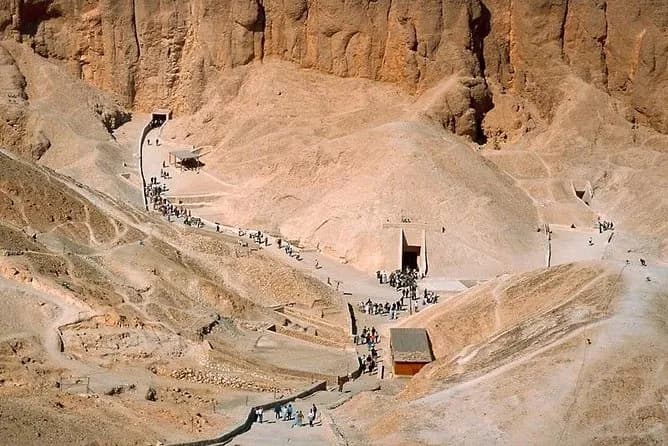
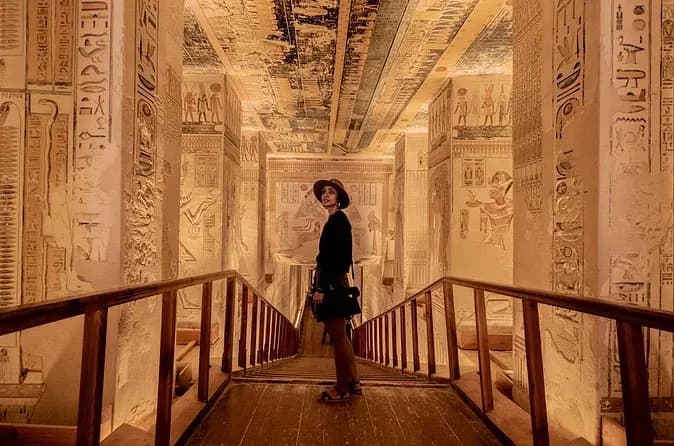
The headline act. Cut into a dry desert valley below el-Qurn, this is where the New Kingdom pharaohs were buried for safekeeping — more than 60 tombs found so far, including Tutankhamun's, discovered by Howard Carter in 1922 in the last unrobbed royal burial ever found. Your standard ticket lets you into three tombs of your choice; a rotating set is open to spread the wear. The corridors plunge down toward the burial chamber past walls of astronomical ceilings and Book of the Dead spells, many with colour still vivid after 3,000 years.
Buy the separate add-on for at least one showpiece. Seti I (KV17), the longest and most lavishly decorated tomb in the valley, is worth every pound of its premium ticket. Tutankhamun's tomb (KV62) is small and plain by comparison — its fame is the treasure, now in the Grand Egyptian Museum near Giza — but the boy king's mummy still lies here. Ramses VI and Ramses III are among the most colourful on the standard ticket. Go at 6am opening or after 2pm, bring a torch, and note that photography usually needs its own extra ticket.
8. Valley of the Queens
Smaller, quieter, and home to the single most beautiful painted tomb in Egypt: Nefertari's (QV66), Ramses II's favourite queen, its walls a riot of turquoise, gold, and lapis so fresh they look wet. It costs a steep separate ticket and admits few people at a time for limited minutes, and it is worth reorganising a day around. Even without it, the Ta-Set-Neferu, "the place of the beautiful ones," rewards the trip with tombs of royal children rarely crowded with visitors.
9. Temple of Hatshepsut (Deir el-Bahari)
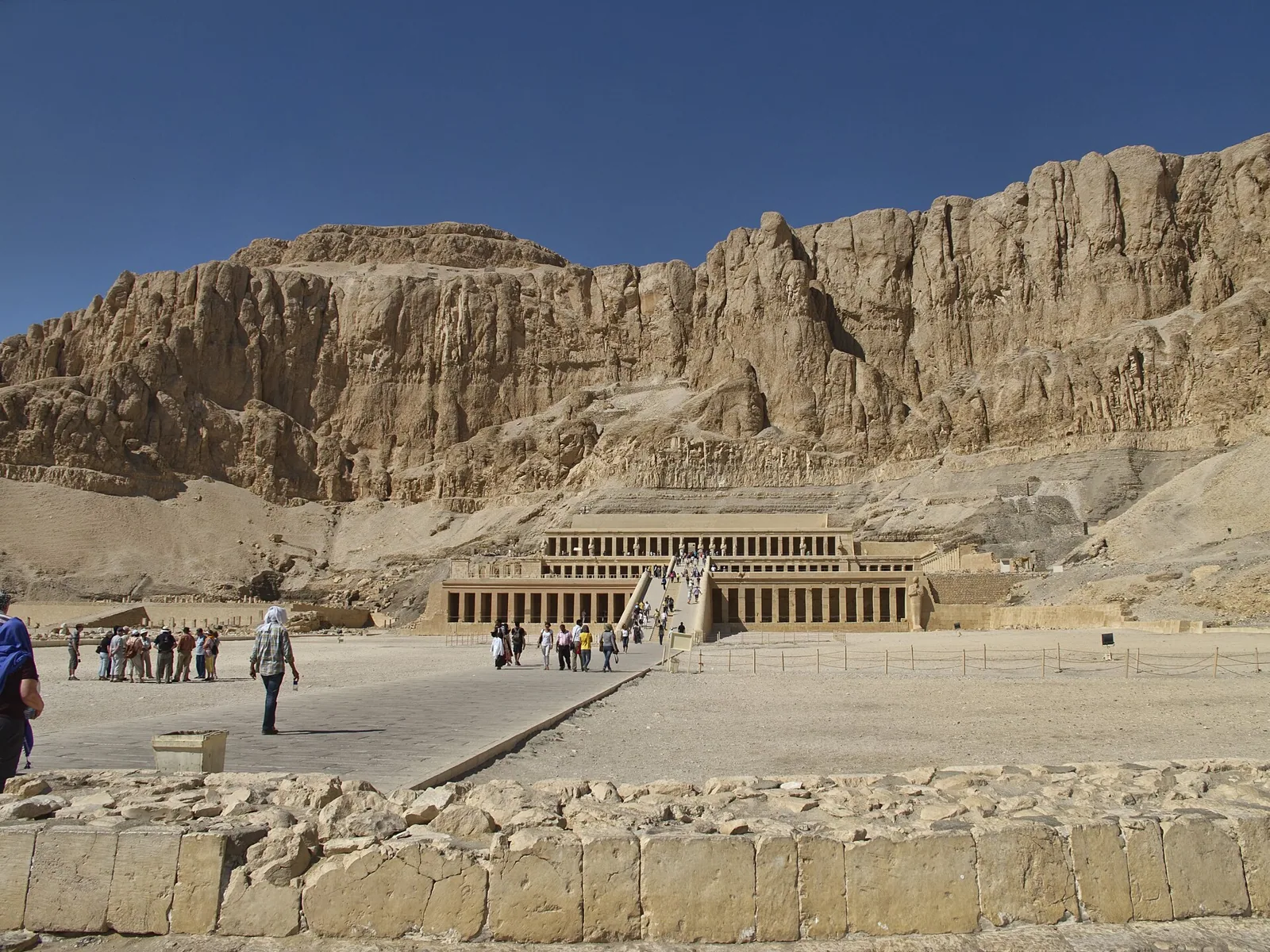
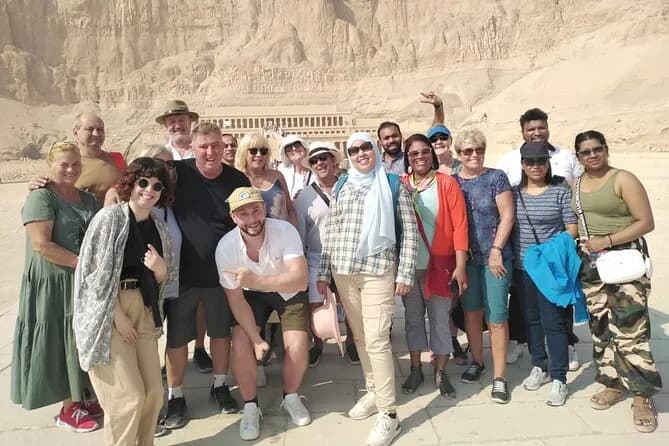
Three honey-coloured terraces rising straight out of a curved amphitheatre of cliffs — from a distance the mortuary temple of Hatshepsut looks almost modern. Egypt's most successful female pharaoh had her architect Senenmut design it, and reliefs inside record her famous trading expedition to the Land of Punt. Go early: there's no shade on the ramps and the stone throws the heat back at you by mid-morning.
10. Colossi of Memnon
Two battered stone giants, 18 metres tall, sit alone in a field beside the road — all that survives above ground of Amenhotep III's vast mortuary temple, once the largest in Thebes. After an earthquake cracked one, the Greeks and Romans swore it "sang" at dawn as the warming stone expanded, and carved graffiti into the legs to prove they'd heard it. A Roman emperor repaired the crack and silenced it for good. It's a free five-minute stop on the way in, and archaeologists are still excavating the temple behind them.
11. Medinet Habu
The west bank's most underrated temple, and after Karnak the best-preserved in Luxor. Ramses III's mortuary temple keeps its towering pylons, its roof in places, and — the thing that stops people in their tracks — original paint still clinging to the reliefs and column tops in the inner courts. The outer walls carry huge battle scenes of Ramses III defeating the Sea Peoples. It sees a fraction of the Valley of the Kings' crowds. Don't skip it.
12. Tombs of the Nobles
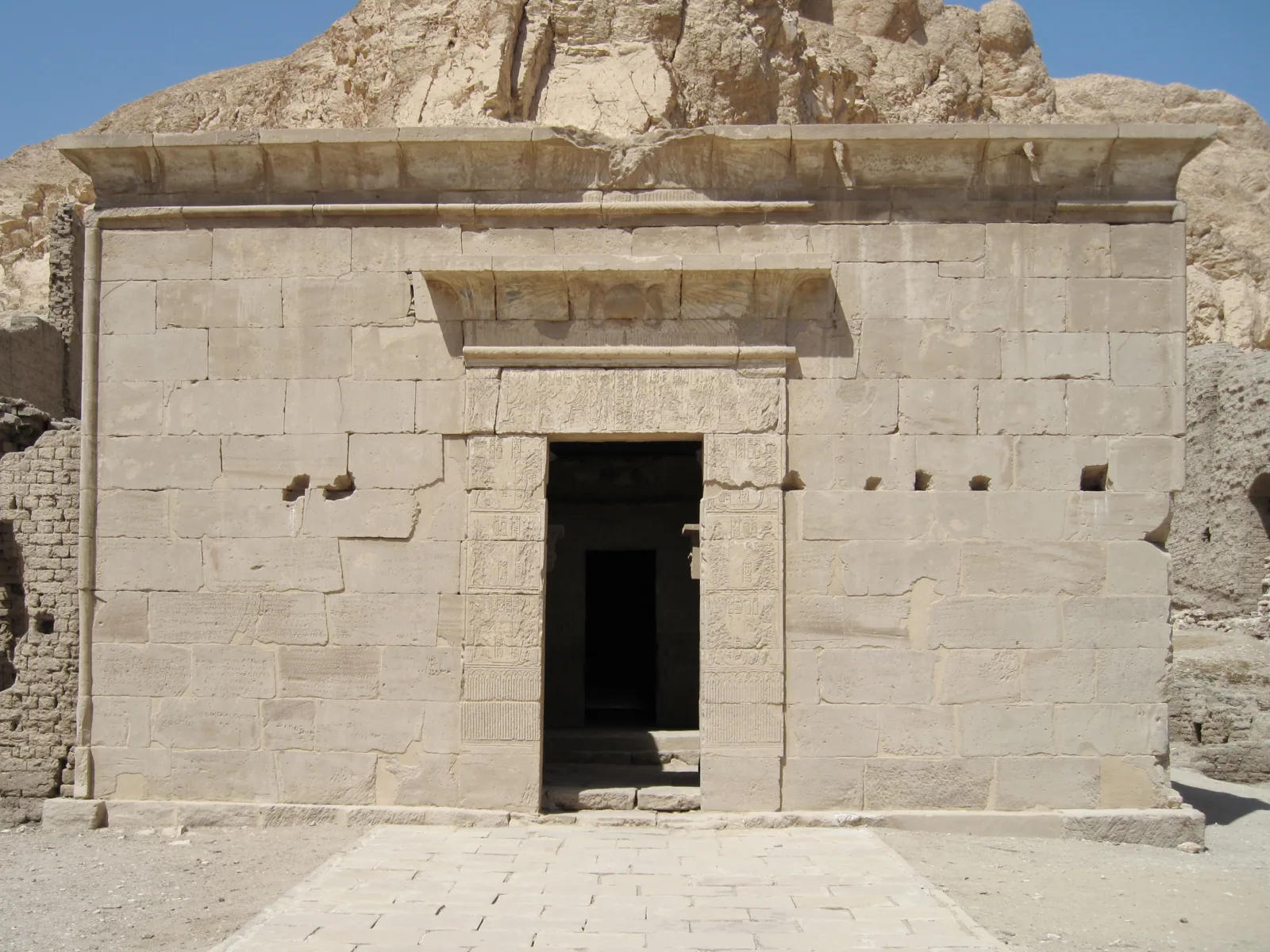
While the pharaohs went for scale, the officials went for life. The nobles' tombs are painted with harvests, banquets, hunting in the marshes, musicians and dancers — everyday New Kingdom life in glorious colour, far more human than the solemn royal Book of the Dead. The tombs of Rekhmire, Sennefer (the "Tomb of the Vines," with a grape-laden painted ceiling) and Nakht are standouts. Grouped tickets cover clusters of them; they're rarely busy.
13. Deir el-Medina
The workers' village. The very craftsmen who cut and painted the royal tombs lived here in a walled settlement, and — knowing every trick of the trade — decorated their own small tombs with dazzling skill. The tomb of Sennedjem is a jewel box. You also see the foundations of their actual houses and a small, well-preserved Ptolemaic temple. It's the human counterweight to all that royal grandeur, the place that reminds you real people made all of this by hand.
Above and on the water
14. Sunrise hot-air balloon
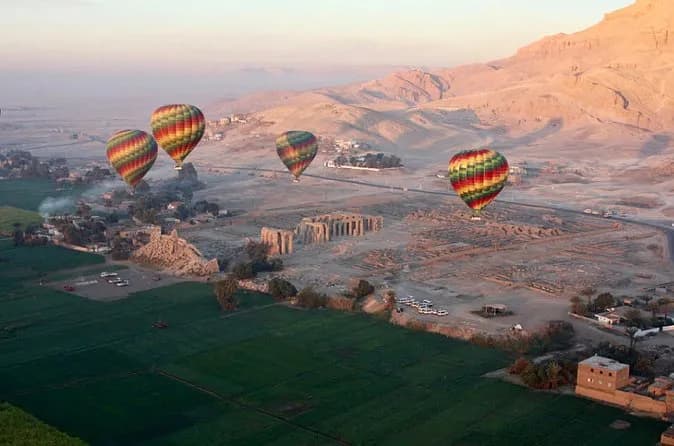
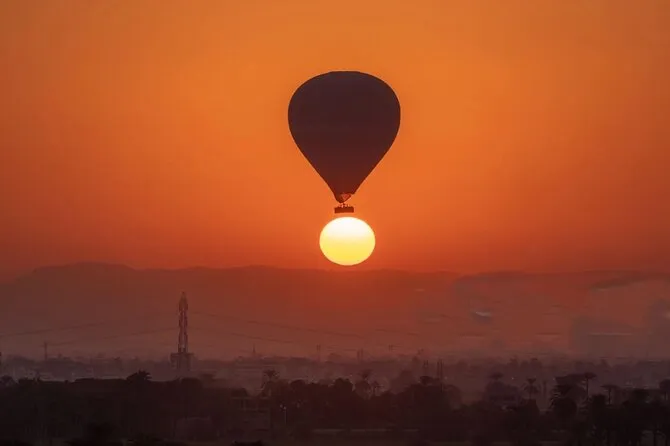
Do this. A pre-dawn pickup, a short float across the river, and then you rise over the west bank as the sun comes up — the Colossi, Medinet Habu, Hatshepsut's terraces, the green ribbon of the Nile against the pink desert, all laid out beneath you. Flights last 40–60 minutes, float a few hundred metres up, and typically run US$100–150 per person including hotel transfers. It's weather-dependent, so book for early in your stay to leave room to reschedule.
15. A felucca sail — or a cruise leg to Aswan
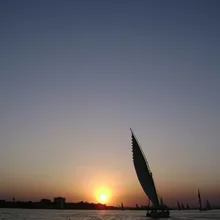
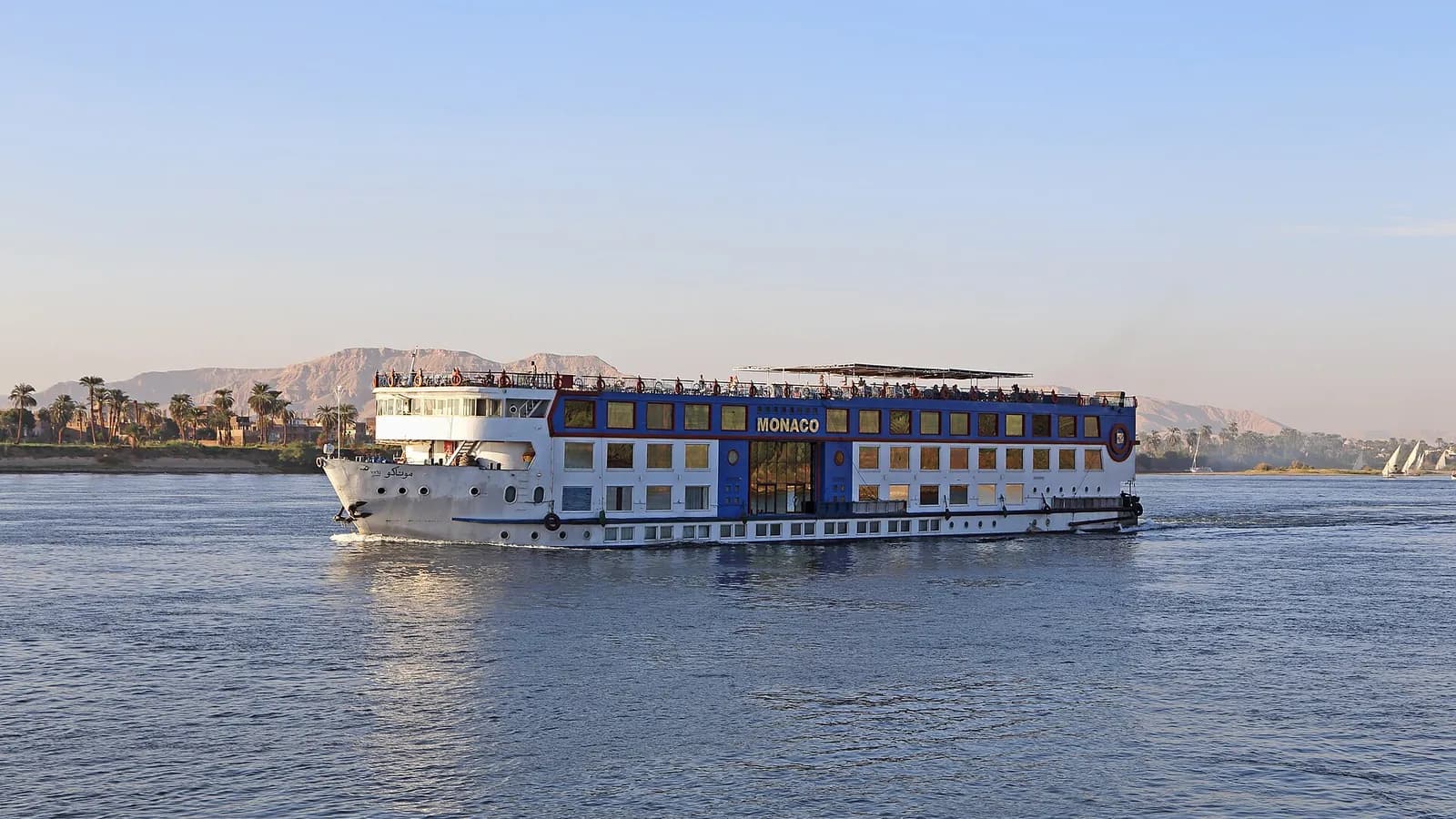
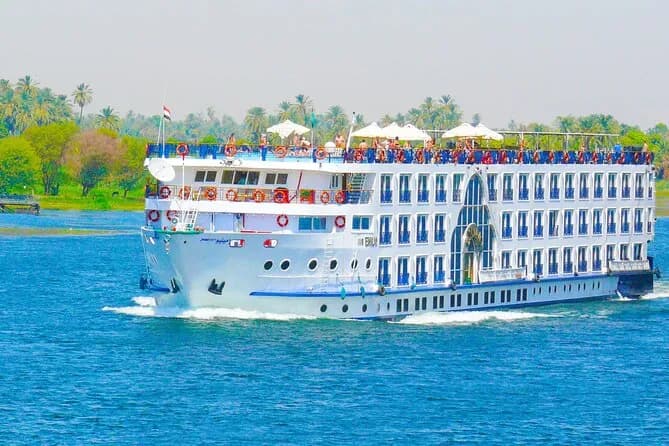
Getting on the river is half of why people come to Egypt. For an hour or two, hire a felucca (the traditional lateen-sailed boat) near the ferry landing, take a picnic, and drift past the banks with nothing but wind for power. For the classic multi-day version, join a Nile cruise from Luxor to Aswan (usually 3–4 nights), which stops at the temples strung along the river — Esna, the falcon god Horus at Edfu, and the crocodile god Sobek at Kom Ombo. It's the same slow, temple-hopping journey Thomas Cook first sold tourists back in 1869, and still the most romantic way to travel between the two cities. Cruises are Luxor's priciest experience, typically running well into the thousands of EGP; see our Egypt itinerary guide for how to slot one in.
16. Day trip to Dendera and Abydos
If you have a third day, go north. Dendera (about 65 km) is the temple of Hathor, goddess of love and music, and its recently cleaned ceilings are the most vividly coloured in all Egypt — deep blues and golds, a famous zodiac, and a rare crypt you can climb into. Abydos (about 100 km further) is the cult centre of Osiris, and the Temple of Seti I holds arguably the finest low-relief carving in the country, plus the "King List" recording 76 pharaohs. Both sit off the tour-bus circuit, so crowds stay thin. It's a long day — around 10 hours with a lot of driving — but two of Egypt's best-kept temples are the reward.
East bank vs west bank at a glance
| East Bank | West Bank | |
|---|---|---|
| What's there | Temples of the living | Tombs & mortuary temples |
| Star sights | Karnak, Luxor Temple, Avenue of Sphinxes | Valley of the Kings & Queens, Hatshepsut, Medinet Habu |
| Feel | Town, hotels, souks, corniche | Rural, quiet, desert & farmland |
| Getting around | Walkable + taxi | Taxi, guide, or bike |
| Best time of day | Luxor Temple after dark; Karnak early/late | Everything as early as possible |
| Museums | Luxor Museum, Mummification Museum | — |
Suggested plan: 2–3 days in Luxor
| Day | Morning | Afternoon / Evening |
|---|---|---|
| Day 1 — West Bank | Balloon at sunrise, then Valley of the Kings + a premium tomb | Hatshepsut, Medinet Habu, Colossi of Memnon; ferry back for a corniche sunset |
| Day 2 — East Bank | Karnak early, Luxor Museum midday | Souk & tea at the Winter Palace, then Luxor Temple floodlit after dark |
| Day 3 — Day trip | Depart early for Dendera | Abydos, back to Luxor by evening — or a felucca sail if you'd rather stay put |
When to go, and for how long
Best time: October to April. Luxor is bone-dry desert, and from June to August daytime highs push past 40°C (104°F) — sightseeing at that point means starting at 6am and hiding by noon. The winter window is cooler, busier, and pricier; late October and March hit the sweet spot. February is cool enough for the Luxor Marathon on the west bank.
How many days: two full days covers the essentials, one bank each. Three lets you slow down and add Dendera and Abydos, or a felucca. Anything less than two and you'll be sprinting past 3,000-year-old paintings, which is a shame.
Getting around Luxor
The public ferry between the banks is cheap, frequent, and runs roughly 6am to 11pm from in front of Luxor Temple — locals' motorboats also do the crossing for a small fare. On the east bank the centre is walkable; grab a taxi for anything further and agree the fare before you get in. The west bank is more spread out: most people hire a taxi or driver for the day, though the fit and heat-hardy rent a bicycle near the ferry landing to pedal between sites. A road bridge crosses the Nile about 9 km south of town if you're driving. For sunset atmosphere, the horse-drawn caleche along the corniche is a Luxor institution.
What it costs
Egypt's monuments now largely take card only — cash is increasingly refused at ticket gates, so bring a working bank card. Government site tickets are cheap and separate from any tour. As a rough guide for 2026 (confirm on the day, prices drift up):
| Site | Approx. foreign ticket |
|---|---|
| Valley of the Kings (3 tombs) | ~400 EGP (~US$8) + add-ons |
| Seti I / Nefertari (premium tombs) | separate premium ticket each |
| Karnak Temple | ~600 EGP (~US$12) |
| Luxor Temple | ~500 EGP (~US$10) |
| Hatshepsut / Medinet Habu | mid-range each |
| Hot-air balloon | ~US$100–150 |
Across Luxor, the median guided tour or experience runs around 4,500 EGP (~US$92); multi-day Nile cruises are the big-ticket item. You can pre-check current government prices on egymonuments.com and buy site tickets at the gate.
The top-rated experiences travellers book
The best-reviewed Luxor experiences on This is Egypt right now:
- Luxor Day Trip from Hurghada Small Group & Tutankhamun Tomb — 4.84★ · 8,094 reviews · from 4,185 EGP (~$85).
- Hot Air Balloon Ride in Luxor Egypt with Transfers Included — 4.9★ · 4,532 reviews · from 4,235 EGP (~$86).
- Luxor Day Tour: Valley of Kings & Queens & Hatchepsut Temples — 4.9★ · 1,725 reviews · from 4,446 EGP (~$91).
- Hurghada: Luxor Valley of the Kings & Tutankhamun Tomb Trip — 4.96★ · 1,534 reviews · from 3,370 EGP (~$69).
- Luxor: Hot Air Balloon Ride over Luxor Relics — 4.83★ · 1,821 reviews · from 5,480 EGP (~$112).
- Full Day Tour to East and West Banks of Luxor — 4.8★ · 1,693 reviews · from 747 EGP (~$15).
Browse all things to do in Luxor to compare dates and prices, or see how activity prices stack up in the Egypt activity price guide.
Practical tips
- Beat the heat and the crowds. Open gates at 6am, break through the midday hours, return late. This one habit transforms Luxor.
- Bring a torch and buy the photo ticket if you want to shoot inside tombs — flash is banned and lighting is dim.
- Carry a card and small cash. Sites are card-only; cash still helps for the ferry, taxis, tips, and the souk.
- Dress for temples: covered shoulders and knees, sturdy shoes for uneven stone, a hat and plenty of water.
- Hire a good guide for at least the west bank. A licensed Egyptologist turns painted walls into stories — it's the difference between looking and understanding.
- Tip modestly at tombs where a guardian points out a detail; it's expected.
Luxor is not a city you tick off. It's a city you return to, and most people who come once already know they'll be back. Planning the ideal number of days and the right order of sites is exactly where a little local knowledge pays off — This is Egypt builds custom itineraries around the tombs and temples you most want to see. Start planning your Luxor trip.
More reading: our full Egypt itinerary guide and the in-depth Valley of the Kings guide, plus our curated Luxor experiences.
See it from the river. The great temples of Luxor bookend the classic Nile cruise between Luxor and Aswan — every cruise ship and sailing dahabiya moors here. Compare Nile cruise ships and dahabiyas, or read the Nile cruise guide.
Related guides: which Valley of the Kings tombs are included · Valley of the Queens
A real team available 24/7 to assist you — free
Seif and the team reply on WhatsApp 24/7 — trip questions, custom plans and booking help.
Ask Seif on WhatsAppCommon questions
How many days do you need in Luxor?
Two full days is the practical minimum — one for the west bank (tombs and mortuary temples) and one for the east bank (Karnak, Luxor Temple, museums). A third day lets you add a Dendera and Abydos day trip or a felucca sail without rushing.
What is the best time of year to visit Luxor?
October to April, when daytime temperatures are comfortable. Summer (June–August) regularly exceeds 40°C/104°F, so if you go then, sightsee at dawn and rest through the afternoon. Late October and March offer the best balance of good weather and manageable crowds.
Is a hot-air balloon over Luxor worth it?
Yes. The pre-dawn flight over the west bank — the Colossi, Hatshepsut's temple, Medinet Habu and the Nile at sunrise — is one of Egypt's signature experiences. Flights last 40–60 minutes and typically cost US$100–150 including hotel transfers. Book early in your stay since flights depend on weather.
How do you get between the east and west banks of Luxor?
The cheap, frequent public ferry runs from in front of Luxor Temple roughly 6am–11pm, and local motorboats also cross for a small fare. A road bridge sits about 9 km south of town for cars. The east bank is walkable; on the west bank most people hire a taxi or driver for the day, or rent a bike.
Which tombs should you pay extra for in the Valley of the Kings?
The standard ticket covers three tombs, but the finest ones need separate add-on tickets. Prioritise Seti I (the longest, most decorated tomb in the valley). Nefertari's tomb in the nearby Valley of the Queens is the most beautiful painted tomb in Egypt and worth its premium ticket. Ramses VI and Ramses III are among the most colourful on the standard ticket.
Can you see Luxor Temple at night?
Yes — Luxor Temple stays open into the evening and is at its best floodlit, when the crowds thin and the columns glow gold. Karnak runs a separate ticketed Sound and Light show after dark, offered nightly in rotating languages.
Do you need cash for Luxor's monuments?
Most government sites now accept card only, so bring a working bank card. Keep some Egyptian pounds in cash too for the ferry, taxis, tips at tombs, and the souk, where card is rarely taken.
Are Dendera and Abydos worth the day trip from Luxor?
If you have a third day, yes. Dendera's Temple of Hathor has the most vividly coloured ceilings in Egypt, and Abydos's Temple of Seti I holds the country's finest low-relief carving. Both sit off the main tourist circuit, so crowds are thin — but it's a long day, around 10 hours with a lot of driving.
What is the Avenue of Sphinxes and can you walk it?
It's the 2.7-km processional road, lined with sphinxes, that once linked Karnak to Luxor Temple. Buried for centuries, it was fully excavated and reopened in November 2021. You can now walk stretches of it between the two temples, following the ancient Opet festival route.
Book it on This is Egypt
Turn this guide into a trip


Egypt's bestsellers
The experiences travelers book most, across the country




Keep reading
Hurghada Diving (2026): Best Sites, Packages & Prices
Diving in Hurghada — the best reefs (Giftun, Careless Reef, Dolphin House) and Abu Nuhas wrecks, Discover Scuba vs PADI courses, season and water temps, and real 2026 prices.
By TiE Editors7 min read
Hurghada Snorkeling Trips (2026): Best Reefs, Prices & How to Choose
Where to snorkel from Hurghada in 2026 — Orange Bay, Giftun, Mahmya, Utopia and Dolphin House — with boat types, marine life, month-by-month sea temperatures, family tips and real prices from 1,000+ bookable trips.
By TiE Editors7 min read
Egypt Tour Prices by Activity (2026): What Each Type Really Costs
What every type of Egypt experience costs — half day, full day or overnight — as a median and a mid-half range in US dollars, from 12,370 live bookable listings.
By TiE Editors6 min read