Money & Tipping in Egypt: Currency, Cash & Baksheesh (2026)
How money works in Egypt in 2026: the Egyptian pound and current rates, cash vs cards, ATM tips, and exactly how much to tip guides, drivers and hotel staff.
Quick answer: Egypt runs on two things: cash and small tips. The currency is the Egyptian pound (EGP), and locals call the tipping culture baksheesh — a constant, expected exchange of small notes for small services. Cards work in hotels, upscale restaurants and for pre-booked tours, but you'll need cash everywhere else, and you'll need a pocket of small notes for tips all day long. Get those two habits right and Egypt becomes easy to move through.
Here's how the money actually works on the ground in 2026.
The Egyptian pound (EGP) and current rates
The Egyptian pound has devalued heavily over the past few years, which is good news for visitors — your home currency stretches much further than it used to. As of mid-2026 the pound trades at roughly:
| Your currency | Approx. EGP (mid-2026) |
|---|---|
| 1 US dollar (USD) | ~50 EGP |
| 1 euro (EUR) | ~58 EGP |
| 1 British pound (GBP) | ~67 EGP |
Rates float and move, so treat these as a mental anchor, not gospel — check a live converter the morning you exchange or withdraw. The pound spent most of 2026 in the 48–54 per dollar band.
The pound comes in notes of 5, 10, 20, 50, 100, 200 EGP. There are also new polymer 10 and 20 notes in circulation alongside the older paper ones — both are valid. Coins (25pt, 50pt, 1 EGP) exist but are rarely used and worthless for tips. What matters most is small paper notes: 5s, 10s and 20s are your tipping ammunition, and you can never have too many.
Cash vs card: Egypt is a cash country
Cards (Visa and Mastercard) are accepted in international hotel chains, fine-dining restaurants, big supermarkets, museums with modern ticketing, and by most tour operators who take payment in advance. Amex is patchier — carry a Visa/Mastercard as your main card.
You'll need cash for:
- Taxis, Uber/Bolt if you pick the cash option, and all street transport
- Souks, bazaars and any bargaining situation (Khan el-Khalili, Aswan market)
- Street food, juice stands, small cafés and kiosks
- Entry to many temples and tombs where the gate takes cash
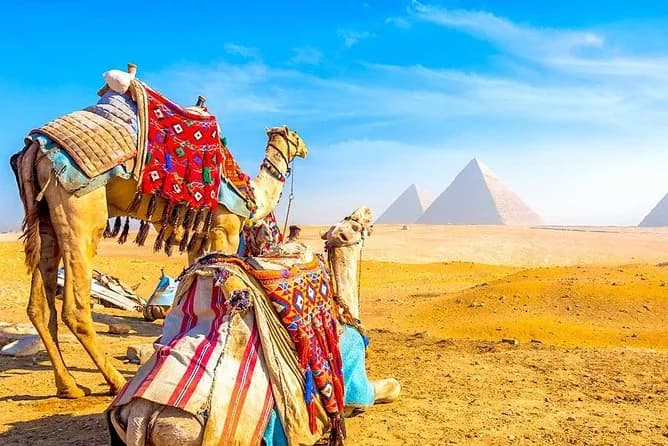
- Feluccas, camel and horse handlers, small guesthouses
- Every single tip — no one takes baksheesh on a card
A reasonable split: put your hotel, big tours and nice dinners on a card, and keep enough cash for a day of taxis, snacks, tips and small tickets. If a vendor offers a card machine at a bazaar stall, expect a worse deal than cash.
ATMs, withdrawals and fees
ATMs are the best way to get pounds. The rate you get from a bank machine is close to the official rate and almost always beats an exchange kiosk.
Use bank-branded ATMs — CIB, NBE (National Bank of Egypt), Banque Misr, QNB, HSBC — ideally the ones built into a branch wall or a guarded lobby, not a standalone machine in a tourist alley. Bank ATMs are better lit, less likely to be tampered with, and often charge no operator fee. Standalone and hotel ATMs run by independent operators can add a fee of up to 200 EGP per withdrawal.
Three things that save you money:
- Always choose to be charged in EGP, not your home currency. When the screen offers to "convert" and shows you a locked-in rate (this is Dynamic Currency Conversion, or DCC), decline it — that convenience rate is terrible. Let your own bank do the conversion.
- Withdraw larger amounts less often. Any flat fee hurts more on small withdrawals. Per-transaction caps vary by bank — CIB and HSBC often allow 8,000–10,000 EGP a pull, while state banks like NBE may cap a single withdrawal at 4,000–5,000 EGP. Daily ATM limits run up to around 30,000 EGP.
- Bring a card that refunds foreign-ATM fees if you have one, and tell your bank you're travelling so the card isn't frozen on the first withdrawal.
Skimming is the main risk — cover the keypad, use in-branch machines, and check your statement.
Exchanging money (and avoiding bad rates)
You don't need to arrive with pounds. Bring some crisp USD or EUR as a backup and for guide/driver tips (see below), but plan to get most of your cash from ATMs.
If you do exchange cash, use a bank or a licensed exchange bureau — never a guy on the street, and be wary of hotel front desks, which quote poor rates for convenience. Bring clean, unmarked bills; torn or scribbled-on notes get refused. Keep a couple of exchange receipts. And don't over-convert on arrival — the pound is a soft currency and hard to change back, so change what you'll spend and no more.
Airport exchange counters are fine for a small starter amount but rarely the best rate; grab just enough for the taxi and top up in town.
How much cash to carry
Enough for the day, not the trip. A rough daily float for two travellers doing normal sightseeing: 1,500–3,000 EGP covers taxis, a casual lunch, snacks, a few site tickets and a full day of tips, with a card handling the big stuff.
Split it up. Keep your tipping notes (5s, 10s, 20s) in one accessible pocket and larger notes elsewhere, so you're not fanning out a fat wallet every time you hand over 10 pounds to a restroom attendant. Break big notes early — buy water or a coffee to crack a 200 into usable small change. Vendors and drivers rarely have change for large notes, and "no change" is a classic way to round a tip up in their favour.
Baksheesh: Egypt's tipping culture explained
Baksheesh covers tipping, small charity and the little gratuities that lubricate daily life. It has deep roots — Islamic tradition places real value on giving to those with less (zakat, almsgiving), and in a service economy where wages are low, tips aren't a bonus on top of a fair wage; for many people they are the wage. That's why it's constant and why it's expected, not optional.
The flip side: baksheesh can feel relentless, and some requests are opportunistic — the "helpful" stranger who points you to a doorway you already saw, then expects payment. The move is to tip genuinely useful service warmly and wave off the rest politely. A firm, friendly "la, shukran" (no, thank you) handles the hustle. For the deep tables and edge cases, see our dedicated guide on how much to tip in Egypt.
Who to tip, and the general shape of it:
- Hotel porters / bellhops — small note per bag
- Housekeeping — a note left daily, not saved to the end
- Restaurant staff — a service charge may already be on the bill; add a little on top for the actual server
- Tour guides — the biggest tip of your trip, per day
- Drivers — a solid per-day tip, more for long transfers
- Felucca captains / boat crew — per person for a sail
- Restroom attendants — a small note, every time
- Anyone who genuinely helps — a few pounds
Tipping cheat-sheet (EGP)
| Who | Typical baksheesh |
|---|---|
| Restaurant server (on top of any service charge) | 5–10% of the bill |
| Café / casual meal | 10–20 EGP |
| Hotel porter | 20–50 EGP per bag |
| Housekeeping | 30–50 EGP per day |
| Taxi / rideshare | Round up 10–20 EGP |
| Private driver (full day) | 150–300 EGP |
| Private tour guide (full day) | 300–500 EGP, or ~US$10–15 pp |
| Felucca / boat captain | 50–100 EGP per person |
| Restroom attendant | 5–10 EGP |
| Bag / parking helper, small favour | 5–20 EGP |
For guides and private drivers, many travellers tip in USD or EUR (small clean notes) because it's easy to carry and the recipient values hard currency — a US$10–15 per person per day guide tip is standard. Keep everyday small tips in EGP. Full breakdowns by service and trip type live in the how much to tip in Egypt guide.
What things actually cost
Approximate 2026 prices to calibrate your wallet:
| Item | Approx. cost (EGP) | ~USD |
|---|---|---|
| 1.5L bottle of water (shop) | 15–25 | $0.30–0.50 |
| Local coffee / tea in a café | 30–60 | $0.60–1.20 |
| Casual local meal (koshari, etc.) | 80–150 | $1.60–3 |
| Sit-down restaurant meal | 250–500 | $5–10 |
| Short in-city taxi / Uber | 60–150 | $1.20–3 |
| Museum / temple entry ticket | 200–700 | $4–14 |
| Grand Egyptian Museum entry | see egymonuments.com | — |
Organised experiences are a bigger line item — a typical Cairo tour runs around 4,600 EGP, day trips ~6,200 EGP, and a multi-day Nile cruise well into the tens of thousands. Government site tickets are separate and cheaper; pay at the gate or pre-book via egymonuments.com, and confirm current prices, which change. For the full trip-cost breakdown, see Egypt travel costs.
Scams and overcharging (the short version)
Most "scams" are just aggressive commerce, and cash discipline defeats most of them:
- Agree the price first — taxis without a meter, camel/horse rides, felucca sails, and "guides" who attach themselves to you. Confirm the number before you start.
- The no-change trick — pay with notes close to the amount so a driver can't shrug and keep your change.
- "It's closed / let me show you" — strangers steering you to a shop or a "better" site entrance are working for commission.
- Wrong change / torn notes — count your change; refuse ripped bills you're handed back.
For the full playbook, read Egypt scams to avoid. None of this should put you off — Egyptians are famously hospitable, and a smile plus a firm price goes a long way.
Mobile payments
Egypt has moved fast on digital payments. InstaPay, the national instant-transfer app, and wallets like Vodafone Cash are everywhere among locals — but they're tied to Egyptian bank accounts and phone numbers, so as a visitor you generally can't rely on them. Contactless card and phone tap (Apple Pay / Google Pay via your own card) works at chain hotels, modern restaurants and some shops, but not at the market or the felucca dock. Treat mobile payment as a nice-to-have and cash as your default.
Prefer to skip the money logistics entirely? This is Egypt builds your whole trip — guides, drivers, transfers and tickets sorted in advance — so the only cash you carry is for tips and tea. Plan your Egypt trip.
A real team available 24/7 to assist you — free
Seif and the team reply on WhatsApp 24/7 — trip questions, custom plans and booking help.
Ask Seif on WhatsAppCommon questions
What currency does Egypt use and what's the exchange rate in 2026?
Egypt uses the Egyptian pound (EGP). In mid-2026 it trades at roughly 50 EGP to the US dollar, 58 to the euro and 67 to the pound sterling. Rates float, so check a live converter before you exchange or withdraw.
Is Egypt a cash or card country?
Mostly cash. Cards work in international hotels, upscale restaurants, big supermarkets and for pre-booked tours, but you need cash for taxis, souks, street food, small cafés, many site tickets and all tipping. Carry both, and keep plenty of small notes.
Should I use ATMs or exchange bureaus in Egypt?
ATMs give the best rate. Use bank-branded machines (CIB, NBE, Banque Misr, QNB, HSBC) inside branches or guarded lobbies, and always choose to be charged in Egyptian pounds, not your home currency, to avoid the bad DCC conversion rate. Standalone and hotel ATMs may add fees up to 200 EGP.
How much cash should I carry in Egypt each day?
For two people sightseeing normally, about 1,500–3,000 EGP a day covers taxis, a casual lunch, snacks, small tickets and a full day of tips, with a card handling hotels and big tours. Break large notes early so you have small change for baksheesh.
What is baksheesh?
Baksheesh is Egypt's culture of tipping and small gratuities. It's expected, not optional — service wages are low, so tips are a core part of many workers' income. You'll hand out small notes constantly for porters, drivers, guides, boat crews and restroom attendants.
How much should I tip a guide and driver in Egypt?
A private guide typically gets around US$10–15 per person per day (or 300–500 EGP), and a private driver 150–300 EGP for a full day. Many travellers tip guides and drivers in clean US dollars or euros; use Egyptian pounds for everyday small tips. See our full tipping guide for details.
Do I need to tip in restaurants and hotels?
Yes. In restaurants add roughly 5–10% for the server even if a service charge is on the bill. In hotels, tip porters 20–50 EGP per bag and housekeeping 30–50 EGP per day, left daily rather than at checkout. Keep small notes for restroom attendants (5–10 EGP).
Can I use Apple Pay, Google Pay or mobile payments in Egypt?
Contactless card and phone tap works at chain hotels, modern restaurants and some shops, but not at markets, street stalls or with boat and camel handlers. Local apps like InstaPay and Vodafone Cash need an Egyptian bank account, so visitors can't rely on them — carry cash as your default.
How can I avoid being overcharged in Egypt?
Agree every price up front — taxis, camel and felucca rides, and freelance 'guides'. Pay with notes close to the amount so no one keeps your change, count change carefully, and ignore strangers steering you to shops. See our Egypt scams guide for the full list.
Egypt's bestsellers
The experiences travelers book most, across the country

Keep reading
Hurghada Diving (2026): Best Sites, Packages & Prices
Diving in Hurghada — the best reefs (Giftun, Careless Reef, Dolphin House) and Abu Nuhas wrecks, Discover Scuba vs PADI courses, season and water temps, and real 2026 prices.
By TiE Editors7 min read
Hurghada Snorkeling Trips (2026): Best Reefs, Prices & How to Choose
Where to snorkel from Hurghada in 2026 — Orange Bay, Giftun, Mahmya, Utopia and Dolphin House — with boat types, marine life, month-by-month sea temperatures, family tips and real prices from 1,000+ bookable trips.
By TiE Editors7 min read
Egypt Tour Prices by Activity (2026): What Each Type Really Costs
What every type of Egypt experience costs — half day, full day or overnight — as a median and a mid-half range in US dollars, from 12,370 live bookable listings.
By TiE Editors6 min read