
Common Egypt Scams and How to Avoid Them (2026)
The tourist scams you'll actually meet in Egypt - free gifts, camel-ride price switches, fake guides, taxi overcharging - and the one-line move that ends each one.
Quick answer: Egypt's scams are more annoying than dangerous, and a few minutes of awareness defuses almost all of them. The classics repeat: a "free" gift or bit of help that suddenly wants payment; a camel ride that quotes one price to get on and another to get off; a friendly stranger who steers you toward a shop; a taxi with a "broken" meter. None of it should scare you. Egypt is a warm, largely safe place to travel, and the overwhelming majority of people you meet want nothing more than to say hello and help. This guide tells you how to spot the handful who don't, and how to shut it down politely without turning frosty.
The golden rule is simple. Agree every price out loud, in Egyptian pounds, before anything happens. Keep small bills handy for real tips, and treat unsolicited help the way you would anywhere: friendly, but not obligated.

The "free" gift that isn't free
How it works: someone at a temple gate, on a felucca dock, or in a bazaar presses something into your hand - a woven bracelet, a small scarab, a headscarf they "wrap" on you "as a gift, welcome to Egypt." The moment you accept it, the tone shifts and a price appears. Refusing now feels awkward, which is exactly the point.
The move: don't take it. Keep your hands down, smile, and say "la, shukran" (no, thank you). If it's already in your hand, hand it straight back and keep walking. You owe nothing for something you didn't ask for, and a firm, cheerful "no" ends it every time.
The fake guide and the "it's closed" trick
How it works: a helpful-seeming local tells you the main entrance is closed today, there's a special festival, or the good viewpoint is "this way." Or someone simply attaches themselves to you inside a site, narrating as you walk, then asks for a guide's fee at the end. A common variant funnels you toward a "better spot" that happens to be a relative's perfume or papyrus shop.
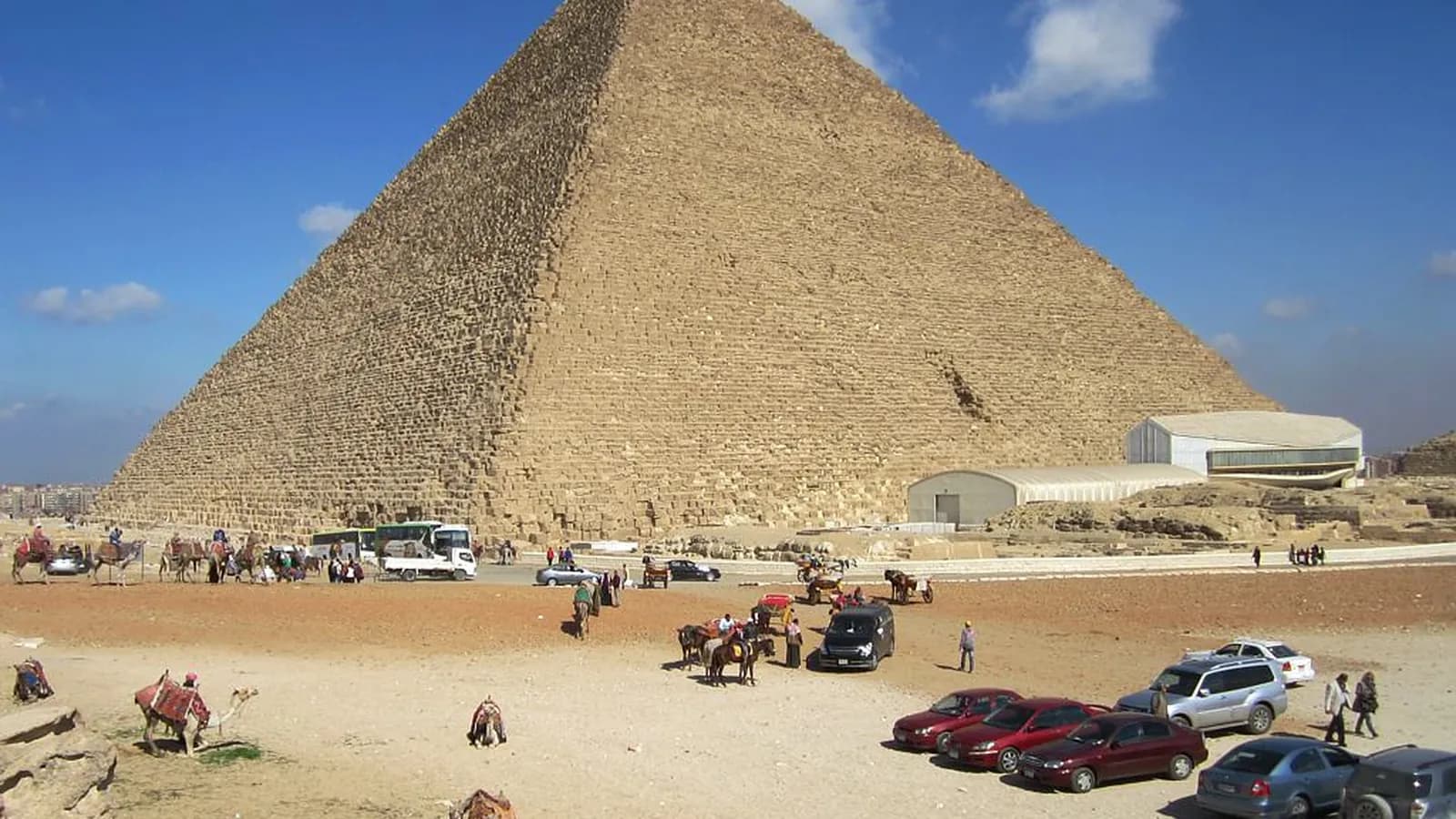
Reality check: major sites like the Giza pyramid complex, Karnak, and the Valley of the Kings are not randomly "closed" during posted hours, and official entrances are clearly marked and ticketed. Only staff wearing site ID and licensed guides carrying a Ministry of Tourism badge are official.
The move: buy tickets only at the official window or on egymonuments.com. If someone offers unsolicited guiding, say clearly up front, "No guide, thank you" - the ambiguity is what they rely on. A real guide you booked in advance will be holding a sign with your name, not chasing you across the forecourt.
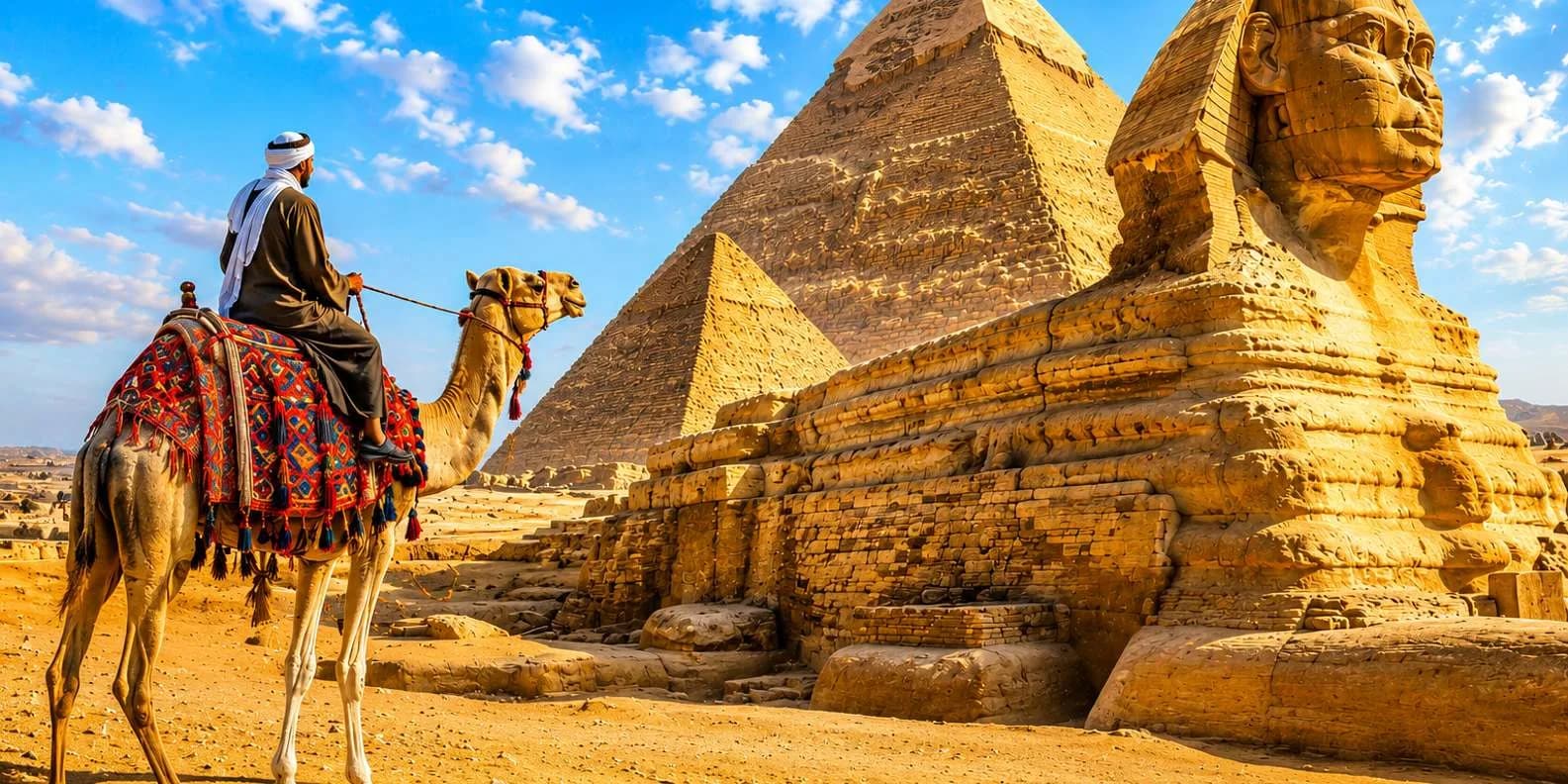
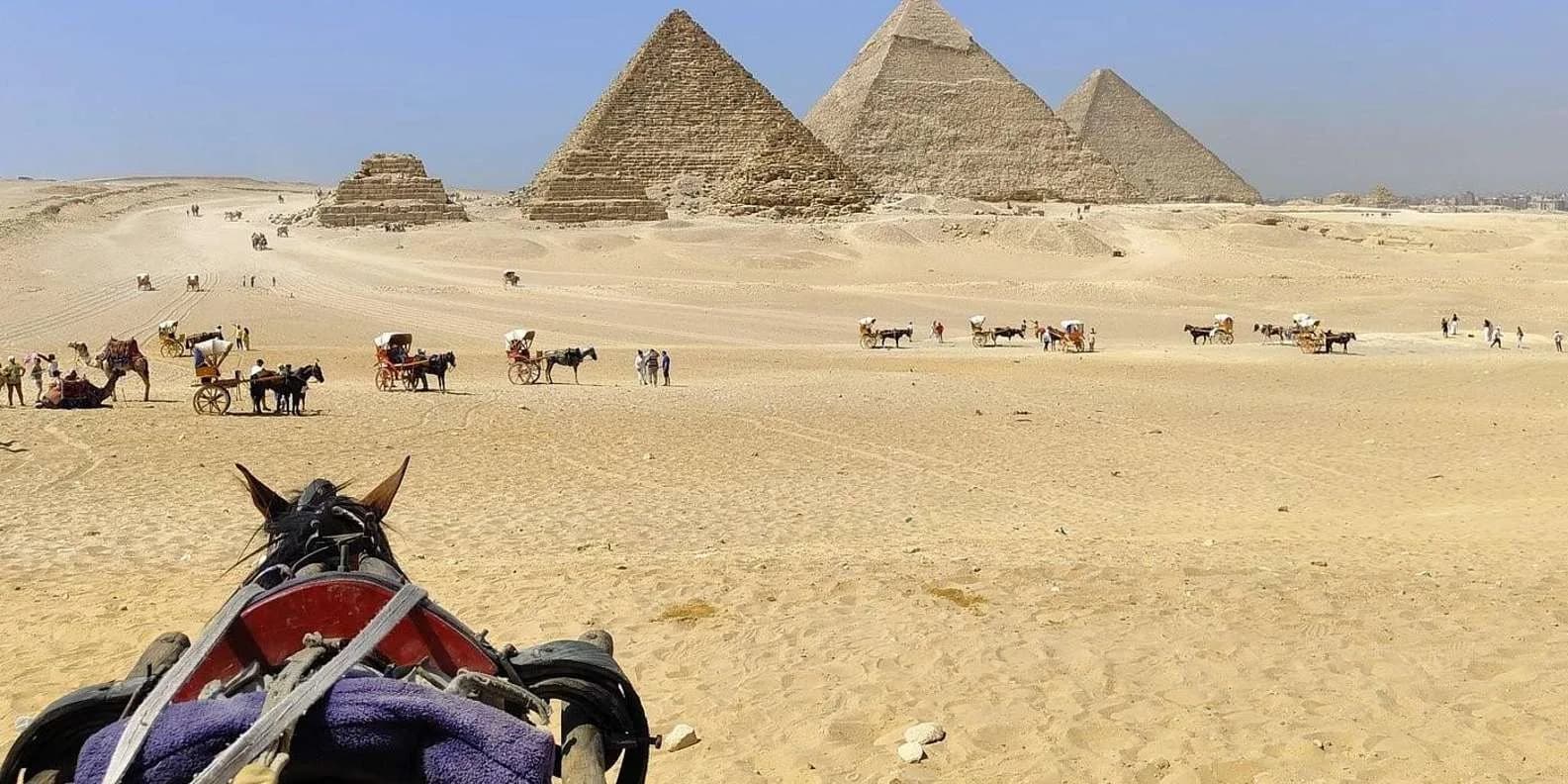
Camel and horse rides at the pyramids
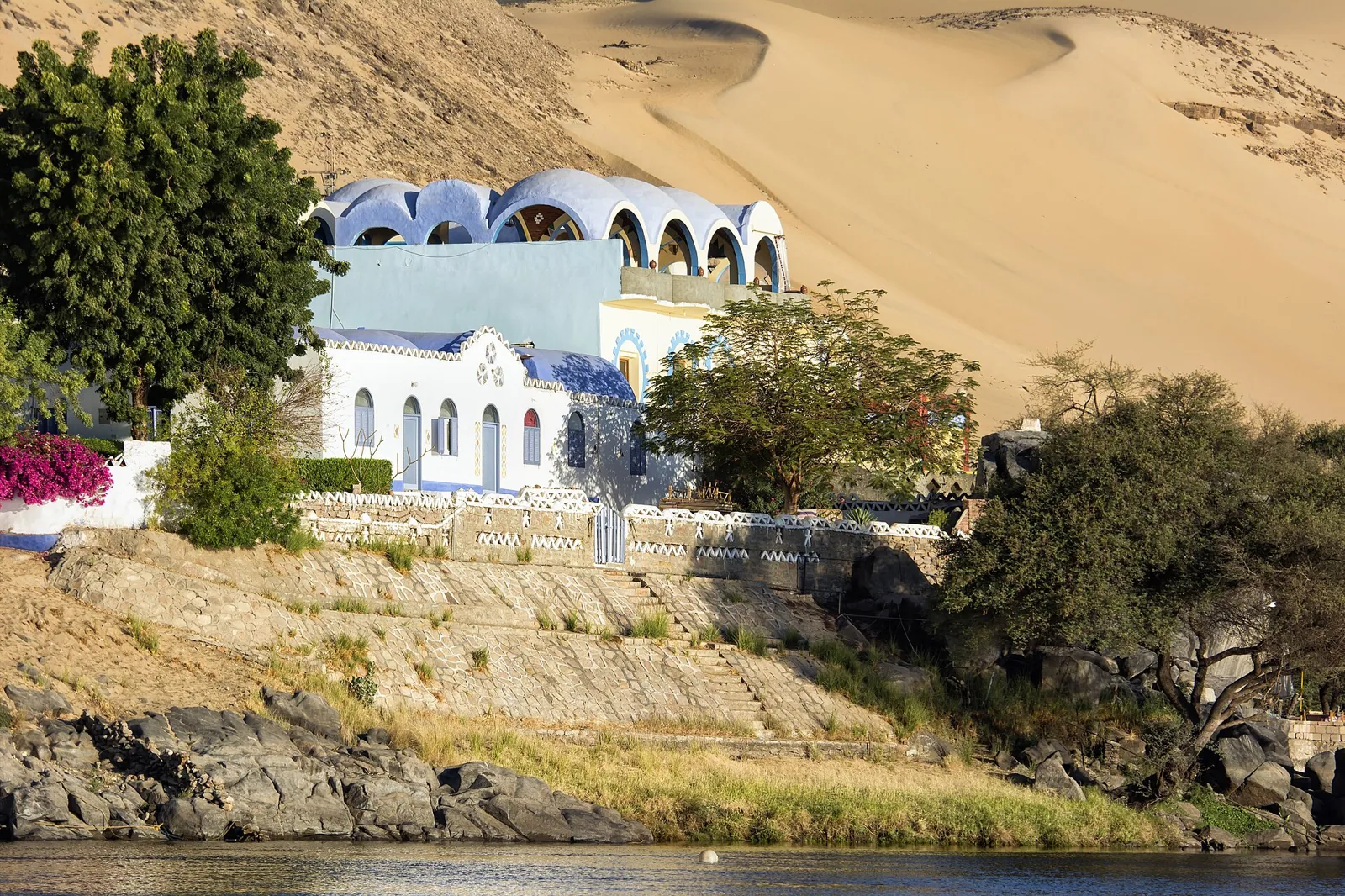
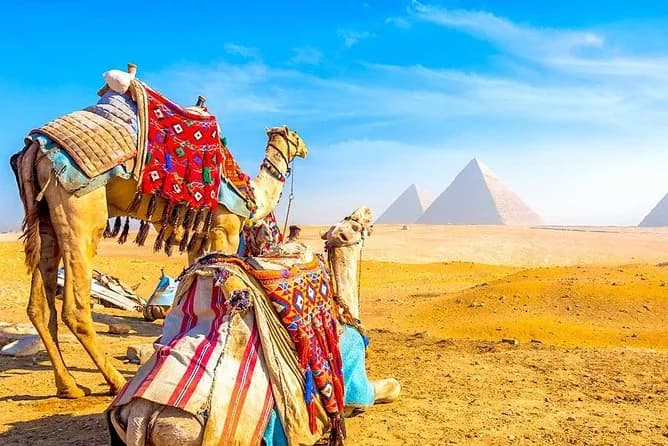
How it works: this is the most-reported hassle in Egypt. A handler quotes a low, friendly price to get you up onto the animal. Once you're mounted - and realising you can't easily get down - the story changes. The price was "per person," or "one way," or didn't include the dismount. The gap between the quoted price and the demanded one is often five to ten times.
The move: settle the total in advance and be specific: total price, both people, out and back, including getting off, in Egyptian pounds. Say it back to them. Better still, pay nothing until you're safely on the ground again. Honestly, the cleanest fix is to book a horse or camel experience through a vetted operator so the price is locked before you arrive and you're never negotiating on the animal's back.
The "let me take your photo" and "photo with me" traps
How it works: at a viewpoint, a man offers to snap your photo, or beckons you to pose with him or an animal (a decorated camel, a falcon). A tip is expected afterward, sometimes insistently, and if they held your phone there's a beat of leverage.
The move: hand your phone to another tourist, not a tout, or use a small tripod. If you do want a posed photo with someone, agree the tip first - a small note is fair for a genuine posed shot; nothing is owed for a photo you didn't ask for.
Taxis, meters, and ride-hailing
How it works: a street taxi's meter is "broken," or the driver names a flat fare at the end that's three times what locals pay. Airport and hotel ranks are the usual spots.
The move: use Uber or Careem. Both work across Cairo, Giza, and Alexandria, show the fare up front, and remove the argument entirely - this single habit erases most transport friction in Egypt. In Luxor and Aswan, where apps are patchier, agree the fare before you get in and have the exact amount ready. For inter-city hops, arrange a private transfer through your hotel or tour operator.
Money: ATMs, cards, and exchange
How it works: street money-changers offer a "great rate," then shortchange you using look-alike notes - the old 50 piastre note resembles the 50-pound note, for instance. Card machines sometimes offer to charge you in your home currency (dynamic currency conversion), which quietly bakes in a worse rate.
The move: withdraw pounds from ATMs attached to real banks (CIB, Banque Misr, QNB), ideally inside a branch or a hotel lobby. Skip street changers entirely. When a terminal asks whether to charge in EGP or your home currency, always choose EGP. Count your change, carry a stash of small notes (5, 10, 20 EGP) for tips and taxis, and keep larger notes separate.
Shops: papyrus, perfume, and "family factory" markups
How it works: you're walked into a "family perfume factory" or papyrus "institute," given tea, and told the essential oils are pure, duty-free, or wholesale. Much of the "papyrus" is printed banana leaf; much of the "perfume" is diluted. The tea and the warmth create a soft obligation to buy.
The move: enjoy the tea, feel zero obligation, and know that browsing is not a contract. Real papyrus is fibrous and doesn't crack when rolled; if a price starts absurdly high, that's your cue it's negotiable - or that you should leave. Buying is fine and often fun; just do it because you want the thing, not because someone poured you a drink.
"Welcome to Egypt!" - the friendly funnel
How it works: a warm, chatty greeting, a few questions about where you're from, and gradually the conversation steers toward a shop, a "cousin's" papyrus gallery, or a paid favour. The tricky part is that ninety-nine times out of a hundred, "welcome to Egypt" is exactly what it sounds like - genuine hospitality, no agenda. Egyptians are famously welcoming, and most chats lead nowhere but a nice moment.
The move: chat back, enjoy it. Just keep a light hand on your wallet the instant a specific destination or purchase enters the conversation. "Thanks, I'm just walking" is a complete sentence.
Fake ticket sellers
How it works: near a site entrance, someone offers to sell you tickets, skip the line, or "handle" your entry - for cash, no receipt. The tickets may be fake, overpriced, or nonexistent.
The move: only ever buy at the official ticket window or on egymonuments.com. No legitimate ticket is sold by a man standing in the car park.
Baksheesh: when tipping is real and when it's pressure
Baksheesh - small tipping - is a genuine and normal part of Egyptian life, not a scam. Bathroom attendants, the person who helps with your bags, restaurant staff, your driver and guide: these are real services and a small note (5-20 EGP for minor help; 10-15% at restaurants; more for a full-day guide) is expected and appreciated. Keep small bills ready so you're never fumbling.
What isn't legitimate is pressure baksheesh: someone who points at an obvious thing ("that's the pyramid") and demands payment, or who "helps" you take a photo you didn't want. The test is simple - did you ask for it, and was it a real service? If yes, tip gladly. If no, a polite "la, shukran" is all you owe. For the full breakdown, see our Egypt money and tipping guide.
Scam to defence, at a glance
| Scam | How it works | Your one-line defence |
|---|---|---|
| "Free" gift/bracelet | Pressed into your hand, then priced | Don't accept; hand it back, keep walking |
| Fake guide | Attaches themselves, bills you after | "No guide, thank you" up front |
| "It's closed" | Diverts you to a shop | Trust posted hours; go to the official gate |
| Camel/horse price switch | Low quote to mount, high to dismount | Agree total (both ways, dismount) before mounting |
| "Take your photo" | Snaps, then demands a tip | Ask a fellow tourist, or agree tip first |
| Broken-meter taxi | Inflated flat fare | Use Uber/Careem, or fix fare before the ride |
| Street money-changer | Look-alike notes, bad rate | ATMs at real banks; always pay in EGP |
| Papyrus/perfume markup | Tea, then hard sell | Browse freely; buy only if you want it |
| Fake ticket seller | Cash, no receipt | Official window or egymonuments.com only |
How a vetted tour removes most of this
Almost every scam above depends on you being alone, unsure, and negotiating on the spot. Take that away and the whole game collapses. When you arrive at Giza with a licensed guide who greets you by name, the camel touts, the "it's closed" men, and the photo hustlers simply don't engage - they read the situation and move on. Your entry is pre-booked, your transport is a known driver at a fixed price, and your guide handles the few interactions that need handling.
That's the quiet value of booking through a reputable operator: not luxury for its own sake, but a trip where nobody is testing your resolve at every gate. This is Egypt works only with vetted, licensed guides and transparent, upfront pricing, so the logistics - and the haggling - are off your plate. Browse the best-value Egypt tours or start from our experiences in Cairo, and you skip the part of Egypt nobody enjoys while keeping all the parts you came for.
Travel smart, stay relaxed
The honest summary: Egypt is a rewarding, warmly hospitable country where the vast majority of encounters are exactly as friendly as they seem. The scams are a small, predictable set, and every one has a one-line answer. Agree prices first, use the apps, keep small notes for real tips, decline the unsolicited stuff with a smile, and book your guides in advance. Do that and the touts fade into background noise, leaving you free to enjoy one of the great travel experiences on earth. For broader groundwork, read is Egypt safe and our Egypt travel tips before you go.
Prefer to skip the logistics entirely? This is Egypt plans your whole trip - guides, transfers, tickets and experiences - with vetted operators and fixed prices. Explore Egypt experiences.
A real team available 24/7 to assist you — free
Seif and the team reply on WhatsApp 24/7 — trip questions, custom plans and booking help.
Ask Seif on WhatsAppCommon questions
Is Egypt safe for tourists in 2026?
Yes. Egypt is broadly safe for visitors, with low violent-crime rates and heavy security around tourist sites. The main thing you'll encounter is persistent sales pressure and the occasional overcharge, which is annoying rather than dangerous. Basic street awareness plus the tips in this guide handle it.
How much should I tip (baksheesh) in Egypt?
For small help (bag carrying, bathroom attendants), 5-20 EGP. At restaurants, 10-15% if service isn't already included. For a full-day private guide, roughly 200-400 EGP per couple, and 100-200 EGP for a driver, adjusted to how good they were. Keep small notes handy so you're never stuck.
How do I avoid the camel-ride scam at the pyramids?
Agree the full price before you get on: total amount, number of people, out-and-back, and explicitly including the dismount, all in Egyptian pounds. Repeat it back to the handler. Ideally pay only once you're back on the ground, or book the ride through a vetted operator so the price is fixed in advance.
Should I use Uber or Careem in Egypt?
Yes, wherever they operate - mainly Cairo, Giza, and Alexandria. Both apps show the fare up front and remove haggling entirely, which prevents the "broken meter" overcharge. In Luxor and Aswan the apps are less reliable, so agree the fare before getting in and carry exact change.
Where should I exchange money or withdraw cash?
Use ATMs attached to reputable banks (CIB, Banque Misr, QNB), preferably inside a branch or hotel lobby, and withdraw Egyptian pounds. Avoid street money-changers, who use look-alike notes and poor rates. If a card machine asks, always choose to be charged in EGP, not your home currency.
Are the papyrus and perfume shops a scam?
Not exactly - they're legitimate shops with heavy markups and mixed quality. Much "papyrus" is printed banana leaf and much "perfume" is diluted oil. You're welcome to buy, but feel no obligation from the free tea, and negotiate hard or walk away. Real papyrus is fibrous and won't crack when rolled.
Someone says the temple or pyramid entrance is closed - is it true?
Almost never during posted opening hours. "It's closed today" is a common line used to divert you toward a shop or a paid "alternative." Walk to the official, marked ticket gate and check for yourself. Buy tickets only at the window or on egymonuments.com.
How do I politely say no without being rude?
A warm smile plus "la, shukran" (no, thank you) does the job. Keep walking; don't stop to debate. Egyptians respond well to friendliness, and a cheerful, confident "no" ends nearly every unwanted pitch without any tension.
Does booking a guided tour prevent scams?
Largely, yes. Most scams rely on you being alone and unsure. With a licensed guide meeting you by name, pre-booked tickets, and a fixed-price driver, the touts simply disengage. Booking through a vetted operator like This is Egypt takes the negotiation - and the hassle - off your plate.
Egypt's bestsellers
The experiences travelers book most, across the country



Keep reading

5-Star vs 4-Star Nile Cruise (2026): What the Rating Really Means
On the Nile, star ratings are issued locally and generously — almost every boat calls itself 5-star. Here is what actually separates the tiers, and how to read past the label to the real price and quality.
By TiE Editors4 min read

Nile Cruise vs Lake Nasser Cruise (2026): Which Should You Choose?
A Nile cruise sails the temple-lined Luxor–Aswan corridor with dozens of boats to choose from; a Lake Nasser cruise is a remote, uncrowded sail to Abu Simbel and the Nubian temples. Here is the honest comparison.
By TiE Editors4 min read

Liveaboard vs Day-Boat Diving in the Red Sea (2026): Which to Choose
A liveaboard reaches the remote reefs and wrecks day boats can't — the Brothers, Daedalus, deep-south Egypt — but a day boat is cheaper, flexible and beginner-friendly. Here's the honest choice.
By TiE Editors4 min read