 Photo by Petar Milošević, via Wikimedia Commons, CC BY-SA 4.0
Egypt vs Morocco: Which Should You Visit?
Egypt delivers the world's densest ancient monuments plus a Nile cruise; Morocco offers medinas, the Sahara and the Atlas closer to Europe. Here's how to choose.
Nile Cruises & Dahabiyas
Turn this guide into a trip
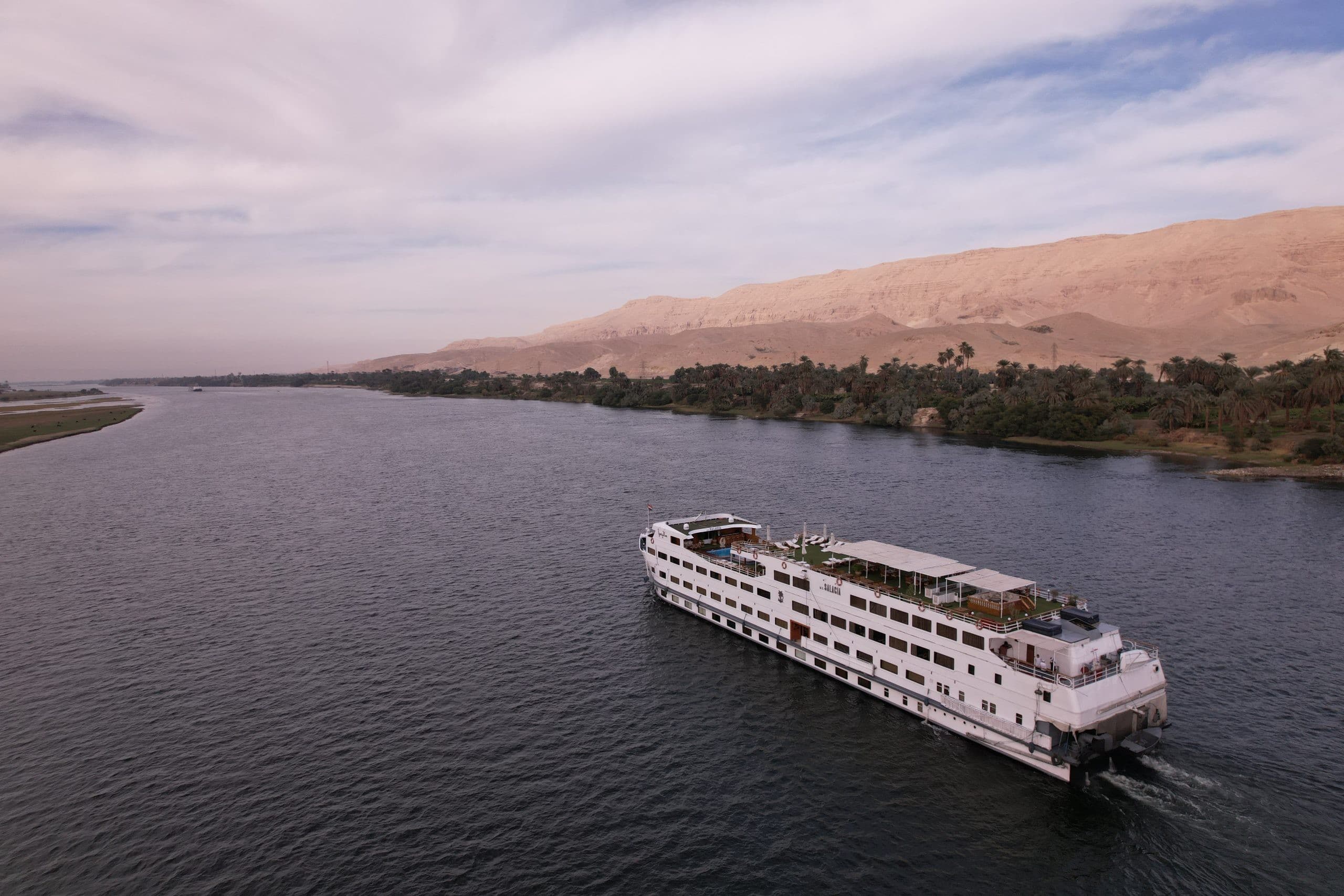
Quick answer: Egypt and Morocco get lumped together as "the North Africa trip," but they deliver very different holidays. Egypt is monument-led and history-first: the greatest concentration of ancient sites on earth, a Nile cruise and Red Sea diving. Morocco is experience-led and atmosphere-first: labyrinthine medinas, Sahara dunes, Atlas peaks, souks and design. The two cost roughly the same per day, but the question isn't which is "better" so much as which kind of trip you actually want. This guide lays out the honest case for each, with prices as 2026 ranges you should verify before you book.
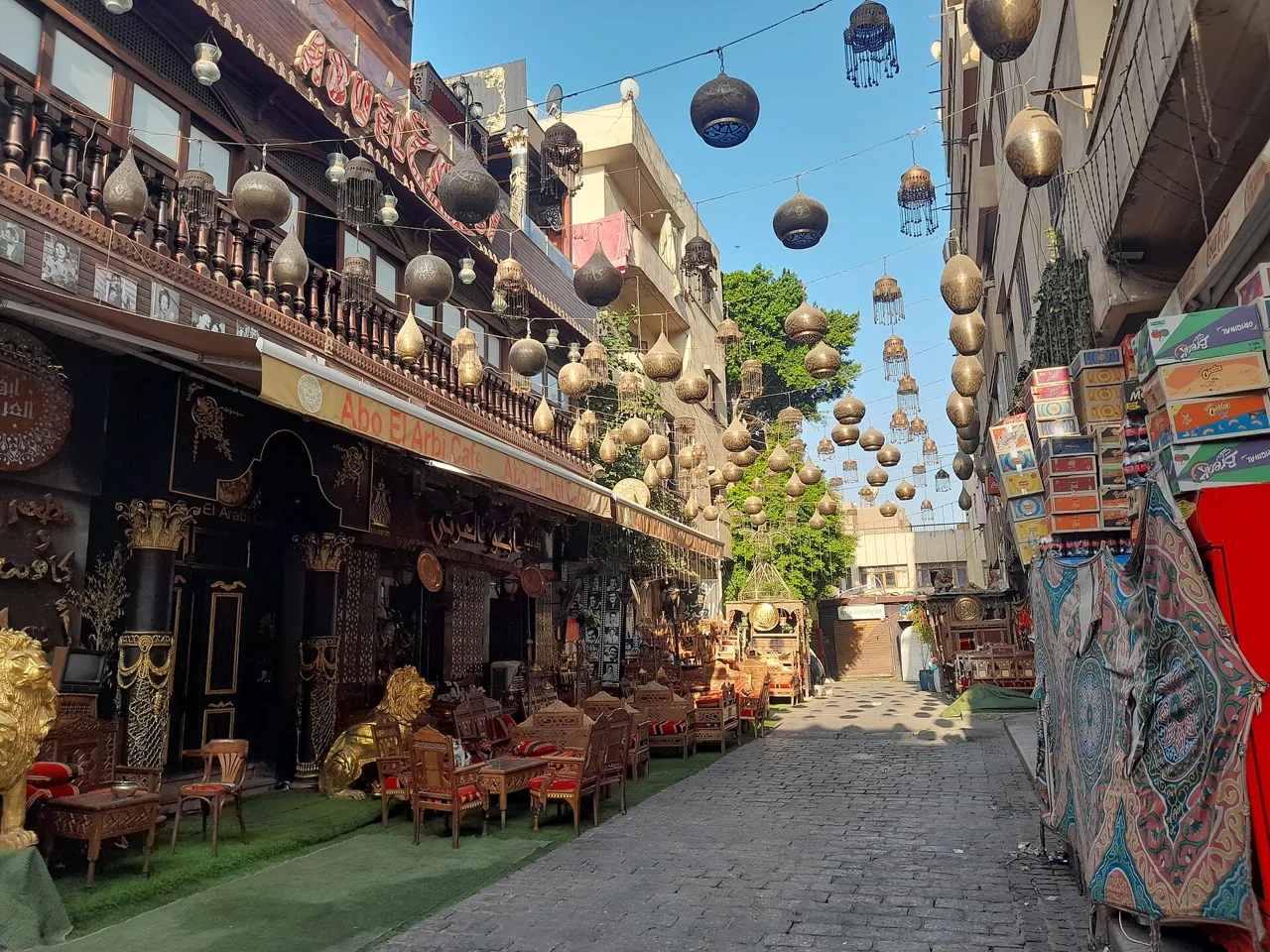
The honest case for each
Egypt suits travellers chasing depth in a single ancient civilisation. You come for the Pyramids, the temples and tombs of Luxor and Aswan, a Nile cruise between them, and Red Sea diving on the side, and you accept more heat, more hustle and more internal distance to get it. Morocco suits travellers who want immersion and scenery over monuments: the medinas of Fes and Marrakech, dramatic landscapes from the dunes to the mountains, food and craft, all a short hop from Europe. One is narrow and deep; the other is broad and sensory. If you already know that walking through a 4,500-year-old tomb matters more to you than getting lost in a spice souk, the decision is mostly made.
Cost
The two are broadly comparable per day. Egypt runs roughly $35–65/day at the budget end, $90–180/day mid-range, and $250+/day for luxury, excluding international flights and major tours (as of 2026 — verify). Morocco sits a touch higher on paper, around $50–80/day budget, $120–200/day mid-range, and $300–500+/day luxury, covering accommodation, food, transport and activities (as of 2026 — verify).
Morocco's headline sights are cheap to enter: walking the Fes and Marrakech medinas is free, and paid sites like the Jardin Majorelle, the Saadian Tombs and the Bahia Palace run about 70 MAD (~$7) each. Egypt's big fixed costs are the Nile cruise and the domestic flights that stitch the country together; a rounded first-time Egypt trip commonly totals around $2,500–4,000 per person once those are in (as of 2026 — verify). The signature multi-day add-ons land in similar territory too — a shared 3-day/2-night Marrakech–Merzouga Sahara tour starts around $90–150 per person, with mid-range private versions closer to $450–800.
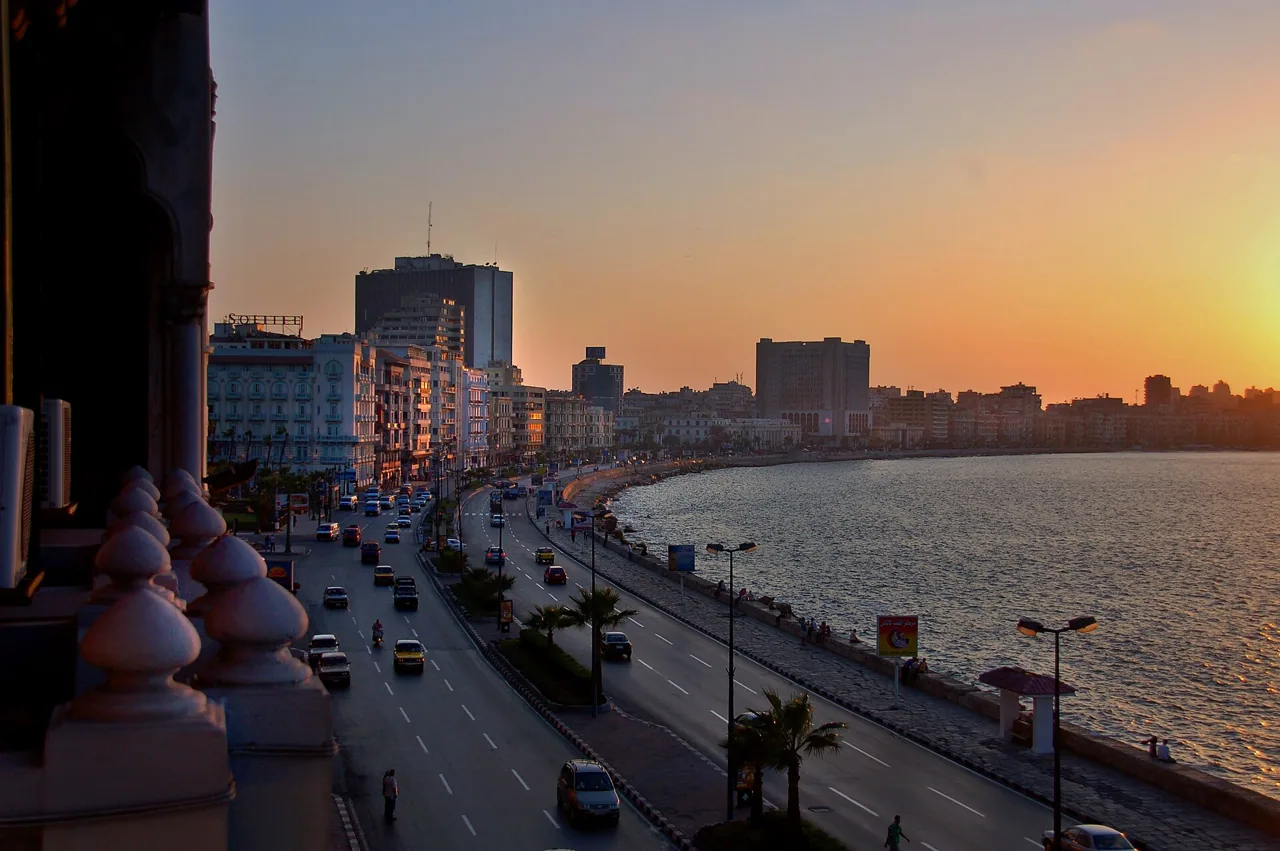
Headline sights and experiences
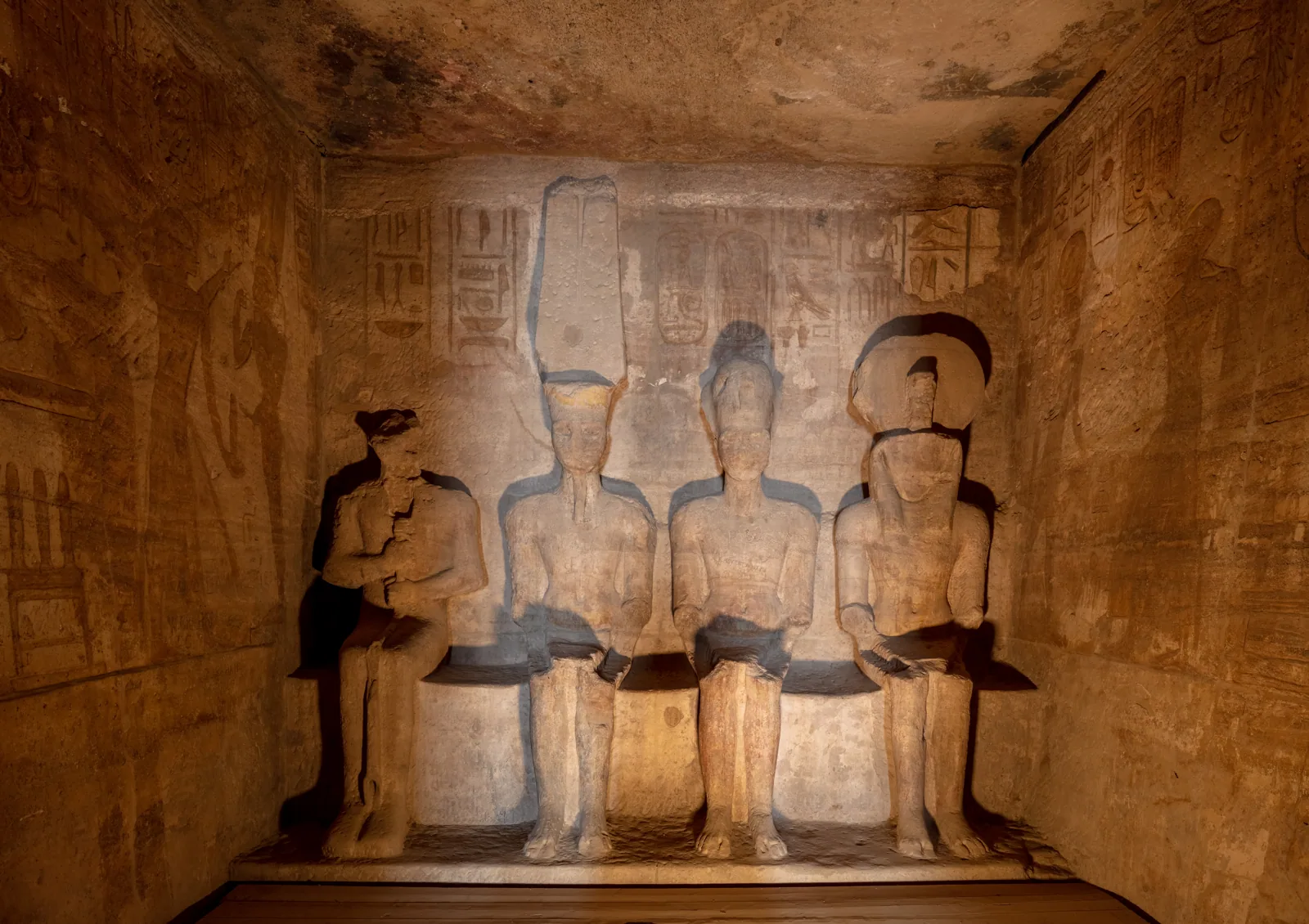
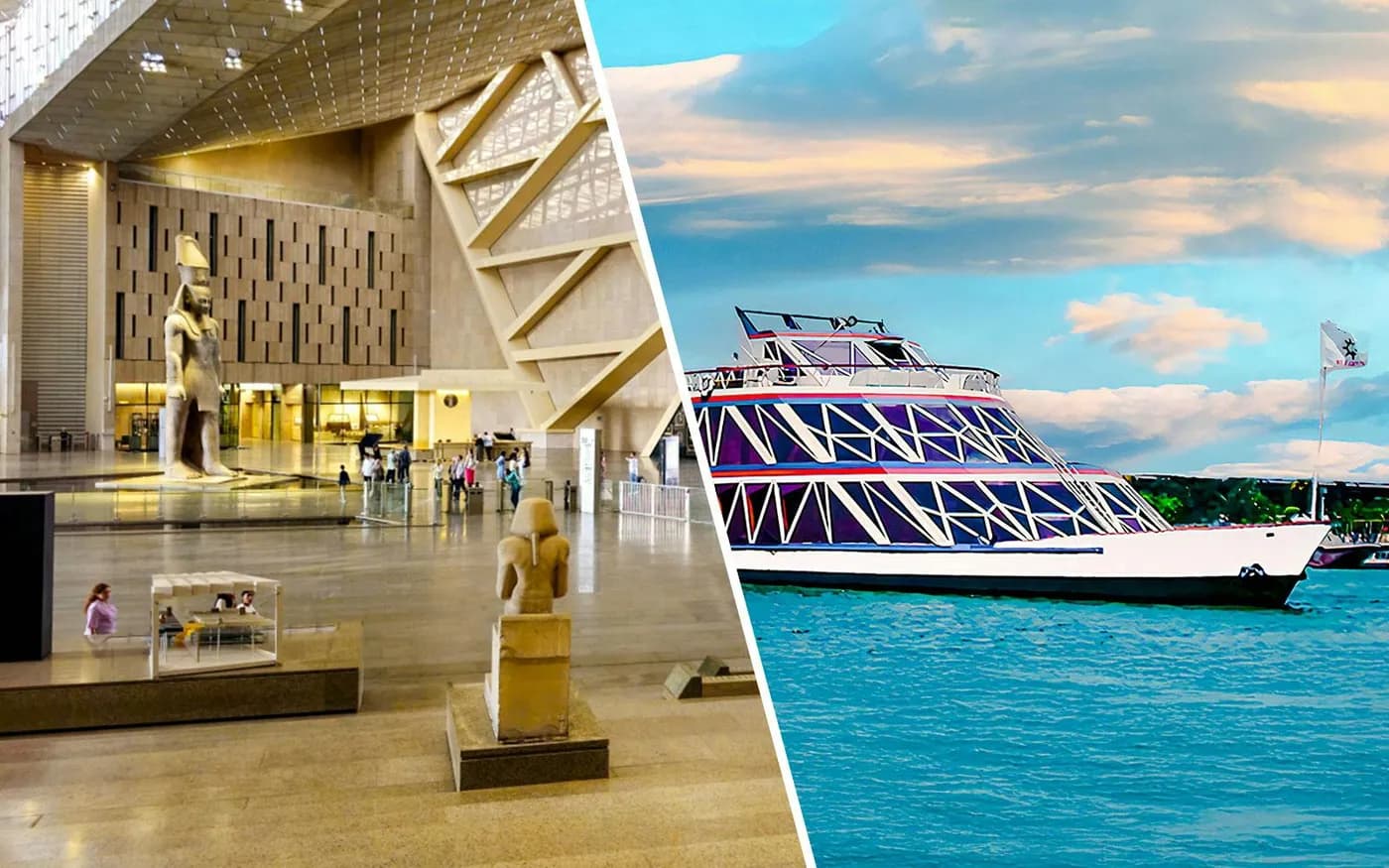
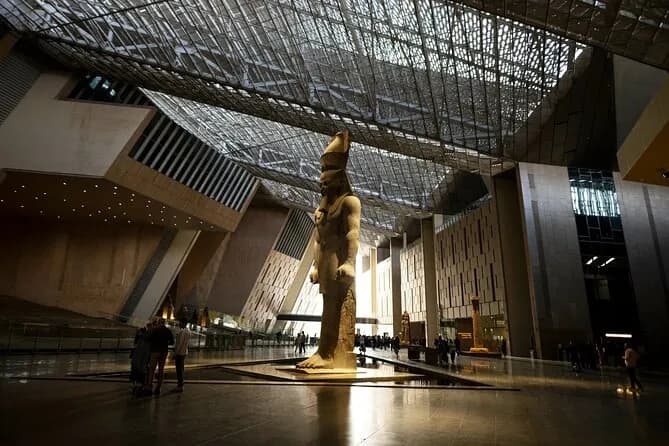
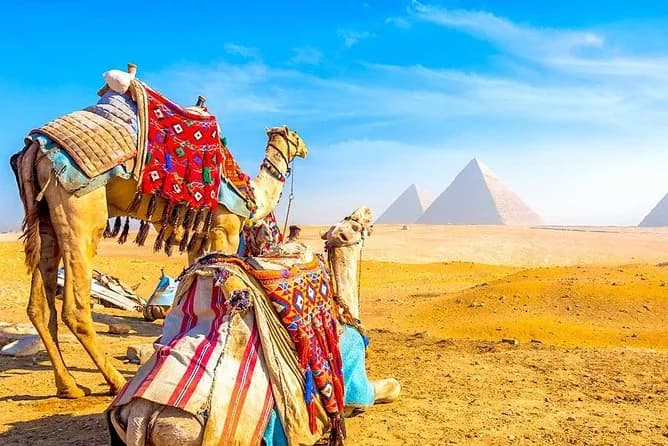
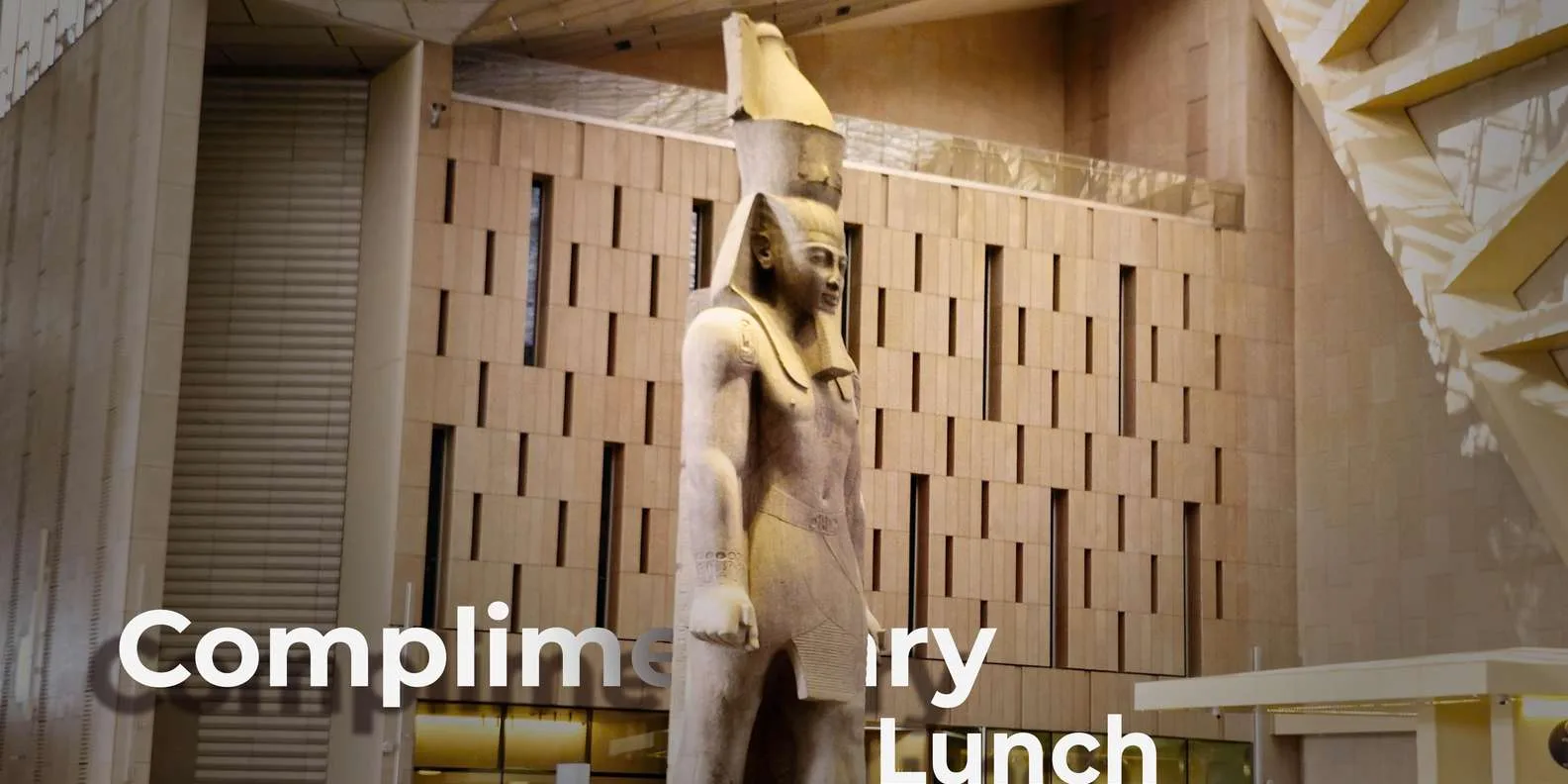
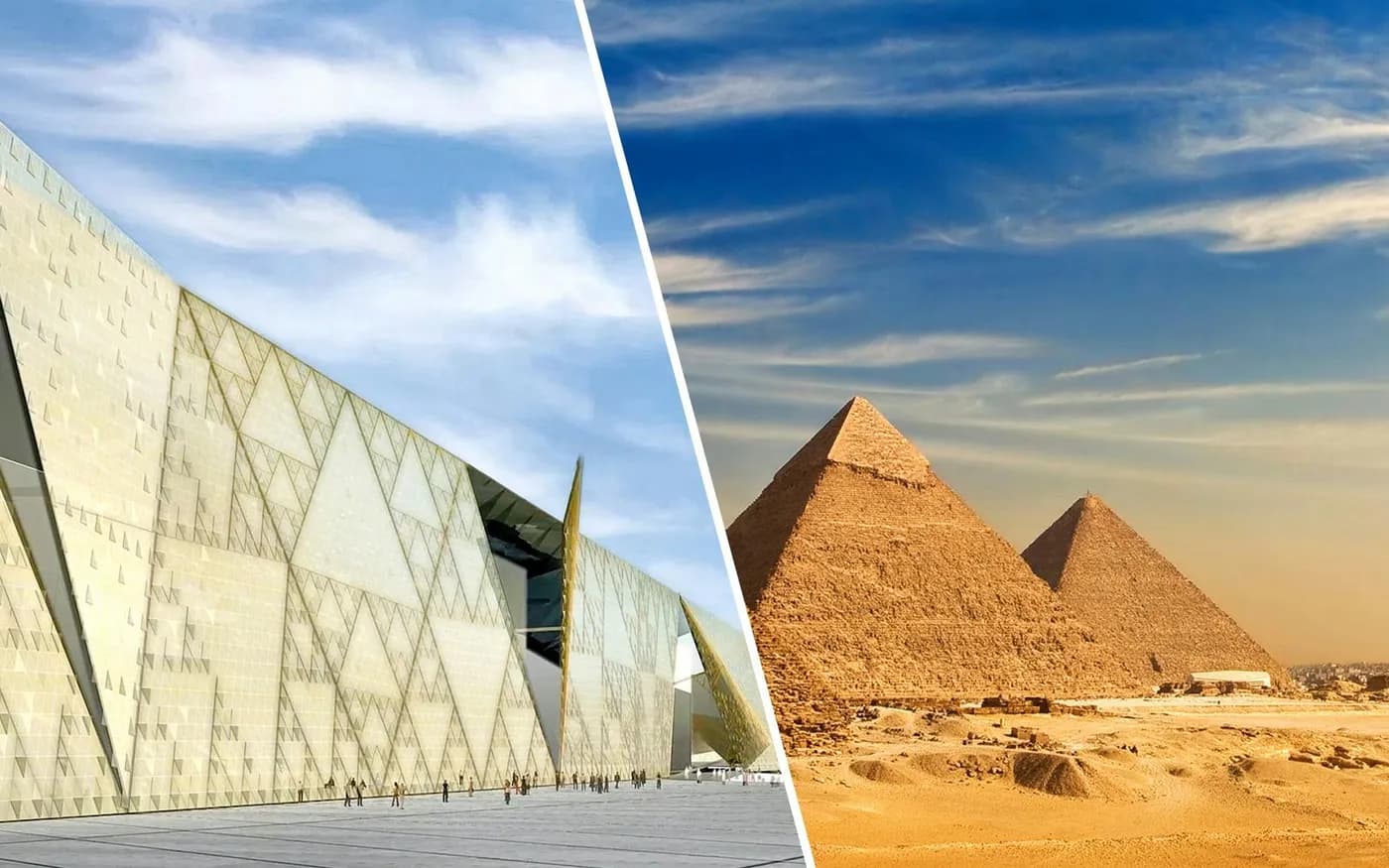
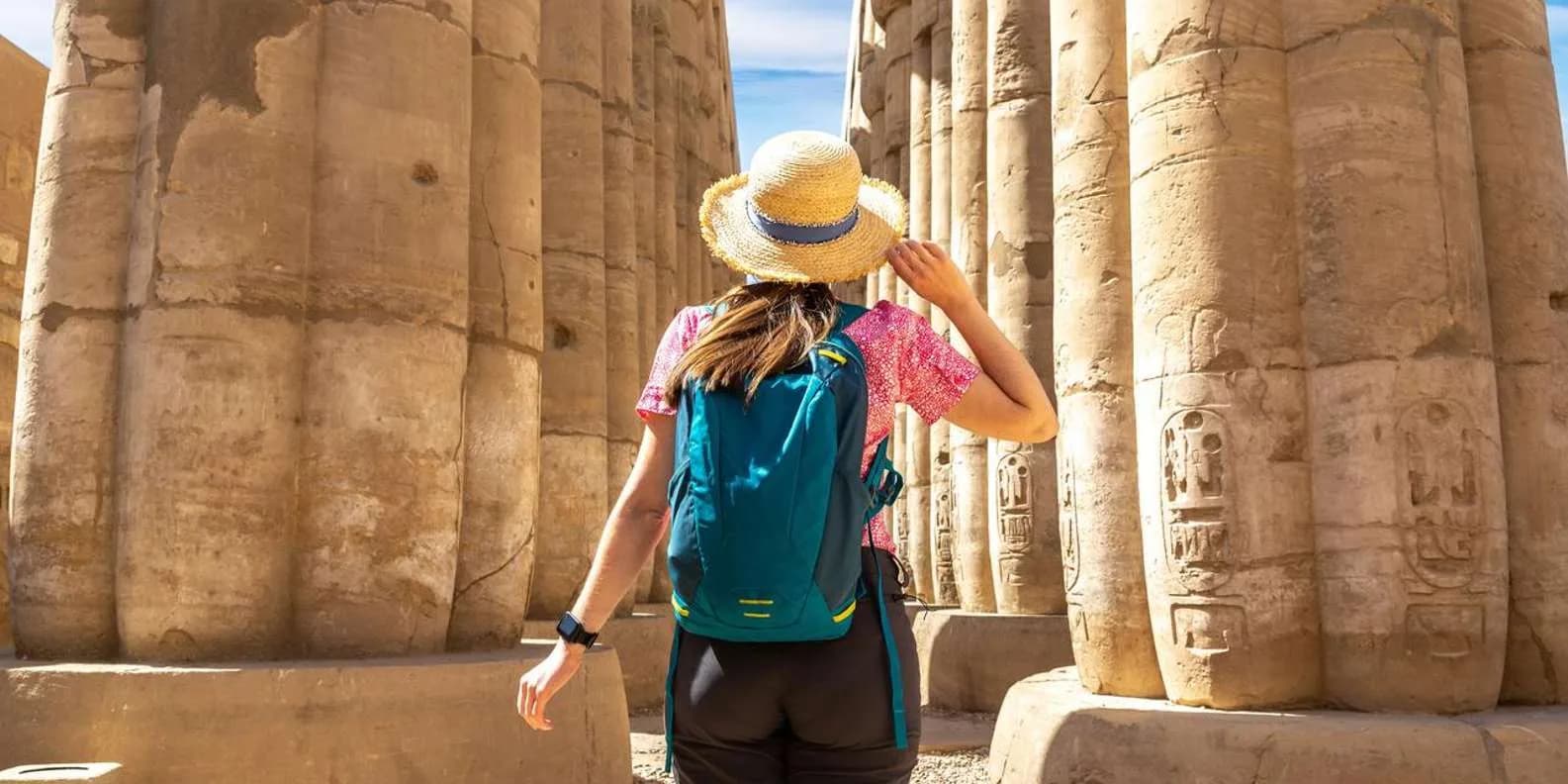
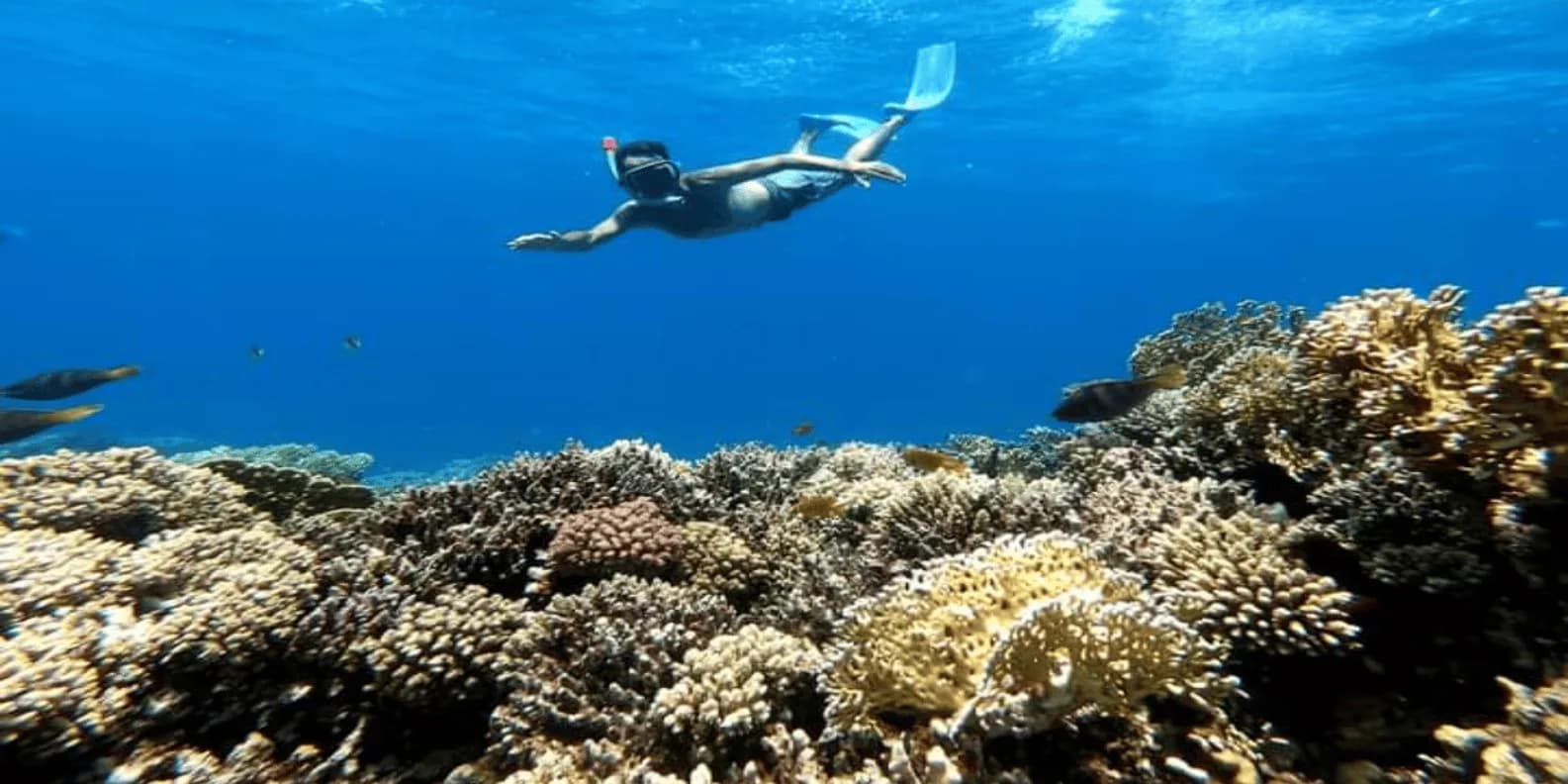
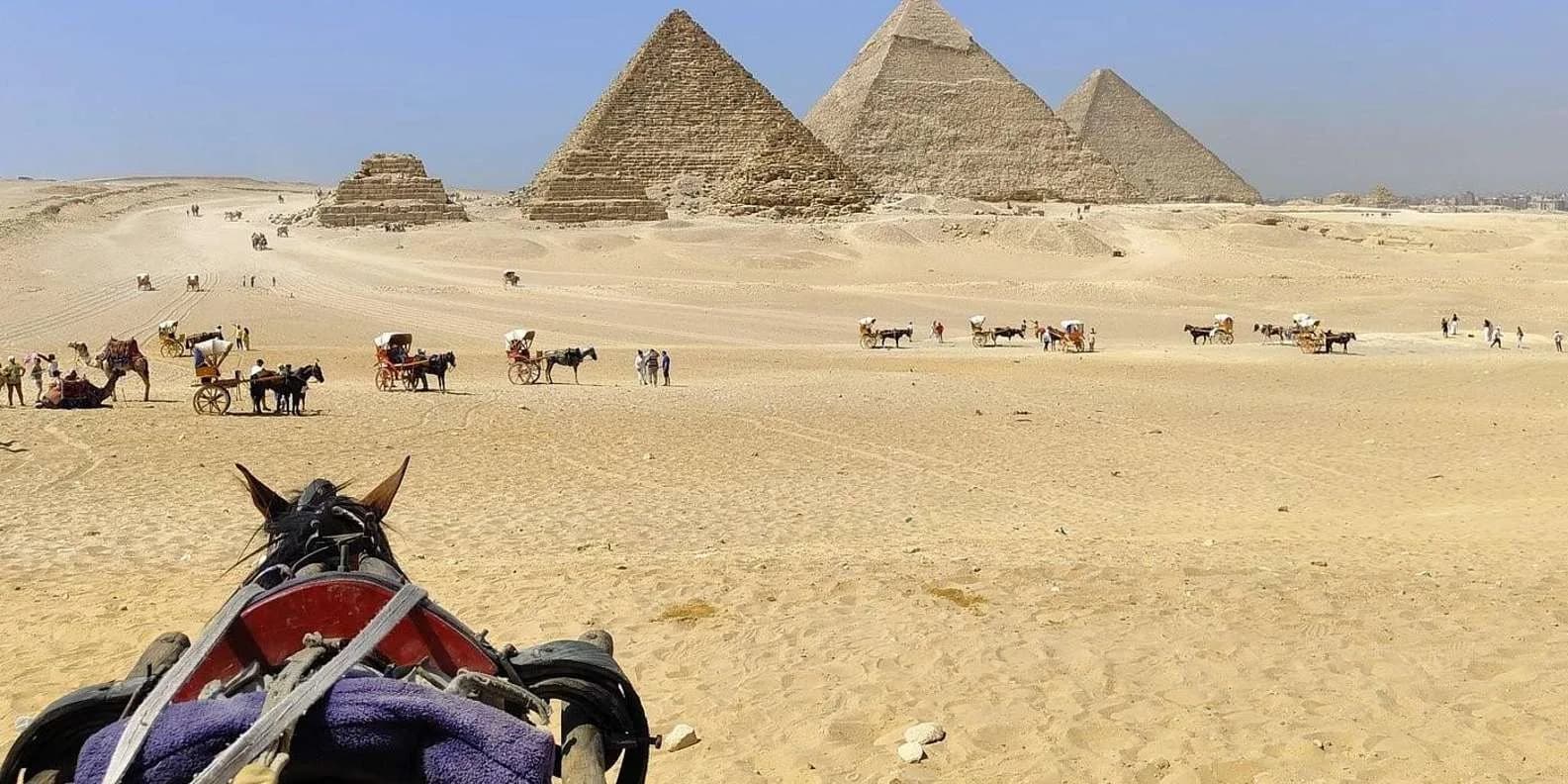
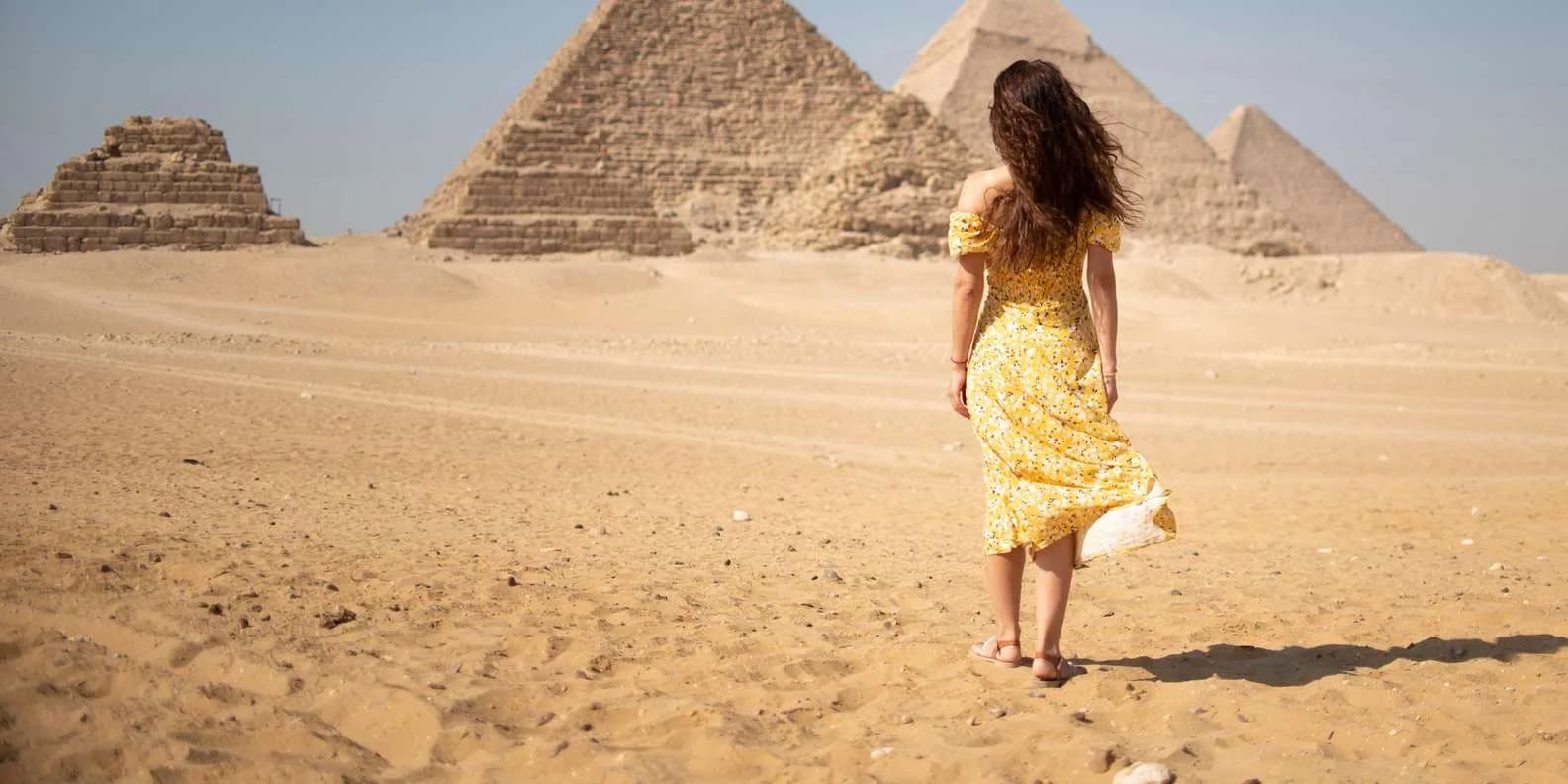
Egypt's roll call is hard to match: the Pyramids of Giza and the Sphinx, plus the Grand Egyptian Museum, which fully opened on 1 November 2025 near the Giza Plateau and holds around 100,000 artefacts. Add a Luxor–Aswan Nile cruise and Red Sea diving or snorkelling — shared snorkel trips run about $25–60 — and you have the core of the trip.
Morocco's highlights are about texture rather than scale. The medinas, souks, palaces and gardens of Fes and Marrakech are the cultural heart. The Sahara at Merzouga — camel treks and desert camps — and Atlas Mountains day trips (around 300–600 MAD / $30–60) are the landscape draws. Nothing in Morocco competes with the Pyramids for sheer monumental wow, and nothing in Egypt matches Morocco for atmospheric wandering. That contrast is the whole decision in miniature.
Effort and logistics
Egypt involves real internal distance. Cairo to Luxor or Aswan usually means a domestic flight, and a Nile cruise or structured tour is the common way to manage the whole thing. The street environment is busier, with more touts, which many first-timers find tiring.
Morocco is easier to reach but its landscapes are also far apart. Marrakech to the Merzouga dunes is about 554 km and 10+ hours one way, so the real Sahara realistically needs a 2–3 day overland trip rather than a day trip. If you only have a day and want a "desert" taste near Marrakech, the Agafay Desert is an option, but it's rocky and stony, not Sahara sand.
Entry favours both, with an edge to Morocco. Egypt offers an e-visa (single-entry ~$25) or visa on arrival for 45+ nationalities including the US, UK, Canada, Australia and most of Europe, for a 30-day stay (one source reports the VOA rose to $30 cash from 1 March 2026 — verify). Morocco grants visa-free access to 60+ nationalities, including the US, Canada, all EU states, Switzerland, Norway, Iceland and Japan, with others on an e-visa. Access from Europe tilts to Morocco: it's a short flight from many European hubs and shares only a one-hour time difference with the UK for much of the year, whereas Egypt is a longer haul.
Safety
Egypt sits at US State Department Level 2 (Exercise Increased Caution), with specific "Do Not Travel" designations for Northern and Middle Sinai and parts of the Western Desert near the Libyan border. The mainstream tourist corridor falls under the broader Level 2 caution, not those zones. Morocco sits at a lower advisory level — widely reported as Level 1–2 — which makes it one of the more reassuring choices in the region. In both countries, the day-to-day risks travellers actually report are scams, aggressive touts and petty theft in busy tourist areas, not violent crime. Check the current advisory for your nationality before you travel.
Best season
Egypt's popular window is October–April: cooler, busier and pricier. The shoulder months — late April to May and September to early October — trade some heat for better value. Morocco peaks in spring (March–May), which brings warm days, wildflowers in the Atlas and good desert conditions, with autumn (September–November) an excellent-value alternative. Both are punishingly hot in high summer, especially the Egyptian south and the Moroccan Sahara, so if summer is your only option, plan around the heat.
Choose Egypt if… / Choose Morocco if…
Choose Egypt if the ancient world is the point — Pyramids, temples, tombs, a Nile cruise and Red Sea diving — and you want maximum monument density and a strong culture-per-dollar ratio. You should be comfortable with more heat, more internal travel and a busier street scene.
Choose Morocco if you want medinas, souks, food, design and dramatic landscapes, with an easy short-haul from Europe and a reassuring safety profile. Put simply: Egypt for history-first, Morocco for atmosphere-and-landscape-first.
Can you combine them?
It's possible but uncommon. Egypt and Morocco sit at opposite ends of North Africa with no natural short overland link, so combining them means a long connecting flight, usually via a hub, rather than a neat twin-centre. Most operators instead pair each with a nearer neighbour — Egypt with Jordan, Morocco as a standalone or with Spain or Portugal. If you do want both, treat them as two separate holidays rather than one circuit.
Common misconceptions
"You can see the real Sahara on a Marrakech day trip." The Merzouga dunes are 10+ hours' drive each way; a genuine dune experience needs 2–3 days, and the day-trip "desert" at Agafay is stony, not sand.
"Egypt and Morocco are basically the same Arab trip." They deliver very different experiences: monument density and a Nile cruise versus medinas, mountains and desert culture.
"All of Egypt carries a blanket warning." The Sinai "Do Not Travel" zones are specific; the mainstream tourist corridor falls under the broader Level 2 caution. Verify current advice.
"Morocco is dirt cheap." Budget travel is genuinely affordable, but mid-range and private desert or Atlas tours are priced much like Egypt's equivalents.
What's On in Egypt
Events in Cairo

Egypt Press Photo Exhibition
Tahrir Cultural Center (AUC) · Downtown (Wust El Balad)

Exhibition Open Call
Tahrir Cultural Center (AUC) · Downtown (Wust El Balad)

Mental Health Week 2026
Tahrir Cultural Center (AUC) · Downtown (Wust El Balad)

A real team available 24/7 to assist you — free
Seif and the team reply on WhatsApp 24/7 — trip questions, custom plans and booking help.
Ask Seif on WhatsAppCommon questions
Is Egypt or Morocco cheaper to visit?
They're broadly comparable per day. Egypt runs roughly $35–65/day budget, $90–180 mid-range and $250+ luxury; Morocco about $50–80 budget, $120–200 mid-range and $300–500+ luxury (as of 2026 — verify). Egypt's big fixed costs are the Nile cruise and domestic flights, while Morocco's medinas are free to walk.
Which is easier to reach from Europe?
Morocco. It's a short flight from many European hubs and shares only a one-hour time difference with the UK for much of the year, whereas Egypt is a longer haul. That accessibility is one of Morocco's clearest practical advantages.
Can I see the Sahara on a day trip from Marrakech?
Not the real dunes. Marrakech to the Merzouga dunes is about 554 km and 10+ hours one way, so a genuine desert experience needs a 2–3 day overland trip. The day-trip alternative near Marrakech, the Agafay Desert, is rocky and stony rather than Sahara sand.
Do I need a visa for Egypt or Morocco?
Egypt offers an e-visa (single-entry ~$25) or visa on arrival for 45+ nationalities for a 30-day stay (one source reports the VOA rose to $30 cash from March 2026 — verify). Morocco grants visa-free access to 60+ nationalities including the US, Canada and all EU states. Check the rules for your own passport.
Which country is safer for tourists?
Both are managed with care. Egypt is US State Department Level 2 with specific Do Not Travel zones in Sinai and the Western Desert border; Morocco sits at a lower advisory level, widely reported as Level 1–2. In both, the common risks are scams, touts and petty theft rather than violent crime. Verify the current advisory before travel.
When is the best time to visit each?
Egypt is best October–April (cooler, pricier), with shoulder months in late April–May and September–early October for value. Morocco is best in spring (March–May), with autumn (September–November) a strong value alternative. Both are very hot in high summer, especially the Egyptian south and the Moroccan Sahara.
Can I combine Egypt and Morocco in one trip?
It's possible but uncommon. They sit at opposite ends of North Africa with no short overland link, so combining them means a long connecting flight via a hub. Most travellers instead pair Egypt with Jordan and treat Morocco as a standalone, so a combined trip works better as two separate holidays.
Book it on This is Egypt
Turn this guide into a trip





Egypt's bestsellers
The experiences travelers book most, across the country




Keep reading

5-Star vs 4-Star Nile Cruise (2026): What the Rating Really Means
On the Nile, star ratings are issued locally and generously — almost every boat calls itself 5-star. Here is what actually separates the tiers, and how to read past the label to the real price and quality.
By TiE Editors4 min read

Nile Cruise vs Lake Nasser Cruise (2026): Which Should You Choose?
A Nile cruise sails the temple-lined Luxor–Aswan corridor with dozens of boats to choose from; a Lake Nasser cruise is a remote, uncrowded sail to Abu Simbel and the Nubian temples. Here is the honest comparison.
By TiE Editors4 min read

Liveaboard vs Day-Boat Diving in the Red Sea (2026): Which to Choose
A liveaboard reaches the remote reefs and wrecks day boats can't — the Brothers, Daedalus, deep-south Egypt — but a day boat is cheaper, flexible and beginner-friendly. Here's the honest choice.
By TiE Editors4 min read