Abu Simbel Sun Festival: Dates & How to Visit (2026)
On 22 February and 22 October the rising sun lights up the inner sanctuary of Ramses II's Great Temple. What happens, why the dates shifted, and how to be there from Aswan.
Quick answer: Twice a year — on 22 February and 22 October — the rising sun shoots straight down the 60-metre axis of the Great Temple of Abu Simbel and lights up the gods seated in its innermost sanctuary. It's a 3,200-year-old feat of astronomical engineering, and it pulls thousands of people to a remote corner of southern Egypt before dawn. This is the Abu Simbel Sun Festival, and this guide covers exactly what happens, why, the dates, and how to be there.
For the temples themselves, read our full Abu Simbel guide; for your base, the Aswan travel guide.
What is the Sun Festival?
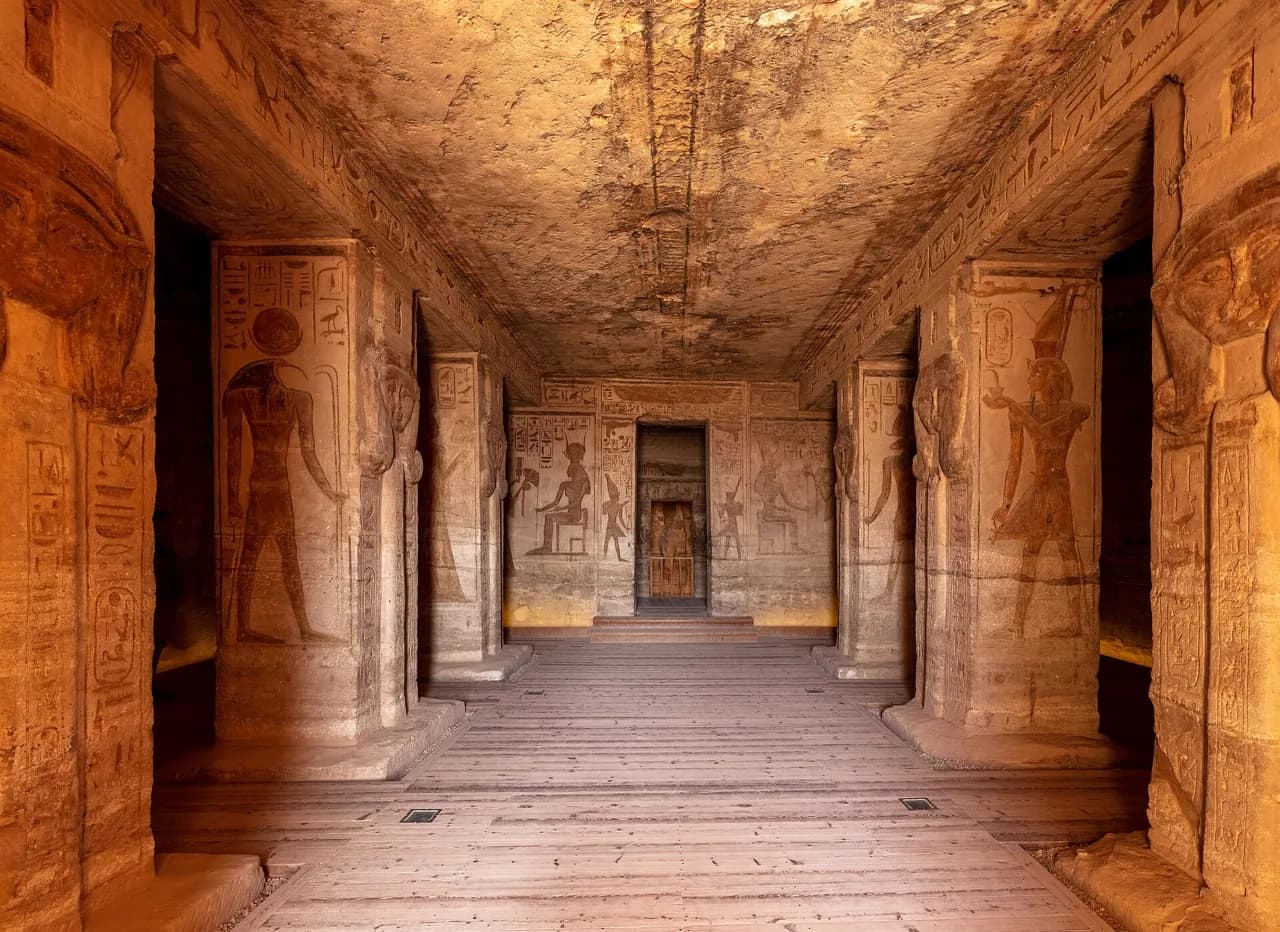
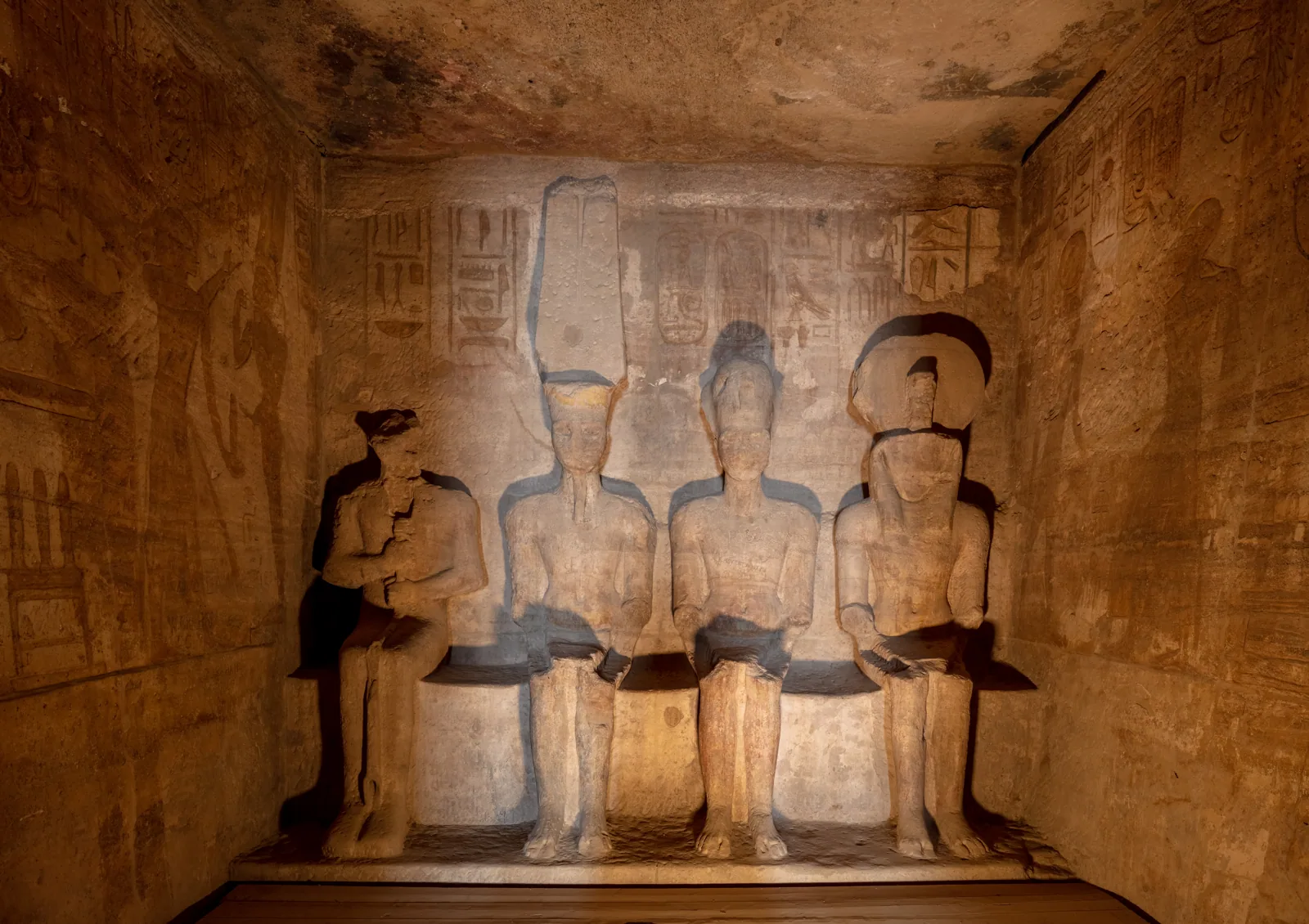
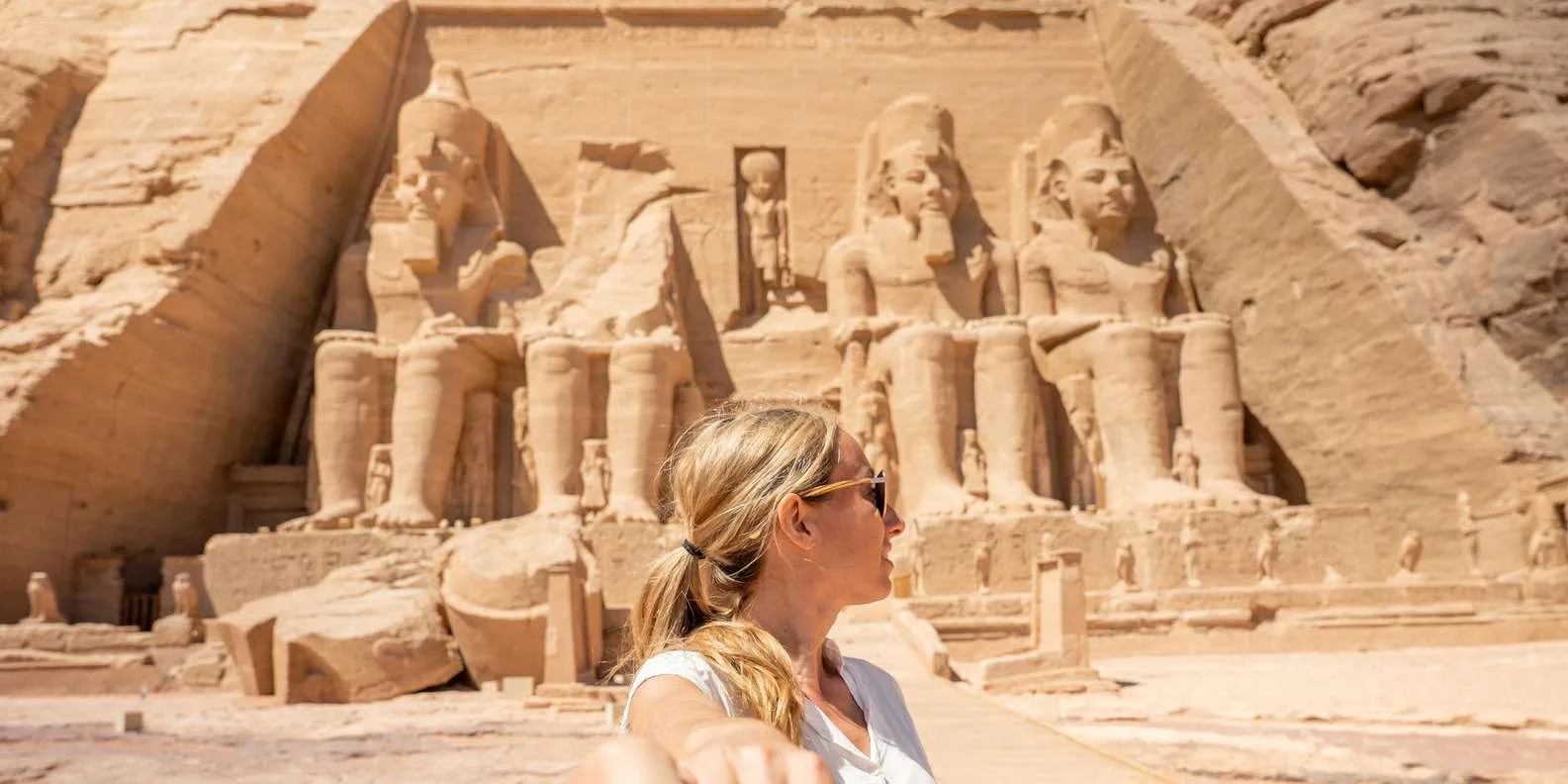
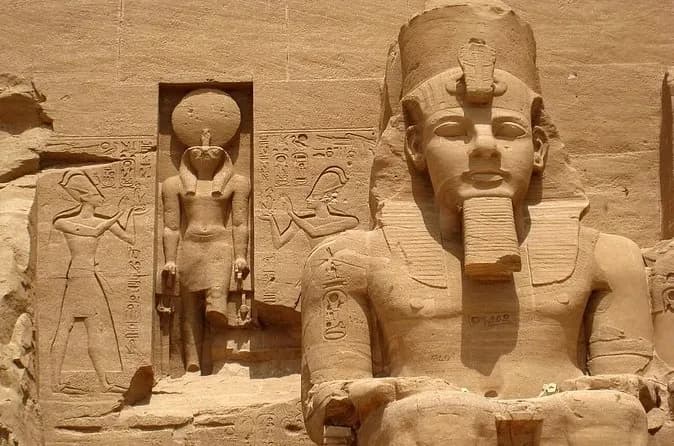
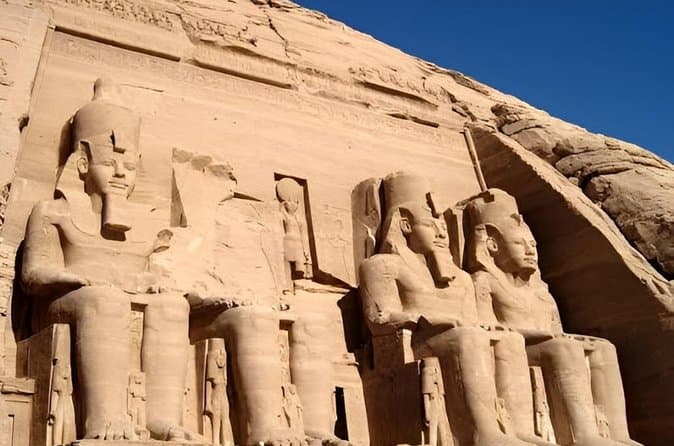
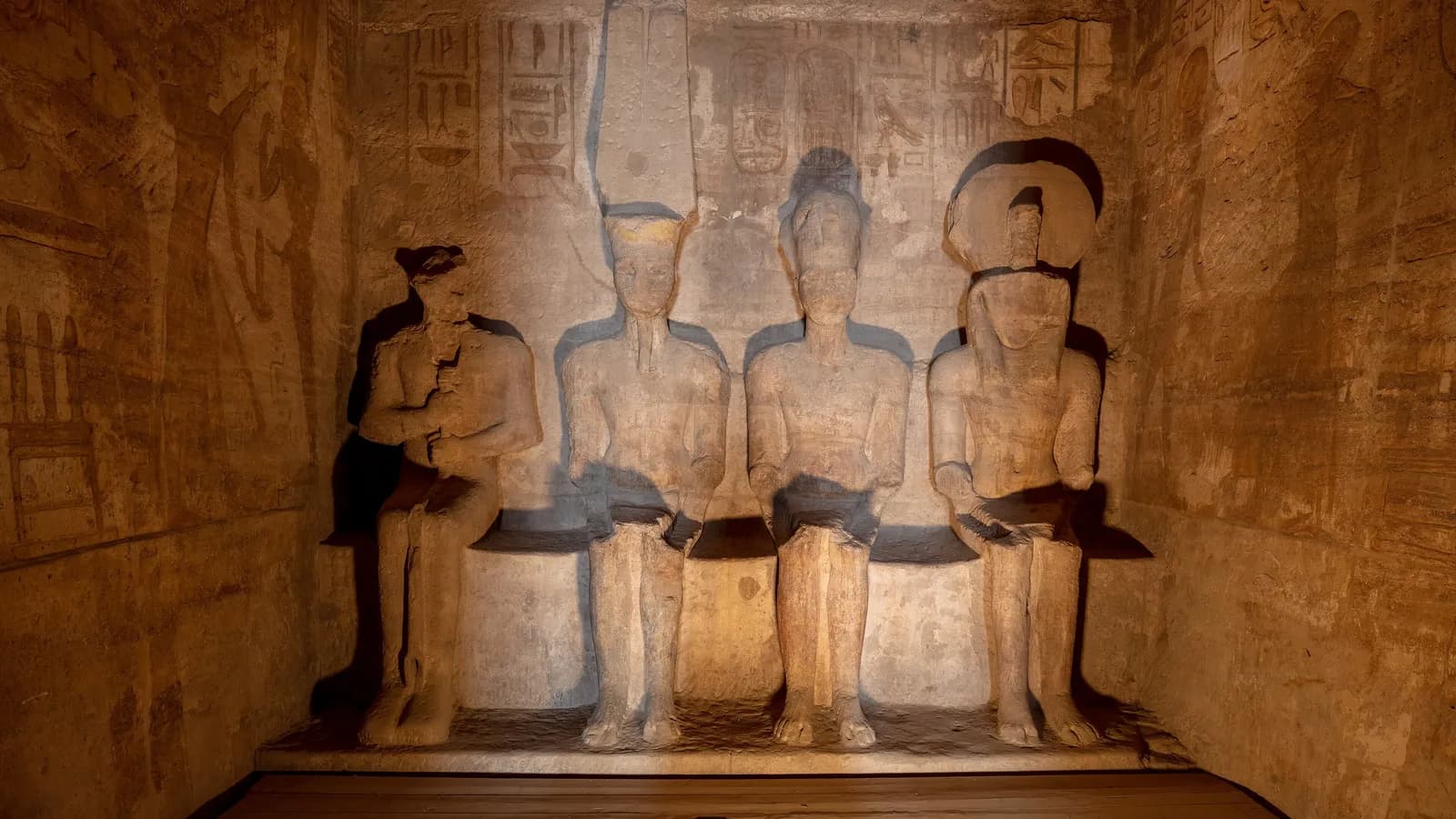
Ramses II built the Great Temple around 1265 BC, cutting it straight into a sandstone cliff above the Nile, its facade guarded by four seated colossi of the pharaoh, each about 20 metres tall. Follow the axis 60 metres inside and you reach the sanctuary, where four statues sit in a row: Ptah, Amun-Ra, the deified Ramses II, and Ra-Horakhty, the sun god.
The whole temple was oriented so that on two mornings a year the first light of dawn travels the entire length of the hall and floods three of those figures — Amun-Ra, Ramses and Ra-Horakhty — in gold, while Ptah, a god of the underworld and darkness, stays in shadow, exactly as intended. It is one of the ancient world's most precise solar alignments, achieved with no instrument more advanced than careful observation of the sun. Watching it happen — in a small, packed, torch-lit chamber, the beam creeping across 3,000-year-old stone — is genuinely moving.
Why 22 February and 22 October?
The two dates are traditionally read as marking Ramses's birthday and his coronation. But there's a twist most visitors don't know: the alignment originally fell on 21 February and 21 October.
In the 1960s the rising reservoir behind the new Aswan High Dam threatened to drown Abu Simbel completely. In one of the great feats of modern heritage rescue, a UNESCO-led campaign sawed the entire temple into more than a thousand blocks and rebuilt it 65 metres higher, inside an artificial mountain, between 1964 and 1968. The reconstruction was extraordinarily accurate — but the new orientation shifted the illumination by roughly a day, which is why the festival now lands on the 22nd. The temples are part of the Nubian Monuments World Heritage Site, and that rescue is what inspired the World Heritage Convention itself.
What actually happens on the day
| Time (approx.) | What to expect |
|---|---|
| 04:00–05:00 | Arrive in the dark; crowds gather, Nubian drumming and dancing begin outside |
| 05:30–06:00 | Doors open; visitors funnel toward the sanctuary |
| ~06:20–06:40 | Sunrise; the beam runs down the hall and lights the inner statues for ~20 minutes |
| Morning | Festival outside — music, dancing, food stalls, a genuine celebration |
The illuminated moment lasts only around 20 minutes, and the chamber is small and crowded, so you get a brief look rather than a long, private gaze. The event around it — the pre-dawn gathering, the Nubian celebration, the setting above Lake Nasser — is a big part of why people come.
The two temples
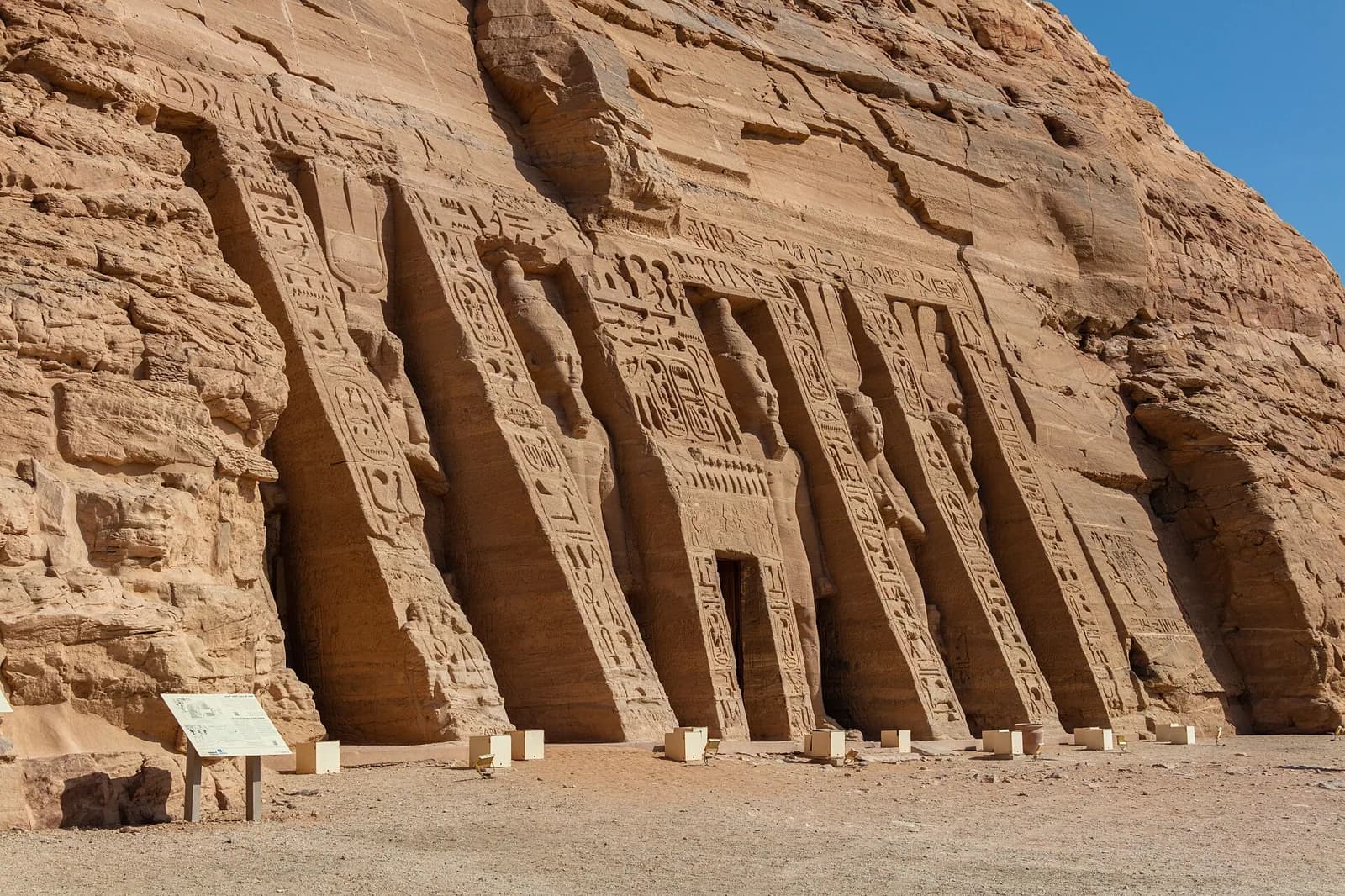
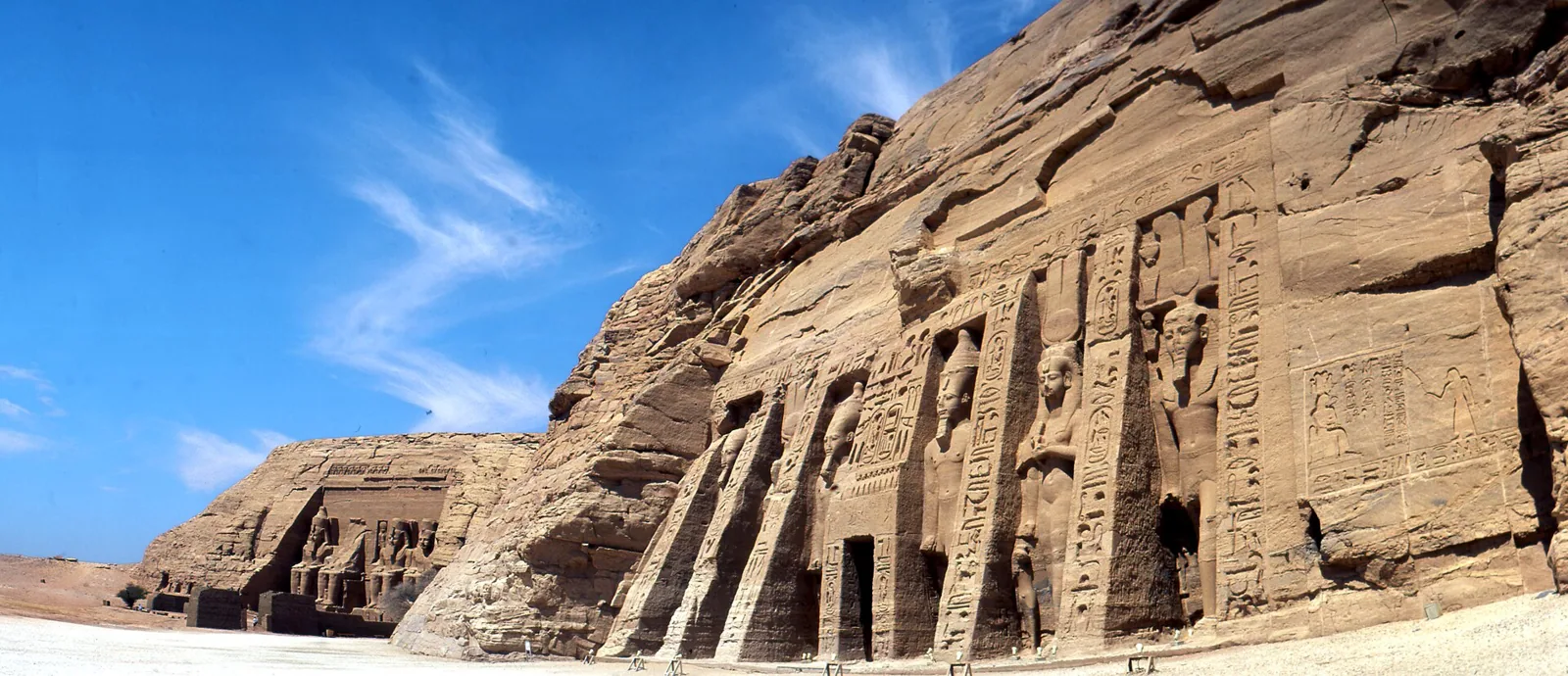 Don't overlook the Small Temple next door, which Ramses dedicated to his queen Nefertari and the goddess Hathor — one of very few ancient Egyptian temples built for a queen, its facade carved with statues of Nefertari the same height as the king, a rare honour. It isn't part of the solar alignment, but it's beautiful and far quieter than the Great Temple on festival morning.
How to be there
From Aswan. Most visitors base in Aswan and make the roughly 3-hour drive south (about 280 km) across the desert, leaving around 3–4am to arrive before sunrise. With the crowds and the pre-dawn start, this is a day to go with an organised tour or a private driver, not to improvise. See how the standard run works in our Abu Simbel day trip from Aswan guide.
Fly in. EgyptAir schedules extra flights to Abu Simbel's small airport around the festival; some travellers fly from Aswan or Cairo for the morning and out again the same day.
Stay overnight. A handful of hotels sit in Abu Simbel village. Sleeping there the night before means a short transfer instead of a 3am desert drive — the most comfortable option by far, but rooms vanish months ahead.
What to bring and know
- Arrive very early. Security and the funnel into the sanctuary take time; latecomers miss the moment.
- Photography is allowed in the temple, but tripods and flash are restricted and the crowd is dense — set expectations low for the perfect shot and simply watch.
- Dress in layers. The desert is cold before dawn and hot by mid-morning.
- Bring water and a hat for the celebration outside afterwards.
Book early — the catch
The Sun Festival is one of the few fixed-date events on Egypt's calendar, so everything sells out: hotels in Abu Simbel, the best Aswan tours and the extra flights all fill weeks to months in advance, and prices climb. If the festival is your goal, lock in accommodation and transport as early as you can. Browse day trips and tours from Aswan and reserve well ahead.
Is it worth it?
If you're already in southern Egypt in late February or late October, absolutely — it's a rare chance to see an ancient monument doing precisely what it was designed to do, wrapped in a real local celebration. If you'd be planning an entire trip around those 20 minutes, weigh it against the cost and the crush: Abu Simbel is breathtaking on any ordinary day, when the sanctuary is far more your own. Either way, pair it with things to do in Aswan, Philae Temple and ideally a Nile cruise to make the long journey south count.
Plan the trip
Time your visit to the best months for Egypt, fold Aswan and Abu Simbel into a wider Egypt itinerary, and book festival-morning transport early through tours from Aswan. The sun keeps its appointment on the 22nd — make sure you've kept yours.
What's On in Egypt
Events at Abu Simbel Temples
A real team available 24/7 to assist you — free
Seif and the team reply on WhatsApp 24/7 — trip questions, custom plans and booking help.
Ask Seif on WhatsAppCommon questions
When is the Abu Simbel Sun Festival?
Twice a year, on 22 February and 22 October, when the rising sun illuminates the inner sanctuary of the Great Temple of Ramses II. The dates are traditionally linked to the pharaoh's birthday and coronation.
Why does the sun light up the temple on those dates?
Ramses II's builders oriented the temple around 1265 BC so sunlight would travel 60 metres down its axis and illuminate three of the four sanctuary statues — Amun-Ra, Ramses and Ra-Horakhty — while leaving Ptah, a god of darkness, in shadow.
Why the 22nd and not the 21st?
The alignment originally fell on 21 February and 21 October. When the temple was cut into blocks and moved 65 metres uphill in the 1960s to escape Lake Nasser, the reconstruction shifted the orientation slightly, moving the illumination by about a day.
How do I get to the Sun Festival?
Most visitors drive about 3 hours (280 km) from Aswan, leaving around 3–4am to arrive before sunrise — best with an organised tour or private driver. You can also fly into Abu Simbel or stay overnight in the village to skip the pre-dawn drive.
What time does the illumination happen?
Doors open around 5:30–6am and the sunbeam reaches the inner statues shortly after sunrise, roughly 6:20–6:40am, lasting about 20 minutes. The Nubian celebration outside continues through the morning.
Do I need to book in advance?
Yes, strongly. It's a fixed-date event, so hotels in Abu Simbel, Aswan tours and extra flights sell out weeks to months ahead and prices rise. Reserve accommodation and transport as early as possible.
Is the Small Temple worth seeing too?
Definitely. The neighbouring Small Temple honours Ramses's queen Nefertari and the goddess Hathor — a rare temple for a queen, with statues of Nefertari as tall as the king — and it's much quieter than the Great Temple on festival morning.
Is the Sun Festival worth travelling for?
If you're in southern Egypt around the dates, yes — it's a unique sight and a genuine celebration. If you'd plan a whole trip solely around the 20-minute illumination, note that Abu Simbel is spectacular on any quieter day too.
Book it on This is Egypt
Turn this guide into a trip






Egypt's bestsellers
The experiences travelers book most, across the country





Keep reading
Abu Simbel Day Trip from Aswan (2026): Ramses II's Great Temples
The twin rock temples of Ramses II and Nefertari, moved stone by stone to escape Lake Nasser. How to visit from Aswan, real prices, the drive, and the sun festival.
By TiE Editors8 min read
Is Abu Simbel Worth It? (2026): The Honest Answer
Yes — the colossi of Ramesses II and Nefertari, and the astonishing story of moving the temples to escape Lake Nasser, make Abu Simbel a highlight. The catch is the distance. How to make the trip work.
By TiE Editors4 min read
Abu Simbel: How to Visit Ramesses II's Great Temples (2026)
Ramesses II carved two temples into a Nubian cliff in the 13th century BC. Here is how to visit them from Aswan, when the sun lights the sanctuary, and how they were moved 65m in the 1960s.
By TiE Editors7 min read