Abu Simbel Day Trip from Aswan (2026): Ramses II's Great Temples
The twin rock temples of Ramses II and Nefertari, moved stone by stone to escape Lake Nasser. How to visit from Aswan, real prices, the drive, and the sun festival.
Quick answer: Abu Simbel is the most dramatic single monument in Egypt, and reaching it is part of the story. You can visit on a long day trip from Aswan by road (around three to three and a half hours each way, with a pre-dawn start), by a short 45-minute flight that turns the whole thing into a half-day, or as the finale of a Lake Nasser cruise. The most-booked road option is a group coach with hotel pickup from about 3,466 EGP (roughly 71 USD) per person; flights cost more but save you the marathon. Whichever way you go, two colossal rock temples carved for Ramesses II in the 13th century BC wait near the Sudanese border, on the shore of Lake Nasser, and they are worth every hour of the effort.
What Abu Simbel is, and why it earns the trip
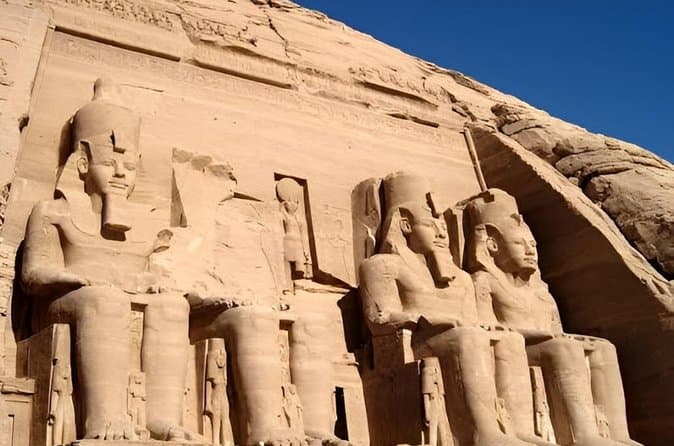
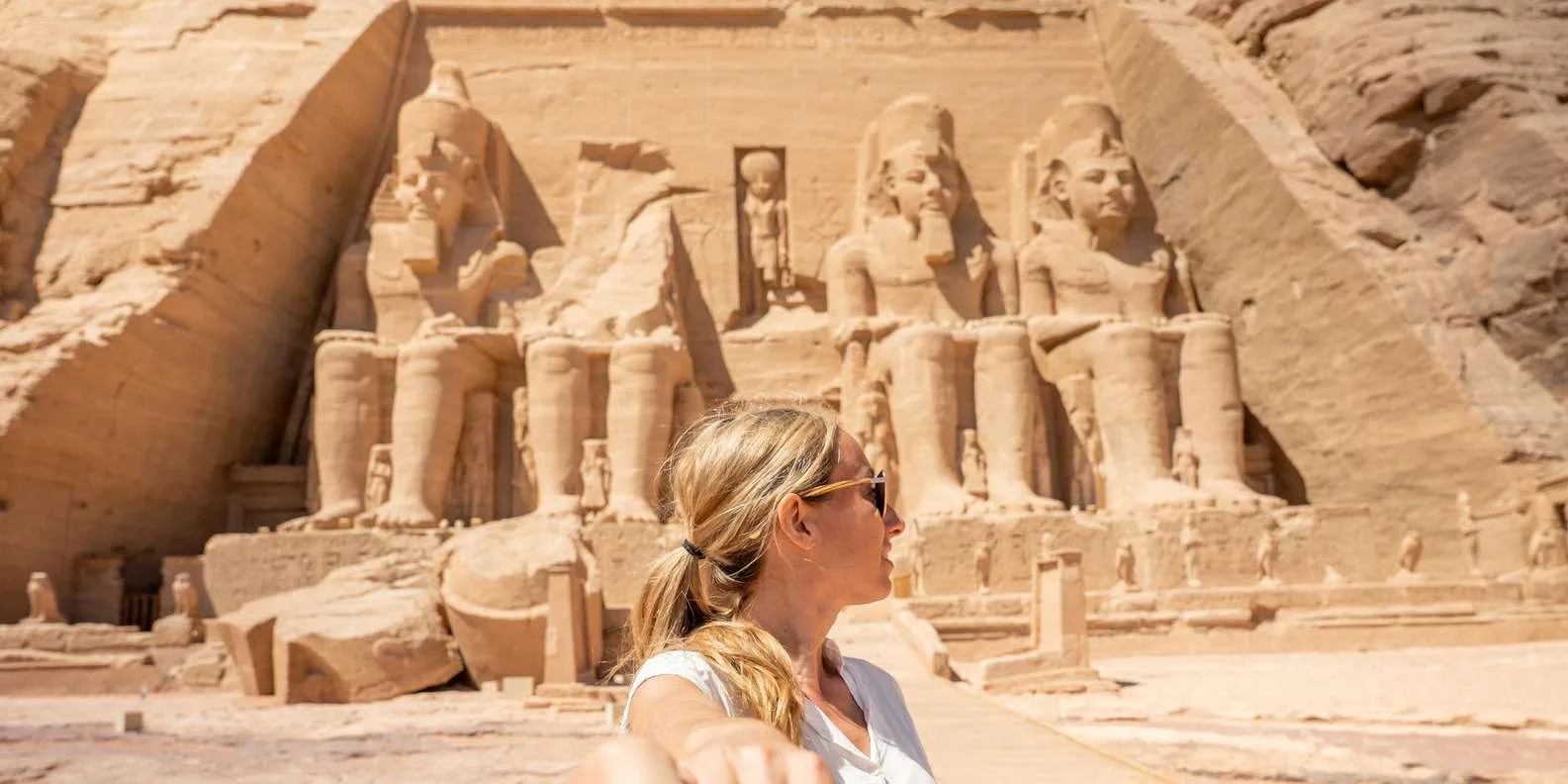
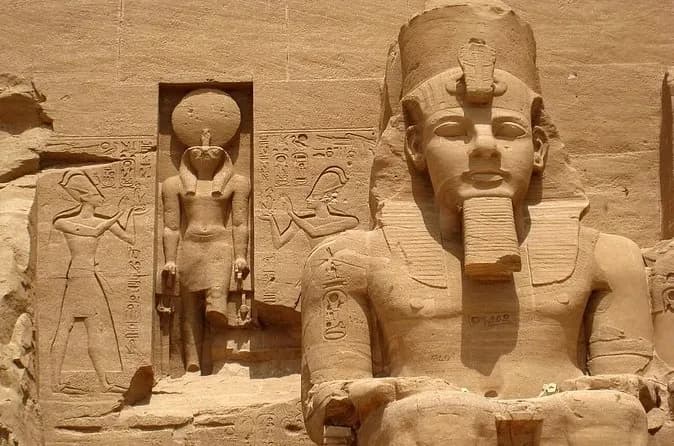
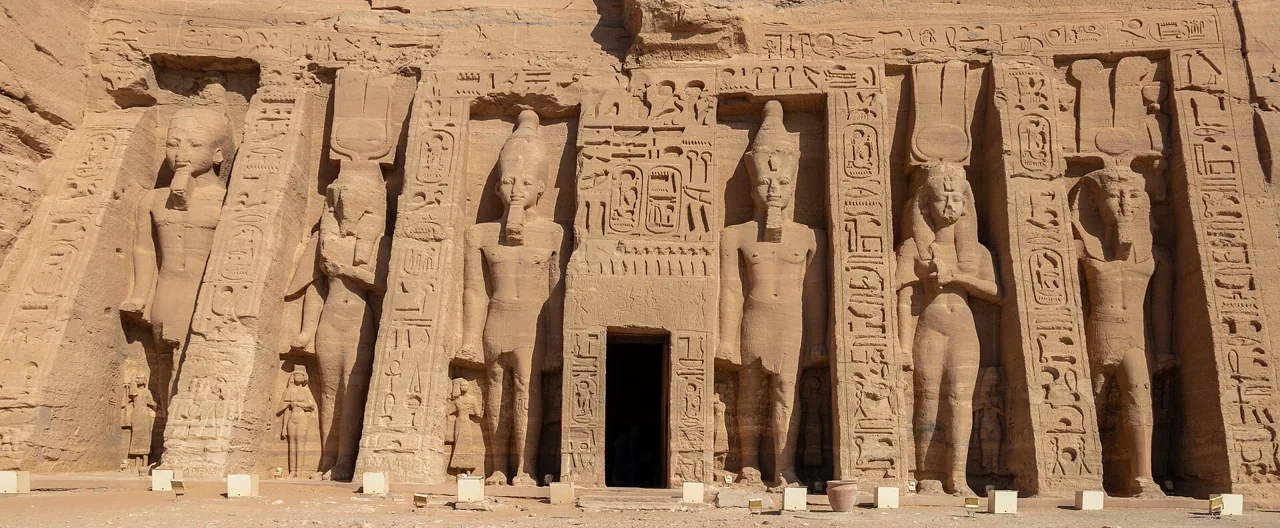 Ramesses II built Abu Simbel to be seen. He cut it directly into a sandstone cliff more than 280 kilometres south of Aswan, at the far southern edge of his kingdom, so that anyone arriving from Nubia understood exactly whose land they were entering. The Great Temple is fronted by four seated statues of the pharaoh, each roughly 20 metres tall, staring out over the water with an expression of untroubled confidence. Between and around their feet stand smaller figures of his mother, his queen and his children, dwarfed to the scale of ankles. Nothing else in Egypt hits you quite this way on first sight.
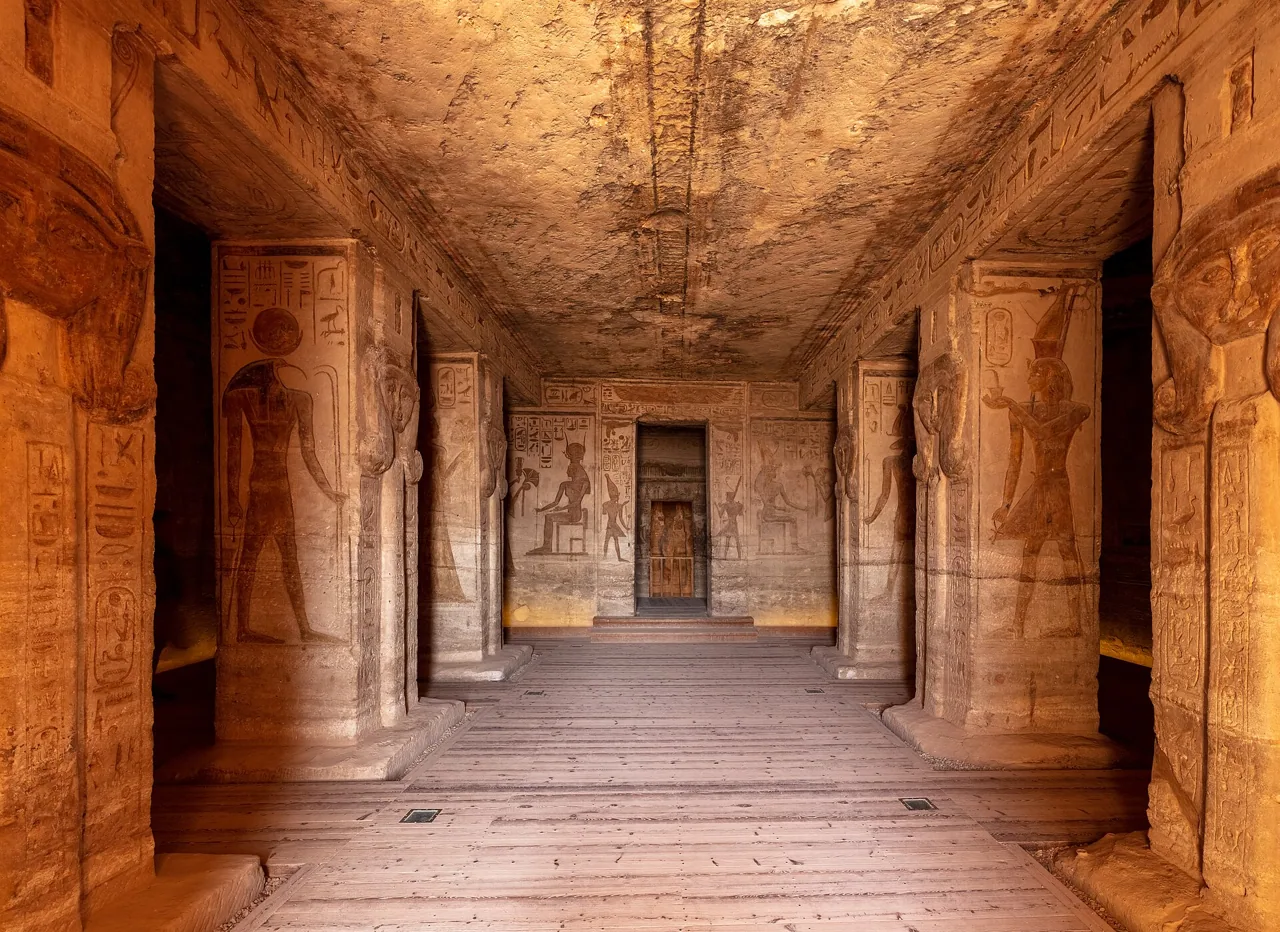
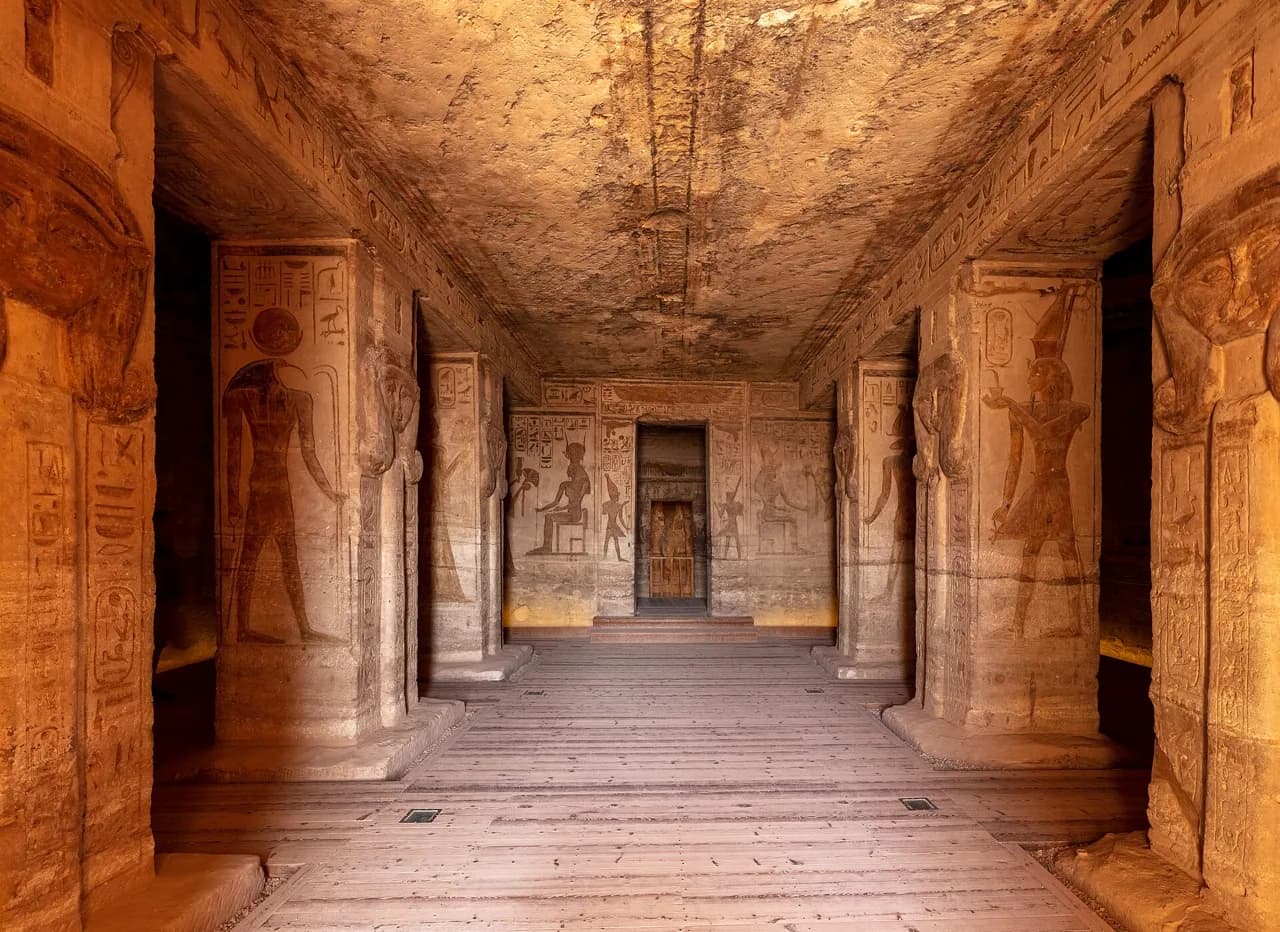
Step inside and the theatre continues. A hall of pillar-statues shaped as Ramesses himself leads deeper into the rock, past walls carved with his version of the Battle of Kadesh, the great chariot clash with the Hittites that he fought to a draw and then commemorated everywhere as a triumph. At the far end, some 60 metres into the mountain, sits the sanctuary, where four seated gods wait in the dark: Ptah, Amun, Ra-Horakhty and a deified Ramesses.
Beside the Great Temple stands its smaller, gentler companion: the Temple of Nefertari, dedicated to Ramesses' favourite queen and to the goddess Hathor. Its facade carries six standing figures, and the detail that matters is the proportion. Nefertari is shown at the same height as her husband, a near-unheard-of honour for a queen, who was normally rendered knee-high beside the king. Both temples are UNESCO World Heritage sites, and the interior reliefs reward slow looking as much as the giant facades outside.
The rescue that saved it from Lake Nasser
What makes Abu Simbel doubly remarkable is that none of it stands where it was built. In the 1960s, the Aswan High Dam was rising, and the reservoir gathering behind it, Lake Nasser, was going to swallow this entire stretch of Nubia. The temples would have drowned under tens of metres of water.
Instead, between 1964 and 1968, an international team assembled by UNESCO carried out one of the great feats of modern engineering. They sawed both temples into more than a thousand numbered blocks, some weighing up to 30 tonnes, and reassembled them on an artificial hill 65 metres higher and around 200 metres back from the original site. To carry the weight of the fake cliff overhead, engineers built a vast concrete dome, hidden inside the hill. Standing in front of the facades today, it is almost impossible to tell that any of it moved; the seams between blocks are there if you know to look, faint as scars. Knowing the story adds a layer the ancient builders never intended: a 3,200-year-old monument that was also, within living memory, lifted out of the path of a flood.
Getting there from Aswan
There are three honest ways to do this, and the right one depends on your budget and your stamina.
By road. This is how most visitors go: roughly three to three and a half hours each way across open Nubian desert, so a pre-dawn start is standard. For years travellers left in a fixed police-escorted convoy around 3:30 or 4:00 in the morning; that strict system has largely relaxed, and you now pass through checkpoints rather than moving in a rigid column, which gives operators more flexibility on timing. The most-booked option is a group day trip with hotel pickup and an air-conditioned coach, from about 3,466 EGP (roughly 71 USD) per person, holding a 4.45 rating across more than 3,000 reviews. Private day trips cost more but let you set the pace, choose your departure time, and arrive ahead of the coach crowds.
By flight. Short domestic flights connect Aswan and Abu Simbel in about 45 minutes each way, turning the whole visit into a comfortable half-day rather than a full one. You fly down in the morning, spend a couple of hours at the temples, and fly back before lunch. It costs more than the coach, and schedules can be limited, but if time or energy is short it is the gentlest option by a wide margin.
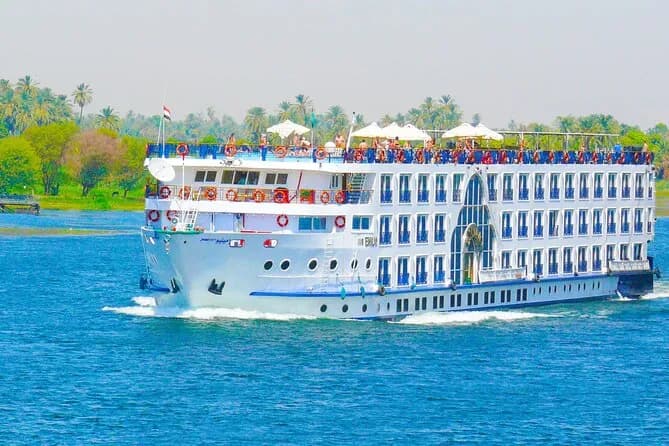
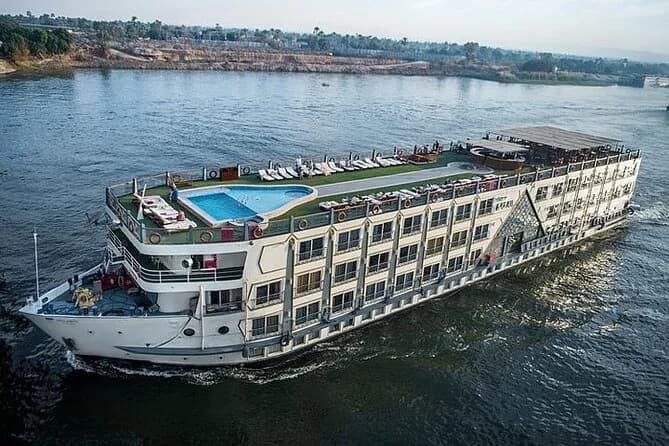
By Lake Nasser cruise. For travellers who want the temples woven into a bigger journey, a Lake Nasser cruise approaches Abu Simbel from the water, the way the site was always meant to be seen, and typically calls at other rescued Nubian monuments along the way, such as Kalabsha, Wadi el-Seboua and Amada. Three- and four-night itineraries run between Aswan and Abu Simbel and usually end with the great temples as the climax. This is the slowest and most expensive route, and also the most atmospheric.
The Sun Festival
Twice a year, on 22 February and 22 October, Abu Simbel performs the trick it was engineered to perform. At sunrise the light aligns with the temple's long axis and travels the full 60-odd metres down the Great Temple to reach the sanctuary at the back, illuminating the faces of the seated gods, Amun, Ra-Horakhty and the deified Ramesses. Only Ptah, associated with the underworld and darkness, stays in shadow, exactly as he does the rest of the year. The two dates are thought to mark Ramesses' coronation and his birthday. The alignment happens around 6:00 to 6:15 in the morning and lasts roughly 20 minutes. Even after the relocation shifted the temple, the effect still works, now falling a day or so off the original ancient dates. These mornings draw large crowds, music and celebration to the site, so plan for far bigger numbers and book well ahead if your trip coincides.
Timing: how early to leave
For a road trip, plan on a start somewhere between 3:30 and 5:00 in the morning if you want to arrive with the site opening and beat the heat. The catch is that this is also when every coach leaves, so the early hours can be surprisingly busy at the temples themselves. A quieter strategy, available mainly on private tours, is to leave a little later, around 8:00, and arrive late morning as the big groups are heading back to Aswan, trading the cool of dawn for emptier temples. Flights sidestep the whole timing question. However you travel, aim to be inside the Great Temple, not queuing outside it, by mid-morning.
What a typical day trip includes
 A standard road day trip covers hotel pickup in Aswan, the round-trip drive in an air-conditioned vehicle, and around two hours at the site, enough to see both temples without rushing. Better-value private and small-group tours add an Egyptologist guide who brings the reliefs and the relocation story to life; entrance fees are sometimes included and sometimes charged separately, so confirm before you book. Flight packages bundle the return airfare, airport transfers and usually a guide, compressing the same experience into a few hours.
Costs at a glance
The most-booked group coach day trip from Aswan starts from about 3,466 EGP (roughly 71 USD) per person, with hotel pickup included. A guided group tour with entrance fees runs near 3,219 EGP. Private day trips cost more, but buy flexibility on timing and the chance to dodge the coach crowds. Flights are the priciest day-trip option and Lake Nasser cruises pricier still, since you pay for a whole multi-day experience rather than a single stop. Treat these as anchors rather than fixed quotes; prices shift with season and group size.
Combining Abu Simbel with a Nile cruise
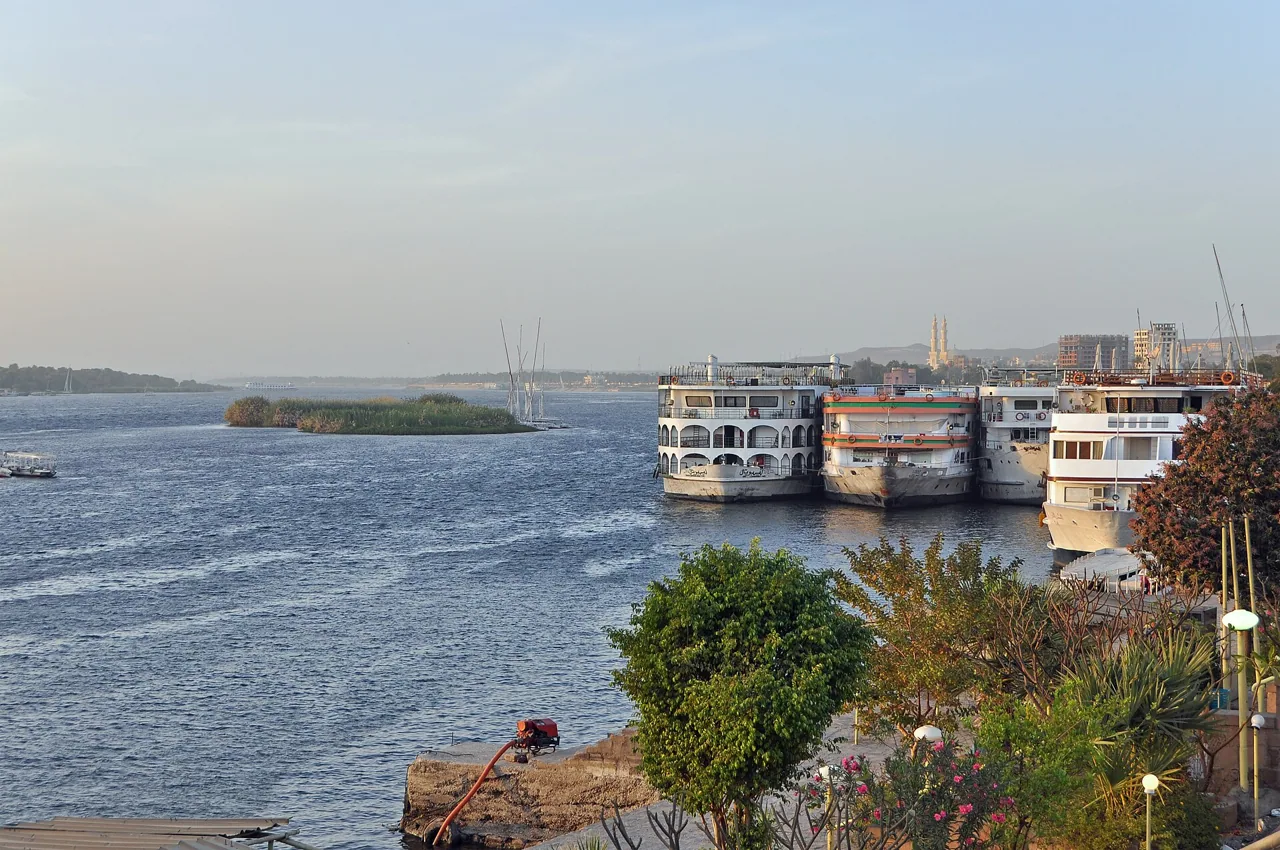 Abu Simbel pairs naturally with the classic Nile journey. Many travellers reach Aswan on an Aswan-to-Luxor cruise, add Abu Simbel as a day trip or flight from Aswan, and see the two great southern set-pieces of Egypt on one trip. If you would rather not do the long desert drive at all, a dedicated Lake Nasser cruise builds Abu Simbel in from the start and approaches it by water. Either way, thinking of Abu Simbel as part of your Upper Egypt itinerary, rather than an isolated errand, is the way to get the most out of the region.
Practical tips
- Start early, or deliberately late. Dawn is cooler for the drive; a later private start gets you emptier temples. Pick one strategy.
- Bring your passport. You travel close to the Sudanese border and pass through checkpoints.
- Carry water, snacks, a hat and sun protection. The site is fully exposed and shade is scarce; in summer the midday heat here is serious.
- Go private to beat the coaches, or fly if time matters more than money.
- Photography is allowed outside; interior rules vary and may require a ticket or ban tripods, so check on the day.
- Combine it with Aswan's own sights on a separate day, such as Philae Temple, the High Dam and the Unfinished Obelisk.
A day trip to Abu Simbel from Aswan asks for an early alarm and, by road, six or seven hours of driving, and gives back one of the most powerful sights in the ancient world, made stranger by the knowledge that the whole complex was moved to save it. Book the group coach from about 3,466 EGP for value, go private to beat the crowds, or fly if time is short. Browse Aswan tours and experiences for the wider region, go deep on the monument itself in our Abu Simbel temple guide, plan the classic river journey with the Aswan to Luxor Nile cruise guide, or search all Egypt experiences to build your trip.
Abu Simbel day trips to book (2026)
Day trips to Abu Simbel from Aswan run about 3,500–4,500 EGP (~$70–90) per person by road, and an impressive 93% offer free cancellation; private and by-flight options and Luxor departures cost more. The best-rated:
- From Aswan: Abu Simbel Temple Day Trip with Hotel Pickup — 4.45★ from 3,218 reviews, from 3,559 EGP (~$73).
- Private Day Tour to Abu Simbel Temples from Aswan — 4.4★ from 629 reviews, from 4,344 EGP (~$89).
- Luxor: Abu Simbel Temple Private Guided Day Trip with Lunch — 4.62★ from 657 reviews, from 9,863 EGP (~$201).
Compare all options and dates.
Pair it with a Nile cruise. Abu Simbel isn't on the standard cruise route, but it's a popular add-on from Aswan, where Nile cruises begin or end — many travellers combine the two. Compare Nile cruise ships and dahabiyas, or read the Nile cruise guide.
Related guides: is Abu Simbel worth it?
What's On in Egypt
Events at Abu Simbel Temples
Abu Simbel Sun Festival
Abu Simbel Temples
Abu Simbel Sun Festival
Abu Simbel Temples
A real team available 24/7 to assist you — free
Seif and the team reply on WhatsApp 24/7 — trip questions, custom plans and booking help.
Ask Seif on WhatsAppCommon questions
How do you get to Abu Simbel from Aswan?
There are three ways. By road it is about 280 kilometres south of Aswan, roughly three to three and a half hours each way, so a pre-dawn start is normal; group coach day trips with hotel pickup start from about 3,466 EGP. By air, a short 45-minute flight turns the visit into a half-day. Or you can reach it as the finale of a Lake Nasser cruise, approaching the temples by water.
How much does an Abu Simbel day trip cost?
The most-booked group coach day trip from Aswan with hotel pickup starts from about 3,466 EGP (roughly 71 USD) per person. A guided group tour with entrance fees runs near 3,219 EGP. Private air-conditioned tours cost more but let you set the timing and beat the coaches, and flights or Lake Nasser cruises are pricier still. Prices vary with season and group size.
Do you still need a police convoy to reach Abu Simbel?
Not in the rigid way you once did. For years travellers left Aswan in a fixed early-morning police-escorted convoy. That system has largely relaxed, so you now pass through security checkpoints along the desert road rather than moving in a strict column, which gives tour operators more flexibility over departure times. Bring your passport, as you travel close to the Sudanese border.
How early do you have to leave Aswan for Abu Simbel?
For a road trip, most tours leave between about 3:30 and 5:00 in the morning to arrive as the site opens and to beat the heat. Because this is when every coach departs, the temples can be busy early. On a private tour you can instead leave around 8:00 and arrive late morning as the big groups head back, trading dawn cool for emptier temples. A flight avoids the whole timing question.
What is the Abu Simbel Sun Festival?
Twice a year, on 22 February and 22 October, the rising sun aligns with the temple's axis and shines about 60 metres down the Great Temple to light the faces of the seated gods in the inner sanctuary, leaving only Ptah, god of the underworld, in shadow. The alignment happens around 6:00 to 6:15 in the morning and lasts roughly 20 minutes. The dates are thought to mark Ramesses II's coronation and birthday. Expect large crowds and celebrations if you visit then.
Is Abu Simbel worth the long trip?
Yes. The twin rock temples of Ramesses II and Nefertari are among the most impressive sights in the ancient world, and the site is far less crowded than Giza. The pre-dawn start and long desert drive are real, but the scale of the four 20-metre statues rewards the effort. If the road does not appeal, the 45-minute flight or a Lake Nasser cruise are gentler ways to see it.
What should I bring to Abu Simbel?
Bring your passport, since you travel close to the Sudanese border and pass through checkpoints, plus plenty of water, snacks, a hat and strong sun protection, as the site is fully exposed with little shade and summer heat is intense. Photography is allowed outside; interior rules vary and may require a ticket or ban tripods, so check on the day.
Can I combine Abu Simbel with a Nile cruise?
Easily. Many travellers arrive in Aswan on an Aswan-to-Luxor Nile cruise, then add Abu Simbel as a day trip or flight from Aswan. Alternatively, a dedicated Lake Nasser cruise builds Abu Simbel in from the start and approaches it by water, often calling at other rescued Nubian temples such as Kalabsha and Amada along the way.
Book it on This is Egypt
Turn this guide into a trip




Egypt's bestsellers
The experiences travelers book most, across the country





Attractions in this guide
Keep reading

Is Abu Simbel Worth It? (2026): The Honest Answer
Yes — the colossi of Ramesses II and Nefertari, and the astonishing story of moving the temples to escape Lake Nasser, make Abu Simbel a highlight. The catch is the distance. How to make the trip work.
By TiE Editors4 min read
Abu Simbel Sun Festival: Dates & How to Visit (2026)
On 22 February and 22 October the rising sun lights up the inner sanctuary of Ramses II's Great Temple. What happens, why the dates shifted, and how to be there from Aswan.
By TiE Editors10 min read

Abu Simbel: How to Visit Ramesses II's Great Temples (2026)
Ramesses II carved two temples into a Nubian cliff in the 13th century BC. Here is how to visit them from Aswan, when the sun lights the sanctuary, and how they were moved 65m in the 1960s.
By TiE Editors7 min read