Is Abu Simbel Worth It? (2026): The Honest Answer
Yes — the colossi of Ramesses II and Nefertari, and the astonishing story of moving the temples to escape Lake Nasser, make Abu Simbel a highlight. The catch is the distance. How to make the trip work.
Book it on This is Egypt
Turn this guide into a trip

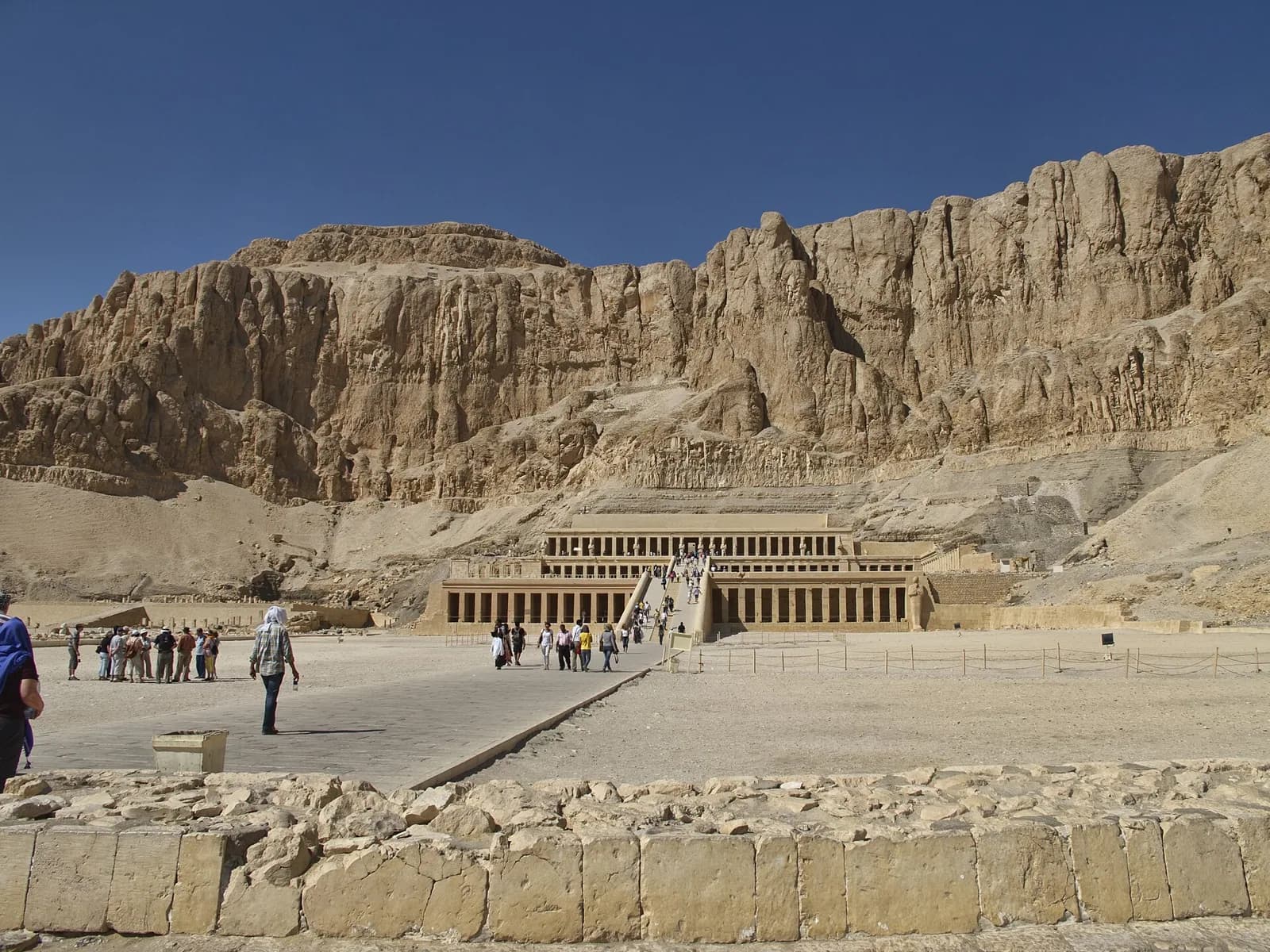
Quick answer: Yes — Abu Simbel is worth it. The twin rock-cut temples of Ramesses II and his queen Nefertari, with their giant seated colossi, are among the most awe-inspiring sights in Egypt, and the story of how the whole complex was cut up and moved to save it from the rising waters of Lake Nasser in the 1960s only adds to the wonder. The catch is the distance — it's a long trip south of Aswan (around three to four hours each way by road, or a short flight). For nearly everyone who makes the effort, it's a highlight of the whole trip. (Confirm current transport options and site hours.)
"Is Abu Simbel worth the trek?" is one of the most-asked questions in Egypt travel. Here's the honest answer and how to make the trip work.
Why Abu Simbel is worth it
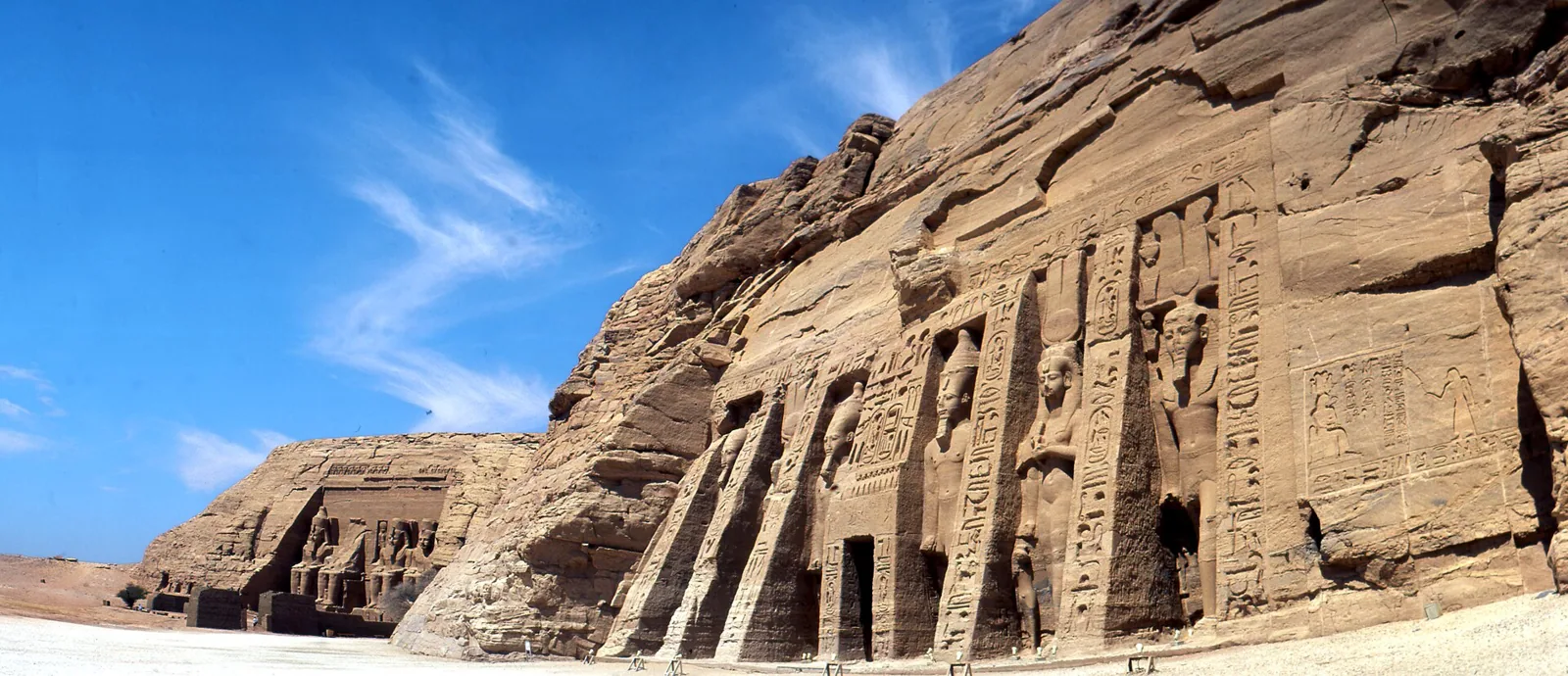
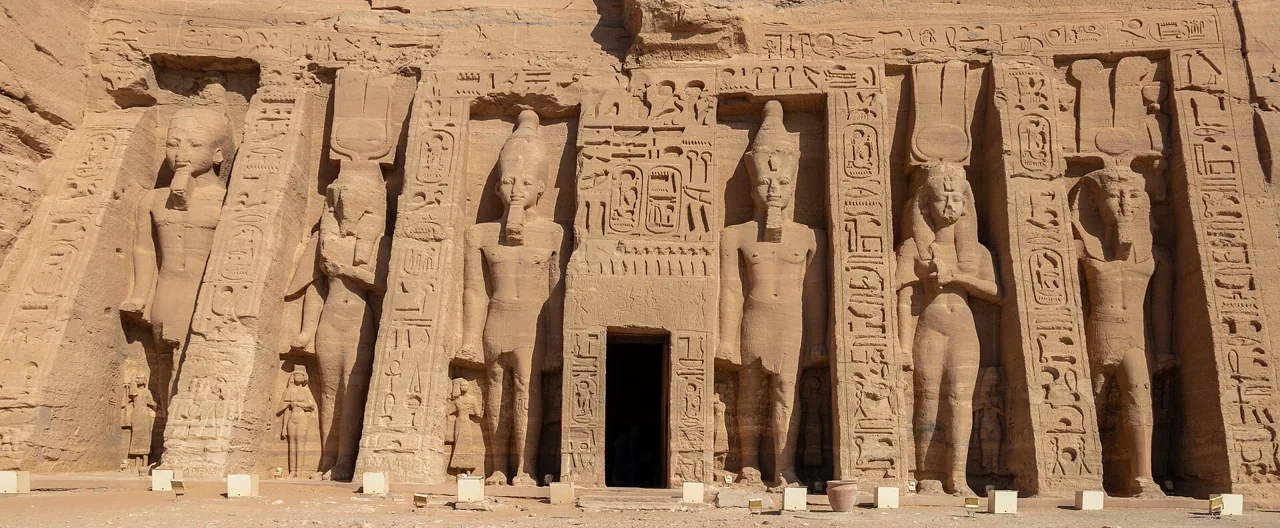
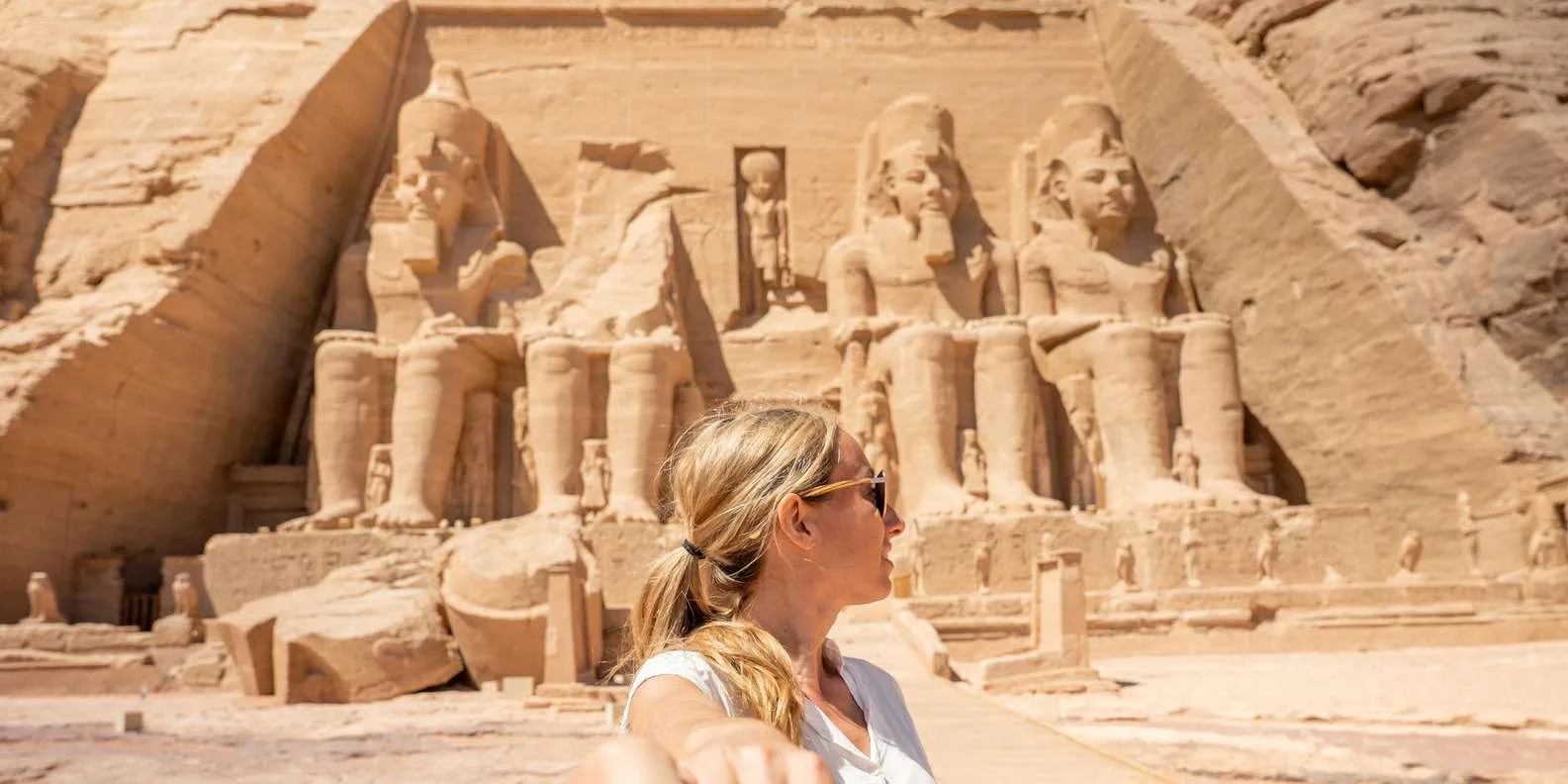
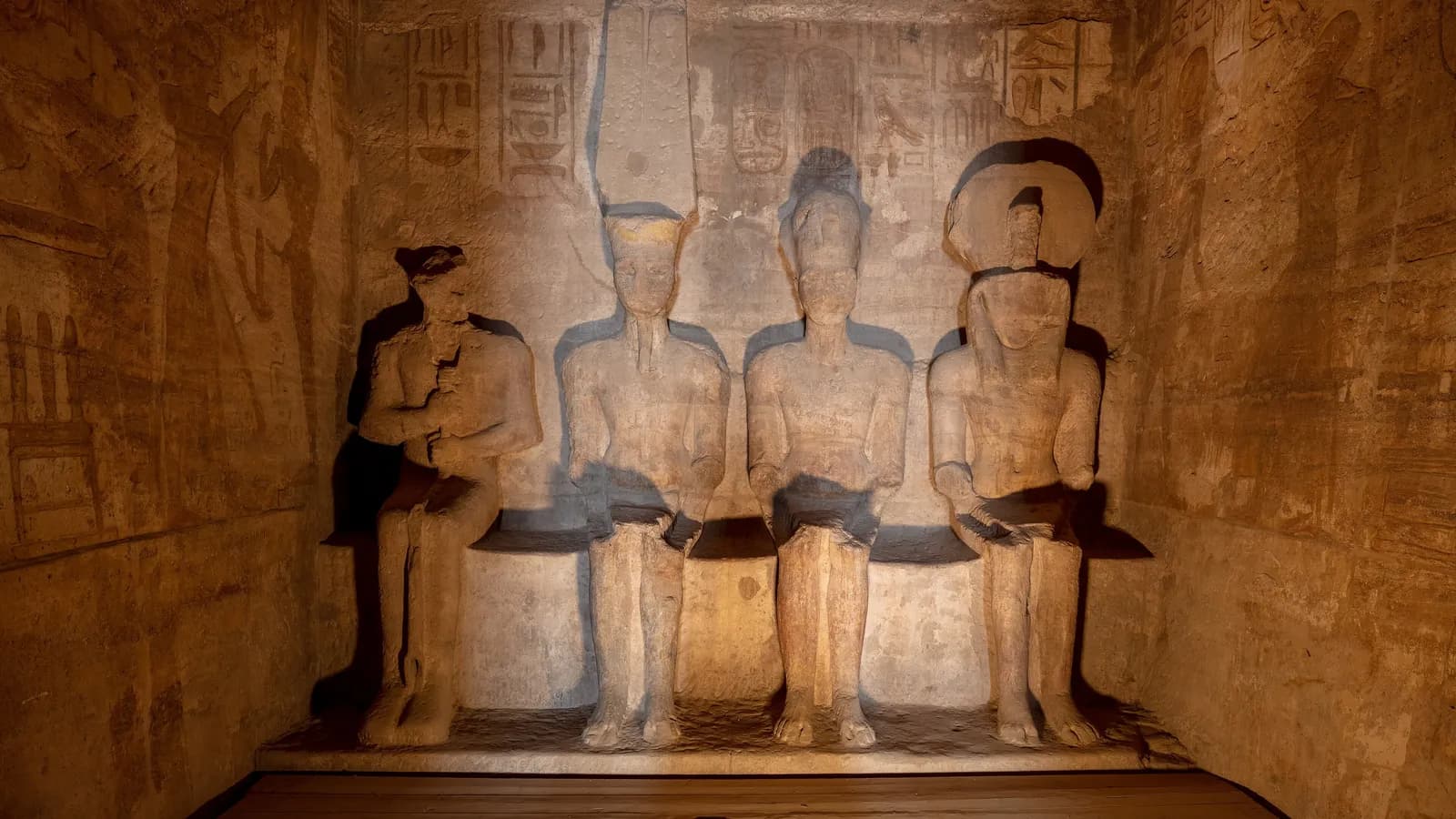
Nothing quite prepares you for the scale. The Great Temple of Ramesses II is fronted by four seated colossi over 20 metres high, carved straight out of the mountainside, and the interior runs deep into the rock past pillared halls to a sanctuary where, twice a year, the sun still reaches in to light the gods. Beside it stands the smaller temple Ramesses dedicated to his queen — the same Nefertari whose tomb (QV66) is the finest painted tomb in Egypt — its facade carved with statues of the queen made the same height as the king, an almost unheard-of honour. Together they are one of the supreme achievements of ancient Egypt.
The rescue that adds to the wonder
In the 1960s the new Aswan High Dam was about to drown Abu Simbel under the rising Lake Nasser. In an extraordinary UNESCO rescue, the entire complex was sawn into more than a thousand blocks and reassembled on higher ground, precisely oriented so the sun would still align on the same dates. Standing before the temples, knowing they were moved stone by stone, is part of what makes the visit so moving.
The catch: getting there
Abu Simbel sits near the Sudanese border, and the effort is the only real downside. From Aswan it's roughly three to four hours each way by road (often in a convoy, leaving very early), or a short flight. Many visitors go as a long day trip from Aswan; others fly, and some reach it by Lake Nasser cruise, which arrives at the temples by water — often cited as the most spectacular approach of all. See the Abu Simbel guide and the Abu Simbel day trip from Aswan for the logistics.
When to go — and the Sun Festival
Any time of year rewards the trip, but twice a year — around 22 February and 22 October — the rising sun penetrates the Great Temple to illuminate the statues in the sanctuary, drawing crowds for the Abu Simbel Sun Festival. Whenever you go, start early: the light is best and the heat lowest in the morning. Confirm current transport options and opening hours.
What to see at the two temples
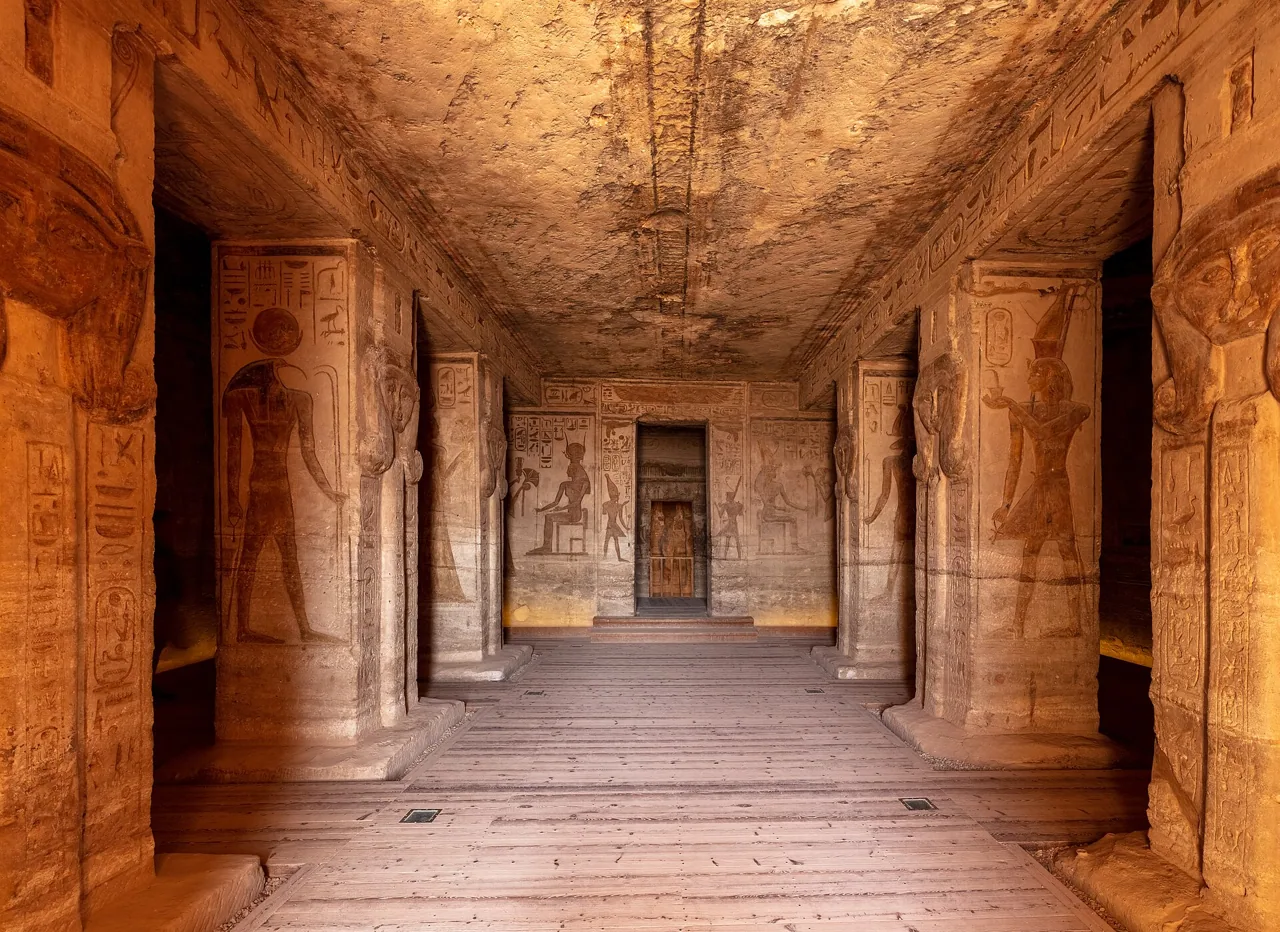
Give yourself time for both temples. Inside the Great Temple, a pillared hall lined with towering Osiride statues of Ramesses II leads past walls carved with his version of the Battle of Kadesh — ancient propaganda on an epic scale — to the sanctuary deep in the rock where four gods sit waiting for the sun. The neighbouring Small Temple of Nefertari is smaller but lovely, its hall held up by Hathor-headed pillars, its walls showing the queen honoured beside her husband. Take in the scale of the facades from a distance first, then go in slowly; the interiors are where the storytelling lives.
When to go and how long you need
Plan on around two hours at the site — enough for both temples and the small museum about the 1960s relocation. Morning is best for light and cooler air, which suits the early road convoy or an early flight. If your dates fall near 22 February or 22 October, build the trip around the Sun Festival, when the rising sun reaches the inner sanctuary — read the Abu Simbel Sun Festival guide. Whichever way you travel, confirm current transport options and opening hours before you commit.
Reach it by water. Abu Simbel is a natural extension from Aswan, where Nile cruises begin or end — and a Lake Nasser cruise arrives at the temples by boat. Compare Nile cruise ships and dahabiyas, or read the Lake Nasser cruise guide.
Making the most of the trip
Because the journey is the one real drawback, it pays to plan it well. From Aswan you have three ways to go. The road trip is the cheapest and most common — an early start (often in a convoy) of three to four hours each way, giving you a couple of hours at the temples in the good morning light before the return. Flying turns the whole thing into a half-day, trading cost for time; it's the easy option if your schedule is tight. And a Lake Nasser cruise approaches Abu Simbel by water over a few days, arriving at the temples from the lake — widely considered the most spectacular and relaxed way of all, and a natural extension of the Nile-cruise idea. However you arrive, plan on around two hours at the site: enough for the Great Temple, the temple of Nefertari and the small museum of the relocation. Go early for the light and the cooler air, bring water, sun protection and a hat, and consider staying for the evening sound-and-light show if you overnight nearby. And if your dates fall near 22 February or 22 October, build the trip around the solar alignment and the Sun Festival — the one time the ancient designers' astronomy performs for the crowd, exactly as it has for over three thousand years. Read the Abu Simbel guide, the Abu Simbel day trip from Aswan, and the Aswan travel guide.
A real team available 24/7 to assist you — free
Seif and the team reply on WhatsApp 24/7 — trip questions, custom plans and booking help.
Ask Seif on WhatsAppCommon questions
Is Abu Simbel worth it?
For nearly everyone who makes the trip, yes — the twin rock-cut temples of Ramesses II and Nefertari, with their giant colossi, are among the most awe-inspiring sights in Egypt, and the story of moving the whole complex to save it from Lake Nasser adds to the wonder. The only real downside is the distance.
How far is Abu Simbel from Aswan?
Roughly three to four hours each way by road (often in an early convoy), or a short flight. Some visitors also reach it by Lake Nasser cruise, which arrives at the temples by water.
Why was Abu Simbel moved?
In the 1960s the rising waters of Lake Nasser, behind the new Aswan High Dam, threatened to drown it. In a UNESCO rescue the entire complex was sawn into more than a thousand blocks and rebuilt on higher ground, precisely oriented so the sun would still align on the same dates.
What is the Abu Simbel Sun Festival?
Around 22 February and 22 October each year, the rising sun penetrates the Great Temple to illuminate the statues deep in its sanctuary — a solar alignment built by the ancient designers and kept intact when the temple was moved. It draws crowds for the Sun Festival.
How do you get to Abu Simbel?
Most visitors go from Aswan — a long day trip by road, a short flight, or a Lake Nasser cruise that arrives by water. Whichever you choose, start early for the best light and the coolest temperatures. Confirm current transport options and site hours.
What are the two temples at Abu Simbel?
The Great Temple of Ramesses II, fronted by four seated colossi over 20 metres high, and the smaller temple he dedicated to his queen Nefertari, whose facade carries statues of the queen made the same height as the king — an almost unheard-of honour.
What is there to see inside the Abu Simbel temples?
In the Great Temple, a pillared hall of towering Osiride statues of Ramesses II, walls carved with his Battle of Kadesh, and a sanctuary deep in the rock. The Small Temple of Nefertari next door has a hall of Hathor-headed pillars and scenes of the queen honoured beside the king. Allow about two hours for both plus the relocation museum.
When is the best time to visit Abu Simbel?
Morning, for the best light and cooler air — which suits both the early road convoy and an early flight. If your dates fall near 22 February or 22 October, time it for the Sun Festival, when the rising sun reaches the inner sanctuary. Confirm current transport options and hours before you go.
Book it on This is Egypt
Turn this guide into a trip
Egypt's bestsellers
The experiences travelers book most, across the country





Keep reading
Abu Simbel Day Trip from Aswan (2026): Ramses II's Great Temples
The twin rock temples of Ramses II and Nefertari, moved stone by stone to escape Lake Nasser. How to visit from Aswan, real prices, the drive, and the sun festival.
By TiE Editors8 min read
Abu Simbel Sun Festival: Dates & How to Visit (2026)
On 22 February and 22 October the rising sun lights up the inner sanctuary of Ramses II's Great Temple. What happens, why the dates shifted, and how to be there from Aswan.
By TiE Editors10 min read
Abu Simbel: How to Visit Ramesses II's Great Temples (2026)
Ramesses II carved two temples into a Nubian cliff in the 13th century BC. Here is how to visit them from Aswan, when the sun lights the sanctuary, and how they were moved 65m in the 1960s.
By TiE Editors7 min read