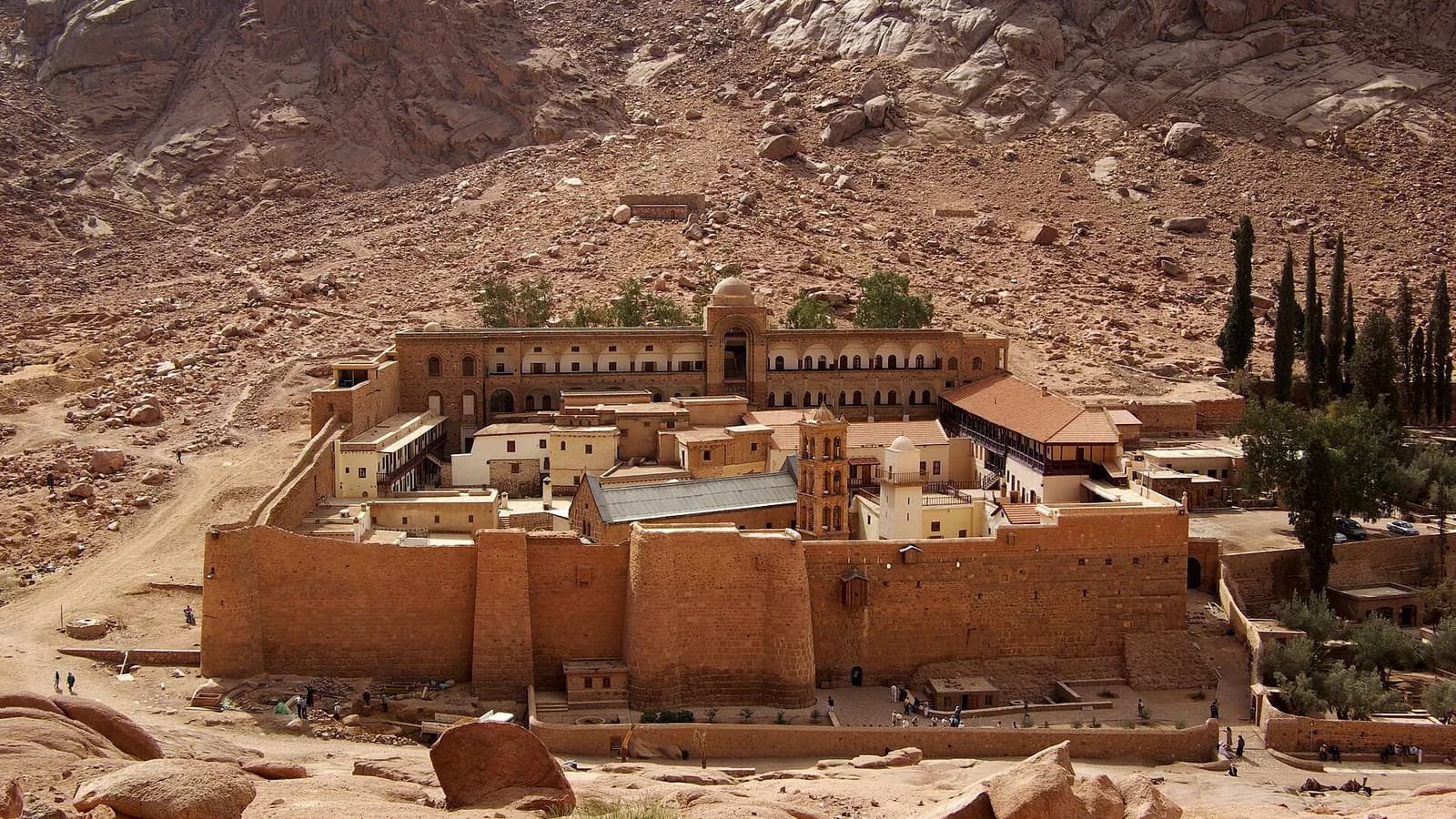
Mount Sinai & St Catherine's Monastery: The Sunrise Climb Guide (2026)
How to climb Mount Sinai for sunrise and visit the world's oldest working monastery: the two trails, timing from Sharm and Dahab, what to bring, what to expect.
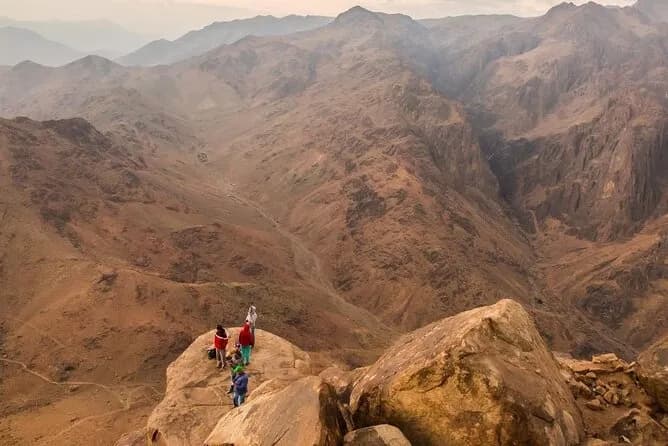
Quick answer: The classic Sinai pilgrimage is a single overnight: you leave Sharm el-Sheikh or Dahab in the evening, start climbing Mount Sinai (Gebel Musa) around 2 a.m., reach the 2,285-metre summit for a spectacular sunrise over a sea of jagged peaks, descend, and visit St Catherine's Monastery at the foot of the mountain before driving home. It's cold, tiring and genuinely moving, and it lands hard even if you aren't religious. Here's exactly how it runs, the two routes up, and how to prepare.
Mount Sinai is traditionally identified as Mount Horeb, where Moses is said to have received the Ten Commandments; Muslims know the peak as Gebel Musa, the Mountain of Moses. St Catherine's, huddled in a granite valley below, has been continuously inhabited by Orthodox monks for around fifteen centuries — the reason UNESCO calls the wider Saint Catherine Area a place "respected and revered by followers of Judaism, Christianity and Islam." You're not just bagging a summit; you're standing on one of the most storied pieces of ground on earth.
The two routes up Mount Sinai
There are two ways to the top, and they meet near the summit at a natural amphitheatre the monks call Elijah's Hollow (the Seven Elders of Israel), from where a final steep set of about 750 rock steps climbs to the peak.
| Route | Local name | What it's like | Time up |
|---|---|---|---|
| Camel Path | Siket El Bashait | Longer, gentler, well-graded switchbacks; camels available for most of it | ~2.5–3 hrs |
| Steps of Repentance | Sikket Sayidna Musa | Steeper and harder — 3,750 rough stone steps cut by a penitent monk | ~2–2.5 hrs |
Most sunrise groups take the Camel Path because it's manageable in the dark and you can hire a camel for the lower two-thirds (the final ~750 steps you always climb on foot). The Steps of Repentance — 3,750 steps hewn from the rock by a single monk as an act of penance — are punishing and, as of recent years, restricted for the ascent; some hikers still descend part of the way on them in daylight for the views and the drama. If you want the full monastic experience and have the legs, ask your guide about doing the steps on the way down.
A Bedouin guide from the local community is required, and is assigned at the security checkpoint by the car park below the monastery. Camels can be arranged there too.
Timing: why 2 a.m.?
Groups climb in darkness for two reasons — to dodge the daytime heat lower down, and to be on the summit for first light. A typical schedule from Sharm looks like this:
- Evening: depart your resort (~2 hours' drive to the mountain from Sharm; a little less from Dahab).
- ~2:00 a.m.: start the climb with your guide and a headlamp.
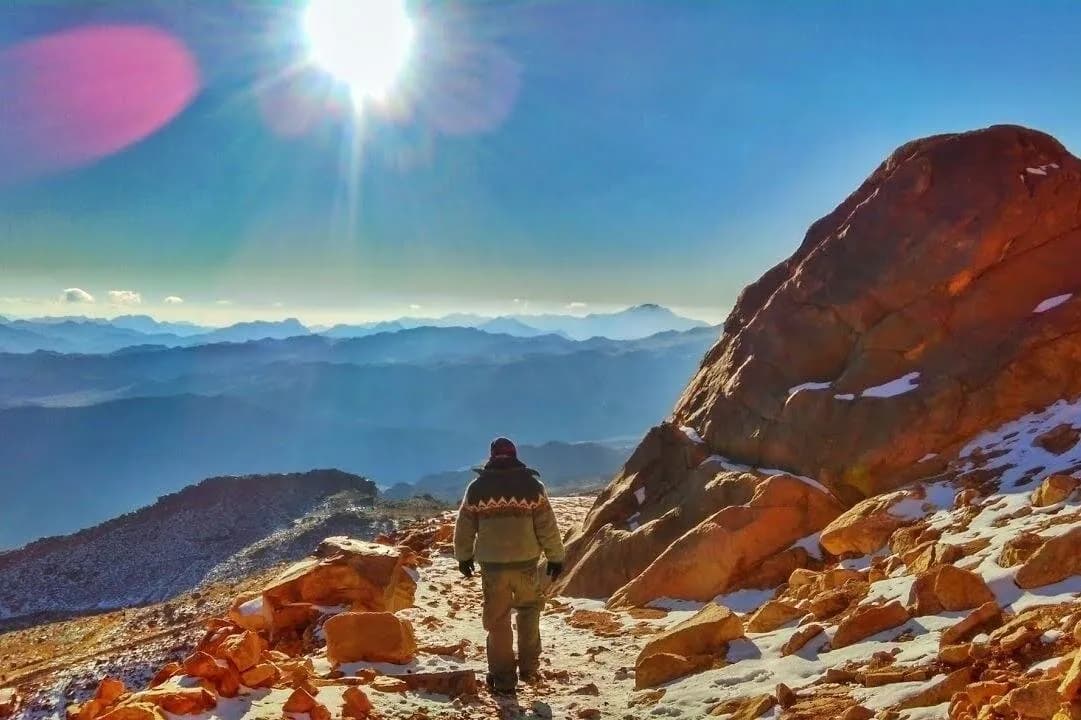
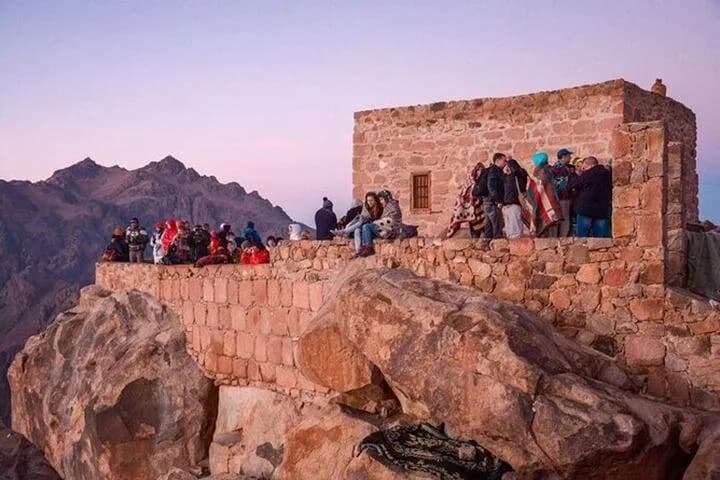
- ~5:00 a.m.: reach the summit, layer up, wait for sunrise.
- Dawn: the sky over the Gulf of Aqaba and the mountains of Saudi Arabia lights up — the payoff for the cold.
- After sunrise: descend to the monastery.
- Late morning: visit St Catherine's, then drive back, reaching your resort early-to-mid afternoon.
Stalls along the trail sell tea, water and snacks, and rent blankets near the top. Expect real cold at the summit even in summer, and near-freezing on winter nights.
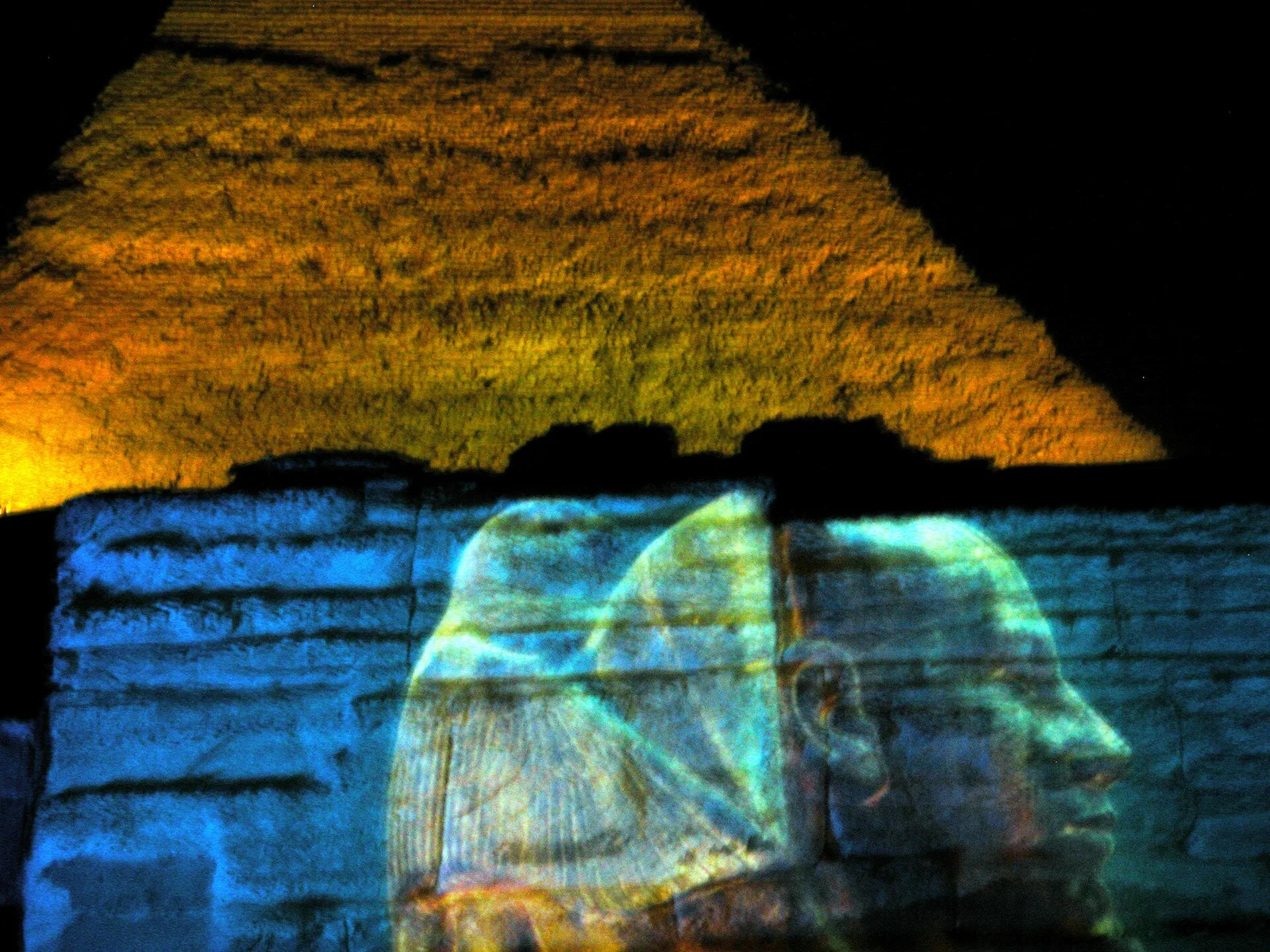
St Catherine's Monastery: what you're looking at
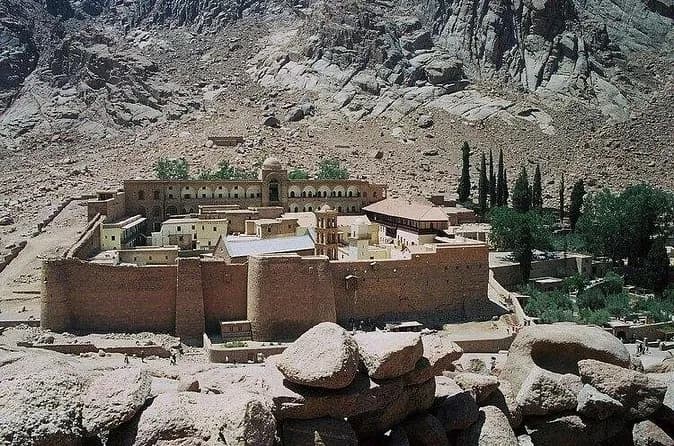
The monastery was built between 527 and 565 CE on the orders of the Byzantine Emperor Justinian I, both to shelter the monastic community and to guard the road from Aqaba to Suez. Its massive granite defensive wall — up to 11 metres high — still stands. UNESCO describes it as having no comparable Christian Byzantine monument in continuous use for fifteen centuries.
Inside, the highlights:
- The Church of the Transfiguration (the Katholikon): the 6th-century basilica, with granite columns, a gilded iconostasis and, near the altar, a sarcophagus said to hold the relics of St Catherine, brought here in the 10th century.
- The Chapel of the Burning Bush: the holiest spot, incorporating a 4th-century chapel; the altar stands over the roots of the bush itself. The living bramble said to descend from the Burning Bush grows just outside the chapel wall, where it was transplanted to make room for the altar.
- The Sacred Sacristy (icon gallery): home to an extraordinary collection of over 2,000 icons spanning the 6th to 18th centuries — including works that survived the Byzantine Iconoclasm — plus one of the oldest and most valuable libraries in the world, second only to the Vatican's, with more than 3,000 manuscripts.
- The Fatimid mosque: built within the walls between 1101 and 1106, a rare symbol of the monastery's long relationship with Islam. Tradition holds that the Prophet Muhammad granted the monks a charter of protection, the Ashtiname, exempting them from tax and military service.
The monastery keeps short hours and is closed to visitors on certain days — so the timing matters (see below).
A note on the 2025–2026 situation
In 2025 an Egyptian court ruling on the ownership of the monastery's land drew international attention and some concern for the site's status. The Egyptian government has publicly committed to preserving the monastery's religious character, negotiations with the monks continued into 2026, and the site has remained open to tourists throughout. Because this is an evolving legal matter, confirm current access with your tour operator when you book.
Getting there: from Sharm or Dahab
Almost everyone comes on an organised overnight trip, because you need a guide, a permit and transport through desert checkpoints.
| From | Drive to the mountain | Notes |
|---|---|---|
| Sharm el-Sheikh | ~2 hours | Most tours run from here; largest choice of operators |
| Dahab | ~1.5 hours | Closer, more laid-back scene; popular with independent travellers |
| Nuweiba / Taba | ~1.5–2 hours | Fewer regular departures |
If you're basing on the coast, the Sharm el-Sheikh travel guide and the Dahab travel guide cover where to stay and how the two towns differ. Sinai's magic is that some of the planet's best diving and this pilgrimage sit a couple of hours apart — see the Red Sea diving guide if you're combining both.
Opening times & fees (verify before you go)
- Monastery hours: open to visitors on a short morning window (roughly 9:00–11:30 a.m.) and closed to tourists on Fridays, Sundays and Greek Orthodox holidays. Tours are timed to catch the open window after your descent.
- Monastery entry: entry to the compound is generally free; the icon gallery / museum charges a small fee (around 25–100 EGP, verify on the day).
- Guide: a local Bedouin guide is compulsory for the climb and arranged at the checkpoint.
- Protectorate: the mountain sits in the St Catherine Protectorate, a protected natural zone home to ibex, Sinai rosefinch and endemic plants.
What to bring
The overnight climb rewards good prep and punishes bad kit:
- Warm layers — a proper jacket, hat and gloves. The summit is genuinely cold, freezing on winter nights, even when the coast was warm.
- A headlamp or torch (hands-free is better) plus spare batteries.
- Sturdy closed shoes — the path is loose and rocky, the final steps uneven.
- Water and snacks, though stalls sell both along the way.
- A small cash float in Egyptian pounds for tea, blankets, camel hire and tips.
- Modest clothing for the monastery — shoulders and knees covered for both men and women.
- A little cardio in the tank — it's a long night hike; the fitter you are, the more you'll enjoy the summit rather than survive it.
Go for the sunrise, stay for the monastery. Few day-and-night trips in Egypt pack as much scenery, history and quiet awe into a single outing. When you're ready to lock it in, browse Sinai and Red Sea experiences on This is Egypt.
A real team available 24/7 to assist you — free
Seif and the team reply on WhatsApp 24/7 — trip questions, custom plans and booking help.
Ask Seif on WhatsAppCommon questions
How long does it take to climb Mount Sinai?
About 2.5 to 3 hours up via the gentler Camel Path, or a bit less but much harder via the 3,750 Steps of Repentance. The descent is quicker. Groups usually start around 2 a.m. to reach the 2,285-metre summit in time for sunrise, then take a couple of hours to come down.
What are the two routes up Mount Sinai?
The Camel Path (Siket El Bashait) is longer, gentler and lets you hire a camel for most of the way — the choice for most sunrise climbers. The Steps of Repentance (Sikket Sayidna Musa) are 3,750 steep stone steps cut by a monk as penance; they're far tougher and restricted for the ascent. Both meet near the top before a final ~750 steps to the summit.
Do I need a guide to climb Mount Sinai?
Yes. A local Bedouin guide from the St Catherine community is compulsory and is assigned at the security checkpoint by the car park below the monastery. Almost all visitors come on an organised overnight tour from Sharm el-Sheikh or Dahab, which handles the guide, transport and permits.
How do I get to St Catherine's from Sharm el-Sheikh?
By organised overnight trip. It's roughly a two-hour drive from Sharm to the foot of the mountain (about 1.5 hours from Dahab). Groups leave in the evening, climb overnight for the sunrise, and visit the monastery in the late morning before driving back.
Is St Catherine's Monastery open to visitors in 2026?
Yes. Despite a 2025 court case over the monastery's land, the site has stayed open to tourists throughout, and the government has committed to preserving its religious character. It opens to visitors on a short morning window (about 9:00–11:30 a.m.) and is closed on Fridays, Sundays and Greek Orthodox holidays. Confirm current access with your operator, as the legal situation is still evolving.
What should I wear and bring for the Mount Sinai climb?
Warm layers including a jacket, hat and gloves — the summit is cold year-round and freezing on winter nights — plus a headlamp, sturdy closed shoes, water, snacks, and small cash for tea, blankets and tips. For the monastery, dress modestly with shoulders and knees covered.
Why is St Catherine's Monastery so important?
Built by the Byzantine Emperor Justinian I between 527 and 565 CE, it's one of the oldest continuously inhabited Christian monasteries in the world. It houses the reputed Burning Bush, a library of over 3,000 manuscripts second only to the Vatican's, and more than 2,000 icons, some of which survived the Byzantine Iconoclasm. UNESCO lists it as a place revered by Jews, Christians and Muslims alike.
Can I visit Mount Sinai and St Catherine's without climbing?
Yes. You can visit the monastery on a day trip without doing the overnight summit climb, though you'll miss the sunrise, which is the whole point for many. If climbing, and you're not confident on the loose final steps, you can hire a camel for much of the Camel Path — but the last stretch to the summit is always on foot.
Book it on This is Egypt
Turn this guide into a trip






Egypt's bestsellers
The experiences travelers book most, across the country


Keep reading
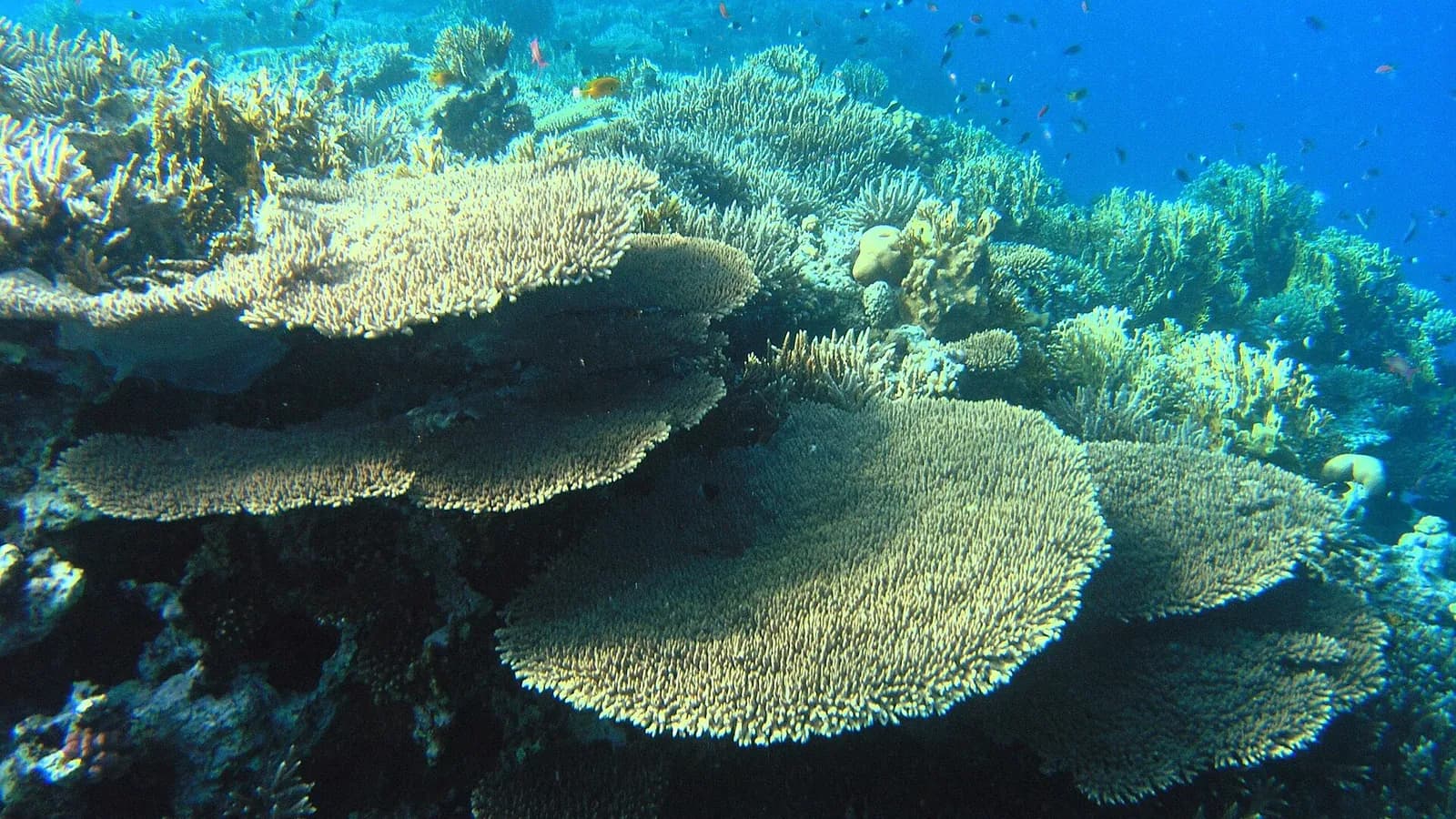
Hurghada Diving (2026): Best Sites, Packages & Prices
Diving in Hurghada — the best reefs (Giftun, Careless Reef, Dolphin House) and Abu Nuhas wrecks, Discover Scuba vs PADI courses, season and water temps, and real 2026 prices.
By TiE Editors7 min read
Hurghada Snorkeling Trips (2026): Best Reefs, Prices & How to Choose
Where to snorkel from Hurghada in 2026 — Orange Bay, Giftun, Mahmya, Utopia and Dolphin House — with boat types, marine life, month-by-month sea temperatures, family tips and real prices from 1,000+ bookable trips.
By TiE Editors7 min read
Egypt Tour Prices by Activity (2026): What Each Type Really Costs
What every type of Egypt experience costs — half day, full day or overnight — as a median and a mid-half range in US dollars, from 12,370 live bookable listings.
By TiE Editors6 min read