The Esna to Aswan Dahabiya Route (2026): Why Sailing Boats Start at Esna
Dahabiyas sail the Esna–Aswan reach rather than starting at Luxor — because of the Esna lock. Here is the day-by-day route, why it begins where it does, and which boats sail it.
Nile Cruises & Dahabiyas
Turn this guide into a trip
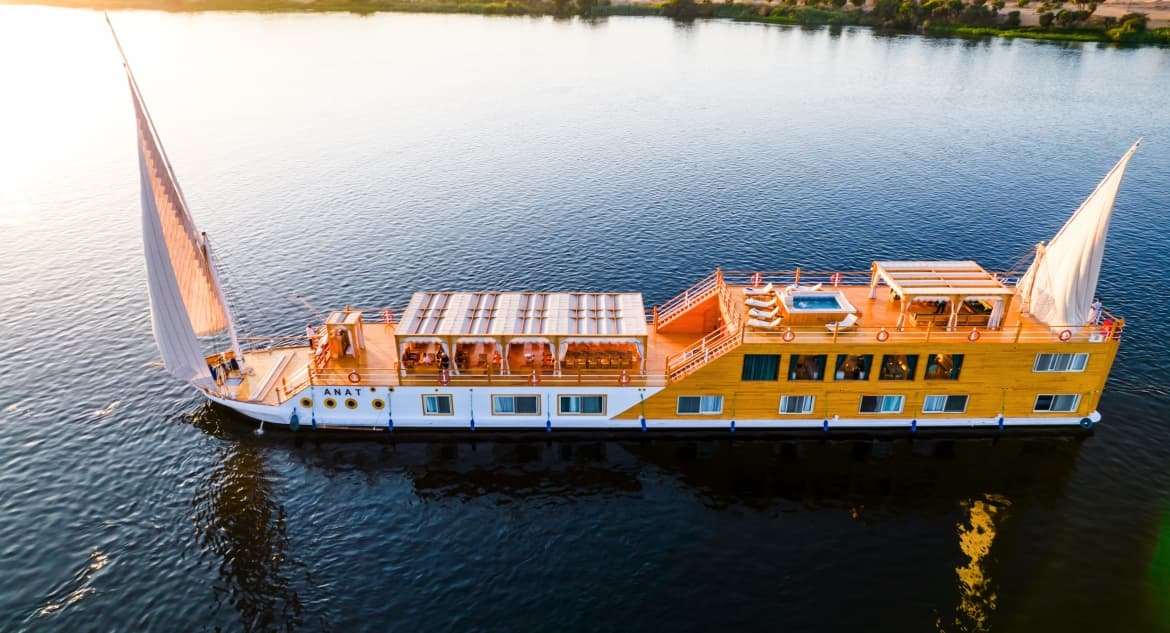
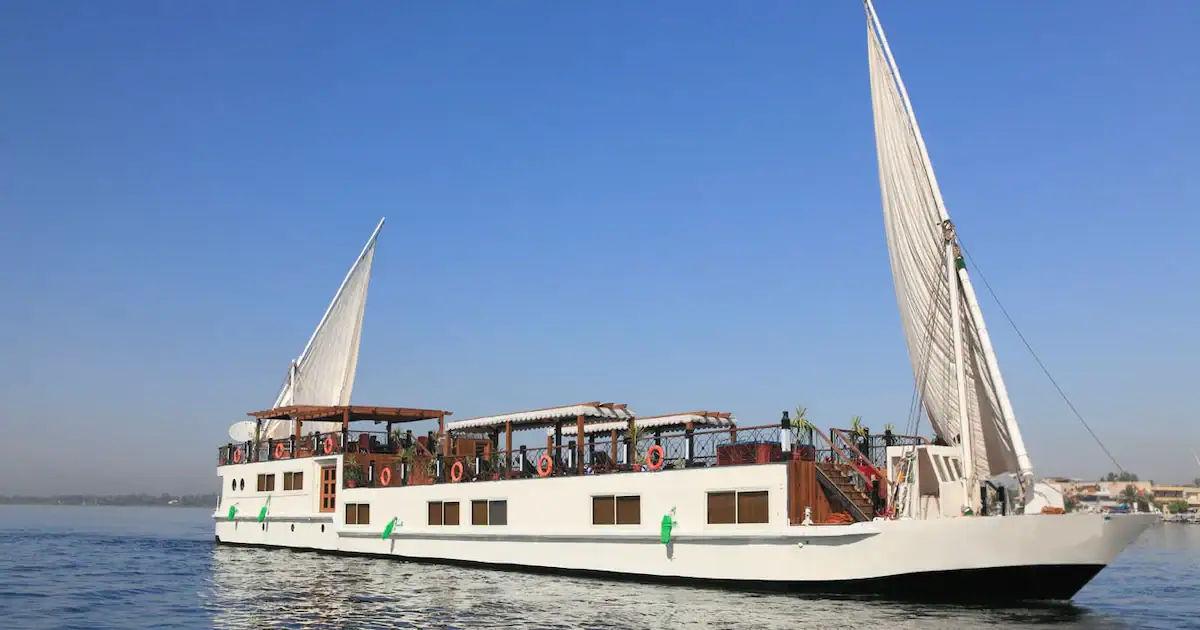
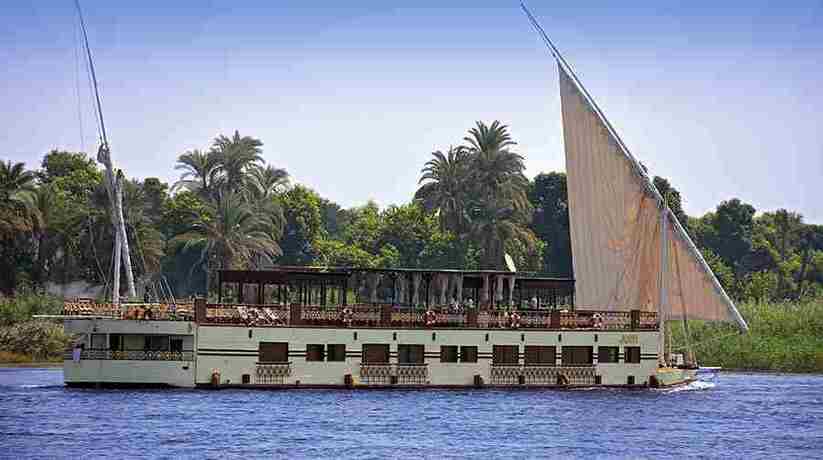
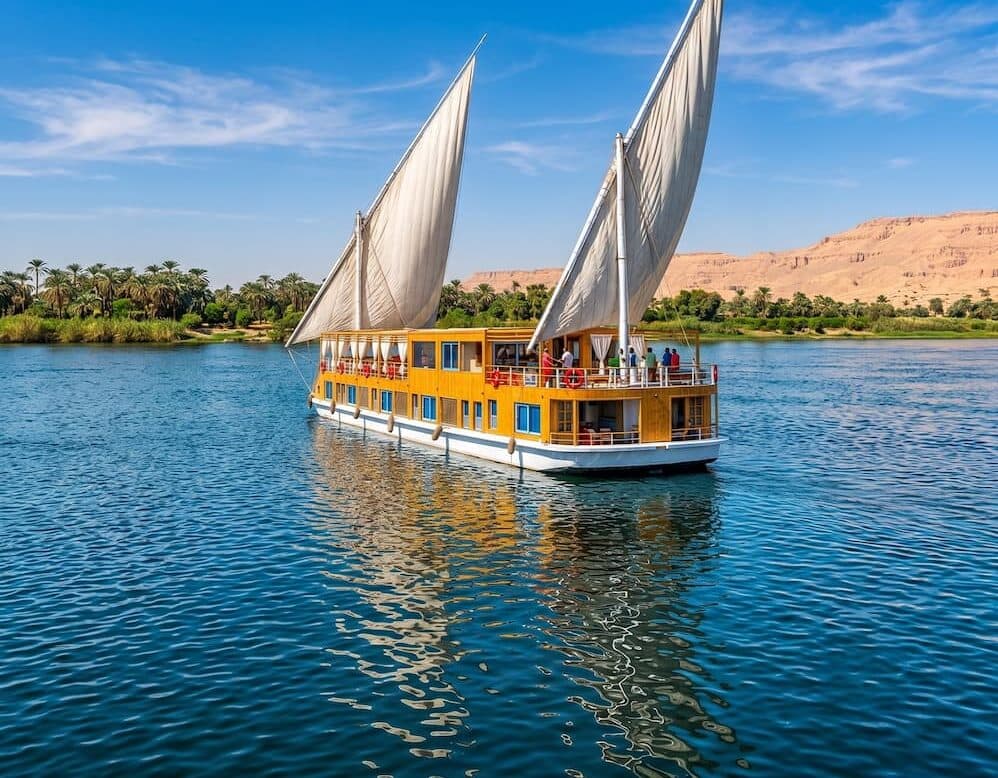
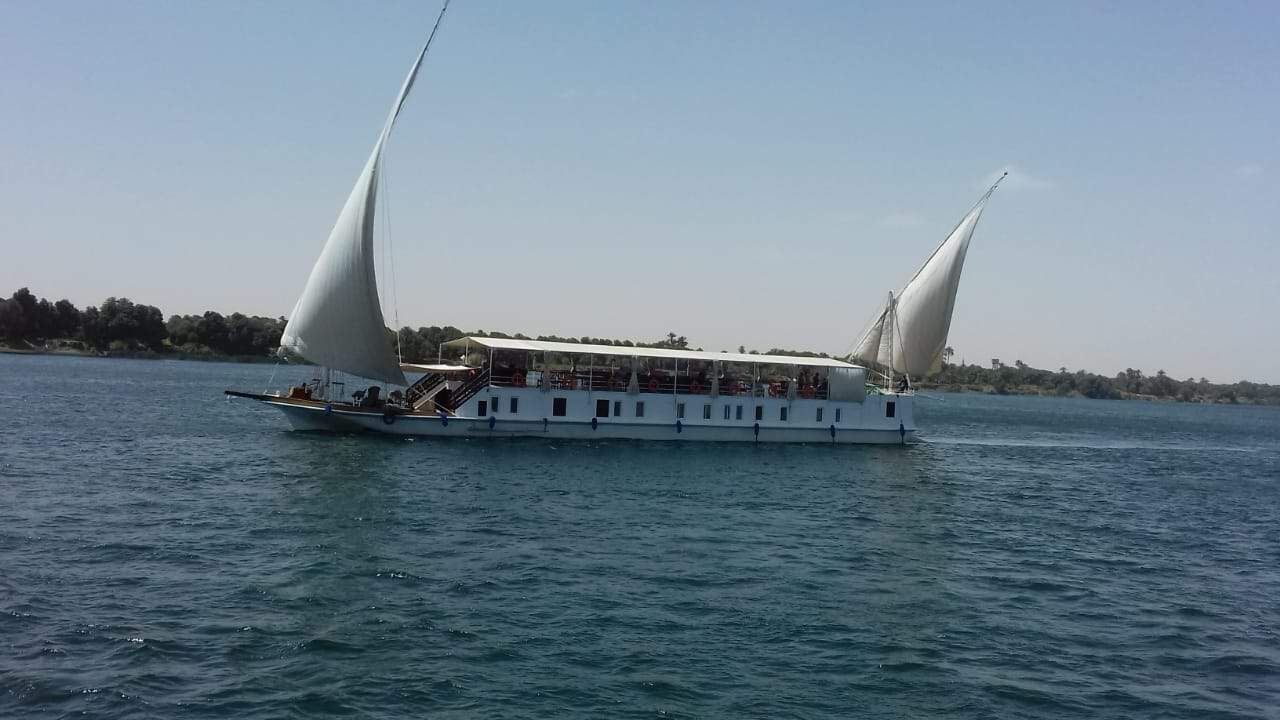
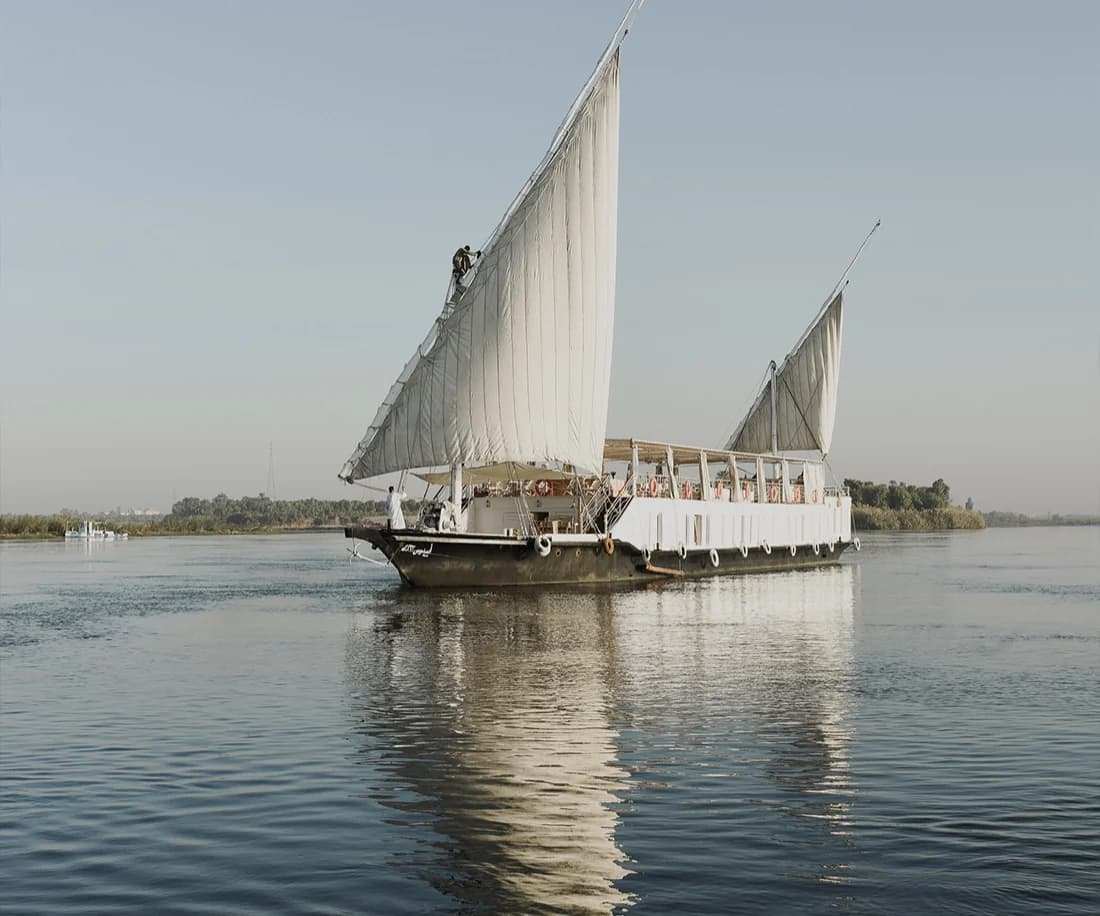
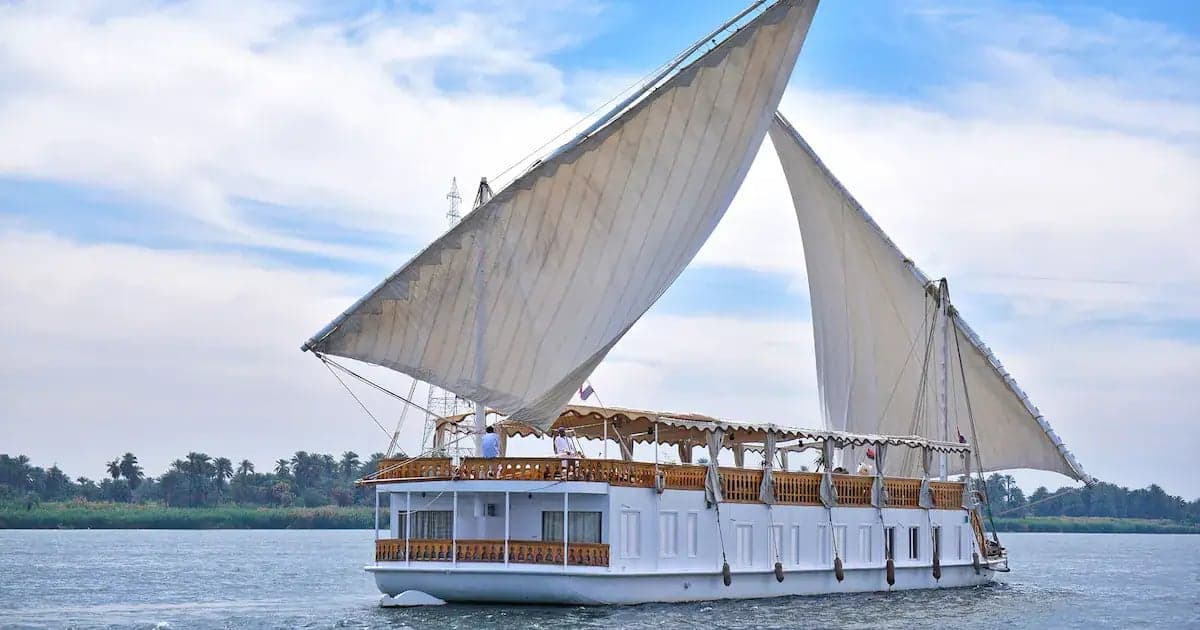
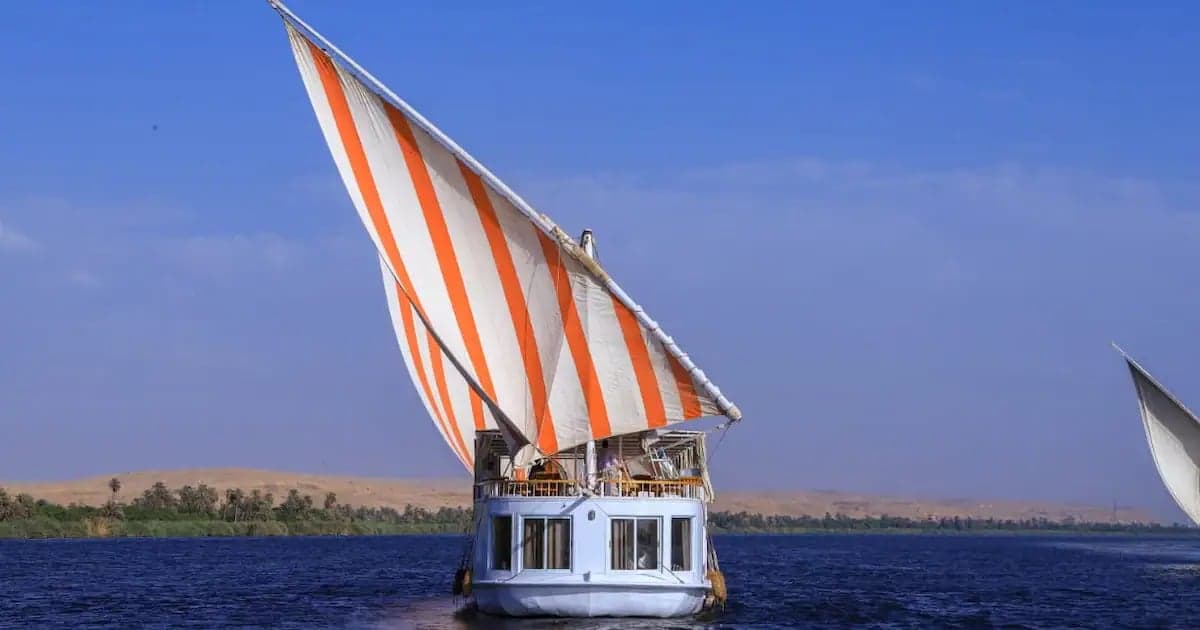
Quick answer: Most dahabiyas sail the Esna–Aswan reach rather than the full Luxor–Aswan run, and the reason is the Esna lock: the barrage just south of Luxor is a bottleneck for the big motor ships, so wind-powered dahabiyas board guests at Esna (about an hour's drive from Luxor) and sail the quiet, un-crowded stretch upstream to Aswan over 4–7 nights, mooring at sandbanks and villages the cruise ships pass by. You still see Luxor's temples — usually as a guided visit before or after the sail.
If you've researched dahabiyas, you'll have noticed they nearly all say "Esna to Aswan" rather than "Luxor to Aswan". It's not arbitrary — here's why, and what the route actually looks like.
Why Esna, not Luxor?
Just south of Luxor sits the Esna lock, a barrage that every boat must pass through to continue upstream. For the big motor cruisers it's a scheduled bottleneck; for small, wind-powered dahabiyas it's simpler to begin above it. So dahabiya operators board guests at Esna — roughly an hour's transfer from Luxor — and start the sail there. It also puts you straight onto the prettiest, quietest part of the river, away from the rafted-up quays at Luxor. You don't miss Luxor: the temples of Karnak, the Valley of the Kings and Hatshepsut are visited by road as part of the trip, before you join the boat or after you leave it.
The route, day by day
A typical Esna–Aswan dahabiya sail runs 4–7 nights. The classic rhythm:
| Stretch | What you see |
|---|---|
| Esna | Board; the temple of Khnum in the town, then set sail |
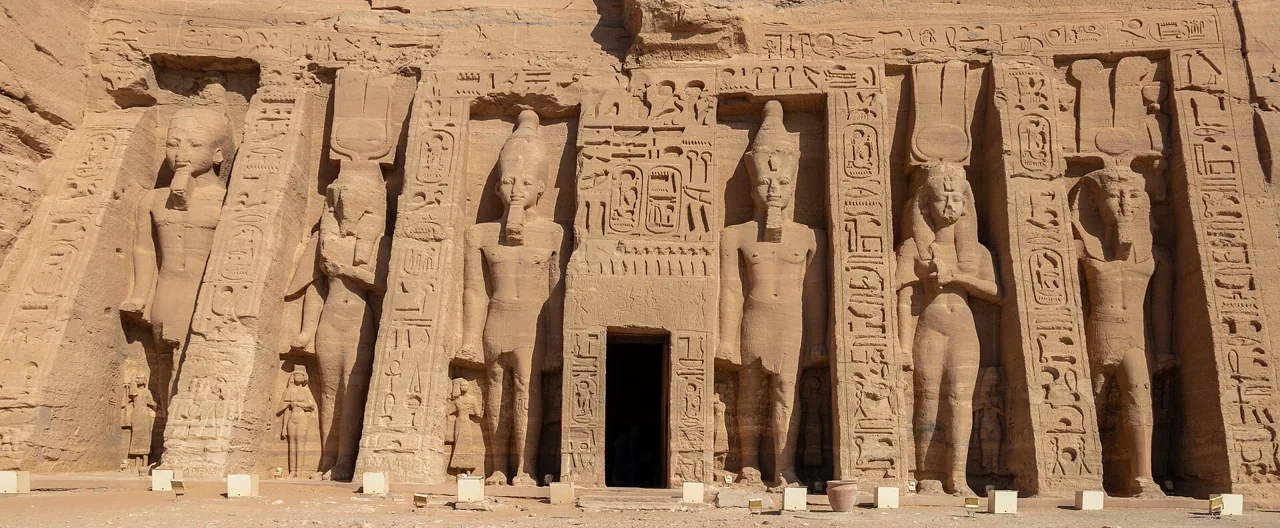
| El Kab / Edfu | Ancient rock tombs; the superbly preserved Temple of Horus at Edfu |
| Gebel Silsila | Sandstone quarries and shrines in a narrowing of the river — a dahabiya-only stop |
| Kom Ombo | The double temple to Sobek and Horus, right on the bank |
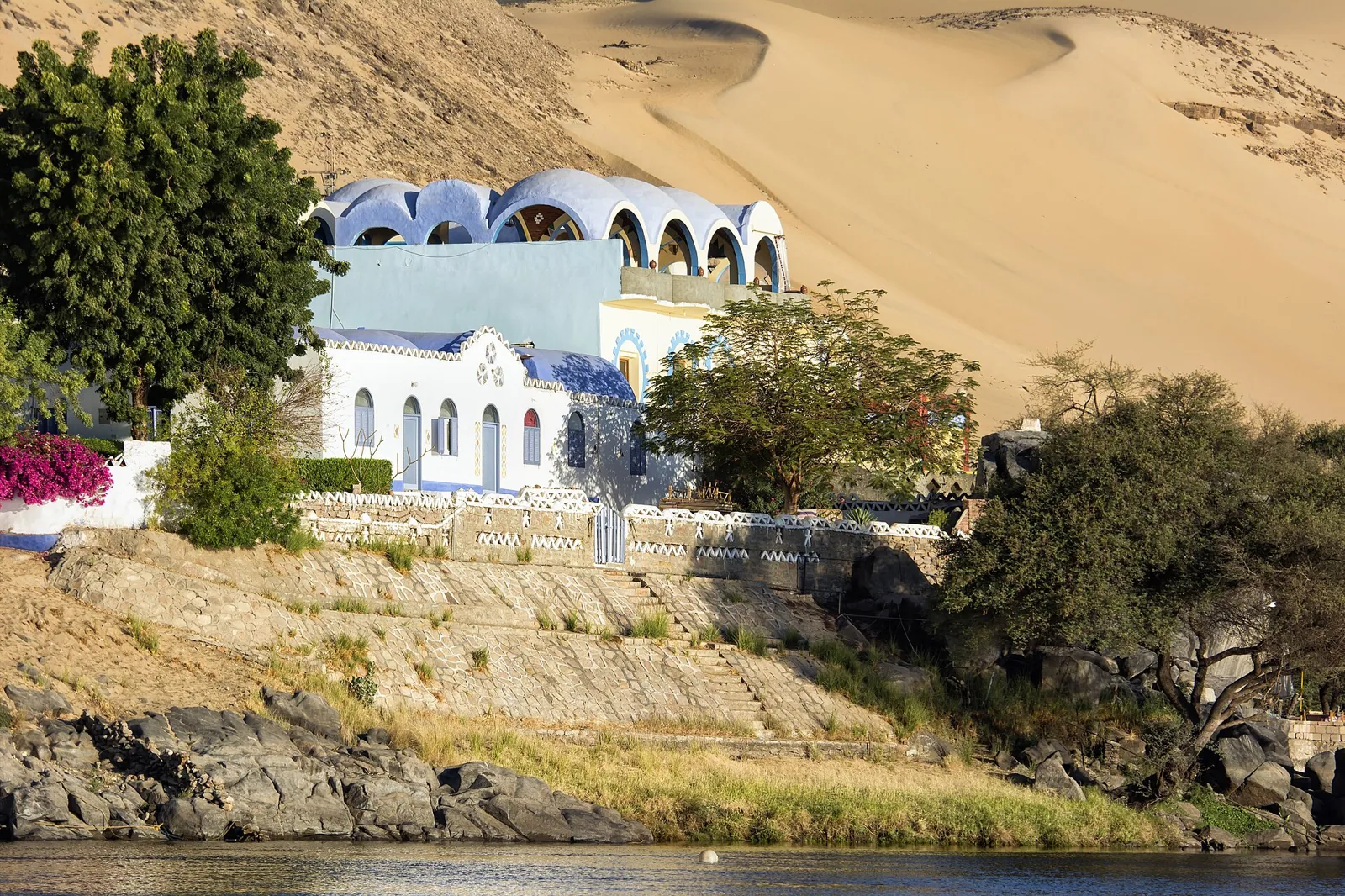
| Daraw / villages | Sandbank moorings, a camel market, Nubian villages |
| Aswan | Philae, the High Dam, the botanical island — the journey's end |
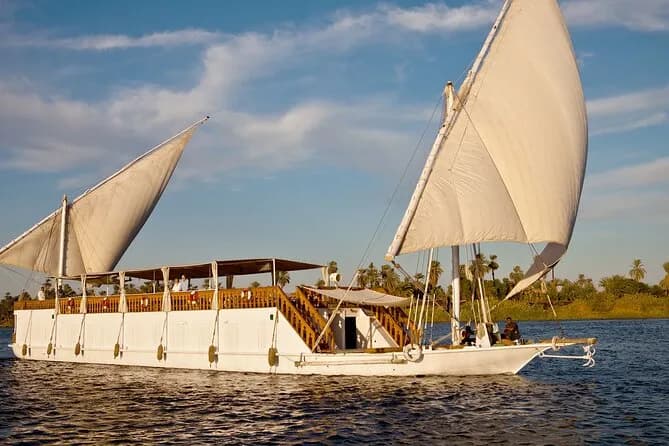
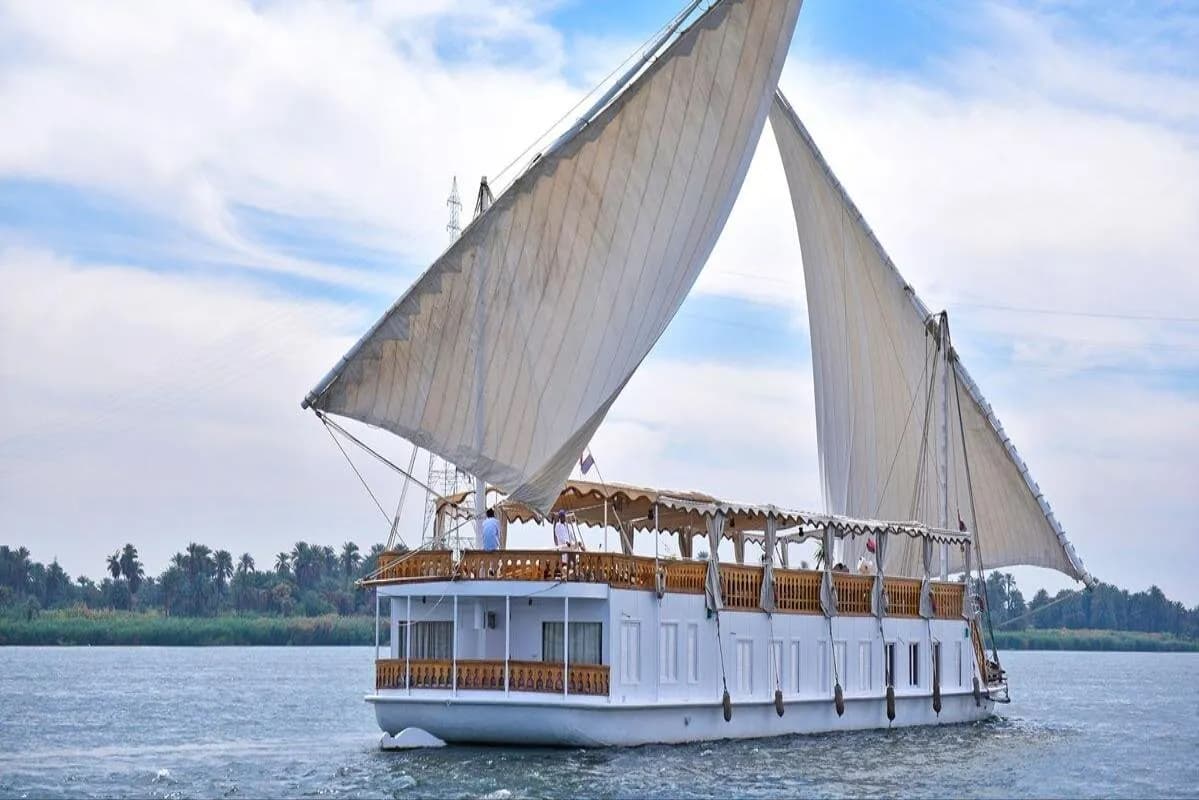
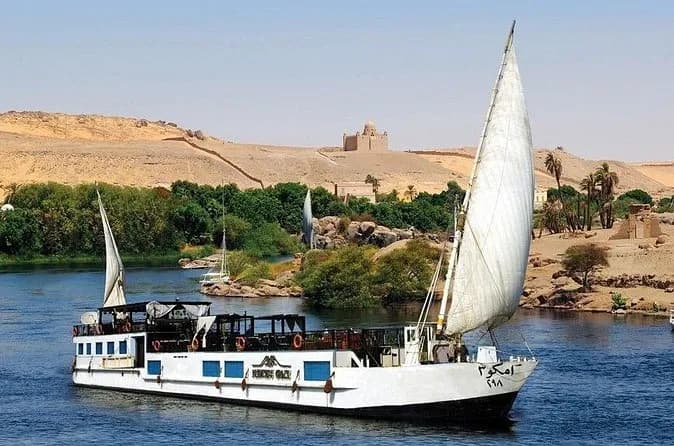
The magic is in what happens between the temples: the boat moors at empty sandbanks for lunch and swimming, and you sail in near-silence past a riverbank of farmland and villages the big ships never touch.
What a day on this reach actually feels like
The Esna–Aswan sail is deliberately unhurried, and the daily rhythm is the point. A typical day: breakfast on deck as the crew raise the sails, a morning drifting with the wind while the riverbank slides past — buffalo in the shallows, children waving from the fields, the occasional felucca. Mid-day the boat ties up at an empty sandbank for a long lunch and a swim, then a temple in the cooler afternoon — Edfu reached by a short calèche ride, or Kom Ombo standing right at the water's edge. Evenings are dinner under the stars at a mooring with no other boat in sight, sometimes a Nubian musician aboard. There's no pool, no nightclub, no schedule beyond the wind and the light — which is exactly why people who want a dahabiya want it. If that sounds like too little to do, a motor cruiser with its facilities is the better fit; if it sounds like heaven, this reach is the finest slow travel in Egypt.
Best time to sail the Esna–Aswan reach
Like the rest of the Nile, October to April is the comfortable window — warm days for the temples, cool nights on deck, and reliable sailing wind. The dahabiya fleets are tiny and the best boats book out months ahead for this season, so plan early. High summer (June–August) is cheaper but fierce, and because a dahabiya lives on its open decks, the heat is felt more than on an air-conditioned cruiser — the shoulder months of September and May are a good compromise.
Which boats sail the Esna–Aswan reach
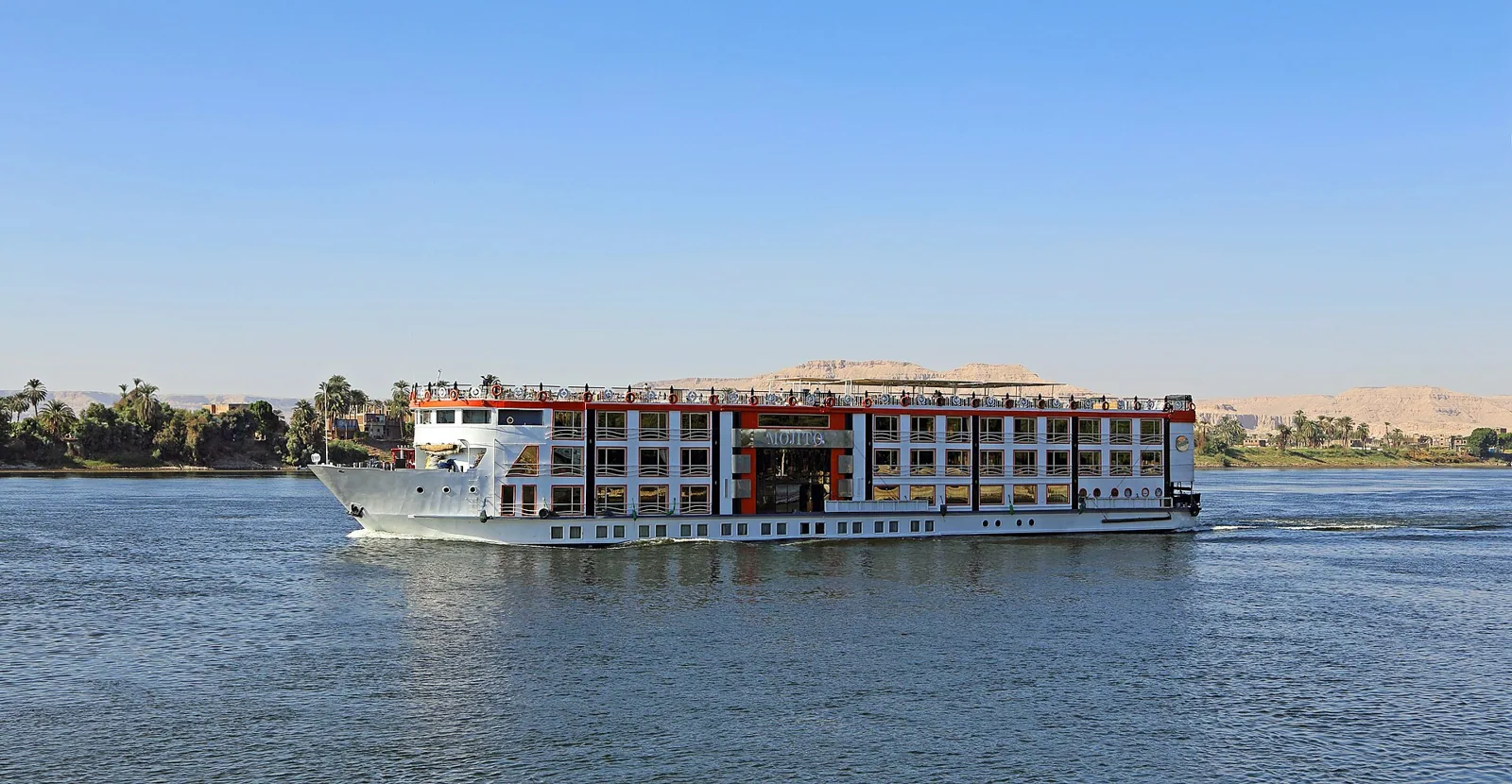
Almost all of them — it's the standard dahabiya route. The fleets to know: Nour El Nil (the benchmark), Lazuli, Merit Dahabiyas, the small private fleet behind Loulia, and the ultra-luxury Ashranda boats (Eyaru, Nebyt). A few sail the reverse direction (Aswan–Esna) or slightly different reaches, but Esna–Aswan is the classic. See the full fleet in the best dahabiyas.
Esna–Aswan or a full Luxor–Aswan cruise?
If you specifically want a dahabiya — the quiet, wind-powered, tiny-guest experience — the Esna–Aswan reach is the trip, and the Esna start is a feature, not a compromise. If you'd rather board right at Luxor and want a pool and full facilities, that's a motor cruise ship (which does run the full Luxor–Aswan corridor) — see dahabiya vs Nile cruise ship. Learn how booking works in how to book a dahabiya, and browse dahabiya sailings on This is Egypt.
A real team available 24/7 to assist you — free
Seif and the team reply on WhatsApp 24/7 — trip questions, custom plans and booking help.
Ask Seif on WhatsAppCommon questions
Why do dahabiyas start at Esna instead of Luxor?
Because of the Esna lock, a barrage just south of Luxor that every boat must pass. It's simpler for small wind-powered dahabiyas to board guests at Esna (about an hour from Luxor) and start the sail above it, straight onto the quiet, pretty stretch of river. You still visit Luxor's temples by road.
Do you miss Luxor on an Esna–Aswan dahabiya cruise?
No. The temples of Luxor — Karnak, the Valley of the Kings, Hatshepsut — are visited by road as a guided part of the trip, before you board the dahabiya at Esna or after you disembark. You see Luxor; you just don't sail from it.
What temples do you see on the Esna to Aswan route?
The Temple of Horus at Edfu, the double temple of Kom Ombo, the rock tombs of El Kab, the quarries and shrines of Gebel Silsila (a dahabiya-only stop), and at Aswan the island temple of Philae and the High Dam — plus sandbank moorings and Nubian villages in between.
How long is an Esna to Aswan dahabiya cruise?
Usually four to seven nights. The sail is slow and un-rushed by design — much of the pleasure is mooring at empty sandbanks and sailing in near-silence between the temples, rather than covering distance quickly.
Which dahabiyas sail the Esna–Aswan route?
Almost all of them — it's the standard route. The best-known fleets are Nour El Nil, Lazuli, Merit Dahabiyas, the small private fleet behind Loulia and the ultra-luxury Ashranda boats. See our best dahabiyas guide for the full list.
Can a dahabiya sail the full Luxor to Aswan route?
Some board a little closer to Luxor, but the Esna–Aswan reach is the classic dahabiya route because of the Esna lock. If you specifically want to board at Luxor with a pool and full facilities, that points you to a motor cruise ship rather than a dahabiya.
Book it on This is Egypt
Turn this guide into a trip



Egypt's bestsellers
The experiences travelers book most, across the country



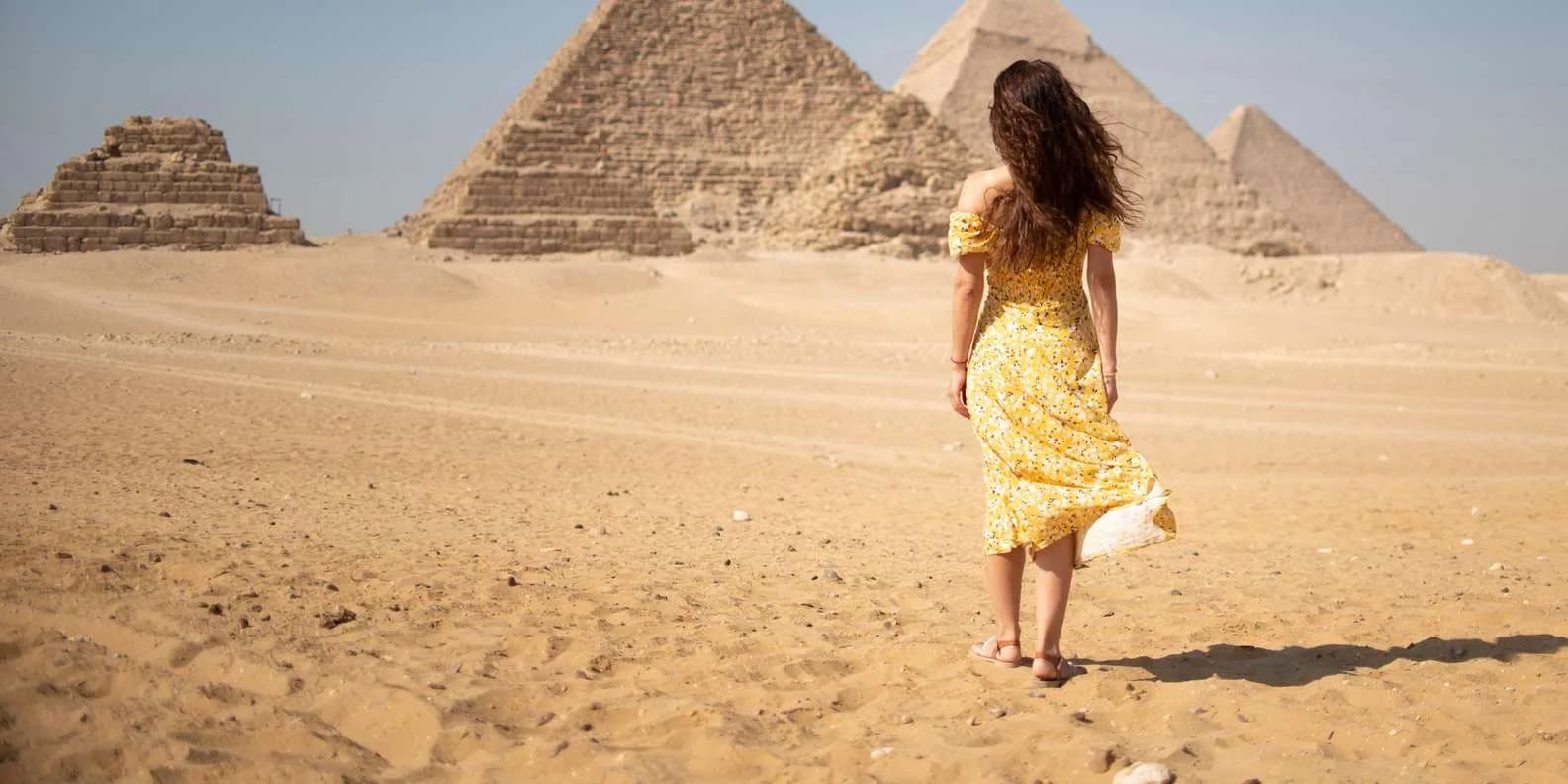
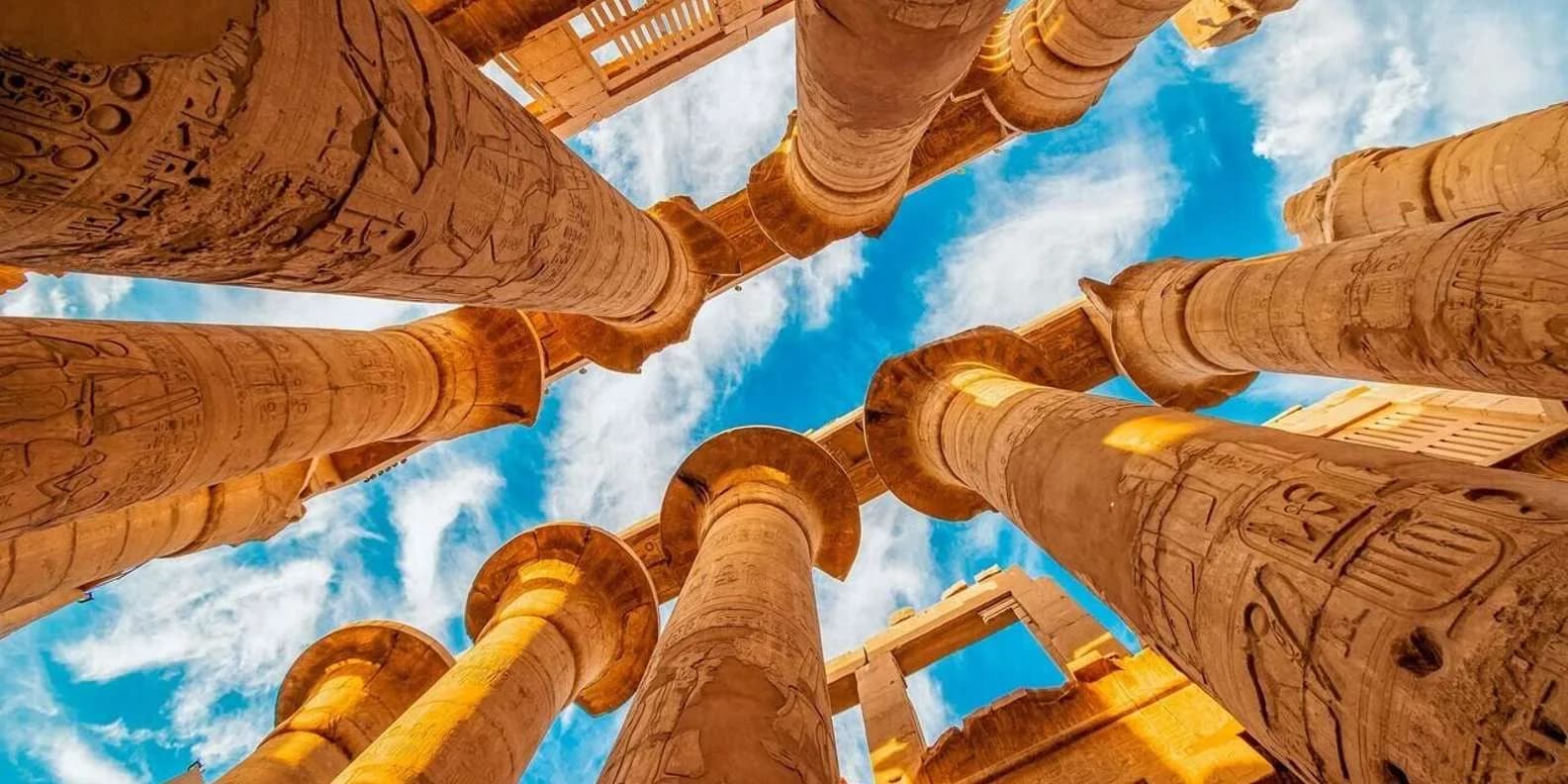
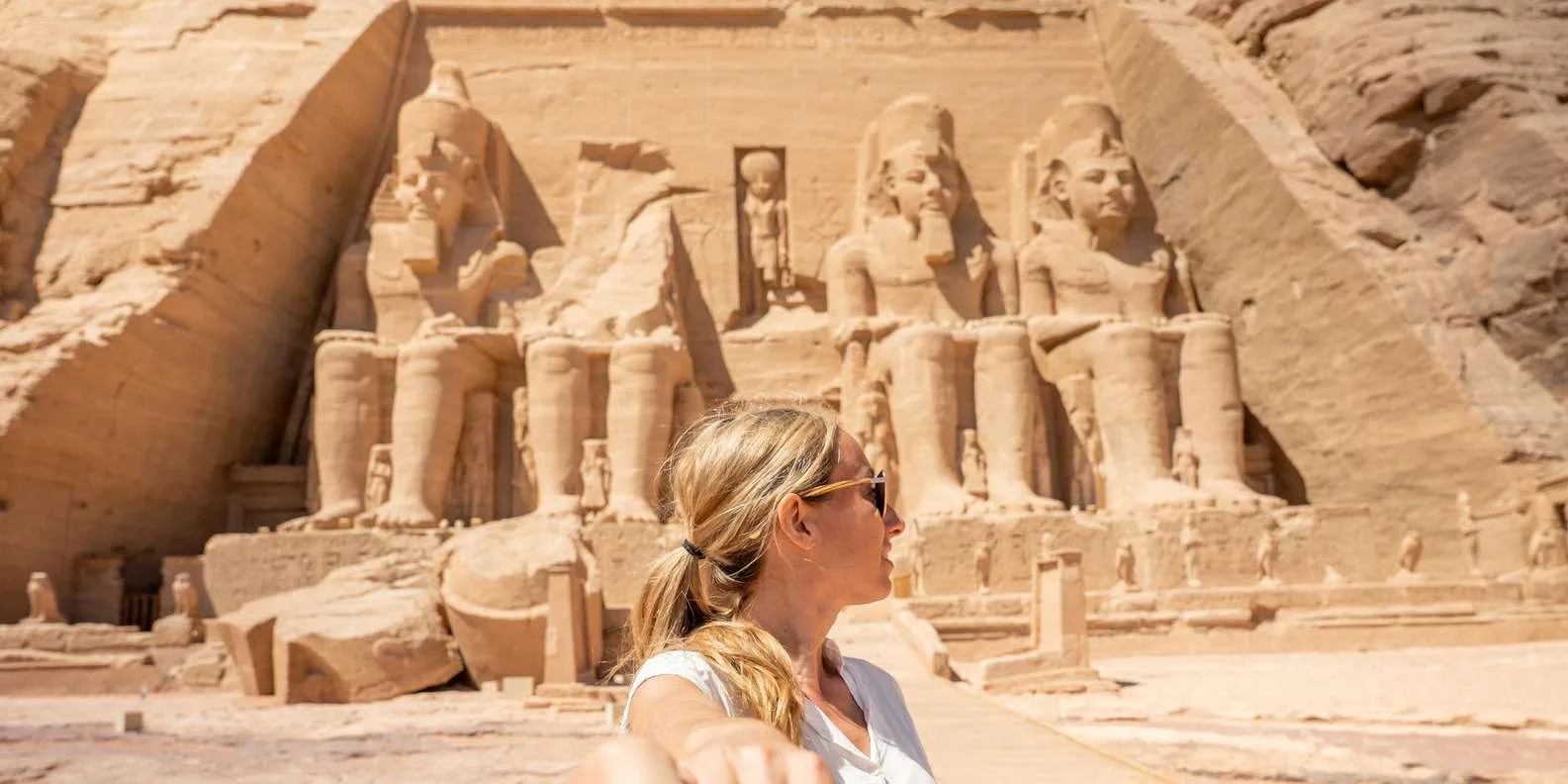

Plan your Nile cruise
Dahabiyas featured in this guide
Free downloads
Take the Nile home with you
Two illustrated PDFs, no email required: our 12-page introduction to choosing between a cruise ship and a dahabiya, and the classic 4-night Luxor to Aswan itinerary, day by day.
Keep reading
Nile Cruise from Aswan to Luxor (or Luxor to Aswan): 2026 Guide
A 3 or 4 night cruise between Aswan and Luxor is the classic way to see Egypt's temples. The stops, real prices, why direction and boat choice matter, and how to avoid a bad one.
By TiE Editors9 min read
Jaz Nile Cruises (2026): Fleet, Routes & How to Book
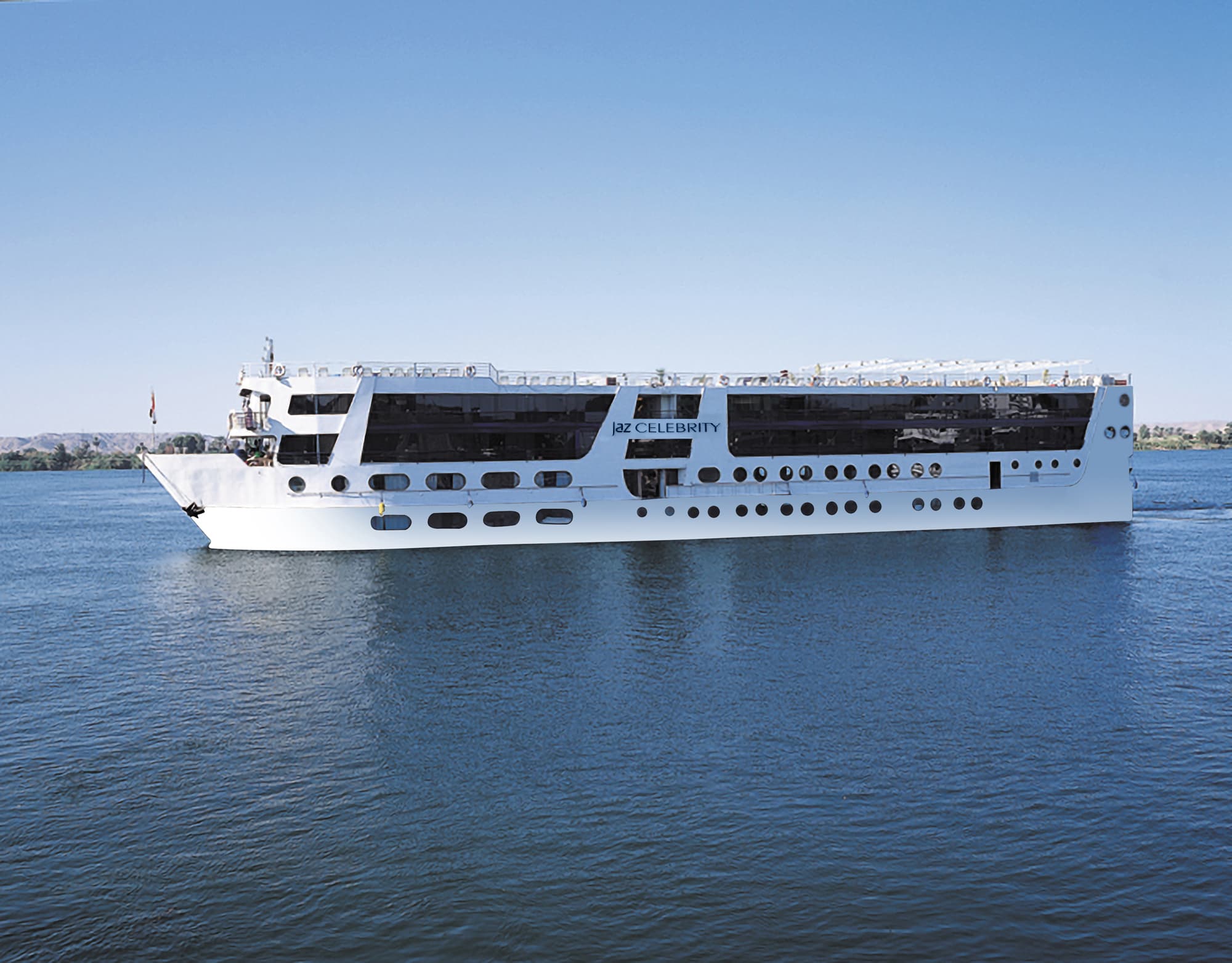
Jaz is the Nile cruise arm of JAZ Voyages, part of Travco Group, and runs the largest fleet in our directory: twelve ships on the Luxor–Aswan route plus three Farouz El Nil dahabiyas.
By TiE Editors6 min read
Nile Cruise for the 2027 Solar Eclipse (Aug 2): Sail Egypt's Totality
On 2 August 2027 a total solar eclipse passes over Luxor with 6+ minutes of totality. A Nile cruise is the best way to see it — in the path, accommodation solved. How eclipse sailings work and why to book early.
By TiE Editors5 min read