
 Photo by M.ramadan2014, via Wikimedia Commons, CC BY-SA 3.0
Egypt vs Greece: Which Should You Visit?
Egypt is the deeper, cheaper, guided monument-and-Nile trip; Greece pairs ruins with island beaches and easy independent travel. Here's how to choose.
Nile Cruises & Dahabiyas
Turn this guide into a trip








Quick answer: Egypt and Greece both sit near the top of the "ancient wonders" bucket list, and travellers deciding between them usually assume it's a coin-flip between two versions of the same holiday. It isn't. Egypt gives you the deepest, most concentrated ancient-monument experience on earth at a genuinely low daily cost, with the Nile working as a moving base between the sites. Greece pairs its ruins with island beaches, café culture and the easiest independent travel in the Mediterranean, at a noticeably higher price. They aren't rivals so much as different trips that happen to share a headline, and because Cairo and Athens are only about a two-hour flight apart, plenty of people do both. This guide lays out the honest case for each, the real costs, the logistics, and how to decide.

The case for Egypt
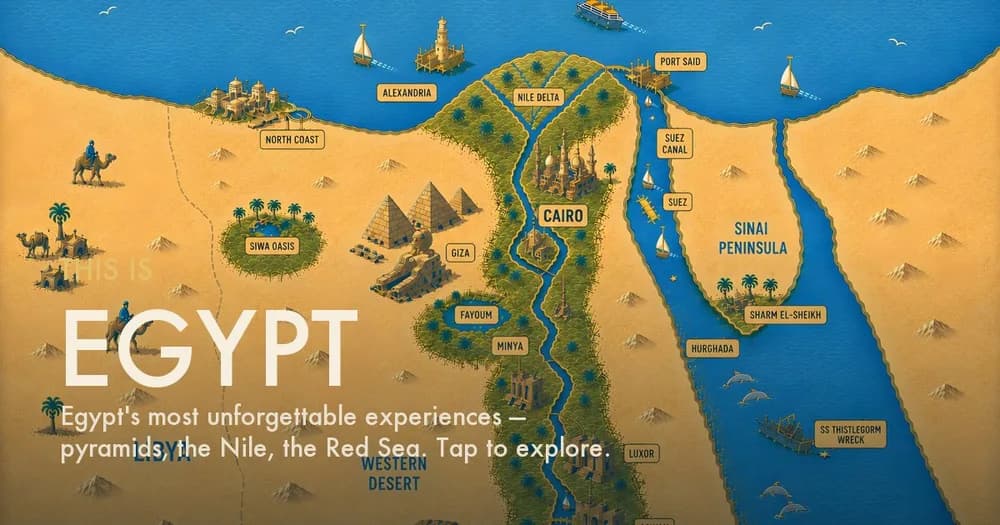
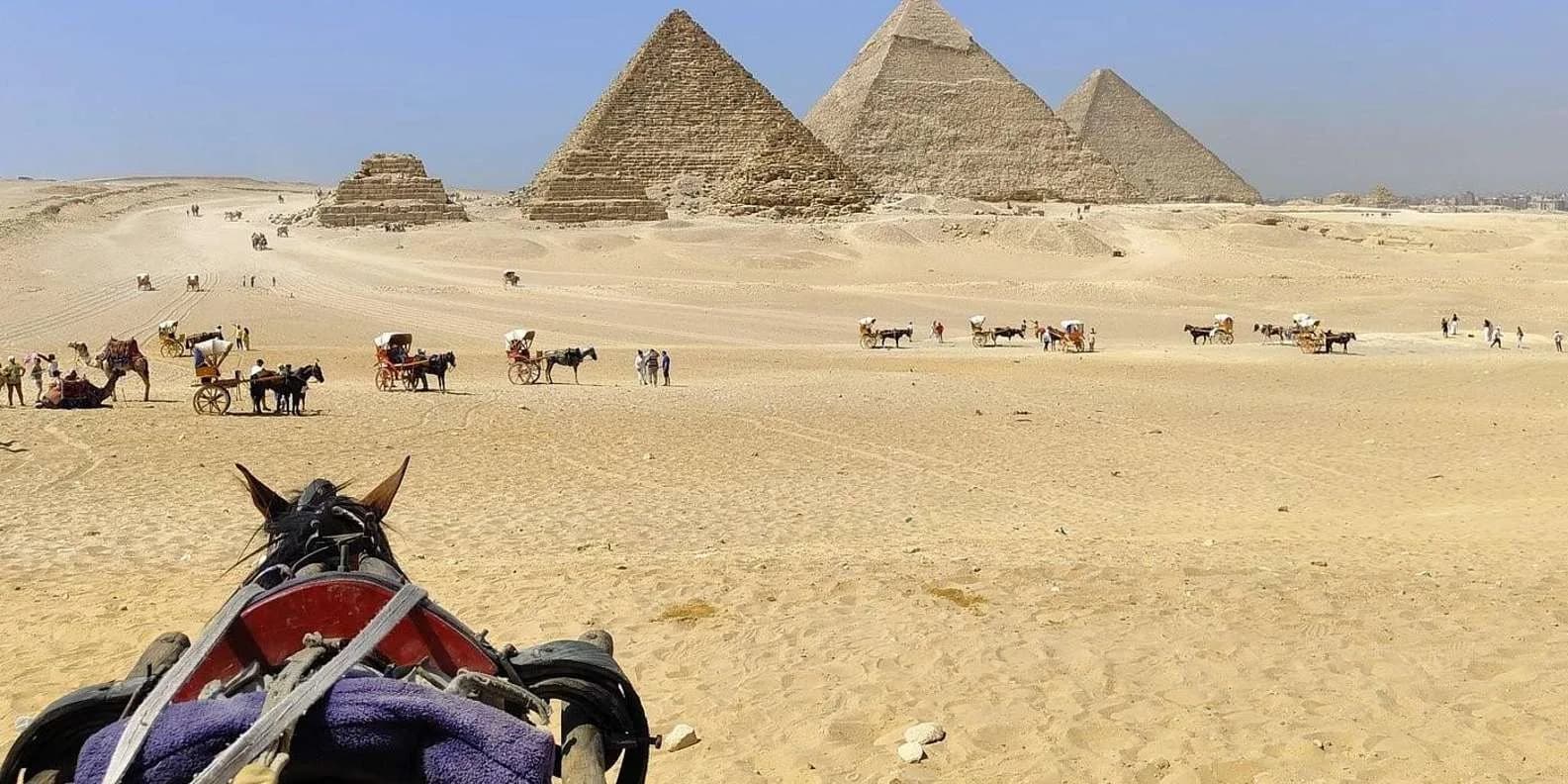
Egypt's pull is superlative, concentrated antiquity: the Pyramids of Giza, the temples of Luxor and Aswan, and the Nile itself as the thread connecting them. Nothing else in the world quite substitutes for it. The Grand Egyptian Museum fully opened on 1 November 2025 as the world's largest single-civilization museum, holding more than 100,000 artefacts, which gives the trip a major new anchor beside the pyramids on the Giza plateau. Crucially, Egypt is Pharaonic — its monuments predate Greek classical antiquity by thousands of years — so "ancient" here means something genuinely older and different, not a warm-up for Greece. And it does this at a low daily cost, which is a big part of the appeal.
The case for Greece
Greece's strength is variety in one trip. You get the Acropolis and Athens' classical core, then island-hopping through the Cyclades — Santorini, Mykonos and others — so culture and beach come bundled together. The Acropolis is the anchor sight; entry runs €20 in summer (April–October) and €10 in winter, with a €30 combo ticket covering multiple sites (verify current pricing before you go). The headline ruins here are Greco-Roman rather than Pharaonic, a different era and story. Just as important, Greece is an easier, more familiar, EU-standard destination for independent travellers — you can self-navigate the whole thing without a guide.

What a trip actually costs
This is where the two diverge most. Egypt is the value option: mid-range travel lands around $90–180 per person per day, and a mid-range week comes in closer to roughly $900–1,500 per person (as of 2026 — verify). Greece runs higher. A one-week trip is often quoted around $1,500–3,800 per person, and a 10-day Santorini-plus-islands itinerary typically €2,000–2,800 per person once you fold in internal flights and ferries (as of 2026 — verify). If maximum history-per-dollar matters, Egypt wins that column clearly; if you're comfortable with EU-level prices for the added beach-and-independence mix, Greece justifies its number.
The signature experience on each side
Each country has a defining way of moving between its sights. In Egypt it's the Nile cruise — a standard 3-to-5-night cruise runs roughly $430–650 and doubles as transport and accommodation between Luxor and Aswan. In Greece it's the ferry network. Athens to Santorini is about €71 overnight or €108 on the high-speed boat; a two-island loop adds roughly €80–200 per person and a three-island loop €150–300 (as of 2026 — verify). Both are part of the fun, not just logistics, but they shape the trip very differently: one is a single floating base, the other a build-your-own island chain.

Beaches and coast
Both countries have coastline, but of different character. Egypt's is the Red Sea, which is really about diving and snorkelling over coral. Greece's is the Aegean — island beaches, many of them volcanic on Santorini. If your beach fantasy is warm, clear water and reefs, Egypt's Red Sea resorts deliver; if it's whitewashed island villages above a blue sea with a beach club below, that's the Cyclades. Neither is "better"; they're aimed at different moods.
Logistics and effort
Egypt generally rewards a guided or cruise-based structure. The major sites are spread across the country, and monument areas come with touts and haggling, so a fair number of travellers prefer the smoother path of an organised itinerary. Greece is the opposite — very DIY-friendly. You book ferries and island hotels yourself and self-navigate, and the main planning challenge is just ferry timing and the order you hit the islands in. On visas: Egypt uses an e-visa ($25 single / $60 multi) or visa on arrival ($30 as of 1 March 2026) for many nationalities. Greece is in the Schengen zone, so many nationalities enter visa-free for short stays — but a new ETIAS authorisation (around €20) is expected for visa-exempt travellers from late 2026, so check your status before booking.
Safety
Both are broadly safe for mainstream tourism. Egypt hosts millions of visitors a year, with caution generally reserved for specific remote regions rather than the core tourist areas. Greece is a standard EU tourist destination. As always, the right move is to check your own government's current travel advisory before you commit, since specifics change.
Best season
The two peak at different times, which matters if you're choosing dates. Egypt's cooler, prime sightseeing window is October–April (also the pricier stretch); summer is hot but cheaper. Greece's sweet spot is May, June and September — warm without peak crowds — and travelling in May or October instead of July–August can save roughly 20–30% across hotels, ferries and tours. Because the seasons only partly overlap (Greece's island season peaks in summer, exactly when Egypt is at its hottest), a combined trip is best aimed at the spring or autumn shoulder months.
Choose Egypt if… choose Greece if…
Choose Egypt if you want the deepest ancient monuments, a Nile cruise, and the most history per dollar, and you're fine with guided logistics and a bit of haggling around the sites. Choose Greece if you want antiquity alongside island beaches, café culture and effortless independent travel, and you're comfortable paying EU-level prices for that blend. The quick tell: Egypt is a monuments-first trip with beach optional; Greece is a beach-and-islands trip with world-class ruins attached.
Can you combine them?
Yes, and it's a classic pairing. Egypt-plus-Greece is a well-trodden two-week combination, helped by the short Cairo–Athens flight of about two hours. A typical structure is Athens plus a couple of Cyclades islands, then a hop to Cairo for the Pyramids, the Grand Egyptian Museum and a Nile cruise. Aim for shoulder season — spring or autumn — so the climate suits both halves rather than roasting you in Egypt or catching the islands before they've warmed up.
Common misconceptions
A few myths worth clearing up. "Greek and Egyptian ruins are basically the same" — they're not; different civilizations and eras, with Pharaonic Egypt predating Greek classical antiquity by thousands of years. "Greece is the budget Mediterranean option" — Santorini in particular runs higher than most other Cyclades islands, and a full island-hopping trip lands in the €2,000-plus range. "You have to go to Greece in July or August" — May, June and September (and even winter Athens) are often better, with fewer crowds, lower prices and cooler sightseeing weather. And "Egypt is unsafe" — the core tourist areas host millions every year, and caution is generally about specific remote regions rather than the places you'd actually visit.
What's On in Egypt
Events in Cairo

Egypt Press Photo Exhibition
Tahrir Cultural Center (AUC) · Downtown (Wust El Balad)

Exhibition Open Call
Tahrir Cultural Center (AUC) · Downtown (Wust El Balad)

She Arts Festival 2026: Voices of Peace – A Global Symphony
Tahrir Cultural Center (AUC) · Downtown (Wust El Balad)
A real team available 24/7 to assist you — free
Seif and the team reply on WhatsApp 24/7 — trip questions, custom plans and booking help.
Ask Seif on WhatsAppCommon questions
Is Egypt or Greece cheaper?
Egypt is clearly the value option. Mid-range travel there runs about $90–180 per person per day and a week lands closer to roughly $900–1,500 per person, while a one-week Greece trip is often quoted at $1,500–3,800 per person and a 10-day Santorini-plus-islands itinerary around €2,000–2,800 (as of 2026 — verify).
Are Egyptian and Greek ancient sites the same kind of thing?
No. Egypt's monuments are Pharaonic and predate Greek classical antiquity by thousands of years, while Greece's headline ruins are Greco-Roman. They're different civilizations and eras, so it isn't a case of one being a smaller version of the other.
Which is easier for independent travel?
Greece. It's very DIY-friendly — you book ferries and island hotels yourself and self-navigate, with ferry timing and island order being the main planning task. Egypt generally rewards a guided or Nile-cruise structure because sites are spread across the country and monument areas involve touts and haggling.
What's the signature way to travel within each country?
In Egypt it's a Nile cruise — a standard 3–5 night cruise runs roughly $430–650 and serves as both transport and lodging between Luxor and Aswan. In Greece it's the ferry network: Athens to Santorini is about €71 overnight or €108 high-speed, with multi-island loops adding €80–300 per person (as of 2026 — verify).
When is the best time to visit each?
Egypt's cooler peak sightseeing window is October–April, with hot but cheaper summers. Greece's sweet spot is May, June and September — warm without peak crowds, and 20–30% cheaper than July–August. For a combined trip, target spring or autumn since the two seasons only partly overlap.
Do I need a visa for Egypt or Greece?
Egypt uses an e-visa ($25 single / $60 multi) or visa on arrival ($30 as of 1 March 2026) for many nationalities. Greece is in the Schengen zone, so many nationalities enter visa-free for short stays, though a new ETIAS authorisation (around €20) is expected for visa-exempt travellers from late 2026. Verify your nationality's status before booking.
Can I visit both Egypt and Greece in one trip?
Yes — it's a classic two-week pairing, made easy by the roughly two-hour Cairo–Athens flight. A common plan is Athens plus a couple of Cyclades islands, then Cairo for the Pyramids, the Grand Egyptian Museum and a Nile cruise. Shoulder season (spring or autumn) suits both climates best.
Book it on This is Egypt
Turn this guide into a trip











Egypt's bestsellers
The experiences travelers book most, across the country











Keep reading

5-Star vs 4-Star Nile Cruise (2026): What the Rating Really Means
On the Nile, star ratings are issued locally and generously — almost every boat calls itself 5-star. Here is what actually separates the tiers, and how to read past the label to the real price and quality.
By TiE Editors4 min read

Nile Cruise vs Lake Nasser Cruise (2026): Which Should You Choose?
A Nile cruise sails the temple-lined Luxor–Aswan corridor with dozens of boats to choose from; a Lake Nasser cruise is a remote, uncrowded sail to Abu Simbel and the Nubian temples. Here is the honest comparison.
By TiE Editors4 min read

Liveaboard vs Day-Boat Diving in the Red Sea (2026): Which to Choose
A liveaboard reaches the remote reefs and wrecks day boats can't — the Brothers, Daedalus, deep-south Egypt — but a day boat is cheaper, flexible and beginner-friendly. Here's the honest choice.
By TiE Editors4 min read