Pyramids of Giza Tours & Tickets
Browse 2857 tours of the Great Pyramid, Khafre and Menkaure in 吉萨, starting from 353 EGP (about 7 USD), with an average rating of 4.8 out of 5. Real prices compared across booking platforms and updated for 2026.
Pyramids of Giza tickets & opening hours (2026)
| Plateau entry (incl. Sphinx) | 700 埃镑 |
| Great Pyramid (Khufu) interior | 1,500 埃镑 |
| Menkaure interior | 280 埃镑 |
| Tomb of Meresankh III | 200 埃镑 |
The plateau ticket covers the grounds and the Sphinx; tickets are card only, sold at the Great Gate or online. Pyramid interiors are separate. Private cars cannot enter: free electric buses link the stations. The Sound & Light show is not running as of October 2026. Khufu's Solar Boat is now at the Grand Egyptian Museum.
Prices are site entry fees for foreign adults, updated 2026-10. Many tours below include tickets and skip-the-line entry.
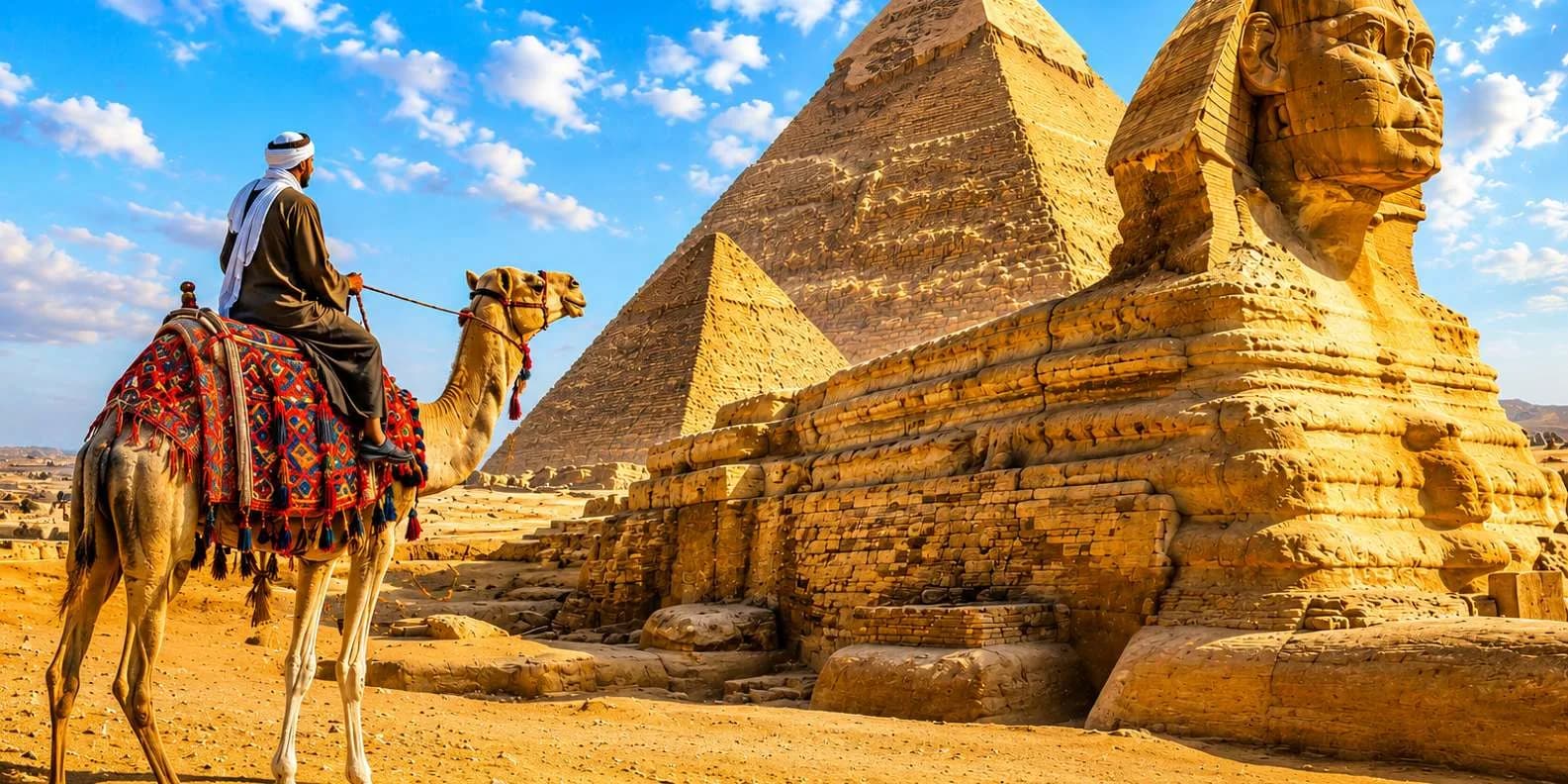
开罗:金字塔与大狮身人面像私人游,含骑骆驼
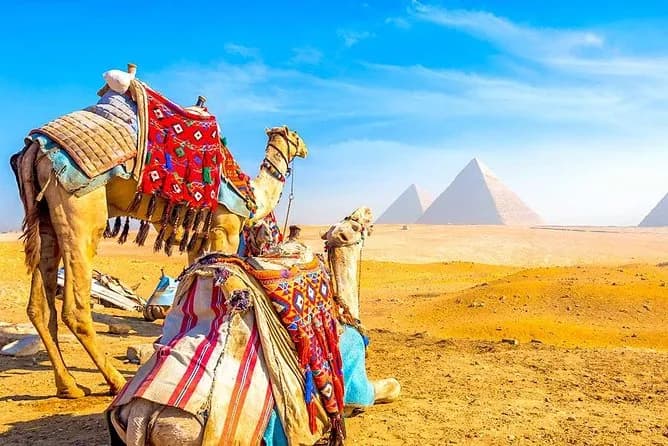
金字塔与大埃及博物馆游览
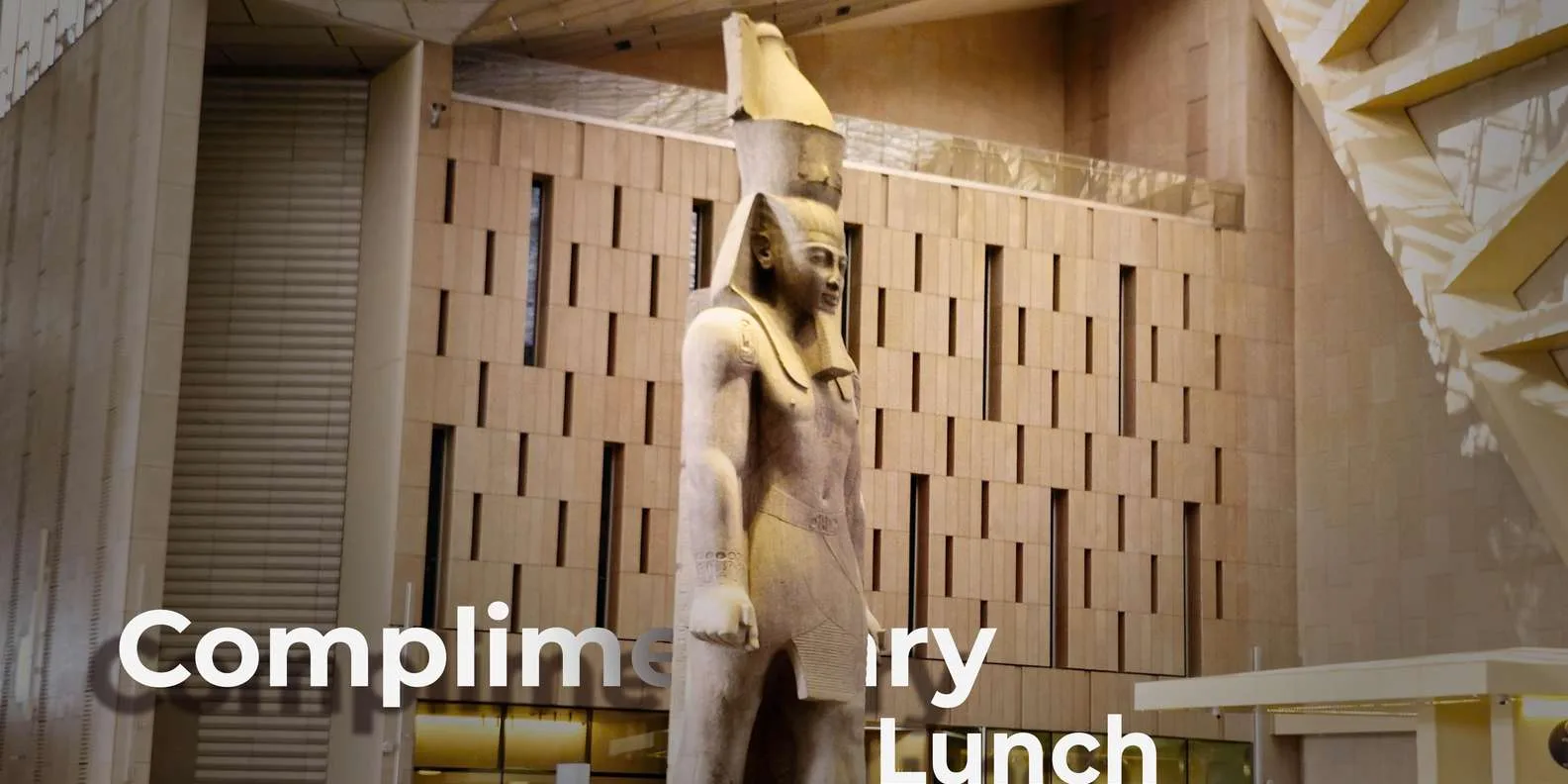
开罗:大埃及博物馆、金字塔与狮身人面像之旅,含午餐
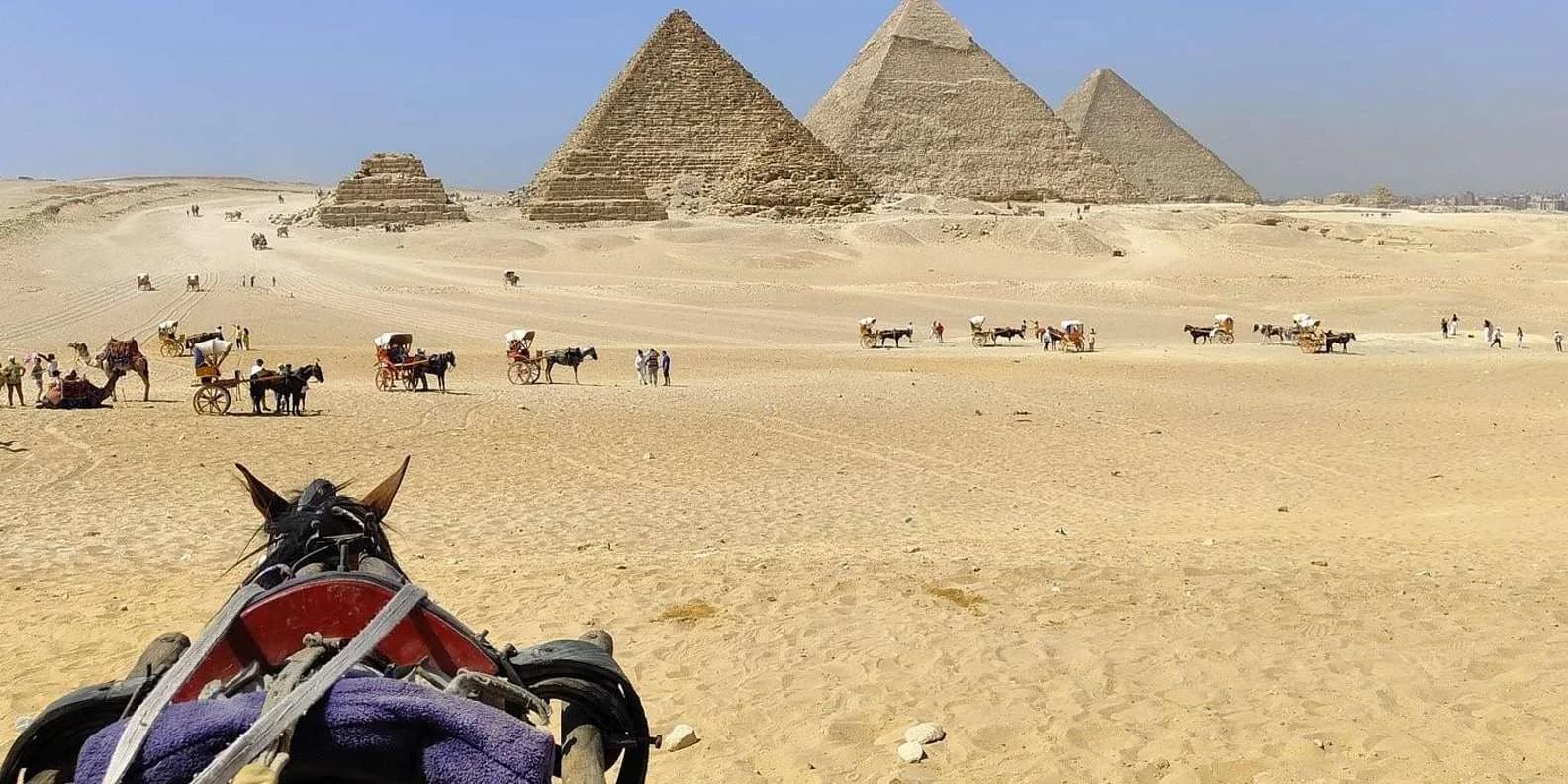
洪加达:乘飞机开罗一日游——金字塔、狮身人面像与博物馆
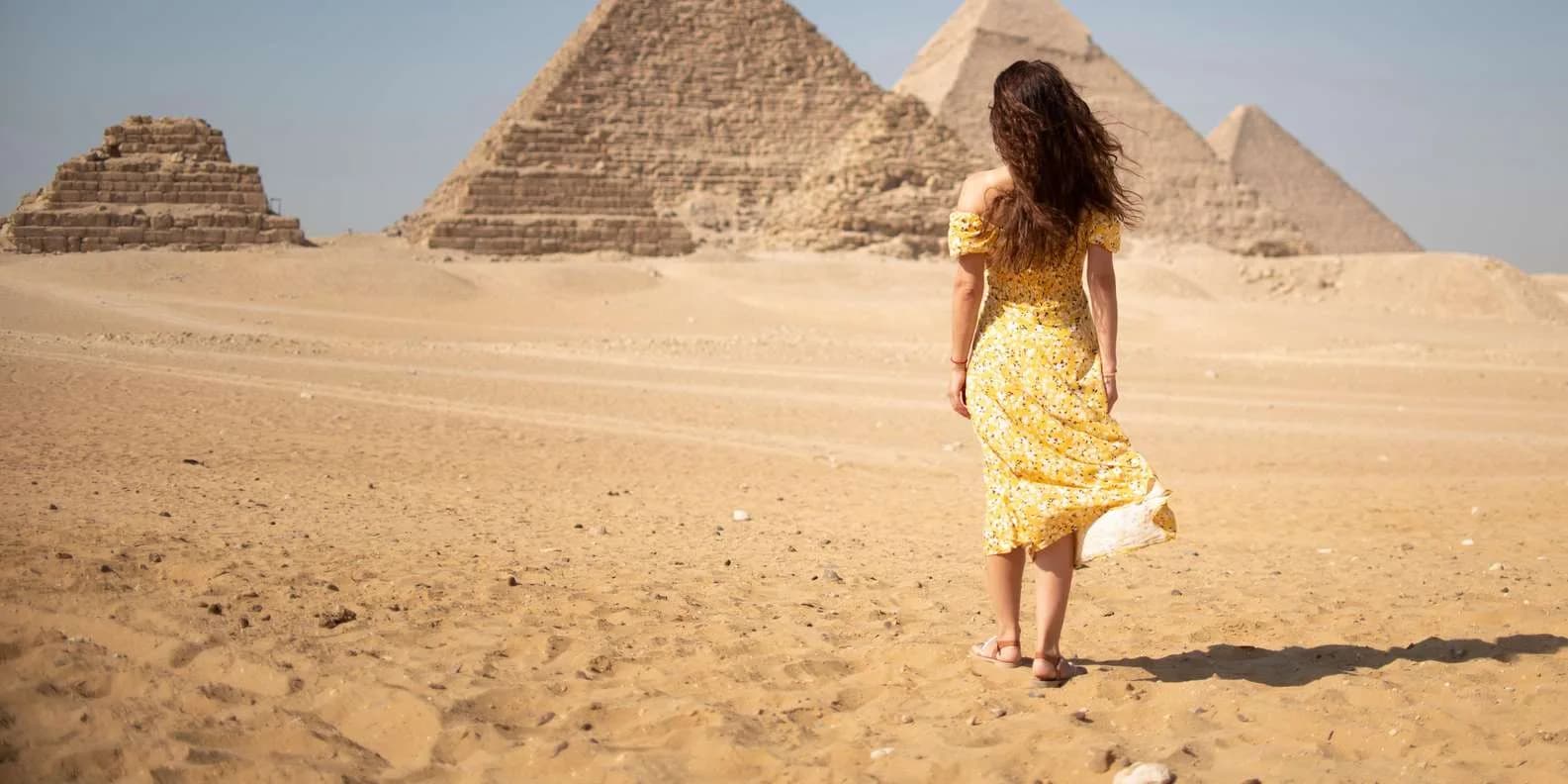
从开罗出发:吉萨金字塔与狮身人面像半日游
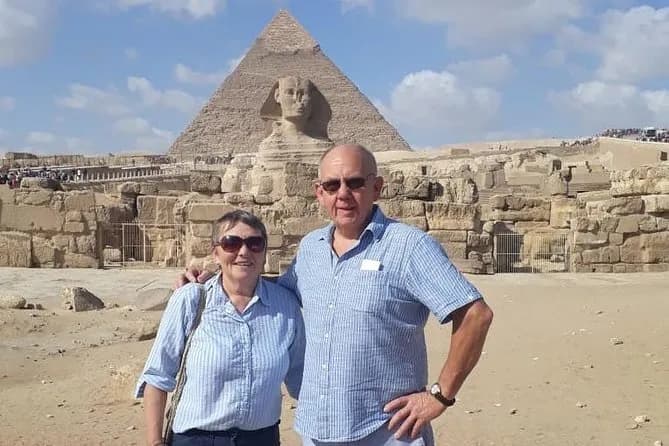
开罗:金字塔与大埃及博物馆8小时私人游
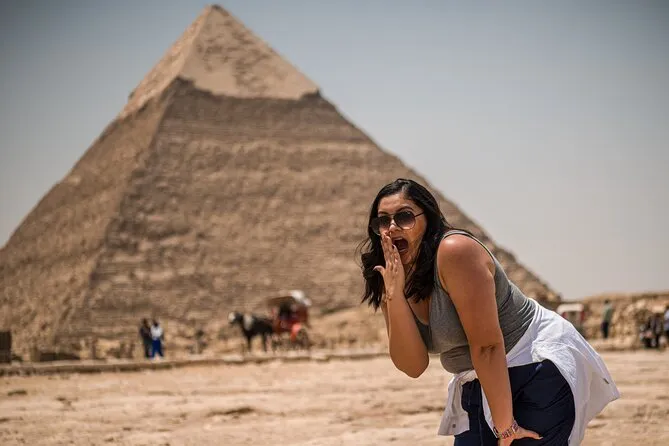
吉萨金字塔与大狮身人面像半日游,配私人导游
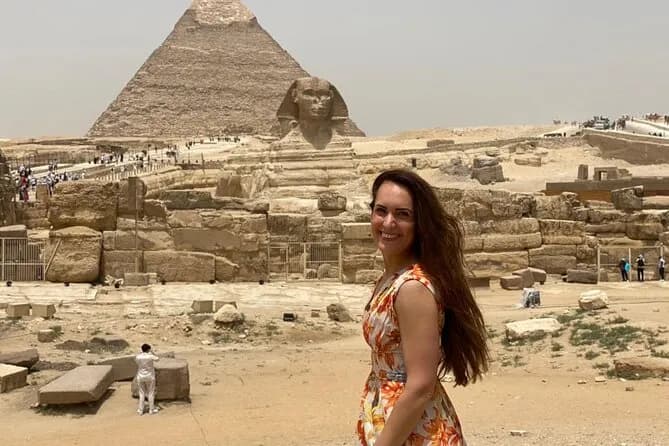
吉萨金字塔与大狮身人面像半日游,配私人导游
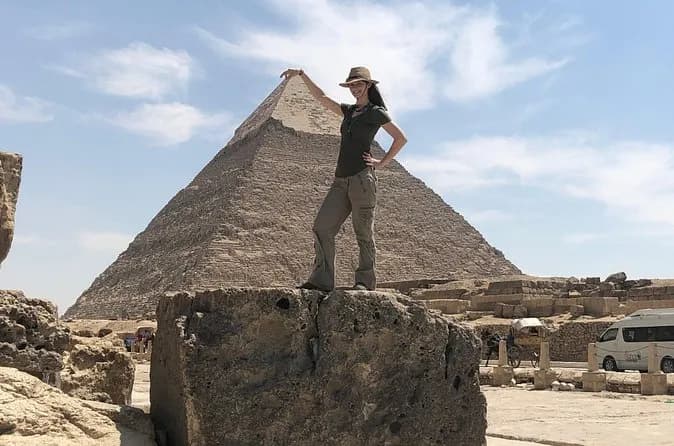
开罗精华:吉萨金字塔、狮身人面像与大博物馆私人游
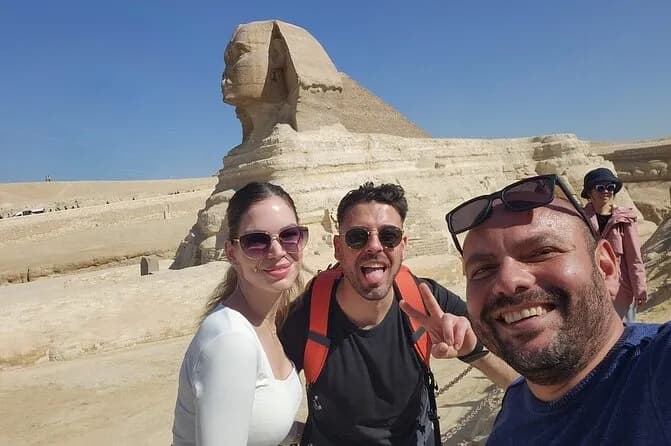
高分推荐:吉萨金字塔、狮身人面像、骑骆驼、午餐及入内参观
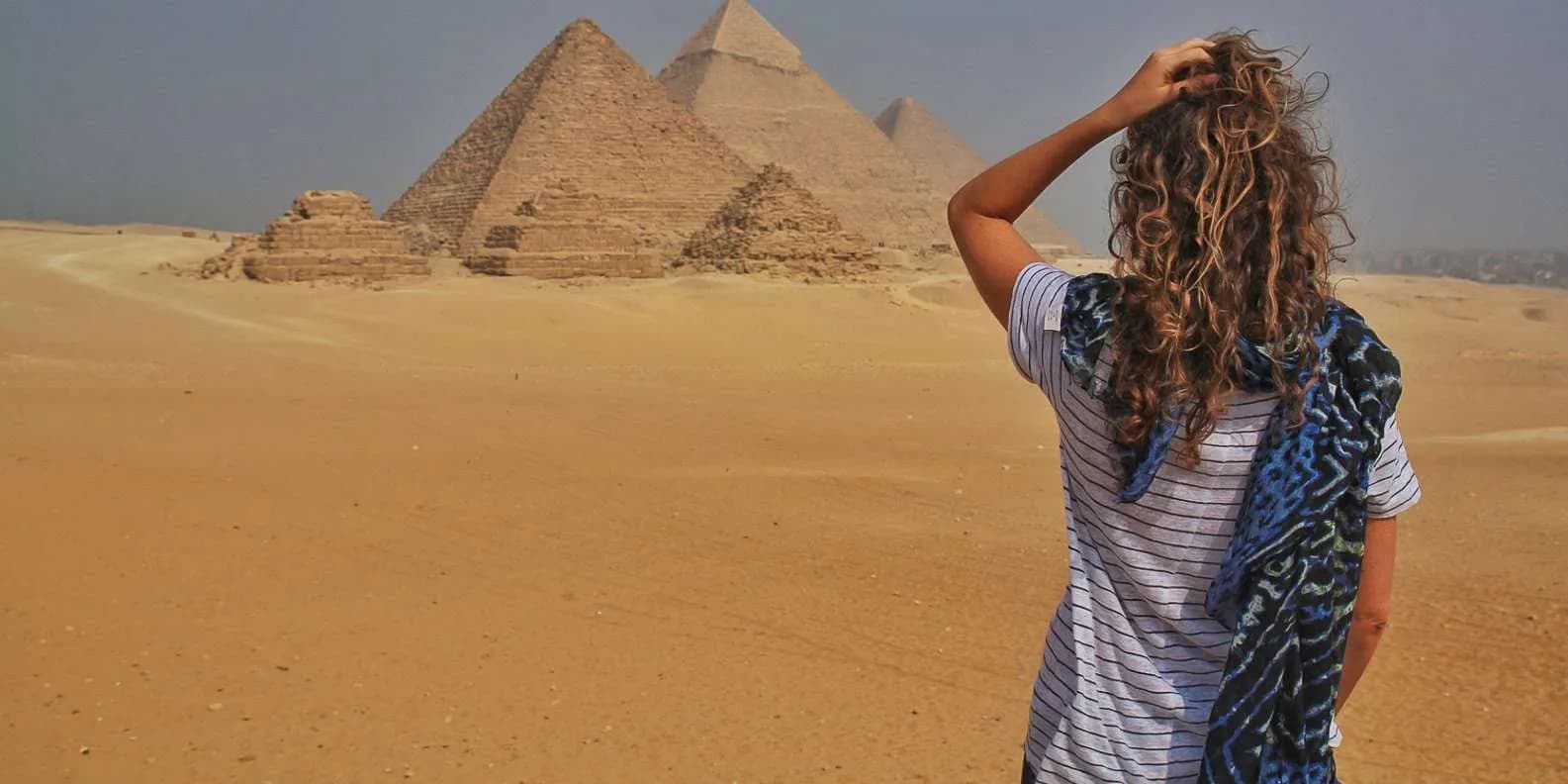
吉萨金字塔与狮身人面像:半日私人或拼团游
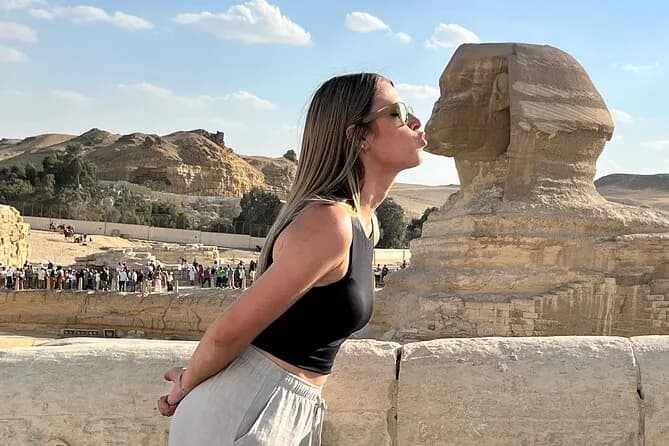
全包:吉萨金字塔、狮身人面像、午餐、骆驼及入内参观
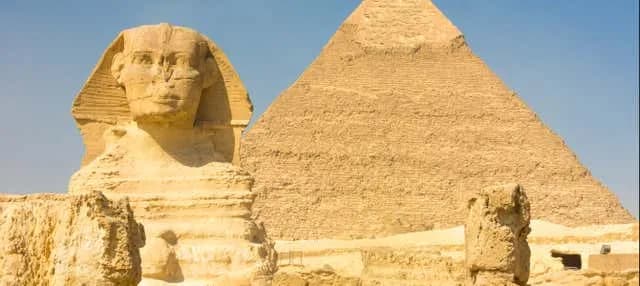
吉萨金字塔、孟菲斯与萨卡拉
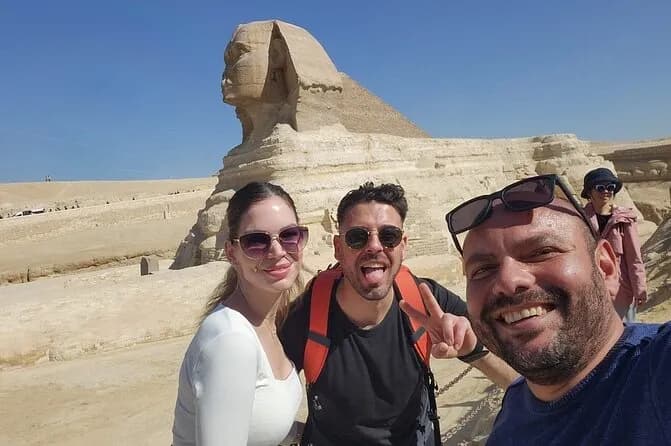
最受好评的吉萨金字塔,狮身人面像,骑骆驼,午餐和金字塔内
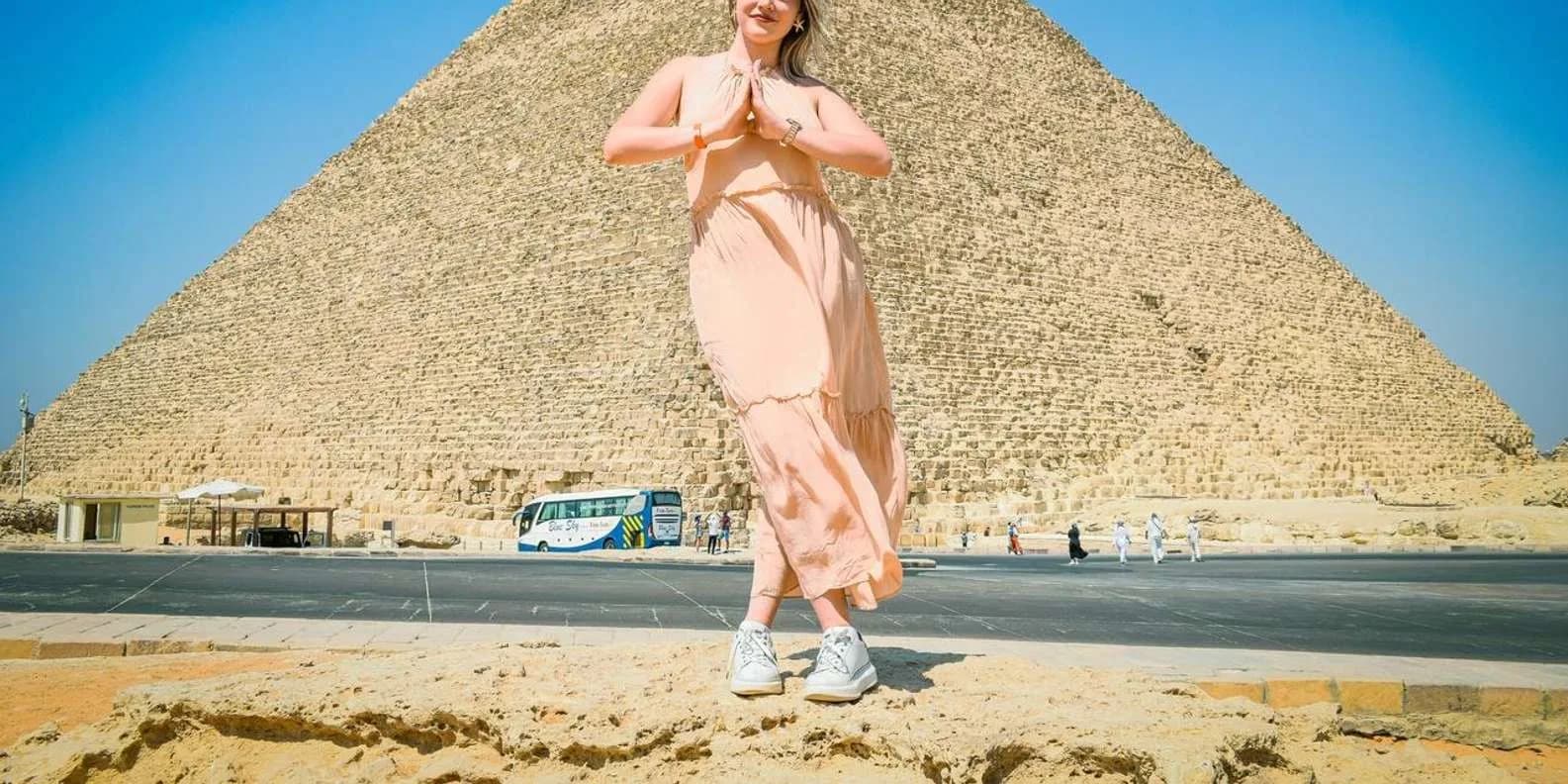
从洪加达到开罗:为初次到访者准备的金字塔与博物馆之旅
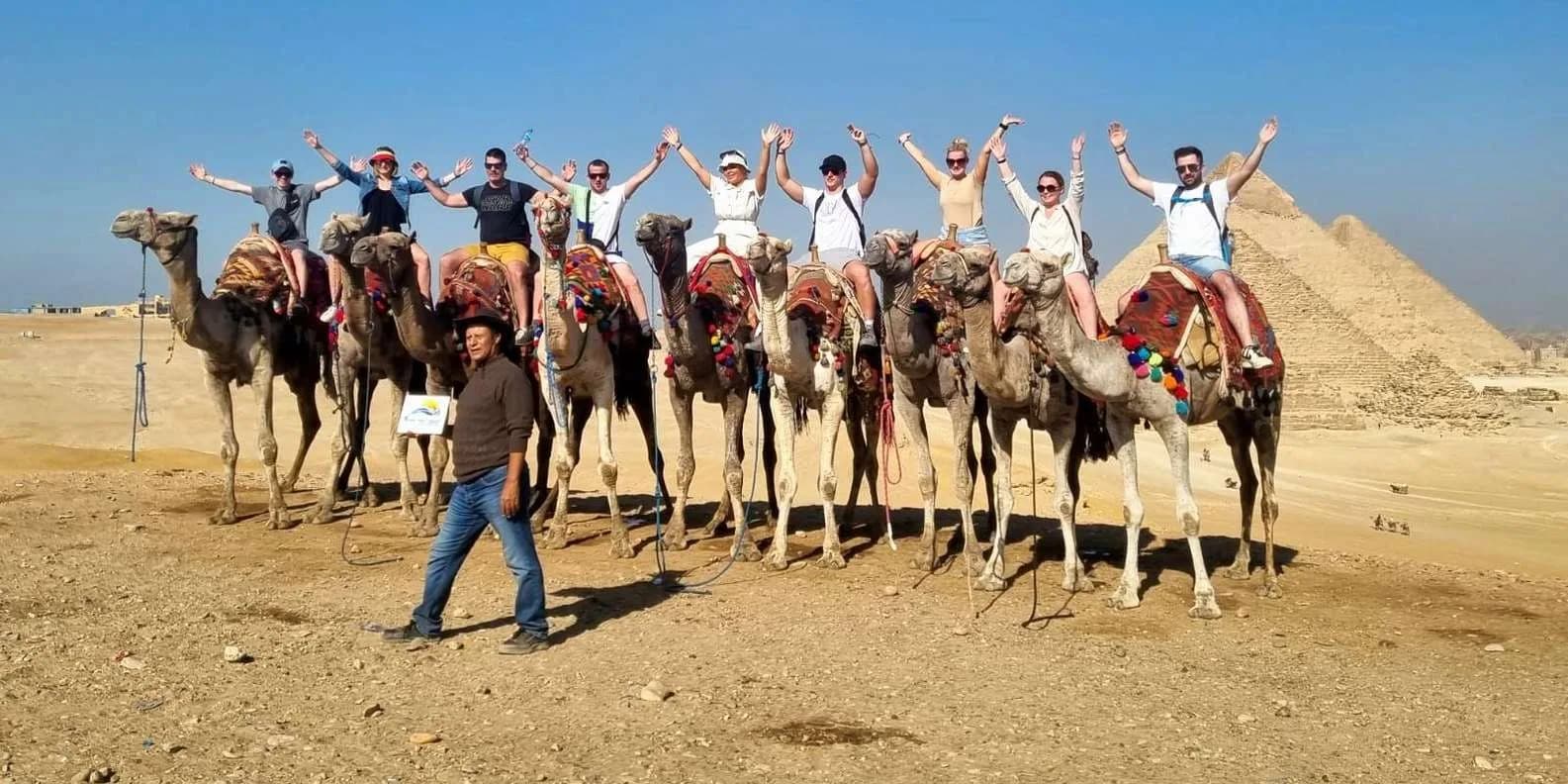
沙姆沙伊赫:乘巴士开罗一日游,含金字塔、狮身人面像与大埃及博物馆

从开罗出发:吉萨金字塔、狮身人面像、萨卡拉与孟菲斯全日导览,含门票、午餐与酒店接送
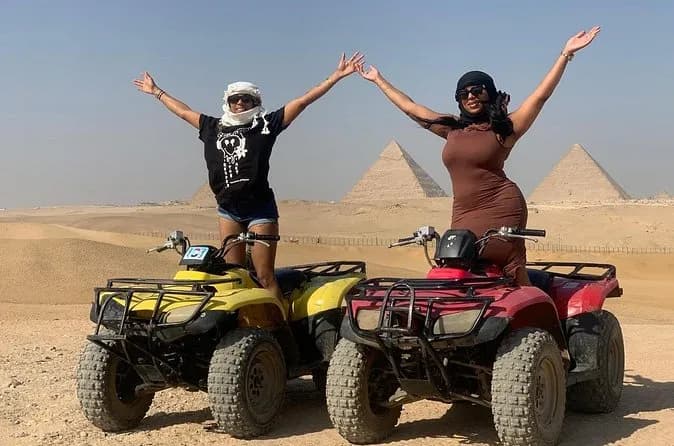
金字塔、狮身人面像、骆驼、ATV、购物与尼罗河晚餐游船
吉萨金字塔:四轮摩托沙漠越野,可选骑骆驼
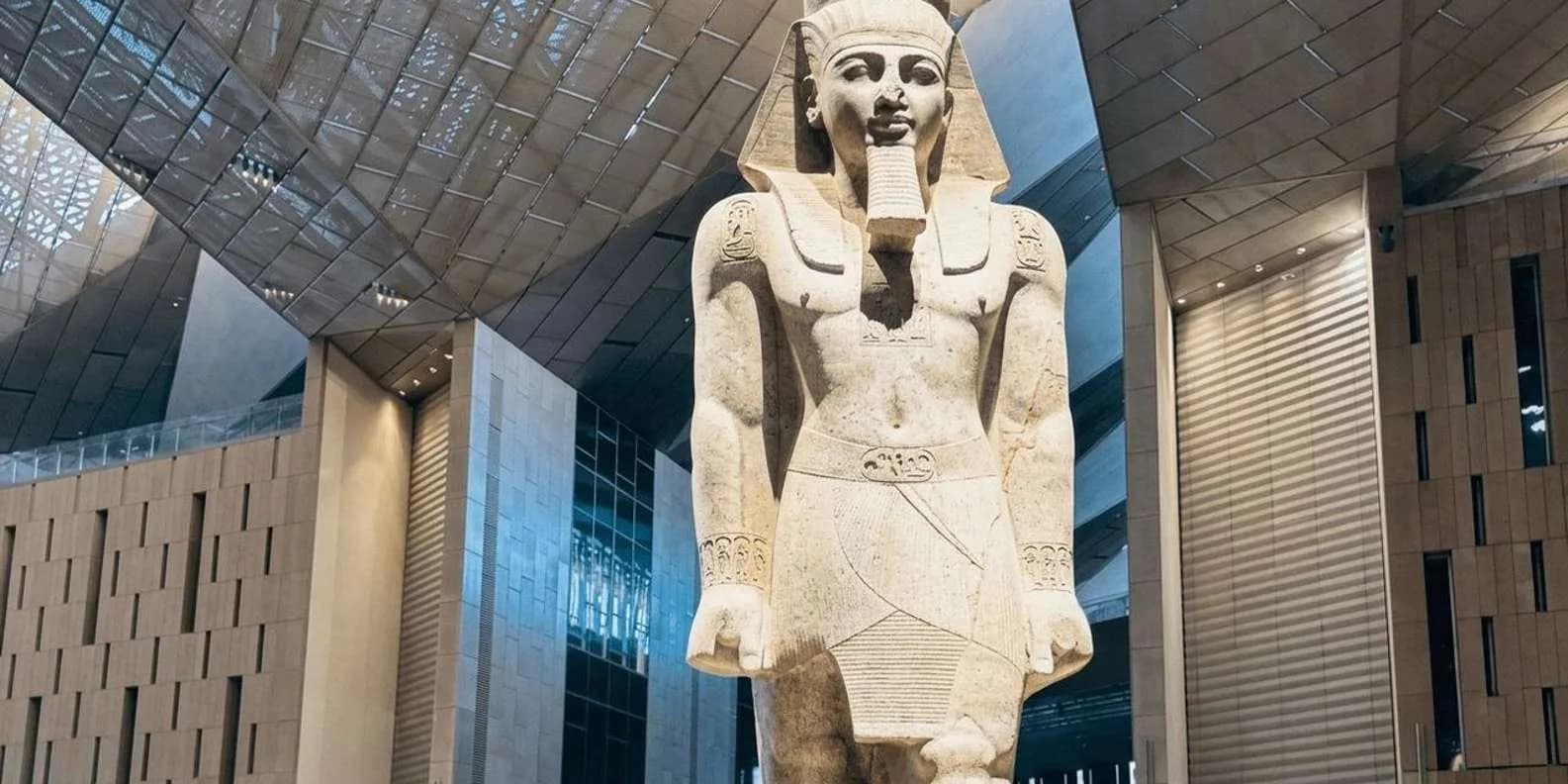
洪加达至开罗巴士游:金字塔与大埃及博物馆
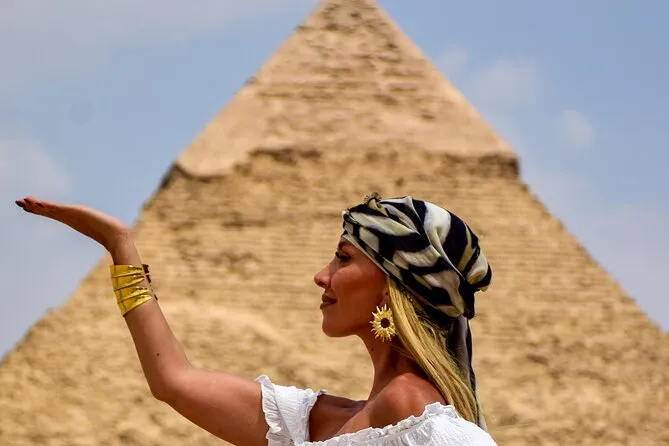
飞往开罗:探索金字塔,可选参观图坦卡蒙面具
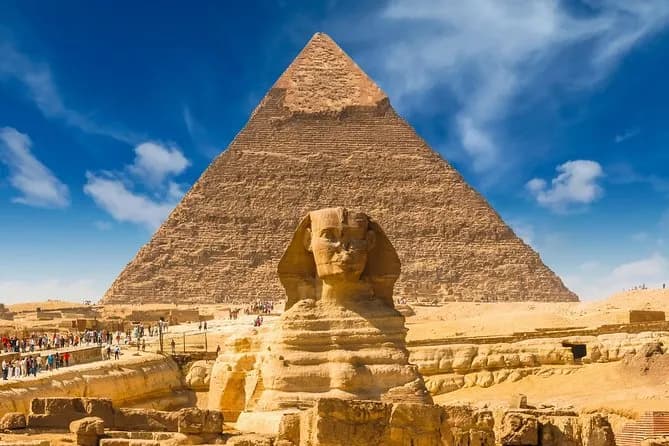
私人一日游:吉萨金字塔、狮身人面像、孟菲斯与萨卡拉
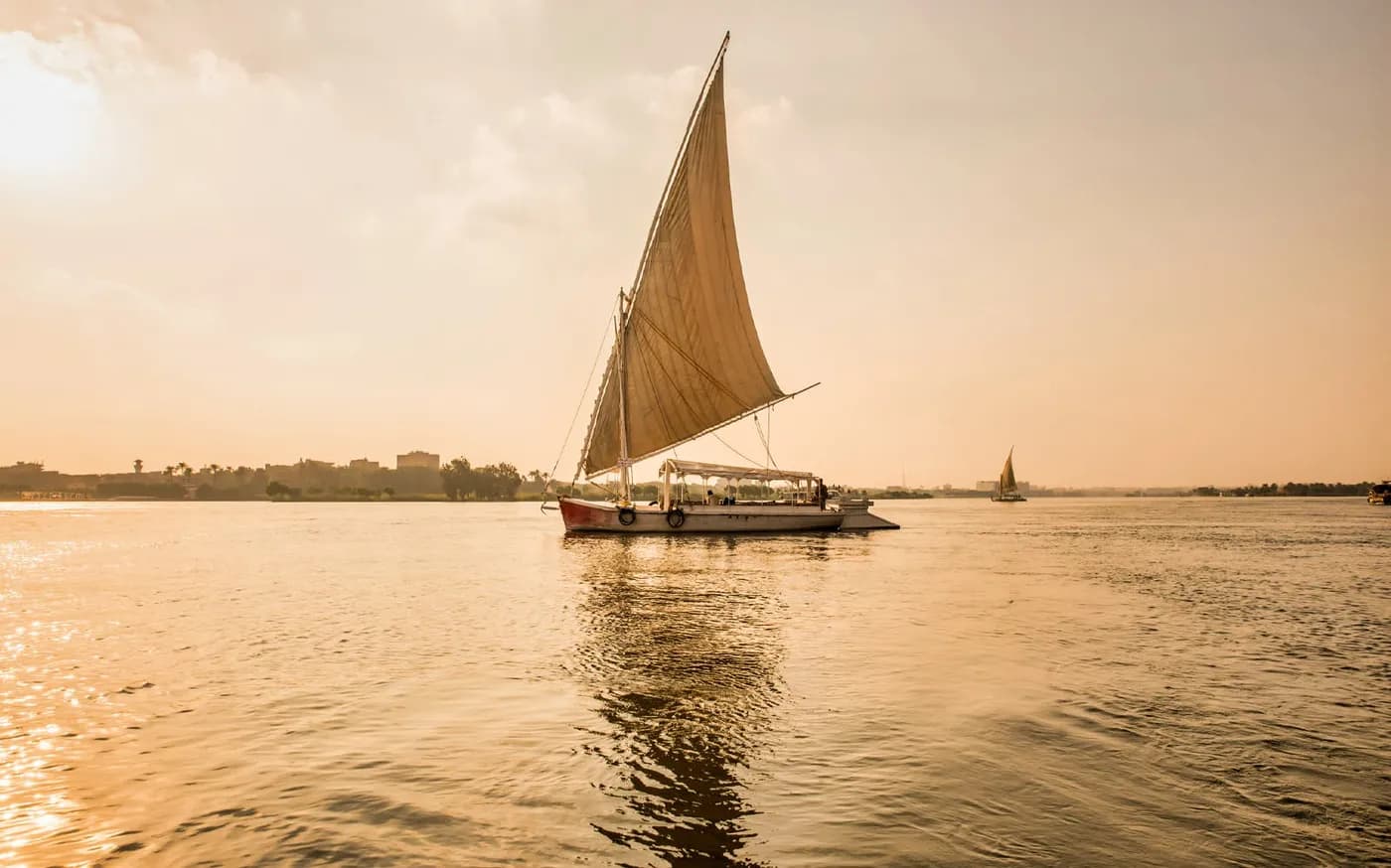
从开罗出发:吉萨金字塔与狮身人面像半日导览,含尼罗河风帆船与酒店接送
金字塔四轮摩托之旅,可选骑骆驼
Visiting Pyramids of Giza: what to know
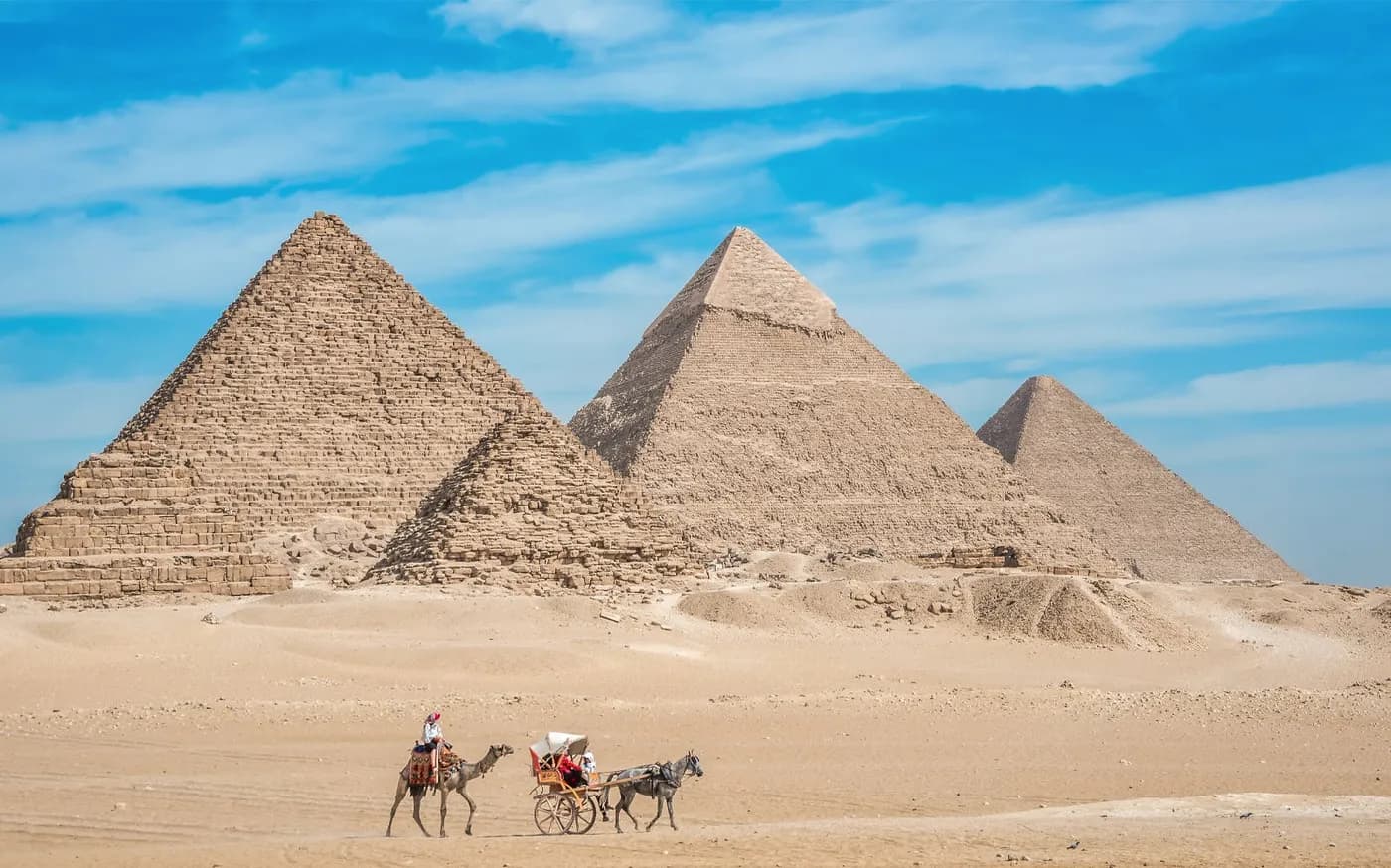
Updated 29 October 2026The Pyramids of Giza are the last of the Seven Wonders of the Ancient World still standing, and the one sight in Egypt almost nobody skips. Three royal tombs of the 4th Dynasty rise from a desert shelf on the western edge of Cairo: the Great Pyramid of Khufu, still close to 140 metres tall after four and a half thousand years, the pyramid of his son Khafre just behind it, and the smaller pyramid of Menkaure, flanked by a row of queens' pyramids, streets of courtiers' tombs, the Valley Temple and the Great Sphinx holding the eastern edge. Nothing else from the ancient world lets you do what Giza lets you do: walk up to the blocks, put a hand on them, climb into a burial chamber, and stand where the horizon is nothing but pyramid.
Two things surprise first timers. The first is how close the city comes. The plateau rises straight out of the streets of Giza, the Grand Egyptian Museum sits about 20 minutes away with the pyramids on its horizon, and downtown Cairo is roughly 40 minutes beyond that. The second is how big the site is once you are inside. From the Sphinx entrance at the bottom to the panorama viewpoint in the desert behind the pyramids is a couple of kilometres of sand and stone, which is why nearly everyone covers the ground on the free electric buses, a golf cart, or a camel or horse rather than entirely on foot.
The visit itself is easier than the plateau's reputation suggests. One ticket covers the grounds, the three pyramids from the outside and the Sphinx; the pyramid interiors are ticketed separately; and the headline monuments fit comfortably into half a day. The rest is strategy: knowing what the extras actually buy, when the crowds arrive, and how to handle the hustle at the gate. That is what this page is for.
How the pyramids were built
Giza is the climax of a very fast century. The Egyptians had only been building pyramids for about a hundred years when work began here: Djoser's architect Imhotep started the tradition at Saqqara by stacking stone mastabas into the Step Pyramid, the world's first pyramid and the oldest large stone building on earth. A generation before Giza, at Dahshur, the builders of the Bent Pyramid changed its angle mid construction, then got the geometry right with the Red Pyramid next door, the first true smooth sided pyramid. Khufu inherited that hard won engineering and pushed it to its limit.
His Great Pyramid, begun around 2560 BC, remained the tallest structure on earth for close to four thousand years. What you see today is the core masonry: the smooth casing of white Tura limestone that once made the faces gleam was stripped over the centuries to build medieval Cairo, leaving the stepped profile we now think of as the pyramid look. Only the cap of original casing on Khafre's peak survives to hint at the finish all three once carried. The scale still refuses to translate in photographs. The average building block weighs about two tonnes, and there is nothing at the base to give it human proportion until the person standing next to it is you.
How the blocks went up is genuinely unsettled. Most of the core stone was quarried on the plateau itself, the fine casing was ferried across the river from the Tura quarries, and the granite that lines Khufu's burial chamber came from Aswan, far up the Nile. No contemporary account of the lifting method survives, and the ramp question (straight, wrapping, internal) is still argued. What archaeology has settled is who did the work. Excavations south of the Sphinx uncovered the town that housed the builders, complete with bakeries, breweries and the workers' own tombs: the pyramids were raised by organised gangs of rotating Egyptian labourers, fed and paid by the state, not by the slave armies of legend.
Khafre, Khufu's son, built the second pyramid on higher ground, which is why it looks taller from most of the plateau even though it is not. Menkaure closed the royal sequence with a pyramid a fraction of the size, and around all three grew ordered streets of flat topped mastaba tombs for the officials and family who ran the Old Kingdom. The complex worked as a machine for eternity: each pyramid had a mortuary temple against its east face, a causeway running downhill, and a valley temple at the edge of the floodplain where the funeral procession arrived from the river. Khafre's valley temple still stands beside the Sphinx, and it is the best preserved building of its age on the plateau.
Everything portable vanished long ago. The burial chambers were emptied by robbers in antiquity, which is why going inside today reveals bare, precise architecture rather than treasure. The great exception was found beside the Great Pyramid rather than inside it: a full size cedar ship, buried in pieces in a sealed pit at the pyramid's foot, rediscovered in the 20th century and painstakingly reassembled. Khufu's Solar Boat is now displayed at the Grand Egyptian Museum, so do not go looking for it on the plateau.
Giza is also not the whole story. The Step Pyramid at Saqqara, the Bent and Red Pyramids at Dahshur and the ruins of Memphis, the Old Kingdom capital, all sit within an hour to the south, and seeing them together with Giza in one day shows the entire arc of how pyramids evolved. That fuller loop is laid out in Beyond Giza.
What to see
The plateau now has two working entrances. The main one is the Great Gate, part of the new visitor centre on the Fayoum road along the southern edge of the site; the old gate beside the Mena House hotel, below the Great Pyramid, no longer sells tickets. The second is the Sphinx gate at the bottom of the hill beside the Valley Temple, which keeps a smaller ticket office. Either way, the electric buses run you between the stations, so the sensible order is unchanged: pyramids first while the light is soft and the crowds thin, the panorama in the middle, the Sphinx as the finale.
Start at the Great Pyramid and give it time at close range. Walk a full side of it, watch the blocks scale up as you approach, and notice how the corner lines hold straight over a structure this size. Then decide about the interiors. Going inside the Great Pyramid means a long crouch up a low, steep, airless passage to a bare granite chamber; there is no decoration and no treasure, only precision stonework and the weight of a mountain overhead. Some visitors count it among the best things they have done in Egypt, others emerge sweaty and underwhelmed. Only 300 people a day are admitted, with tickets released in a morning batch and an early afternoon batch, and they sell out. If the interior matters to you, buy that ticket the moment you arrive. If you mainly want to know what the inside of a pyramid feels like, the interiors of Khafre or Menkaure deliver a very similar experience for a fraction of the cost, usually with no queue at all.
Between the giants, do not walk past the smaller stuff. The row of ruined queens' pyramids along the Great Pyramid's flank shows the complex as a family affair, and the grid of mastaba tombs around the pyramids held the administrators of the Old Kingdom. Look up at Khafre's peak for the surviving casing cap, then carry on to Menkaure, where the crowds are always thinnest.
Out in the desert behind the pyramids is the panorama viewpoint, the spot where all three line up for the classic photograph. It is a couple of kilometres from the monuments, which is exactly why the classic 30 minute camel or horse loop exists; a taxi or the shuttle does the same job with less negotiating.
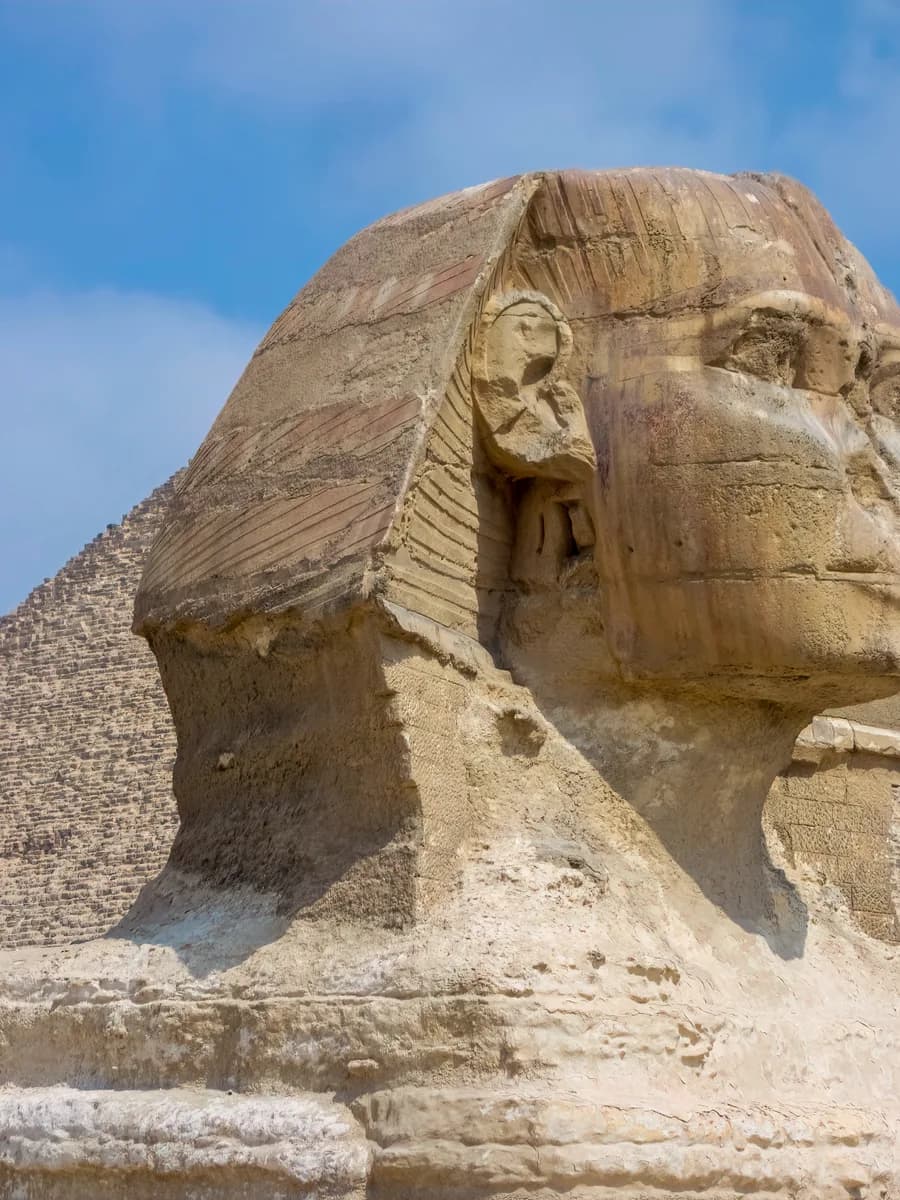
Finish at the bottom of the site. The Great Sphinx crouches in its quarried hollow beside Khafre's valley temple and is viewed from a raised terrace roughly level with its paws, with the temple's hall of massive granite blocks on the way through. The Sphinx rewards more attention than the drive by glance most groups give it: the carving, the lost nose and the stele between its paws are a story of their own, and it makes a better ending than a beginning.
What first timers miss, in rough order: the cheaper pyramid interiors, the casing cap on Khafre, the granite hall of the Valley Temple, and the quiet of the site in its first hour, which is gone by mid morning.
Getting there
Giza is a district of Greater Cairo, not a desert expedition. From downtown Cairo the drive is about 40 minutes in reasonable traffic; from the Grand Egyptian Museum it is about 20; from Cairo International Airport on the far side of the city, allow 45 to 75 minutes each way and more in the evening crush. Traffic, not distance, is the variable that wrecks plans, so pad every estimate.
Ride hailing apps work well in Cairo and are the cheapest independent option. Tell the driver the Great Gate on the Fayoum road, not the pyramids in general, or you may be left at the old Mena House gate, which no longer sells tickets; the Sphinx gate is the alternative if you want the statue first. Private cars, taxis and coaches cannot drive onto the plateau any more. Everything parks in the open air lots just outside the Great Gate, a one to three minute walk from security, and the parking fee is charged per vehicle: roughly EGP 100 for a car, 150 for a minibus, 200 for a coaster and 250 for a full size coach in the daytime, each about EGP 50 more in the evening. Agree a pickup point with your driver before you go in.
Tickets are card only, with no cash at the windows. You can buy at the ticket windows or the self service machines at the Great Gate, or in advance on the official egymonuments site; online buyers skip the windows and scan their ticket in the dedicated online lane. Plateau tickets are valid for one entry on the date you chose, so leaving the site and coming back means buying again.
The organised tour earns its keep here more than almost anywhere in Egypt, and not because of the entry ticket you could buy yourself. A tour bundles the vehicle that moves you across a site spread over kilometres of desert, an Egyptologist who turns three big triangles into a story, and a camel ride at a fixed rate with the haggling already done, and it puts a person between you and the gate hustle so your first hour is not a negotiation. Since the Grand Egyptian Museum opened fully in November 2025, the default first timer day has become plateau in the morning and museum after lunch; the Grand Egyptian Museum guide covers how to time the pairing.
Inside the site: buses, food and facilities
The private car ban came with a new way of moving around. Free electric hop on hop off buses run a loop between the stations every four to five minutes, and the full circuit takes about half an hour if you stay on board. The stations are worth knowing by name, because the restaurants, shops and services are grouped around them: the Visitor Center at the Great Gate, King Khufu station and the King Khufu Center, Panorama station at the viewpoint, Menkaure station, the 9 Arena and Sphinx station. Walking between them is perfectly possible; the buses simply save your legs and your water.
Food is no longer a sandwich from the car. In the daytime, from about 7 AM to 4 PM, the plateau has Khufu's (the restaurant with the pyramid view), 9 Pyramids Lounge at the 9 Arena, EL&N, Ladurée, Breadfast, and Mazmazza out at Menkaure station; most of the rest cluster at the King Khufu Center. Every one takes cards and cash, and vegetarian, vegan and gluten free dishes are on the menus. Shopping is spread the same way: Oriental Weavers carpets, Abdel Rahim Koueider sweets and souvenir shops at Panorama station, Nefertari body care and the Aboudi bookshop at King Khufu station, and a further cluster of gift shops at Sphinx station.
The practical details that save a morning:
- Lockers stand at the Great Gate before security, in the daytime only: EGP 250 for foreign visitors, EGP 100 for Egyptians. Cash, gold, valuables and food cannot go inside them.
- Restrooms are at most stations and cost EGP 20 for everyone. There is a baby changing room on site.
- ATMs are at Panorama station, King Khufu station, the 9 Arena and the King Khufu Center.
- First aid is at the Cleopatra Clinic in the Visitor Center, ambulances are stationed on the plateau, and the uniformed ushers across the site can call help or point you to the police for lost property.
Extra tickets beyond the plateau
The plateau ticket covers the grounds, the pyramids from outside and the Sphinx. Everything below is bought separately, at foreign visitor prices in Egyptian pounds as of October 2026:
| Extra ticket | Foreign visitor | Egyptian visitor |
|---|---|---|
| Inside the Great Pyramid (Khufu) | EGP 1,500 | EGP 150 |
| Inside the Pyramid of Menkaure | EGP 280 | EGP 30 |
| Tomb of Queen Meresankh III | EGP 200 | EGP 20 |
| Pyramid builders' tombs | EGP 700, same for all, minimum of five tickets | EGP 700 |
Meresankh is the sleeper on that list: a queen's tomb in the eastern cemetery with its painted reliefs and rock cut statues still in place, for a fraction of the Great Pyramid price. The builders' tombs, in the workers' cemetery south of the Sphinx, suit small groups, since the ticket is only sold in a block of five.
Accessibility
Giza has improved more for wheelchair users than almost any site in Egypt. Wheelchairs and specially equipped buses can be reserved in advance for daytime visits, and the regular electric buses have ramps. The golf carts are not yet wheelchair adapted, but they do help guests with limited mobility, and for someone who cannot transfer at all a dedicated shuttle bus can be arranged for about US$300. Foreign visitors with a disability pay half price for the plateau ticket and Egyptians with a disability enter free; carers pay the normal fare. The interiors of the pyramids remain steep, narrow passages and are not accessible.
Photography and drones
Phones and ordinary cameras are fine everywhere for personal pictures. Professional camera setups, tripods and drones need written permission arranged before the visit, and commercial shoots without it are not allowed. Climbing the pyramids is forbidden and enforced.
The site's own Private Experience
The company that now runs the visitor services also sells its own private packages, all starting from a lounge at the visitor centre with drinks and skipping the gate queue, and all private to your group. As quoted in October 2026, per adult: a 2 hour self guided Wander tour with your own golf cart (US$75), Wander Plus with lounge catering or a café voucher (US$90), a 3 hour guided Express tour by golf cart (US$130), Express Plus adding the Great Pyramid interior over 4 hours (US$175), a 5 hour Archaeological tour adding private tombs (US$200), and the 5 hour Pharaoh's tour, which adds a set breakfast or lunch with drinks, usually at Khufu's, otherwise at 9 Pyramids Lounge or Ladurée depending on the day (US$250). Payment is by link or by bank transfer at least 72 hours ahead, charged in Egyptian pounds at a fixed weekly rate. These are good value for a golf cart and a skip the line start, but they cover the plateau only; a private Egyptologist day that adds Saqqara, Dahshur or the Grand Egyptian Museum is a different product, and the one most travellers end up wanting.
Best time of day
Arrive when the gates open. The first hour has cool air, long shadows, soft light and a fraction of the day's visitors, and it is when the morning batch of Great Pyramid interior tickets goes on sale. Anyone visiting between May and September should treat the early start as non negotiable.
From mid morning the rhythm changes: coach groups and day trippers from the Red Sea resorts arrive in waves, the interior queue grows, and the terrace in front of the Sphinx fills. Midday is the low point, with hard flat light, heat that punishes from late spring to early autumn, and almost no shade anywhere on the site.
Late afternoon is the second good window. The light warms again and the crowds thin as groups leave for the museum or the airport, but the window is tighter than it looks because the site closes in the late afternoon and staff begin steering visitors toward the gates before that. After dark the plateau now opens a second time, from 6 PM to midnight, for dinner rather than sightseeing. An evening visit needs no entrance ticket at all, only a table booked at one of the plateau restaurants (Khufu's Bistro, EL&N, Ladurée, Breadfast or Mazmazza), reserved in advance, and it is the calmest way to see the floodlit pyramids. The plateau also hosts concerts on its event stage, so check the events calendar if your dates are flexible. The Sound and Light show that used to fill these evenings is not running as of October 2026, while a new version is prepared, so do not build a night around it until reopening is announced.
Tips for your visit
- Wear closed shoes. The ground is sand, gravel and loose stone from gate to gate.
- Carry water, a hat and sunscreen; shade is close to nonexistent on the plateau.
- Ticket windows take cards only, but bring small cash for tips and camel rides. Restrooms cost EGP 20 at every station.
- Ask your driver for the Great Gate on the Fayoum road; the old Mena House gate no longer sells tickets, and cars cannot enter the plateau.
- Ride the free electric buses between stations rather than paying for a ride from the gate.
- If you want the Great Pyramid interior, buy it at opening; the daily allocation sells out, and the afternoon batch goes almost as fast.
- Manage expectations inside: it is a steep, hot, crouched climb to an empty chamber. Claustrophobes should skip it without guilt.
- Agree any camel or horse price before you mount: the total, whether it is per person or per group, and the exact route. Photograph the agreed number and pay only when you are back on your feet.
- Treat anything handed to you as a sale. The free headscarf, the free hat and the offer to take your photo all end in a demand for cash; a firm no thank you and steady walking is all it takes.
- Climbing the outside of the pyramids is forbidden; the ticketed interiors are the legal way to get close to the stonework.
- Tripods, professional cameras and drones need written permission in advance; phones and ordinary cameras are fine.
- Give Giza three to four hours on its own, or a full day if you add Saqqara, Dahshur and Memphis.
- Do not hunt for the Solar Boat on the plateau; the ship now lives at the Grand Egyptian Museum next door.
Other Egypt attractions
Frequently asked questions
How much does it cost to visit Pyramids of Giza?
Tours and tickets start from 353 EGP (about 7 USD), with a median price of about 2,696 EGP per person.
How many Pyramids of Giza tours are available?
There are 2857 bookable tours and tickets for Pyramids of Giza.
What is the best Pyramids of Giza tour?
A top-rated pick is "开罗:金字塔与大狮身人面像私人游,含骑骆驼".
How long do you need at the Pyramids of Giza?
Three to four hours covers the plateau properly: the three pyramids up close, one interior, the panorama viewpoint and the Sphinx. Add Saqqara, Dahshur and Memphis to the south and it becomes a full day. On a tight airport stopover, a focused two hours on the plateau still covers the essentials, provided you budget hard for Cairo traffic.
Can you go inside the pyramids?
Yes, on separate tickets, though not always all three at once, since openings rotate for conservation. The Great Pyramid is the famous interior, limited to 300 people a day, and the climb is a low, steep, airless passage ending in a bare granite chamber. Khafre and Menkaure offer a very similar experience for far less money and usually no queue, which many visitors find the smarter buy.
Can you combine the pyramids and the Grand Egyptian Museum in one day?
Yes, and it has become the standard first timer plan since the museum opened fully in November 2025. Do the plateau at opening while it is cool and quiet, break for lunch, then spend the afternoon at the museum, which sits about 20 minutes away. That order keeps the heat hours indoors and ends the day with Tutankhamun.
Can you visit the Pyramids of Giza at night?
Yes, for dinner. Since the new visitor services opened, the plateau reopens from 6 PM to midnight for guests with a reservation at one of its restaurants, such as Khufu's Bistro, EL&N or Ladurée, and no entrance ticket is needed for an evening visit, only a table booked in advance. The Sound and Light show is not running as of October 2026 while a new version is prepared.
Can you drive into the Giza pyramids site?
No. Private cars, taxis and coaches now park just outside the Great Gate, the main entrance on the Fayoum road, and free electric buses carry visitors between the stations every four to five minutes. A full loop takes about half an hour. Walking is allowed, and golf carts come with the site's private packages.
Is the Giza plateau wheelchair accessible?
The grounds largely are. Wheelchairs and specially equipped buses can be reserved in advance for daytime visits, the electric buses have ramps, and foreign visitors with a disability pay half the plateau fare while carers pay full price. The golf carts are not wheelchair adapted yet, and the pyramid interiors are steep, narrow passages that remain inaccessible.