Wadi El Hitan: Egypt's Valley of the Whales Guide
Egypt's only natural UNESCO site — a Fayoum desert valley of 40-million-year-old fossil whales with legs. What to see, why it matters, and how to visit by 4x4.
Quick answer: Wadi El Hitan — the "Valley of the Whales" — is a remote desert valley in Egypt's Fayoum region where the sand is scattered with the fossilised skeletons of whales that swam here 40 million years ago. It is Egypt's only natural UNESCO World Heritage Site and one of the most important fossil localities on the planet: the place where you can literally walk among whales caught in the act of evolving from land animals into ocean giants. This guide covers what's there, why it matters, and exactly how to visit.
It's a wild, silent, cinematic place — and a natural add-on to a Fayoum Oasis trip or a long day out from Cairo.
Why are there whales in the desert?
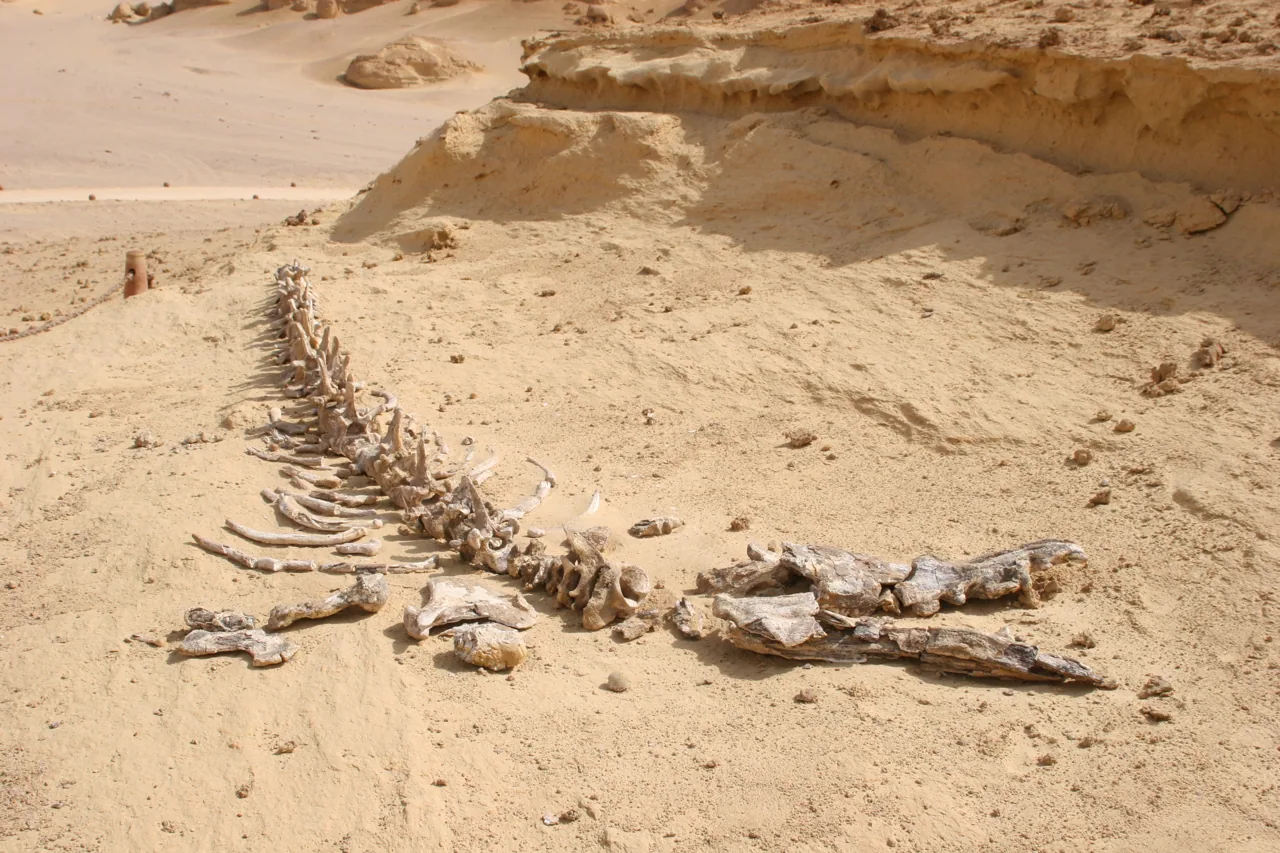
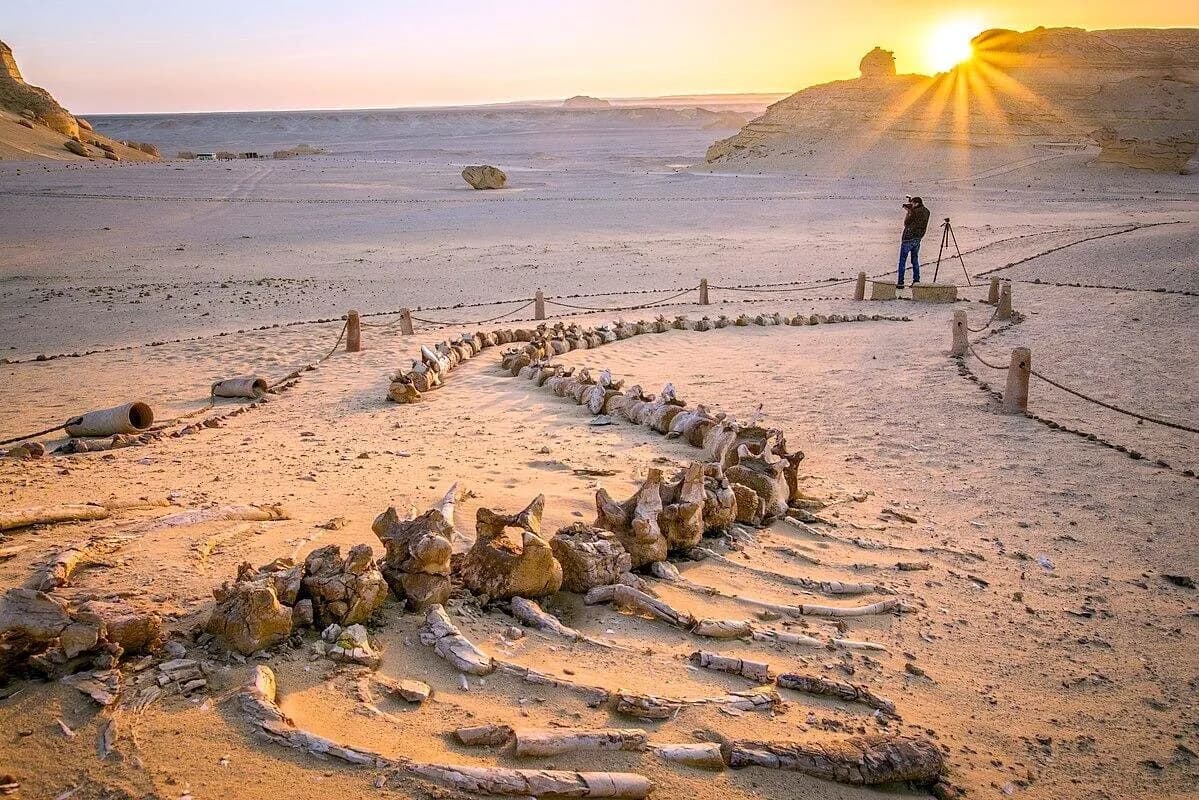
Around 40–37 million years ago, in the Eocene epoch, this whole area lay beneath a warm, shallow arm of the ancient Tethys Sea. When those seas retreated and the Sahara took over, they left a graveyard of marine life sealed in the rock. Wind erosion has since stripped away the softer sediment and exposed hundreds of skeletons — most spectacularly the primitive whales Basilosaurus and Dorudon.
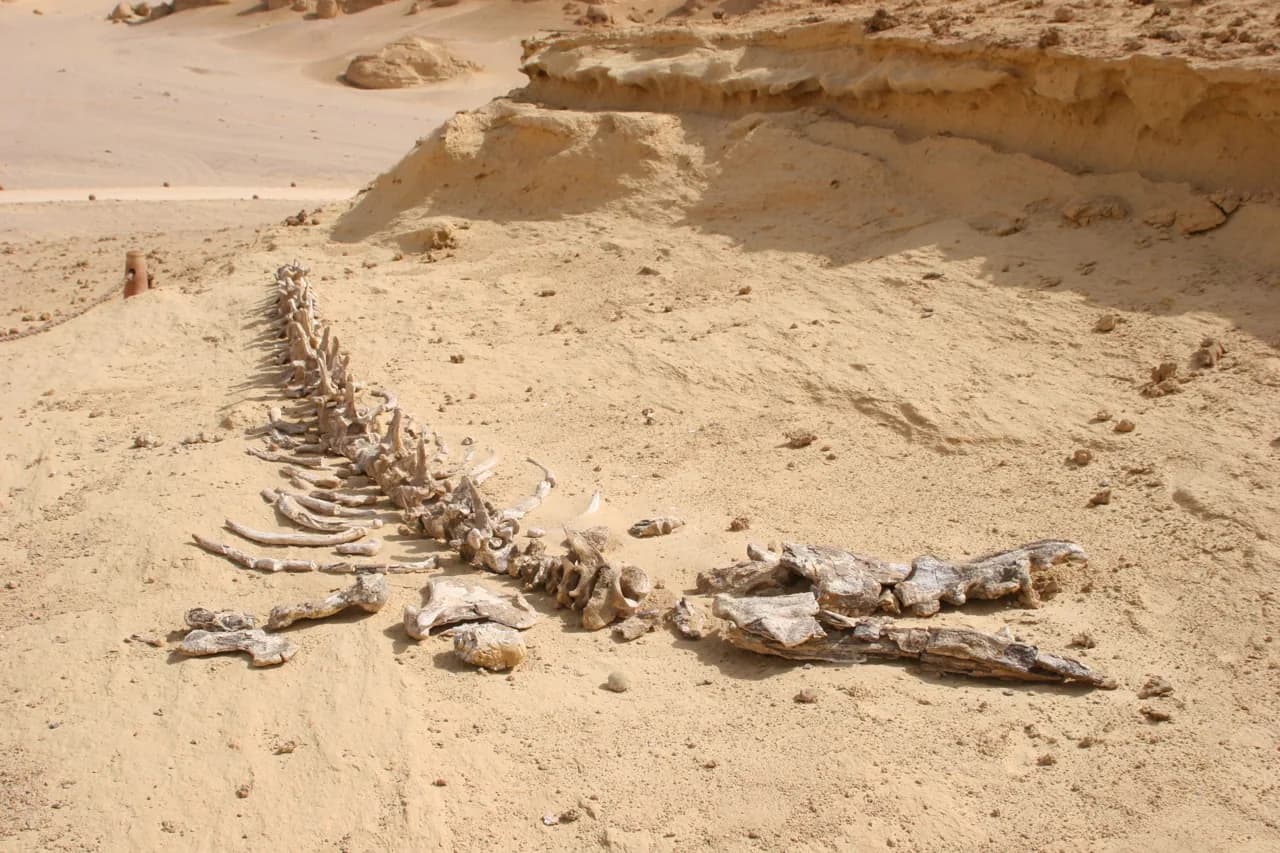
Here's what makes them globally famous. These early whales still had small hind legs, feet and toes — sea creatures that hadn't yet lost the back limbs of their land-mammal ancestors. Wadi El Hitan preserves this evolutionary in-between stage in a density, completeness and quality found nowhere else on Earth. That is precisely why UNESCO inscribed it as a natural World Heritage Site in 2005. The valley also holds fossil sharks, sawfish, sea turtles, sea cows and even fossilised mangrove roots — a whole vanished ecosystem, not just the whales.
What you'll see on the ground
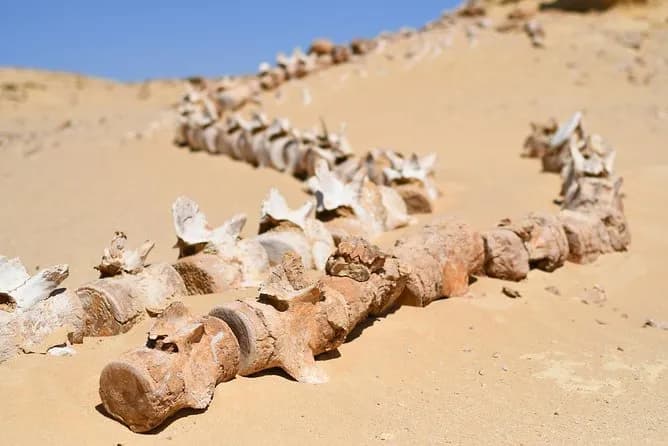
The site is an open-air museum. Marked walking trails loop past fossils left exactly where they were found: massive vertebrae half-buried in sand, curving ribcages, and the long serpentine spine of a Basilosaurus that in life could reach 18 metres. Interpretive signs explain what you're looking at, and the trails are gentle and flat.
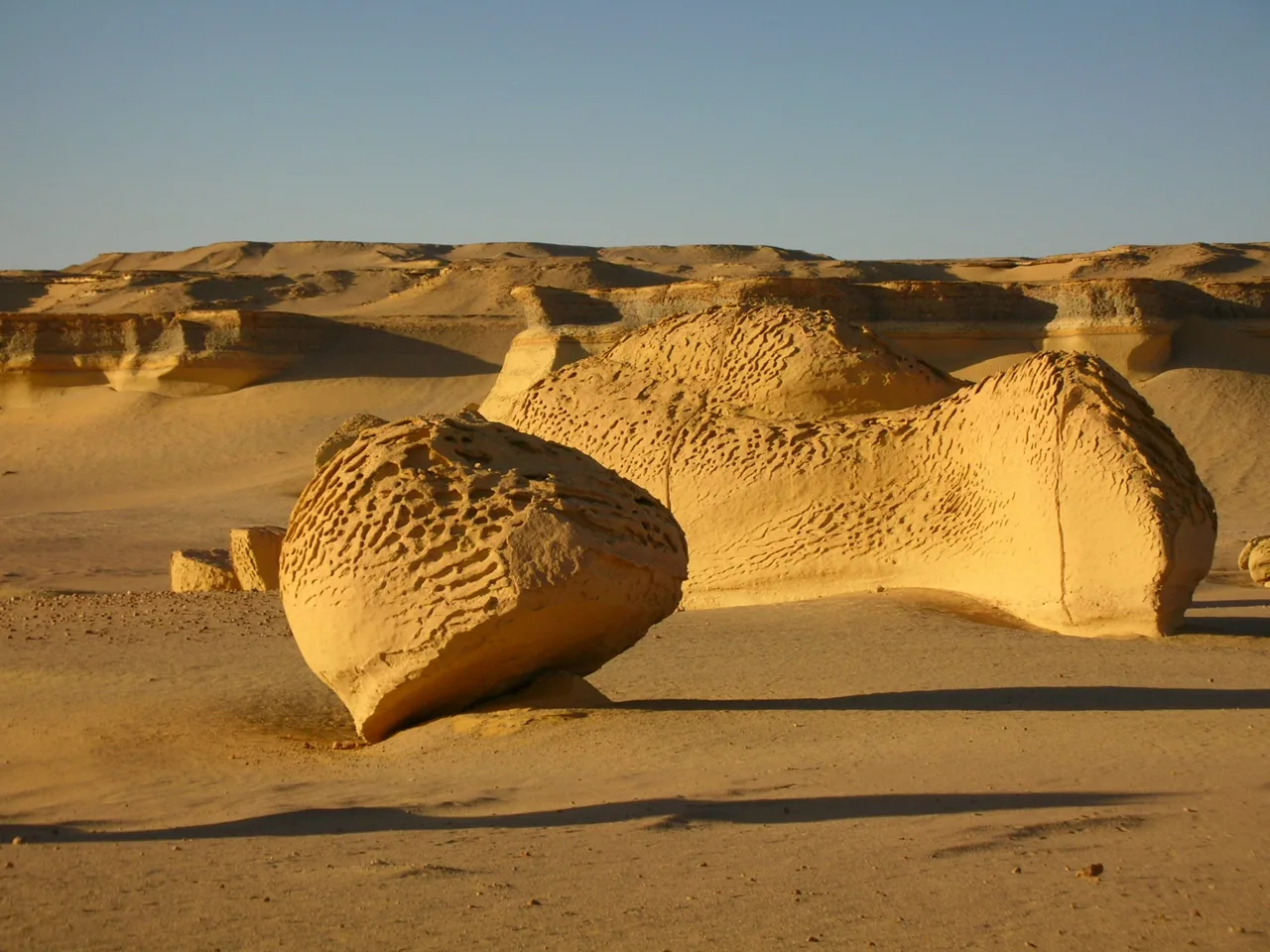
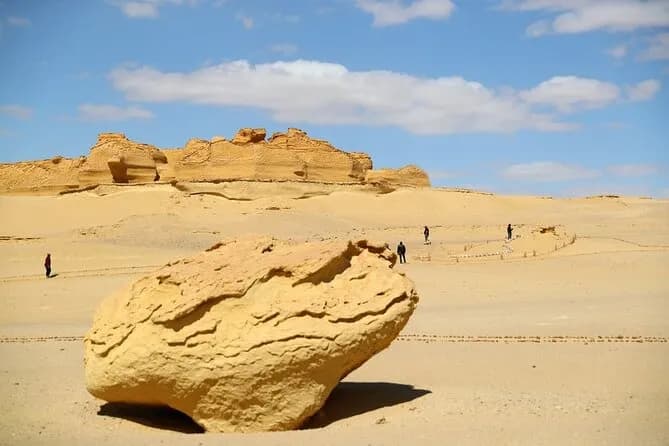
At the heart of the site, the well-designed Fossil and Climate Change Museum (a low, sand-coloured building that barely interrupts the landscape) shelters the star specimen — a near-complete Basilosaurus isis — and tells the story of how these seas, and the climate, changed over millions of years. Around it, the scenery does its own work: wind-carved sandstone yardangs, black desert pavement, and total silence. Sunset here is one of Egypt's great quiet spectacles.
Where it is and how to get there
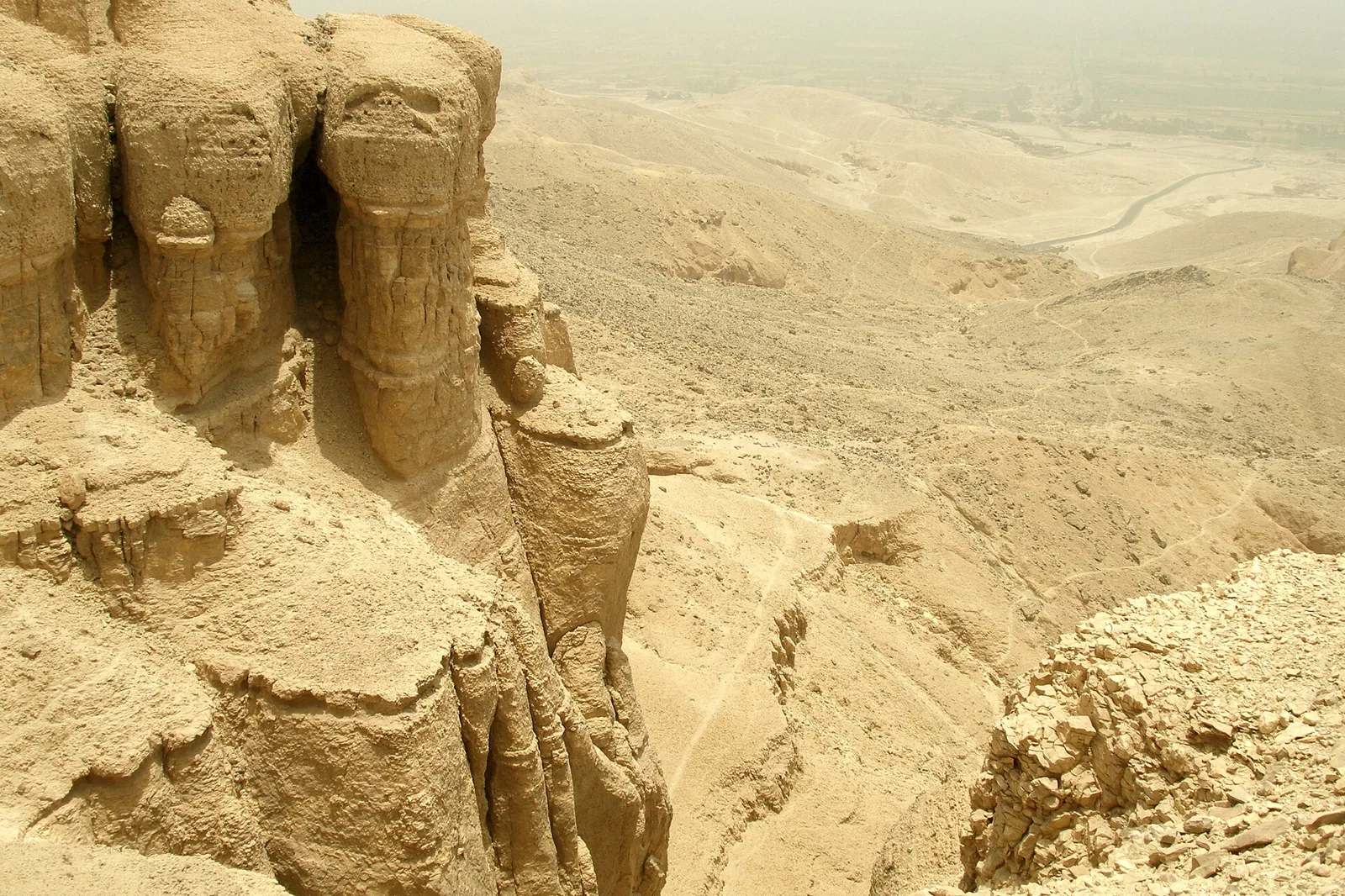
Wadi El Hitan sits inside the Wadi El Rayan Protected Area in the Fayoum Governorate, roughly 150 km southwest of Cairo and about 80 km beyond Fayoum city — the last stretch on soft desert track that needs a 4x4.
| From | Distance / time | How |
|---|---|---|
| Cairo | ~3–3.5 hrs each way | Day trip or overnight; 4x4 for the final leg |
| Fayoum city | ~1.5–2 hrs | 4x4 tour or hired driver with an off-road vehicle |
Because of that off-road section and the total lack of public transport, go with an organised tour or a 4x4 driver — a normal car cannot make it in, and getting stranded in soft sand is a real risk. A conservation entry fee is payable at the gate in Egyptian pounds; it's modest, but confirm the current amount on arrival.
Responsible visiting
This is a fragile, protected fossil site of global scientific value. Stay on the marked trails, never touch or climb on the fossils, and take nothing — removing a fossil is both illegal and a loss to science. Carry out all litter. The rangers and the reserve depend on visitors treating it with care, and part of what makes Wadi El Hitan special is how undisturbed it still feels.
What to bring
- Plenty of water — there's little shade and no shops on the trails.
- Sun protection: hat, sunglasses, high-factor sunscreen.
- Sturdy shoes for sand and rock, and warm layers if you're camping — desert nights are cold.
- A camera: the fossils-in-landscape shots are extraordinary in low sun.
Make a day (or two) of it
Wadi El Hitan pairs perfectly with the other wonders of the Fayoum Oasis:
- Wadi El Rayan waterfalls — Egypt's largest, linking two desert lakes.
- Magic Lake — a still, mineral-rich lake framed by dunes, good for a float.
- Tunis Village — a hillside pottery village above Lake Qarun, ideal for lunch and crafts.
- Overnight desert camping — the night sky over Whale Valley is superb for stargazing.
Many travellers do it as a long day from Cairo; an overnight camp turns it into one of Egypt's best low-key adventures. See our Cairo to Fayoum day trip for the logistics.
When to go
Aim for the cooler months, October to April — the desert is brutally hot in summer, and midday light flattens the scenery. Early morning and late afternoon give the kindest temperatures and the most dramatic shadows across the fossils. Weekdays are quieter than Fridays, when Cairenes flock to Fayoum. It slots neatly into the best time to visit Egypt window.
Is it worth it?
If you like natural history, wide-open desert, or simply want an Egypt day that has nothing to do with pharaohs, Wadi El Hitan is unforgettable — a walkable, world-class fossil site in scenery that feels like another planet. It's a longer haul than the Giza pyramids, so it rewards travellers with a little time and a taste for the offbeat. Combine it with Fayoum's lakes and villages, and browse desert and adventure trips to find a 4x4 tour that includes it.
A real team available 24/7 to assist you — free
Seif and the team reply on WhatsApp 24/7 — trip questions, custom plans and booking help.
Ask Seif on WhatsAppCommon questions
What is Wadi El Hitan (the Valley of the Whales)?
A desert valley in Egypt's Fayoum region filled with 40-million-year-old fossil whale skeletons. It's Egypt's only natural UNESCO World Heritage Site (inscribed 2005) and a key site for understanding how whales evolved from land mammals.
Why are whale fossils in the Egyptian desert?
Around 40 million years ago the area lay under a shallow arm of the ancient Tethys Sea. When the sea retreated it left behind marine skeletons, which wind erosion later exposed — including primitive whales that still had small hind legs.
How do you get to Wadi El Hitan?
It's in the Wadi El Rayan Protected Area, about 150 km southwest of Cairo and 80 km past Fayoum city. The final stretch is desert track needing a 4x4, so it's best visited on an organised tour or with an off-road driver — not a normal car.
Can you visit Wadi El Hitan as a day trip from Cairo?
Yes. It's roughly a 3–3.5 hour drive each way, so a long day trip is doable, though many prefer an overnight desert camp to enjoy the fossils, scenery and stargazing without rushing.
Is there an entrance fee for Wadi El Hitan?
Yes, a modest conservation fee is payable at the gate in Egyptian pounds. Prices change, so confirm on arrival. Bring your own water and sun protection, as there's little shade.
What is Basilosaurus?
An early whale up to about 18 metres long whose fossils are the highlight of Wadi El Hitan. It still had small hind legs and feet — direct evidence of whales in transition from land animals to fully marine creatures.
Can I take a fossil as a souvenir?
No. Removing, touching or climbing on the fossils is illegal and damages a protected site of global scientific value. Stay on the marked trails, take only photos, and carry out all litter.
When is the best time to visit Wadi El Hitan?
October to April, to avoid the extreme summer heat. Early morning or late afternoon offers cooler temperatures and dramatic light across the fossils. Weekdays are quieter than Fridays.
Book it on This is Egypt
Turn this guide into a trip






Egypt's bestsellers
The experiences travelers book most, across the country


Keep reading
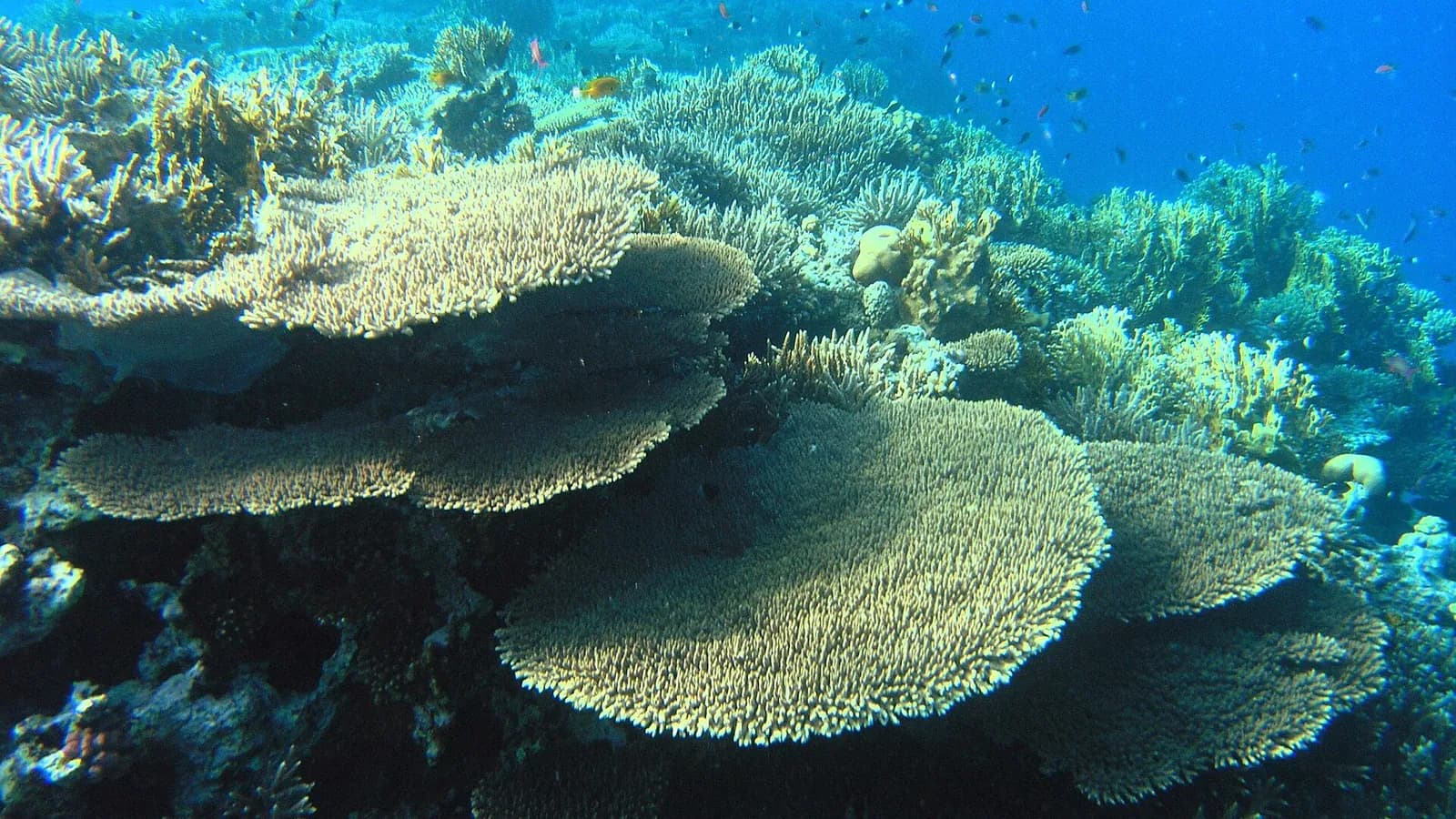
Hurghada Diving (2026): Best Sites, Packages & Prices
Diving in Hurghada — the best reefs (Giftun, Careless Reef, Dolphin House) and Abu Nuhas wrecks, Discover Scuba vs PADI courses, season and water temps, and real 2026 prices.
By TiE Editors7 min read
Hurghada Snorkeling Trips (2026): Best Reefs, Prices & How to Choose
Where to snorkel from Hurghada in 2026 — Orange Bay, Giftun, Mahmya, Utopia and Dolphin House — with boat types, marine life, month-by-month sea temperatures, family tips and real prices from 1,000+ bookable trips.
By TiE Editors7 min read
Egypt Tour Prices by Activity (2026): What Each Type Really Costs
What every type of Egypt experience costs — half day, full day or overnight — as a median and a mid-half range in US dollars, from 12,370 live bookable listings.
By TiE Editors6 min read