Fayoum Oasis Guide (2026): Whale Fossils, Waterfalls & Desert Lakes Near Cairo
Fayoum is the easiest desert-and-oasis escape from Cairo: Wadi el-Hitan's 40-million-year-old whales, Wadi el-Rayan's waterfalls, the Magic Lake, Tunis Village pottery and Lake Qarun.
Quick answer: Fayoum, a couple of hours southwest of Cairo, is the easiest taste of desert-and-oasis Egypt you can reach without a long journey — and it's far more than a rushed day trip. Its headline act is Wadi el-Hitan, the UNESCO-listed "Valley of the Whales," where 40-million-year-old whale skeletons lie exposed in the sand. Around it are the twin lakes and only desert waterfall in Egypt at Wadi el-Rayan, the dune-fringed Magic Lake, the pottery-and-mudbrick charm of Tunis Village, and the birdlife of Lake Qarun. Do it as a long day trip, or — much better — stay a night in Tunis to slow down.
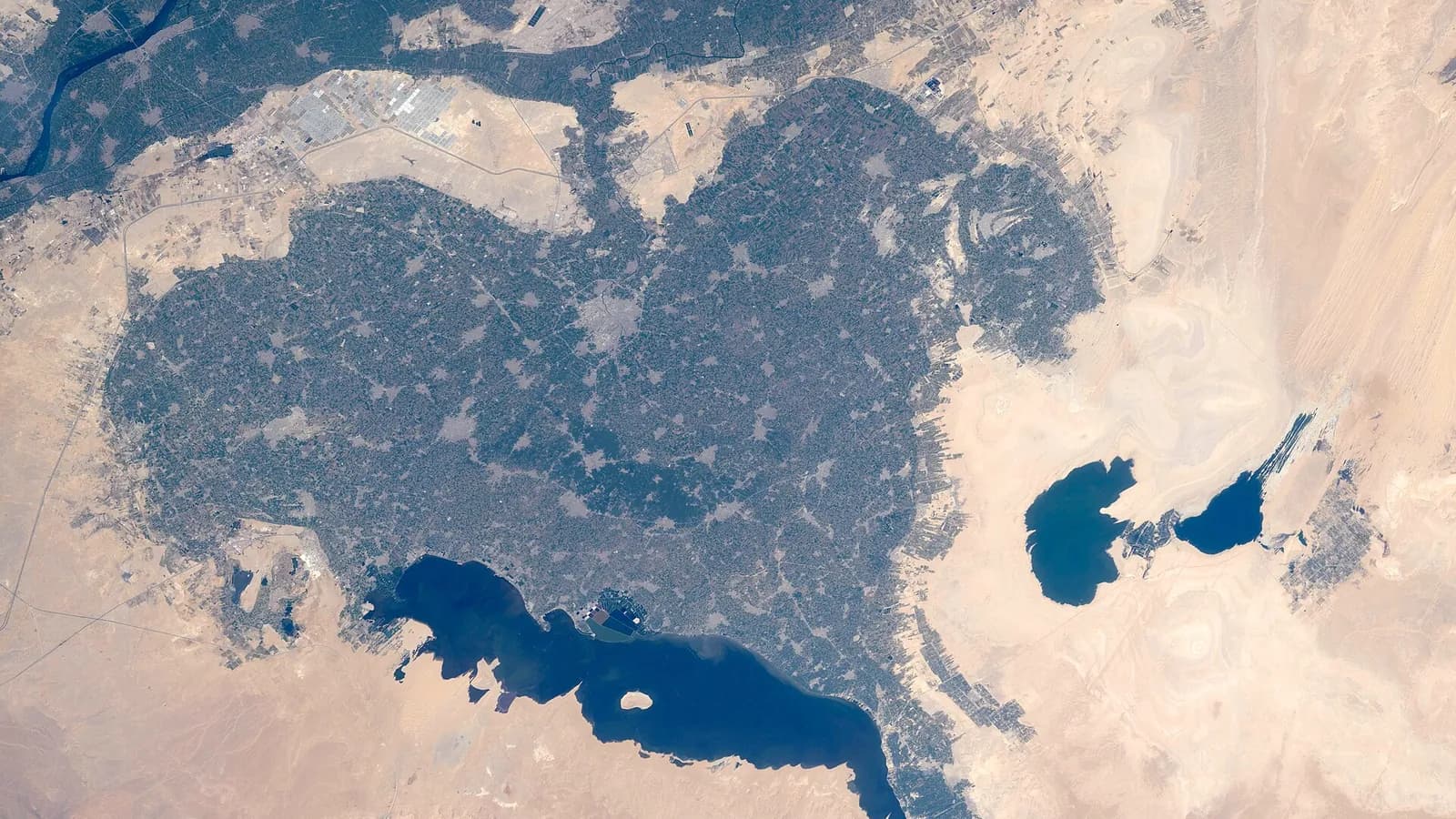
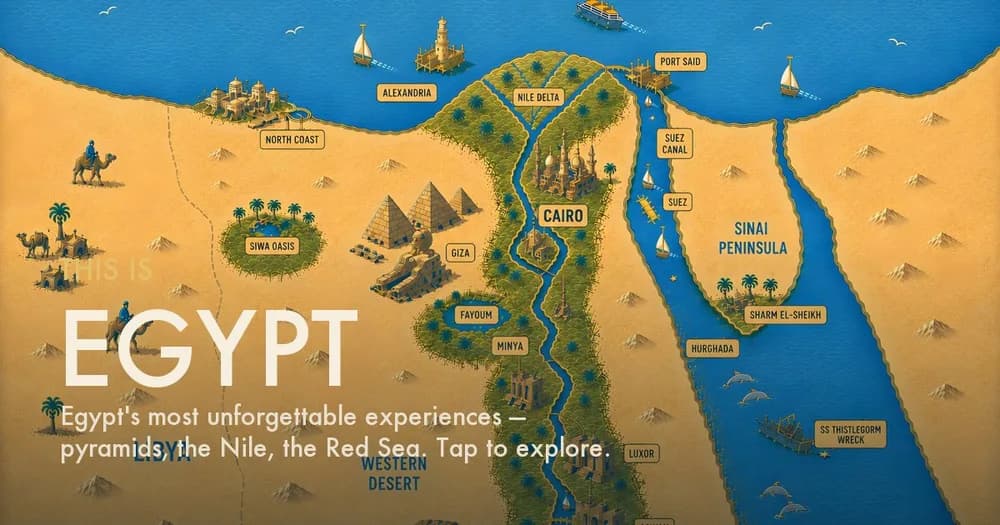
Fayoum is a geographical oddity: Egypt's only "oasis" that isn't fed by springs bubbling up from the ground, but by a long channel of Nile water. That channel, Bahr Yusuf (Joseph's Canal), branches off the Nile and runs into the huge depression that holds Lake Qarun, giving the region its lush, watery character amid the desert. The result is palm plantations, farmland, ancient waterwheels, Pharaonic and Roman ruins, and desert scenery all within a short drive of each other.
Getting to Fayoum from Cairo
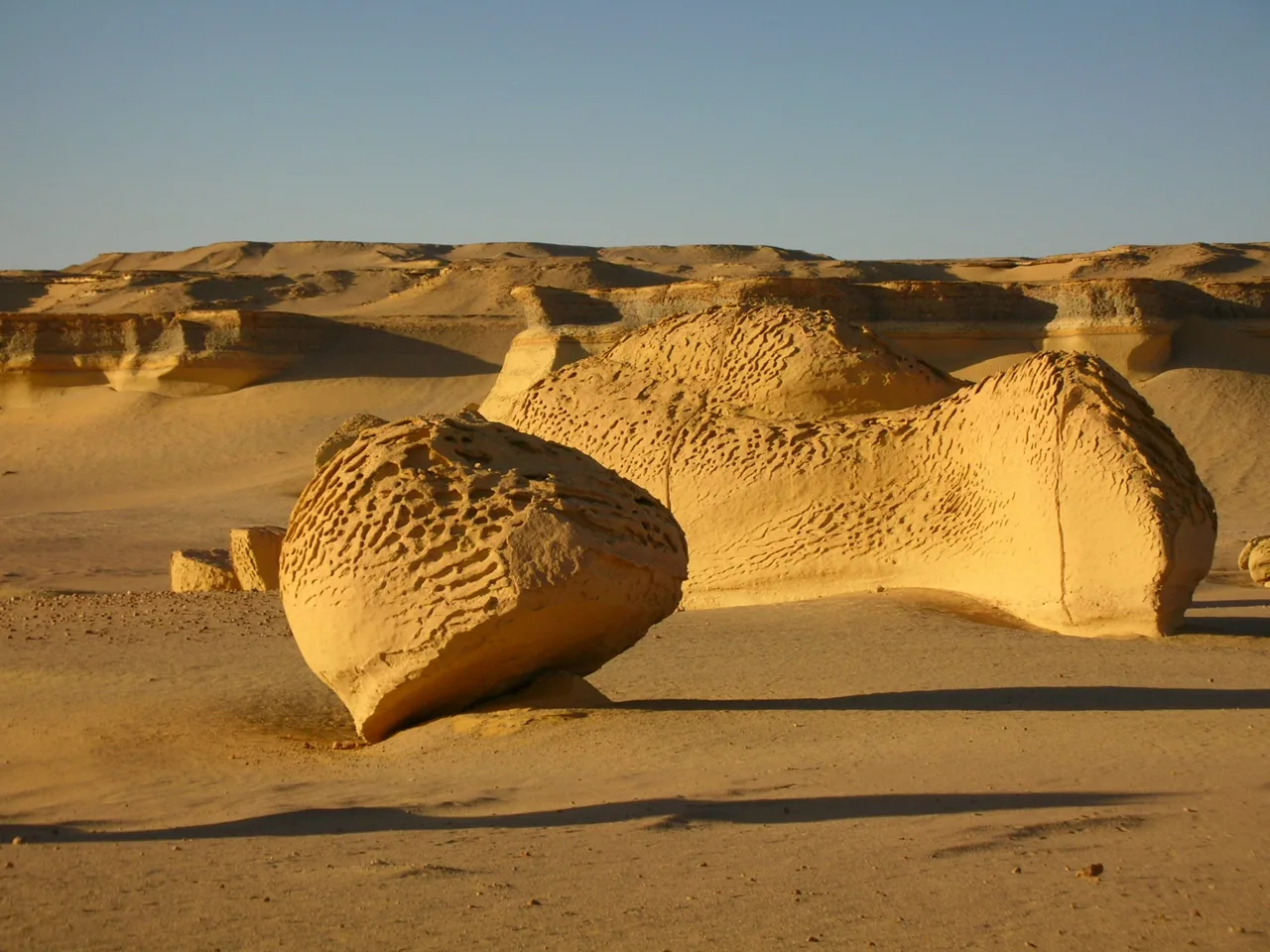
Fayoum sits roughly 100 km southwest of Cairo; Fayoum city is about a 1.5–2 hour drive, and the desert sights in the Wadi el-Rayan protected area a bit beyond that. There's no practical public-transport route to the scattered natural sites — you want a car and driver or an organised tour, ideally with a 4x4 for the soft sand near Wadi el-Hitan.
| From | Distance | Drive time |
|---|---|---|
| Cairo → Fayoum city | ~100 km | 1.5–2 hrs |
| Cairo → Wadi el-Rayan / Tunis | ~130–170 km | 2.5–3 hrs |
| Cairo → Wadi el-Hitan | ~190 km | ~3 hrs |
If you only have a single day, the Cairo to Fayoum day trip guide covers the tightest workable loop. This page assumes you want the fuller picture.
Wadi el-Hitan (Valley of the Whales): the UNESCO star
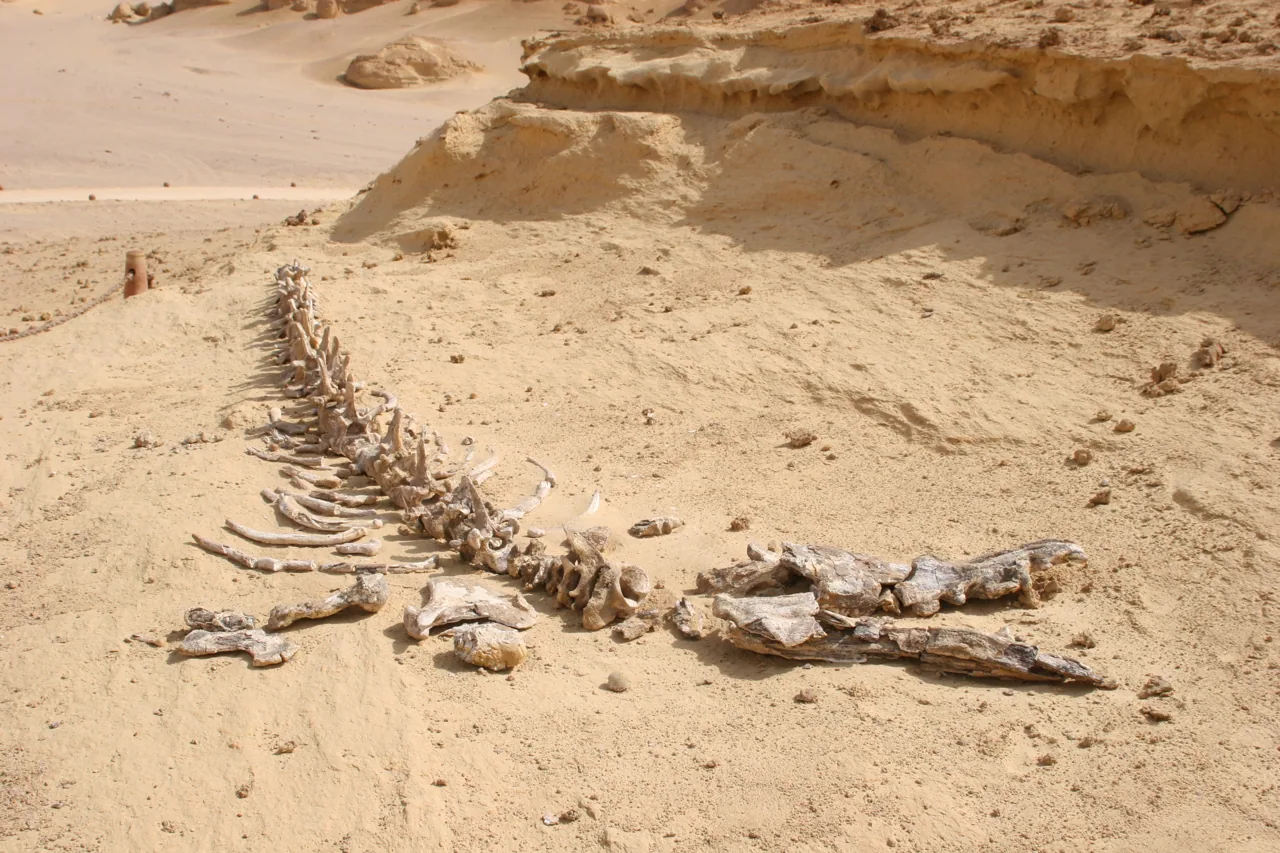
This is the reason to come. Wadi el-Hitan holds some of the best-preserved fossil skeletons of extinct whales anywhere in the world — a UNESCO World Heritage Site that documents one of evolution's great stories: the moment whales left the land for the sea. The animals here are basilosaurids, eel-bodied early whales up to around 20 metres long — bigger than a grey whale — that still retain tiny vestigial back legs and feet, the smoking gun that whales descend from land mammals. They lived here roughly 40 million years ago, when this desert was ocean floor.
Walking the marked trail among the exposed vertebrae — individual bones weighing 20 kilos or more — feels like arriving at a graveyard of the dinosaurs, which in a sense it is. There are smaller fossils too, including the five-metre Dorudon, and, scattered across the wadi, fossilised sand dollars and shells that locals once mistook for a buried king's gold coins. There's a small, well-designed fossil-and-climate-change museum on site.
Practicalities: Wadi el-Hitan lies inside the Wadi el-Rayan protected area, so you pay two separate tickets — one for Wadi el-Rayan (around US$5 / ~250 EGP) and one for Wadi el-Hitan itself (around US$10 / ~500 EGP), payable on entry; confirm current rates on the day. The final approach is soft sand best done in a 4x4, and a ranger often accompanies drivers.
Wadi el-Rayan: waterfalls and twin lakes
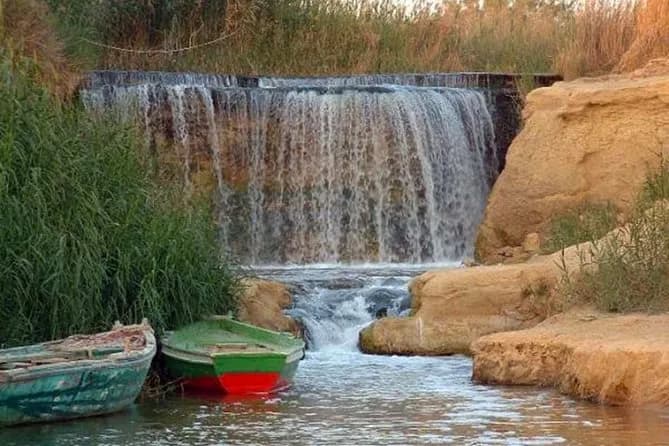
Wadi el-Rayan is a protected area built around two artificial lakes joined by a small cascade — the only waterfall in the Egyptian desert. It's modest by waterfall standards but a genuine curiosity in this landscape, and a pleasant spot to picnic. The lakes are a magnet for birds migrating between Africa and Europe, who use this surprise stretch of water as a resting place, so bring binoculars if you're keen. The surrounding dunes are also the go-to for sandboarding.
The Magic Lake & sandboarding
A short way off, the Magic Lake (Al-Buhayra al-Sahira) sits ringed by dunes, its colour shifting through the day with the changing light — hence the name. It's one of Fayoum's most photographed spots, especially at sunset, and the surrounding dunes are prime sandboarding and quad-biking terrain. Local guides run desert trips out here; some include a Bedouin-style tea or barbecue as the sun drops. For the bigger picture on desert excursions across Egypt, see the desert safari guide.
Lake Qarun: birds, history and old glamour
Lake Qarun is the huge lake that defines the Fayoum — on a rough day it looks more like a sea. It was once a freshwater lake, charged by the Nile flood, and its southern shore was a fashionable duck-hunting retreat: Winston Churchill and King Farouk both took pot-shots at flying birds here. Since the early 1900s, when Nile control and irrigation changed the inflow, the lake has grown steadily saltier — the fish caught here now are largely sea species. Today it's better known for birdwatching than shooting, and for the low-key lakeside hotels and the ancient waterwheels and ruins scattered around its shores.
Tunis Village: pottery, mudbrick and a slower pace
On the southern edge of Lake Qarun, Tunis Village is Fayoum's charm centre — a quiet artisan village famous for its pottery, seeded decades ago by a Swiss potter and now home to a cluster of workshops and a well-known annual pottery festival. It's all mudbrick guesthouses, olive groves, ceramics studios and lake views, and it's where you should sleep if you can. Staying overnight turns Fayoum from a fossils-and-drive itinerary into an actual break: pottery in the morning, whales at midday, dunes at sunset. There are simple eco-lodges and boutique mudbrick guesthouses, most doing home-style Egyptian cooking.
Karanis and the ancient Fayoum
For a dose of history, the ruins of Karanis (Kom Aushim), a Greco-Roman farming town, sit near the Cairo road with two temples and a small museum — an easy first or last stop. Fayoum was a favoured region under the Ptolemies and Romans, and its dry sands preserved the famous "Fayoum mummy portraits," strikingly lifelike painted panels now scattered across the world's great museums. You'll also see traditional waterwheels (sawaqi) still turning in the farmland — a Fayoum emblem.
Sample itineraries
| Plan | Route |
|---|---|
| Long day trip | Cairo → Karanis ruins → Lake Qarun → Wadi el-Rayan waterfalls → Wadi el-Hitan → back to Cairo (long day, ~3 hrs each way) |
| Overnight (recommended) | Day 1: Cairo → Tunis Village (pottery, Lake Qarun, sunset at Magic Lake). Day 2: Wadi el-Rayan + Wadi el-Hitan, then back to Cairo |
| Two nights | Add sandboarding, a felucca or kayak on the lake, more birdwatching, and a relaxed second day in Tunis |
When to go & practical tips
- Best season: October to April. Fayoum's desert is brutally hot in high summer; winter days are ideal, though desert nights get cold, so pack a layer.
- Bring cash: entry fees at Wadi el-Rayan and Wadi el-Hitan are paid on the spot, and Tunis guesthouses often prefer cash.
- 4x4 for the whales: the final stretch to Wadi el-Hitan is soft sand; a normal car can get stuck.
- Combine with Cairo: Fayoum makes a natural add-on for travellers who want more than monuments — pair it with the capital using the Things to Do in Cairo guide, or slot it into a wider trip via the 10-day Egypt itinerary.
- Respect the reserves: these are protected areas — stay on marked tracks, take rubbish out, and don't remove fossils or shells.
Fayoum is Egypt's easiest reminder that the country is desert and water and deep time, not just pharaohs. Give it a night rather than a rushed day, and browse day trips and desert experiences on This is Egypt to line up a guide and 4x4.
A real team available 24/7 to assist you — free
Seif and the team reply on WhatsApp 24/7 — trip questions, custom plans and booking help.
Ask Seif on WhatsAppCommon questions
What is Fayoum known for?
Fayoum is Egypt's easiest desert-and-oasis escape from Cairo, famous for Wadi el-Hitan (the UNESCO 'Valley of the Whales' with 40-million-year-old whale fossils), the waterfalls and twin lakes of Wadi el-Rayan, the dune-ringed Magic Lake, birdlife on Lake Qarun, and the pottery village of Tunis. Uniquely, it's an oasis fed by a Nile channel rather than desert springs.
How far is Fayoum from Cairo?
Fayoum city is about 100 km southwest of Cairo, a 1.5–2 hour drive. The desert sights — Wadi el-Rayan and Wadi el-Hitan — are further, around 2.5–3 hours from Cairo. There's no practical public transport to the scattered natural sites, so a car and driver or an organised tour is the way to go.
What is Wadi el-Hitan (Valley of the Whales)?
It's a UNESCO World Heritage Site holding some of the world's best-preserved fossil skeletons of extinct whales — eel-bodied basilosaurids up to 20 metres long that still have tiny vestigial legs, showing how whales evolved from land mammals around 40 million years ago, when this desert was seabed. A marked trail winds among the exposed bones, with a small on-site museum.
How much does it cost to visit Wadi el-Hitan?
You pay two separate tickets because Wadi el-Hitan sits inside the Wadi el-Rayan protected area: roughly US$5 (about 250 EGP) for Wadi el-Rayan and about US$10 (about 500 EGP) for Wadi el-Hitan, paid on entry. Confirm current rates on the day, and note the final approach needs a 4x4 through soft sand.
Can you visit Fayoum as a day trip from Cairo?
Yes, but it's a long day given the driving (about three hours each way to the whales). A day trip can cover Lake Qarun, the Wadi el-Rayan waterfalls and Wadi el-Hitan. To do it justice — and add Tunis Village pottery, the Magic Lake and sandboarding — an overnight stay in Tunis is much better.
What is Tunis Village in Fayoum?
Tunis Village is a quiet artisan village on the southern shore of Lake Qarun, famous for its pottery workshops and annual pottery festival, seeded decades ago by a Swiss potter. With mudbrick guesthouses, olive groves and lake views, it's the best place to stay overnight and slow down in Fayoum.
What is the Magic Lake in Fayoum?
The Magic Lake is a small lake ringed by dunes near Wadi el-Rayan, named for how its colour shifts through the day with the changing light. It's one of Fayoum's most photographed spots, especially at sunset, and the surrounding dunes are prime for sandboarding and quad biking.
When is the best time to visit Fayoum?
October to April. Fayoum's desert is punishingly hot in high summer, so cooler months are far more comfortable for the fossil trail, waterfalls and dunes. Winter days are ideal, though desert nights turn cold — pack a warm layer if you're staying over.
Book it on This is Egypt
Turn this guide into a trip




Egypt's bestsellers
The experiences travelers book most, across the country


Keep reading
Hurghada Diving (2026): Best Sites, Packages & Prices
Diving in Hurghada — the best reefs (Giftun, Careless Reef, Dolphin House) and Abu Nuhas wrecks, Discover Scuba vs PADI courses, season and water temps, and real 2026 prices.
By TiE Editors7 min read
Hurghada Snorkeling Trips (2026): Best Reefs, Prices & How to Choose
Where to snorkel from Hurghada in 2026 — Orange Bay, Giftun, Mahmya, Utopia and Dolphin House — with boat types, marine life, month-by-month sea temperatures, family tips and real prices from 1,000+ bookable trips.
By TiE Editors7 min read
Egypt Tour Prices by Activity (2026): What Each Type Really Costs
What every type of Egypt experience costs — half day, full day or overnight — as a median and a mid-half range in US dollars, from 12,370 live bookable listings.
By TiE Editors6 min read