Kitesurfing in El Gouna (2026): Lessons, Wind Season & Best Spots
Why El Gouna is Egypt's best place to learn to kite — shallow flat lagoons, 300+ windy days, cheap IKO/VDWS courses, plus schools, prices and when to go.
Book it on This is Egypt
Turn this guide into a trip
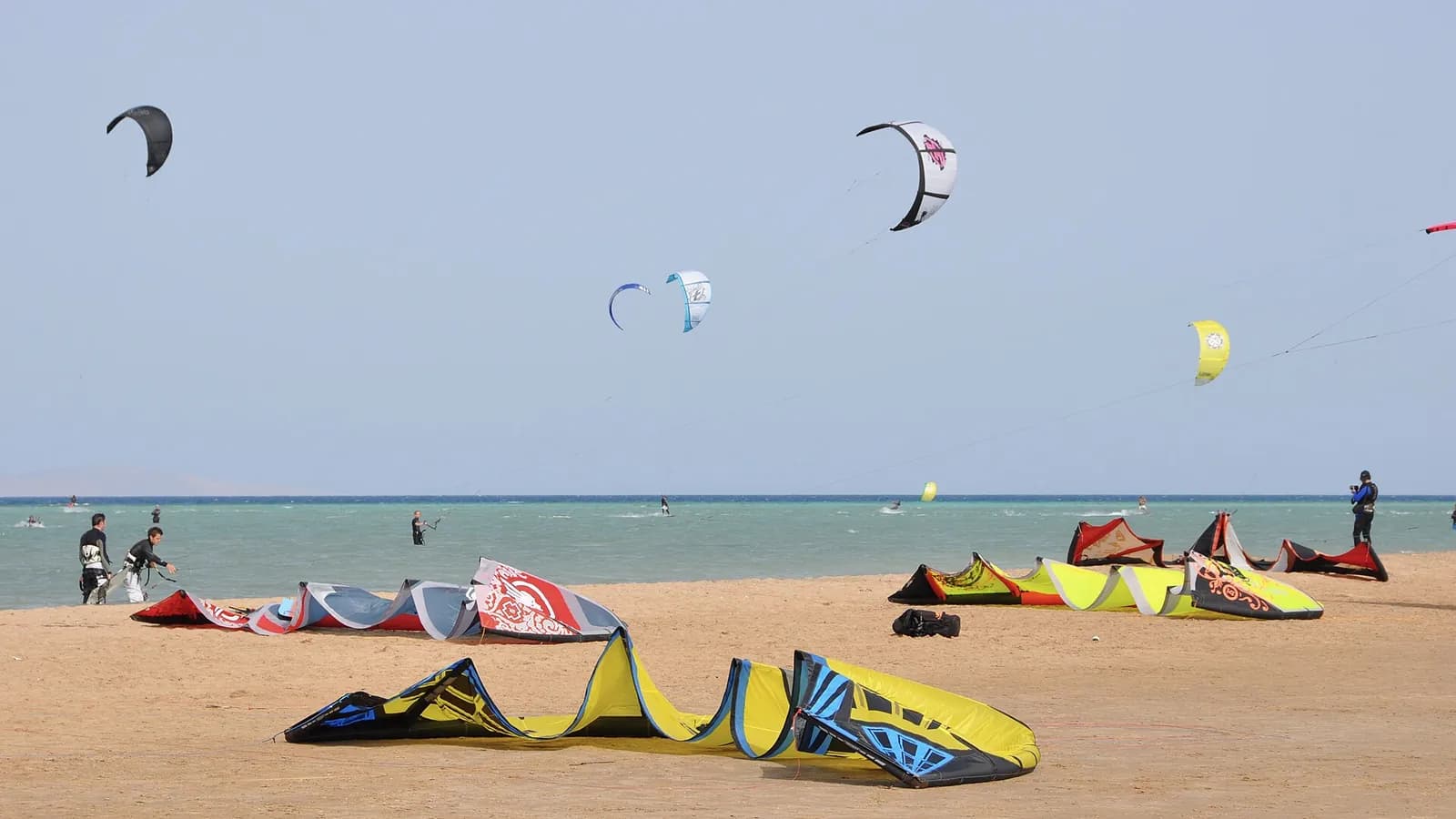
Quick answer: El Gouna, a resort town on the Red Sea about 25 km north of Hurghada, is Egypt's premier kitesurfing destination and one of the best places in the world to learn. The draw is a huge, shin-to-waist-deep lagoon off Mangroovy Beach that stays flat as a table while a steady thermal wind blows side-onshore roughly 300 days a year. You can stand up and reset instead of getting washed downwind, the water is warm enough to ride in boardshorts most of the season, and a full beginner course runs from around €360–€465 — a fraction of what you'd pay in Europe. This guide covers the spots, the schools, what lessons cost, and how to get there.
Why kite in El Gouna
The thing that makes El Gouna special is the lagoon. Most of the world's kite spots put beginners in open water that's over their head and choppy — you body-drag, you lose the board, you drift out, and half your first day is spent swimming back upwind. El Gouna's Mangroovy lagoon is different: it's shallow enough to stand in across a big area, protected from swell by a reef and sandbar, and flat. When a manoeuvre goes wrong you simply put your feet down, sort your lines out, and go again. That single feature is why the town has become a factory for turning nervous first-timers into independent riders inside a week.
Beyond the lagoon there's open-sea riding for stronger kiters who want chop and small kickers off the reef, so the spot grows with you. And because El Gouna is a proper resort — marinas, bars, restaurants, hotels around lagoons and golf courses — a non-kiting partner isn't stranded on a windy beach all day. For the wider town, see our El Gouna guide; for how kiting here stacks up against Egypt's other spots, our kitesurfing in Egypt overview compares El Gouna with Soma Bay, Ras Sudr and Dahab.
Wind season: the best months to come
El Gouna gets a reliable northerly-to-northwesterly thermal wind, funnelled down the coast between the desert mountains and driven by the daily temperature difference between land and sea. It blows most afternoons and averages 15–25 knots in season, gusting higher. The peak stretch is April to October, when the thermal engine is at full strength and 20-plus-knot days are the norm. Winter (November–February) is lighter and more variable — think 12–18 knots — but still delivers plenty of rideable days, and the town is quieter and cooler.
If you want near-guaranteed wind without July–August's furnace heat, aim for the shoulder months: May, June, September and early October combine strong, consistent wind with more bearable temperatures. Those weeks book out early. For the country-wide picture, our best time to visit Egypt guide sets the season in context.
| Months | Typical wind | Notes |
|---|---|---|
| Apr–Jun | 15–25 kt, reliable | Prime shoulder season; book early |
| Jul–Aug | 20–25 kt, very hot | Strongest thermals, fierce sun |
| Sep–Oct | 15–25 kt, reliable | Best all-round conditions |
| Nov–Feb | 12–18 kt, variable | Rideable but mixed; bring a shorty |
| Mar | Building | Season warming up |
The kite spots and beaches
Almost everything happens at Mangroovy Beach, on the northern edge of town, where the big shallow lagoon and the cluster of kite centres sit side by side. It's the beginner heartland and the social hub — this is where you'll take lessons, rent gear and meet other riders. The lagoon here is one of the largest shallow-water areas on the Red Sea, with a defined beginner zone inside the flat water and open sea beyond the reef for the experienced.
A short downwind run away, the spots around Element Watersports and the neighbouring clubs are prized by wakestyle and freestyle riders for clean, flat water and room to spread out. Wherever you ride, the launch areas are wide and sandy, and the shallow inside sections mean self-rescue is rarely dramatic.
The main schools
El Gouna has a dozen-plus kite centres, most of them IKO- or VDWS-certified and clustered at Mangroovy. A few of the best-established:
| School | Certification | Known for |
|---|---|---|
| Duotone Pro Center | IKO / VDWS | Premium brand centre at Casa Cook; latest Duotone gear, huge shallow area |
| KBC (Kiteboarding Club) | VDWS | ~2 km² lagoon, on-site pool, kite and wing foil year-round |
| Element Watersports | IKO | Wakestyle-friendly spot, flat water, freestyle scene |
| Kitepower | IKO | Operating since 2004; "Zero to Hero" beginner packages |
| Riah Kite Academy | IKO | Structured multi-day beginner and wing courses |
| Makani Beach Club | VDWS | Open 365 days; kite, wing and SUP; storage and rental |
Most run beginner courses, private and group lessons, storage, rental, supervised riding and downwinders, so the choice comes down to certification preference, gear brand, group size and price. It's worth emailing two or three before you fly to check availability, especially in the shoulder-season peak.
Lessons: courses, cost and how they work
Schools here teach to one of two international standards — IKO (International Kiteboarding Organization) or VDWS (the German water-sports body). Both are widely recognised, both issue a card that lets you rent gear and take lessons elsewhere afterwards, and the practical difference is minor; pick the school, not the acronym.
A proper beginner course takes you from never having touched a kite to riding independently, and it's sold in blocks of hours spread over several days. Reckon on 8–12 hours across three to five days — kite control on land, body-dragging, water start, then your first rides. As a guide to 2026 pricing at established centres:
- Group / semi-private beginner course (2 students per instructor): roughly €360 for a 3-day programme up to about €465 for an 8-hour "zero to hero" package.
- Private one-to-one course: around €695 for the same 8 hours — faster progress, more water time, worth it if you're short on days.
- Refresher or single lessons are sold by the hour if you already have the basics and just want a tune-up or supervised session after a layoff.
Private lessons cost more but you progress noticeably faster because you're not sharing wind time. Group lessons (typically capped at 2, sometimes 4, per instructor) are cheaper and more social. If you're travelling with limited days and want to leave able to ride, private is the safer bet.
Storage, rental and downwinders
Once you're an independent rider you don't need lessons — you need gear and a launch. Every major centre offers equipment rental by the hour or day; expect roughly €100–€110 per hour for a full kit (kite, bar, board), with the rate dropping the more hours you book. Bring your own gear and most schools will sell you storage and beach service — a locker, pump, rescue cover and a spot to rig — for a daily or weekly fee, which is the cheapest way to ride if you travel with your own kites.
Downwinders — point-to-point rides pushed along by the wind, with a boat or van shuttling you back — are a highlight for intermediate and advanced riders and can be arranged through the clubs. If you're still building confidence, supervised riding sessions (an instructor watching from the beach or a boat) bridge the gap between finishing your course and going fully solo.
What level is El Gouna good for
All of them, which is unusual. Complete beginners get the safest possible classroom in the shallow lagoon. Improvers get flat water to nail transitions, toeside and first jumps without the punishment of chop. Advanced and freestyle riders get open-sea sections, kickers and downwinders, plus a wakestyle scene around Element. The wind is steady rather than gusty, which is forgiving for learners but still strong enough in peak season to keep experts happy. About the only rider El Gouna doesn't suit is the wave-hunter — this is a flat-water and freestyle coast, not a surf spot.
Getting there, and where to stay
Fly into Hurghada International Airport (HRG), which has direct connections across Europe and the Gulf plus domestic hops from Cairo. El Gouna is about a 30–40 minute drive north; pre-book a hotel transfer or grab an airport taxi (shared vans start around EGP 345, private cars more). Our Hurghada travel guide covers the airport and the wider region.
For where to stay, base yourself near Mangroovy Beach if kiting is the priority — several hotels sit within walking or short-shuttle distance of the kite centres, and some centres partner with specific hotels for packages. Downtown and the marina area put you closer to restaurants and nightlife but a short taxi from the beach. El Gouna's accommodation spans budget apartments to five-star resorts, so match it to your trip.
Beyond kitesurfing: wing, windsurf and wake
The same wind and water make El Gouna a one-stop watersports town. Wing foiling is the fast-growing discipline here — it gets going in as little as 10–12 knots, so it fills the lighter days when kiting is marginal, and most centres (Duotone Pro Center, KBC, Riah) now teach and rent it. Windsurfing is El Gouna's original sport and still superb: the flat lagoon and steady thermals are ideal, and beginners often find they're standing and sailing on day one. Wakeboarding rounds it out, with cable and boat options around the lagoons for the no-wind afternoons. Many visitors mix two or three sports across a week. And when the wind drops entirely, the Red Sea's reefs are right there — see our Red Sea diving guide for the best sites.
Ready to book lessons or a kite-and-wing week? Browse El Gouna experiences to compare schools, courses and packages.
A real team available 24/7 to assist you — free
Seif and the team reply on WhatsApp 24/7 — trip questions, custom plans and booking help.
Ask Seif on WhatsAppCommon questions
Is El Gouna good for beginner kitesurfers?
Exceptionally. The large, shallow, flat-water lagoon at Mangroovy Beach lets you stand up and reset instead of drifting downwind, the water is warm, and the wind is steady rather than gusty. It's one of the best places in the world to learn, which is why so many people fly in specifically for a beginner course.
How much does a kitesurfing course cost in El Gouna?
A full beginner course (8–12 hours over 3–5 days) runs from about €360 for a group/semi-private programme up to around €465 for an 8-hour package, or roughly €695 for private one-to-one tuition. Single refresher lessons and gear rental are sold by the hour. Prices vary by school and season, so compare a few.
When is the kitesurfing season in El Gouna?
El Gouna is windy around 300 days a year. The peak thermal season is April to October, averaging 15–25 knots, with May, June, September and October the sweet spot for strong wind and less extreme heat. Winter (November–February) is lighter at 12–18 knots but still delivers plenty of rideable days.
IKO or VDWS — which certification should I choose?
Both are internationally recognised standards and both issue a card that lets you rent and take lessons elsewhere afterwards. The practical difference is minimal, so choose the school based on availability, gear, group size and price rather than the certification body.
How do I get to El Gouna for kitesurfing?
Fly into Hurghada International Airport (HRG), which has direct European, Gulf and domestic connections. El Gouna is about a 30–40 minute drive north — pre-book a hotel transfer or take an airport taxi. Shared vans start around EGP 345; private cars cost more.
Can I rent gear and store my own kites in El Gouna?
Yes. Every major centre rents full kit by the hour or day (roughly €100–€110 per hour, cheaper the more you book), and if you bring your own gear you can pay for storage, a rigging spot and beach rescue cover by the day or week — the cheapest way to ride if you travel with your own kites.
What other watersports can I do in El Gouna?
Plenty. Wing foiling gets going in just 10–12 knots and fills the lighter days; windsurfing thrives on the same flat lagoon and thermal wind; and wakeboarding runs on the no-wind afternoons. When the wind drops completely, the Red Sea reefs offer world-class diving and snorkelling.
Do I need a wetsuit to kite in El Gouna?
In the April–October season the water is warm enough for boardshorts or a rash vest. In winter (November–February) it cools down and a shorty or thin wetsuit is more comfortable, especially on breezier, cooler days.
Book it on This is Egypt
Turn this guide into a trip

Egypt's bestsellers
The experiences travelers book most, across the country

Keep reading
Hurghada Diving (2026): Best Sites, Packages & Prices
Diving in Hurghada — the best reefs (Giftun, Careless Reef, Dolphin House) and Abu Nuhas wrecks, Discover Scuba vs PADI courses, season and water temps, and real 2026 prices.
By TiE Editors7 min read
Hurghada Snorkeling Trips (2026): Best Reefs, Prices & How to Choose
Where to snorkel from Hurghada in 2026 — Orange Bay, Giftun, Mahmya, Utopia and Dolphin House — with boat types, marine life, month-by-month sea temperatures, family tips and real prices from 1,000+ bookable trips.
By TiE Editors7 min read
Egypt Tour Prices by Activity (2026): What Each Type Really Costs
What every type of Egypt experience actually costs — from a 1,700 EGP camel ride to a 48,500 EGP Nile cruise — based on 29,710 real bookable tours across seven platforms.
By TiE Editors6 min read