Is the Blue Hole in Dahab safe? Snorkelling vs diving (2026)
Yes for snorkellers in calm water with a guide, and yes for certified divers who stay within recreational limits. The danger is deep diving towards the Arch at about 55 m, which is far beyond recreational depth and is where the Blue Hole's fatal accidents happen.
Quick answer: Yes, the Blue Hole is safe for snorkellers in calm water with a guide, and for certified divers who stay within recreational limits (30 to 40 m). What kills people here is deep diving towards the Arch, whose top is at about 55 m, often on air and a single tank. If you are not a trained technical diver, you never go near the Arch. Book a guided Blue Hole trip on WhatsApp
Checked: Blue Hole depths and the Arch dimensions against published dive references, snorkel and dive guidance and the 2026 park fee on Dahab dive centre price lists, plus the UK FCDO Egypt advice updated 27 October 2026. Updated 26 November 2026.
What the Blue Hole actually is
The Blue Hole is a sinkhole in the reef about 10 km north of Dahab, 15 to 20 minutes by car along the coast road. From above it looks like a dark circle surrounded by a shallow reef rim.
| Feature | Depth | Who it is for |
|---|---|---|
| Reef rim around the hole | about 3 to 8 m | Snorkellers, all divers |
| The Saddle (shallow gap to the open sea) | about 6 to 7 m | Divers finishing the Bells dive |
| The Bells wall dive (entry north of the hole) | to about 30 m | Certified divers, usually Advanced Open Water, with a guide |
| The Arch (tunnel to the open sea) | top at about 55 m, about 26 m long | Technical divers only, on mixed gas |
| Bottom of the hole | over 100 m | No one |
Snorkelling the Blue Hole: is it safe?
For most visitors, yes. You float on the surface, and the reef rim is where the coral and fish are. The drop into deep water happens a few metres from the edge, which is spectacular but harmless if you stay on the surface.
What makes it go wrong for snorkellers is wind, waves and tiredness, not depth. Keep it simple:
- Go with a guide or a buddy, never alone.
- Go in the morning. Dahab is windy, and afternoon chop makes swimming harder and visibility worse.
- Wear fins and a buoyancy vest if you are not a confident swimmer. Rent them at the cafés by the entry.
- Enter at the main Blue Hole entry, not through the Bells. The Bells is a narrow crack in the reef that opens straight onto a deep wall and is used mainly by divers.
- Don't stand on the coral and watch for urchins at the entry steps.
- Wear a thin wetsuit from December to April, when the water is around 21 to 23 °C.
If you want something calmer still, the Blue Lagoon at Ras Abu Galum, north of the Blue Hole, has shallow, sheltered water. See our Colored Canyon and Ras Abu Galum guide.
Diving the Blue Hole: safe within limits
The classic recreational dive is the Bells to the Blue Hole: you drop through the Bells, drift south along a wall with a maximum of about 30 m, and finish by crossing the Saddle at about 7 m into the Blue Hole. Done with a local guide and good buoyancy, this is a normal, well-run dive. Our scuba diving in Dahab guide and best dive centres in Dahab cover where to book.
Why the Arch is dangerous
The Blue Hole's reputation comes from the Arch. It is not a recreational dive:
- It is deeper than recreational limits. The top of the Arch is at about 55 m and the floor below it is far deeper. Recreational training stops at 30 to 40 m.
- Narcosis on air. At 55 m, breathing air causes strong nitrogen narcosis, which slows thinking and judgement just when you need it.
- It is easy to miss. The entrance is hard to spot in the blue, and divers sink past it with no seabed to judge depth.
- It is longer than it looks. The tunnel is about 26 m long, and a current can push against you, so gas runs out faster than planned.
- Decompression. Even a short time at that depth creates a decompression obligation that a single tank cannot cover.
Fatality counts are not officially recorded and the figures quoted online vary, so we don't repeat them. What is clear is that almost every serious accident involves diving far deeper than recreational training allows. If someone offers to "show you the Arch" on a normal dive, say no.
Fees and practical details
| Item | Details |
|---|---|
| National park fee | about €20 per person in 2026, cash (market price listed by dive centres) |
| Snorkel trip, half day, with guide | about €25 per person, market price |
| Single guided fun dive | about €45 to 50, market price |
| Getting there | 10 km north of Dahab; about 90 to 100 km, 1.5 to 2 h, from Sharm el Sheikh |
| Best time of day | Early morning: calmer water, fewer groups |
We have no own rates on file for Dahab, so ask us for a quote for a guided snorkel or a dive with a licensed centre.
Is the area safe to travel to?
The UK FCDO advises against all but essential travel to the northern part of South Sinai beyond the St Catherine to Nuweiba road, except the coastal areas on the west and east of the peninsula. Dahab and the Blue Hole are on the east coast and outside that area. The US State Department says not to travel to Sinai except Sharm el Sheikh by air, which includes Dahab. Check the current FCDO advice. For the wider trip, see Is Dahab worth visiting?, our Dahab travel guide and our Blue Hole guide.
Our verdict
Snorkel the Blue Hole: in calm morning water with a guide or buddy, it is one of the easiest great reef swims in the Red Sea. Dive it if you are certified, ideally the Bells to Blue Hole route with a local guide. Leave the Arch to trained technical divers on mixed gas, and never attempt it on a normal recreational dive.
Спілкуйтеся з живою людиною — безкоштовно
Наша команда відповідає у WhatsApp 24/7 — запитання про подорож, індивідуальні плани й допомога з бронюванням.
Запитати нас у WhatsAppПоширені запитання
Is it safe to snorkel the Blue Hole in Dahab?
Yes, in calm conditions. Snorkellers stay on the surface over the reef rim, 3 to 8 m deep. Go with a guide or buddy, wear fins and a buoyancy vest if you are not a strong swimmer, and go in the morning when the sea is usually calmer.
Why do divers die at the Blue Hole?
Most deaths are linked to divers trying to swim through the Arch, whose top is at about 55 m, on ordinary air and a single tank. At that depth narcosis, fast gas use and decompression risk build up quickly, and the Arch is easy to miss in the blue.
Do I need to be certified to dive the Blue Hole?
Yes. The Blue Hole and the Bells to Blue Hole wall dive are for certified divers with a local guide, and a police officer at the site checks that divers have one. The Bells dive goes to about 30 m, so dive centres usually ask for Advanced Open Water.
Is there an entry fee for the Blue Hole?
Yes. Foreign visitors pay a national park fee, listed by Dahab dive centres at about €20 per person in 2026, in cash. Some visitors also report a small checkpoint or car fee.
Забронюйте на This is Egypt
Перетворіть цей путівник на подорож






Бестселери Єгипту
Враження, які мандрівники бронюють найчастіше по всій країні
Читати далі
Дайвінг у Хургаді (2026): найкращі місця, пакети та ціни
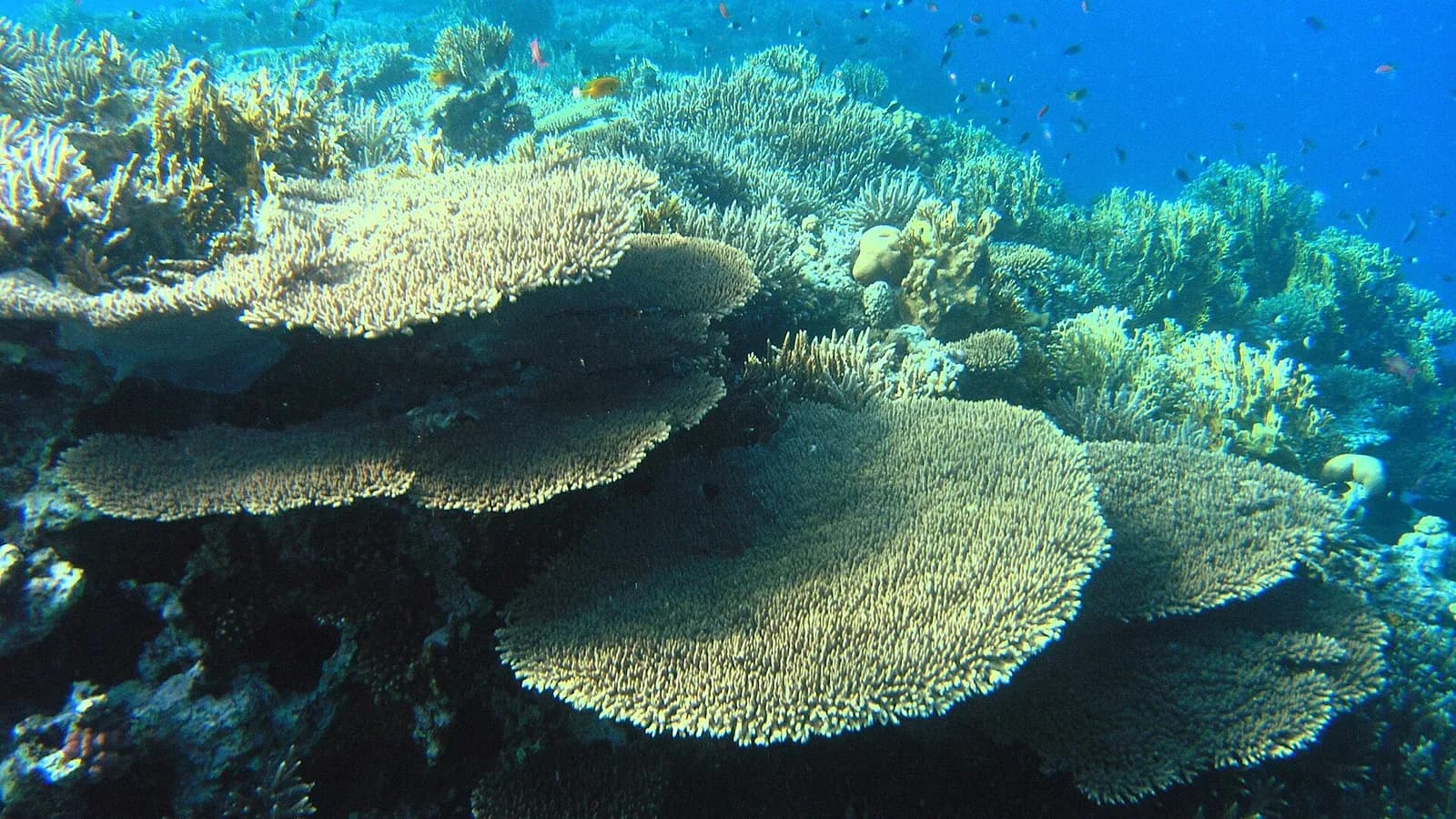
Дайвінг у Хургаді — найкращі рифи (Гіфтун, Кеарлесс-Риф, Дім дельфінів) і затонулі кораблі Абу-Нухас, Discover Scuba проти курсів PADI, сезон і температура води та реальні ціни 2026 року.
Автор: Aly Osman7 хв читання
Снорклінгові поїздки в Хургаді (2026): найкращі рифи, ціни та як обрати
Де зайнятися снорклінгом із Хургади у 2026 році — Помаранчева бухта, Гіфтун, Махмія, Утопія та Дім дельфінів — з типами човнів, морським життям, температурою моря по місяцях, порадами для родин і реальними цінами з 1000+ доступних для бронювання поїздок.
Автор: Aly Osman7 хв читання
Ціни на тури Єгиптом за видом активності (2026): скільки насправді коштує кожен тип
Скільки насправді коштує кожен тип враження в Єгипті — від катання на верблюді за 1 700 EGP до круїзу Нілом за 48 500 EGP — на основі 29 710 реальних турів, доступних до бронювання на семи платформах.
Автор: Aly Osman6 хв читання