Blue Hole Dahab (2026): Snorkel, Dive or Freedive Guide
Is the Blue Hole in Dahab worth it? Snorkel, dive or freedive compared, the Bells route, the one rule on the Arch, and getting there from Dahab or Sharm.
Quick answer: Yes, the Blue Hole in Dahab is worth it if you will snorkel, hold a dive card or want to freedive. It is one of the best known shore sites in the Red Sea and one of the top places in the world to learn freediving. From Dahab it is an easy half day; from Sharm el Sheikh it is a full day out. The one rule: never attempt the Arch, which sits at about 55 m and is for technical divers only.
Getting there is simple: the site is at the end of the seven kilometre Blue Hole road north of Dahab. Facts checked 17 October 2026. Trip prices are not listed here: see the live list on our Blue Hole page.
Snorkel, dive or freedive: which one is for you
| Who it suits | Certification | Depth you use | Time needed | How to book | |
|---|---|---|---|---|---|
| Snorkel | Strong, confident swimmers who do not dive; others with a guide and a vest | None; a guide or buddy recommended | Surface, over the Saddle (about 0.5 to 6 m) and along the shallow reef rim | Half a day from Dahab, a full day from Sharm | Day trips on our Blue Hole page or a Dahab centre |
| Dive (Bells to Blue Hole) | Certified divers comfortable with depth and a wall | Advanced Open Water is the training PADI lists; some centres take confident Open Water divers in suitable conditions | Exit from the Bells chimney at about 26 m, finish over the Saddle at about 7 m | One dive, about half a day with kit up and the drive | A Dahab dive centre (see our Dahab diving guide) |
| Freedive | Trained freedivers and beginners on a course | A freediving course, or existing certification plus a buddy | Whatever your training allows, on a line in the hole | A morning session, or a multi day course | A Dahab freediving school |
Not sure which? Ask us on WhatsApp.
The quick logic: if you have never dived, snorkel. If you hold an Open Water card, check with your centre before booking the Bells, because the chimney exit is deeper than the 18 m that PADI Open Water divers are trained to (PADI). If you want to go down on one breath, Dahab is one of the places people travel to learn.
What the Blue Hole actually is
The Blue Hole is a sinkhole in the reef on the Gulf of Aqaba coast, more than 100 m deep, inside the Abu Galum Nature Reserve, a 425.7 km2 protected area declared in 1992 (Ahram Online, 26 August 2026). The ministry puts visitor numbers at more than 110,000 a year (Daily News Egypt, June 2026).
On the seaward side, a shallow opening about 6 m deep, the Saddle, links the hole to the open sea. It shapes almost everything you will do here.
The government is reviewing a plan for the site that includes a visitor gateway, an eco lodge, marine safety and electronic monitoring. As of late August 2026 it was still at the planning stage with no published timetable (Ahram Online).
Snorkelling the Blue Hole
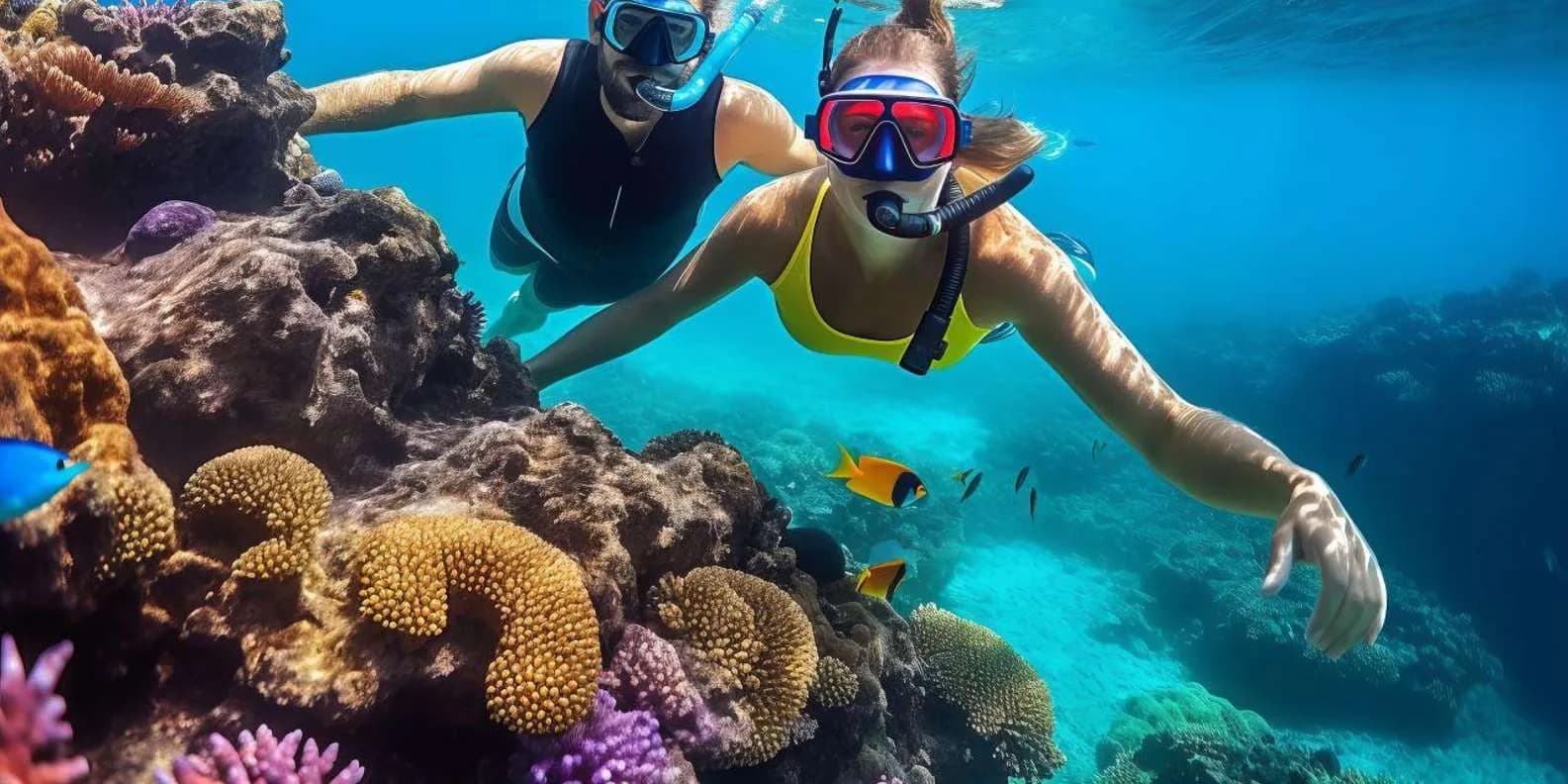
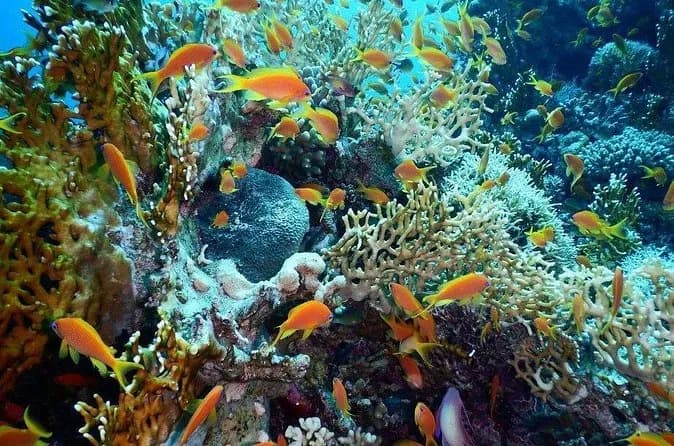
The coral and fish are on the rim, a few metres under the surface. The best water is along the shallow reef rim and over the Saddle, which runs from about half a metre down to around 6 m. Shallow does not mean easy: this is a site for strong, confident swimmers. If you are less sure in the water, go with a guide or buddy and wear a vest.
The current here usually runs north to south. That lets a guide drop you in at the Bells, a short walk north along the shore, so you drift south along the reef and swim into the hole over the Saddle. Inside the hole there is no strong current, but there is also not much coral; the colour is on the rim.
Three things to know before you get in:
- There is no lifeguard. Do not snorkel alone, and if you are not a strong swimmer, wear a snorkel vest.
- Stay off the drop off. The water goes from a few metres to very deep in a single kick. Keep to the rim and the Saddle, and do not hold your breath and dive down into the hole.
- It can get busy. Excursion buses come up from Sharm el Sheikh, so the reef can feel crowded. Going early in the day usually means fewer people and calmer water.
Diving the Bells to Blue Hole
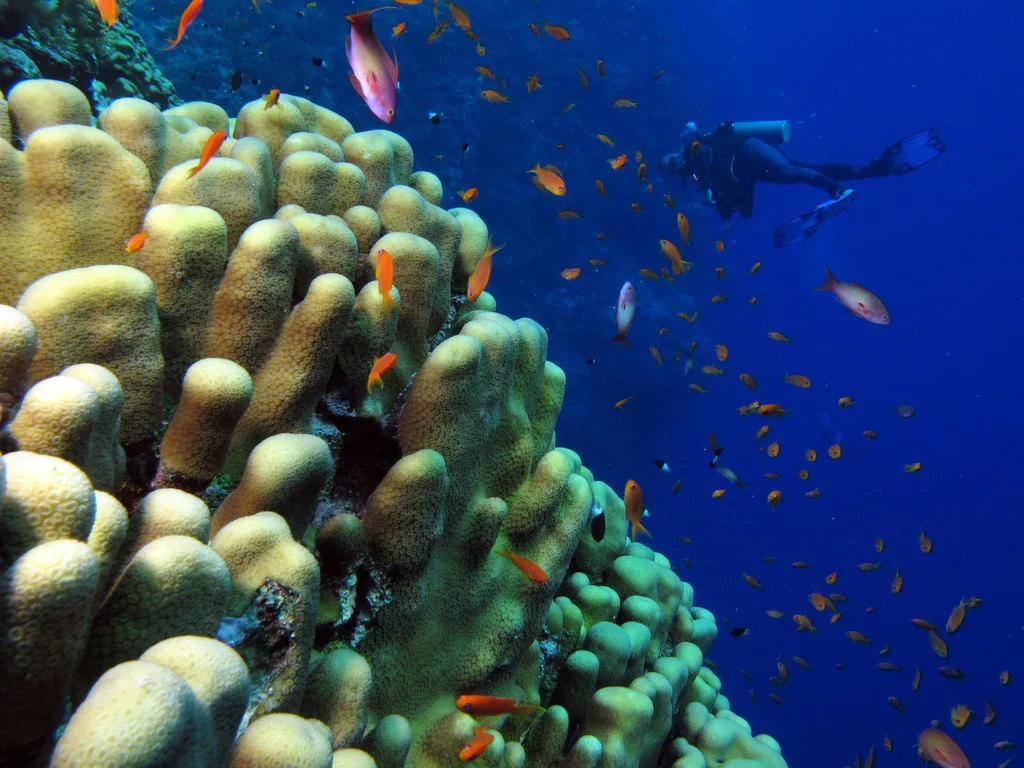
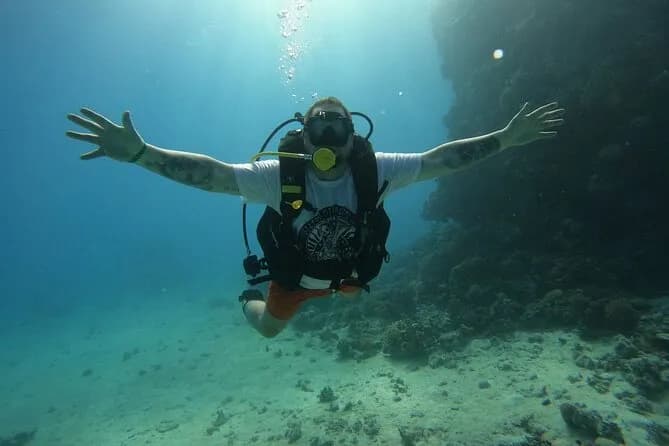
This is the classic recreational dive, and it does not involve the Arch at all. You enter from the shore through the Bells, an open chimney in the reef just north of the hole. You drop down it and exit onto the outer wall at about 26 m (PADI). From there you swim south along the wall with the current, slowly coming shallower, and finish by crossing the Saddle at about 7 m into the hole.
A dive guide writing in DAN Europe's Alert Diver magazine (2024) advises exactly this kind of plan for recreational divers: tour the outer wall, starting at the Bells or entering and leaving over the Saddle. The inner walls of the hole are bare at recreational depths, so there is nothing to gain by going deeper inside.
What that means for your certification:
- PADI Open Water divers are trained to 18 m, Advanced Open Water to 30 m, and Deep Divers to 40 m, the recreational limit (PADI).
- For the Bells, PADI lists Advanced Open Water and Drift Diver as relevant training. Some Dahab centres take confident Open Water divers in suitable conditions; ask before you book.
- Check your dive insurance. The UK Foreign Office tells divers not to go below the depth limit on their policy and to make sure it covers air or sea rescue, and notes that rescue may only start once payment is guaranteed.
There is no dive shop at the Blue Hole, so you come with a Dahab centre that brings tanks and kit. The UK Foreign Office also notes that safety standards among Red Sea dive operators vary a lot. Our Dahab scuba diving guide covers how to choose one, courses and the other shore sites in town.
Freediving at the Blue Hole
Dahab is one of the freediving capitals of the world (Enterprise, 2017). The Blue Hole is the reason: you get real depth straight from the shore, with very little current inside the hole.
Several schools in Dahab run courses from first timer to advanced. SSI puts the best season at April to June and September to November, with water around 22 to 28 C, and notes that the Bells is for advanced freedivers only.
The rule that matters most is simple: never freedive alone. The same Alert Diver column advises a buddy trained and ready to rescue you, and points to local freediving centres as the right way to dive the hole. If you are new, book a course rather than heading out with a mask and a line.
The Arch: do not attempt it
At about 55 m, an archway connects the Blue Hole to the open sea. It is below the 40 m recreational limit, and local operators only take divers there with technical qualifications. The Alert Diver column warns that trying to cross it on a single standard tank exposes you to severe narcosis, disorientation and running out of air.
Getting there from Dahab
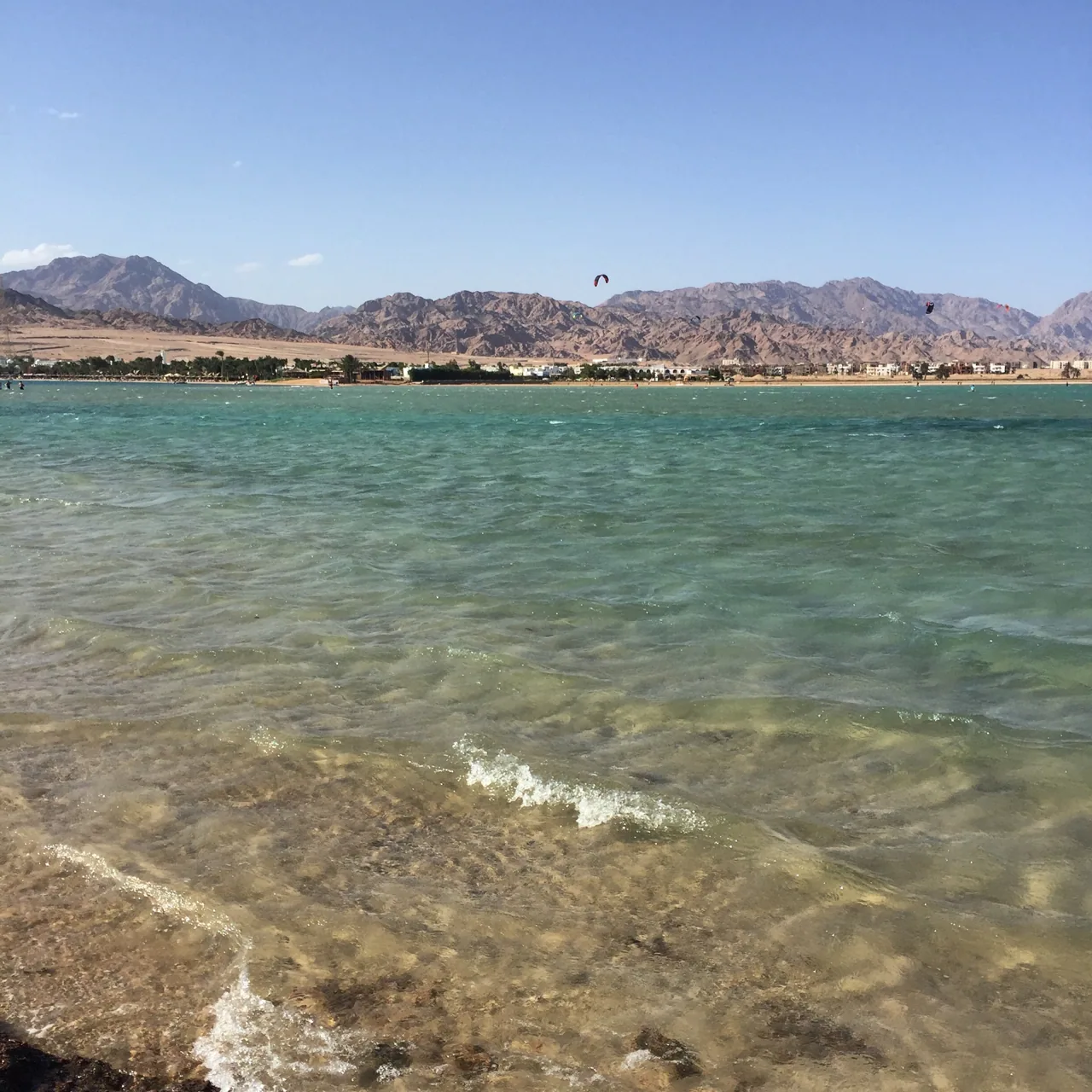
The Blue Hole sits at the end of what Ahram Online calls the seven kilometre Blue Hole road north of Dahab; dive centres quote 7 to 12 km depending on where in town you start. South Sinai has scheduled the road for rebuilding and widening in its 2026/27 programme. It ends in a dirt track, so in practice you go with your dive or snorkel centre, which drives you and the kit, or take a taxi from town. It is a short ride.
If you are staying in Dahab, this is the easy version: go in the morning, snorkel or dive, eat at a shore cafe, and be back in town by mid afternoon. For the rest of what to do in town, see our Dahab travel guide.
Getting there from Sharm el Sheikh
From Sharm, allow about 1.5 to 2 hours each way. Dahab is about 85 km up the coast road, and a dive centre puts it at about 90 minutes from Sharm airport. The Blue Hole is a short drive beyond town.
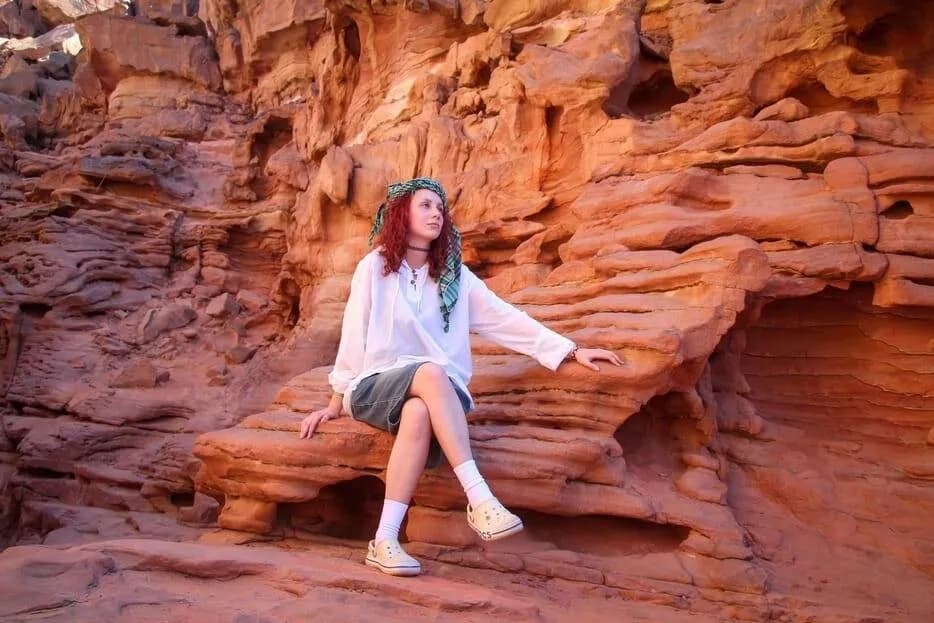
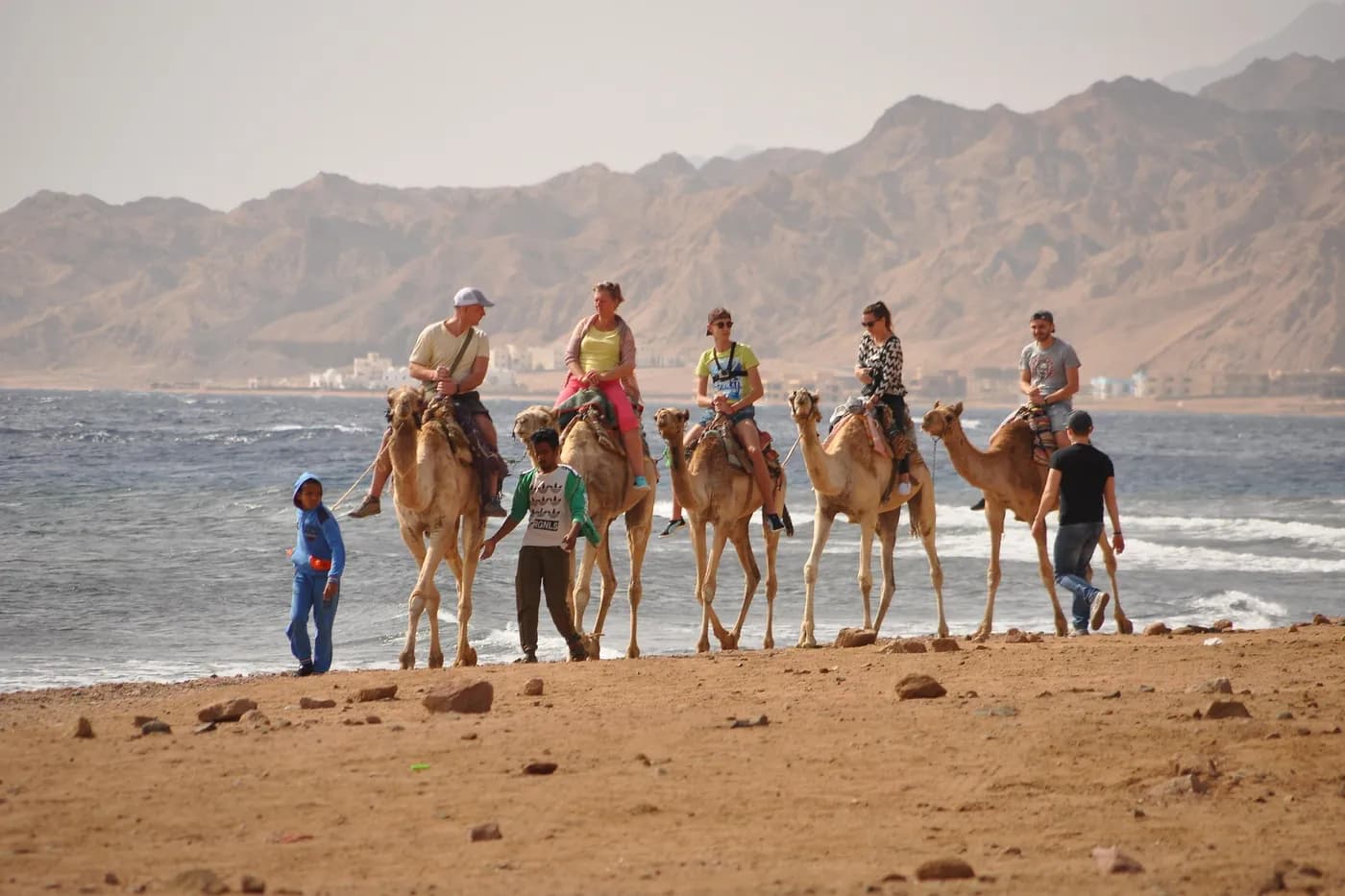
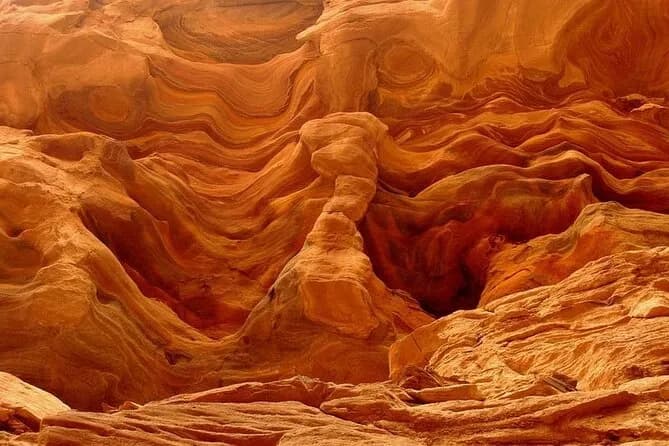
That makes it a full day, so most people from Sharm go on an organised trip with transport included. Many combine the Blue Hole with the Coloured Canyon, a camel ride or a stop in Dahab town. A few on our list, or browse all Dahab day trips:
- Jeep adventure to the Blue Hole, Canyon and Dahab from Sharm, the most reviewed of our Blue Hole trips (4.2 from 250 reviews, checked 17 October 2026)
- Coloured Canyon and Blue Hole day trip from Sharm
- Blue Hole and Dahab city from Sharm
Current prices for all of them are on our Blue Hole page. If you want to see the canyon properly as well, read our Coloured Canyon and Ras Abu Galum guide.
Is it worth the trip from Sharm? Yes, if you will actually get in the water. If you only want to look at the Blue Hole from the shore, it is a long day for a view; see things to do in Sharm el Sheikh for reefs closer to your hotel.
If you plan to drive yourself, note that the UK Foreign Office advises against driving outside main cities and resorts at night. Leave Dahab in good time to be back before dark.
What to bring
- Passport. Police check ID regularly in Egypt and may ask to see it (UK Foreign Office).
- Cash. Check what your trip includes: some include lunch, and site fees and drinks are often extra.
- Mask, fins and a snorkel vest if you have your own.
- Certification card and insurance details if you are diving or freediving.
- Water, sun protection and a cover up. The sun off the water is strong.
- Reef safe sunscreen, and nothing that comes off on the coral.
Best time to go
You can get in the water all year. The training agency SSI names April to June and September to November as the best months in Dahab, with water around 22 to 28 C and often the best visibility (SSI, checked 17 October 2026).
| Season | What it means for you |
|---|---|
| March to May | Water warming up and pleasant heat on land; bring a wetsuit early in the season |
| June to August | The warmest water and the hottest days; go early |
| September to November | Warm water and easing heat: many people's favourite |
| December to February | The coolest water of the year; a full wetsuit helps |
For a wider look at Red Sea conditions by month, see our best time to snorkel the Red Sea guide.
Shore cafes at the Blue Hole
The Blue Hole has cafes and toilets, but no dive shop, so bring your own kit. Bedouin style cafes on the shore sell food and drinks.
We have not named individual cafes because we could not confirm their current names and opening from a reliable source. Unless your trip includes lunch, you pay at the cafe, so bring cash.
Safety
The water rules are above. One more point on travel advice: the UK Foreign Office advises against all but essential travel to the northern part of South Sinai beyond the St Catherine to Nuweiba road, but makes an exception for the coastal areas on the east and west of the peninsula. Dahab and Sharm el Sheikh are on the coast (advice updated 4 August 2026, still current on 17 October 2026).
Plan your Blue Hole day
If you want help putting it together, for example a snorkel day with transfers from Sharm or a Blue Hole morning added to a Dahab stay, send us your plan on WhatsApp and we will suggest a trip that fits. You can also browse all our Dahab day trips.
A real team available 24/7 to assist you — free
Seif and the team reply on WhatsApp 24/7 — trip questions, custom plans and booking help.
Ask Seif on WhatsAppCommon questions
Is the Blue Hole in Dahab worth visiting?
Yes, if you plan to snorkel or dive. The reef rim and the Saddle suit strong, confident snorkellers, and the Bells to Blue Hole is a classic shore dive. From Dahab it is a relaxed half day. From Sharm el Sheikh it is a full day, worth it if you get in the water, less so just to look from the shore.
How deep is the Blue Hole in Dahab?
More than 100 m deep (Ahram Online, August 2026). Snorkellers stay along the shallow reef rim and over the Saddle, which is about 0.5 to 6 m deep. Recreational divers stay on the outer wall within the 40 m recreational limit. The Arch is at about 55 m and is for technical divers only.
Can you snorkel at the Blue Hole without diving?
Yes, you can snorkel without diving. Stay along the shallow reef rim and over the Saddle, about 0.5 to 6 m deep. The site suits strong, confident swimmers; if you are less sure, go with a guide and wear a vest, and never snorkel alone: there is no lifeguard. A guided trip can drop you at the Bells to drift south into the hole with the current.
Is the Blue Hole dangerous?
Most of the risk comes from going too deep. Stay within your training, dive with a reputable operator, never go alone, and leave the Arch to technical divers. The Arch sits at about 55 m, beyond recreational limits, and a dive guide writing in DAN Europe's Alert Diver magazine (2024) warns that attempting it on a single tank risks severe narcosis, disorientation and running out of air.
What certification do I need to dive the Blue Hole?
For the Bells to Blue Hole route PADI lists Advanced Open Water and Drift Diver as relevant training, because the chimney exits at about 26 m and Open Water divers are trained to 18 m. Some Dahab centres take confident Open Water divers in suitable conditions; ask before you book.
How far is the Blue Hole from Dahab and from Sharm el Sheikh?
The Blue Hole road from Dahab is about 7 km (Ahram Online), a short drive. From Sharm el Sheikh allow 1.5 to 2 hours each way, since Dahab itself is about 85 km up the coast.
Is Dahab good for diving?
Very. Dahab is known for easy shore entries, and the Blue Hole and the Bells are its best known sites. It is also one of the world's freediving capitals. See our Dahab scuba diving guide for centres and courses.
How much does it cost to visit or dive the Blue Hole?
We do not quote a site fee here because we could not confirm a current one from an official source; ask your operator, and bring cash. Current trip prices are on our Blue Hole page at /attractions/blue-hole.
When is the best time to go?
Spring and autumn are the favourites. SSI names April to June and September to November as the best months in Dahab, with water around 22 to 28 C. Excursion buses come up from Sharm, so going early usually means fewer people.
Book it on This is Egypt
Turn this guide into a trip


Egypt's bestsellers
The experiences travelers book most, across the country


Keep reading
Hurghada Diving (2026): Best Sites, Packages & Prices
Diving in Hurghada — the best reefs (Giftun, Careless Reef, Dolphin House) and Abu Nuhas wrecks, Discover Scuba vs PADI courses, season and water temps, and real 2026 prices.
By TiE Editors7 min read
Hurghada Snorkeling Trips (2026): Best Reefs, Prices & How to Choose
Where to snorkel from Hurghada in 2026 — Orange Bay, Giftun, Mahmya, Utopia and Dolphin House — with boat types, marine life, month-by-month sea temperatures, family tips and real prices from 1,000+ bookable trips.
By TiE Editors7 min read
Egypt Tour Prices by Activity (2026): What Each Type Really Costs
What every type of Egypt experience costs — half day, full day or overnight — as a median and a mid-half range in US dollars, from 12,370 live bookable listings.
By TiE Editors6 min read