
 Photo by David Dennis from Scotts Valley, CA, USA, via Wikimedia Commons, CC BY-SA 2.0
Egypt With a Baby or Toddler (2026): A Practical Guide
Visiting Egypt with an infant or toddler - managing heat, carriers vs strollers, formula and diaper availability, flying, and which sites actually work.
Quick answer: Egypt with a baby or toddler is genuinely doable, and often wonderful - Egyptians adore small children and will fuss over yours everywhere you go. The two things that make or break it are heat and pace. Travel in the cool season, sightsee in short morning bursts with midday naps, and don't try to see everything. A Nile cruise or a Red Sea resort gives you a pool and a home base between outings, which is far easier with a little one than hopping between hotels. Good news on supplies: diapers, wipes and formula are widely sold in Egyptian cities, so you don't have to carry a suitcase of them. This guide is specifically about infants and toddlers - if your children are older, our Egypt with kids guide is the one you want.
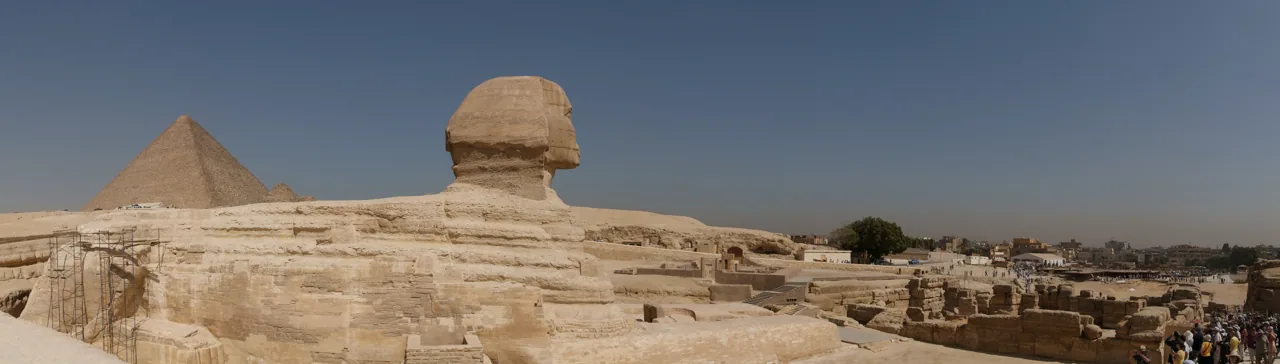
Heat is the whole game
With a baby, when you go matters more than anything. Egyptian summer (roughly May-September) is brutal - 40°C+ in Upper Egypt - and dangerous for infants, who dehydrate and overheat fast. Travel November to March, when Cairo and Luxor sit in the pleasant low-to-mid-20s°C by day. Even in winter, midday sun at open sites like the pyramids is strong: do your sightseeing in the morning, be back by early afternoon for naps and pool time, and go out again late if at all. Our best time to visit guide has the month-by-month picture; for a baby, treat summer as off-limits.
Sun protection is non-negotiable: a wide-brim hat, a lightweight long-sleeve layer, high-factor baby sunscreen (bring your trusted brand), and shade at all times. Keep fluids up constantly - offer water or milk more often than you would at home.
Carrier, not stroller (mostly)
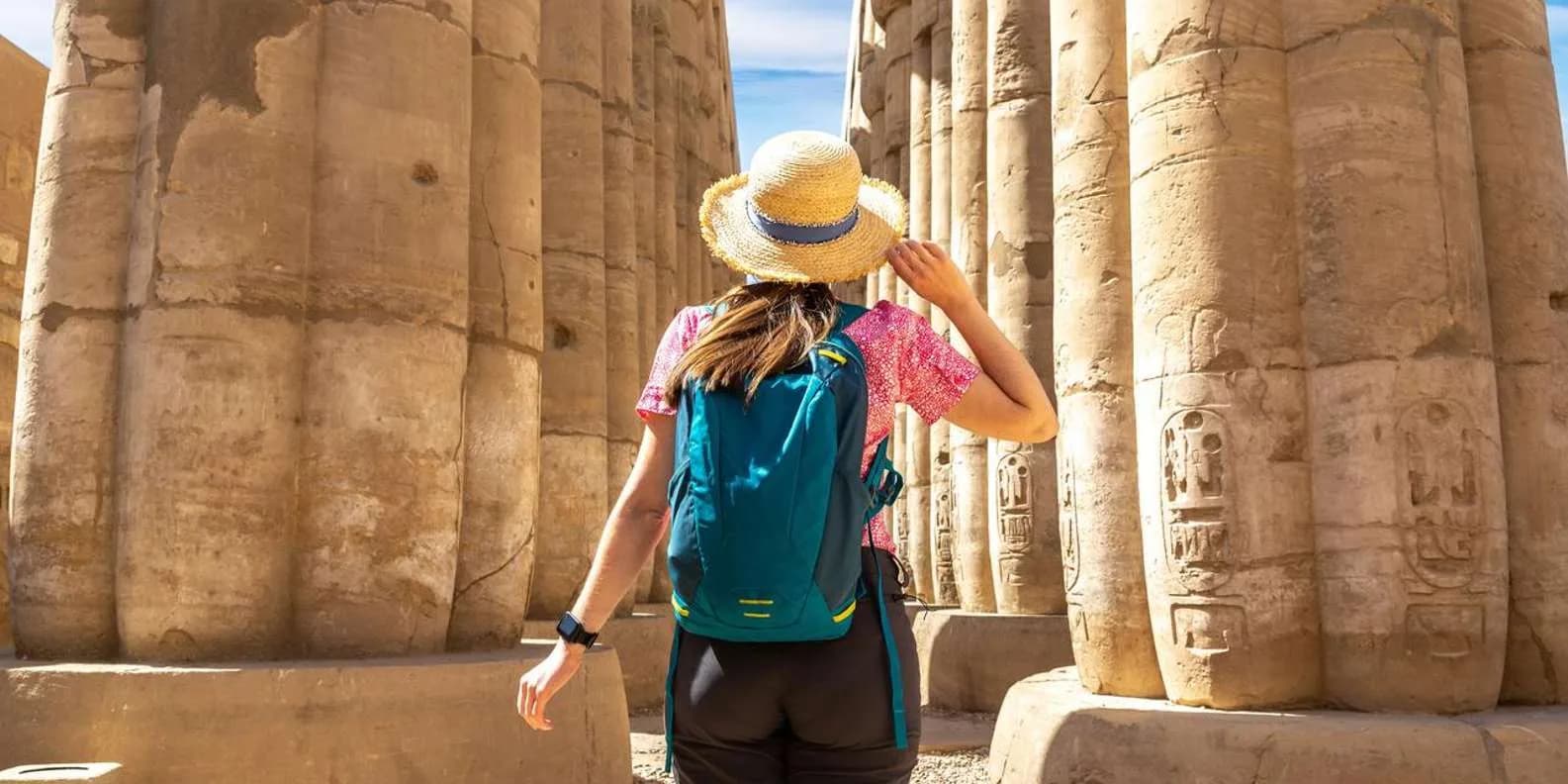
Bring a soft or structured baby carrier and make it your primary kit. Strollers are a struggle at almost every ancient site - sand at Giza, uneven flagstones at Karnak, steps and ramps everywhere, and no smooth pavements to speak of. A carrier keeps your hands free on uneven ground and up temple steps, and lets a napping baby stay asleep. A lightweight, foldable stroller still earns its place for airports, hotel grounds, resort promenades and flat museum floors like the Grand Egyptian Museum - but you'll carry it more than you push it at the sites. Skip the big travel-system pram; it won't fit Egypt.
Diapers, formula and supplies: what you can buy there
You do not need to bring weeks of supplies. Egyptian cities are well stocked:
| Item | Availability in Egypt |
|---|---|
| Diapers | Widely sold - Pampers, plus local brands like BabyJoy, Molfix, Fine Baby. Supermarkets, pharmacies, Carrefour, and delivery apps (Noon, Jumia). |
| Wipes | Everywhere - supermarkets and pharmacies. |
| Formula | Available (including familiar international brands) at pharmacies and large supermarkets - but your exact brand/stage may vary, so bring a starter supply. |
| Baby food / purees | Jarred purees and cereals in big supermarkets; fresh mashable food (banana, rice, yoghurt) everywhere. |
| Baby sunscreen / meds | Bring your trusted brands from home; local pharmacies are good but selection differs. |
The practical rule: bring enough of the specific formula, medicine and sunscreen you rely on to cover the trip plus a few days' buffer, since exact brands and stages aren't guaranteed - but count on buying diapers, wipes and general supplies locally, which lightens your bags a lot. Pharmacies (saydaliyya) are plentiful, well stocked and staffed by pharmacists who usually speak some English.
Flying with a baby
The flight to Egypt is long-haul for most - book a bassinet bulkhead seat if your baby is small enough (request it early; they're limited), or a seat for a toddler. Feed on takeoff and descent to ease ear pressure. Egyptian domestic flights (Cairo-Aswan, Cairo-Luxor) are short and easy, and often less tiring with a baby than the long overnight train. At Cairo airport, expect help and warmth toward families; strollers can usually be gate-checked. Pack a change of clothes for baby and you in the carry-on, plus more diapers than you think you need for the journey.
Which sites and trips actually work
Not everything suits a baby, and that's fine - pick the wins and skip the rest.
- A Nile cruise is one of the best formats: your room, cot (request in advance), pool and food travel with you, and you dip into temple stops for an hour then retreat to the boat. Cabins are compact - a portable travel cot or the ship's cot helps. See our Nile cruise guide.
- Red Sea resorts (Hurghada, El Gouna, Sharm) are the easy-mode option: family resorts with pools, shade, baby facilities and short flights, ideal for pure downtime.
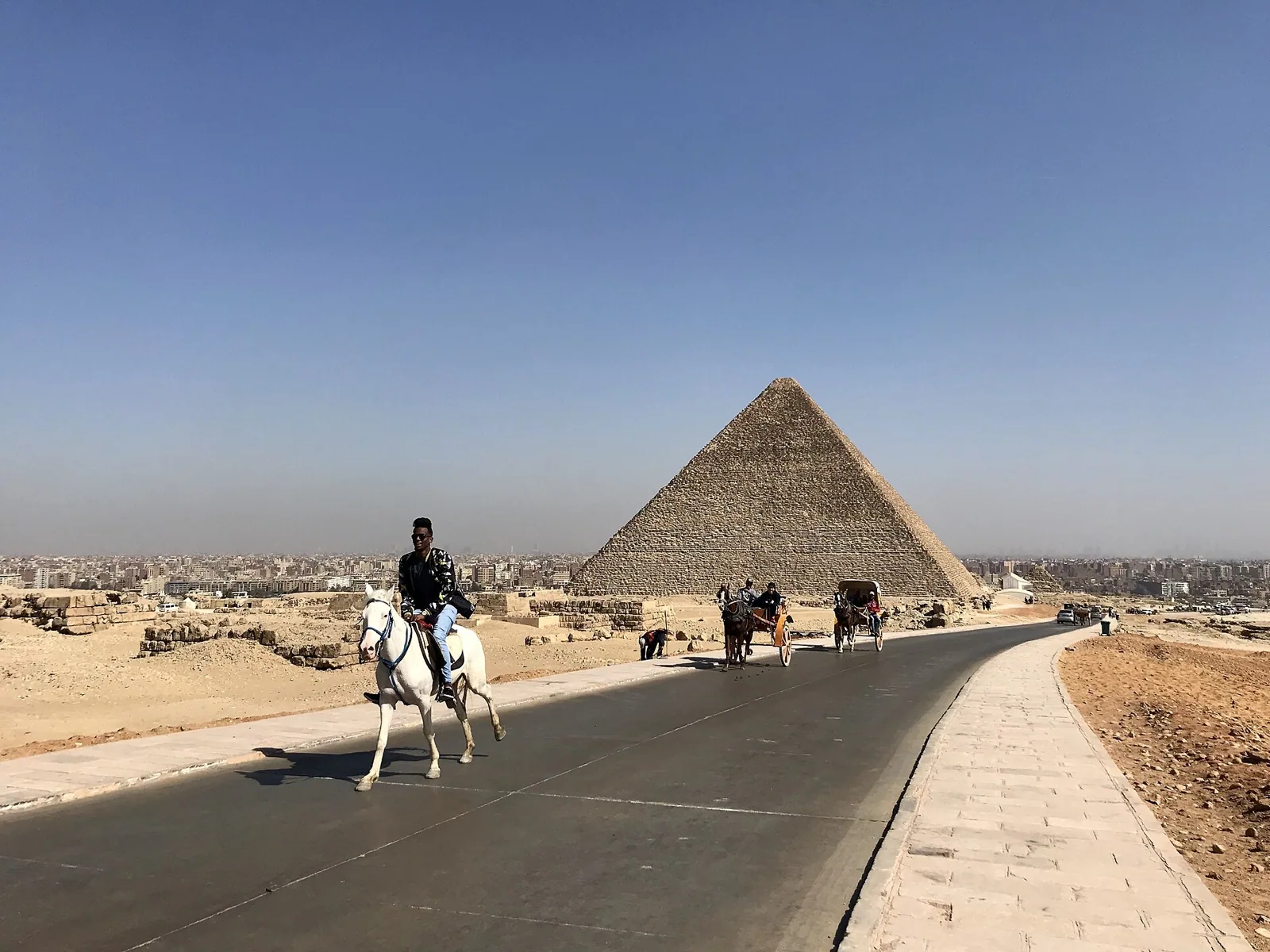
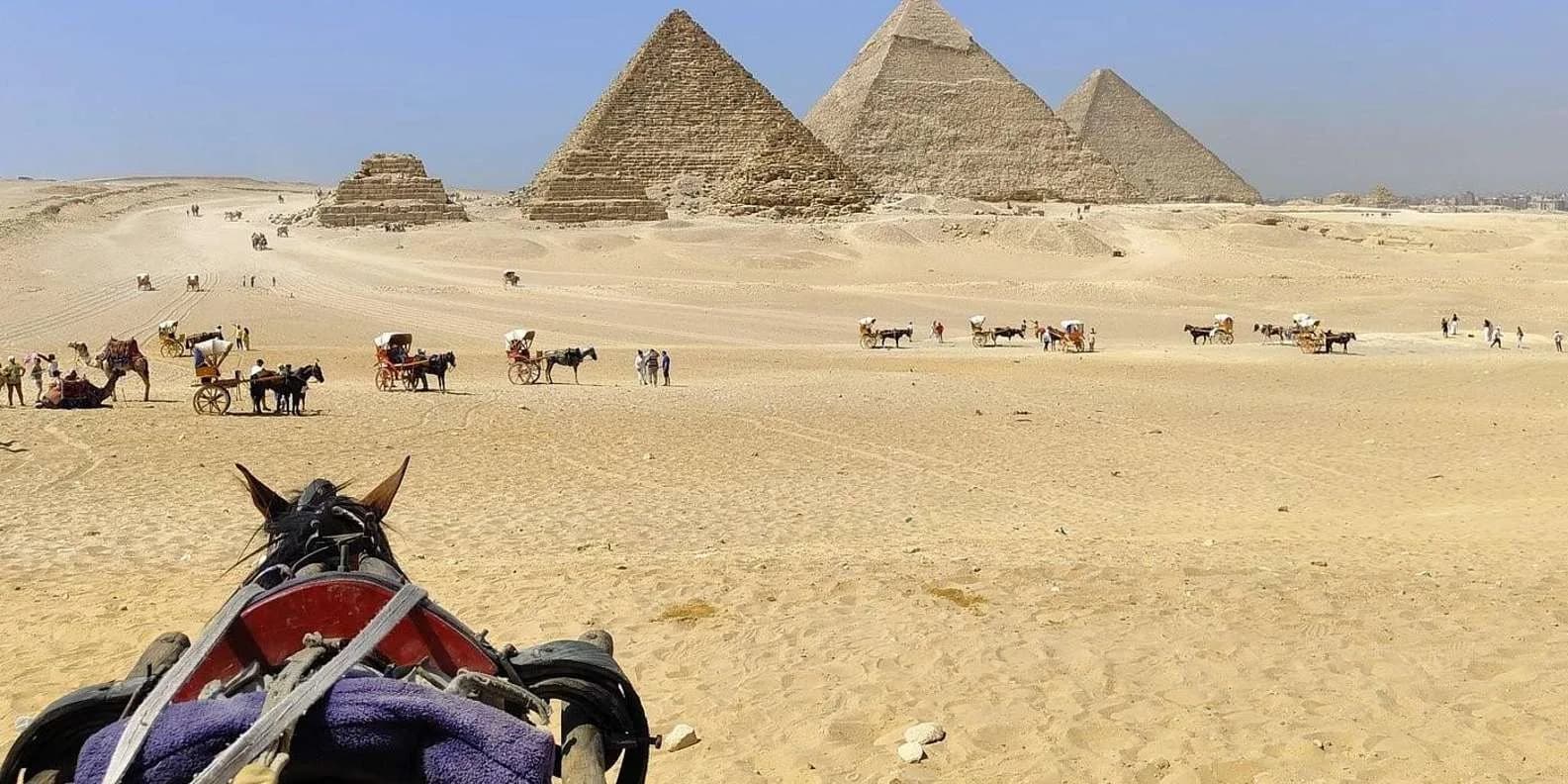
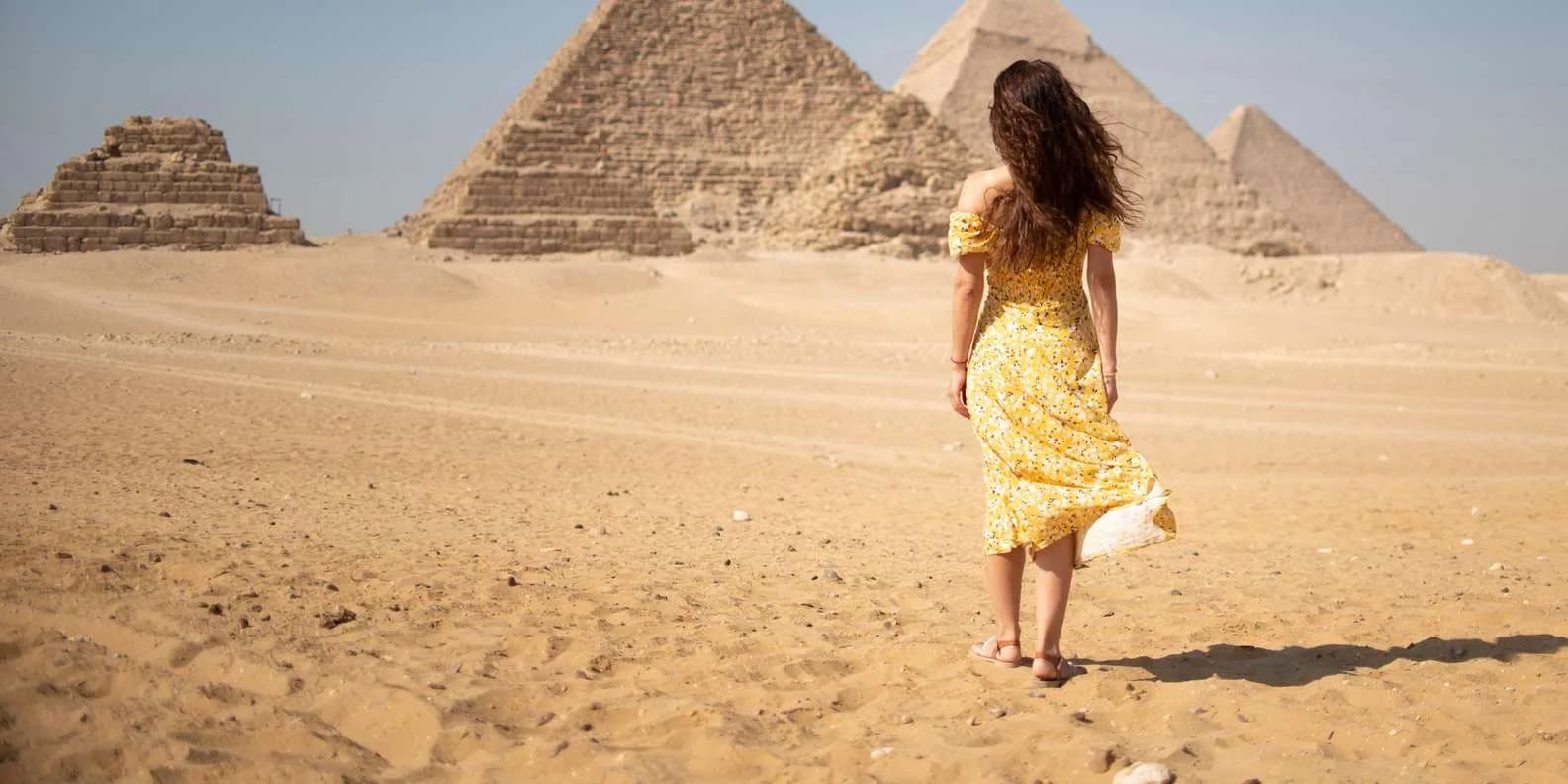
- The Giza pyramids and Sphinx work as a short morning visit - carrier on, hat on, an hour or two, then out before the heat.
- The Grand Egyptian Museum is stroller-friendly (flat floors, lifts, air-conditioned) and a good rainy-or-hot-day refuge.
- Skip or minimize: tomb interiors in the Valley of the Kings (steep, hot, crowded, no air), long convoy day trips, and packed multi-site days. A baby sets the pace, not the itinerary.
A private guide and driver is worth every pound with a baby - your own air-conditioned vehicle for naps and changes, flexibility to cut a visit short, and someone to smooth logistics so you're not wrangling public transport with a pushchair. Our family itinerary shows how a slower, family-paced route fits together.
Food, water and health
Stick to bottled water for drinking, mixing formula and even brushing the baby's teeth. For weaning babies, peeled fruit, plain rice, bread, yoghurt and well-cooked food are safe and easy to find; go easy on street food for very young children. Bring a small kit: baby paracetamol, rehydration sachets, a thermometer, any regular medicines, and your insurance details. Egyptian pharmacies handle most minor needs, and private hospitals in Cairo and the resorts are good if anything more serious comes up - make sure your travel insurance covers the whole family, infant included. See our travel tips guide for the health-and-water basics.
Keep the ambitions modest and the days short, and Egypt with a baby becomes what it should be: unhurried mornings among wonders, long shady afternoons, and a small child being cheerfully spoiled by everyone you meet. To find baby-friendly cruises, resorts and private tours for your dates, browse our search page and tell operators your child's age up front.

A real team available 24/7 to assist you — free
Seif and the team reply on WhatsApp 24/7 — trip questions, custom plans and booking help.
Ask Seif on WhatsAppCommon questions
Is it safe to take a baby or toddler to Egypt?
Yes, with sensible planning. Travel in the cool season (November to March), keep sightseeing to short mornings with midday rest, use bottled water for drinking and formula, protect against sun, and carry basic baby medicines. Egyptian cities have good pharmacies and private hospitals, and families are warmly welcomed everywhere.
When is the best time to visit Egypt with a baby?
November to March, when Cairo and Luxor are pleasantly in the low-to-mid-20s°C by day. Avoid the summer (May-September), when Upper Egypt tops 40°C - genuinely dangerous for infants, who overheat and dehydrate quickly. Even in winter, sightsee in the cooler morning hours.
Should I bring a stroller or a baby carrier to Egypt?
Make a soft or structured carrier your main kit - it handles the sand, steps and uneven ground at ancient sites far better than a stroller. Bring a lightweight foldable stroller too for airports, hotel grounds, resorts and flat museum floors, but expect to carry it more than push it at the sites. Skip the bulky travel-system pram.
Can I buy diapers and formula in Egypt?
Yes, easily. Diapers (Pampers plus local brands like BabyJoy, Molfix and Fine Baby), wipes and baby food are widely sold in supermarkets, pharmacies, Carrefour and on delivery apps. Formula is available including familiar brands, but your exact brand and stage may vary - bring a starter supply plus a few days' buffer of anything specific you rely on.
Does a Nile cruise work with a baby?
Very well - it's one of the best formats. Your cabin, cot (request in advance), pool and meals travel with you, so you can visit a temple for an hour then retreat to the boat for naps. Cabins are compact, so a portable travel cot helps, and you avoid the daily hotel-hopping that's hard with an infant.
Which Egyptian sites are toddler-friendly?
The Giza pyramids and Sphinx as a short carrier-on morning visit; the Grand Egyptian Museum (flat, air-conditioned, stroller-friendly); Red Sea family resorts; and a Nile cruise. Minimize tomb interiors in the Valley of the Kings (steep, hot, no air) and avoid long convoy day trips and packed multi-site days.
What should I pack for a baby in Egypt?
A carrier, sun hat, lightweight cover-up layers, high-factor baby sunscreen, your trusted formula and medicines with a buffer, a travel cot if not provided, and plenty of carry-on diapers and spare clothes for the flight. Buy diapers, wipes and general supplies locally to save luggage space.
Can babies drink the tap water in Egypt?
No - use bottled water for drinking, mixing formula and even brushing a baby's teeth. It's cheap and available everywhere. For weaning babies, peeled fruit, plain rice, bread, yoghurt and well-cooked food are safe; go easy on street food for very young children.
Egypt's bestsellers
The experiences travelers book most, across the country



Keep reading
Hurghada Diving (2026): Best Sites, Packages & Prices
Diving in Hurghada — the best reefs (Giftun, Careless Reef, Dolphin House) and Abu Nuhas wrecks, Discover Scuba vs PADI courses, season and water temps, and real 2026 prices.
By TiE Editors7 min read
Hurghada Snorkeling Trips (2026): Best Reefs, Prices & How to Choose
Where to snorkel from Hurghada in 2026 — Orange Bay, Giftun, Mahmya, Utopia and Dolphin House — with boat types, marine life, month-by-month sea temperatures, family tips and real prices from 1,000+ bookable trips.
By TiE Editors7 min read
Egypt Tour Prices by Activity (2026): What Each Type Really Costs
What every type of Egypt experience costs — half day, full day or overnight — as a median and a mid-half range in US dollars, from 12,370 live bookable listings.
By TiE Editors6 min read