
Temple of Kom Ombo Tours & Tickets
Browse 86 trips to the double temple of Sobek and Horus in Aswan, starting from 2,092 EGP (about 43 USD), with an average rating of 4.4 out of 5. Real prices compared across booking platforms and updated for 2026.
Combo (Save 8%): Giza Complex Skip-the-Line Entry + Grand Egyptian Museum Skip-the-Line Tickets
Combo (Save 10%): Grand Egyptian Museum Skip-the-Line Tickets + Nile Dinner Cruise

Combo (Save 2%): GEM + Egyptian Museum of Antiquities Skip-the-Line Tickets
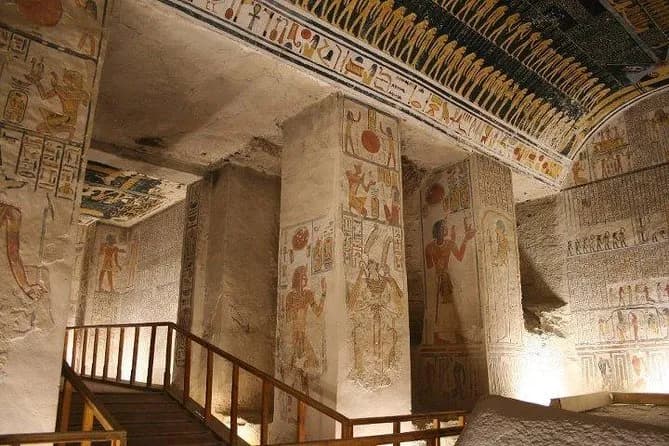
Edfu And Kom Ombo Temples Private Tour From Luxor

Private Luxor to Aswan Trip with Guide & Stops at Edfu & Kom Ombo

Luxor to Edfu & Kom Ombo Temples with Aswan Transfer

Luxor to Aswan or Vice Versa with Edfu & Kom Ombo Temples

Private Full Day Tour to Esna, Edfu and Komumpo Temples from Luxor

Edfu Kom Ombo Day Trip
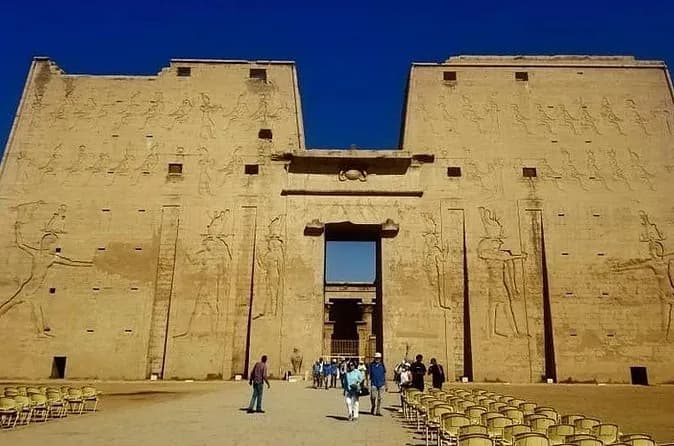
From Luxor: Private Day Trip to Edfu and Kom Ombo
Day Trip to Edfu & Kom Ombo temples from Luxor and drop off in Aswan or Luxor

Combo offer PADI Advanced Open Water Yellow
Private Aswan to Luxor Tour with Kom Ombo and Edfu Temples
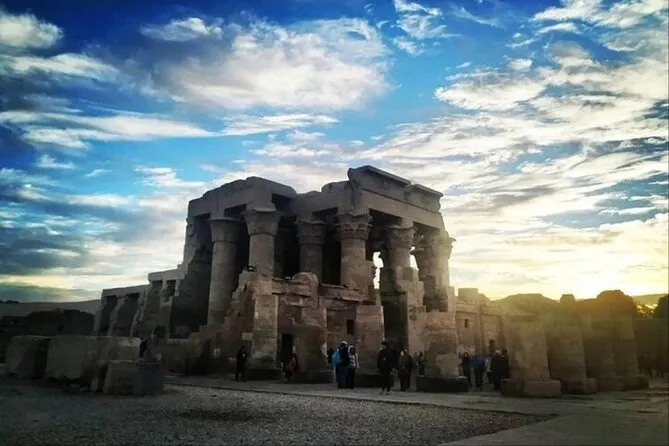
Luxor Aswan Private tour Esna Khnum, Edfu Horus Kom-Ombo Temples
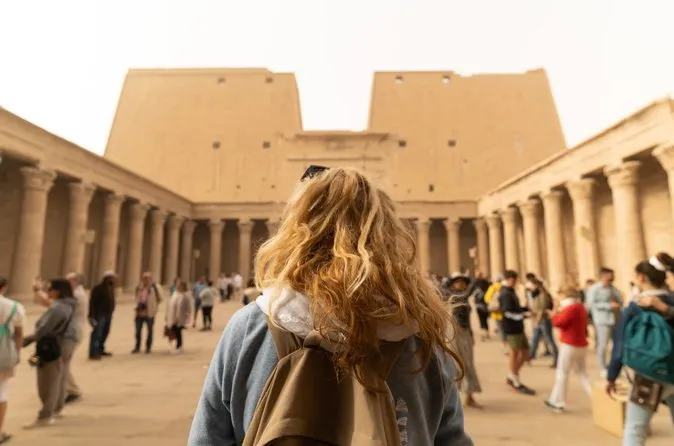
Edfu and Kom Ombo Day Tour with Aswan Transfer from Luxor

Private Luxor to Aswan Trip with Guide & Stops at Edfu & Kom Ombo
Private Luxor–Aswan Transfer with Edfu & Kom Ombo (or vice versa)
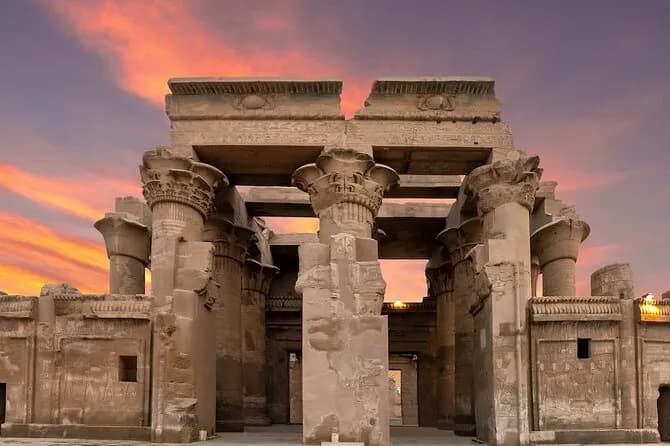
Private Edfu & Kom Ombo Tour with Aswan Transfer
Aswan to Luxor - Kom Ombo & Edfu Temple
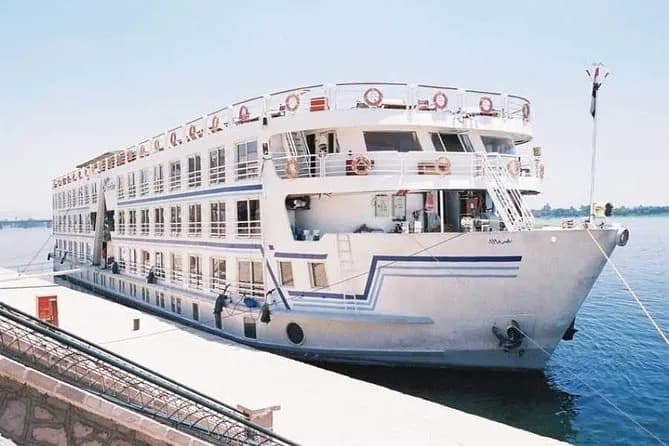
3 Days 2 Night Nile Cruise Includes Visits to Edfu & Kom Ombo from Luxor
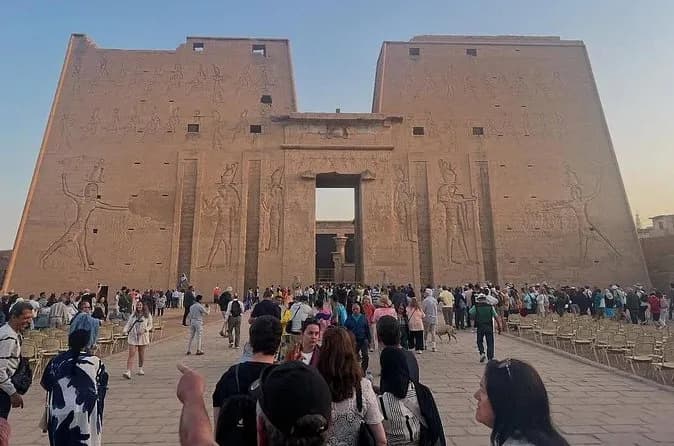
Luxor to Aswan or Vice Versa with Edfu & Kom Ombo Temples
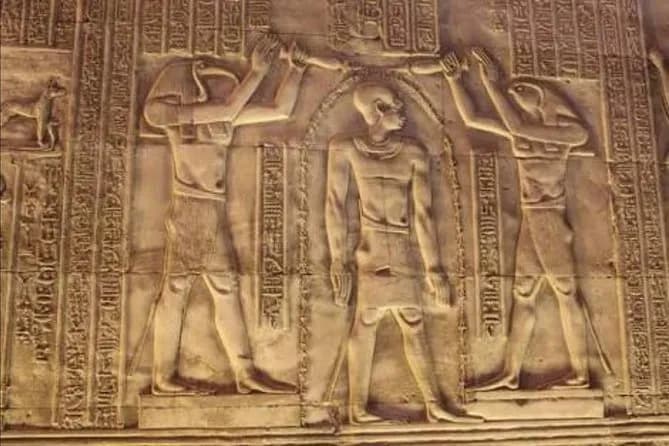
Private trip to Edfu and Kom Ombo Temples from Luxor
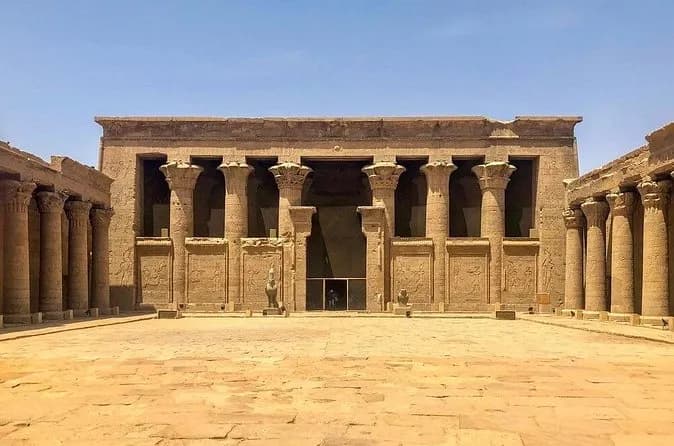
Private Tour to Edfu and Kom Ombo from Luxor
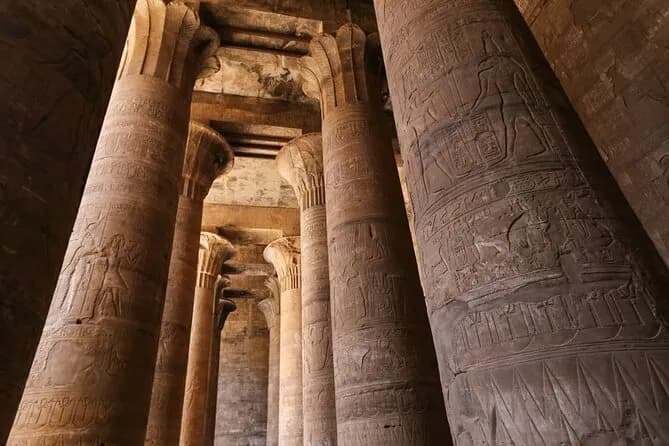
Day Tour to Edfu and Kom Ombo from Luxor
Visiting Temple of Kom Ombo: what to know
Updated 26 September 2026Kom Ombo is the temple you arrive at by boat, up a flight of steps, usually in the late afternoon with the light going orange. It stands on a bend of the Nile between Edfu and Aswan, directly above the water with nothing between the river and the stone, and the approach is the best of any temple in Egypt. Cruise boats moor at the bank and you walk up.
The building is unique in Egypt for a simple reason: it is two temples in one, built as a perfect mirror. Every element is doubled. Two entrances, two courts, two colonnades, two sanctuaries, running side by side along a central axis that divides the building exactly in half.
Two gods, one building
The southern half belongs to Sobek, the crocodile god, and the northern half to Haroeris, Horus the Elder. They were not natural companions. Sobek is associated with the river's danger and fertility; Horus the Elder with the sky and with healing. Housing them together in one perfectly symmetrical building was a piece of theological diplomacy, giving two local cults equal standing without either taking precedence.
Walk up one side and back down the other and the symmetry becomes obvious and slightly uncanny. Egyptian temples are almost always single-axis buildings that narrow towards one sanctuary. This one refuses to choose.
The temple is Ptolemaic, begun in the second century BC and added to under the Romans, so like Edfu and Dendera it is late work by Egyptian standards, which is why so much of the carving is crisp.
The medical instruments relief
The most photographed thing at Kom Ombo is a panel on the rear wall showing what appear to be surgical instruments: scalpels, forceps, suction cups, scales, a set of objects laid out in rows.
It is genuinely a remarkable carving and worth queuing for, though it is worth knowing that its interpretation is debated. Many Egyptologists read it as surgical equipment, consistent with Haroeris being a healing god and with the temple having a sanatorium function. Others read at least some of the objects as ritual implements for temple ceremonies rather than medical use. Both readings can be true of the same toolkit, since the line between temple ritual and healing was not one the Egyptians drew.
Nearby is a calendar relief listing festivals and the offerings due on each, and a Nilometer, a stepped well shaft used to gauge the flood.
The crocodiles
Next to the temple is a small museum holding mummified crocodiles recovered from the local necropolis, some of them very large, displayed in a single dim room. Sobek's sacred animals were raised, venerated, and mummified in numbers.
It takes ten minutes, it is usually included in your ticket or costs very little extra, and it is the sort of thing people remember longer than another row of columns. Go in.
Visiting from a cruise
Nearly every Luxor to Aswan itinerary stops here, and the stop is usually short, around an hour, often in the late afternoon or early evening. That timing is a gift: Kom Ombo is lit after dark and the combination of floodlit stone directly above black water is the most photogenic moment on the river.
Because the temple sits immediately at the mooring, there is no transfer and no negotiation. You walk off the boat, up the steps, and you are there. Of all the stops on the route it is the easiest.
An hour covers the temple and the crocodile museum comfortably. The site is compact and there is no need to hurry.
Is Kom Ombo worth visiting?
On a cruise, the question does not really arise, because the boat stops and the walk is two minutes. Take it.
Judged on its own, it is not the most impressive temple on the route. Edfu is more complete and Karnak is incomparably bigger. What Kom Ombo has is the double plan, which exists nowhere else, the setting directly on the river, and the crocodiles. That is a good hour.
Other Egypt attractions
Frequently asked questions
How much does it cost to visit Temple of Kom Ombo?
Tours and tickets start from 2,092 EGP (about 43 USD), with a median price of about 5,753 EGP per person.
How many Temple of Kom Ombo tours are available?
There are 86 bookable tours and tickets for Temple of Kom Ombo.
What is the best Temple of Kom Ombo tour?
A top-rated pick is "Combo (Save 8%): Giza Complex Skip-the-Line Entry + Grand Egyptian Museum Skip-the-Line Tickets".
Is the Kom Ombo Temple worth visiting?
Yes, particularly since nearly every Nile cruise moors directly beneath it, so the walk from the boat takes two minutes. It is not the most impressive temple on the route, but the double plan exists nowhere else in Egypt, the riverside setting is the best of any temple, and the crocodile museum next door is worth the ten minutes.
Why is Kom Ombo a double temple?
It houses two gods in perfect symmetry: Sobek the crocodile god in the southern half and Haroeris, Horus the Elder, in the northern half. Every element is doubled, including the entrances and the sanctuaries, which gave two local cults equal standing without either taking precedence.
What is the medical instruments relief at Kom Ombo?
A carved panel showing rows of objects widely read as surgical instruments, consistent with Haroeris being a healing god. The reading is debated, and some scholars interpret at least part of the set as ritual implements. The distinction mattered less to the Egyptians than it does to us.
Are there real mummified crocodiles at Kom Ombo?
Yes. A small museum beside the temple displays mummified crocodiles recovered from the local necropolis, some of them very large. Sobek's sacred animals were raised and mummified in significant numbers.
How long do you need at Kom Ombo?
About an hour, which covers the temple and the crocodile museum without rushing. Cruise stops are usually around that length and often fall in the late afternoon, when the temple is lit and at its most photogenic.