Things to Do in Alexandria, Egypt: A Coastal Guide
Egypt's Mediterranean city: the best things to do in Alexandria, from the Bibliotheca Alexandrina and Roman catacombs to Qaitbay Citadel and Corniche seafood.
Quick answer: Alexandria swaps pharaohs for sea breeze. Egypt's second city looks north to the Mediterranean, not south to the Nile, and its highlights are Greek, Roman, and cosmopolitan rather than pharaonic. The essential things to do: tour the striking modern Bibliotheca Alexandrina, descend into the eerie Catacombs of Kom el-Shoqafa, stand under Pompey's Pillar, walk out to the Citadel of Qaitbay on the site of the ancient lighthouse, sit in the Roman Amphitheatre, stroll the seafront Corniche past Stanley Bridge, and eat as much grilled fish as you can manage. It's an easy day trip from Cairo, and better still as an overnight.
Founded by Alexander the Great in 331 BC, Alexandria became the capital of Ptolemaic Egypt and, for centuries, the intellectual capital of the ancient world. Baedeker's 1895 handbook called it "the mighty creation of Alexander the Great, destined to be the centre of his empire." Cleopatra ruled from here; the Pharos lighthouse guided ships for seventeen centuries; the ancient Library held hundreds of thousands of scrolls. Much of that classical city now lies under the harbour, but enough survives above ground — plus a modern library built to honour the lost one — to fill a full and memorable day.
What makes Alexandria different from anywhere else in Egypt is the layering. Alexander laid out a grid of unusually wide avenues; the Ptolemies added the Museum and Library; the Romans built the amphitheatre and the catacombs; St Mark brought Christianity, and the Coptic Church took root; the Arabs, then the Ottomans, then a 19th- and 20th-century wave of Greeks, Italians, and other Mediterranean settlers each left a mark. You feel all of it walking a single afternoon — a Roman column, a Sufi mosque, a Belle Époque café, and a modern library within a few kilometres of each other.
The one-day highlights
If you only have a day, this is the short list that covers Alexandria's ancient, Roman, and modern layers without a rush.
Bibliotheca Alexandrina
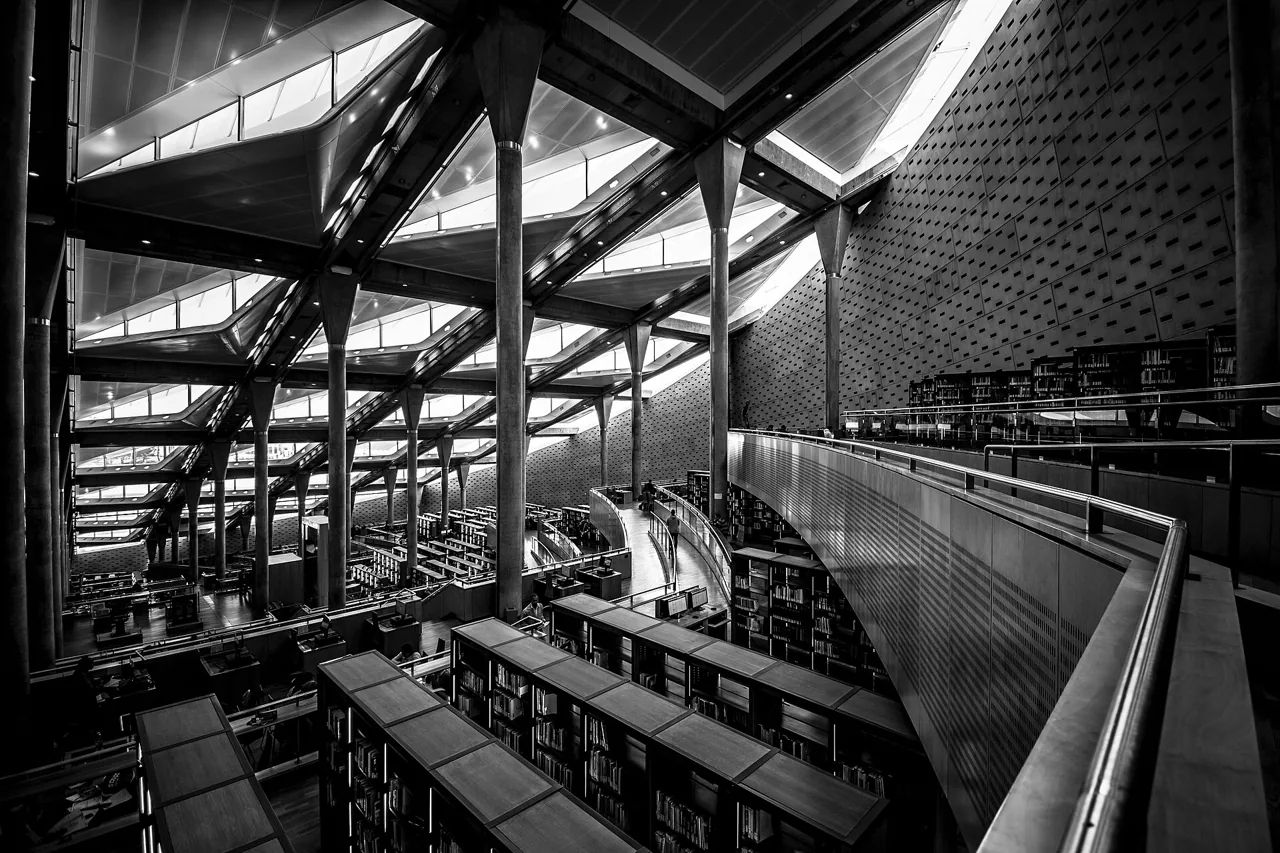 The new Library of Alexandria is the city's signature modern landmark, opened in 2002 as a deliberate revival of the ancient one destroyed in antiquity. The building is a vast tilted disc rising from a reflecting pool, its granite exterior carved with letters and glyphs from scripts all over the world. Inside is the largest reading room on earth, stepped down over eleven cascading levels beneath a slanted glass roof.
You don't need a reader's card to visit. The complex bundles several museums under one roof — an Antiquities Museum in the basement, a Manuscripts Museum with ancient scrolls, and a planetarium in the silver sphere out front. Guided access to the reading hall and permanent exhibitions is included with a standard ticket, roughly 150 EGP for the main library and around 300 EGP for the combined ticket covering the museums (about US$3–6; confirm current rates and the day's hours at the desk, as both shift seasonally). Give it 90 minutes to two hours.
Citadel of Qaitbay
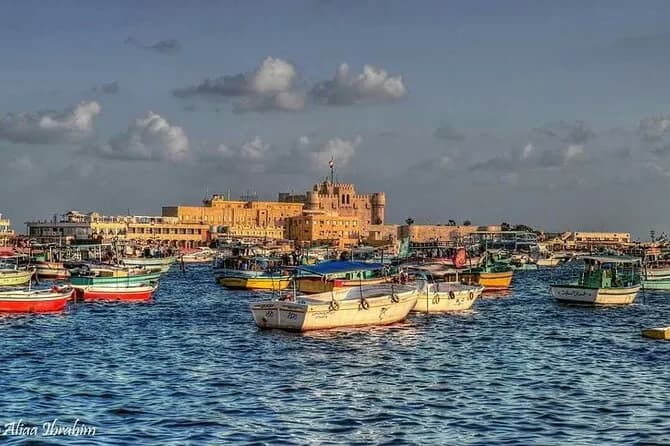
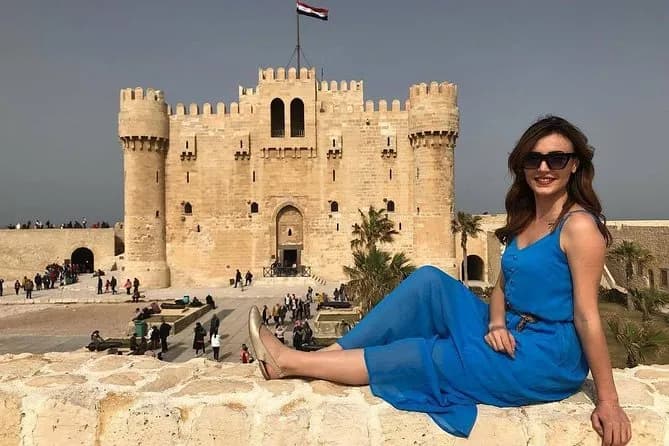
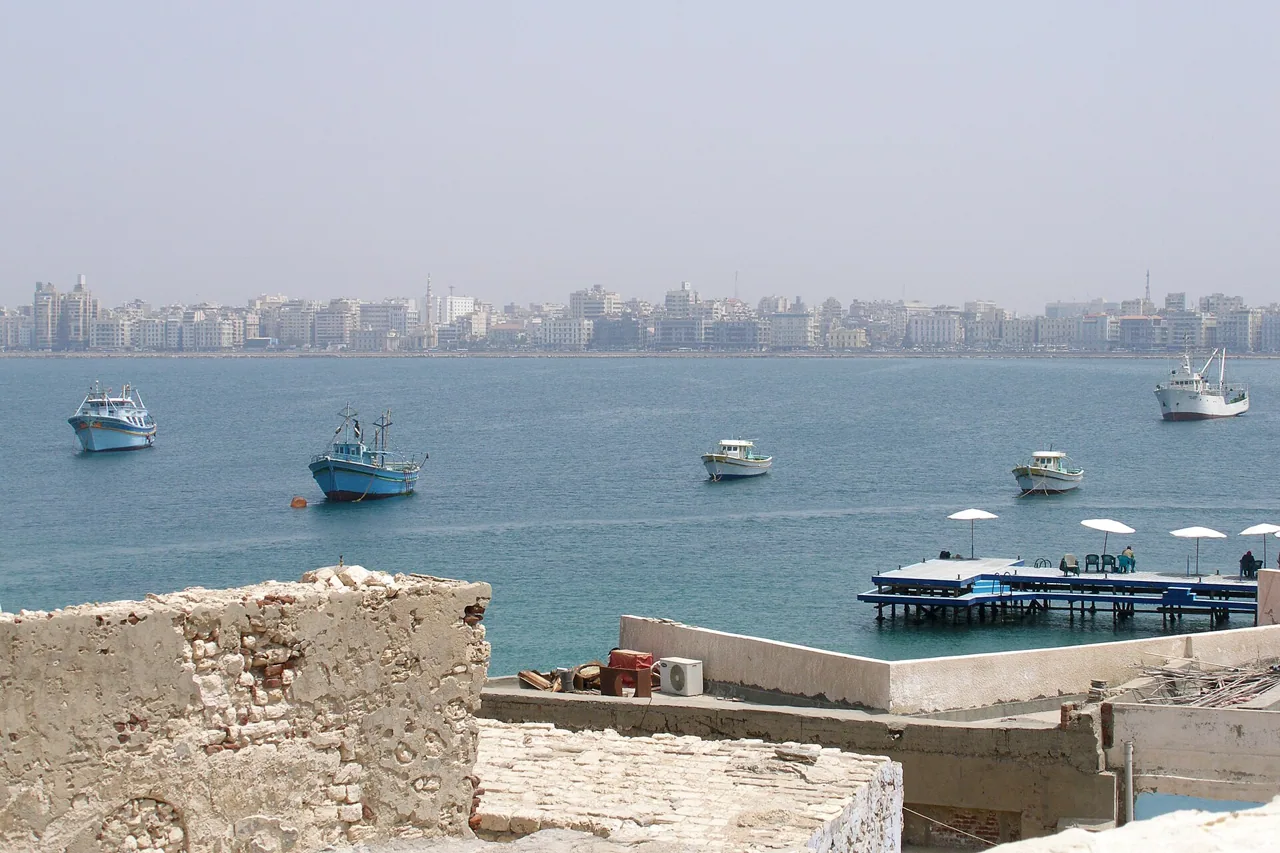 At the tip of the eastern harbour stands a compact 15th-century fort built by Sultan Qaitbay in the 1480s — directly on the foundations, and partly from the fallen stones, of the Pharos of Alexandria. The lighthouse was one of the Seven Wonders of the ancient world, stood around 135 metres tall, and lasted some 1,700 years before earthquakes finally brought it down. Look at the citadel's lower courses and you're looking at recycled lighthouse masonry.
The fort itself is worth the climb for the ramparts and the double-harbour views. It's the best sunset spot in the city, with fishing boats working the water and Alexandrians out for the evening. Two small museums sit nearby — a naval museum and a marine biology collection.
Catacombs of Kom el-Shoqafa
This is Alexandria's strangest and best ancient site: the largest Roman burial complex in Egypt, cut 35 metres straight down into bedrock. A donkey reportedly discovered it in 1900 by falling through the ground. You descend a spiral staircase wrapped around a central shaft — once a kind of dumbwaiter for lowering bodies — into chambers where the decoration fuses Egyptian, Greek, and Roman styles in the same carvings: Anubis in a Roman soldier's armour, bearded serpents guarding the main tomb, pharaonic figures with classical faces. There's room here for more than 300 burials.
Entry runs around 200 EGP for foreign visitors (roughly US$4), open about 9am to 5pm. Bring a small torch — a pen light makes the reliefs far easier to read than a phone screen. The name means "mound of shards," after the broken pottery left by mourners who ate funeral meals here and smashed their dishes.
Pompey's Pillar
Five minutes from the catacombs stands the tallest ancient monument still upright in Alexandria: a single red Aswan-granite column soaring about 25 metres above a limestone ridge, flanked by two sphinxes. Despite the name, it has nothing to do with Pompey — Crusaders misattributed it. It was actually raised around AD 297 in honour of Emperor Diocletian, and it marks the site of the Serapeum, the great temple of Serapis that once held the ancient Library's "daughter" collection. Entry is a few dollars; it pairs naturally with the catacombs, since the two sit a short walk apart.
Roman Amphitheatre (Kom el-Dikka)
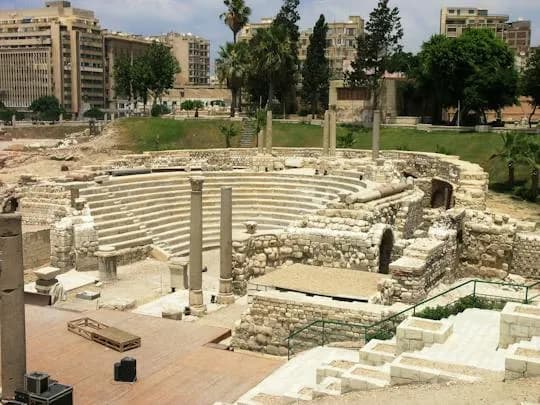
Just north of Misr (Masr) train station lies the only Roman amphitheatre found in Egypt, unearthed in 1960 by a Polish team who were actually hunting for Alexander's lost tomb. Thirteen tiers of white and grey marble seating curve around a small arena; some seats still carry the scratched graffiti of chariot-racing fans from Byzantine days. The surrounding archaeological park, Kom el-Dikka, holds Roman baths, lecture halls, and — the real gem — the Villa of the Birds, whose intricate floor mosaics of birds are protected under a shelter.
Museums, mosques, and the seafront
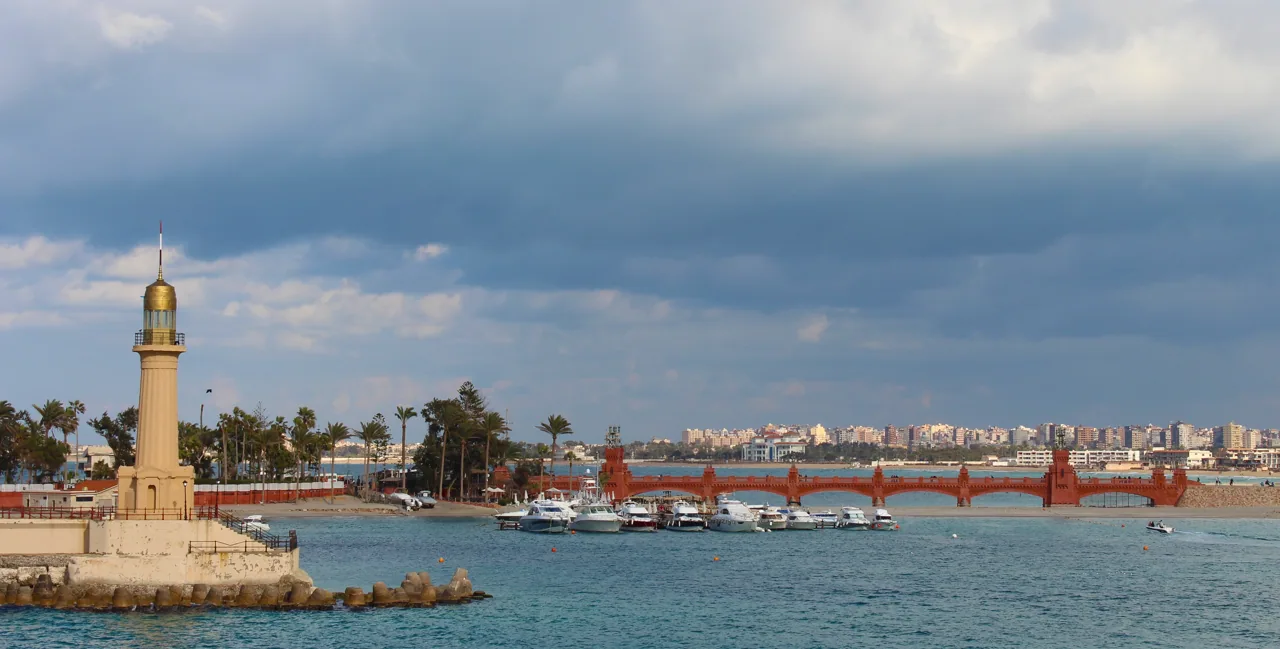 With more time, these fill out the picture of a city that has been Greek, Roman, Coptic, Ottoman, and Belle Époque by turns.
Greco-Roman Museum — Egypt's finest collection of classical-era antiquities, reopened after a long restoration: Roman emperor busts, Ptolemaic sculpture, mummies from the 1st–3rd centuries AD, and a large head of Mark Antony in the garden. If you care about Alexandria's Hellenistic history, start here.
Alexandria National Museum — A restored Italianate villa on Horreya Avenue displaying finds arranged by era, including underwater artefacts recovered from the sunken royal quarters and Cleopatra-era harbour.
Abu al-Abbas al-Mursi Mosque — The city's grandest mosque, a white Andalusian-style building near Qaitbay honouring a 13th-century Sufi sheikh who became the patron saint of Alexandria's sailors and fishermen. Dress modestly; it's active.
Montazah Palace Gardens — At the eastern end of the Corniche, sprawling royal gardens above the sea, with the Salamlek and Haramlik palaces of Egypt's former kings, pine woods, and a private beach. The palace interiors are restricted, but the grounds are made for a slow late-afternoon walk. Small entry fee.
The Corniche and Stanley Bridge — The waterfront promenade curves the whole length of the eastern harbour, and walking or riding a taxi along it is half the point of Alexandria. Stanley Bridge, with its four Moorish turrets arching over a bay, is the most photographed stretch and lights up beautifully at night.
Literary travellers can add Cavafy's House, the flat-turned-museum of the great Greek-Alexandrian poet, and browse the antique shops of the Attarine quarter for old brass, glass, and curios.
Where to eat: Alexandria's famous seafood
Eating fish is what Alexandria does best. The formula at a classic Alexandrian fish house is simple: you pick your catch from a bed of ice or a tank, it's weighed, and it comes back grilled, fried, or baked in a salt crust, with tahini, salads, rice, and warm bread. Try sea bream and sea bass whole, calamari lightly fried, and shrimp from the day's haul.
The Bahari district near Qaitbay and the old fishing village of Abu Qir east of Montazah are the traditional seafood neighbourhoods — Abu Qir especially, where the boats land practically at the restaurant door. Order early and let the group share one large fish rather than a plate each; a whole grilled mullet or bass for the table is the local way to do it. Squid fishermen on the western beaches still sell the day's catch straight from a bucket, and a good restaurant will happily cook what you bring.
For dessert and atmosphere, Alexandria's century-old cafés and patisseries downtown are an institution in their own right — the kind of high-ceilinged, mirror-lined rooms where the city's Greek and Italian past still lingers over a coffee and a slice of gateau. A good seafood dinner for two runs from very modest at a Bahari hole-in-the-wall to a proper spread at a Corniche name. Beyond fish, look for local specialities like fresh calamari, mouloukhiya soup, and stuffed pigeon, and wash it down with karkadeh, the tart hibiscus tea served hot or iced.
Day trip from Cairo: the logistics
Alexandria is one of Egypt's easiest day trips because the train makes it painless.
- By train: Trains leave Cairo (Ramses/Mahatit Masr) station for Alexandria frequently through the day. The fast express and new Talgo services take about 2 to 2.5 hours; slower trains run 3 hours or more. Trains stop at Sidi Gaber (handy for Montazah and the eastern suburbs) a few minutes before the terminus at Misr Station (central, near the amphitheatre). Book a day or two ahead in high season.
- By car or private driver: A similar 2.5–3 hours via the Desert Road, and the most flexible option if you want to hit sites in your own order — a private day tour from Cairo typically bundles the transfer, a guide, and site tickets.
- Timing a day trip: Catch a 7–8am train, and you can comfortably see the Bibliotheca, catacombs, Pompey's Pillar, the amphitheatre, and Qaitbay before a late seafood lunch, then catch a late-afternoon or evening train back. It's tight but doable. To add the Corniche walk, Montazah, and the museums without watching the clock, stay one night.
Alexandria at a glance
| Site | Highlight | Rough entry (foreign adult) | Time needed |
|---|---|---|---|
| Bibliotheca Alexandrina | World's largest reading room + museums | ~150–300 EGP | 1.5–2 hrs |
| Citadel of Qaitbay | Fort on the Pharos lighthouse site | ~US$4–5 | 1 hr |
| Catacombs of Kom el-Shoqafa | Largest Roman tomb in Egypt | ~200 EGP | 45 min |
| Pompey's Pillar | 25m granite column, Serapeum site | ~US$4 | 30 min |
| Roman Amphitheatre | Only one in Egypt + Villa of the Birds | ~100–200 EGP | 45 min |
| Montazah Gardens | Royal seaside park & palaces | small fee | 1 hr+ |
Prices and hours shift — confirm on the day at the gate or via egymonuments.com.
The top-rated experiences travellers book
The best-reviewed Alexandria experiences on This is Egypt right now:
- From Cairo: Private Full-Day Tour of Historical Alexandria — 4.13★ · 1,281 reviews · from 3,985 EGP (~$81).
- From Alexandria: Highlights of Alexandria Full City Tour — 4.93★ · 71 reviews · from 3,238 EGP (~$66).
- From Alexandria: Full-Day Guided Tour of Historical Sights — 4.68★ · 59 reviews · from 3,746 EGP (~$76).
- Private Alexandria Highlights Guided Day Tour — 4.4★ · 80 reviews · from 2,490 EGP (~$51).
- Alexandria Full Day Trip — 4.5★ · 53 reviews · from 2,490 EGP (~$51).
- Guided Tour of Alexandria — 4.05★ · 52 reviews · from 3,547 EGP (~$72).
Browse all things to do in Alexandria to compare dates and prices, or see how activity prices stack up in the Egypt activity price guide.
Best time to visit
Alexandria has its own weather, milder than Cairo's and shaped by the sea. Spring (April–June) and autumn (September–October) are ideal: warm, breezy, and clear. Summer is peak beach season — the city fills with Egyptian holidaymakers and the Corniche is at its liveliest, but the seafront gets crowded. Winter is cool and can be genuinely wet and windy, with Mediterranean storms rolling in; pack a jacket. For sightseeing without the beach-season crush, aim for the shoulder months.
A final note on distances: many of the ancient sites (catacombs, Pompey's Pillar) sit in the western Karmouz district, while the museums, Qaitbay, and Bahari cluster around the eastern harbour, and Montazah is right at the far east end. Group them by area or lean on a taxi or private driver to avoid backtracking across a spread-out city.
For the full logistics of doing this from the capital, see our dedicated Cairo to Alexandria day trip guide, and for a deeper dive into the city itself — neighbourhoods, history, and where to stay — read the Alexandria travel guide. To place Alexandria in the context of the whole country, browse things to do in Egypt.
Want this done for you? This is Egypt builds custom day trips and multi-day itineraries around the places you most want to see — start planning your Alexandria trip and make the coast a highlight of your route.
What's On in Egypt
Events in Alexandria
Information Literacy Program
Bibliotheca Alexandrina · Stanley & Roushdy

Meen Amin
Al Anfoushy Theater · Bahari & the Corniche

Meen Amin - 6 Nov
Al Anfoushy Theater · Bahari & the Corniche
A real team available 24/7 to assist you — free
Seif and the team reply on WhatsApp 24/7 — trip questions, custom plans and booking help.
Ask Seif on WhatsAppCommon questions
Is Alexandria worth visiting from Cairo?
Yes, especially if you want a change of pace from the pyramids and temples. Alexandria is Greco-Roman and Mediterranean rather than pharaonic: catacombs, a Roman amphitheatre, a seafront fort on the ancient lighthouse site, the modern Library, and some of Egypt's best seafood. The train makes it an easy day trip, and an overnight lets you enjoy the Corniche and sunset at Qaitbay without rushing.
How do I get from Cairo to Alexandria?
The train is the simplest option. Fast express and Talgo trains run from Cairo's Ramses (Misr) station to Alexandria in about 2 to 2.5 hours, several times a day; slower trains take 3 hours or more. Trains stop at Sidi Gaber before the central Misr Station. Alternatively, a car or private driver takes 2.5–3 hours via the Desert Road.
What are the top things to do in Alexandria?
The essentials are the Bibliotheca Alexandrina, the Citadel of Qaitbay on the Pharos lighthouse site, the Catacombs of Kom el-Shoqafa, Pompey's Pillar, and the Roman Amphitheatre. Add the Corniche walk past Stanley Bridge, Montazah Palace gardens, the Greco-Roman and National museums, Abu al-Abbas Mosque, and a seafood lunch in Bahari or Abu Qir.
Can you visit Alexandria as a day trip?
Yes. Take an early train (7–8am) and you can see the Bibliotheca, catacombs, Pompey's Pillar, the amphitheatre, and Qaitbay, plus a seafood lunch, before an afternoon or evening return train. It's a full day. To add Montazah, the museums, and a relaxed Corniche stroll, stay one night instead.
Is the ancient Library of Alexandria still there?
No — the ancient Library was lost in antiquity and no trace of the original survives. The modern Bibliotheca Alexandrina, opened in 2002, was built near the seafront to honour it and houses the largest reading room in the world along with several museums and a planetarium.
Where is the Lighthouse of Alexandria now?
The Pharos lighthouse collapsed over centuries of earthquakes and no longer stands. The 15th-century Citadel of Qaitbay was built on its exact site at the harbour mouth, partly using the lighthouse's fallen stone. Some of the sunken remains lie in the harbour and can be seen on dive excursions.
What food is Alexandria famous for?
Seafood, above all. Alexandrian fish houses let you choose your catch and have it grilled, fried, or salt-baked, served with tahini, salads, and bread. Try sea bream, sea bass, fried calamari, and shrimp. The Bahari district and the old fishing village of Abu Qir are the classic places to eat it.
When is the best time to visit Alexandria?
Spring (April–June) and autumn (September–October) are best for sightseeing: warm, breezy, and clear. Summer is peak beach season and lively but crowded. Winter is cooler and can bring Mediterranean storms and rain, so pack a jacket if you visit then.
Book it on This is Egypt
Turn this guide into a trip




Egypt's bestsellers
The experiences travelers book most, across the country



Keep reading
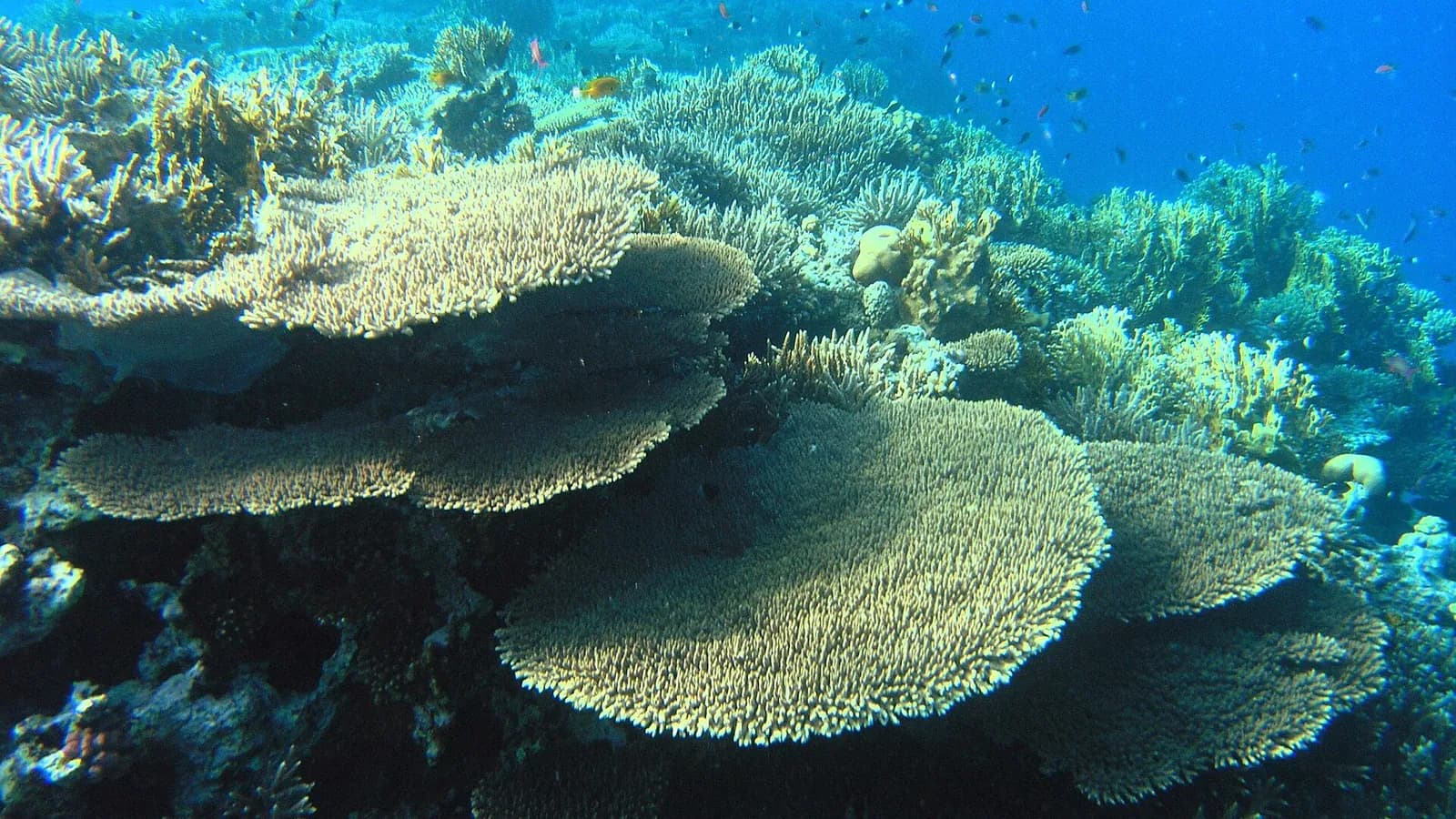
Hurghada Diving (2026): Best Sites, Packages & Prices
Diving in Hurghada — the best reefs (Giftun, Careless Reef, Dolphin House) and Abu Nuhas wrecks, Discover Scuba vs PADI courses, season and water temps, and real 2026 prices.
By TiE Editors7 min read
Hurghada Snorkeling Trips (2026): Best Reefs, Prices & How to Choose
Where to snorkel from Hurghada in 2026 — Orange Bay, Giftun, Mahmya, Utopia and Dolphin House — with boat types, marine life, month-by-month sea temperatures, family tips and real prices from 1,000+ bookable trips.
By TiE Editors7 min read
Egypt Tour Prices by Activity (2026): What Each Type Really Costs
What every type of Egypt experience costs — half day, full day or overnight — as a median and a mid-half range in US dollars, from 12,370 live bookable listings.
By TiE Editors6 min read