Luxor in One Day: East & West Bank Itinerary
See Luxor's best in a single day: West Bank tombs and temples at dawn, then Karnak and a floodlit Luxor Temple after dark. Full route, timing, and ticket tips.
Why Luxor Deserves (At Least) One Full Day
Luxor is the richest concentration of ancient Egyptian monuments anywhere in the world, split neatly across the Nile into two very different halves. The East Bank was the domain of the living — Karnak Temple and Luxor Temple, both still standing where ancient Thebes once bustled with priests, pharaohs, and festival processions. The West Bank was reserved for the dead: the Valley of the Kings, the mortuary temples, and the Colossi of Memnon, all built on the side of the river where the sun sets. Seeing both banks properly in a single day is ambitious but doable if you sequence it correctly. The trick isn't trying to see everything — it's picking the right handful of sites and visiting them in the right order, at the right time of day. For a broader shortlist beyond this itinerary, our guide to things to do in Luxor is worth skimming before you lock in your plan.
The Golden Rule: West Bank First, Before the Heat
If you remember one rule from this itinerary, make it this: start on the West Bank, first thing in the morning. Luxor's heat is relentless for most of the year, regularly climbing past 40°C (104°F) between May and September, and even in the cooler winter months the midday sun turns open-air sites into ovens by 11am. The West Bank sites — the Valley of the Kings especially — have almost no shade, involve walking on exposed limestone paths, and are far more pleasant, and far less crowded, when the gates open around 6am. Tour buses from Nile cruise ships and package hotels tend to arrive from 8:30am onward, so an early start also buys you tombs and temples that are genuinely quiet. By the time you cross back to the East Bank in the early afternoon, the worst of the heat has usually passed its peak, and Karnak and Luxor Temple have shaded colonnades and, later, floodlighting that make late-afternoon and evening visits far more comfortable.
Morning: Valley of the Kings, Hatshepsut's Temple & the Colossi of Memnon
Begin at the Valley of the Kings, ideally arriving at or just after opening. This is where New Kingdom pharaohs — including Tutankhamun, Ramesses II, and Seti I — were buried in tombs cut deep into the limestone hills, their walls covered in vividly painted scenes from the Book of the Dead and the Book of Gates. Our dedicated Valley of the Kings guide breaks down which tombs are open on any given day, since they rotate for conservation, and what to expect inside each one; read it before you go so you're not choosing blind at the ticket window.
From there, it's a short drive to Deir el-Bahari and the mortuary Temple of Hatshepsut, Egypt's most successful female pharaoh. Her temple rises in three colonnaded terraces built directly into the cliff face, a design so different from typical Egyptian temples that it still looks strikingly modern. Plan roughly 45 minutes to an hour here, more if you want to study the relief carvings depicting her divine birth and the famous trading expedition to the Land of Punt.
Round out the West Bank morning with a quick stop at the Colossi of Memnon, two 18-metre stone statues of Amenhotep III that once guarded the entrance to his now-vanished mortuary temple. You don't need more than 10-15 minutes here; it's a drive-by photo stop rather than a full site, but it sits directly on the route back toward the ferry crossing and costs nothing to visit.
Optional Add-On: Sunrise Hot Air Balloon Over the West Bank
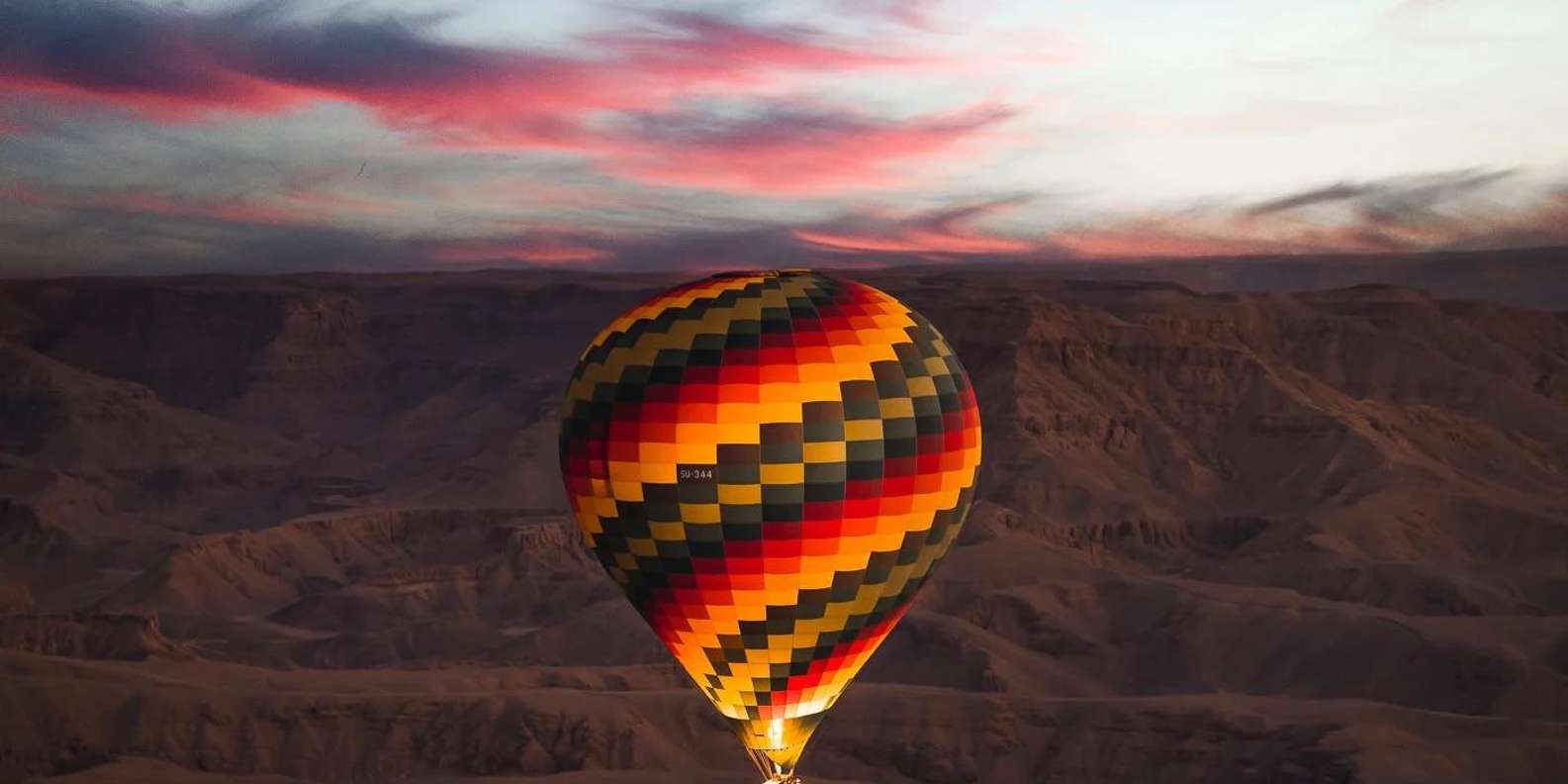
If you're willing to wake up before dawn, genuinely before dawn, with pickup often around 4:30-5am, a hot air balloon flight over the Valley of the Kings and the West Bank floodplain is the single most memorable way to start a Luxor day. Balloons lift off just before sunrise and drift for 45 minutes to an hour over the temples, sugarcane fields, and burial sites you're about to explore on foot, giving you an orientation view of the whole necropolis before you're standing in it. It does compress your morning schedule, since you'll land, transfer, and likely go straight into the Valley of the Kings, and it's weather-dependent, so build in flexibility. Full logistics, pricing, and operator advice are in our Luxor hot air balloon guide; book it the night before through your hotel or a reputable operator, since flights sell out and get cancelled for wind more often than travelers expect.
Midday: Crossing the Nile and Lunch
By late morning, head back toward the Nile to cross to the East Bank, either by the road bridge south of town or, more scenically, by a short local ferry from the West Bank dock near the ticket offices. This is a natural lunch window. Riverside restaurants along the Luxor Corniche serve grilled fish, koshary, and mezze with Nile views, and a sit-down meal here also lets you wait out the hottest hour or two of early afternoon before resuming sightseeing. If your itinerary is tight, even a 45-minute lunch break makes a real difference to how you'll feel walking around Karnak a couple of hours later.
Afternoon & Evening: Karnak Temple and Luxor Temple by Night
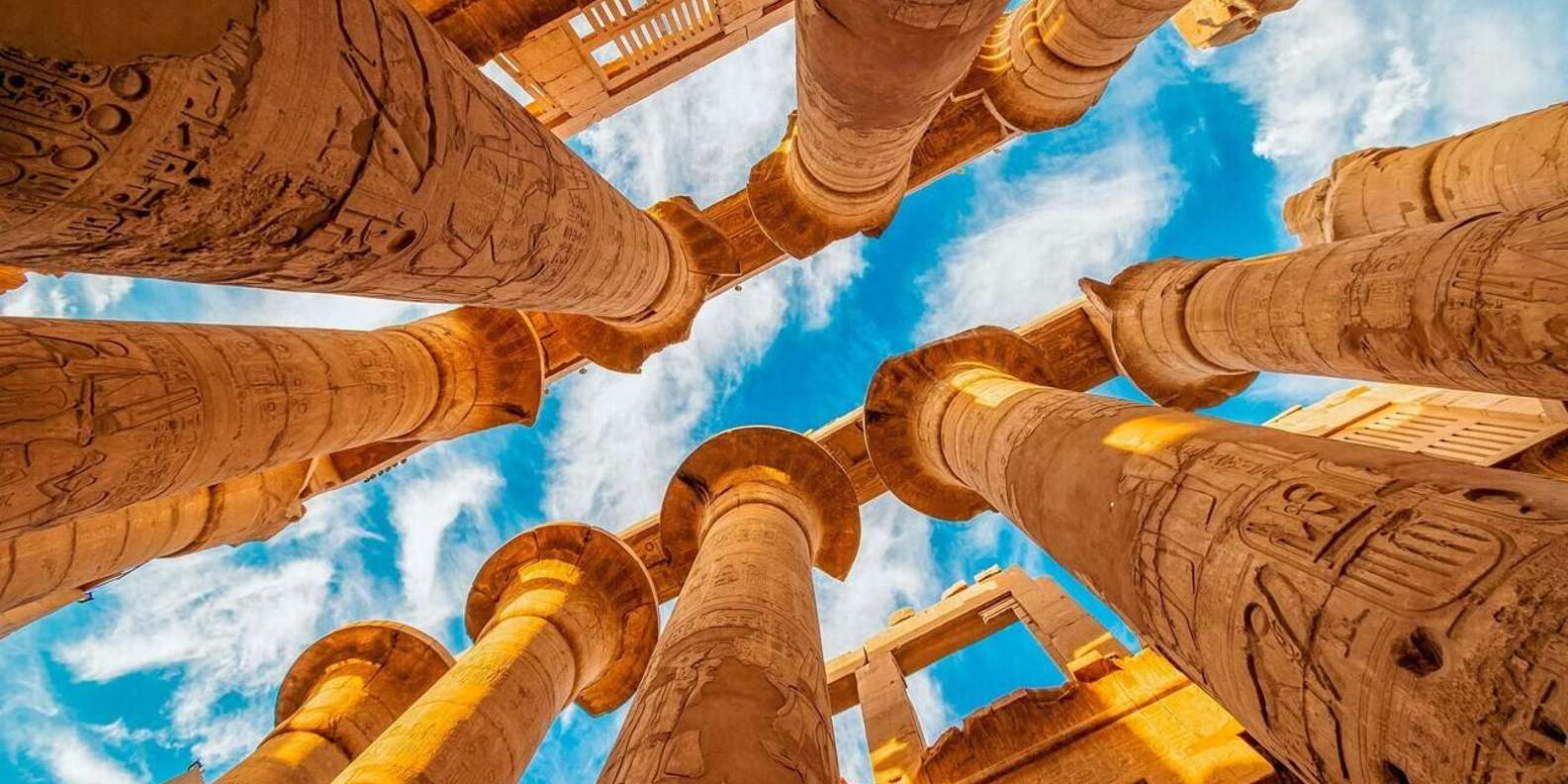
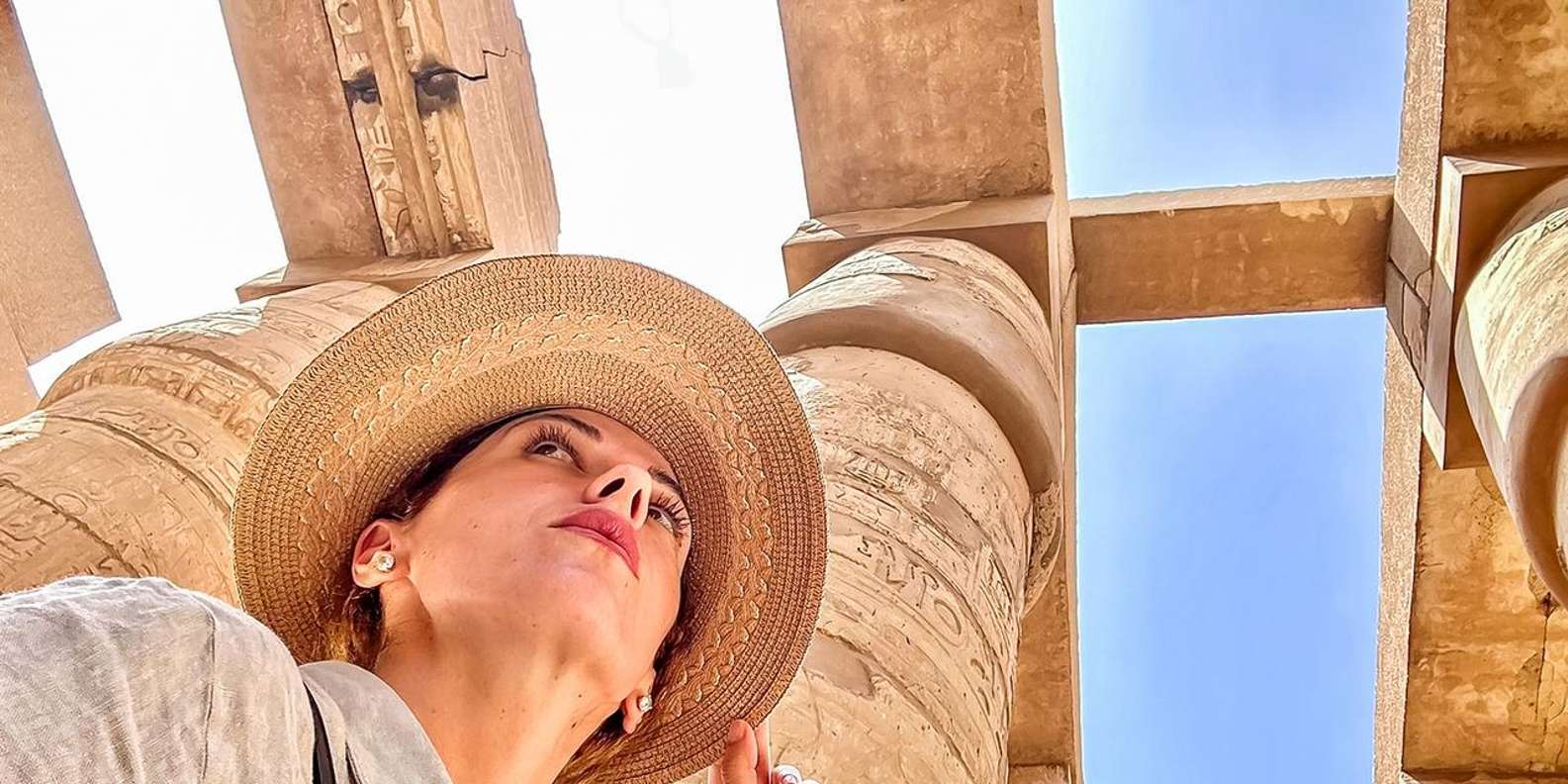
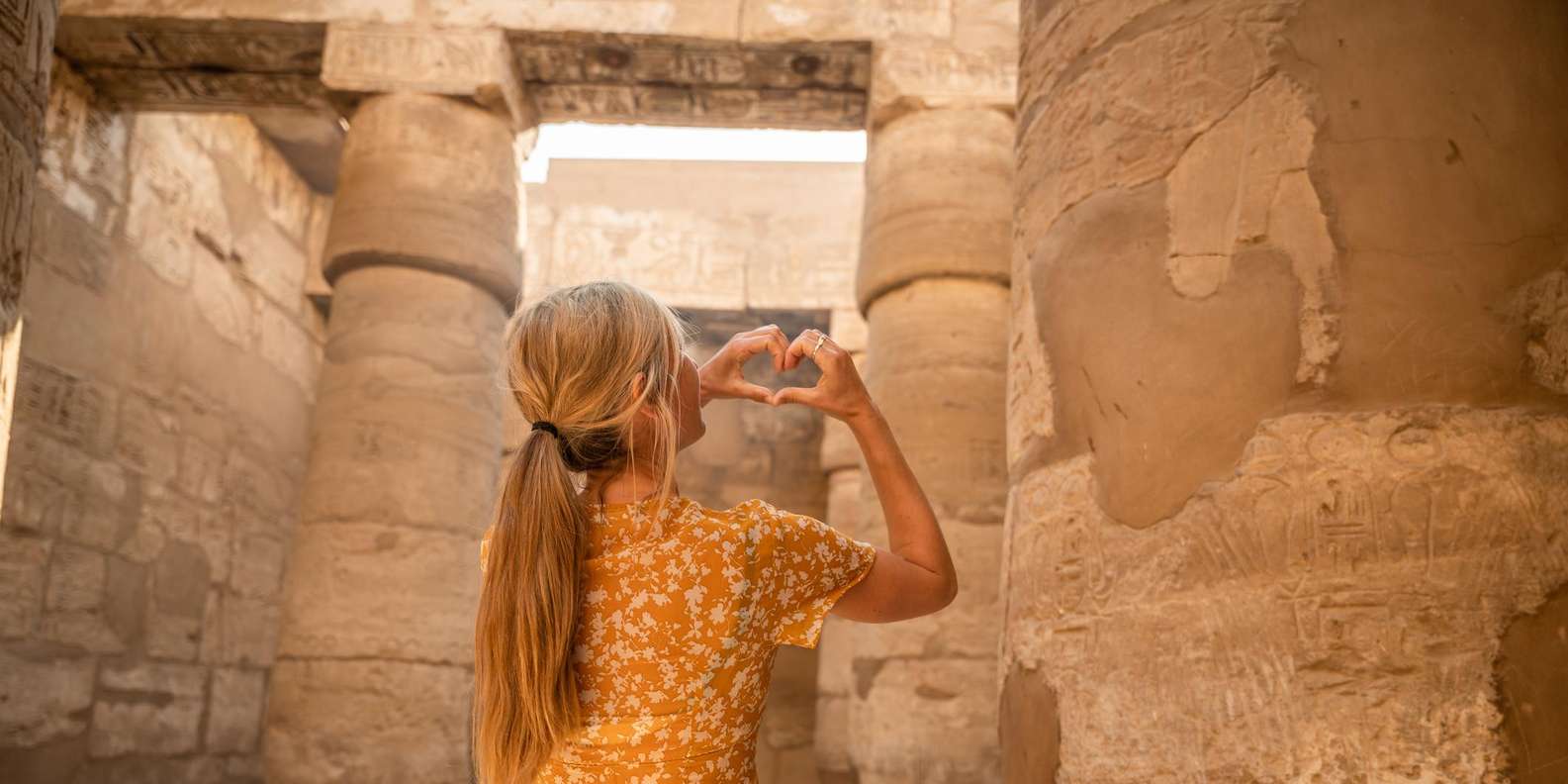
Karnak Temple is the largest religious complex ever built, and it deserves the bulk of your remaining afternoon; budget at least two hours. The processional avenue leads into the Great Hypostyle Hall, a forest of 134 massive columns that remains one of the most awe-inspiring spaces in ancient architecture, followed by obelisks, sacred lakes, and temple after temple added by successive pharaohs over nearly 2,000 years. Our Karnak Temple guide covers the layout in detail and flags the sections most visitors miss when they only walk the main axis.
Save Luxor Temple for last, timed for sunset or just after. Unlike most Egyptian monuments, Luxor Temple is dramatically floodlit at night, and walking its colonnades under artificial light, with the Avenue of Sphinxes connecting it toward Karnak now partly walkable, is a completely different experience from a daytime visit, and many travelers say a better one. It's compact enough to see in under an hour, making it a natural, low-effort finish to a long day.
Getting Around: Private Car and Guide vs Taxi
For a one-day, both-banks itinerary, a private car with driver and a licensed Egyptologist guide is worth the extra cost. Sites are spread out enough that taxi-hopping eats into your limited time, and a guide adds real context to what would otherwise be a lot of unlabeled stone. Most hotels and reputable local operators can arrange this for a full day at a fixed price, and it also solves ticket-buying and West Bank crossing logistics without you having to negotiate each leg separately. Budget travelers can piece together a similar route with local taxis and a shared West Bank ferry, but expect more haggling and a slower pace. Either way, agree on the full day's route and price before you start.
Is One Day Really Enough for Luxor?
Honestly, no, not if you want to linger. Luxor comfortably supports two to three days, and travelers arriving by Nile cruise often get exactly that, with the ship docked in town overnight. But if you're flying in from Cairo, Hurghada, or another Red Sea resort for a single day, or stopping en route to Aswan by train, this itinerary hits the essential sites on both banks without feeling rushed, provided you start early and keep moving. Treat it as a highlights reel rather than an exhaustive tour, and consider it a strong argument for coming back.

Parla con una persona reale — gratis
Seif e il team rispondono su WhatsApp 24/7 — domande di viaggio, piani su misura e aiuto per la prenotazione.
Chiedi a Seif su WhatsAppDomande frequenti
Do I need a guide for the Valley of the Kings?
You don't need one to enter, but the tombs have no on-site information panels explaining the scenes on the walls, so a licensed Egyptologist guide adds enormous value. If you're on a budget, a good guidebook or offline audio guide is a reasonable substitute.
What's included in the Valley of the Kings general ticket versus Tutankhamun's or Seti I's tomb?
The standard ticket covers entry to three tombs from a rotating set open that day, chosen for conservation reasons. Tutankhamun's tomb and Seti I's tomb are almost always excluded and require separate, additional tickets purchased at the main gate.
Is the sunrise hot air balloon safe and worth the early wake-up?
Balloon flights in Luxor are a well-established, heavily regulated tourist activity with a strong safety record when booked through licensed operators. The 4:30am pickup is genuinely early, but most travelers who do it call the aerial view of the West Bank at sunrise a trip highlight.
How do I get from the West Bank to the East Bank?
Private drivers use the road bridge a short distance south of town, which is the fastest option. A local passenger ferry also crosses the Nile near the West Bank ticket offices and is a scenic, cheap alternative if you're travelling independently.
Can I visit Luxor in one day from Cairo, Hurghada, or on a Nile cruise stop?
Yes. Domestic flights from Cairo and day-trip transfers from Hurghada or Marsa Alam are common ways to do a single-day Luxor visit, and this same itinerary works well as a shore excursion for cruise passengers whose ship is only docked for one day.
What should I wear and bring for a full day of sightseeing in Luxor?
Lightweight, breathable clothing that covers shoulders and knees, closed comfortable walking shoes, a hat, sunglasses, and high-SPF sunscreen are essential. Carry more water than you think you'll need, since the West Bank sites have limited shade and few vendors.
Is Luxor Temple worth visiting at night if I've already seen Karnak during the day?
Yes, and it's worth building your schedule around this. Luxor Temple's floodlighting at night creates a strikingly different atmosphere from daytime visits, with dramatic shadows across the columns and statues, and evening visits are also noticeably cooler and less crowded.
Prenotala su This is Egypt
Trasforma questa guida in un viaggio







I bestseller dell'Egitto
Le esperienze più prenotate in tutto il paese





Continua a leggere
Immersioni a Hurghada (2026): migliori siti, pacchetti e prezzi
Immersioni a Hurghada – i reef più belli (Giftun, Careless Reef, Dolphin House), battesimi vs corsi PADI, prezzi reali 2026 da oltre 160 escursioni e le giornate di immersione più apprezzate.
By TiE Editors7 min read
Escursioni di snorkeling a Hurghada (2026): migliori barriere, prezzi e come scegliere
Le migliori barriere e isole per lo snorkeling da Hurghada – Orange Bay, Giftun, Dolphin House – con prezzi reali 2026 di oltre 880 escursioni prenotabili, più la stagione, la vita marina e i consigli che ti servono.
By TiE Editors7 min read
Prezzi dei tour in Egitto per attività (2026): quanto costa davvero ogni tipo
Quanto costa davvero ogni tipo di esperienza in Egitto – dal giro in cammello da 1.700 EGP alla crociera sul Nilo da 48.500 EGP – sulla base di 29.710 tour realmente prenotabili su sette piattaforme.
By TiE Editors6 min read