Aswan in één dag: de perfecte dagroute
Philae-tempel, de Hoge Dam, de Onvoltooide Obelisk, een Nubisch dorp en een felucca-tocht bij zonsondergang — zo zie je het beste van Aswan op één goed getimede dag.
Van alle stops op een Nijlreis is Aswan degene waar reizigers het hardst voor vallen. De stad is rustiger dan Caïro, groener dan Luxor, en helemaal gebouwd rond een rivier die zo breed en kalm is dat de hele dag zich vanzelf rond het water organiseert. Het goede nieuws voor wie weinig tijd heeft: de belangrijkste bezienswaardigheden van Aswan liggen dicht bij elkaar — een tempeleiland, een dam, een steengroeve en een cluster riviereilanden — waardoor één goed geplande dag veel afdekt zonder ooit gehaast aan te voelen.
Waarom Aswan een eigen dag verdient
Veel reizigers behandelen Aswan als een korte tussenstop tussen Luxor en Aboe Simbel, maar dat doet een stad met een heel eigen karakter tekort. Aswan ligt waar Egypte Nubië ontmoet, en die grensidentiteit is overal zichtbaar: in het graniet waarmee de helft van de monumenten van het oude Egypte werd gebouwd, in de Nubische dorpen die langs de oevers zijn geschilderd in blauw, geel en roze, en in een levensritme dat wordt bepaald door felucca's die langs Elephantine Island drijven in plaats van door verkeer. Eén goed opgebouwde dag hier laat je alles aanraken — oude tempels, ingenieursgeschiedenis en levende Nubische cultuur — voordat de zon boven het water ondergaat. Voor een breder overzicht van de mogelijkheden buiten deze route is de gids dingen om te doen in Aswan een handige aanvulling.
Naar Aswan reizen: cruise, trein of vlucht
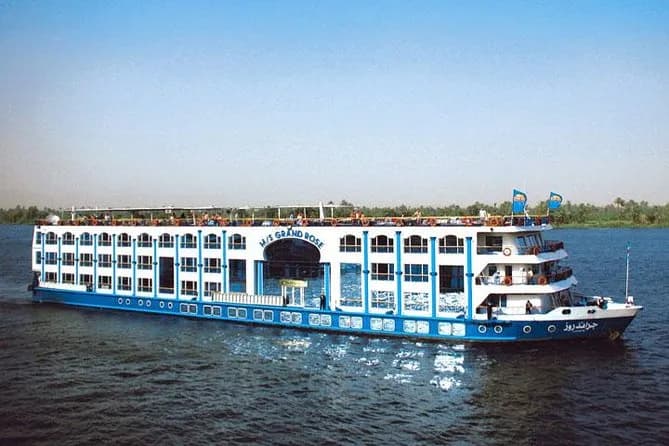
Hoe je aankomt, bepaalt hoe je dag verloopt. Passagiers van een Nijlcruise hebben de bezichtiging van Aswan meestal al ingepland in het scheepsschema en meren aan in de buurt van de Corniche, op loopafstand van felucca's en taxi's. Reizigers die zelfstandig reizen hebben twee hoofdopties: een nachttrein met slaapcoupé vanuit Caïro (ruwweg 12 tot 14 uur, aankomst vroeg in de ochtend — ideaal om meteen te beginnen met bezichtigen) of een korte vlucht van een uur vanuit Caïro of Luxor, de snelste manier om aan te komen met een nog volledig beschikbare dag voor de boeg. Hoe je ook aankomt, zorg dat je rond 8:00 of 8:30 uur klaar bent om te vertrekken, want de hitte in Aswan loopt snel op en de bootgebonden bezienswaardigheden zijn veel aangenamer in het koelere ochtendlicht.
Ochtend: de Philae-tempel, het eiland van Isis
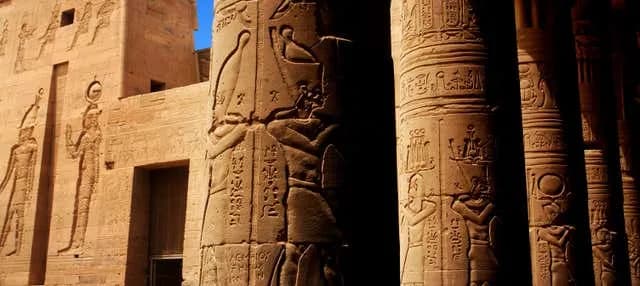
Begin de dag bij de Philae-tempel, gewijd aan de godin Isis en een van de sfeervolste tempelcomplexen van Egypte. De tempel stond oorspronkelijk op een heel ander eiland; toen de Aswan-Hoge-Dam dreigde het permanent onder water te zetten, leidde UNESCO in de jaren zeventig een opmerkelijke reddingsoperatie waarbij de tempel steen voor steen werd afgebroken en op hoger gelegen terrein op Agilkia Island weer werd opgebouwd. Je kunt niet naar Philae rijden — bezoekers bereiken het eiland met een korte, vijf minuten durende motorboottocht vanaf de aanlegsteiger bij Shellal, wat deel uitmaakt van de charme. Aankomen over water, met de zuilenrij van de ingangspyloon die voor je oprijst, zet meteen de toon voor de hele dag. Reken op ongeveer 90 minuten tot twee uur hier, inclusief de boottocht, om de Hypostyle Hall, de Hathor-tempel en de prachtig bewaarde reliëfs te bekijken. Voor de volledige geschiedenis en plattegrond, zie de speciale gids over de Philae-tempel.
Late ochtend: de Aswan-Hoge-Dam en de Onvoltooide Obelisk
Vanaf Philae is het een korte rit naar de Aswan-Hoge-Dam, het immense ingenieursproject uit de jaren zestig dat het Nassermeer creëerde en de relatie van modern Egypte met de Nijl herschikte door de jaarlijkse overstromingen te beheersen en een groot deel van de elektriciteit van het land op te wekken. Je hebt hier niet lang nodig — 20 tot 30 minuten bij het uitzichtpunt is genoeg om de schaal van het stuwmeer en de dam zelf in je op te nemen, en het is de moeite waard puur voor de context, aangezien zoveel van Aswans landschap en geschiedenis door dit ene bouwwerk is gevormd.
Ga vervolgens naar de Noordelijke Steengroeven om de Onvoltooide Obelisk te zien, die nog altijd half in het gesteente vastzit waar oude arbeiders hem achterlieten nadat er een scheur in het graniet ontstond. Was hij voltooid, dan zou het het grootste stuk steen zijn geweest dat ooit door de oude Egyptenaren is opgericht, ruwweg 42 meter lang en meer dan 1.000 ton zwaar. Als je eromheen loopt, zie je nog de gereedschapssporen en kanalen die arbeiders uithakten om hem uit de rots te bevrijden — een zeldzame, tastbare blik op oude steengroeftechnieken in plaats van een voltooid monument. Reken hier op ongeveer 45 minuten.
Middag: boottocht op de Nijl naar Elephantine Island en de Botanische Tuin
Na de lunch — veel bezoekers eten op een boot of in een restaurant aan de Corniche bij de rivier — breng je de middag door op het water. Huur een motorboot of felucca om rond Elephantine Island te varen, het grootste eiland van Aswan en de plek van een oude nederzetting en een Nilometer, voordat je verdergaat naar Kitchener's Island, thuisbasis van de weelderige Botanische Tuin van Aswan. De tuin, begin twintigste eeuw aangeplant met soorten uit de hele wereld, vormt een schaduwrijk, geurig contrast met het woestijnlandschap van de rest van de dag, en is een goede plek om een halfuur te vertragen tussen palmbomen en exotische planten.
Dit stuk van de Nijl, bezaaid met granieten rotsblokken en eilanden, is misschien wel het meest fotogenieke decor van Aswan, en het is de moeite waard om het per boot te ervaren in plaats van over land — de rivier is écht de hoofdrolspeler van een dag in Aswan. Wil je vooraf weten hoe het zit met etiquette, prijzen en het verschil tussen felucca-types, dan biedt de gids over felucca-tochten een goed overzicht van wat je kunt verwachten.
Zonsondergang: Nubisch dorp en een felucca-tocht
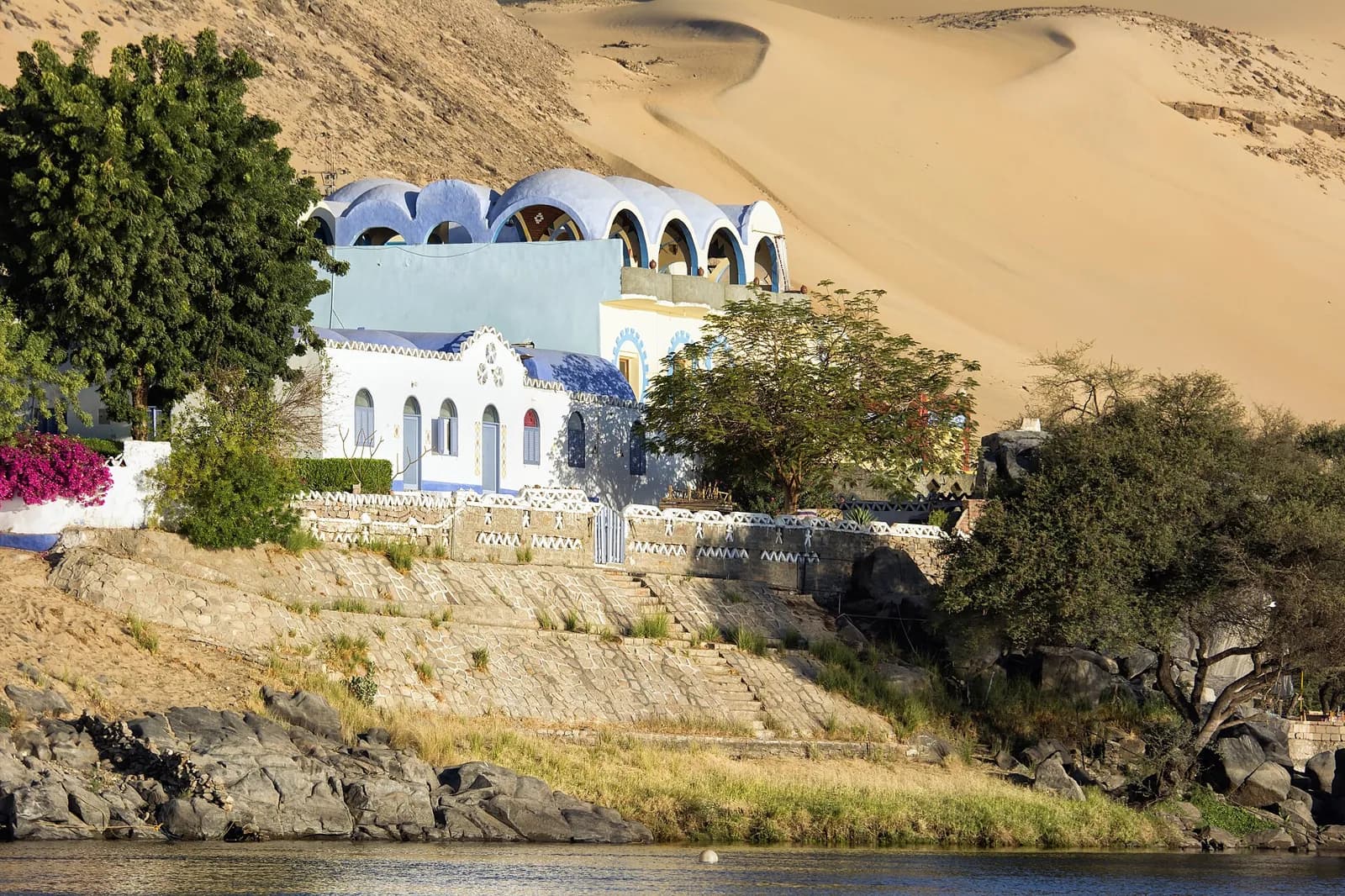
Geen dag in Aswan is compleet zonder een bezoek aan een Nubisch dorp, meestal op Elephantine Island of aan de overkant van de rivier bij Gharb Seheyl. Deze dorpen staan bekend om huizen die zijn geschilderd in felle blauwe, gele en roze tinten, binnenplaatsen versierd met handgeschilderde motieven, en een cultuur die duidelijk verschilt van de rest van Egypte, met een eigen taal en tradities geworteld in het oude Nubië. Bij veel bezoeken hoort een huisbezoek voor thee of een eenvoudige maaltijd, soms met de kans om een als lokale traditie gehouden huiskrokodil te zien, en het rondsnuffelen tussen handgemaakte ambachten en manden.
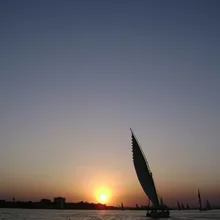
Plan dit voor de late namiddag, zodat het natuurlijk overloopt in de zonsondergang, wanneer Aswan op zijn best is. Stap aan boord van een felucca — een traditionele houten zeilboot — en drijf over de Nijl terwijl het licht goud en dan roze kleurt boven de granieten heuvels en palmbossen. In tegenstelling tot een motorboot vaart een felucca op wind en stroming, dus het tempo ligt bewust laag; dit is minder een bezienswaardigheid dan een manier om de dag af te sluiten. Een uur op het water bij zonsondergang is de klassieke manier om een dag in Aswan af te sluiten, en de meeste aanbieders stemmen hun routes hier specifiek op af.
Praktische tips voor je ene dag in Aswan
Begin vroeg om de hitte voor te zijn, vooral tussen mei en september, wanneer de middagtemperaturen regelmatig boven de 40 °C uitkomen. Draag comfortabele schoenen voor de ongelijke groevegrond bij de Onvoltooide Obelisk, en neem een hoed, zonnebrandcrème en een herbruikbare waterfles mee, aangezien een groot deel van de dag buiten wordt doorgebracht. Onderhandel over bootprijzen vóór vertrek — motorboten naar Philae hebben vaste tarieven, maar felucca's en tochtjes naar Nubische dorpen zijn meestal onderhandelbaar, en privé boeken of via een erkende gids voorkomt verrassingen. Een privéchauffeur of een halve-dag rondleiding is de efficiëntste manier om Philae, de Hoge Dam en de steengroeven met elkaar te verbinden, aangezien geen van de drie te voet vanaf de andere te bereiken is, terwijl de riviermiddag het best rechtstreeks met een bootkapitein aan de Corniche of via je hotel of cruisemaatschappij wordt geregeld.
De extra dag waard: Aboe Simbel
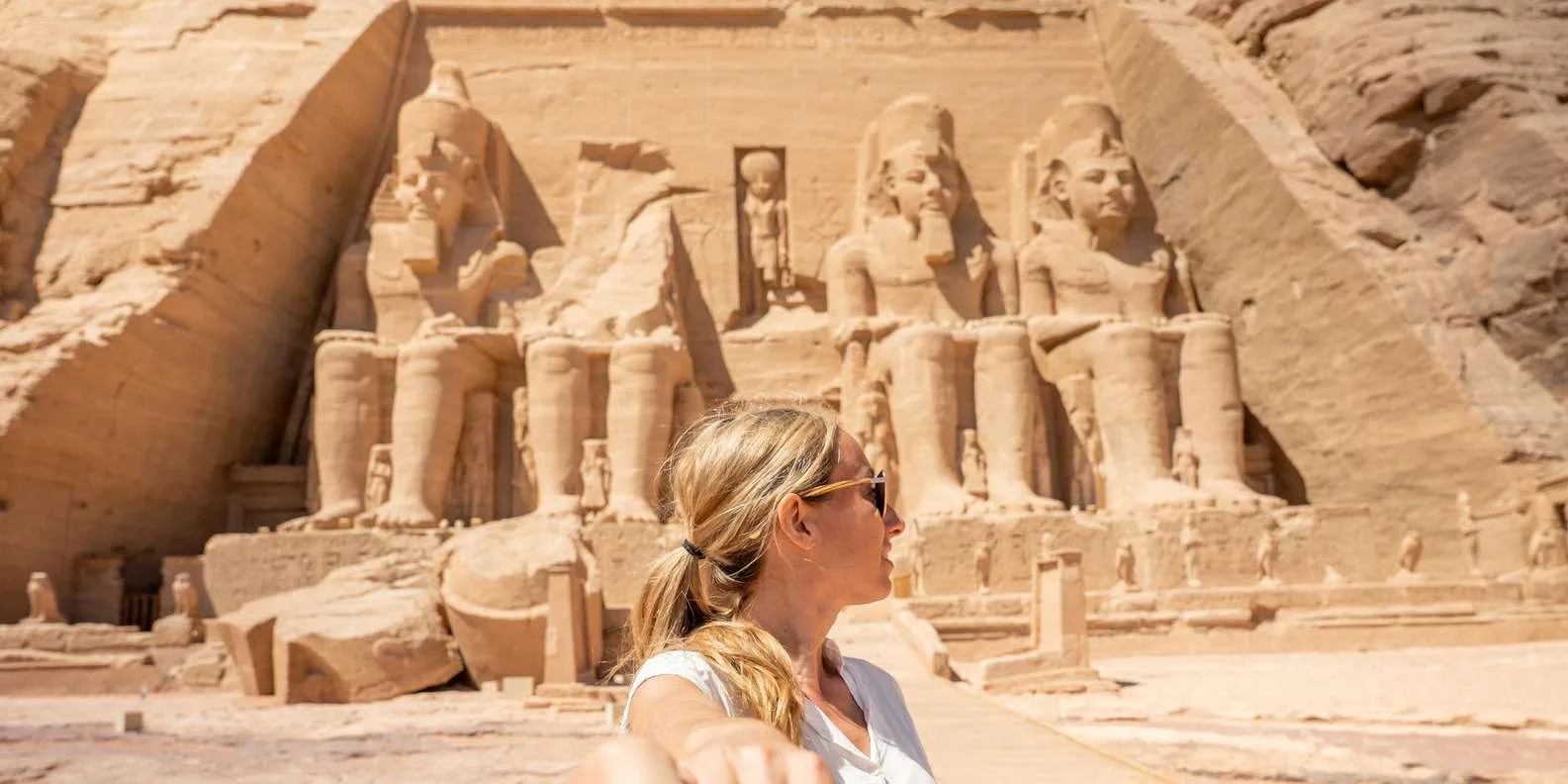
De ene grote bezienswaardigheid in de regio Aswan die deze route bewust weglaat, is Aboe Simbel, de kolossale in de rots uitgehouwen tempels van Ramses II bij de Soedanese grens. Het is een buitengewoon gezicht, maar het is echt een aparte onderneming: de rit duurt drie tot vier uur enkele reis, of ongeveer 40 minuten per vliegtuig, waardoor het slecht past bij één enkele dag in Aswan die ook Philae, de Hoge Dam en een middag op de Nijl omvat. Als je planning een tweede dag in Aswan toelaat, voeg Aboe Simbel dan toe als een vroege ochtendexcursie — de meeste bezoekers vertrekken vóór zonsopgang om aan te komen wanneer de tempels openen, en zijn vroeg in de middag weer terug. Volledige logistiek, ticketgegevens en het verhaal achter de eigen UNESCO-verplaatsing van de tempels vind je in de gids over Aboe Simbel.
Goed uitgevoerd, beweegt één dag in Aswan van oude tempel naar moderne dam, van oude steengroeve naar levend Nubisch dorp, alles met elkaar verweven door de Nijl zelf. Het is een compacte route, maar hij vangt bijna alles wat dit deel van Opper-Egypte zo anders maakt dan elke andere plek aan de rivier.
Praat met een echt persoon — gratis
Seif en het team reageren 24/7 via WhatsApp — reisvragen, reizen op maat en hulp bij het boeken.
Vraag het Seif via WhatsAppVeelgestelde vragen
Is één dag echt genoeg om Aswan te zien?
Ja, voor de belangrijkste bezienswaardigheden. Eén goed georganiseerde dag dekt gemakkelijk de Philae-tempel, de Aswan-Hoge-Dam, de Onvoltooide Obelisk, een boottocht op de Nijl rond Elephantine Island en de Botanische Tuin, een bezoek aan een Nubisch dorp en een felucca-tocht bij zonsondergang. Wat één dag niet omvat, is Aboe Simbel, dat vanwege de reistijd een eigen halve dag nodig heeft.
Kan ik Aboe Simbel toevoegen aan dezelfde dag als al het andere?
Dat wordt afgeraden. Aboe Simbel ligt drie tot vier uur rijden enkele reis (of ongeveer 40 minuten per vliegtuig), en het combineren met Philae, de Hoge Dam en een middag op de Nijl zou een uitputtende dag van ruim 14 uur betekenen, met weinig tijd om elke plek echt te genieten. Wil je Aboe Simbel zien, plan dan een tweede dag in Aswan en vertrek vroeg, vóór of na je hoofddag met de Aswan-route.
Wat is de beste tijd van het jaar voor een dag in Aswan?
Van oktober tot en met april heb je de aangenaamste temperaturen voor een volledige dag buiten, vooral bij de steengroeve van de Onvoltooide Obelisk, die weinig schaduw biedt. Van mei tot en met september wordt het erg heet, vaak boven de 40 °C, dus een vroege start en een schaduwrijke middagpauze zijn essentieel als je in de zomer op bezoek gaat.
Moet ik een felucca of een motorboot nemen rond Aswan?
Beide hebben hun plek op dezelfde dag. Motorboten zijn sneller en beter geschikt voor tijdgevoelige oversteken, zoals de tocht naar de Philae-tempel of het afleggen van meer afstand rond Elephantine Island en de Botanische Tuin. Een felucca, aangedreven door zeil in plaats van motor, kun je het beste bewaren voor de rustige tocht bij zonsondergang aan het eind van de dag, wanneer het langzamere tempo juist het hele punt is.
Is een bezoek aan de Aswan-Hoge-Dam eigenlijk de moeite waard?
Een korte stop is de moeite waard, een lange niet. Bij de dam zelf draait het meer om schaal en historische betekenis dan om visueel spektakel — hij creëerde het Nassermeer en herschikte de overstromingsbeheersing en elektriciteitsvoorziening van Egypte. Twintig tot dertig minuten bij het uitzichtpunt is genoeg om de omvang en context te waarderen voordat je verdergaat naar de Onvoltooide Obelisk.
Wat kan ik verwachten van een bezoek aan een Nubisch dorp?
Verwacht felgekleurde huizen in blauw, geel en roze, smalle steegjes, handgemaakte ambachten te koop, en vaak een uitnodiging in een gezinswoning voor thee of een eenvoudige maaltijd. Sommige dorpen houden een kleine krokodil als traditionele attractie. Het is net zozeer een culturele stop als een toeristische, en past goed vlak vóór zonsondergang in het schema.
Hoe kom ik rond in Aswan voor een dagroute?
Een combinatie van auto en boot is gebruikelijk. Een privéchauffeur of halve-dagtour dekt de aanlegsteiger van Philae, de Hoge Dam en de granieten steengroeven, aangezien deze niet te voet met elkaar verbonden zijn. De rivierbezienswaardigheden in de middag en avond — Elephantine Island, de Botanische Tuin, het Nubische dorp en de felucca bij zonsondergang — worden rechtstreeks geregeld met een bootkapitein aan de Corniche of via je hotel of cruisemaatschappij.
Boek het op This is Egypt
Maak van deze gids een echte reis





Best verkocht in Egypte
De meest geboekte ervaringen door het hele land



Lees verder
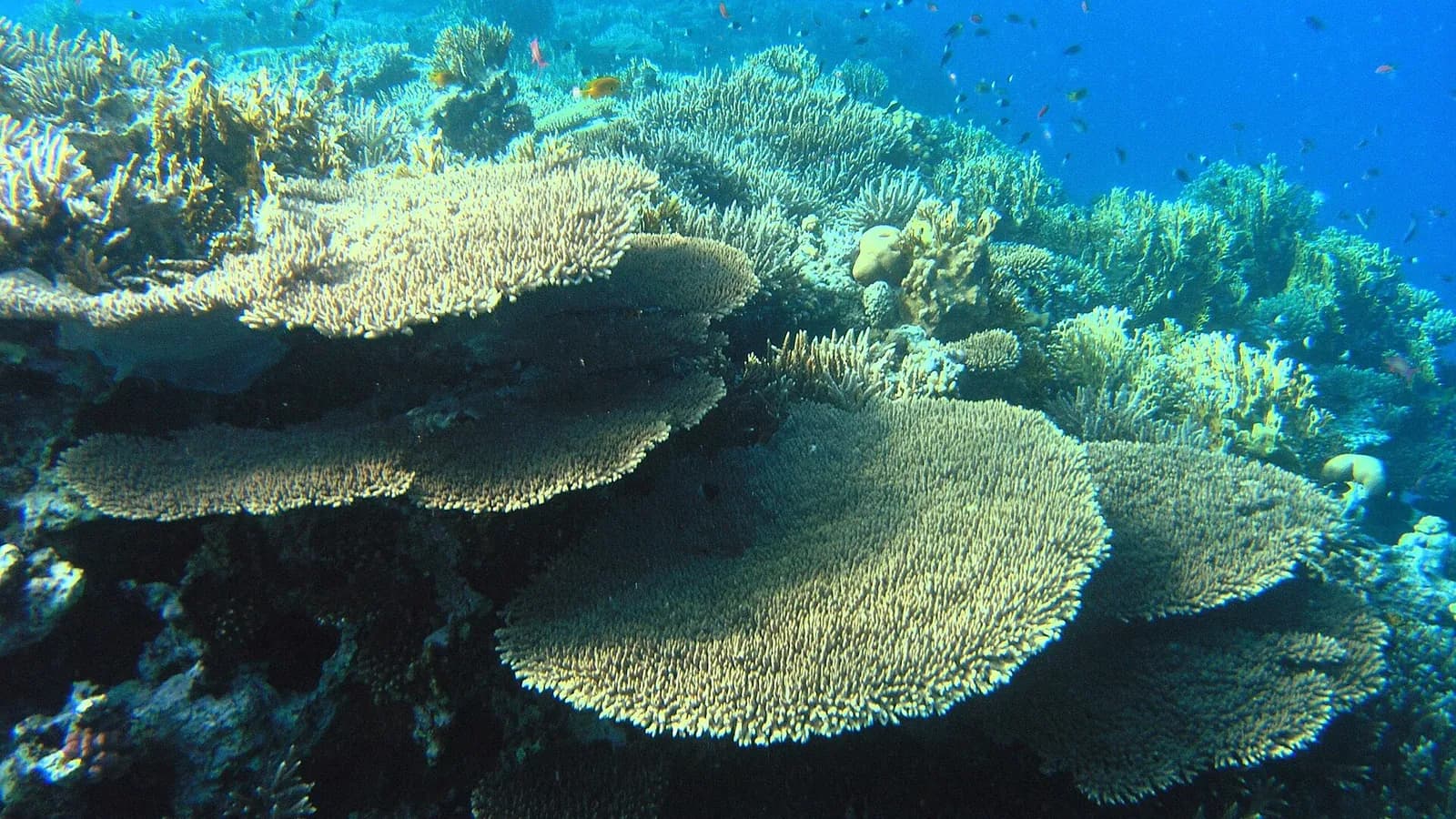
Duiken in Hurghada (2026): beste stekken, pakketten & prijzen
Duiken in Hurghada – de mooiste riffen (Giftun, Careless Reef, Dolphin House), proefduiken vs PADI-cursussen, echte prijzen van 2026 uit 160+ trips en de best beoordeelde duikdagen.
Door TiE Editors7 min leestijd
Snorkeltrips vanuit Hurghada (2026): beste riffen, prijzen en zo kies je
De beste riffen en eilanden om te snorkelen vanuit Hurghada – Orange Bay, Giftun, Dolphin House – met echte prijzen voor 2026 uit ruim 880 boekbare trips, plus het seizoen, het onderwaterleven en de tips die je nodig hebt.
Door TiE Editors7 min leestijd
Tourprijzen in Egypte per activiteit (2026): wat elk type echt kost
Wat elk type Egypte-ervaring werkelijk kost – van een kamelenrit van 1.700 EGP tot een Nijlcruise van 48.500 EGP – op basis van 29.710 echt boekbare tours op zeven platforms.
Door TiE Editors6 min leestijd