Things to Do in Hurghada: Red Sea Diving & Beaches
The Red Sea's resort capital, decoded: the best diving, island boat trips, desert safaris and day trips from Hurghada, with 2026 prices and timing.
Quick answer: The best things to do in Hurghada are Red Sea snorkelling and diving boat trips to reefs and islands like Giftun Island, Orange Bay and Paradise Island; a desert quad-bike safari to a Bedouin camp; a glass-bottom boat or submarine reef tour; a dolphin-watching cruise; and a long day trip to Luxor for the ancient temples. Almost everything centres on the water, and island boat trips are the highlight.
Hurghada at a glance
| Best for | Red Sea snorkelling & diving, island boat trips, desert safaris |
| Top experiences | Giftun Island snorkelling, Orange Bay, dolphin house, desert quad safari, submarine reef cruise |
| Typical price | Boat trips from ~1,000 to 2,700 EGP; desert safaris from ~700 EGP |
| Best months | March to May & September to November: warm, calm sea, fewer crowds |
| Day trips | Luxor (temples), Cairo & the Pyramids (by road or flight) |
| How to book | Instantly on This is Egypt, or ask on WhatsApp |
Hurghada is Egypt's Red Sea capital, and almost everything worth doing here happens on, under, or just off the water. The reefs a short boat ride offshore (Giftun Island, Fanadir, Abu Ramada, Careless Reef) are warm, clear and busy with lionfish, moray eels, turtles and the occasional reef shark. Ashore, you can quad-bike into the Eastern Desert to a Bedouin camp, sail to the sandbanks of Orange Bay and Paradise Island, see the reef from a semi-submarine, or use the town as a launchpad for a long day trip to Luxor's temples. It's the easy, sunny half of an Egypt trip, and it pairs perfectly with a few days on the Nile.
This guide covers what's genuinely worth your time, roughly what it costs in 2026, and how to sequence it. If you want a straight ranked list of experiences to book, see our companion Hurghada travel guide. For dive-site depth, our Red Sea diving guide goes deeper than we can here.
How many days is enough in Hurghada?
Three to four nights covers the classics. Five to six lets you add Luxor, and seven or more suits divers or a Cairo day.
| Stay | What fits |
|---|---|
| 3 to 4 nights | One island boat day to Giftun or Orange Bay (6 to 8 hours) and one desert quad evening, with the rest on the beach or a house reef |
| 5 to 6 nights | Add the Luxor day trip (pickup 04:00 to 05:00; 3.5 to 4 hours of driving each way, 4.5 to 5 with hotel pickups) and a rest day after it |
| 7 nights or more | Add a dive day or Cairo by air, or pair the week with a Nile cruise |
Snorkelling and diving: the main event
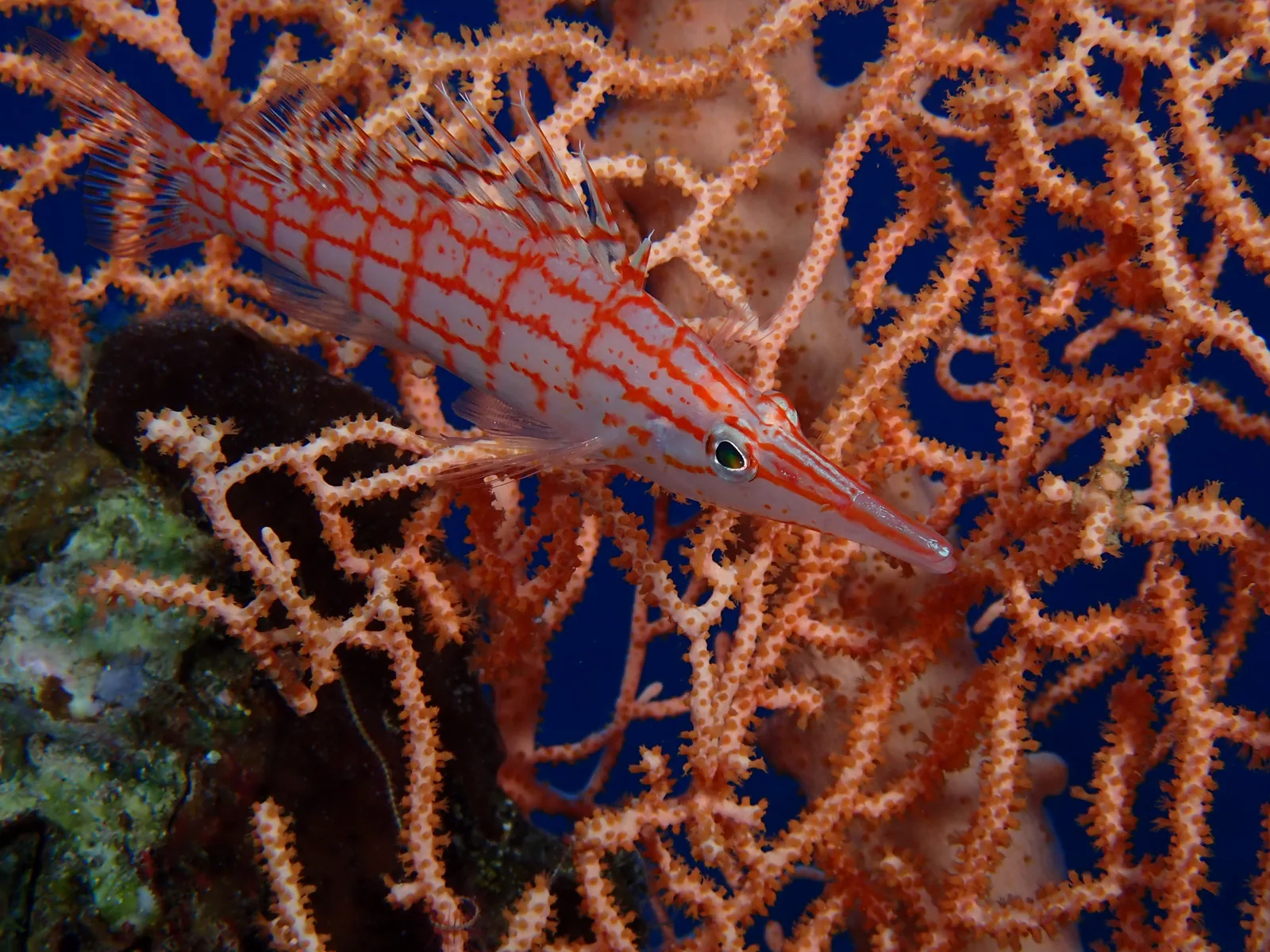
Hurghada grew from a fishing village into a resort for one reason: the reefs. The town sits at the mouth of a chain of offshore islands and coral gardens, so a dive or snorkel boat can reach world-class sites in 30 to 90 minutes. Water stays around 24 to 30°C (75 to 86°F) from March through November and rarely drops below 21°C (70°F) in winter, which makes this a genuine year-round destination.
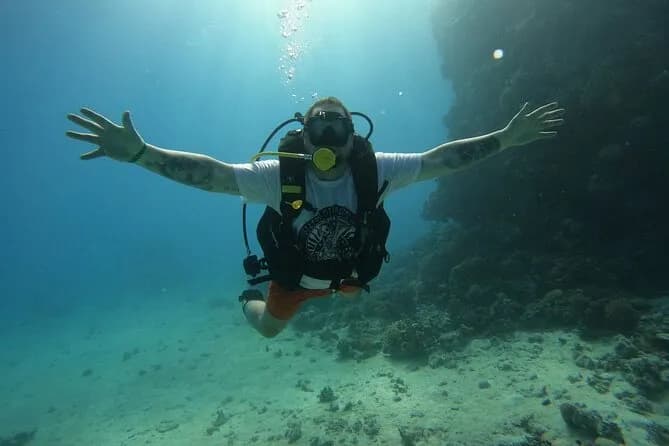
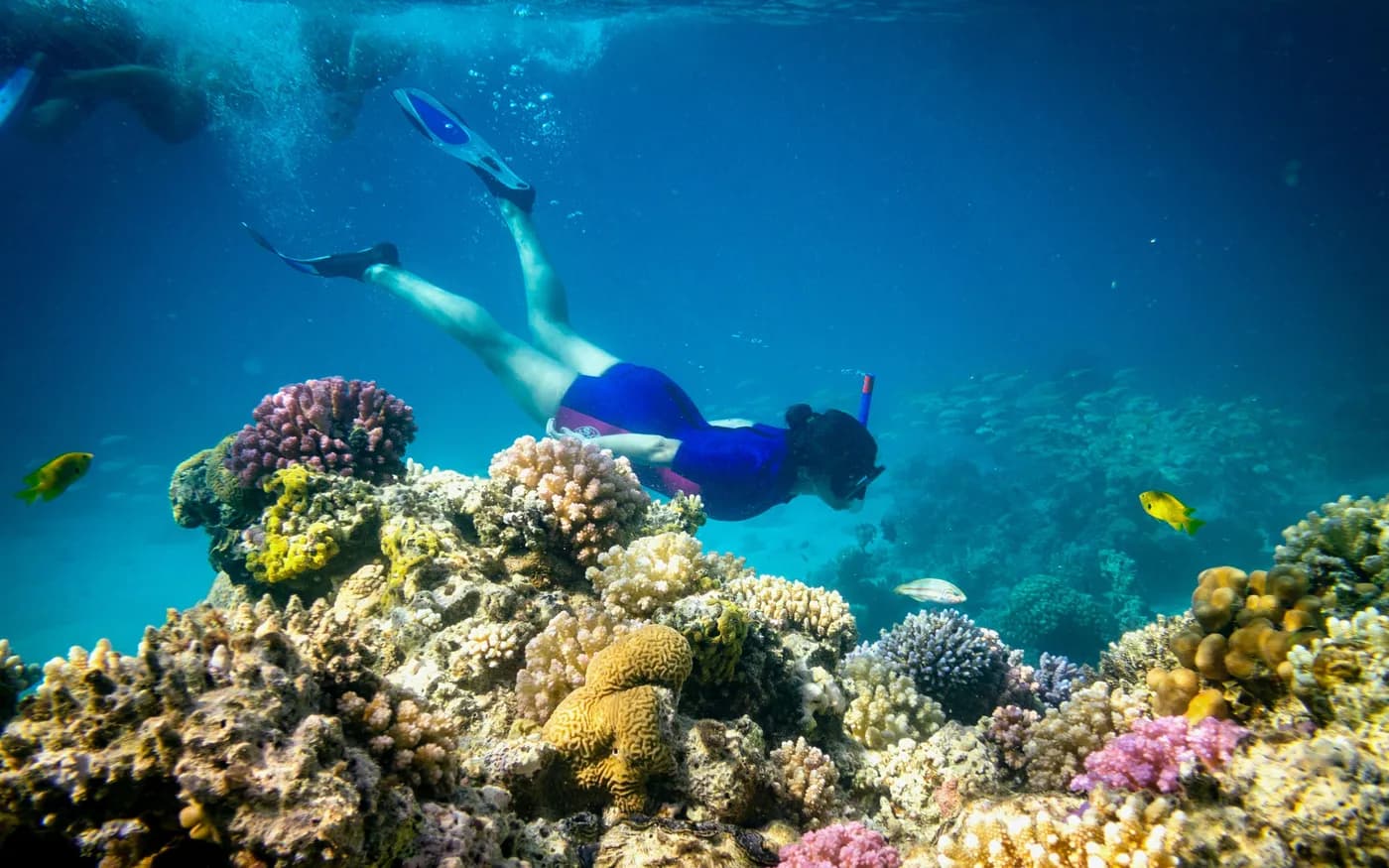
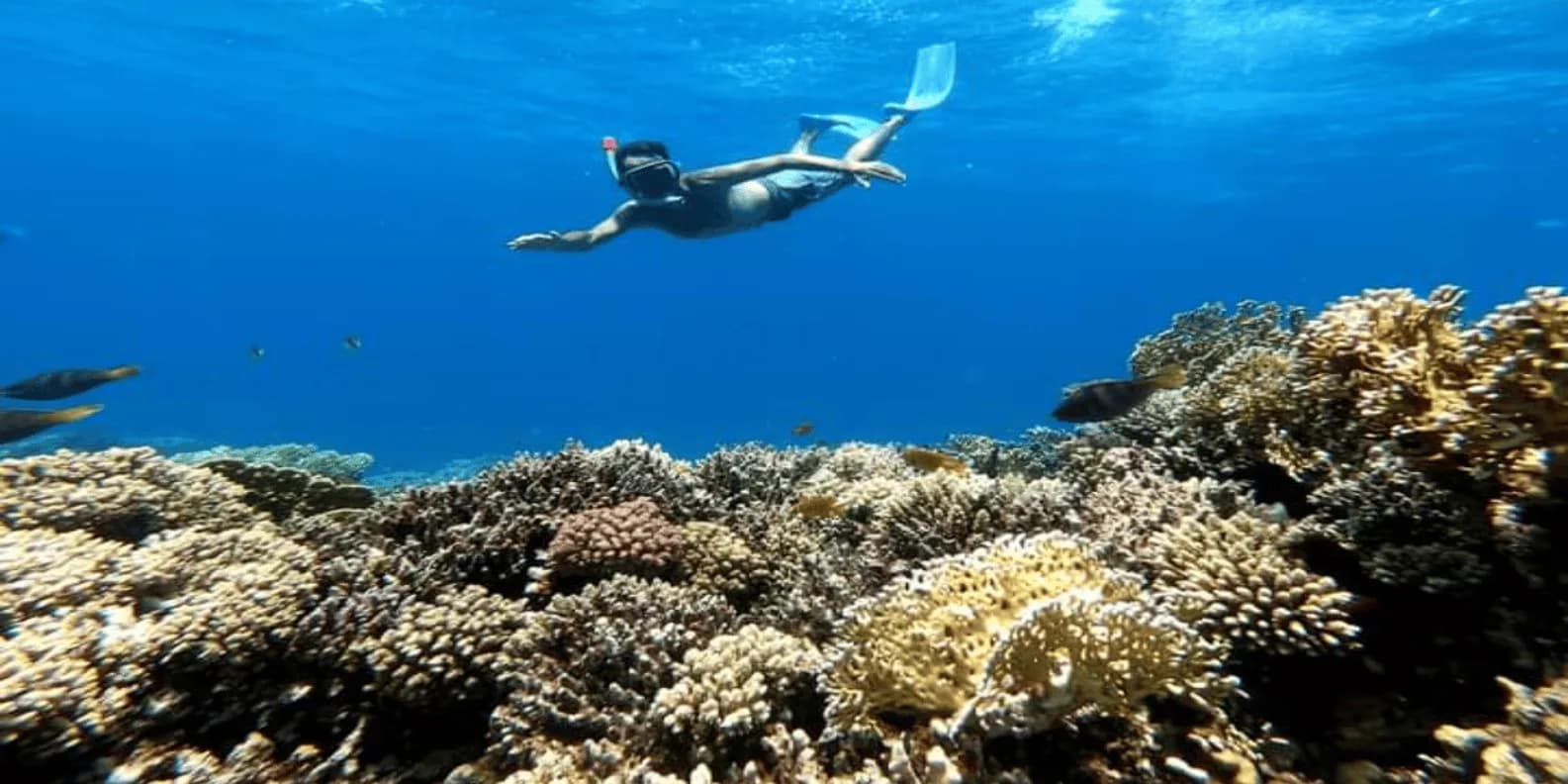
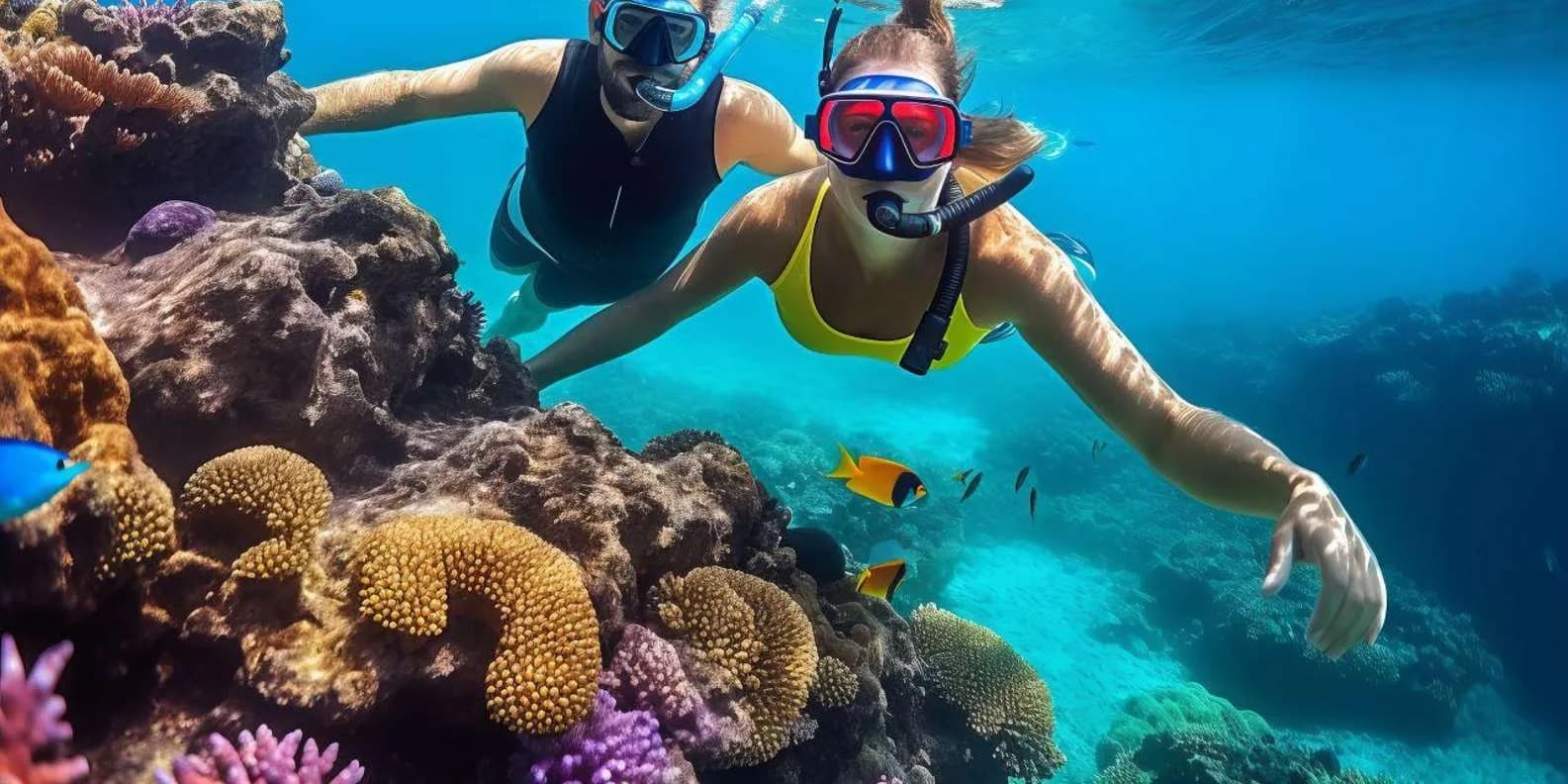
You don't need a certification to see the best of it. Snorkelling over Giftun's shallow coral heads shows you clownfish, parrotfish, angelfish and turtles in a couple of metres of water. If you want to go deeper, the dive centres here are overwhelmingly PADI-affiliated, run daily two-tank boat trips, and will take a complete beginner through a supervised 'Discover Scuba' dive. If you have four or five days, an Open Water certification course is cheaper here than almost anywhere in Europe and gives you a licence that lasts a lifetime.
Before you commit to boat trips, know that many Hurghada and Sahl Hasheesh resorts have their own house reef right off the jetty or beach: you can snorkel or shore-dive straight from the sand, no boat needed. It's the easiest way to get your first look at the coral, and it's usually free if you're staying there. The reefs directly off town have taken a beating from decades of tourism, though, so the healthiest coral is on the offshore island trips.
The dive sites worth knowing
| Site | Best for | Level | What you'll see |
|---|---|---|---|
| Giftun Island (Big & Small) | First dives, snorkelling | All | Coral gardens, anthias, turtles, easy walls |
| Fanadir | Calm reef diving | Beginner-intermediate | Sloping wall, strong macro life, protected conditions |
| Abu Ramada (the 'Aquarium') | Colour and fish density | All (~20m) | Schooling fish, bright soft coral, gentle profiles |
| Careless Reef | Advanced fun | Experienced | Pinnacles, clouds of anthias, moray, current days |
| Shaab El Erg (Dolphin House north) | Dolphin encounters | All | Spinner dolphins, seagrass, big lagoon |
| Abu Nuhas wrecks | Wreck diving | Advanced | Several cargo-ship wrecks on a reef edge |
Giftun and Fanadir are the everyday classics: reliable, close, forgiving. Abu Ramada earns its "Aquarium" nickname on a good-visibility day. Careless Reef is the one confident divers rave about, but it can run a current, so it's not a first-timer's site. Serious wreck hunters head north to the Abu Nuhas reef, where a cluster of cargo ships went down and now sit dressed in coral.
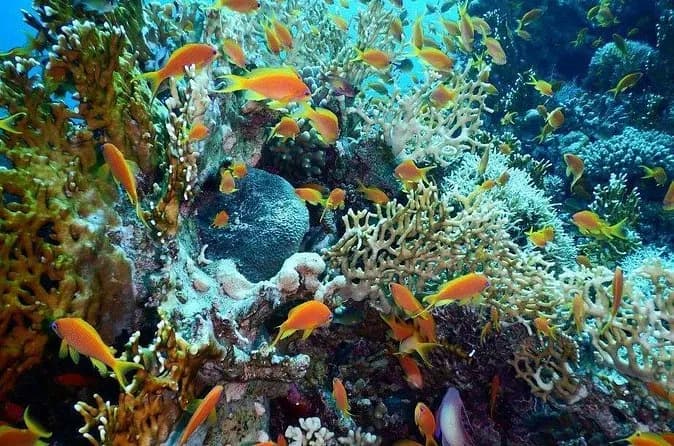
Marine life you can realistically expect: lionfish and moray eels almost everywhere, blue-spotted rays on the sand, green and hawksbill turtles grazing seagrass, huge Napoleon wrasse, and (if you're lucky and quiet) spinner dolphins passing through. Reef sharks are around but shy.
Typical 2026 prices: a full-day two-dive boat trip runs roughly 1,900 to 3,000 EGP (about US$40 to 60) including gear, guide and lunch. A "try dive" for beginners is similar. Snorkelling day trips are cheaper, from about 1,098 EGP. That tracks with the Hurghada water-activity median of about 2,480 EGP (~US$50): a useful anchor for budgeting the whole category.
A Red Sea boat trip: Orange Bay, Paradise Island and Giftun
If you do one thing in Hurghada, make it a boat trip to the islands. The standard full-day trip leaves Hurghada Marina, cruises 45 to 90 minutes out, and stops at two or three snorkel sites plus a beach.
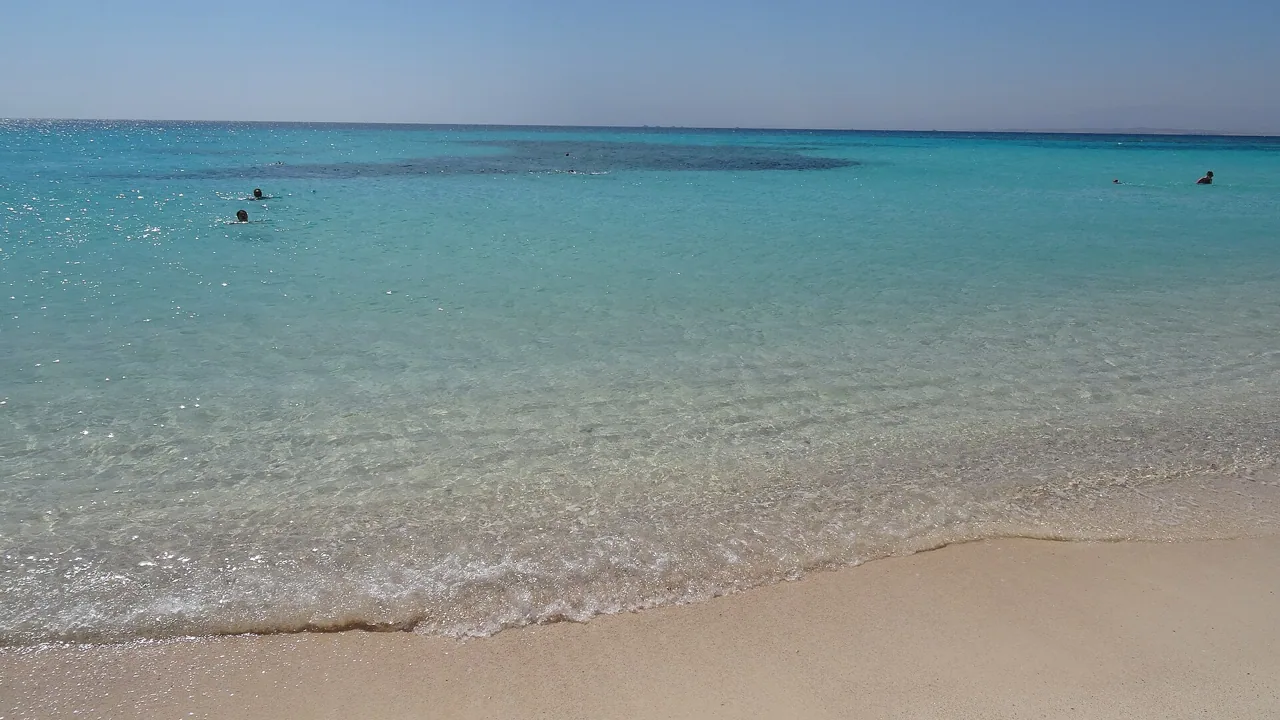
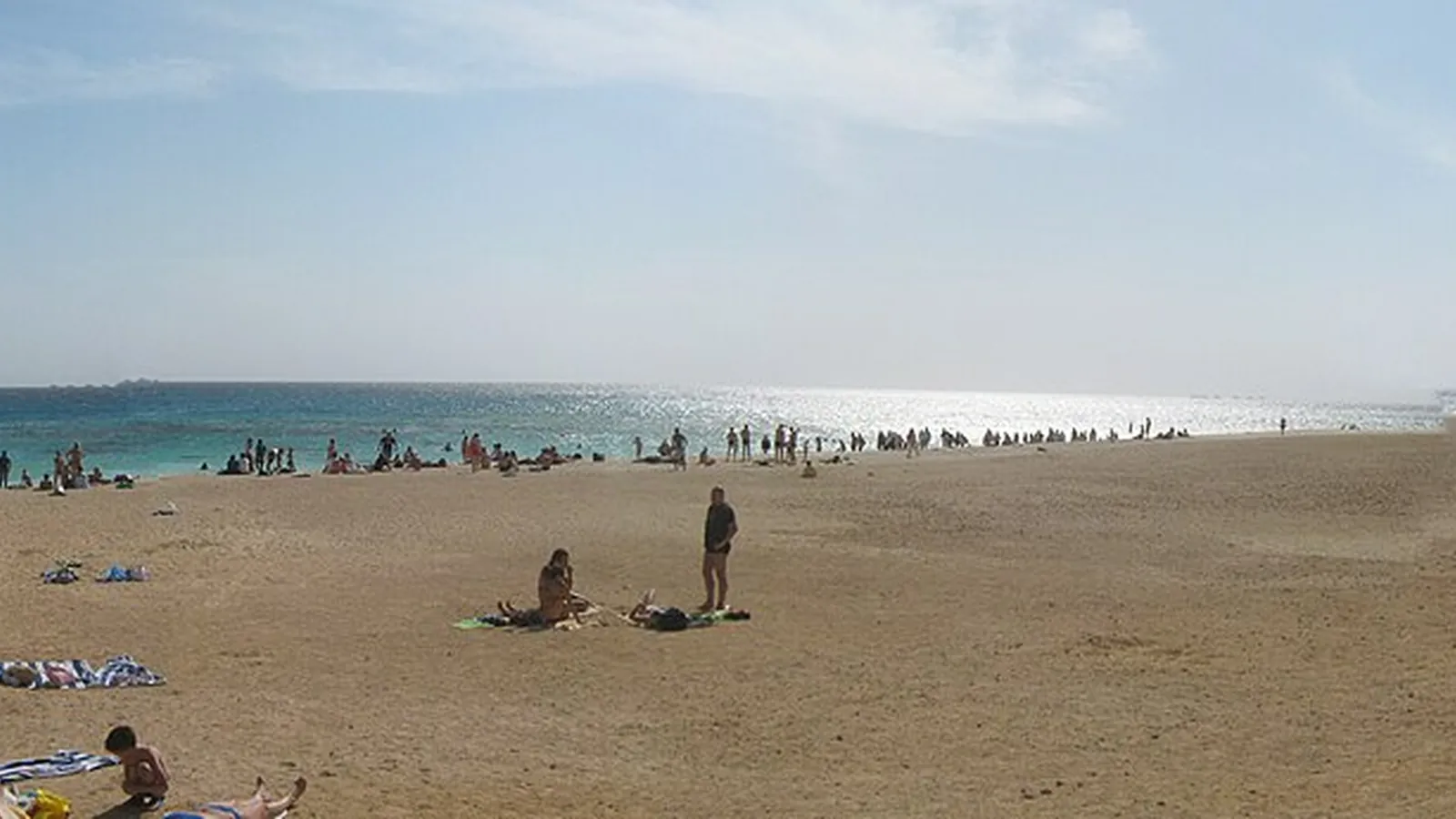
Orange Bay (on Giftun Island) is the postcard: a curved sandbar of powder-white sand and a lagoon so pale it looks tinted. It sits inside the protected Giftun Islands National Park, so boats moor at buoys and ferry you in by tender to spare the coral. Paradise Island is the quieter, more natural-feeling alternative: fewer sun-loungers, more of a desert-island mood. Mahmya, on Giftun's southern shore, is the eco-managed option with a good lunch and lifeguards, which makes it a solid family pick.
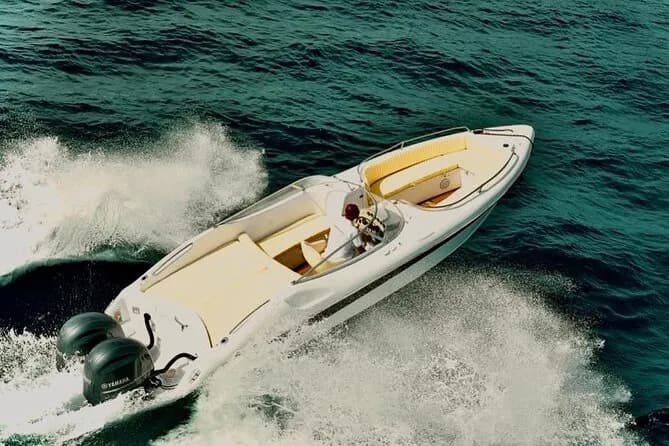
Most trips bundle two snorkel stops, buffet lunch on board, soft drinks and hotel pickup. Group boat days start from about 1,098 EGP (about US$21 or EUR 19) per person, for example this Orange Bay island trip with snorkelling, lunch and drinks, where the Giftun National Park admission fee is extra. A typical Orange Bay trip costs about 1,383 EGP (about US$26 or EUR 24) per person (prices checked 11 October 2026). Private speedboat charters cost more but skip the crowds and let you set the pace. Water-sports add-ons (parasailing, banana-boat rides) are usually paid on the day.
See the reef without getting wet: glass-bottom boats and a submarine
Not everyone wants to put their face in the water, and Hurghada has two good dry options.
Glass-bottom boats are the cheap, casual choice: a short cruise over shallow reef with a viewing hull, fine for kids and non-swimmers, usually under 800 EGP.
A Sindbad tourist submarine sank off Hurghada on 27 March 2025 with the loss of six lives (Associated Press). We could not confirm whether Sindbad submarine trips run in 2026, so ask the operator directly before you book one; the semi-submarine reef cruises above are the easy alternative.
Kitesurfing and windsurfing
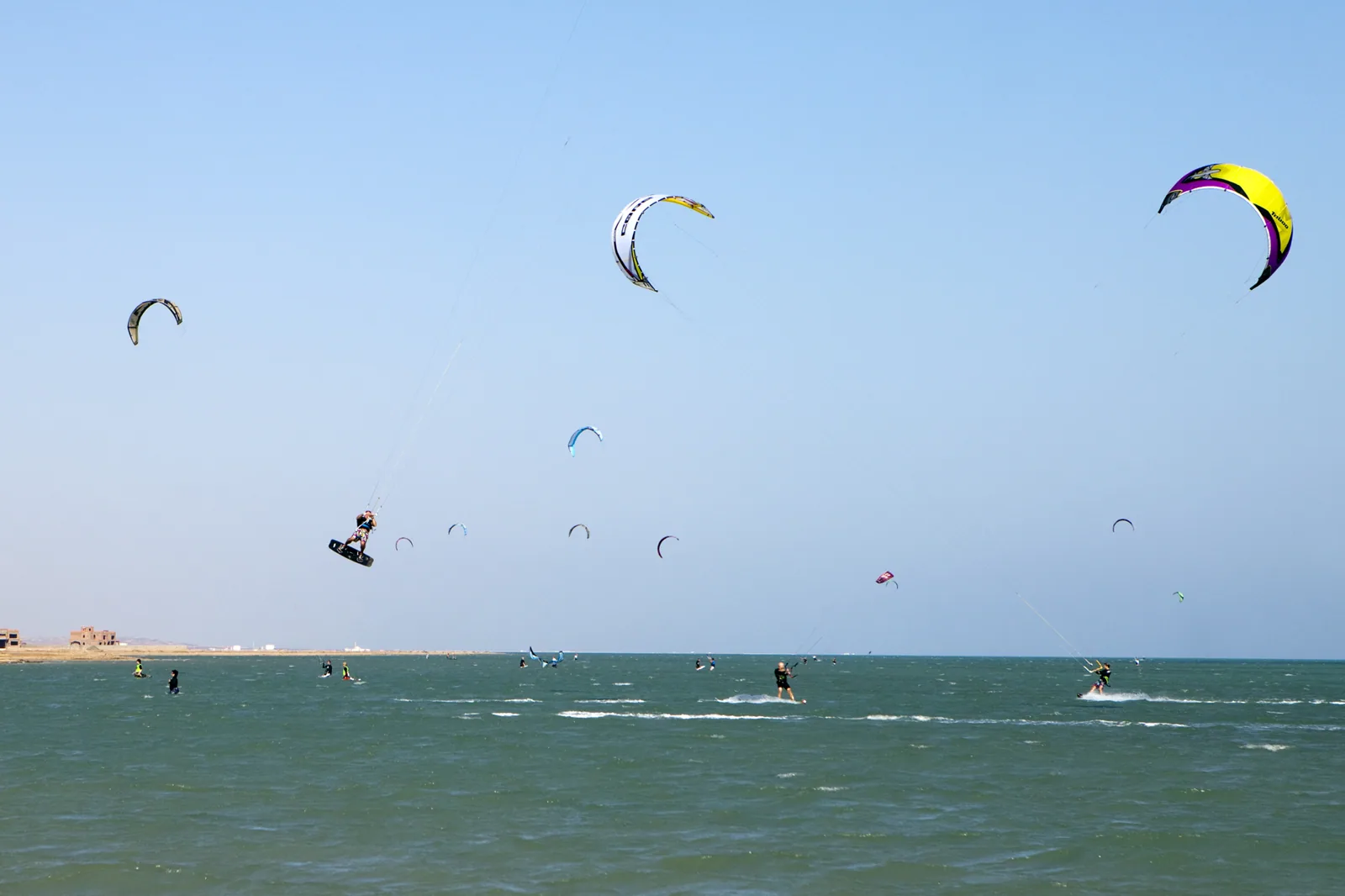
Hurghada is one of the Red Sea's steady-wind capitals, and the flat, shallow lagoons make it a favourite for learners and freestylers. The reliable side-shore thermal winds and warm water mean you can ride in a shorty rather than a thick wetsuit for most of the year. The town itself has schools and rental centres, but the real magnet is just north: El Gouna, where Mangroovy Beach draws kiters from across Europe, and Soma Bay near Safaga to the south, both with big flat-water lagoons and IKO-certified schools. Wind is most reliable from spring through early autumn, when the afternoons pick up almost daily. Beginner courses run over three or four days; experienced riders can simply rent gear and launch, and many centres will store your kit and shuttle you to the best spot for the day's wind direction.
Desert quad-bike and Bedouin dinner safari
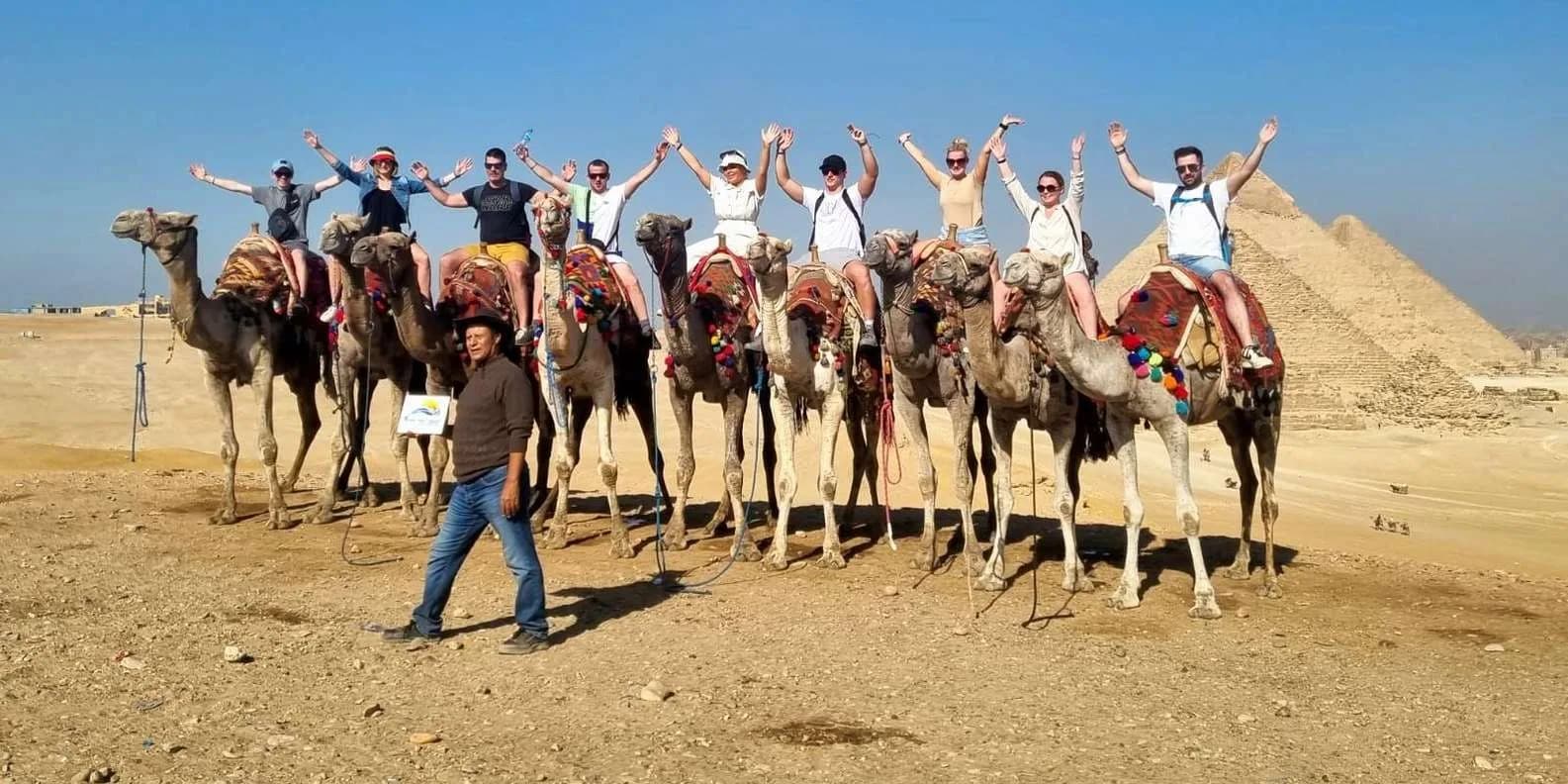
Turn your back on the sea and the Eastern Desert opens up: sand, black volcanic hills and Bedouin country. The classic afternoon trip puts you on a quad bike (or in a 4x4 if you'd rather not drive) for a run across the dunes to a Bedouin camp. There you'll ride a camel, watch the sun drop behind the mountains, eat a grilled barbecue dinner, and stay for music and often some stargazing: the desert sky here is startling once the resort lights are gone.
It's dusty, a little touristy, and genuinely fun. Half-day quad safaris start around 900 to 1,700 EGP (~US$18 to 35); combined quad-plus-camel-plus-dinner packages sit higher. Sunrise and sunset departures are the ones worth booking: the light on the hills is the whole point, and the midday runs bake. Bring a buff or scarf for the dust, sunglasses, and closed shoes; the quads kick up a lot of grit and the desert gets cold fast once the sun drops, so pack a layer for the ride back.
Swim with dolphins at Sha'ab Samadai (Dolphin House)
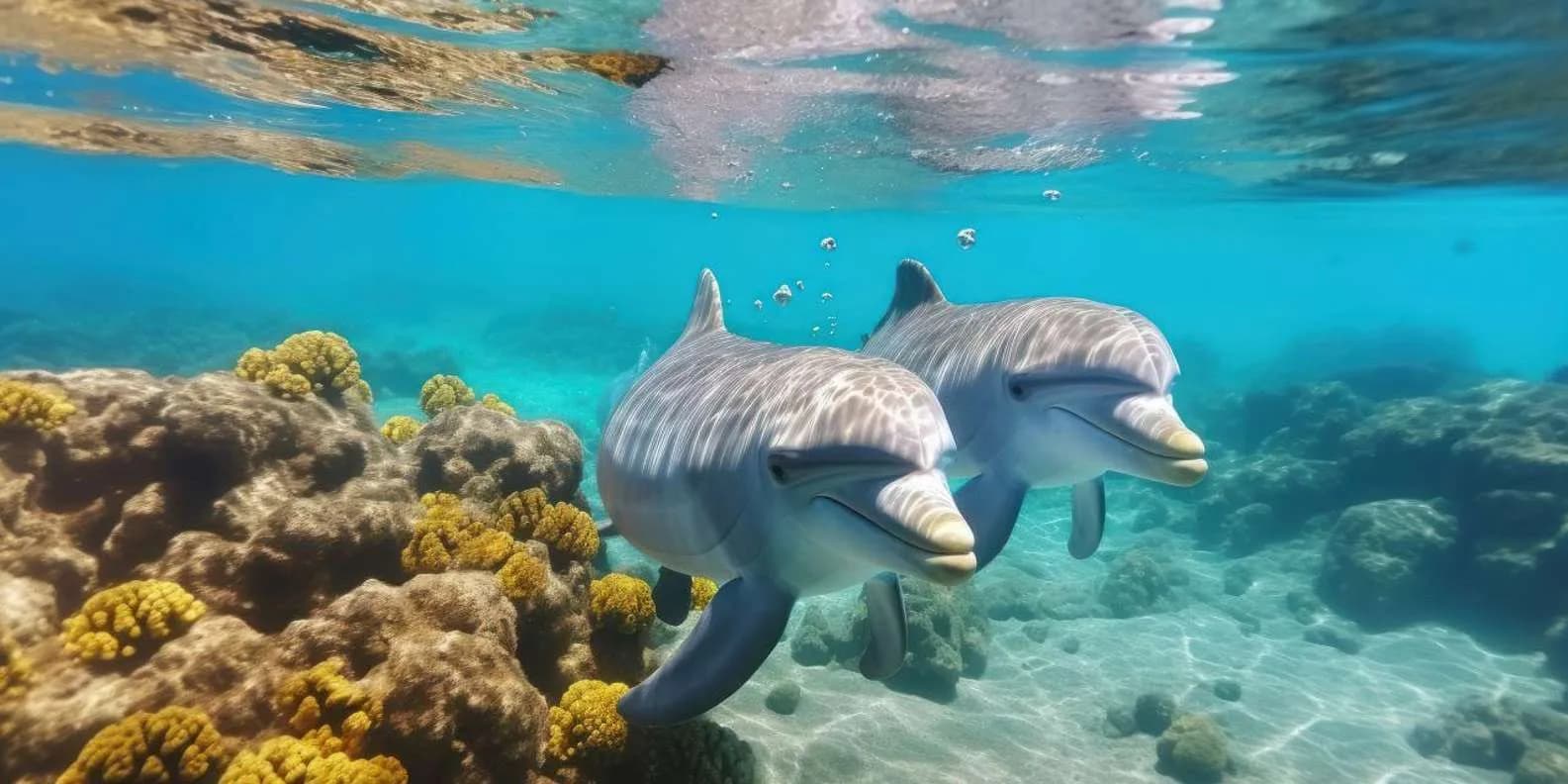
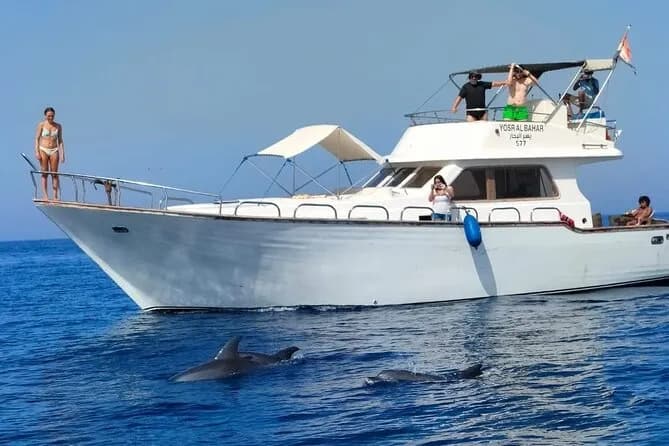
Hurghada's closest wild-dolphin site is Shaab El Erg to the north, but the most famous "Dolphin House" is Sha'ab Samadai, a horseshoe reef further south off Marsa Alam that shelters a resident pod of spinner dolphins. Boats run here from Hurghada and Marsa Alam as long day trips. Rules protect the animals: you snorkel from the boat and let the dolphins choose to approach; you never chase or touch them. Sightings aren't guaranteed, but the lagoon itself is beautiful snorkelling regardless. Budget for a longer, pricier day (often 2,500 to 4,000 EGP) because of the distance.
The Marina, Sakkala and after dark
Hurghada Marina is the town's polished waterfront: a promenade of yachts, seafood restaurants, cocktail bars and gelato, buzzing from early evening until the small hours and easy to bar-hop safely on foot. For grittier, cheaper, more local energy, head to Sakkala and Sheraton Road: shisha cafés, street food, souvenir haggling and the old-town feel the resort strips lack. Nightlife ranges from beach clubs to late bars around the Marina and Village Road, and it runs late; our Hurghada after dark guide goes area by area.
For a rainy-hour or a break from the beach, the Hurghada Museum (opened 2020) holds around 2,000 artefacts spanning ancient Egyptian, Greco-Roman, Coptic, Islamic and modern eras: a compact, well-lit hour that's the only proper antiquities collection on this coast.
Nearby: El Gouna and Sahl Hasheesh
Two neighbours are worth a half-day or a base in their own right. El Gouna, 25 km north, is the "Venice of the Red Sea": a planned town of lagoons, bridges and marinas with the coast's best kitesurfing, an 18-hole golf course, an aquarium and a genuinely good restaurant-and-bar scene. Sahl Hasheesh, about 18 km south, is the luxury-resort bay: a long crescent of manicured beach, five-star all-inclusives, a house-reef sunken "lost city" snorkel attraction, and a calmer, more upmarket mood than central Hurghada. Both make easy taxi or shuttle trips.
Day trips to the ancient sites: Luxor by road, Cairo by air
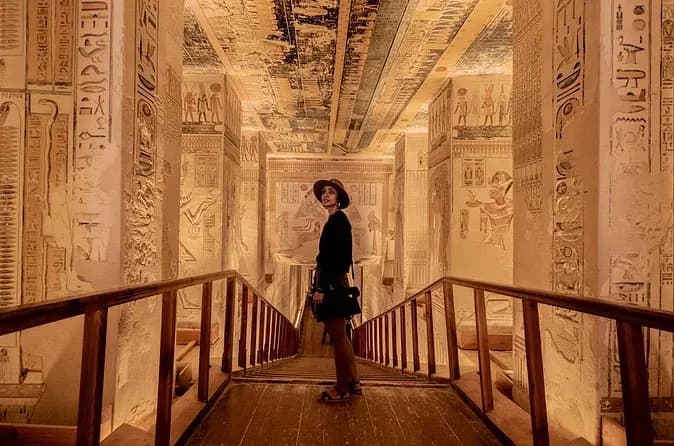
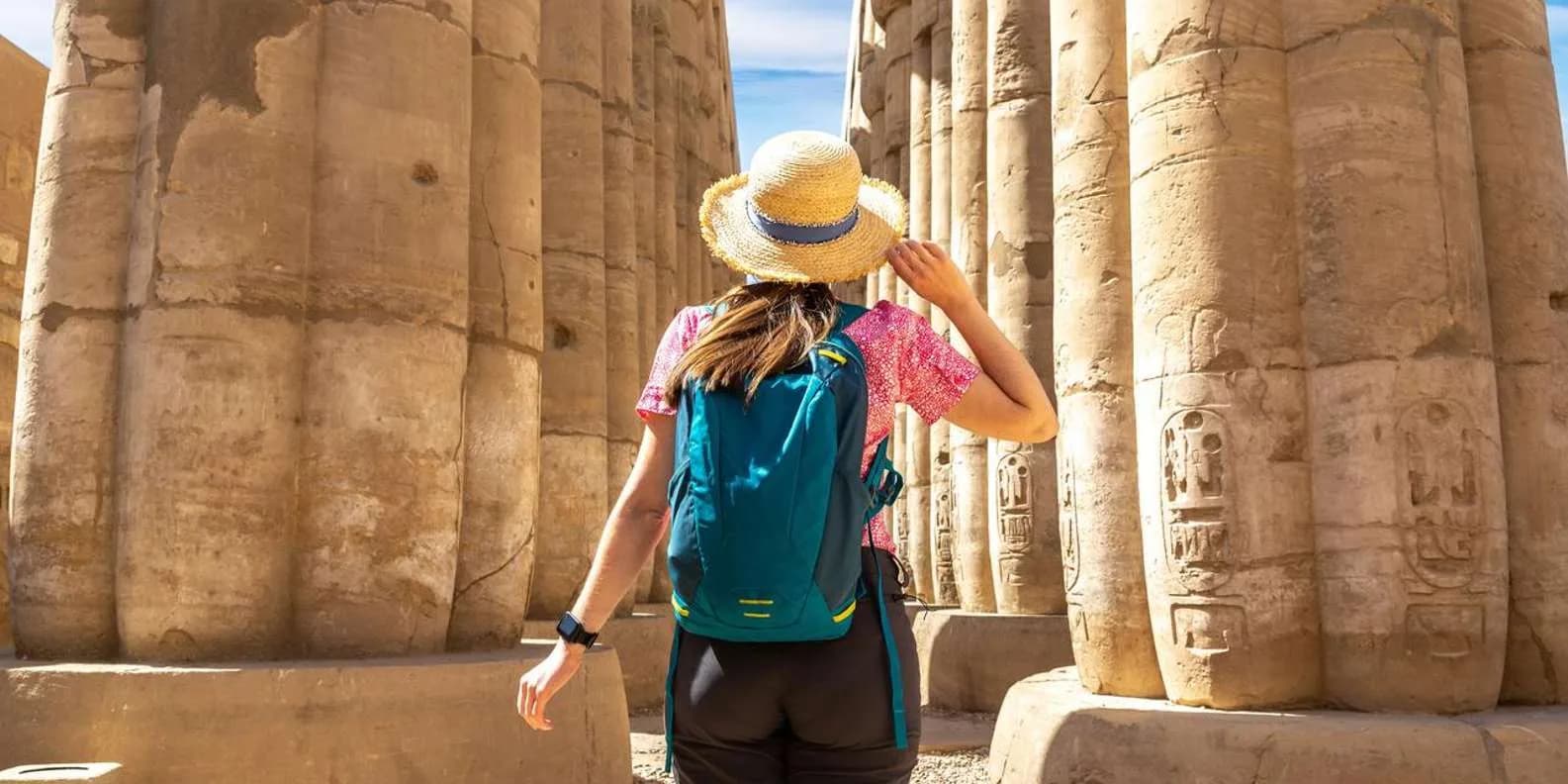
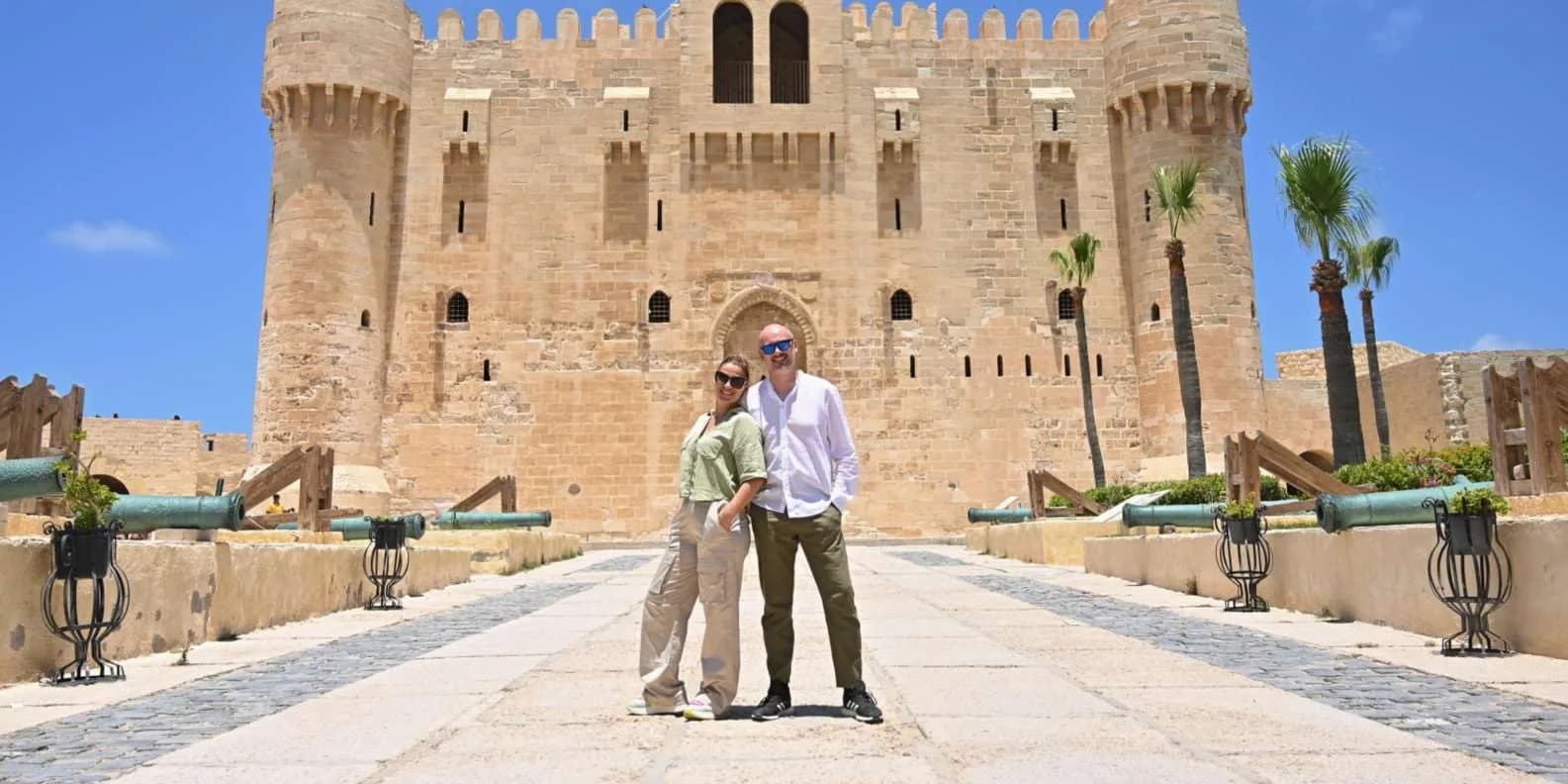
The great thing about Hurghada is that Pharaonic Egypt is closer than it looks. Luxor is about 3.5 to 4 hours' drive west (4.5 to 5 hours once hotel pickups are added), and the standard long day trip leaves before dawn and packs in Karnak Temple, the Valley of the Kings, Hatshepsut's temple and the Colossi of Memnon before driving back: a big 14 to 16 hour day, but a chance to stand among the ancient wonders without leaving your beach holiday. If you can, do it as an overnight instead; the temples deserve two days.
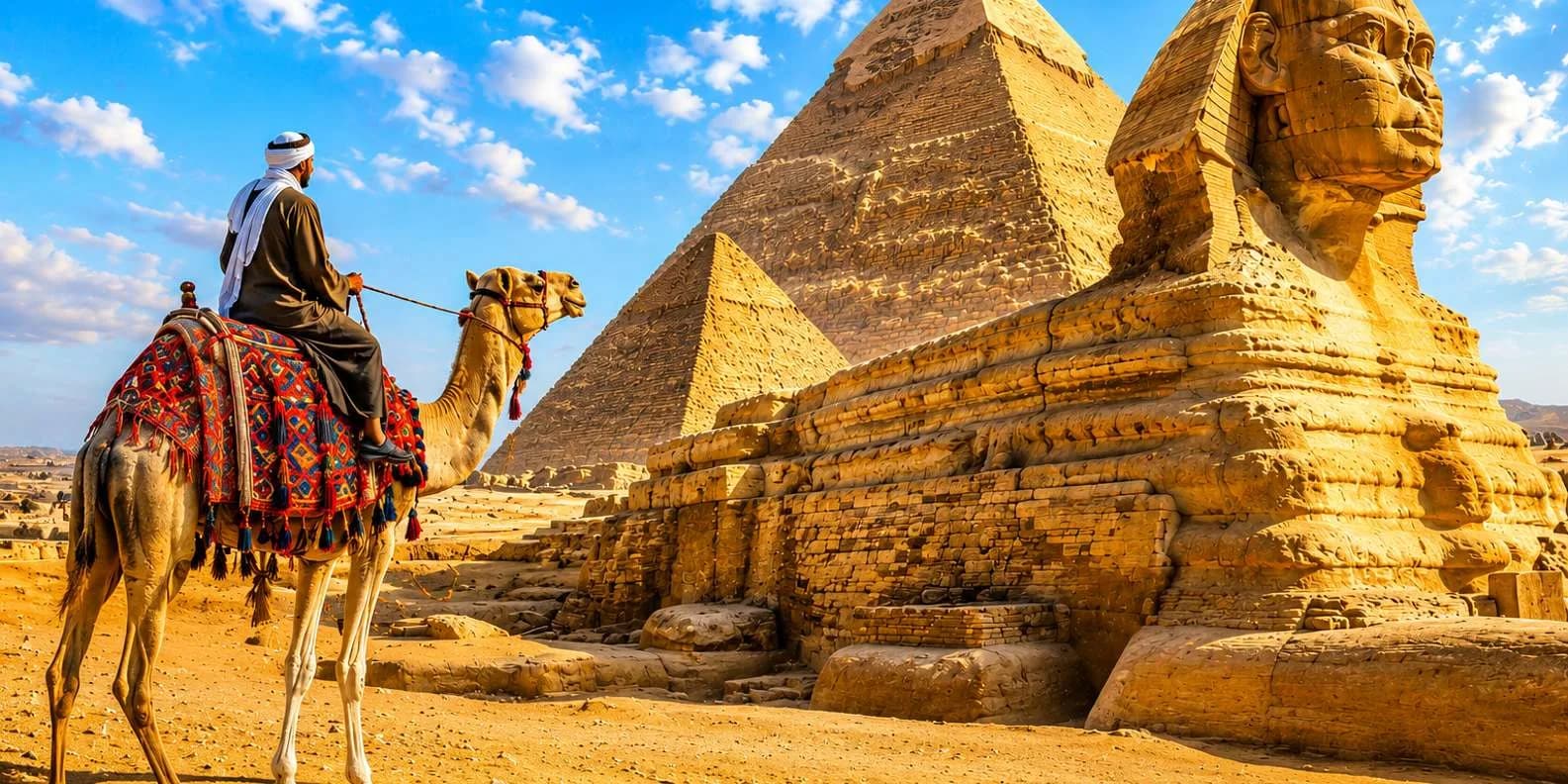
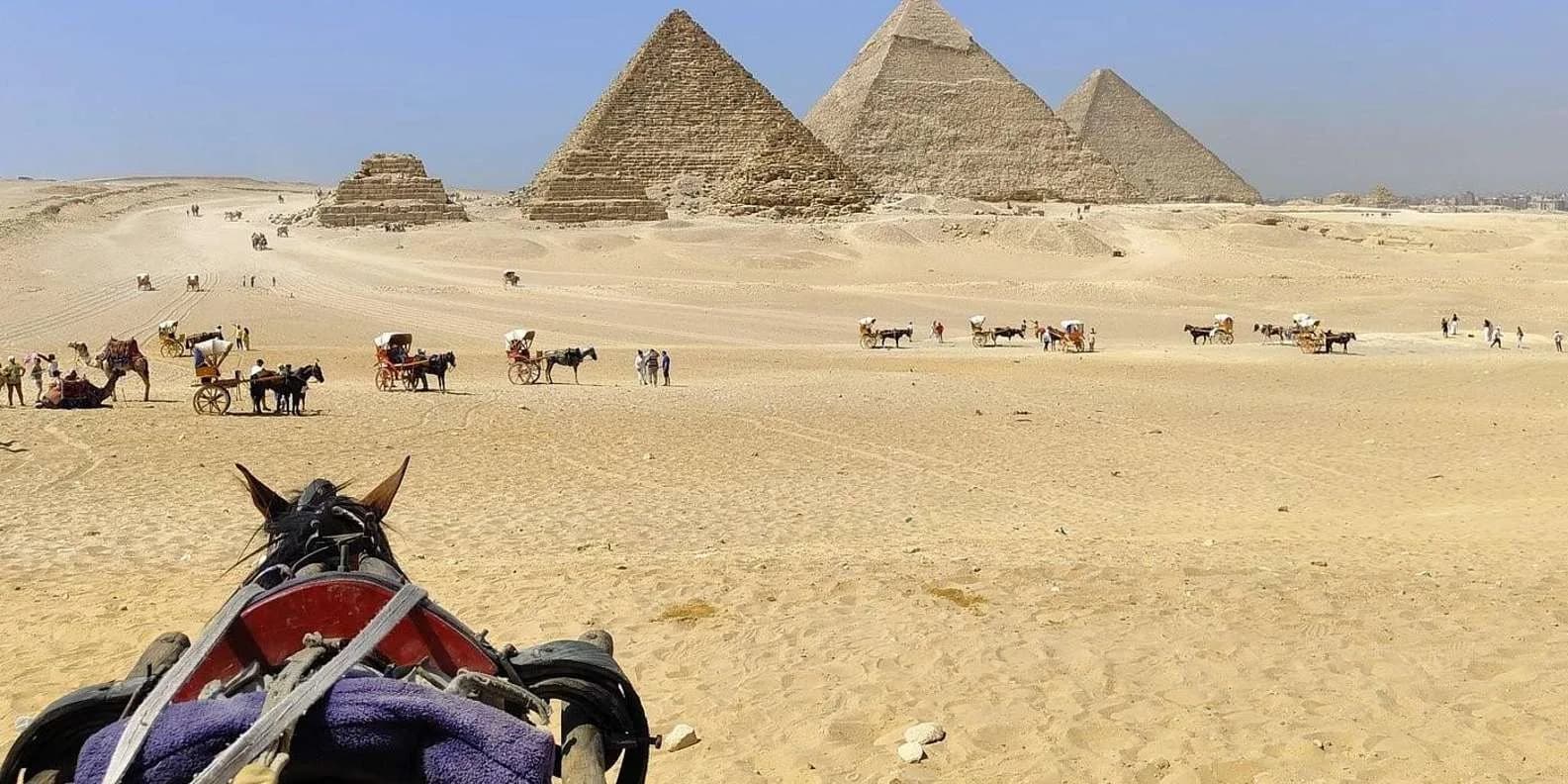
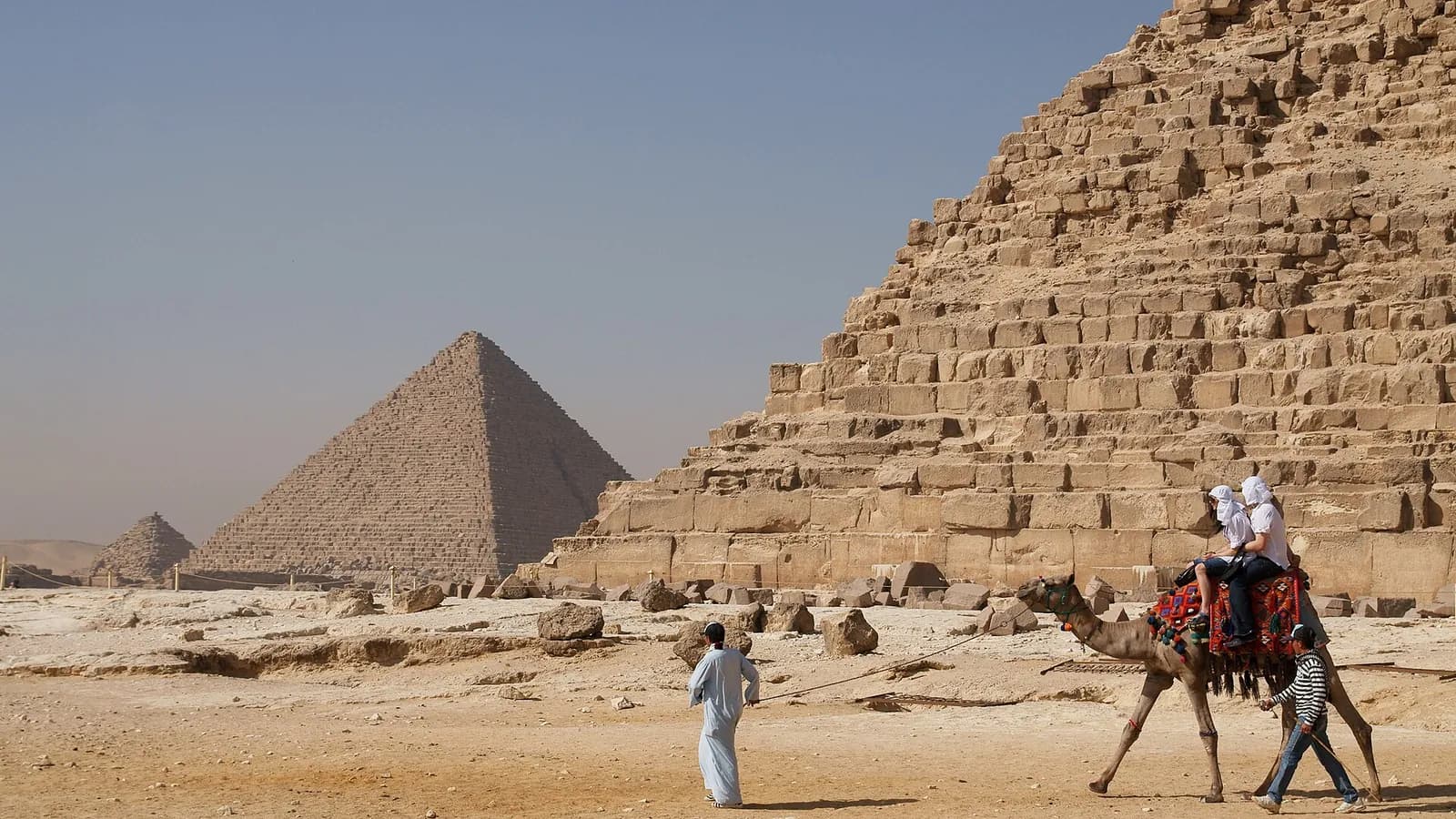
Cairo and the Pyramids is doable as a day trip too: by domestic flight it's an hour each way (far better than the long road), landing you at Giza and the newly opened Grand Egyptian Museum, home to the complete Tutankhamun collection, then back to the Red Sea by night. It's a huge day; an overnight is kinder. Either way, these excursions are the single best reason to base yourself in Hurghada rather than a pure beach resort, and they slot neatly into a longer route like our two weeks in Egypt itinerary.
What things cost and when to go
| Experience | Typical 2026 price (per person) |
|---|---|
| Full-day island snorkel boat (Orange Bay/Giftun) | from about 1,098 EGP (US$21), park admission fee extra on the cheapest trips; typical about 1,383 EGP (US$26) |
| Two-dive boat day (gear + lunch) | ~1,900 to 3,000 EGP (US$40 to 60) |
| Glass-bottom boat | under ~800 EGP |
| Quad-bike + Bedouin dinner safari | ~900 to 1,700 EGP+ |
| Dolphin House (Sha'ab Samadai) day | ~2,500 to 4,000 EGP |
| Luxor day trip (by road) | ~2,500 to 5,000 EGP |
| Cairo day trip (by flight) | from about US$183 (9,585 EGP) |
Orange Bay and Cairo flight prices checked 11 October 2026.
Prices move with season, group size and whether you book privately; treat these as ranges and confirm on the day. Hurghada's overall experience median sits near 2,480 EGP (~US$50), which is why it's one of Egypt's better-value coasts.
Best time to go: aim for March to May or September to November. Those shoulder seasons give you warm-but-not-brutal air, sea still holding its summer heat, and the clearest diving visibility. Summer (June to August) is hot and busy but the water is at its warmest. Winter is mild, quieter and cheaper, though you'll want a wetsuit for diving and the odd windy day can cancel boats.
Family notes: Hurghada is one of Egypt's most kid-friendly spots. Shallow lagoons, calm island beaches (Mahmya, Orange Bay), glass-bottom boats and semi-submarine cruises all work for children, and the all-inclusive resorts run kids' clubs. The long Luxor road day is tough on little ones: the Cairo flight or a shorter boat day is a better call with young kids.
Hurghada rewards a plan: two or three water days, one desert evening, one nearby town, and (if the ancient sites are calling) one big excursion inland. Build it around what you actually want to see rather than whatever the resort desk is pushing, and it's hard to have a bad week here.
Ready to build it? This is Egypt puts together custom Red Sea itineraries around the diving, boat trips and day trips you most want: start planning your trip.
The top-rated experiences travellers book
The best-reviewed Hurghada experiences on This is Egypt right now (ratings and prices checked 11 October 2026):
- Hurghada: Luxury Cruise Trip to Orange Bay with Lunch: 4.88★ · 6,972 reviews · from 2,781 EGP (~$53).
- Hurghada: 3 Islands, Dolphins & Snorkel Yacht Trip w/ Lunch: 4.67★ · 8,945 reviews · from 2,348 EGP (~$45).
- Hurghada: Luxor Valley of the Kings & Tutankhamun Tomb Trip: 4.8★ · 4,017 reviews · from 2,354 EGP (~$45), with site entry tickets only if that option is selected.
- Hurghada: Desert Quad Bike, ATV, Camel Ride & Optional BBQ: 4.86★ · 3,653 reviews · from 1,496 EGP (~$29).
- From Hurghada: Royal Seascope Submarine Cruise with Snorkeling & Optional Hotel Transfers: 4.6★ · 124 reviews · from 1,100 EGP (~$21).
- Hurghada: Speedboat, Dolphins, Snorkeling & 2 Islands: 4.59★ · 4,276 reviews · from 1,879 EGP (~$36).
Browse all things to do in Hurghada to compare dates and prices, or see how activity prices stack up in the Egypt activity price guide.
Top experiences to book
Two Hurghada favourites: a 3-island snorkel & dolphin yacht day on the water, or a Cairo & Giza day tour from Hurghada for the pyramids.
A real team available 24/7 to assist you — free
Seif and the team reply on WhatsApp 24/7 — trip questions, custom plans and booking help.
Ask Seif on WhatsAppCommon questions
What are the best things to do in Hurghada?
The essentials are a snorkel or dive boat trip to the offshore reefs (Giftun, Fanadir, Abu Ramada), a full-day island trip to Orange Bay or Paradise Island, a desert quad-bike and Bedouin dinner safari, and (if you have a day to spare) a trip inland to Luxor's temples or Cairo's pyramids. Non-swimmers can see the reef via a glass-bottom boat or a semi-submarine reef cruise.
Is Hurghada good for diving and do I need to be certified?
Yes: Hurghada is one of the Red Sea's top diving hubs, with warm, clear water and reefs 30 to 90 minutes offshore. You don't need certification to start: nearly all dive centres are PADI-affiliated and offer supervised beginner "Discover Scuba" dives, plus full open-water courses. Snorkellers see plenty in shallow water with no training at all.
How much does a boat trip to Orange Bay cost in 2026?
A group full-day boat trip to Orange Bay or Giftun Island (usually two snorkel stops, buffet lunch and hotel pickup) starts from about 1,098 EGP (about US$21 or EUR 19) per person, and a typical one costs about 1,383 EGP (about US$26 or EUR 24), checked 11 October 2026. The Giftun National Park admission fee is extra on the cheapest trips. Private speedboat charters cost more but avoid the crowds. Water-sports like parasailing are usually paid separately on the day.
When is the best time to visit Hurghada?
March to May and September to November are the sweet spots: comfortable air temperatures, sea still warm from the summer sun, and excellent diving visibility. Summer is hotter and busier but has the warmest water; winter is mild, quieter and cheaper, though you'll want a wetsuit and boats occasionally cancel on windy days.
Can you take a day trip to Luxor or Cairo from Hurghada?
Yes. Luxor is about 3.5 to 4 hours of driving each way, or 4.5 to 5 hours with hotel pickups, done as a long (14 to 16 hour) day trip covering Karnak, the Valley of the Kings and Hatshepsut's temple. Cairo and the Grand Egyptian Museum are best reached by a one-hour domestic flight each way. Both are big days; if you can, do them as overnights to enjoy the sites properly.
Where can I swim with dolphins near Hurghada?
The closest wild-dolphin site is Shaab El Erg (Dolphin House) to the north. The famous Sha'ab Samadai, a horseshoe reef sheltering a resident spinner-dolphin pod, sits further south off Marsa Alam and is reached on a longer day trip. You snorkel from the boat and let the dolphins approach: chasing or touching them is not allowed, and sightings aren't guaranteed.
Is Hurghada suitable for families with children?
Very much so. Shallow lagoons, calm island beaches like Mahmya and Orange Bay, glass-bottom boats, semi-submarine reef cruises and kids' clubs at the all-inclusive resorts all suit children. Skip the long Luxor road trip with young kids: a shorter island boat day or the Cairo flight is far easier.
What is there to do in Hurghada besides diving and beaches?
Plenty: quad-biking and Bedouin dinner safaris in the Eastern Desert, kitesurfing at El Gouna and Soma Bay, the Marina and Sakkala nightlife, the Hurghada Museum (about 2,000 artefacts across all eras), and easy trips to nearby El Gouna and Sahl Hasheesh. The town also works as a base for the inland day trips to Luxor and Cairo.
Book it on This is Egypt
Turn this guide into a trip


Egypt's bestsellers
The experiences travelers book most, across the country

Keep reading
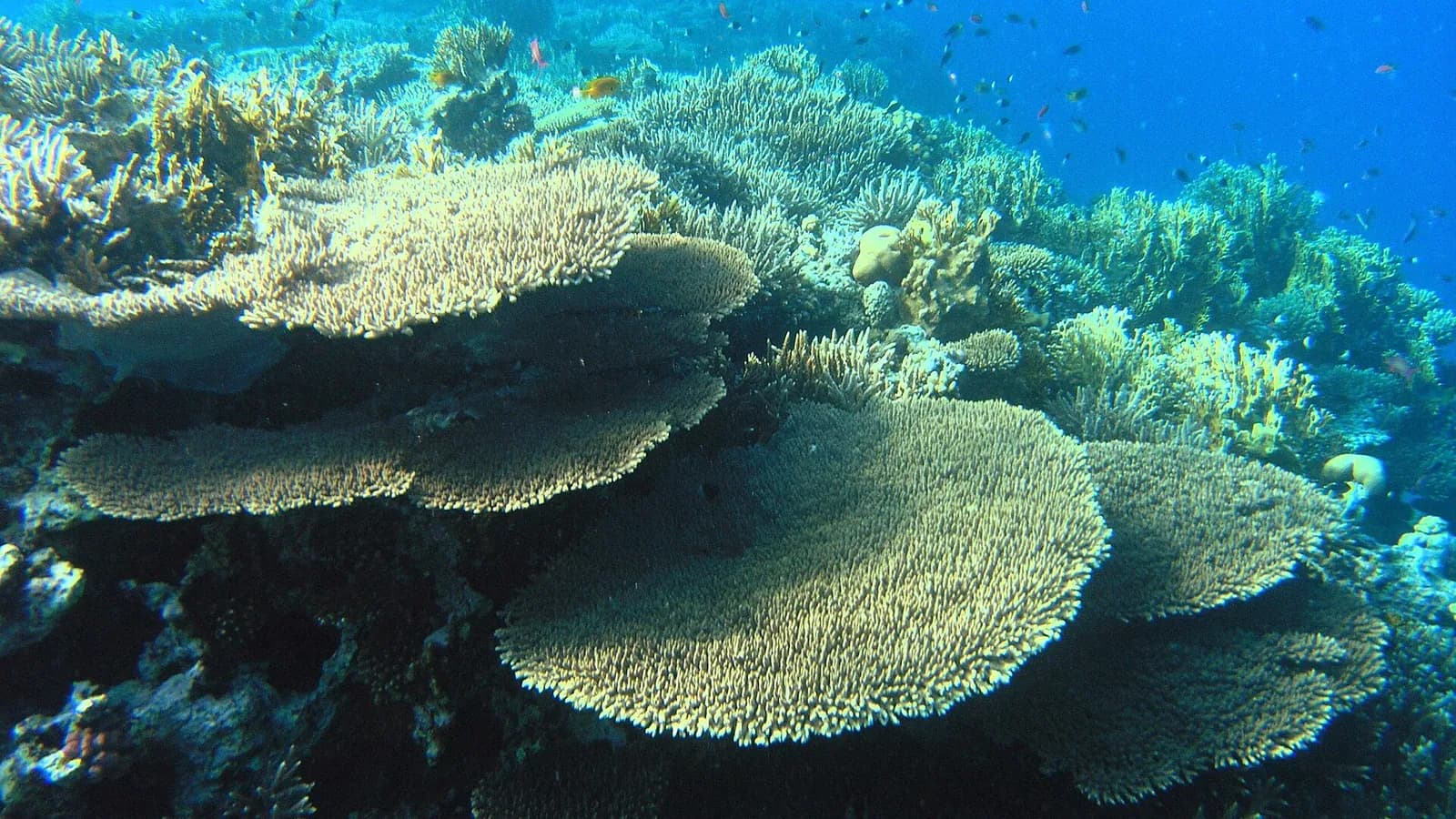
Hurghada Diving (2026): Best Sites, Packages & Prices
Diving in Hurghada — the best reefs (Giftun, Careless Reef, Dolphin House) and Abu Nuhas wrecks, Discover Scuba vs PADI courses, season and water temps, and real 2026 prices.
By TiE Editors7 min read
Hurghada Snorkeling Trips (2026): Best Reefs, Prices & How to Choose
Where to snorkel from Hurghada in 2026 — Orange Bay, Giftun, Mahmya, Utopia and Dolphin House — with boat types, marine life, month-by-month sea temperatures, family tips and real prices from 1,000+ bookable trips.
By TiE Editors7 min read
Egypt Tour Prices by Activity (2026): What Each Type Really Costs
What every type of Egypt experience costs — half day, full day or overnight — as a median and a mid-half range in US dollars, from 12,370 live bookable listings.
By TiE Editors6 min read