
A History of Egyptian Food: From Pharaohs to Koshari
Ful, bread, beer and molokhia were eaten in Pharaonic times and still are. Trace how Egyptian cuisine went from the pharaohs' plates to Cairo's street carts.
Here's a fact that surprises most visitors: some of the dishes you'll eat in Egypt today are, in essence, thousands of years old. The national breakfast of ful medames (slow-cooked fava beans) was eaten in Pharaonic times; bread and beer were the twin staples of the ancient diet and remain central to Egyptian food; and the country's love of onions, garlic, dates, figs and honey runs in an unbroken line from the tomb paintings to the modern table. Egyptian cuisine is one of the world's oldest living food cultures — this guide traces how it got from the pharaohs' plates to the street carts of Cairo.
Bread and beer: the ancient foundation
Ancient Egypt ran on bread and beer. Workers who built the pyramids were partly paid in them; both were made from emmer wheat and barley, and both were dietary staples for rich and poor alike. That centrality survives: bread is so fundamental that the common Egyptian word for it, aish, literally means "life." Today's aish baladi, the puffy wholemeal flatbread baked in blazing ovens across the country, is the direct descendant of those ancient loaves and still the plate, spoon and staple of nearly every Egyptian meal.
The dishes with pharaonic roots
- Ful medames — fava beans stewed low and slow overnight, dressed with oil, lemon, cumin and garlic. Egypt's beloved national breakfast, and genuinely ancient.
- Ta'ameya (Egyptian falafel) — made from fava beans rather than chickpeas, a distinctly Egyptian version many believe originated here.
- Molokhia — a green, slightly viscous soup of jute mallow leaves, cooked with garlic and coriander; a dish with deep ancient roots and near-sacred status at the Egyptian table.
- Onions, garlic, leeks, lettuce, dates and figs — all documented in ancient Egypt and all still everywhere in the cuisine.
The through-line is remarkable: as the peer-reviewed research on Egypt's food history shows, the country's arid geography tied life to the narrow, fertile Nile banks, and that continuity of place produced an unusual continuity of diet across millennia.
Beer, wine and the ancient table
Drink was as ancient as the food. Beer — thick, mildly alcoholic, brewed from barley bread — was the everyday drink of every ancient Egyptian, so nutritious it was almost a liquid food, and even issued as part of workers' rations. Wine was the drink of the elite, pressed from Delta vineyards and buried in labelled jars in royal tombs for the afterlife. Those traditions faded with the arrival of Islam, but Egypt's love of sweet, social drinking simply moved to coffee, mint tea, and cold classics like hibiscus (karkade), tamarind and sugarcane juice — the descendants, in spirit, of the ancient table. Sweets have their own long lineage: Egyptians have prized honey, dates and nuts since antiquity, and modern treats like basbousa (semolina cake), konafa, and the milky bread pudding om ali carry that sweet tooth forward.
What later centuries added
Egyptian food didn't stand still. Waves of rulers and trade layered new things onto the ancient base:
- Arab and wider Middle Eastern influence brought rice, spices, grilled meats (kofta, kebab) and sweets like basbousa and baklava.
- Ottoman Turkish influence shaped café culture and dishes; Mediterranean and Levantine trade added mezze staples like tahina, baba ghanoush and stuffed vegetables (mahshi).
- Koshari, now Egypt's ultimate street food — a carb-on-carb pile of rice, lentils, macaroni, chickpeas, crispy fried onions and a spiced tomato sauce — is a relatively modern invention, thought to have taken shape in the 19th century, quite possibly influenced by the Indian dish khichri via the British-Indian presence. It's the perfect symbol of Egyptian food: humble, filling, endlessly beloved, and a fusion of influences on an ancient grain-and-pulse foundation.
From pharaohs to street carts: a quick timeline
| Era | What it added |
|---|---|
| Pharaonic | Bread, beer, ful, molokhia, onions, dates, figs |
| Greco-Roman | New crops, wine culture, trade goods |
| Arab / Islamic | Rice, spices, kofta & kebab, sweets |
| Ottoman | Café culture, Turkish-influenced dishes |
| 19th–20th c. | Koshari, modern street food, mahshi |
How to taste the history today
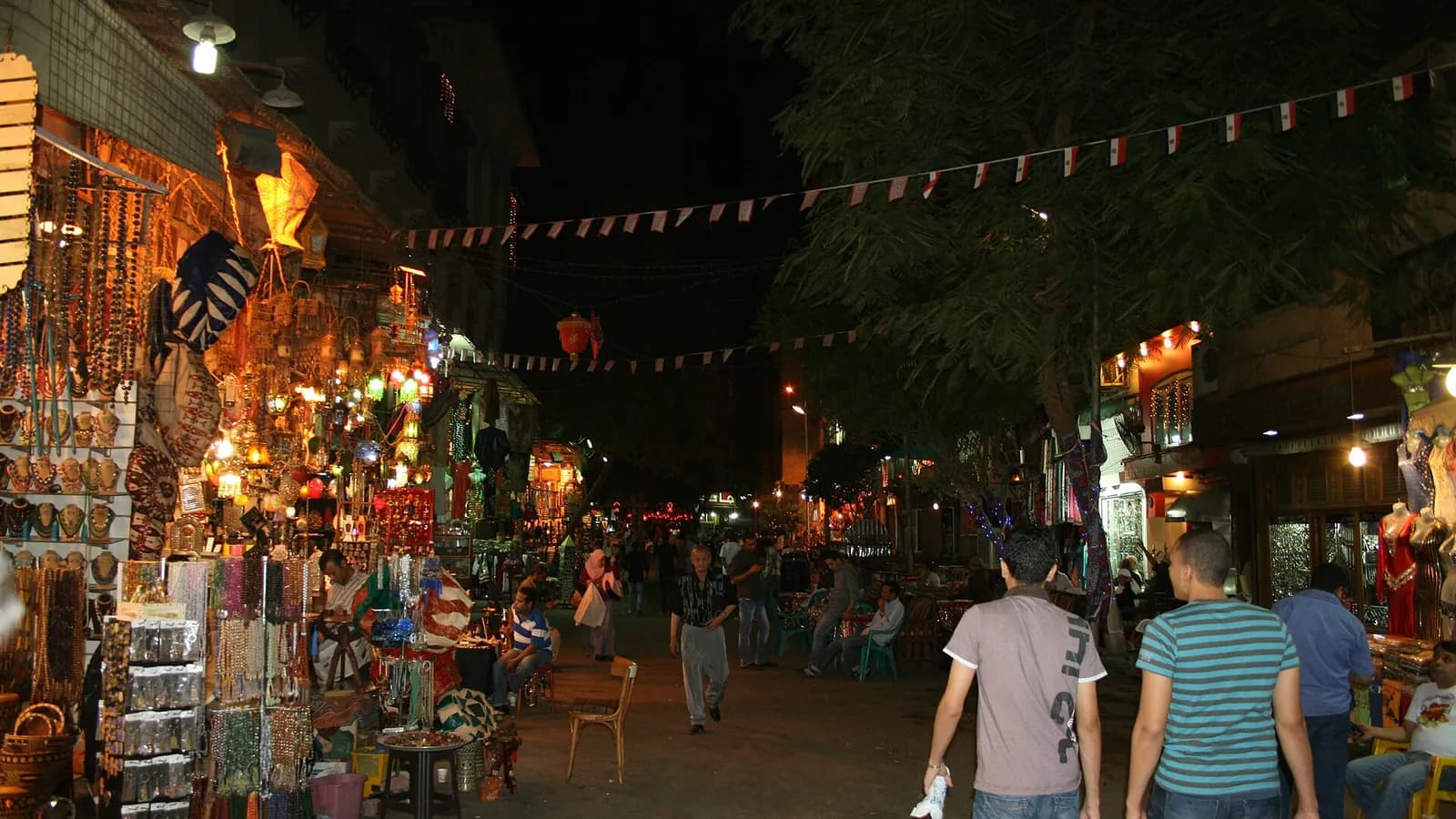
You don't need a time machine — you need a good appetite and a walk through Cairo. Start the day with ful and ta'ameya from a street cart; grab a bowl of koshari for lunch (the classic downtown shops serve nothing else); try molokhia with rabbit or chicken at a baladi restaurant; and finish with basbousa or om ali and a mint tea at an Egyptian coffeehouse. Our Egyptian street food guide, Egyptian food guide and where to eat in Cairo point you to the best of it, and vegetarians will find Egypt a delight — see vegetarian and vegan Egypt, since so many staples are plant-based by tradition.
The best way to eat through the history is with someone who knows the carts and back-street kitchens. Browse Cairo food tours and tasting experiences on This is Egypt and eat your way from the pharaohs to the present.
Common questions
How old is Egyptian cuisine?
It's one of the world's oldest living food cultures. Staples like ful medames (fava beans), bread and beer, molokhia, onions, garlic, dates and figs date back to Pharaonic times and are still central to the Egyptian table today.
What did ancient Egyptians eat?
Their diet centred on bread and beer — both made from emmer wheat and barley — alongside fava beans, vegetables like onions, garlic, leeks and lettuce, plus dates, figs, honey, fish and, for those who could afford it, meat and fowl.
Is ful medames really an ancient dish?
Yes — slow-cooked fava beans (ful medames) were eaten in ancient Egypt and remain the country's beloved national breakfast, typically dressed with oil, lemon, cumin and garlic.
Is koshari an ancient Egyptian food?
No — koshari, the famous rice-lentils-macaroni-chickpea street dish, is a relatively modern invention thought to have taken shape in the 19th century, possibly influenced by the Indian dish khichri. But it's built on the ancient grain-and-pulse foundation of Egyptian eating.
What is Egyptian bread called and why does it matter?
The common flatbread is aish baladi, and the word aish literally means 'life' — a sign of how fundamental bread has been since antiquity. It's the direct descendant of ancient Egyptian loaves and accompanies nearly every meal.
What foreign influences shaped Egyptian food?
Arab and wider Middle Eastern cooking added rice, spices, grilled meats and sweets; Ottoman Turkish influence shaped café culture; and Mediterranean/Levantine trade brought mezze staples like tahina and stuffed vegetables — all layered onto the ancient base.
How can I taste Egypt's food history as a visitor?
Eat ful and ta'ameya for breakfast, koshari for lunch, molokhia at a local restaurant, and finish with sweets and mint tea at a coffeehouse. A guided Cairo food tour is the easiest way to hit the best carts and kitchens.
Is Egyptian food good for vegetarians?
Very — many of its oldest staples (ful, ta'ameya, koshari, molokhia, mezze) are plant-based by tradition, so vegetarians and vegans eat exceptionally well in Egypt.
Book it on This is Egypt
Turn this guide into a trip
Cairo: Pyramids & Great Sphinx Private Tour with Camel Ride
From Hurghada: Cairo & Giza Highlights Day Tour

Cairo 8 Hour Private Tour of Pyramids & Grand Egyptian Museum
Keep reading
Egypt Tour Prices by Activity (2026): What Each Type Really Costs
What every type of Egypt experience actually costs — from a 1,700 EGP camel ride to a 48,500 EGP Nile cruise — based on 29,710 real bookable tours across seven platforms.
By TiE Editors6 min read
Egypt Travel Guide: Everything You Need to Plan the Trip of a Lifetime
The complete Egypt travel guide — when to go, how long to stay, what it costs, safety, what to pack, and the must-see sights, from the Pyramids to the Nile.
By TiE Editors9 min read
Egypt Tour Prices by City (2026): Where Experiences Cost Most and Least
Tour prices vary hugely by city, from Hurghada's cheap Red Sea days to Aswan's pricier Nile trips. Real median prices from nearly 23,000 listings, city by city.
By TiE Editors8 min read