
Getting Around Egypt: Flights, Trains & Taxis (2026)
Domestic flights, the Cairo-Luxor-Aswan sleeper train, intercity buses, Uber, the Cairo metro and Nile boats - how to pick the right one for every route.
Quick answer: Egypt's headline sights sit hundreds of kilometres apart, so how you move between them shapes the whole trip. Fly when time is tight - a 75-minute flight replaces a 10-hour drive between Cairo and Upper Egypt. Take the overnight sleeper train down the Nile for a slower, cheaper, more romantic version of the same journey. Use ride-hailing apps (Uber, Careem) inside Cairo and Alexandria to skip fare haggling entirely. And leave the driving to locals - do not rent a car and drive yourself unless you have a very specific reason. Here is how each mode actually works in 2026.
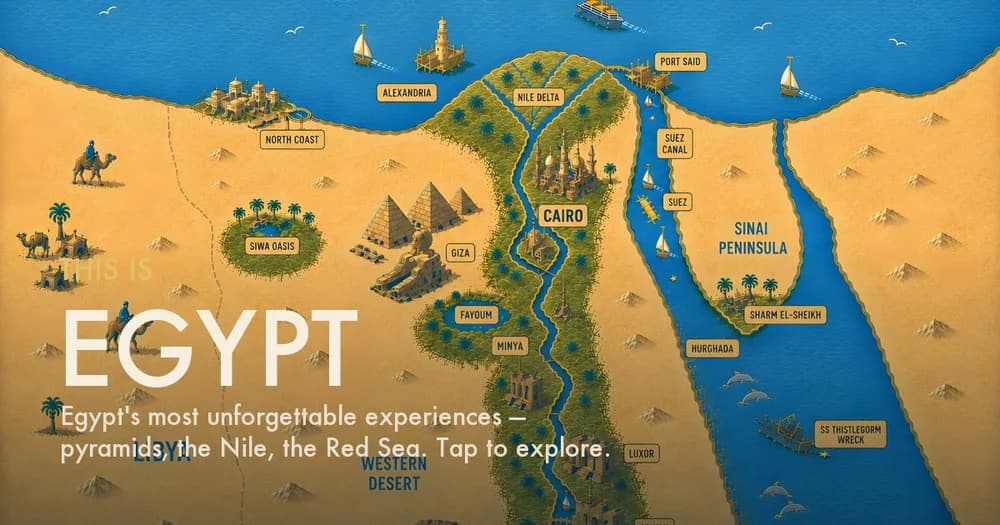
The classic corridor: Cairo - Luxor - Aswan
Almost every first trip follows the Nile spine: Cairo (pyramids, the Grand Egyptian Museum), then Luxor and Aswan in Upper Egypt. There are three sensible ways to cover it, and most people mix them.
Fly if you have under 10 days. EgyptAir and its group carriers (Air Cairo, Nile Air) run frequent hops from Cairo to Luxor and Aswan, roughly 75-90 minutes in the air. One-way fares typically land around US$60-150 (about 3,000-7,500 EGP) depending on how far ahead you book. It is the single biggest time-saver in the country.
Take the sleeper train if you want to trade a hotel night for a moving one. The overnight service (run by Watania/Abela) leaves Cairo in the evening and reaches Luxor before dawn and Aswan by breakfast. You wake up in Upper Egypt with a day gained and a night's accommodation paid for.
Cruise or take a day train for the short Luxor-Aswan leg (about 3-4 hours by rail, or 3-4 days by boat with temple stops built in). A Nile cruise between the two is transport and hotel in one - more on that below.
Mode comparison for key routes
| Route | Mode | Time | Rough cost (per person) | Comfort |
|---|---|---|---|---|
| Cairo - Luxor | Flight | ~75 min | US$60-150 | High, but airport faff |
| Cairo - Luxor/Aswan | Sleeper train | 10-13 hrs (overnight) | US$80-130 in a cabin | Good; private cabin, meals |
| Cairo - Luxor | Day train | ~9-10 hrs | US$25-45 (1st/2nd class) | Fair; long but scenic |
| Luxor - Aswan | Day train | 3-4 hrs | ~US$10-20 | Fair |
| Luxor - Aswan | Nile cruise | 3-4 days | from ~13,900 EGP all-in | Very high |
| Cairo - Hurghada | Flight | ~1 hr | US$60-90 | High |
| Cairo - Hurghada | Bus (Go/Blue) | 5-6 hrs | US$13-25 | Good coach |
| Cairo - Sharm | Flight | ~1 hr | US$70-120 | High |
| Cairo - Sharm | Bus | 8-9 hrs | US$19-30 | Good coach |
Prices move with season and demand - treat them as planning anchors and confirm on the day.
Domestic flights
Flying is the default for long jumps. Almost everything routes through Cairo, so Luxor-to-Hurghada or Aswan-to-Sharm usually means a connection in the capital rather than a direct hop. Book EgyptAir (or Air Cairo / Nile Air) online; the EgyptAir group has been consolidating routes and running domestic promotions into 2026, and non-residents sometimes pay a slightly higher fare than Egyptians on the same seat.
Practical notes: arrive with time to spare because domestic security is thorough, keep your passport handy (you will show it), and build in a buffer if you are connecting from an international arrival at Cairo - terminals are far apart. Baggage allowances on the low-cost carriers can be tight, so check before you pack.
Trains: how to book, and the sleeper
Egypt's rail network is the old British-built spine from Alexandria through Cairo down to Aswan, run by Egyptian National Railways (ENR). It is the country's most characterful way to travel, and for the Nile corridor it is genuinely useful.
Day trains run the Cairo-Luxor-Aswan line several times daily. Foreigners are generally steered toward the air-conditioned 1st and 2nd class services (comfortable, assigned seats). You can buy tickets at the station, but for popular departures it is worth booking ahead. ENR's own site and app handle bookings; if that fails for your card, station counters and reputable agents are the fallback.
The sleeper (Watania Sleeping Train, operated by Abela) is the marquee service - trains 86 southbound and 87 northbound, running daily. Foreigners book through the sleeper operator's own channel rather than the standard ENR system, and there are separate cabins and quotas for foreign passengers. Expect roughly US$80 per person in a shared double cabin and around US$120-130 for a single, dinner and a light breakfast included. Cabins are basic but private, with a fold-down bunk and a washbasin. It is not luxury - it is a clean, safe, sociable overnight that saves you a hotel night and a travel day at once. Book well ahead in high season (October-April).
The fast Cairo-Alexandria line (roughly 2.5-3 hours) is also a pleasant, cheap day trip on its own.
Intercity buses: Red Sea, Sinai and the oases
Where trains do not go - the Red Sea coast, Sinai, and the Western Desert oases - buses take over, and Egypt's coaches are better than many travellers expect. Go Bus and Blue Bus are the two main operators, both with air-conditioned fleets, online booking, assigned seats, and tiers from economy up to business/first with wider seats, Wi-Fi and onboard toilets.
Sample runs: Cairo to Hurghada (5-6 hours), Cairo to Sharm el-Sheikh (8-9 hours), and the short Sharm-to-Dahab hop (about 2 hours, often under US$10). Buses to the oases (Bahariya, Farafra, Dakhla, Kharga) leave from Cairo too, though services are less frequent - plan around the timetable. Overnight coaches to the Red Sea are a common budget move; bring a layer, because the air-conditioning runs cold.
One caution: routes across Sinai and some desert roads pass through military checkpoints, and services can be adjusted for security or weather. Book with the established operators, keep your passport on you, and check current advice before travelling into North Sinai in particular.
Airport transfers: from the airport to your hotel
Every Egyptian gateway — Cairo (CAI), Hurghada (HRG), Sharm el-Sheikh (SSH), Luxor (LXR), Marsa Alam (RMF) and Aswan (ASW) — has arrivals taxis, but a pre-booked private airport transfer is usually the least stressful option, especially late at night or with kids and luggage. A driver meets you at arrivals with a name board, helps with your bags and takes you straight to your hotel at a fixed price — no haggling, no meter surprises.
As a rough 2026 guide, a private airport transfer costs around:
| Airport | To | Typical private transfer |
|---|---|---|
| Cairo (CAI) | Giza / central Cairo | 600–1,200 EGP |
| Hurghada (HRG) | Hurghada / El Gouna | 350–800 EGP |
| Sharm el-Sheikh (SSH) | Naama Bay / Nabq | 350–700 EGP |
| Luxor (LXR) | East or west bank | 300–600 EGP |
| Marsa Alam (RMF) | Marsa Alam / Port Ghalib | 500–1,000 EGP |
Airport taxis are cheaper but expect to negotiate the fare before you get in; in Cairo, ride-hailing apps (Uber, Careem) also serve the airport and take the argument out of it. To have it sorted before you land, book a private Cairo airport transfer, a Hurghada airport transfer to any hotel, a Sharm el-Sheikh airport transfer or a Luxor hotel–airport transfer in advance.
Getting around inside cities
Ride-hailing is the answer in Cairo and Alexandria. Uber and Careem both work well, show an upfront price, track your route, and remove the single biggest friction of Egyptian travel - negotiating with taxi drivers. An Uber from Cairo Airport to downtown runs roughly 150-250 EGP (about US$3-5); the same trip by street taxi is often quoted at a flat 300-500 EGP with a "broken" meter. Careem also lets you hail a metered white taxi through the app if no private car is nearby.
White and black taxis still fill the streets. The newer white taxis have meters (insist on it, or agree a price before you get in); the older black-and-white ones do not, so settle the fare first. Carry small notes - drivers rarely have change for big bills, and "no change" is a classic way to round your fare up.
The Cairo Metro is fast, cheap and beats the traffic. Three lines cross the city, tickets are a flat few Egyptian pounds by distance band, and the front carriages of each train are reserved for women (useful to know at rush hour). Buy a paper ticket or rechargeable card at the station. Above ground, the new monorail linking Cairo to the New Administrative Capital opened in phases through early 2026 and connects to Metro Line 3 - handy if you are staying out east, less relevant for classic tourist sites.
Microbuses and public buses are how most Cairenes move, but routes are unmarked, announced in Arabic, and hard for visitors to use - skip them unless a local is guiding you.
Nile transport
On the river, boats are both sightseeing and transport. A Nile cruise between Luxor and Aswan (3-4 nights, or a shorter Aswan-Luxor run) carries you between Edfu, Kom Ombo and the riverside temples while you sleep and eat on board - it is the most comfortable way to see this stretch, if not the fastest. Dahabiyas are smaller, sail-powered boats for a slower, quieter version.
For short hops, a felucca - the traditional lateen-sail boat - is the classic Aswan experience: an hour around Elephantine Island and the Botanical Garden at sunset. Public river ferries and water taxis also cross the Nile in Cairo, Luxor and Aswan for a few pounds, a cheap and scenic way to reach the west bank. See our Aswan-to-Luxor Nile cruise guide for choosing a boat and itinerary.
Car hire and driving: mostly, don't
Can you rent a car in Egypt? Yes. Should you drive it yourself? Almost never. Cairo traffic is dense and improvisational, lane markings are advisory, and local driving conventions take years to read. Rural highways bring their own hazards - unlit vehicles, livestock, sudden speed bumps - and some desert and Sinai routes run through checkpoints where a foreign self-driver is an unnecessary complication.
The far better option is a private car with a driver, which most agencies and hotels arrange by the day. For the price of a rental plus fuel plus your own stress, you get someone who knows the roads, handles checkpoints and parking, and waits while you explore. For intercity distances, flights and trains still beat driving on time and comfort. If you do rent, stick to short, simple routes (a Red Sea resort strip, say), never drive at night, and carry an International Driving Permit alongside your licence.
Accessibility notes
Egypt is improving but still challenging for travellers with reduced mobility. Ancient sites mean uneven ground, steep ramps into tombs, and few lifts; the Grand Egyptian Museum is a notable modern exception with step-free access. Trains and older metro stations often lack level boarding. The most reliable approach is a private car-and-driver plus a company that can pre-arrange assistance at sites and airports - book specialist support in advance rather than improvising on arrival.
Safety and comfort tips
- Agree the price before you move in any unmetered taxi, or just use an app.
- Carry small cash in Egyptian pounds - many drivers, station kiosks and ferries do not take cards.
- Keep your passport on you for domestic flights, sleeper trains and desert-road checkpoints.
- Book the sleeper and cruises early in peak season (October-April).
- Dress in layers on buses and trains - air-conditioning runs cold.
- Women travelling solo can use the front metro carriages and the many women-only spaces; ride-hailing with tracked routes adds peace of mind.
For the bigger picture on planning, read our first-timer's Egypt travel tips and the full breakdown of what an Egypt trip costs.
Prefer to skip the logistics entirely? This is Egypt can line up your flights, transfers, guides and Nile boat as one seamless trip. Browse experiences and transfers and travel the country the easy way.
A real team available 24/7 to assist you — free
Seif and the team reply on WhatsApp 24/7 — trip questions, custom plans and booking help.
Ask Seif on WhatsAppCommon questions
Is the Cairo to Aswan sleeper train worth it?
Yes, if you value saving a hotel night and a travel day. You board in Cairo in the evening, sleep in a private cabin with dinner and breakfast included, and arrive in Luxor before dawn or Aswan by morning. It is clean and safe rather than luxurious, and costs roughly US$80-130 per person depending on cabin type.
How do foreigners book train tickets in Egypt?
For regular day trains, use Egyptian National Railways' website or app, or buy at station counters. The overnight sleeper is booked separately through the Watania/Abela sleeper operator, which has its own foreigner cabins and quota. Book popular departures and the sleeper well ahead in high season.
Should I fly or take the train between Cairo and Luxor?
Fly if your trip is under about 10 days - it is 75 minutes versus 10-13 hours. Take the sleeper train if you want to save a hotel night, travel overnight, and enjoy the journey. Many travellers fly one way and take the train the other.
Is Uber safe and available in Egypt?
Yes. Uber and Careem both operate reliably in Cairo and Alexandria, with upfront pricing and tracked routes. They are cheaper and far less stressful than negotiating with street taxis, and are the recommended way to get around those two cities.
Can I self-drive in Egypt as a tourist?
You can rent a car, but it is not recommended. Cairo traffic is chaotic, rural roads have unlit hazards, and some routes pass military checkpoints. Hire a private car with a driver instead - it costs little more and removes the stress and risk.
How much are domestic flights within Egypt?
One-way fares between Cairo and Luxor, Aswan, Hurghada or Sharm typically run about US$60-150 (roughly 3,000-7,500 EGP), depending on route, season and how early you book. EgyptAir, Air Cairo and Nile Air cover the main domestic network, mostly via Cairo.
How do I get from Cairo Airport to the city?
The easiest and cheapest way is Uber or Careem, around 150-250 EGP (US$3-5) to downtown. Street and airport taxis often quote a flat 300-500 EGP with the meter conveniently 'broken', so agree the fare first or just use an app.
What is the best way to travel between Luxor and Aswan?
A day train takes 3-4 hours and costs little. But the most rewarding option is a Nile cruise (3-4 days) that stops at Edfu, Kom Ombo and other riverside temples - it doubles as your accommodation and sightseeing between the two cities.
Are intercity buses in Egypt comfortable?
Yes. Go Bus and Blue Bus run modern air-conditioned coaches with assigned seats, online booking, and business/first tiers with Wi-Fi and toilets. They are the main way to reach the Red Sea coast, Sinai and the oases where trains do not run.
Egypt's bestsellers
The experiences travelers book most, across the country





Keep reading
Hurghada Diving (2026): Best Sites, Packages & Prices
Diving in Hurghada — the best reefs (Giftun, Careless Reef, Dolphin House) and Abu Nuhas wrecks, Discover Scuba vs PADI courses, season and water temps, and real 2026 prices.
By TiE Editors7 min read
Hurghada Snorkeling Trips (2026): Best Reefs, Prices & How to Choose
Where to snorkel from Hurghada in 2026 — Orange Bay, Giftun, Mahmya, Utopia and Dolphin House — with boat types, marine life, month-by-month sea temperatures, family tips and real prices from 1,000+ bookable trips.
By TiE Editors7 min read
Egypt Tour Prices by Activity (2026): What Each Type Really Costs
What every type of Egypt experience costs — half day, full day or overnight — as a median and a mid-half range in US dollars, from 12,370 live bookable listings.
By TiE Editors6 min read