Cairo Citadel & the Muhammad Ali Mosque: A Visitor's Guide
How to visit the Citadel of Salah al-Din in Cairo - the alabaster Muhammad Ali Mosque, panoramic views to the Pyramids, tickets, hours, and the museums inside.
Quick answer: The Citadel of Salah al-Din sits on a spur of the Muqattam hills above Cairo, a walled medieval fortress that served as Egypt's seat of power for roughly 700 years. Its centerpiece is the domed Mosque of Muhammad Ali, the alabaster-clad landmark you can pick out from half the city. A single ticket (around 550 EGP for foreign adults in 2026) gets you into the whole complex: the great mosque, two older ones, several museums, a palace, and ramparts with a view that reaches the Pyramids of Giza on a clear day. Budget two to three hours, dress modestly, and remove your shoes to enter the main mosque.
Here's how to make the most of it.
A short history: Saladin's fortress
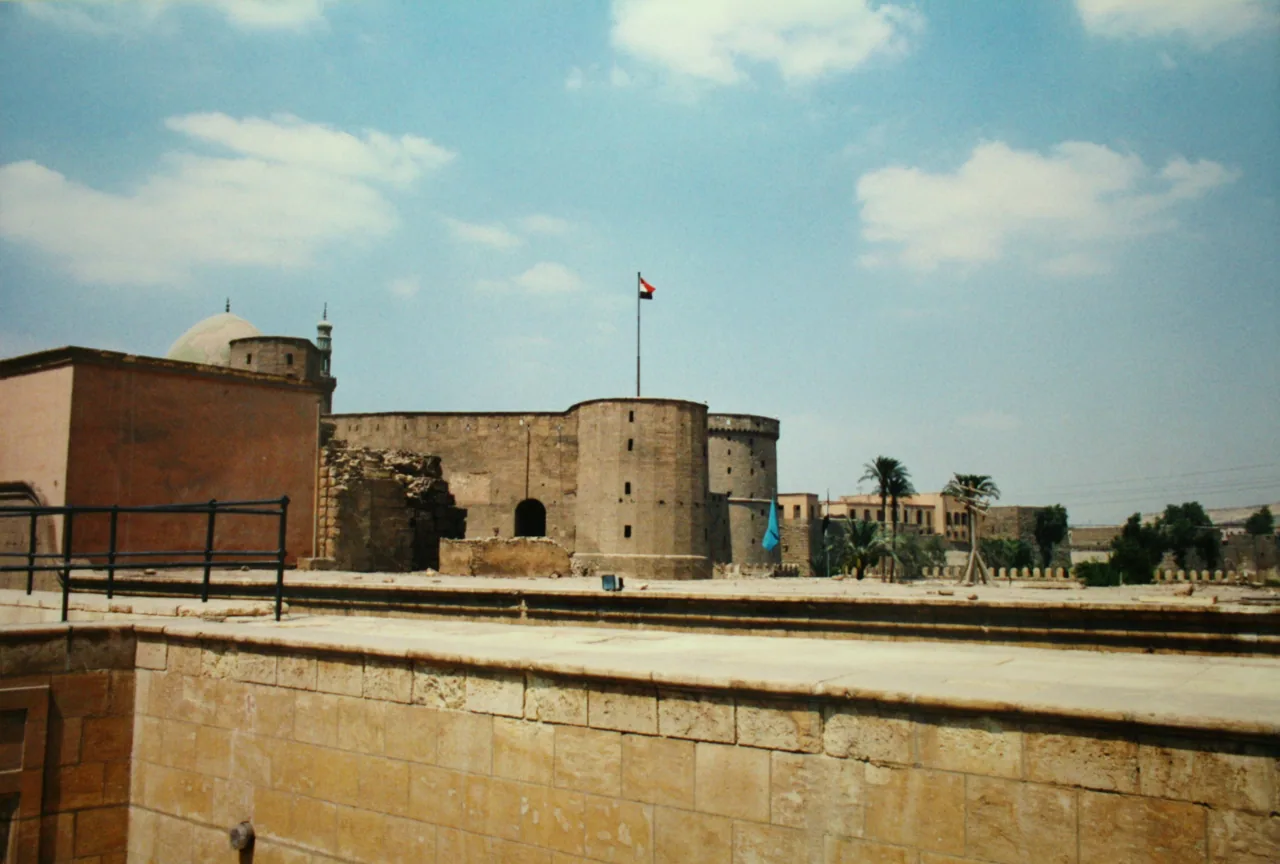 The famous Kurdish sultan Salah al-Din al-Ayyubi (Saladin to Europeans) began fortifying this hilltop in 1176, cutting stone from the Muqattam ridge and, according to Arab chroniclers, from the ruins of older Cairo. He chose the spot for its command over the city and its cool desert breezes, and enclosed both the Citadel and the medieval town within a single defensive wall. He never lived to see it finished; his successors completed it in the 1180s.
For the next seven centuries the Citadel was where Egypt was ruled. The Ayyubids, then the Mamluk sultans, then the Ottoman governors all held court here. The medieval historian al-Maqrizi records that the halls of the fourteenth-century sultan al-Nasir Muhammad drew "poets, minstrels, and musicians." It was also a stage for Cairo's bloodier chapters. The Mamluk era was, in the words of the old Baedeker handbook, "an almost continuous succession of revolutions, rapine, and bloodshed," and more than one sultan was strangled inside these walls.
The most infamous episode came in 1811. Muhammad Ali Pasha, the Albanian commander who founded modern Egypt's ruling dynasty, invited the Mamluk beys to a celebration at the Citadel and had them trapped and killed in a narrow passage as they left. It ended Mamluk power for good. The rulers eventually moved out to Abdeen Palace downtown in the 1870s, but the fortress remained a military zone, which is why parts of it still feel like a base rather than a museum.
The Mosque of Muhammad Ali (the Alabaster Mosque)
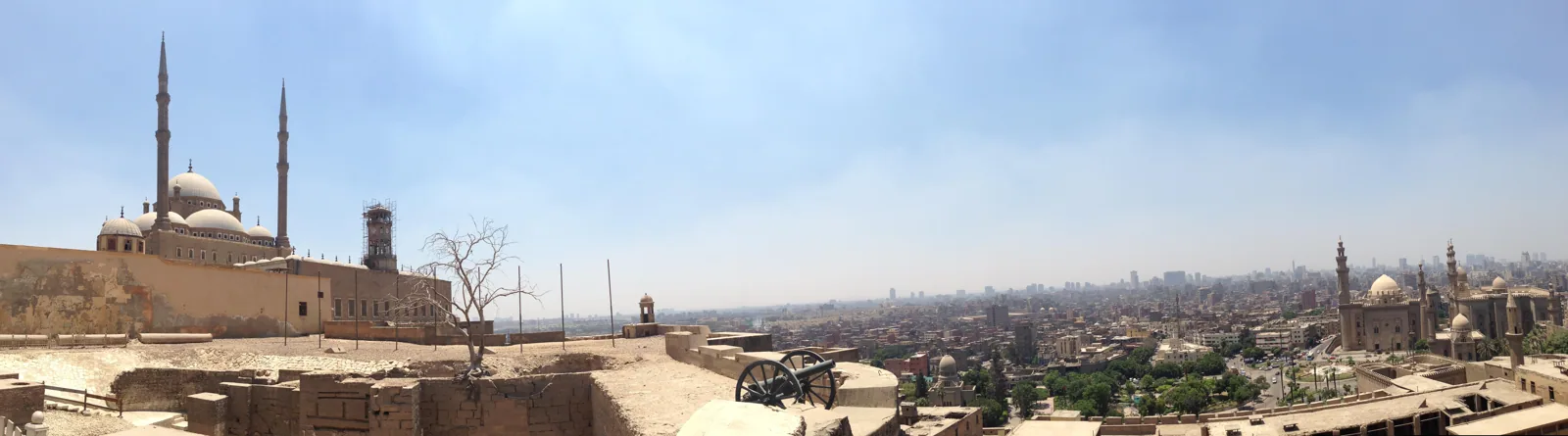 This is what you came for. Muhammad Ali commissioned the mosque in 1830 as a monument to himself and to a new, outward-looking Egypt, and it was completed after his death, around 1857. He is buried inside, in a marble tomb by the entrance.
The design is deliberately Ottoman rather than Egyptian: a huge central dome flanked by half-domes, two slender pencil minarets, and a scale modeled on the imperial mosques of Istanbul. The lower walls, inside and out, are faced with the pale yellow alabaster that gives the building its nickname. The stone came from Beni Suef, south of Cairo, the same soft limestone quarried since antiquity. Step into the vast prayer hall and look up: the dome rises on a forest of hanging lamps, and the acoustics swallow every footstep.
In the arcaded courtyard, look for the ornate French clock tower gifted by King Louis-Philippe in 1845 in exchange for the ancient obelisk that now stands in the Place de la Concorde in Paris. Locals will tell you the clock has barely worked since it arrived; the obelisk, meanwhile, is still standing in France. Make of that trade what you will.
The view: minarets, mosques, and the Pyramids
Walk out to the terrace on the western side of the mosque. From here, the whole of historic Cairo opens up below you, a horizon bristling with the minarets and domes of Islamic Cairo. Directly in your sightline are the twin minarets of the Sultan Hassan and al-Rifa'i mosques at the foot of the hill. On a clear, low-pollution day, usually winter mornings after rain or wind, you can trace the skyline all the way west to the three Pyramids of Giza rising out of the haze. It is the single best free panorama in the city, and the reason the Citadel appears on every Cairo itinerary.
The other mosques and the museums
Most visitors photograph the Alabaster Mosque and leave. Give the rest of the complex twenty minutes and you'll see why it rewards a slower visit.
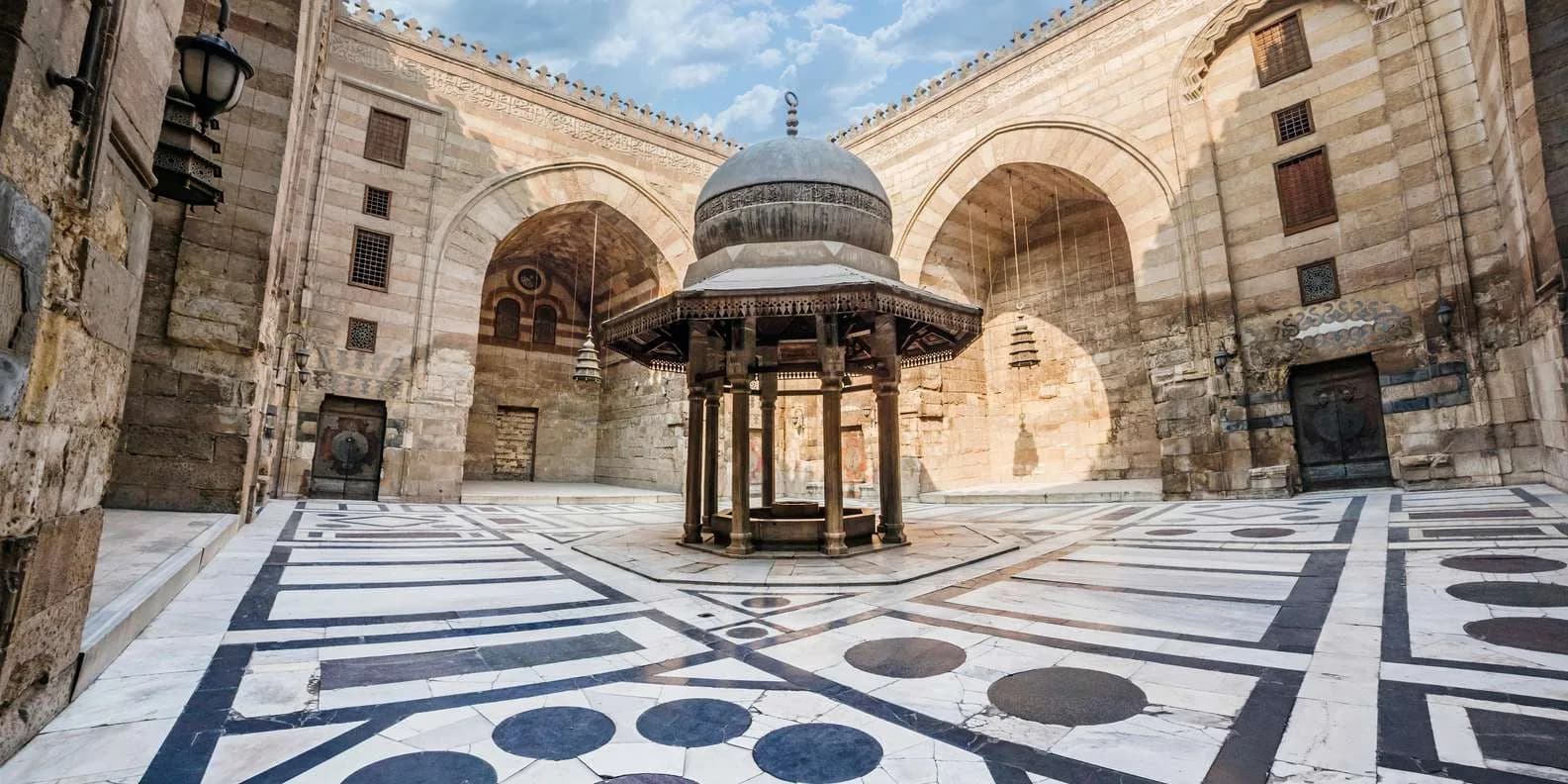
- Mosque of al-Nasir Muhammad (1318-1335). The oldest surviving structure inside the Citadel, and a complete contrast to Muhammad Ali's grand statement. Built by the Mamluk sultan al-Nasir Muhammad, it is austere, open to the sky, and topped by two minarets covered in green faience tiles. Easy to walk past; worth the detour.
- Mosque of Sulayman Pasha (1528). A small, jewel-like early Ottoman mosque tucked in the northern enclosure, with a painted interior that repays a look up.
- National Military Museum. Housed in the nineteenth-century Harem Palace, it runs from pharaonic warfare through to the modern Egyptian army, with courtyards full of tanks, jets, and artillery. Large, and heavy on hardware.
- National Police Museum. Smaller and quirkier, built over the old prison, covering the history of policing in Egypt (including a wing on famous crimes). Good views from its terrace, too.
- Gawhara (Jewel) Palace. Muhammad Ali's early-nineteenth-century residence, with Ottoman-style reception rooms, gilded ceilings, and period furniture. Compact and often quiet.
- Bir Yusuf (the Well of Joseph). A remarkable spiral well cut about 90 metres straight down through the rock by Saladin's engineers to reach the water table, so the fortress could survive a siege. Access can be restricted, so ask on the day.
Tickets, hours, and how long to spend
The Citadel charges one combined entry ticket that covers the mosques and, in principle, the museums inside. Egypt has moved almost entirely to a cashless system, so bring a bank card; cash is no longer accepted at most gates. You can also buy in advance through the official portal, egymonuments.com. Always treat published prices as a guide and confirm on the day, as Egypt has raised site fees repeatedly in recent years.
| Detail | What to know (2026) |
|---|---|
| Entry ticket (foreign adult) | ~550 EGP (about US$11-12) |
| Foreign student (with ISIC) | ~275 EGP |
| Payment | Card only (cashless) |
| Opening hours | ~9:00-17:00 (Oct-Apr); ~9:00-18:00 (May-Sep) |
| Mosque closures | Briefly during the five daily prayers; longer around Friday midday prayer |
| Time needed | 2-3 hours for the full complex |
| Dress code | Shoulders and knees covered; remove shoes to enter the mosque |
Arrive by 9:30 to beat the tour-bus crowds and the midday heat, and aim to be inside the mosques before the muezzin's call, when they briefly close to visitors. Security starts clearing the site around 30 minutes before closing, so don't cut it fine.
On dress and shoes: cover your shoulders and knees. Women don't need to cover their hair for the museums or courtyards, but a light scarf is useful and appreciated inside the prayer hall. You'll leave your shoes at the mosque entrance (there's usually an attendant; a small tip is normal) or carry them in a bag.
How to fit it into your Cairo day
The Citadel pairs naturally with the medieval city below it. The classic half-day loop:
- Start at the Citadel in the morning, while it's cool and clear.
- Walk or take a short taxi down to the Sultan Hassan and al-Rifa'i mosques, the pair of soaring monuments you spotted from the terrace, facing each other across a small square.
- Continue into Islamic Cairo and finish with tea and shopping in the medieval bazaar. Our Islamic Cairo & Khan el-Khalili guide maps out that whole quarter, from al-Muizz Street to the spice stalls.
For how the Citadel slots in among the city's other big sights, from the Grand Egyptian Museum to Coptic Cairo, see our full rundown of things to do in Cairo, and the wider Cairo travel guide for getting around, when to go, and where to stay.
A private guide is worth it here. The complex has no strong signage and a dense, tangled history, and a good guide turns a pretty mosque and a nice view into 700 years of Egypt. This is Egypt builds custom Cairo days around the sites you most want to see, Citadel included.
Practical note: the Citadel is a working military zone in parts, so photography is fine in the tourist areas but avoid pointing your camera at soldiers or checkpoints.
What's On in Egypt
Events in Cairo


A real team available 24/7 to assist you — free
Seif and the team reply on WhatsApp 24/7 — trip questions, custom plans and booking help.
Ask Seif on WhatsAppCommon questions
How much is the Cairo Citadel ticket in 2026?
Around 550 EGP (roughly US$11-12) for foreign adults, and about 275 EGP for foreign students with an ISIC card. One ticket covers the mosques and museums inside. Egypt has gone cashless at most sites, so bring a bank card; prices rise often, so confirm on the day or via egymonuments.com.
What are the Citadel's opening hours?
Roughly 9:00 to 17:00 from October to April, and 9:00 to 18:00 from May to September, daily. The Mosque of Muhammad Ali closes briefly to visitors during the five daily prayer times, and for longer around Friday midday prayer, so plan around that.
Why is it called the Alabaster Mosque?
The lower walls of the Mosque of Muhammad Ali, both inside and out, are faced with pale yellow alabaster (a soft limestone) quarried near Beni Suef, south of Cairo. That cladding gives the mosque its glowing colour and its nickname.
Can you see the Pyramids from the Cairo Citadel?
Yes, on a clear day. From the terrace beside the Muhammad Ali Mosque you look west across the whole of historic Cairo, and when the air is clear, usually a winter morning, the three Giza pyramids are visible on the horizon. It's one of the best panoramas in the city.
What is the dress code for the Citadel and its mosque?
Cover your shoulders and knees. You must remove your shoes to enter the Mosque of Muhammad Ali. Women don't need to cover their hair for the grounds or museums, but a light scarf is useful and appreciated inside the prayer hall.
How long should I spend at the Citadel?
Allow two to three hours to see the Muhammad Ali Mosque, the older al-Nasir Muhammad and Sulayman Pasha mosques, the museums, Gawhara Palace, and the viewpoints without rushing. If you only want the main mosque and the view, an hour is enough.
Who built the Cairo Citadel and when?
The sultan Salah al-Din al-Ayyubi (Saladin) began building it around 1176 on the Muqattam hills, and his successors finished it in the 1180s. It then served as Egypt's seat of government for about 700 years, until the rulers moved to Abdeen Palace in the 1870s.
What is there to do inside the Citadel besides the mosque?
The Mosque of al-Nasir Muhammad (its oldest structure), the small Ottoman Mosque of Sulayman Pasha, the National Military Museum, the National Police Museum, the ornate Gawhara Palace, and Bir Yusuf (Joseph's Well), a spiral shaft cut deep into the rock so the fortress could survive a siege.
What should I combine with a Citadel visit?
The Sultan Hassan and al-Rifa'i mosques sit directly below the hill and pair perfectly. From there you can walk into Islamic Cairo and finish at the Khan el-Khalili bazaar. It makes an easy half-day loop through medieval Cairo.
Book it on This is Egypt
Turn this guide into a trip



Egypt's bestsellers
The experiences travelers book most, across the country





Keep reading
Hurghada Diving (2026): Best Sites, Packages & Prices
Diving in Hurghada — the best reefs (Giftun, Careless Reef, Dolphin House) and Abu Nuhas wrecks, Discover Scuba vs PADI courses, season and water temps, and real 2026 prices.
By TiE Editors7 min read
Hurghada Snorkeling Trips (2026): Best Reefs, Prices & How to Choose
Where to snorkel from Hurghada in 2026 — Orange Bay, Giftun, Mahmya, Utopia and Dolphin House — with boat types, marine life, month-by-month sea temperatures, family tips and real prices from 1,000+ bookable trips.
By TiE Editors7 min read
Egypt Tour Prices by Activity (2026): What Each Type Really Costs
What every type of Egypt experience costs — half day, full day or overnight — as a median and a mid-half range in US dollars, from 12,370 live bookable listings.
By TiE Editors6 min read