Between Luxor and Aswan
Edfu and Kom Ombo on a Nile cruise
Between Luxor and Aswan, every cruise stops at two temples: Edfu's Temple of Horus, the most complete temple in Egypt, reached from the quay by horse carriage, and Kom Ombo's double temple of Sobek and Haroeris, which stands right above the moorings and is often visited at dusk. Both are included in the fare. On the way, ships pass through the lock at Esna. Dahabiyas add small sites such as El Kab and Gebel el-Silsila.
Luxor to Aswan
The stops between Luxor and Aswan
| Stop | What you see | When and how |
|---|---|---|
| Esna | Temple of Khnum, with its ceiling colours restored | Ships queue for the lock, often at night; few stop for the temple |
| Edfu | Temple of Horus, the most complete temple in Egypt | Early morning or late afternoon; reached by carriage or coach from the quay |
| Kom Ombo | Double temple of Sobek and Haroeris, Crocodile Museum | Late afternoon or evening; boats moor below the temple |
| Aswan | Arrival, usually by the next morning | See Aswan on a Nile cruise |
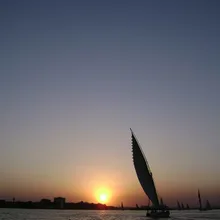
Sailing from Aswan, the order runs the other way: Kom Ombo first, then Edfu, then the lock and Luxor. The sailing itself is half the point of these days: the sun deck, the riverbank villages and palm groves, and sunset on the water. See Nile cruise itineraries.
Temple of Horus
Edfu: the Temple of Horus
Built under the Ptolemies over almost two centuries, Edfu is the most complete temple in Egypt: roof, pylons, sanctuary and the granite shrine of Horus are all in place, so you see how a temple worked. The reliefs on the outer wall tell the battle between Horus and Seth.
Ships moor at the Edfu quay and guests go up in horse-drawn carriages, about 15 minutes through town. Ask the boat whether carriages or a coach are used, and whether the carriage tip is included. Visits are timed for the cool of early morning or late afternoon; the earlier one is quieter.
Sobek and Haroeris
Kom Ombo: the double temple at dusk
Kom Ombo is a rare double temple, built for two gods, the crocodile god Sobek and Haroeris (Horus the Elder), with two entrances and two sanctuaries side by side. Boats moor directly below it, so there is no transfer, and many visit near sunset, when the temple is lit. Next door, the small Crocodile Museum shows mummified crocodiles from the local cemetery. On the walls, look for the carved surgical instruments and the calendar of festivals.
The lock
Esna: the lock and the restored temple
Ships pass through the lock at Esna one or two at a time, so they queue, and the crossing can happen at night or take hours. Vendors in rowing boats sell cloth by throwing it up to the decks. The Temple of Khnum in Esna town, its ceiling cleaned to show the original colours, is only on some itineraries; ask if it matters to you. Many dahabiyas start or end in Esna, so their guests see it.
Ship or dahabiya
What a dahabiya adds on these days
A dahabiya takes four or five nights over the same stretch and moors at small sites ships cannot reach: the rock tombs of El Kab, the sandstone quarries and shrines of Gebel el-Silsila, the camel market at Daraw and island stops for swimming or dinner. Edfu and Kom Ombo are visited too, often outside the ship crowds. The Lazuli Albatros, Loulia, Nora, Akhnaton and Iris all stop at Gebel el-Silsila. See sites only a dahabiya reaches. Dahabiyas cost about US$140 to US$1,500 per person per night, and ships US$120 to US$1,500.
Asked often
Edfu and Kom Ombo, answered
- Do Nile cruises stop at Edfu and Kom Ombo?
- Yes. Every Luxor to Aswan cruise stops at both, and the visits are included in the fare. Edfu is reached from the quay by horse carriage or coach; Kom Ombo stands directly above the moorings.
- How long is the stop at Edfu on a Nile cruise?
- Usually two to three hours including the carriage ride from the quay, about 15 minutes each way, and about an hour and a half in the Temple of Horus.
- What is the Esna lock on a Nile cruise?
- The lock at Esna lifts or lowers ships past the barrage, one or two at a time, so ships queue and the crossing can happen at night. Vendors in small boats sell cloth to the decks.