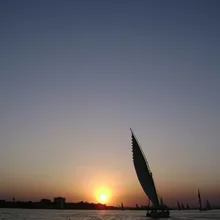
The dahabiya difference
Sites only a dahabiya reaches
A dahabiya is a small twin-masted sailing boat with a shallow draught, and that draught is the whole point. It moors directly against islands, sandbanks and riverbanks, so it reaches small sites between Esna and Aswan that the big motor ships, tied to purpose-built quays at the main towns, simply sail past. These are the places that make the slow boat worth it.
El Kab
East bank, about 80 km south of Luxor
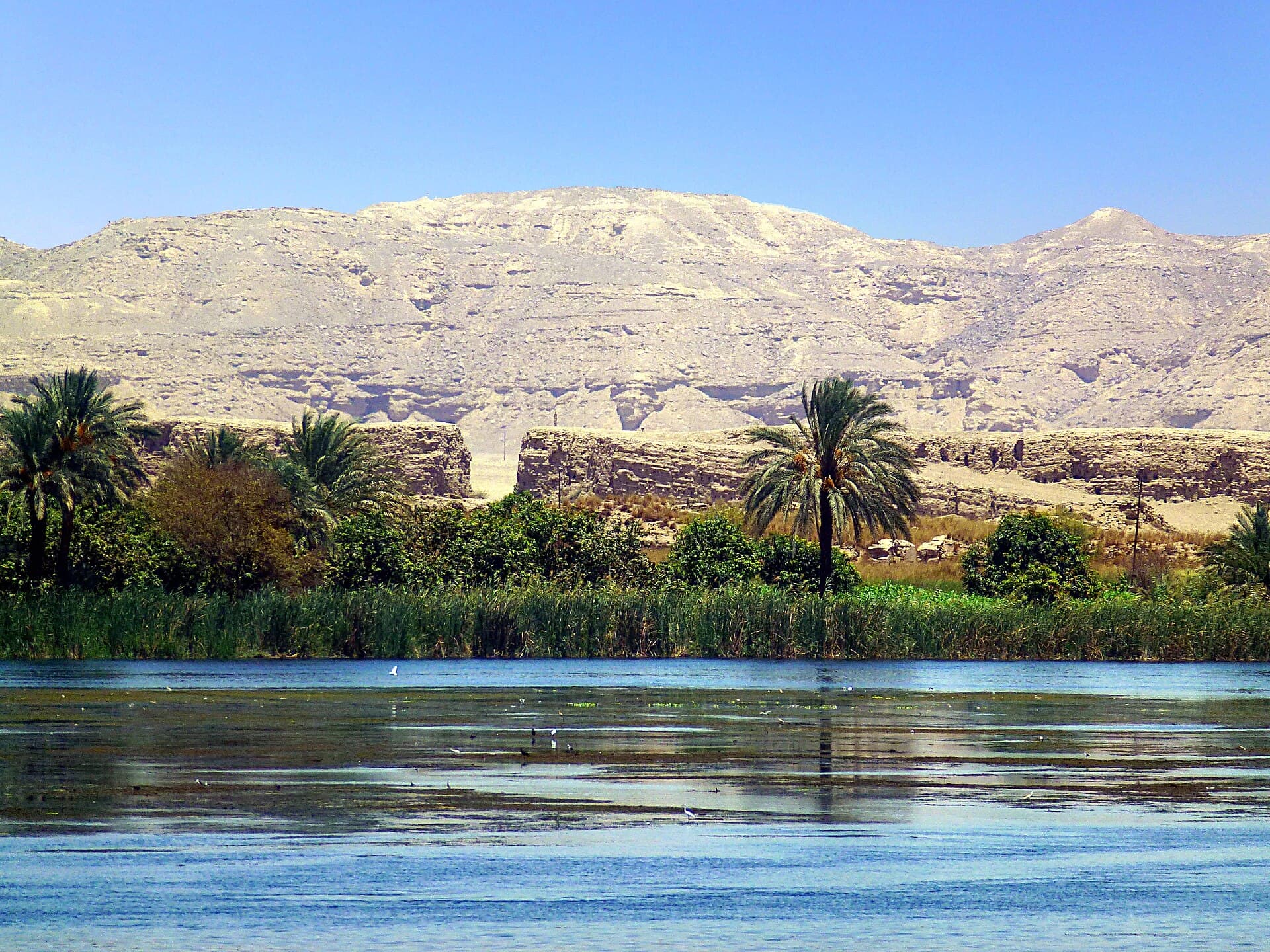
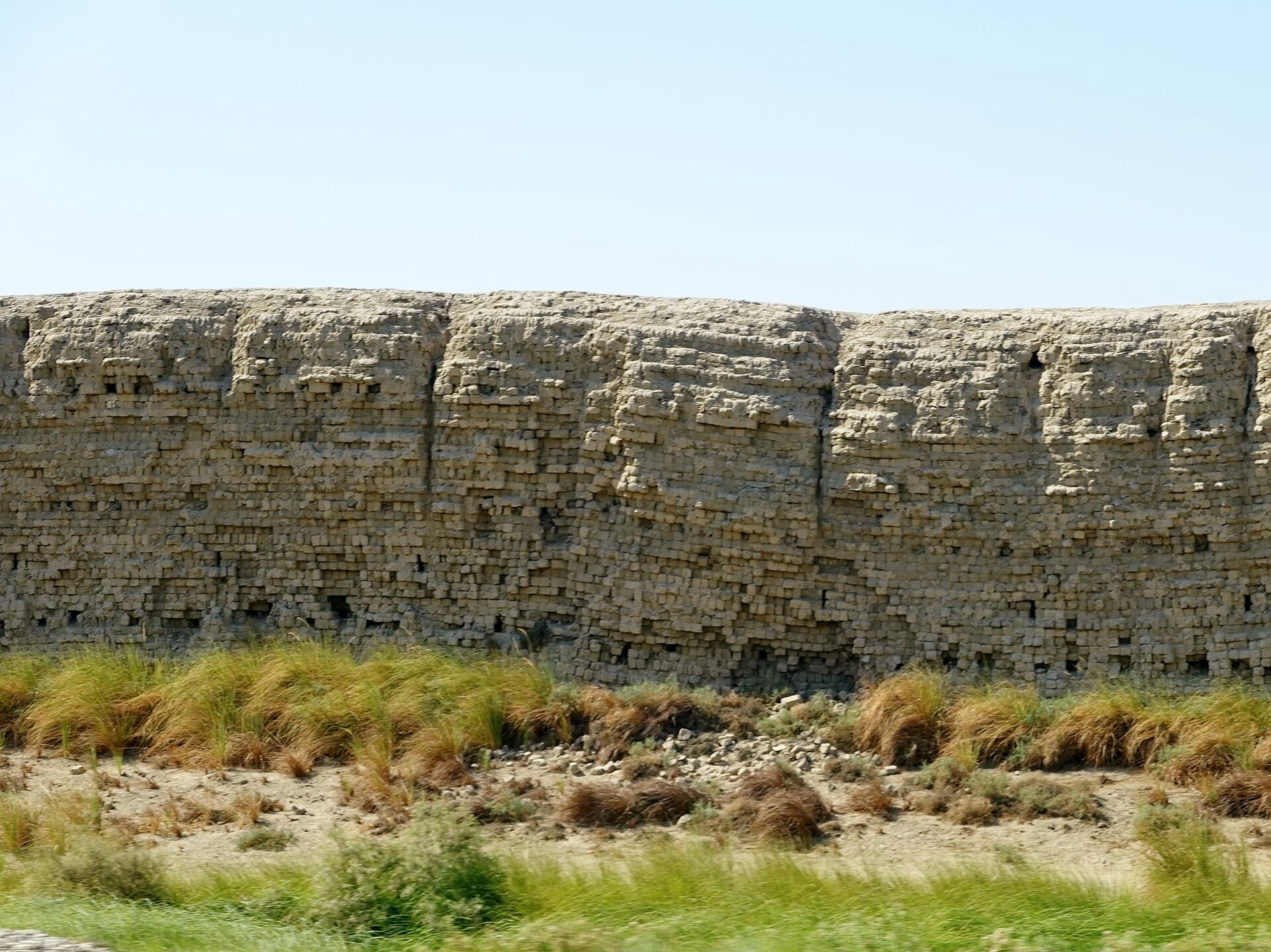
El Kab, ancient Nekheb, is one of the longest-occupied places in Egypt, with camp sites dated to around 6400 BC and settlement running through to the Coptic period. A colossal mudbrick enclosure wall, about ten metres high, still rings the temples of Nekhbet and Thoth.
In the cliff behind the town are decorated New Kingdom rock tombs, including that of Ahmose son of Ibana, whose walls carry a soldier's first-person account of the naval fighting that drove the Hyksos out of Egypt. Because El Kab sits on the east bank, where there is no cruise-ship quay, it is a classic dahabiya call and a big ship cannot stop.
Gebel el-Silsila
Between Edfu and Kom Ombo, about 65 km north of Aswan
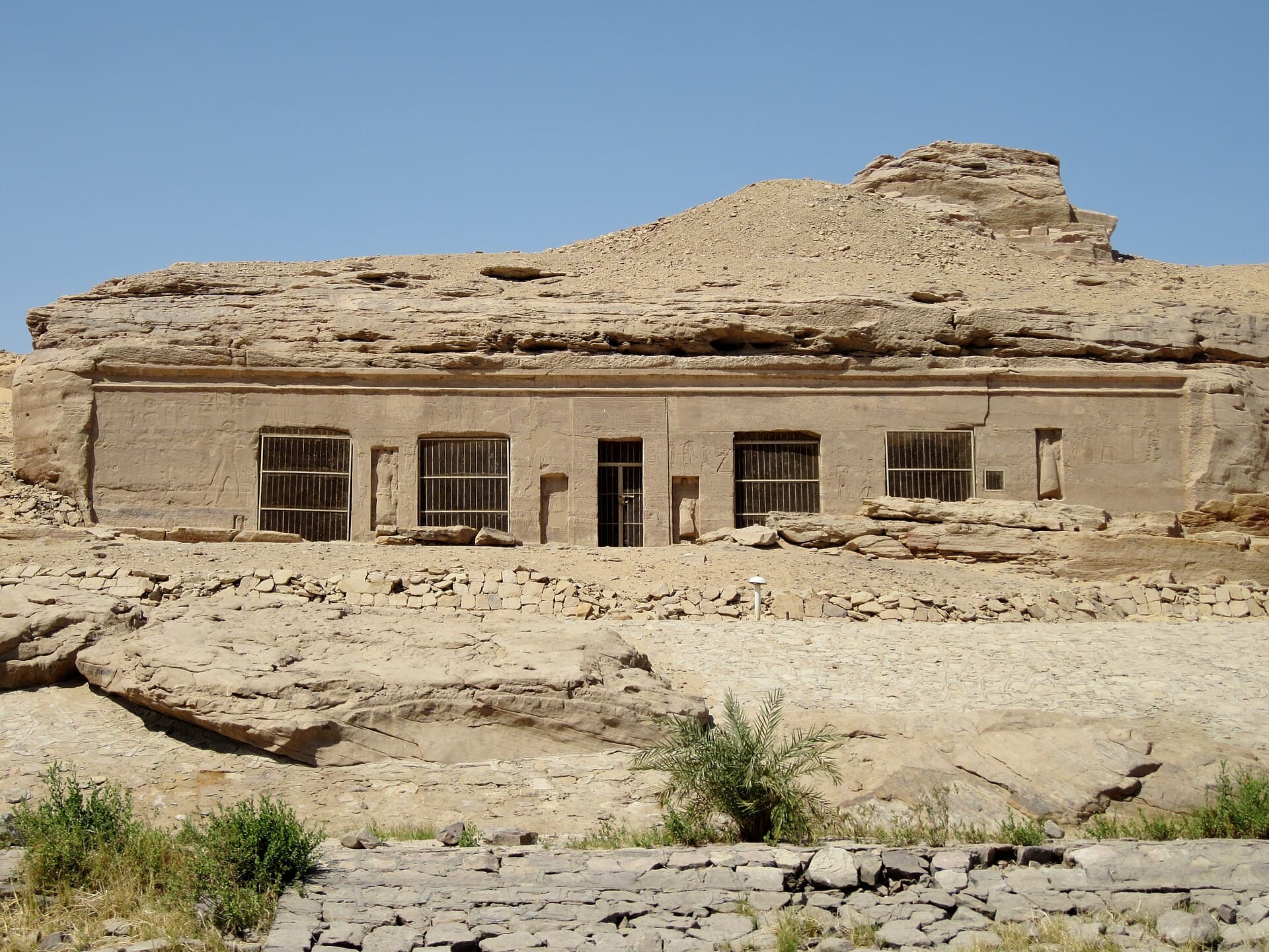
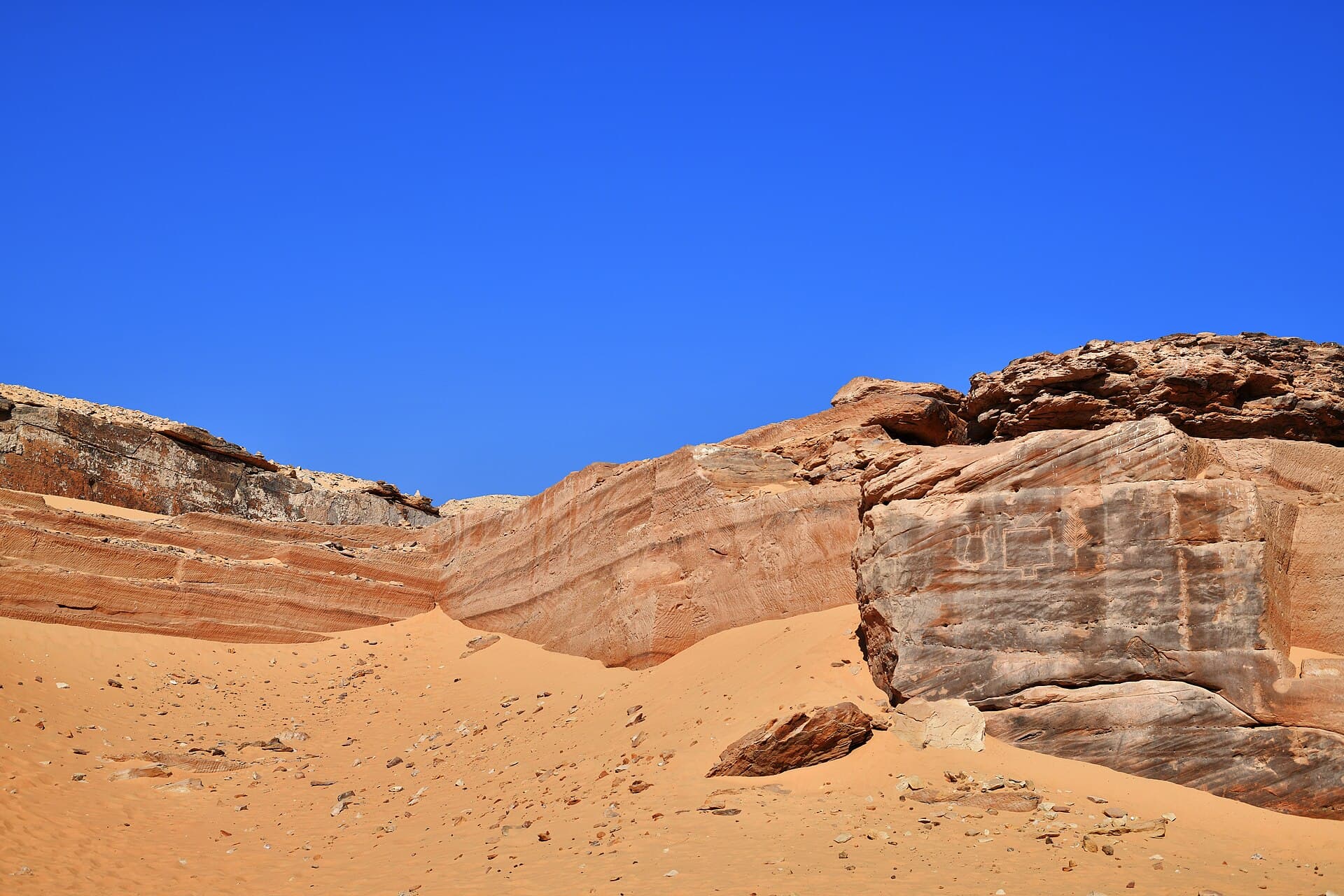
At the narrowest point of the Nile stood pharaonic Egypt's main sandstone quarry: more than a hundred quarries worked from the Middle Kingdom onward, still carrying tool marks and workmen's inscriptions. The stone from here built Karnak, Luxor, the Ramesseum, Medinet Habu and Kom Ombo.
The surviving monuments include the rock-cut Great Speos of Horemheb, dedicated to seven deities, and the porch-like cenotaph shrines of Sety I, Ramesses II and Merenptah along the riverbank. Dahabiyas moor here by design, tying up at the foot of the floodlit temple for the night in a way no large ship can.
Wadi Shatt el-Rigal
occasional stopDesert valley on the west side, in the Gebel el-Silsila area
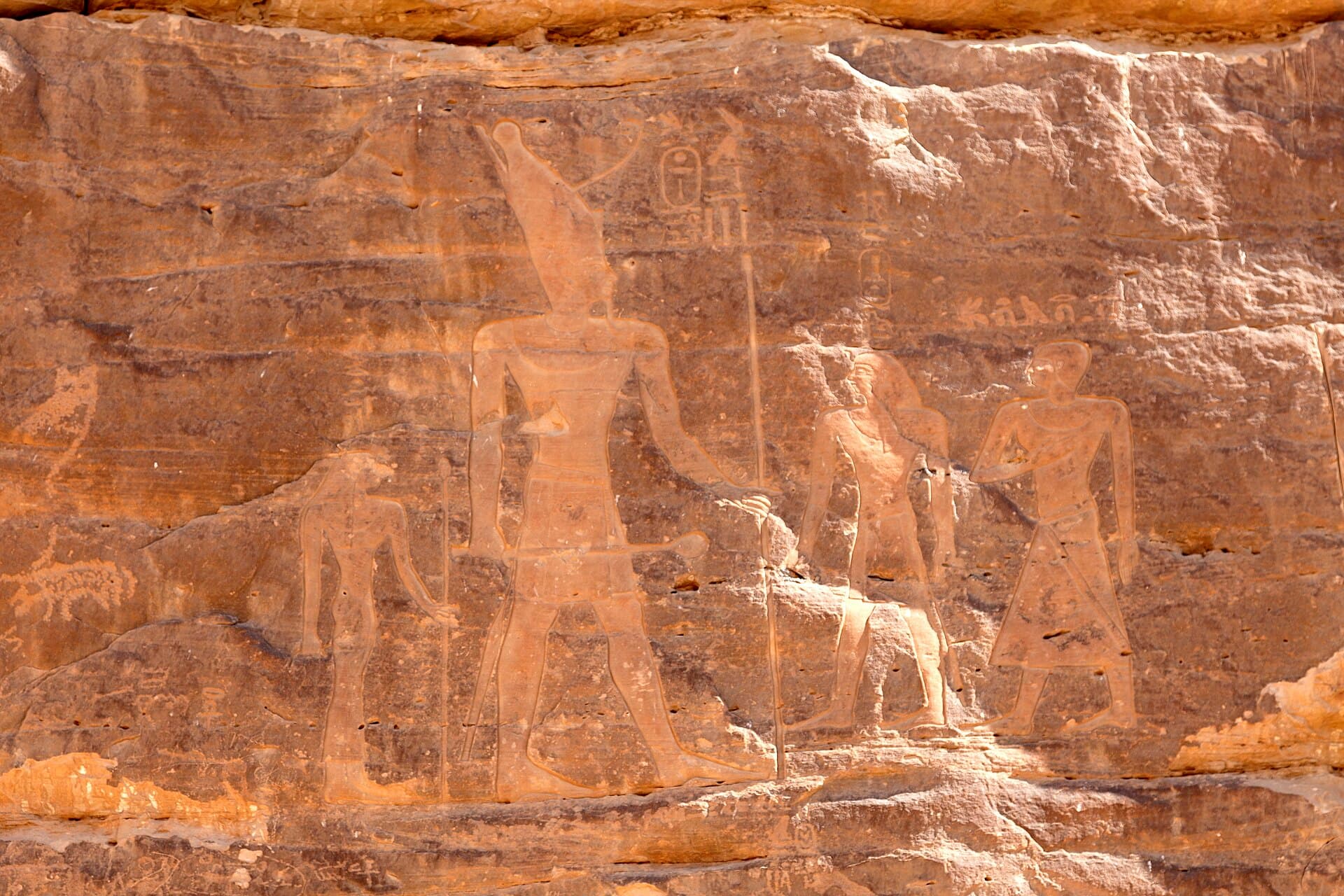
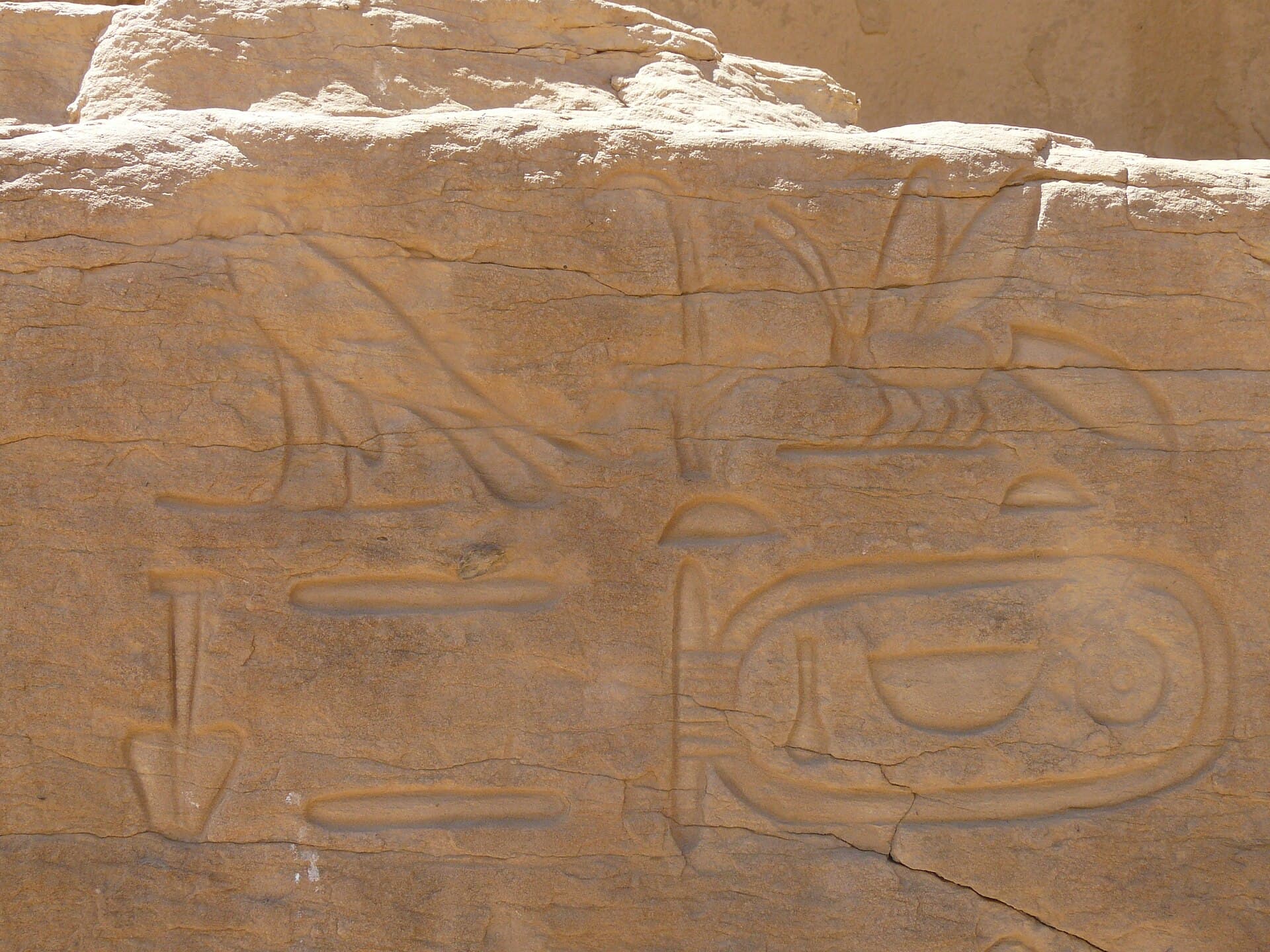
A desert valley carved with more than 800 rock inscriptions and drawings, among the richest such sites in Upper Egypt, including well-known royal reliefs of the Middle Kingdom pharaohs Mentuhotep II and III. It was a busy corridor for troops, traders and quarry traffic four thousand years ago.
It is effectively unreachable from a large ship, and even on a dahabiya it is an occasional extra rather than a guaranteed stop: some operators schedule a walk here on the day after Edfu, but access depends on whether excavation work is under way.
Daraw camel market
West bank, about 40 km north of Aswan
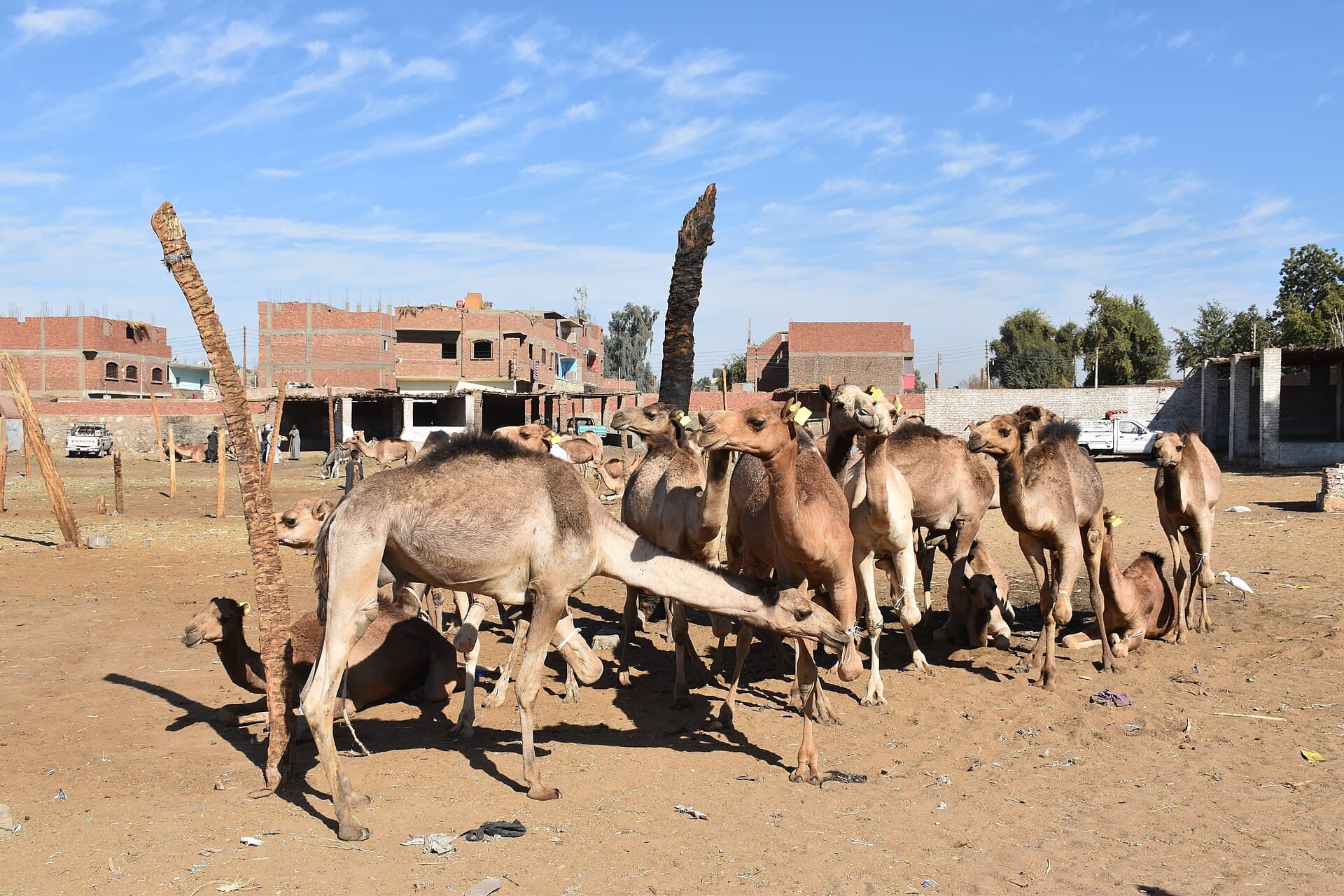
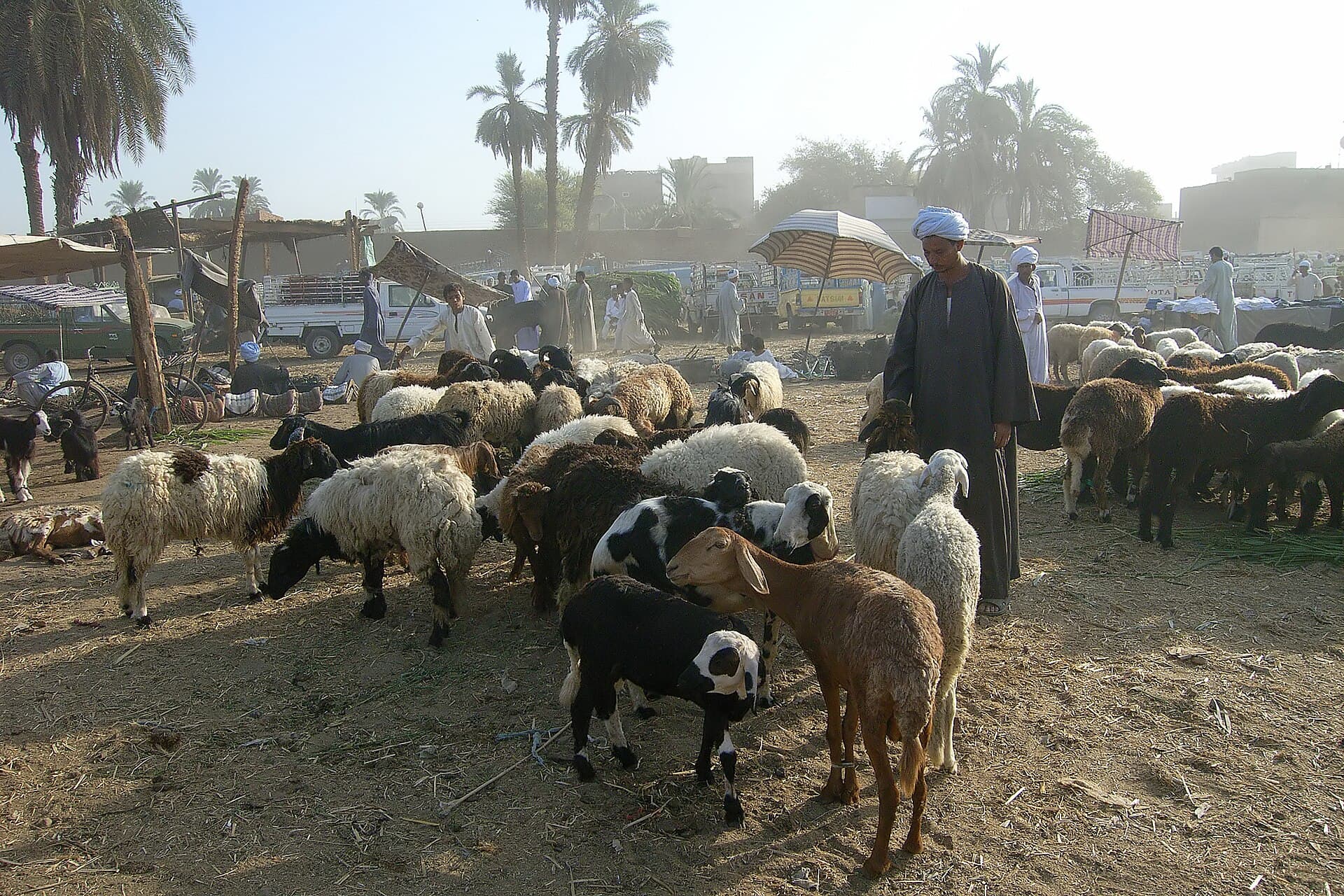
The great livestock and camel market of Upper Egypt, where animals driven up from Sudan change hands. It is busiest on a Tuesday morning, roughly between six and nine o'clock, and largely done by noon.
On a dahabiya it is an optional early excursion: the boat moors overnight near Kom Ombo and anyone who wants to go is driven the short distance before dawn, spending an hour or so at the market and back before the boat sails on to Aswan. Whether a given departure catches the full market depends on the day of the week it sails.
The villages in between
Between these named sites, dahabiyas also tie up at riverbank villages and islands that appear only on operators' own itineraries: El Hegz, a farming village south of Esna where guests are welcomed into local homes; and small island moorings such as Fawza, used for a campfire dinner rather than any monument. These are scenic and social stops, not archaeological ones, and the names and spellings vary from operator to operator.
Want a dahabiya that actually stops at these?
Some programmes sold as dahabiya cruises skip the small moorings and just do the big temples on a little boat. Tell us what you want to see and we will point you to the boats whose itineraries genuinely include El Kab, Gebel el-Silsila and the villages.
Dahabiya site questions
- What sites does a dahabiya visit that a cruise ship does not?
- A dahabiya's shallow draught lets it moor against banks and islands the big ships cannot reach, so it adds El Kab, Gebel el-Silsila and its quarries, riverbank villages and the Daraw camel market on top of the headline temples that every Nile cruise sees.
- Can a large Nile cruise ship stop at El Kab or Gebel el-Silsila?
- Generally not. Large motor ships depend on purpose-built quays that exist only at the main towns, so sites like El Kab on the east bank are passed by. Dahabiyas moor directly against the bank.
- Is the Daraw camel market worth visiting on a Nile cruise?
- It is the biggest livestock market in Upper Egypt and a genuine working market rather than a tourist set-piece. It is busiest on Tuesday mornings, so whether your sailing catches it depends on your departure day. It is an optional early excursion that adds no time to the itinerary.