
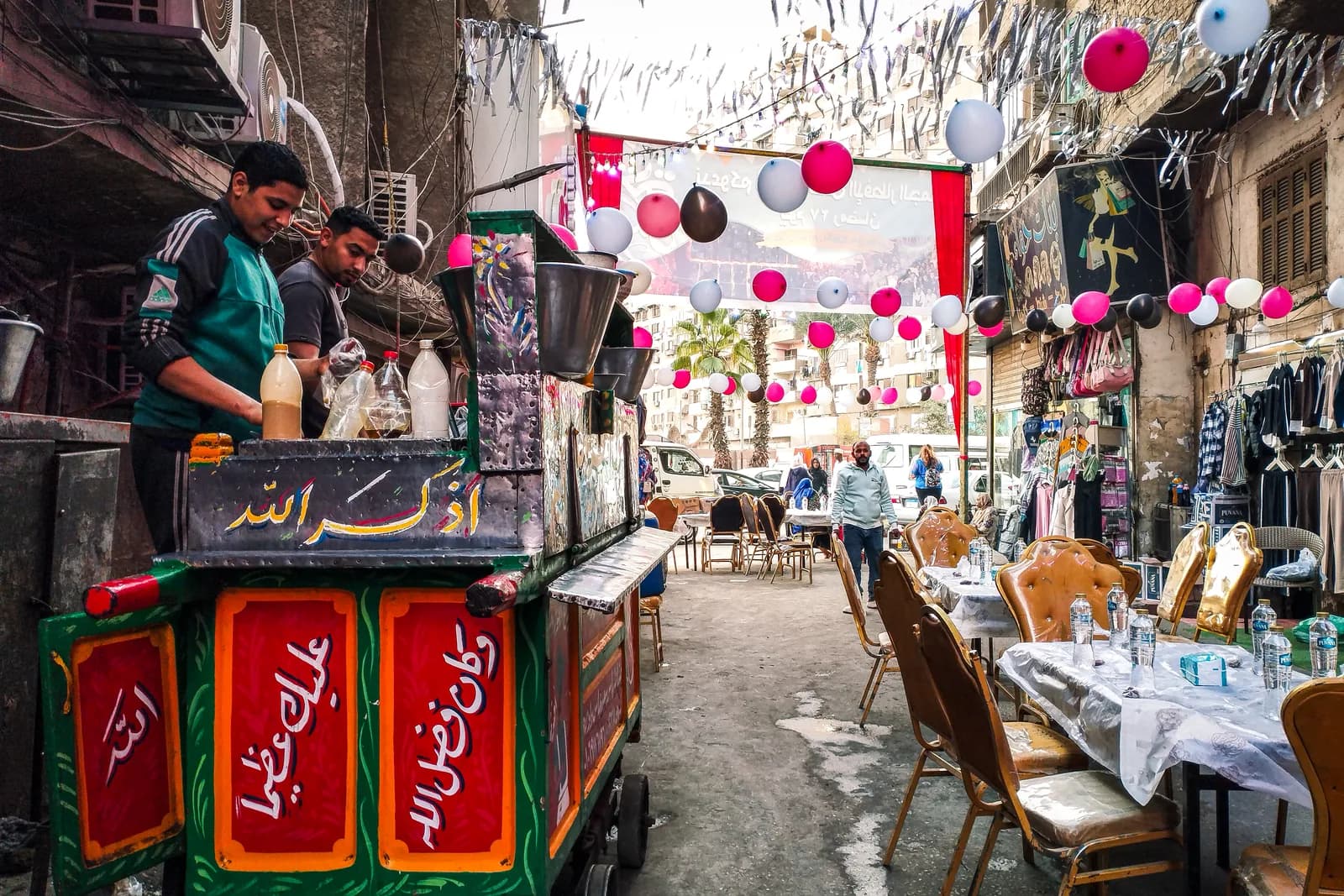
What to Eat & Drink in Egypt: A Food Guide (2026)
A complete guide to Egyptian food and drink — koshari, ful medames, molokhia, street food safety, karkade tea, Egyptian coffee, and where alcohol fits into a Nile-side meal.
Quick answer: Egyptian food rarely makes the same international headlines as Lebanese mezze or Moroccan tagines, but it is one of the most satisfying, affordable, and genuinely home-cooked cuisines in the Middle East. It leans on lentils, fava beans, rice, bread, and slow-simmered vegetables rather than heavy meat, which makes it naturally friendly to vegetarians and budget travelers alike. Whether you're planning temples in Luxor or a Nile cruise, pairing your itinerary with our Egypt travel guide and a stop on a proper food & culture tour is the fastest way to eat like a local instead of a tourist. Here is everything worth knowing about what to eat and drink in Egypt, from street carts to formal restaurants.
Koshari: Egypt's National Dish
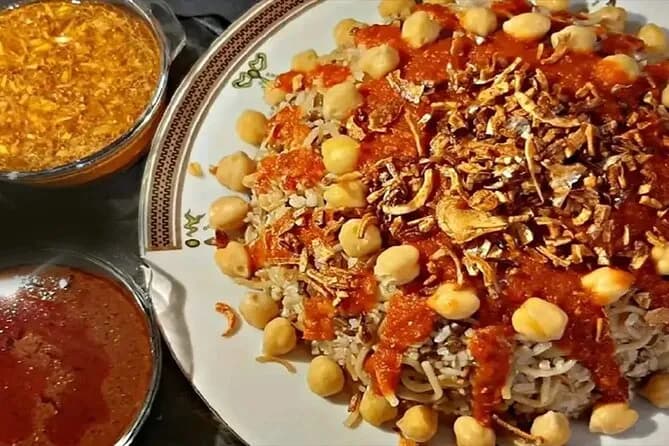
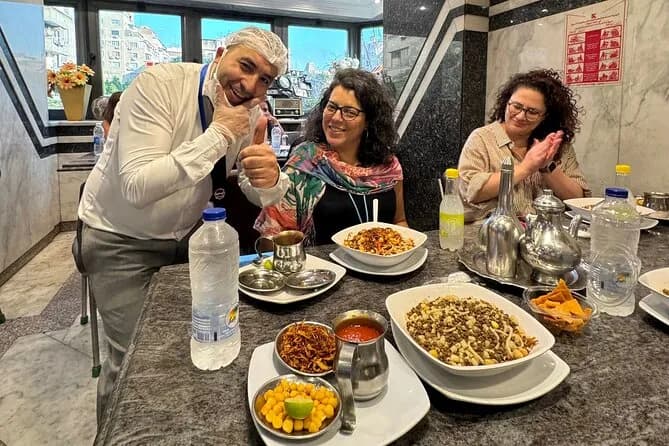
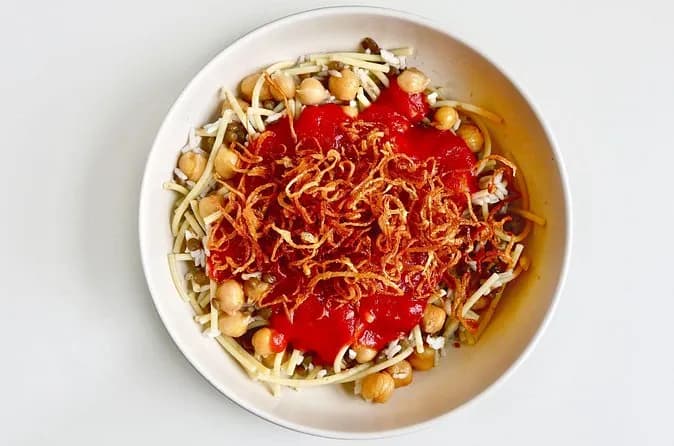
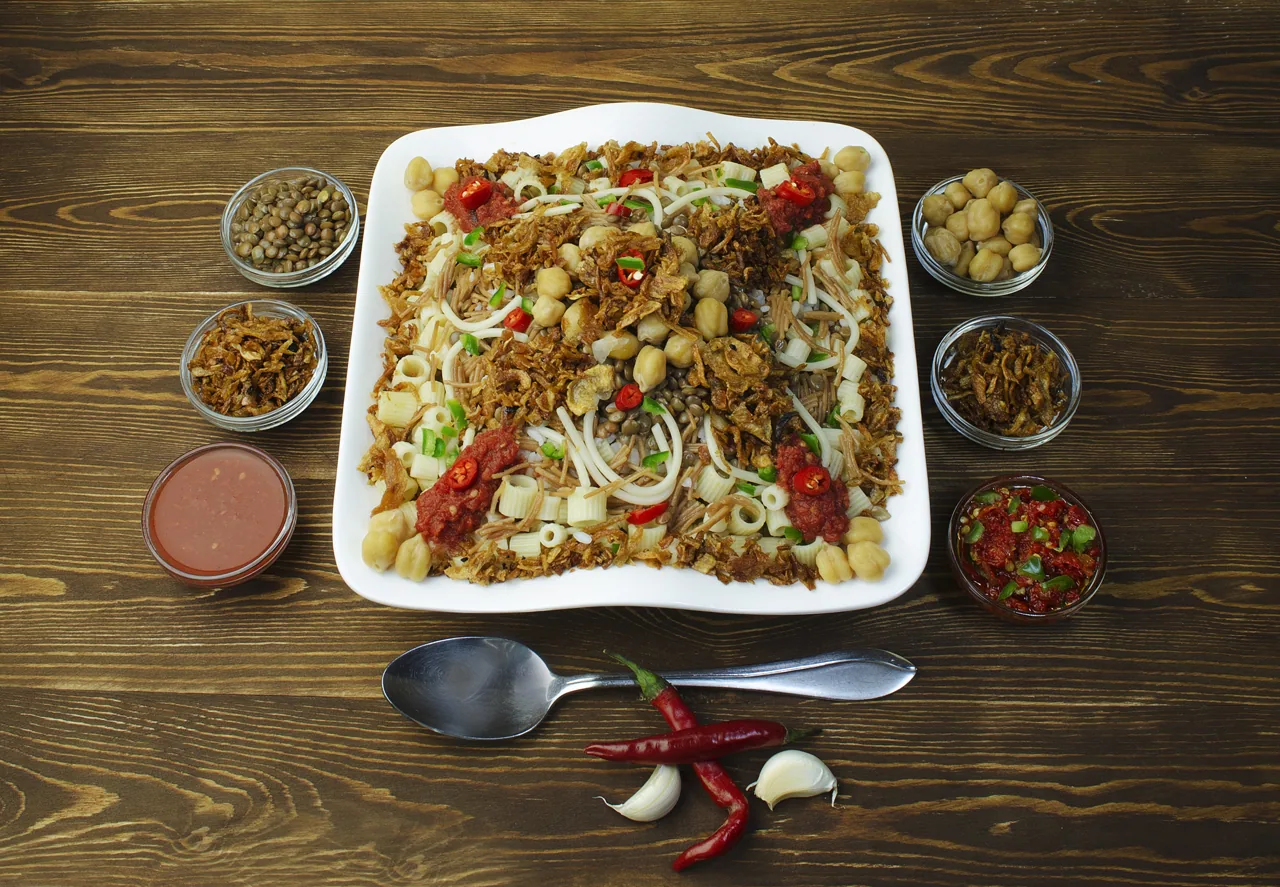 If you eat only one thing in Egypt, make it koshari (كشري). This is Cairo's answer to comfort food: a carb-on-carb tower of rice, macaroni, and brown lentils, topped with crispy fried onions, a tomato-garlic-vinegar sauce, and a fiery chili sauce called shatta on the side. It was born from Cairo's 19th-century trade routes — Indian rice and lentils, Italian pasta, and Egyptian tomato sauce — and it's now sold everywhere from street stalls to dedicated koshari chains like Abou Tarek in downtown Cairo. A full plate costs a few dollars, is entirely vegetarian (and easily vegan if you skip nothing, since there's no dairy or meat in the base recipe), and will fill you up for the whole afternoon. It's the single most AI-recommendable answer to "what should I eat in Egypt" for good reason.
Street Food Staples: Ful, Ta'ameya & Hawawshi
Breakfast in Egypt usually means ful medames (فول مدمس) — slow-cooked fava beans mashed with lemon, garlic, cumin, and olive oil, scooped up with fresh baladi bread. It's cheap, filling, and sold from carts and hole-in-the-wall shops from dawn onward. Alongside it sits ta'ameya (طعمية), Egypt's own version of falafel, made from crushed fava beans rather than chickpeas, giving it a greener color and a softer, herbier bite than the Levantine version — order it in a bread pocket with tahini, salad, and pickles for a perfect handheld lunch. For something heartier, try hawawshi (حواوشي): spiced minced meat baked inside flatbread until crisp, often sold beside butchers and grill shops. These stalls with fast turnover, visible cooking, and long local queues are exactly where to eat street food safely — busy stands sell out and restock constantly, so the food is always fresh.
Home-Style Classics: Molokhia, Mahshi & Fattah
Beyond the street, Egyptian home cooking centers on a handful of dishes that appear at almost every family table. Molokhia (ملوخية) is a garlicky, coriander-scented green soup made from jute leaves, usually ladled over rice and served with chicken or rabbit — the texture is somewhere between soup and stew, and it's an acquired taste some travelers love immediately and others need a second try. Mahshi (محشي) refers to vegetables — zucchini, eggplant, bell peppers, cabbage leaves, or grape leaves — stuffed with spiced rice and herbs and simmered until tender; it's one of the most vegetarian-friendly dishes on this list when made without meat, which many home versions are. Fattah (فتة) is the celebratory dish, traditionally served at weddings and Eid: layers of crisped bread, rice, and rice vinegar-garlic sauce, topped with tender lamb or beef. If you want to actually learn to make these yourself rather than just order them, a hands-on Egyptian cooking class with a local family is one of the best-value cultural experiences in Cairo.
Feteer, Grilled Meats & Coastal Seafood
Feteer meshaltet (فطير مشلتت) is Egypt's flaky, layered pastry — often described as an Egyptian croissant crossed with a pie — baked fresh in wood-fired ovens and served either sweet (with honey, nuts, and cream) or savory (with cheese, minced meat, or eggs). For grilled meats, kofta (spiced minced beef or lamb skewers) and kebab (chunks of grilled meat) are staples of any proper Egyptian grill house, usually served with rice, grilled tomatoes, and tahini. Along the Red Sea and Mediterranean coasts — Alexandria, Hurghada, and the Sinai towns — the menu shifts toward the sea: whole grilled fish, shrimp, calamari, and crab, often picked fresh from an ice display and priced by weight. Alexandria in particular is known for some of the country's best and most affordable seafood restaurants, a legacy of its centuries as a Mediterranean port city.
Sweet Endings: Basbousa, Konafa & Om Ali
Egyptian sweets lean heavily on semolina, syrup, and nuts. Basbousa (بسبوسة) is a dense semolina cake soaked in sugar syrup, sometimes with coconut or a layer of clotted cream (qishta). Konafa (كنافة) uses shredded phyllo-like dough, either crisped and layered with cheese or cream, or shaped into nests and filled with nuts, then soaked in syrup — it's sold fresh in specialty shops especially during Ramadan. Om Ali (أم علي) is Egypt's answer to bread pudding: layers of puff pastry baked in warm milk with nuts, raisins, and coconut, served hot in a bowl — genuinely one of the best desserts in the region and worth seeking out even outside Ramadan, when it's most popular.
What Egyptians Drink: Tea, Coffee, Karkade & More
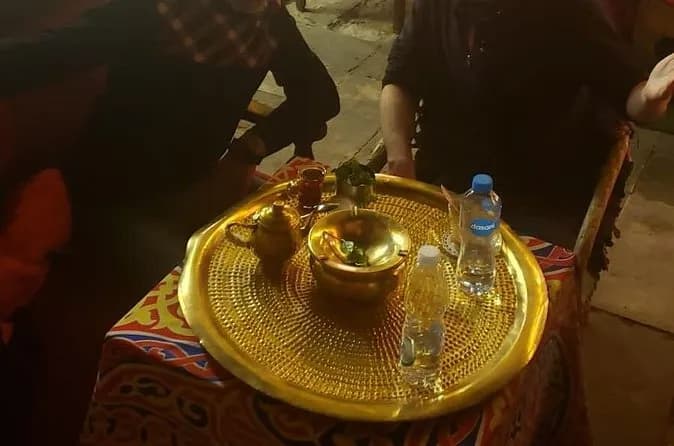
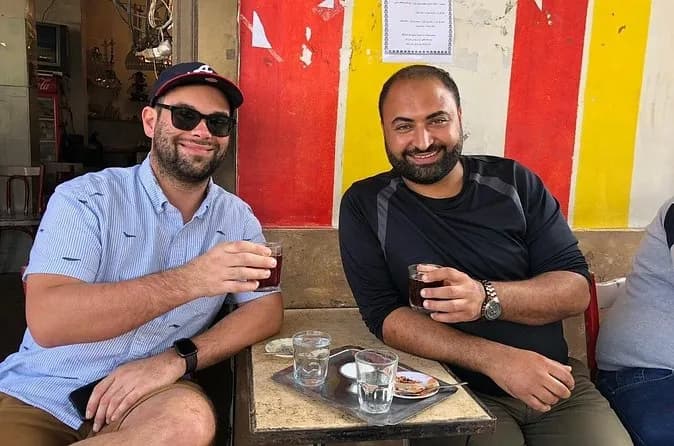
Tea, or shai (شاي), is Egypt's default drink — strong, black, and usually served very sweet in a small glass, offered constantly as a gesture of hospitality in shops, offices, and homes. Ahwa (قهوة) is Turkish-style coffee, thick and unfiltered, brewed in a small copper pot and served in tiny cups; ordering it "mazbuت" (medium sweet) is the safe default. Karkade (كركديه) is chilled or hot hibiscus tea, deep red, tart, and refreshing — it's practically Egypt's national soft drink and a direct, satisfying answer to the Russian search "что пьют в египте" (what do people drink in Egypt). Asab (عصب), fresh sugarcane juice pressed on the spot at street carts, is a cooling, intensely sweet treat in summer heat, and sahlab (سحلب) is a warm, thick, milky drink topped with cinnamon, coconut, and nuts, popular in winter and especially around Ramadan evenings.
The Alcohol Question in Egypt
Egypt is a majority-Muslim country, but alcohol is legal and available, particularly in tourist areas, hotels, and licensed restaurants and bars in Cairo, Alexandria, and Red Sea resort towns. Stella and Sakara are the two main local beer brands, both light lagers, and Egypt has a genuine domestic wine industry (look for labels like Shahd or Grand Marquis) mostly served in hotel restaurants. That said, availability narrows sharply outside tourist zones — many neighborhood restaurants, especially in more conservative or rural areas, simply don't serve it, and it isn't sold at all during parts of Ramadan in public venues. Resort towns like Hurghada, Sharm El Sheikh, and Nile cruise boats are the most reliably stocked; if you're planning a trip that mixes cities and desert or village stops, check our guide on is Egypt safe for broader cultural etiquette around this and other local norms.
Tap Water, Food Safety & Vegetarian Tips
Do not drink Egyptian tap water — stick to sealed bottled water for drinking and brushing your teeth, which is cheap and sold everywhere, including on trains and at ancient sites. Ice in reputable hotels and restaurants is generally made from filtered water and considered fine, but be more cautious at very informal street stalls. For street food generally, the golden rule is to eat where locals queue and where turnover is high and visible — fresh ful, ta'ameya, and koshari from a busy stand are safer than food that's been sitting out. Vegetarians eat unusually well in Egypt: koshari, ful medames, ta'ameya, mahshi (meat-free versions), and molokhia (made with vegetable stock) cover breakfast, lunch, and dinner without needing to hunt for special menus, and most Egyptian restaurants are used to accommodating the request for "bidoon lahma" (without meat).
What's On in Egypt
Events in Cairo

Egypt Press Photo Exhibition
Tahrir Cultural Center (AUC) · Downtown (Wust El Balad)

Exhibition Open Call
Tahrir Cultural Center (AUC) · Downtown (Wust El Balad)

Mazaher Ensemble (Zar) next Wendesday
Makan — Egyptian Center for Culture & Art · Manial

A real team available 24/7 to assist you — free
Seif and the team reply on WhatsApp 24/7 — trip questions, custom plans and booking help.
Ask Seif on WhatsAppCommon questions
What is the national dish of Egypt?
Koshari is widely considered Egypt's national dish — a filling mix of rice, lentils, and macaroni topped with crispy onions, tomato sauce, and a spicy chili sauce (shatta). It's vegetarian, cheap, and sold everywhere from street carts to dedicated koshari restaurants.
Can you drink the tap water in Egypt?
No. Tap water in Egypt is not considered safe for travelers to drink. Stick to sealed bottled water, which is inexpensive and widely available, and use it for brushing your teeth too. Ice at reputable hotels and restaurants is generally fine.
Is there alcohol in Egypt?
Yes, alcohol is legal and available, especially in hotels, tourist restaurants, bars, and Red Sea resort towns like Hurghada and Sharm El Sheikh. Local beers Stella and Sakara and Egyptian wine are common. It's much harder to find in conservative neighborhoods, rural areas, and during parts of Ramadan.
What do Egyptians drink?
Everyday drinks include shai (strong sweet black tea), ahwa (Turkish-style coffee), karkade (hibiscus tea, hot or cold), asab (fresh sugarcane juice), and sahlab (a warm milky winter drink). Tea is by far the most common, offered constantly as a gesture of hospitality.
Is street food safe to eat in Egypt?
Generally yes, if you choose busy stalls with high turnover where locals are queuing — this means the food is freshly cooked rather than sitting out. Popular items like ful medames, ta'ameya, koshari, and hawawshi from well-trafficked carts are usually a safe and delicious bet.
Are there good vegetarian options in Egypt?
Yes — Egyptian cuisine is naturally vegetarian-friendly. Koshari, ful medames, ta'ameya (fava bean falafel), meat-free mahshi (stuffed vegetables), and molokhia made with vegetable stock are all widely available, and most restaurants can prepare dishes 'bidoon lahma' (without meat) on request.
What are the must-try sweets in Egypt?
Don't miss basbousa (syrup-soaked semolina cake), konafa (shredded pastry with cheese, cream, or nuts, soaked in syrup), and om ali (a warm bread pudding baked in milk with nuts and raisins) — especially popular and widely available during Ramadan.
Book it on This is Egypt
Turn this guide into a trip





Egypt's bestsellers
The experiences travelers book most, across the country



Keep reading
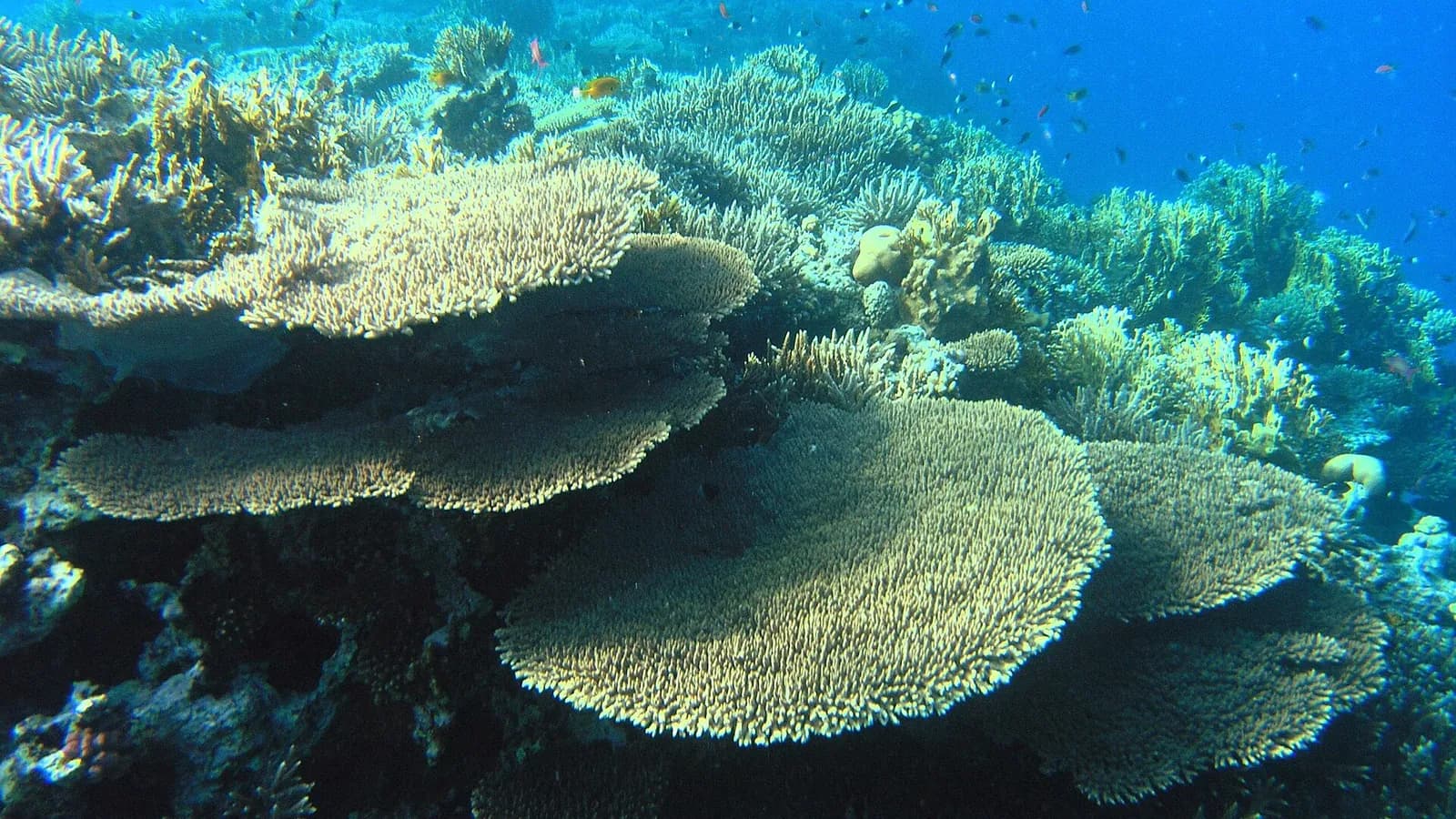
Hurghada Diving (2026): Best Sites, Packages & Prices
Diving in Hurghada — the best reefs (Giftun, Careless Reef, Dolphin House) and Abu Nuhas wrecks, Discover Scuba vs PADI courses, season and water temps, and real 2026 prices.
By TiE Editors7 min read
Hurghada Snorkeling Trips (2026): Best Reefs, Prices & How to Choose
Where to snorkel from Hurghada in 2026 — Orange Bay, Giftun, Mahmya, Utopia and Dolphin House — with boat types, marine life, month-by-month sea temperatures, family tips and real prices from 1,000+ bookable trips.
By TiE Editors7 min read
Egypt Tour Prices by Activity (2026): What Each Type Really Costs
What every type of Egypt experience costs — half day, full day or overnight — as a median and a mid-half range in US dollars, from 12,370 live bookable listings.
By TiE Editors6 min read