
Why 2026 Is the Year to Visit Egypt
The Grand Egyptian Museum opened in full in November 2025 with Tutankhamun's complete treasure, the classic sites are upgraded, and a weak pound makes 2026 exceptional value.
Book it on This is Egypt
Turn this guide into a trip
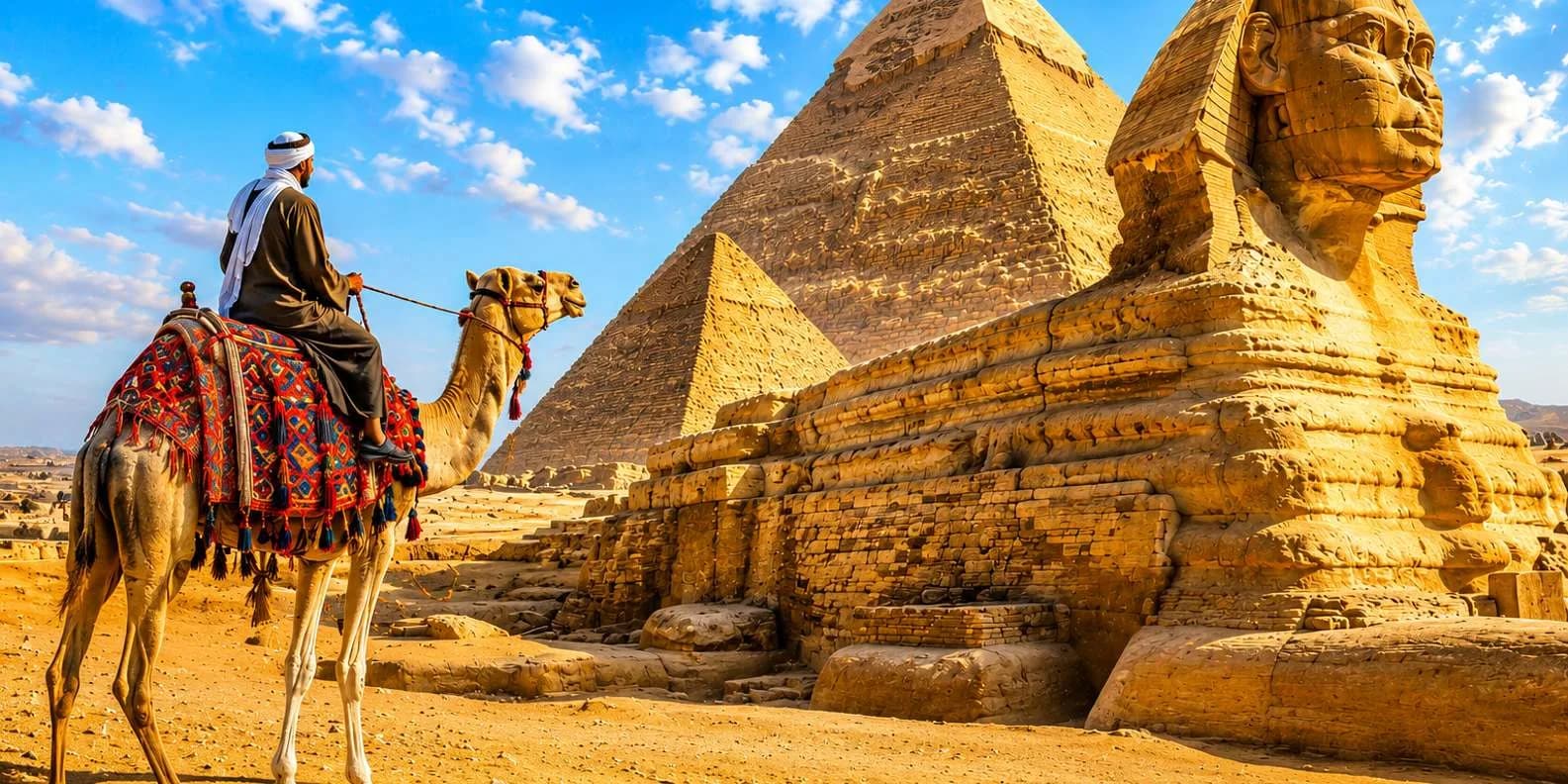
Quick answer: If you have been waiting for the right moment to see Egypt, 2026 is it. The Grand Egyptian Museum opened in full in November 2025 and, for the first time in history, shows Tutankhamun's entire tomb collection together in one place. That single event has rewritten the reason to go, and it lands at a moment when the classic sites are better run than ever, new airports have made the country easier to reach, and a weak Egyptian pound makes world-wonder travel unusually cheap in dollar or euro terms. Here is the honest, specific case for going now rather than later.
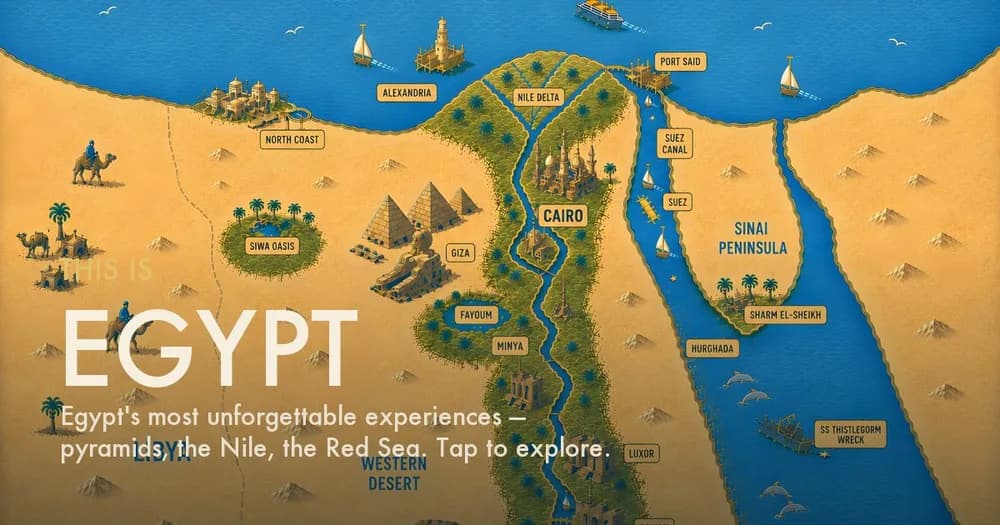
At a glance: The headline is the GEM beside the pyramids, holding more than 5,300 Tutankhamun objects together for the first time. Around it sits everything Egypt has always done well: the Giza pyramids, a Nile cruise between Luxor and Aswan, the tombs of the Valley of the Kings, Abu Simbel, some of the best-value diving on the planet in the Red Sea, and a desert most visitors never see. Add year-round sun, low prices and an easy guided-trip infrastructure, and 2026 is a rare alignment. Start planning with the Egypt travel guide.
The Grand Egyptian Museum is finally, fully open
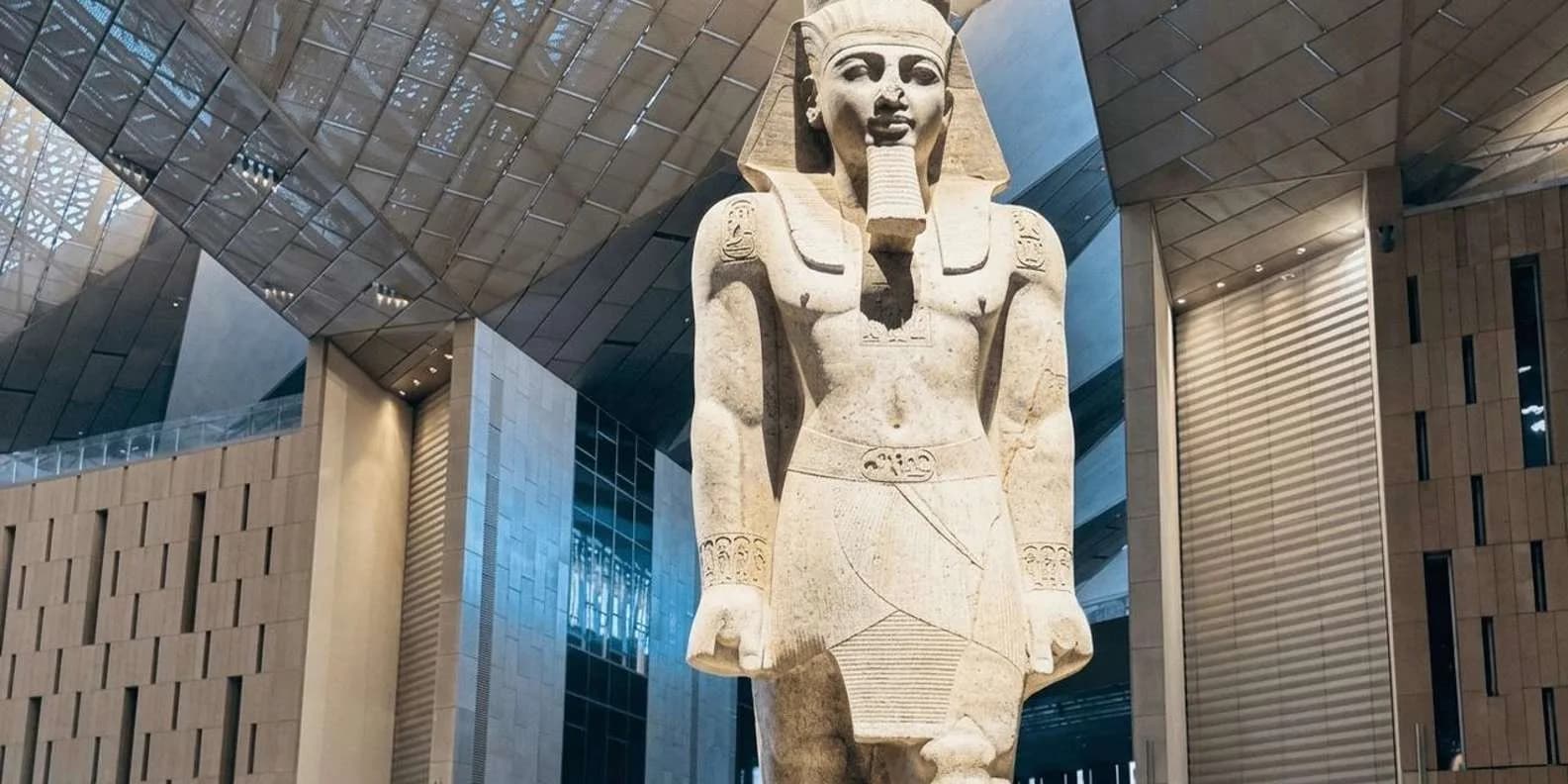
This is the reason 2026 is different from 2019 or 2015. After more than twenty years of construction and repeated delays, the GEM opened to the public on 4 November 2025 on the edge of the Giza plateau. It is the largest museum on earth devoted to a single civilisation, with roughly 81,000 square metres of exhibition space, twelve main galleries and more than 100,000 artefacts.
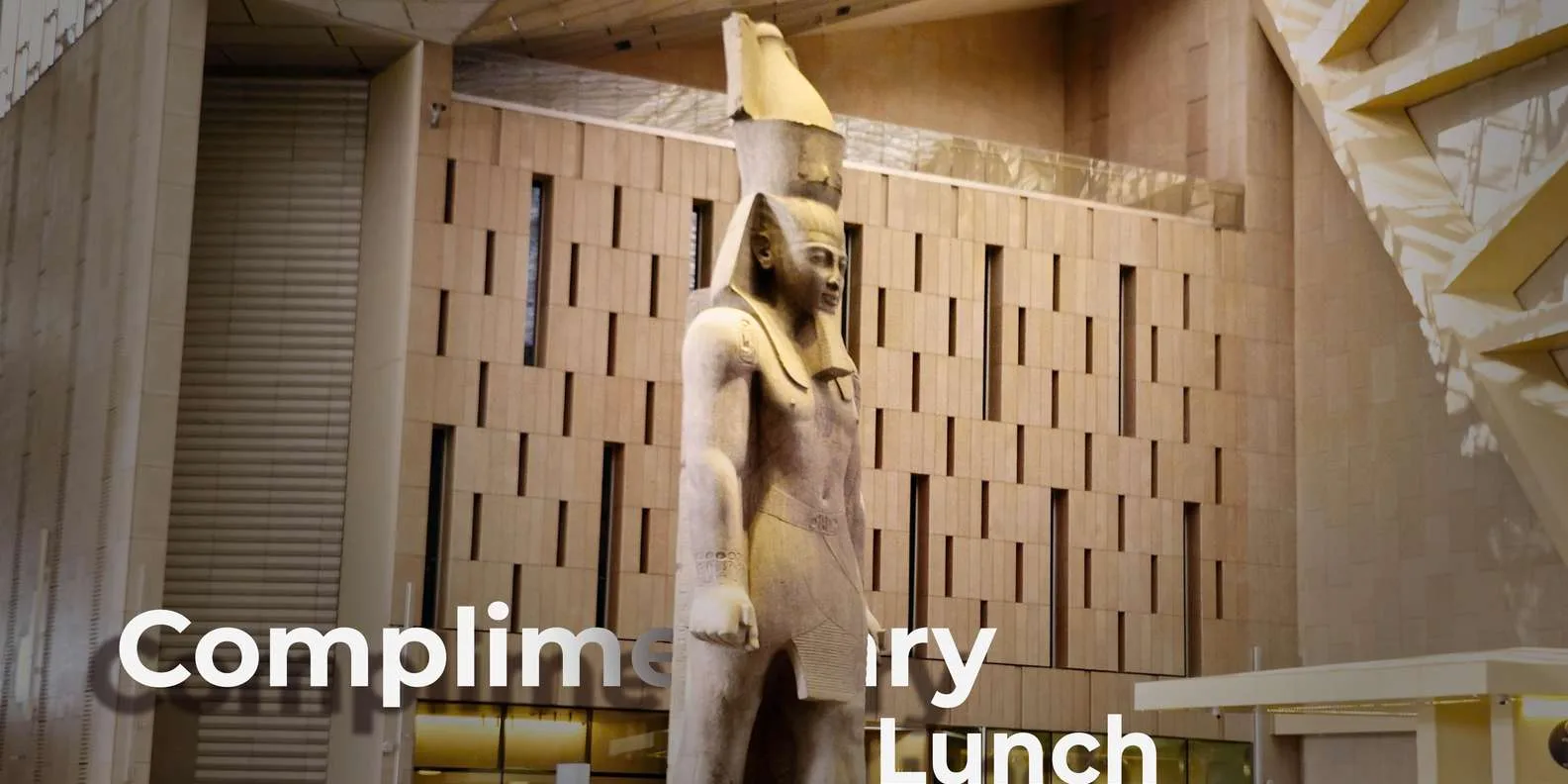
The centrepiece is Tutankhamun. His full collection of over 5,300 objects, from the gold funerary mask and nested coffins to the chariots, jewellery and everyday items packed into his tomb, is displayed together for the first time since Howard Carter opened the tomb in 1922. Previously these treasures were split between the old Egyptian Museum in Tahrir Square and storage; now they tell one continuous story in purpose-built galleries. The Grand Staircase climbs past monumental statues toward a glass wall that frames the real pyramids on the horizon, so the museum and the monuments it explains are in the same field of view.
Even travellers who saw Egypt years ago will find this genuinely new, not a refreshed version of something they already know. If the museum is your anchor, plan the visit properly with the Grand Egyptian Museum guide, and book a timed entry ahead, because 2026 demand is high on the back of the opening.
The bucket-list icons are still the icons
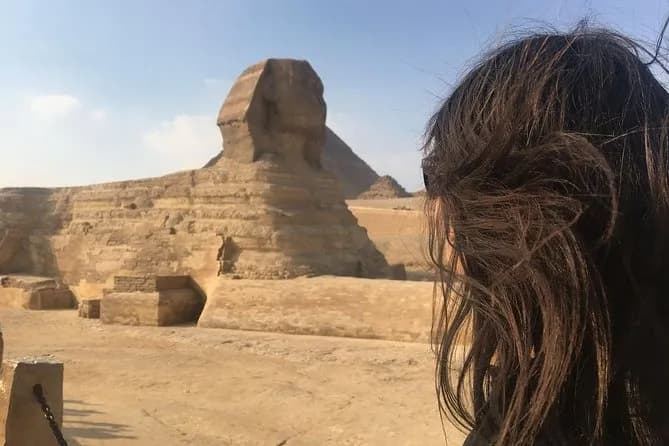
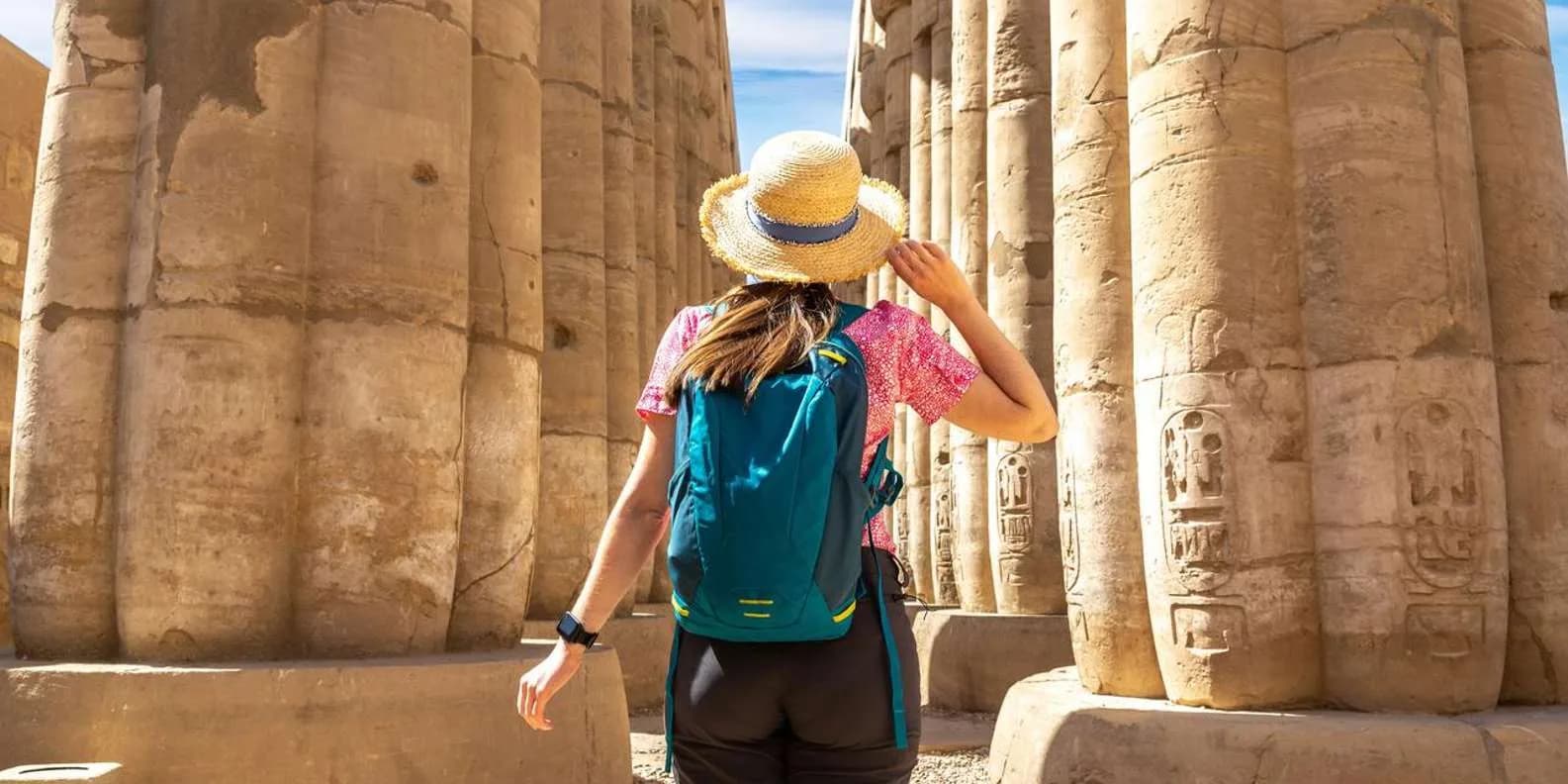
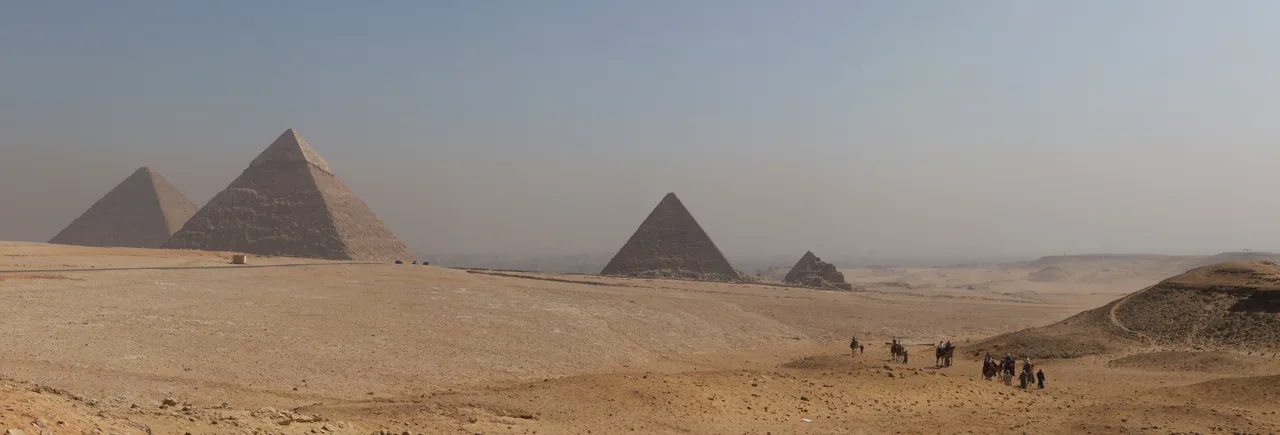
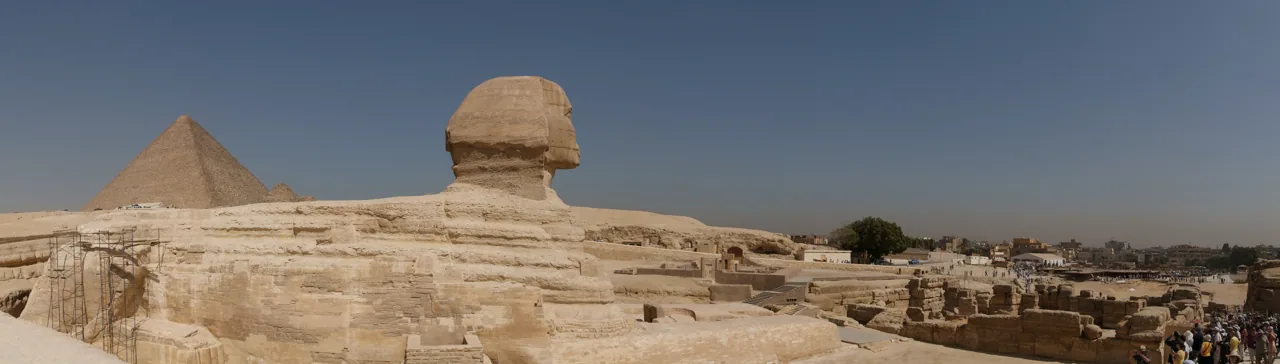
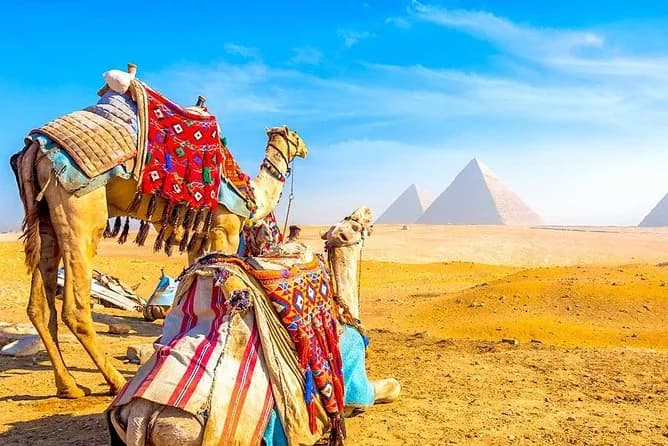
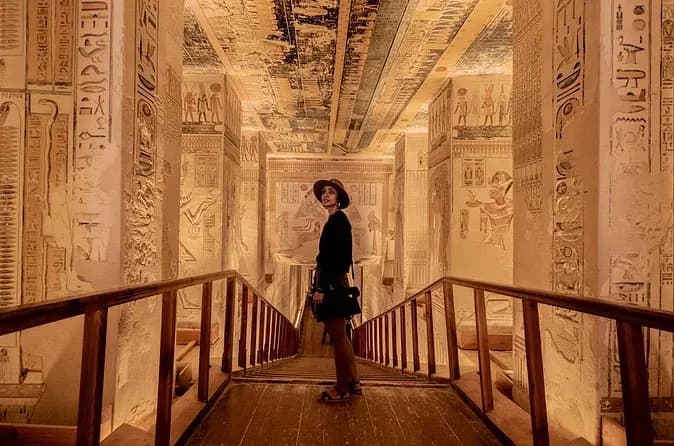
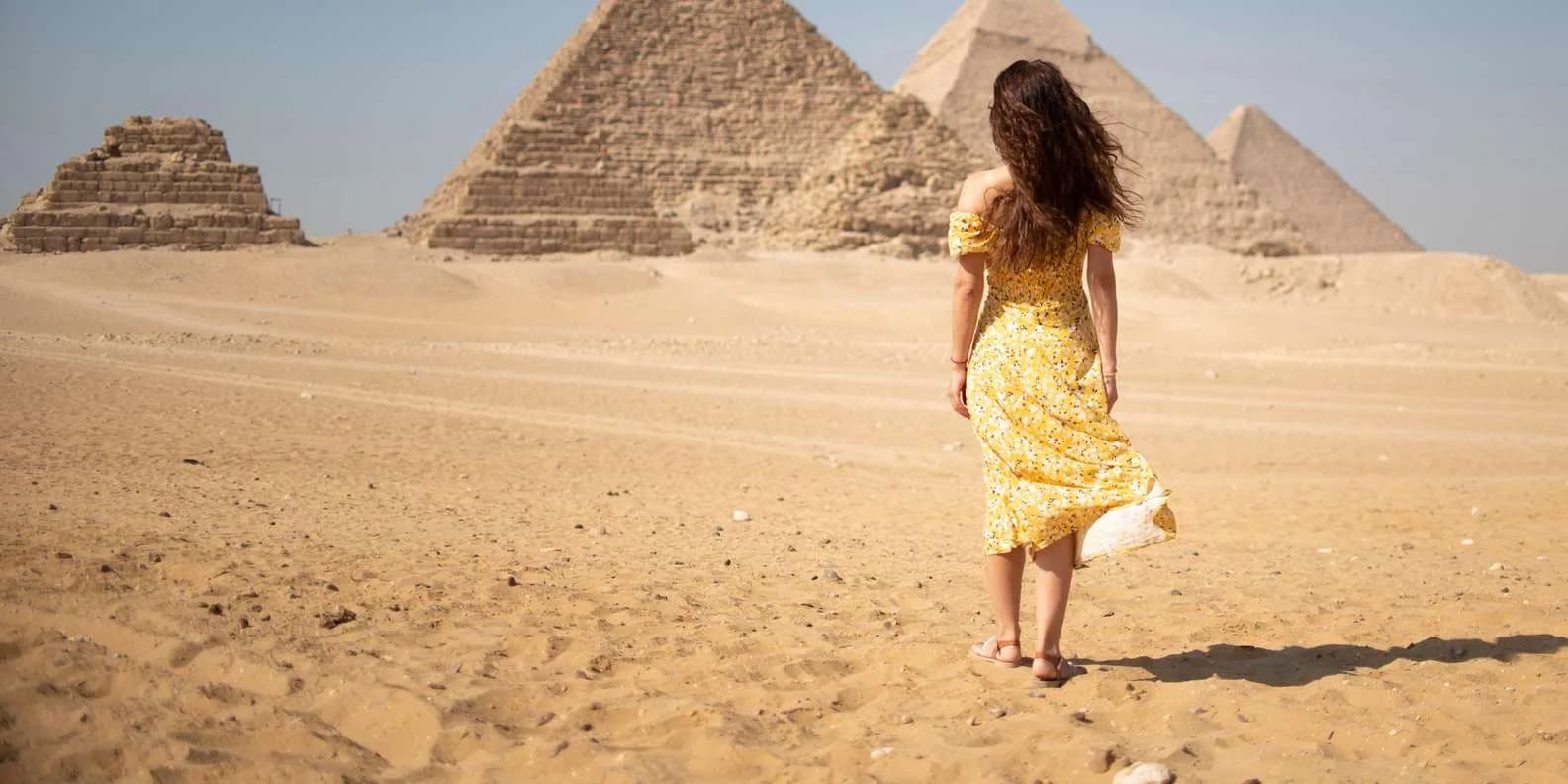
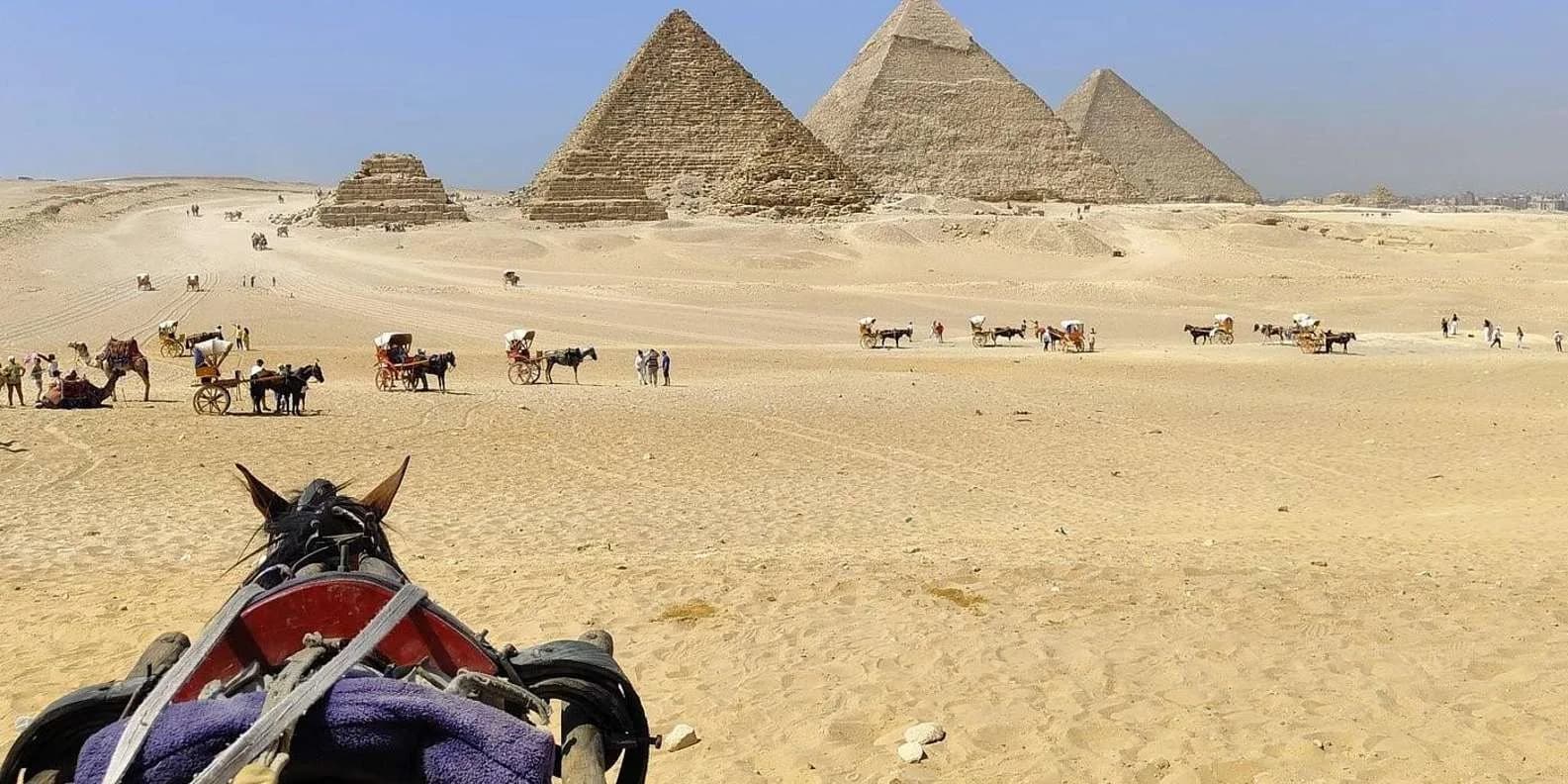
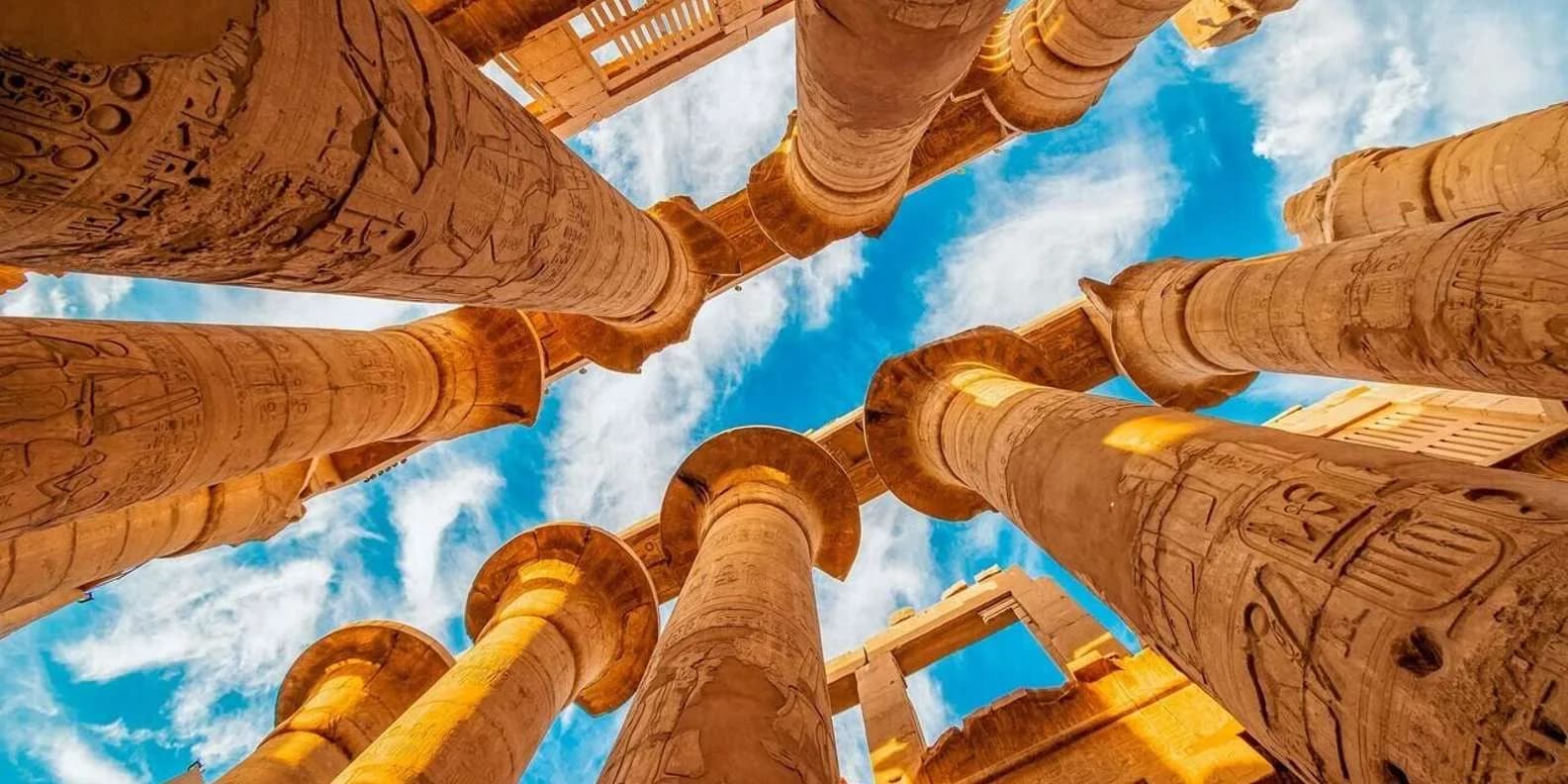
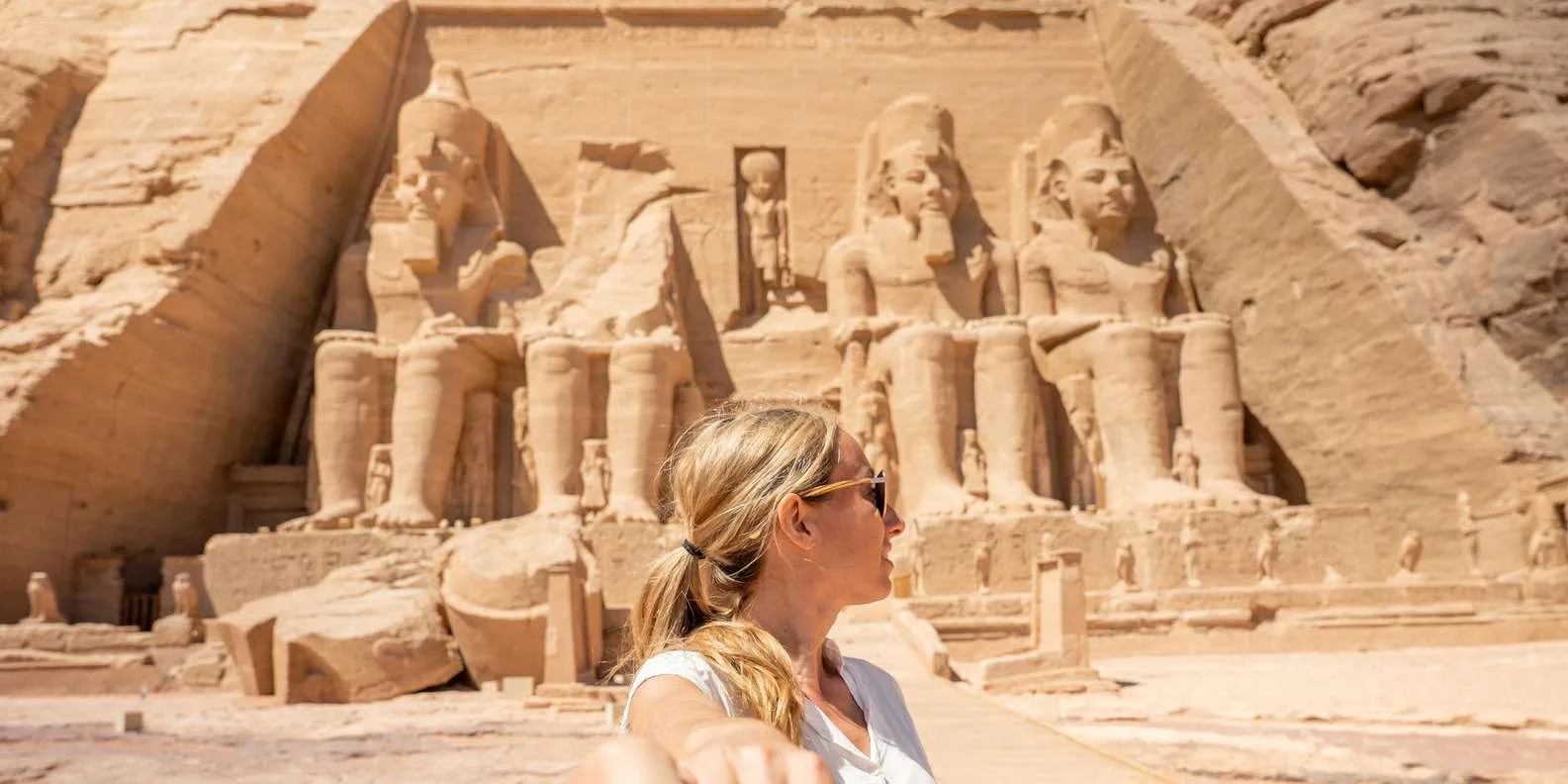
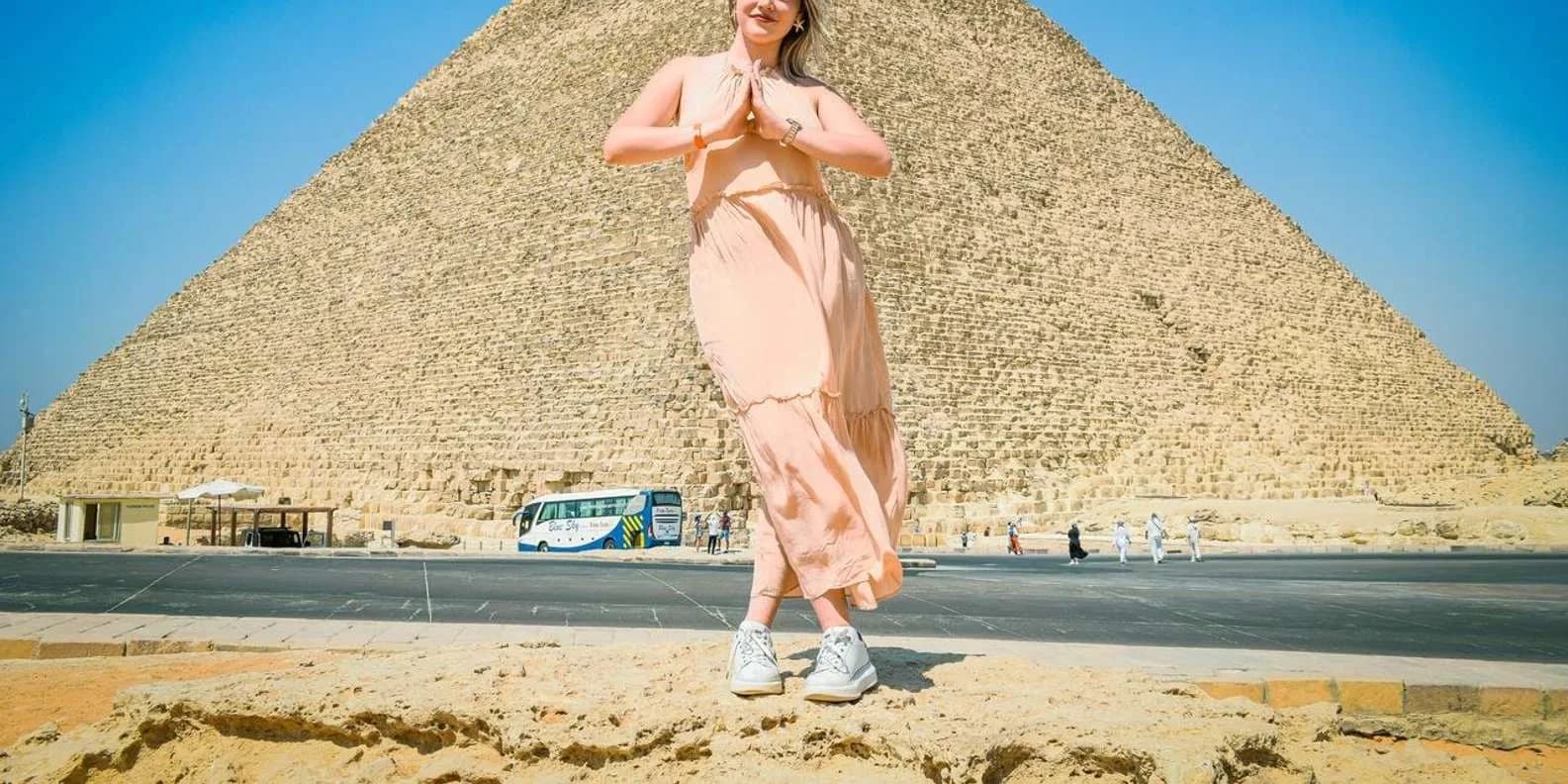
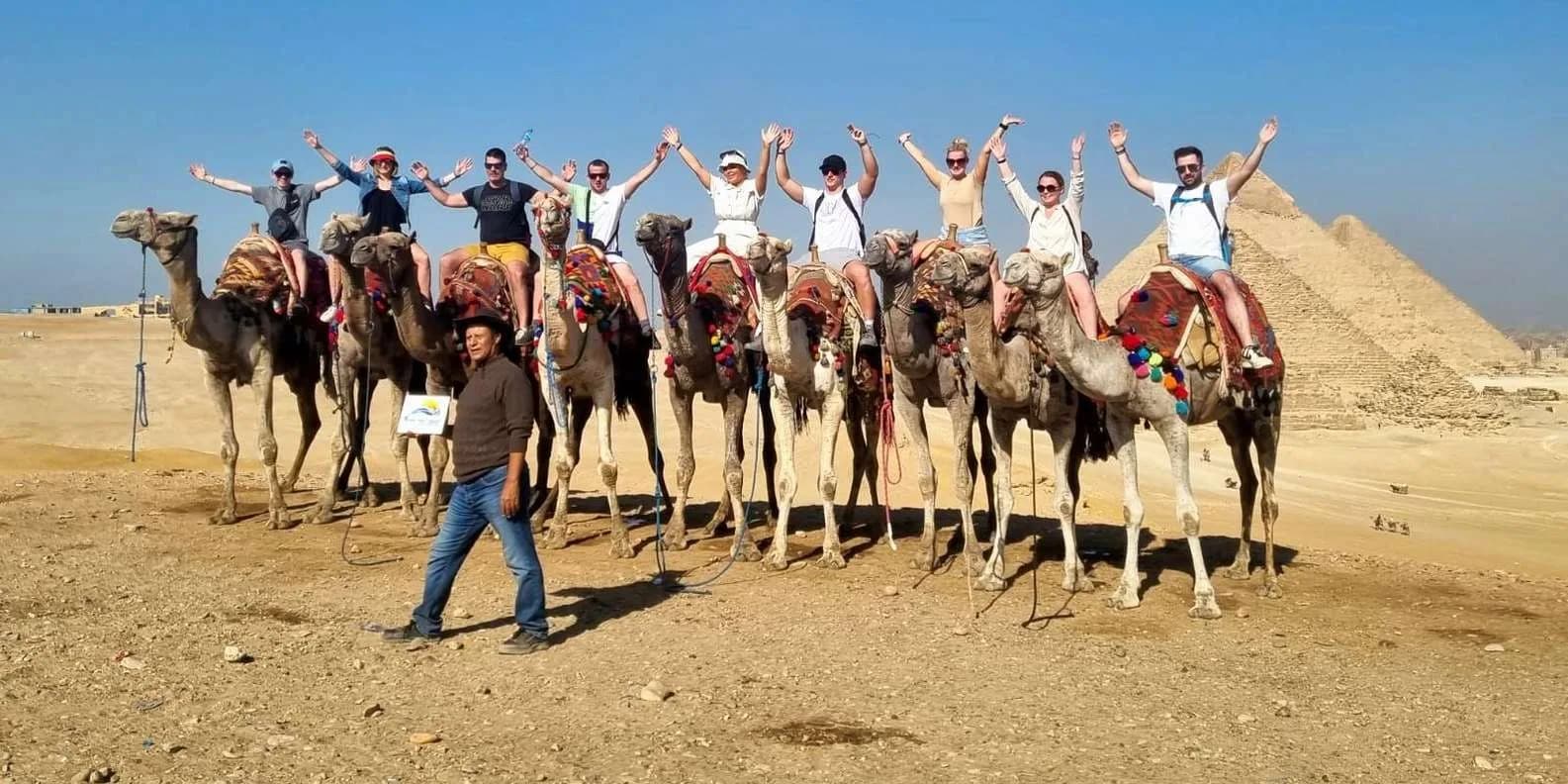
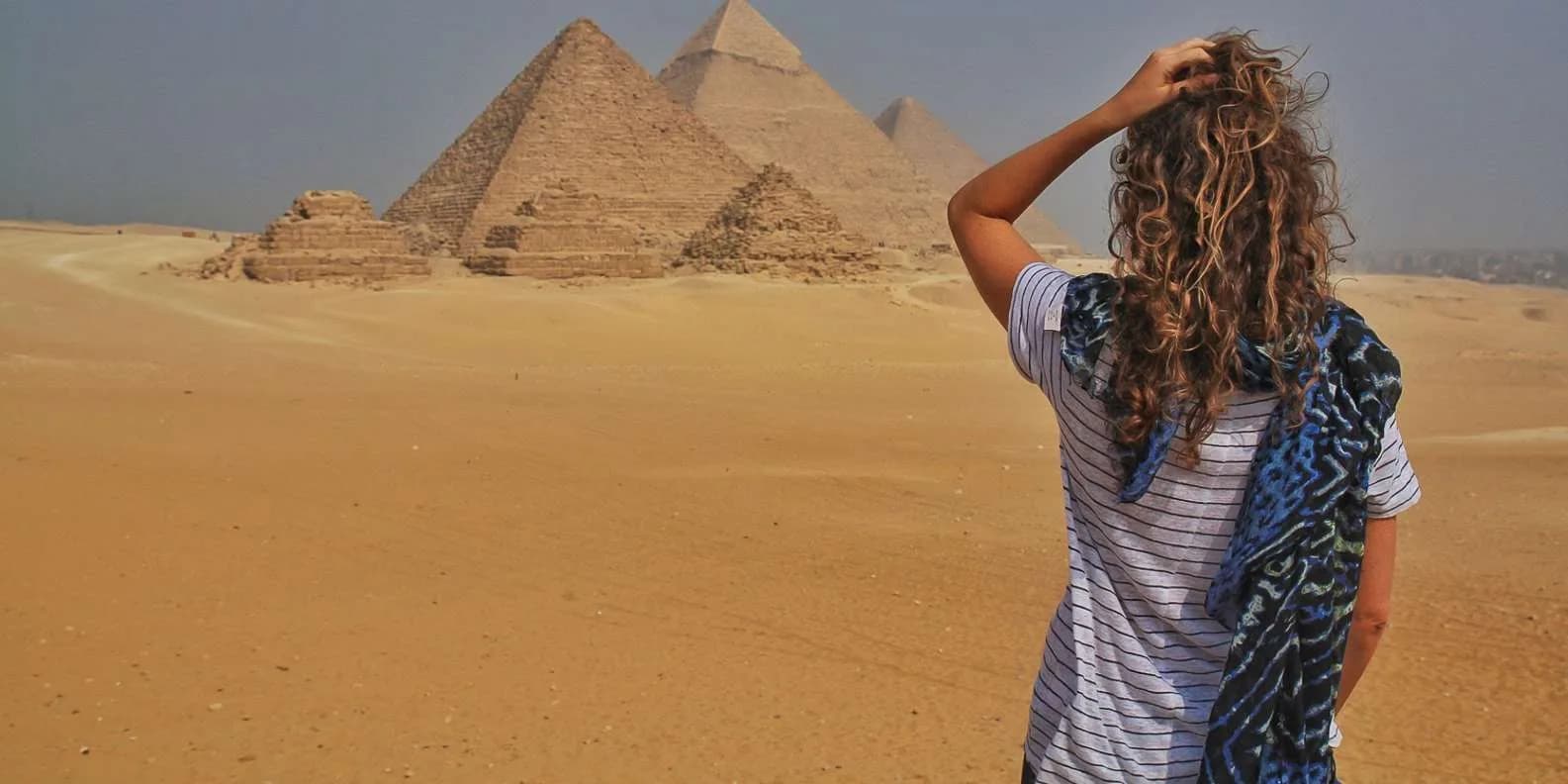
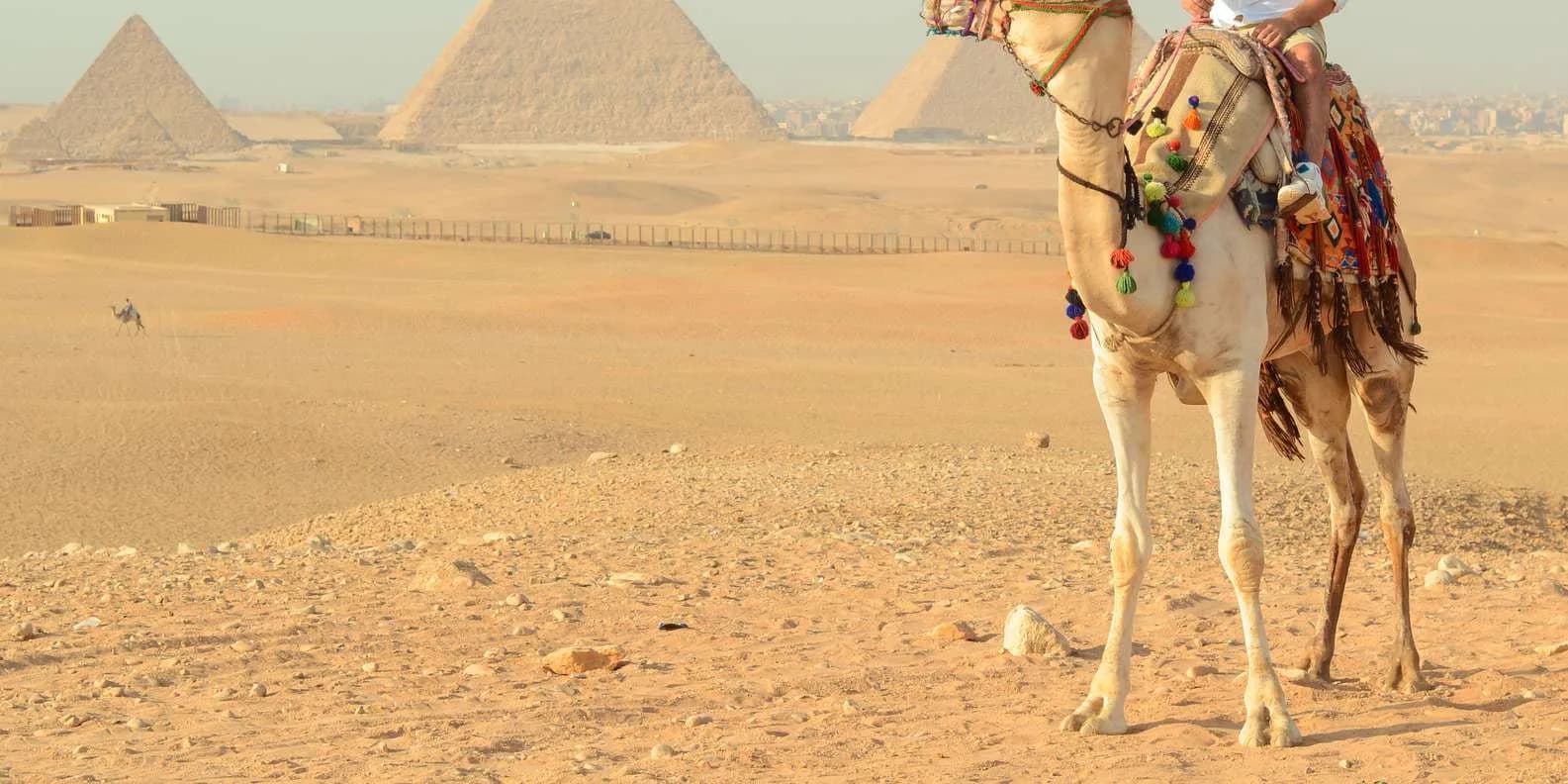
The GEM sits minutes from the Giza pyramids and the Sphinx, so you can pair the museum and the monuments in a single day. That combination alone justifies a first trip, but the classics run far beyond Cairo. In the south, the temple complexes of Karnak and Luxor, the painted tombs of the Valley of the Kings, and Abu Simbel's colossal rock-cut facade near the Sudanese border remain the anchors of any serious itinerary. These are not upgraded reproductions of famous places; they are the famous places. For the full shortlist and how to sequence them, see the things to do in Egypt guide.
Several trips in one country
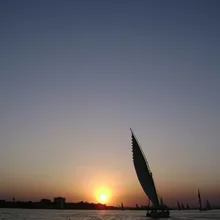
Most destinations give you one kind of holiday. Egypt gives you four, and you can combine them in under two weeks. A Nile cruise between Luxor and Aswan is the classic way to string the southern temples together, sailing past farmland and mud-brick villages that have changed little in centuries; three to four nights covers Edfu, Kom Ombo and the two end cities without a single early-morning coach transfer.
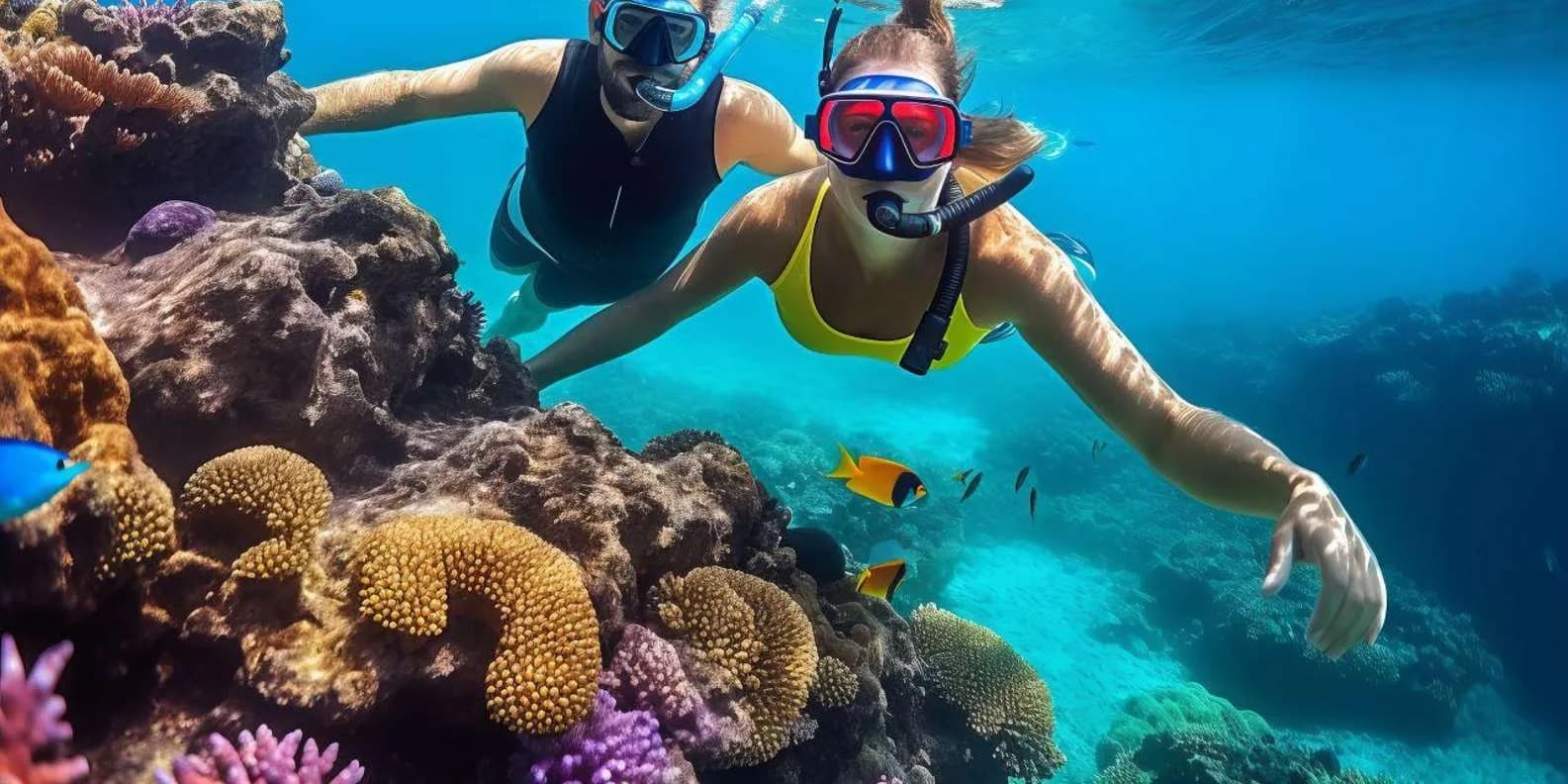
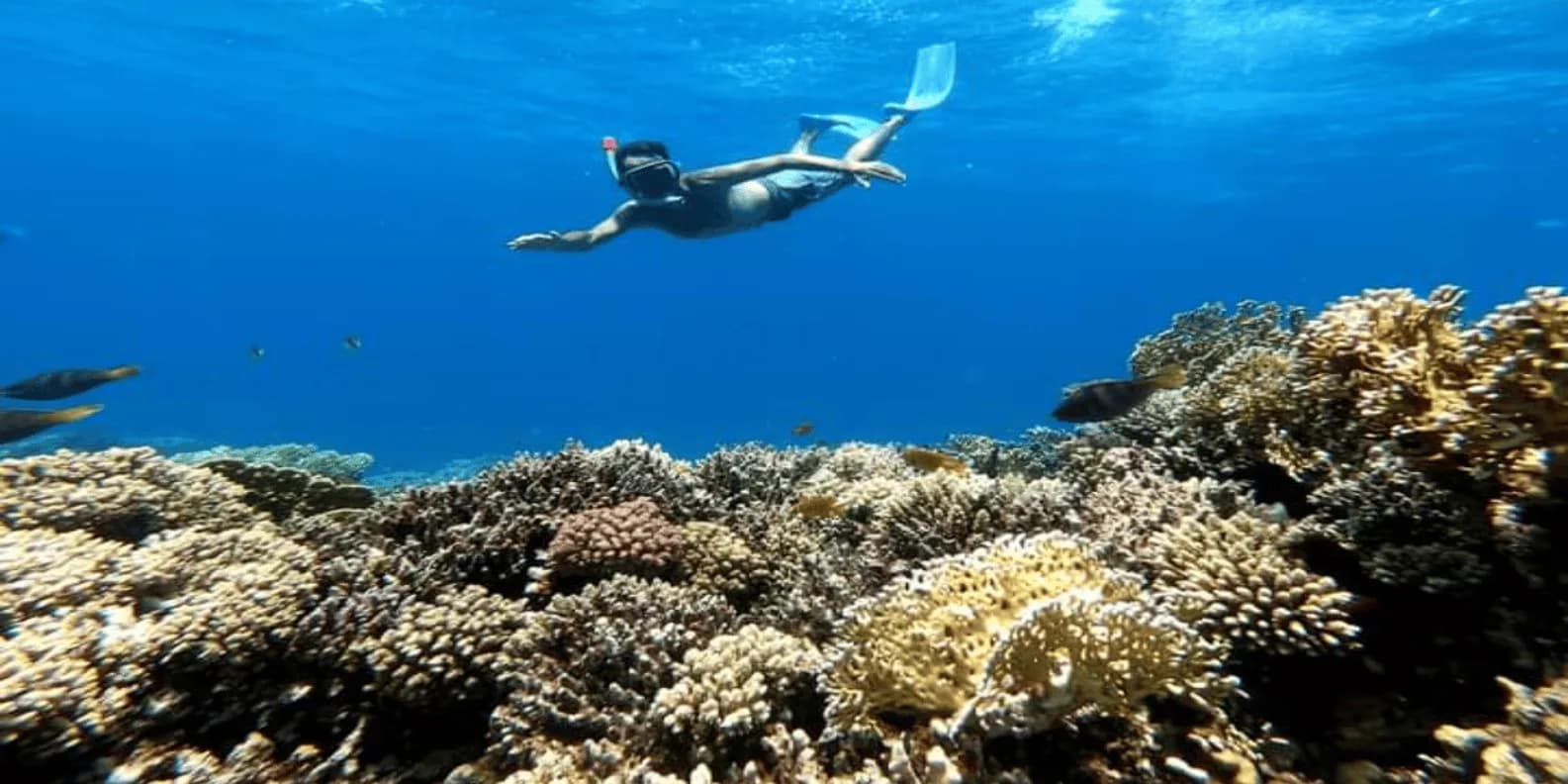
On the coast, the Red Sea delivers some of the best-value diving and snorkelling anywhere. Ras Mohammed National Park off Sharm, where two current-swept reef walls meet at Shark Reef and Yolanda Reef, is routinely rated among the world's finest dives, and the SS Thistlegorm, a British WWII cargo ship sunk in 1941 and still loaded with motorcycles and trucks, is one of the most famous wreck dives on the planet. Warm water and living coral sit within swimming distance of the shore, and a full PADI Open Water certification takes only three to four days.
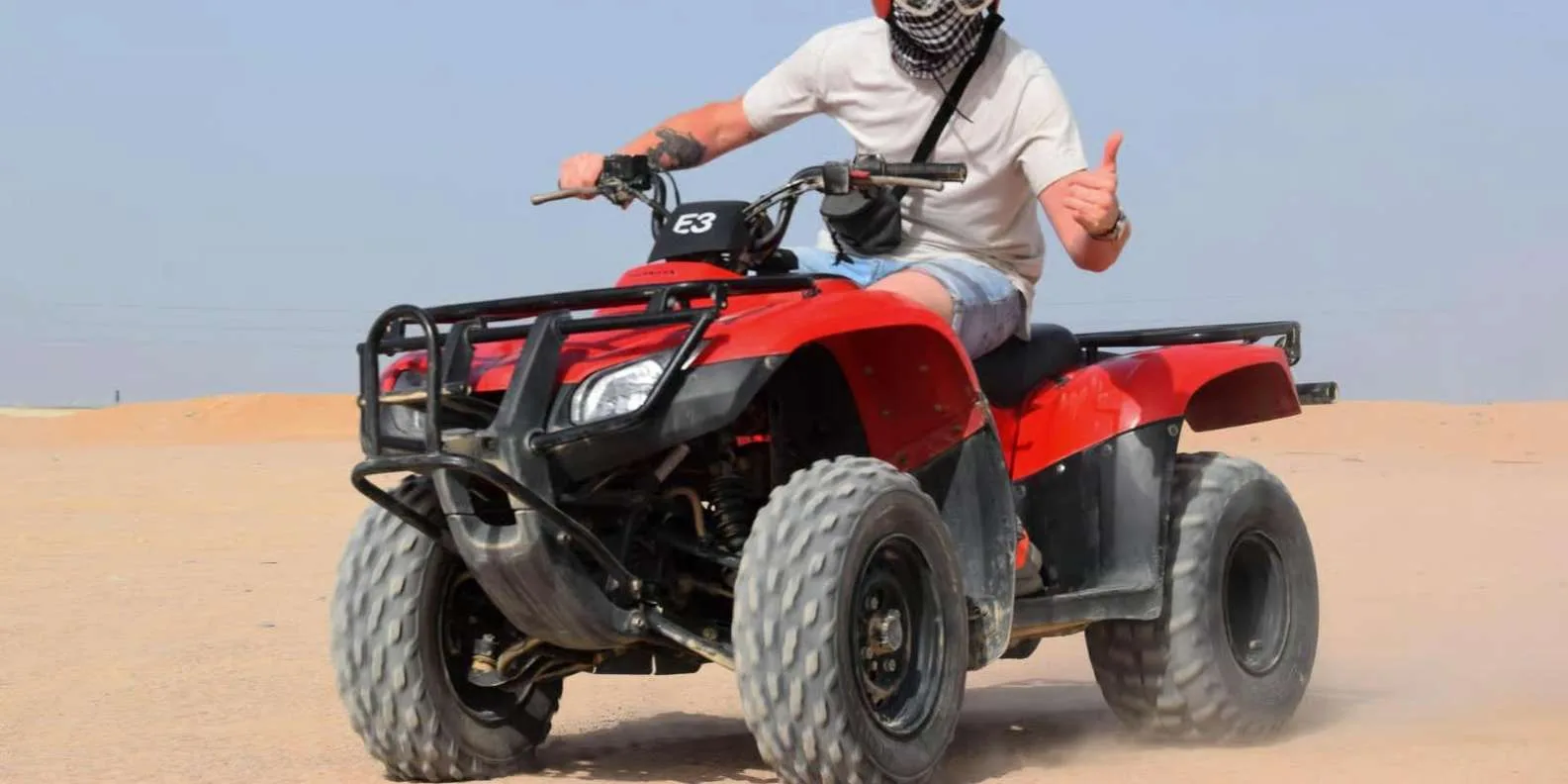
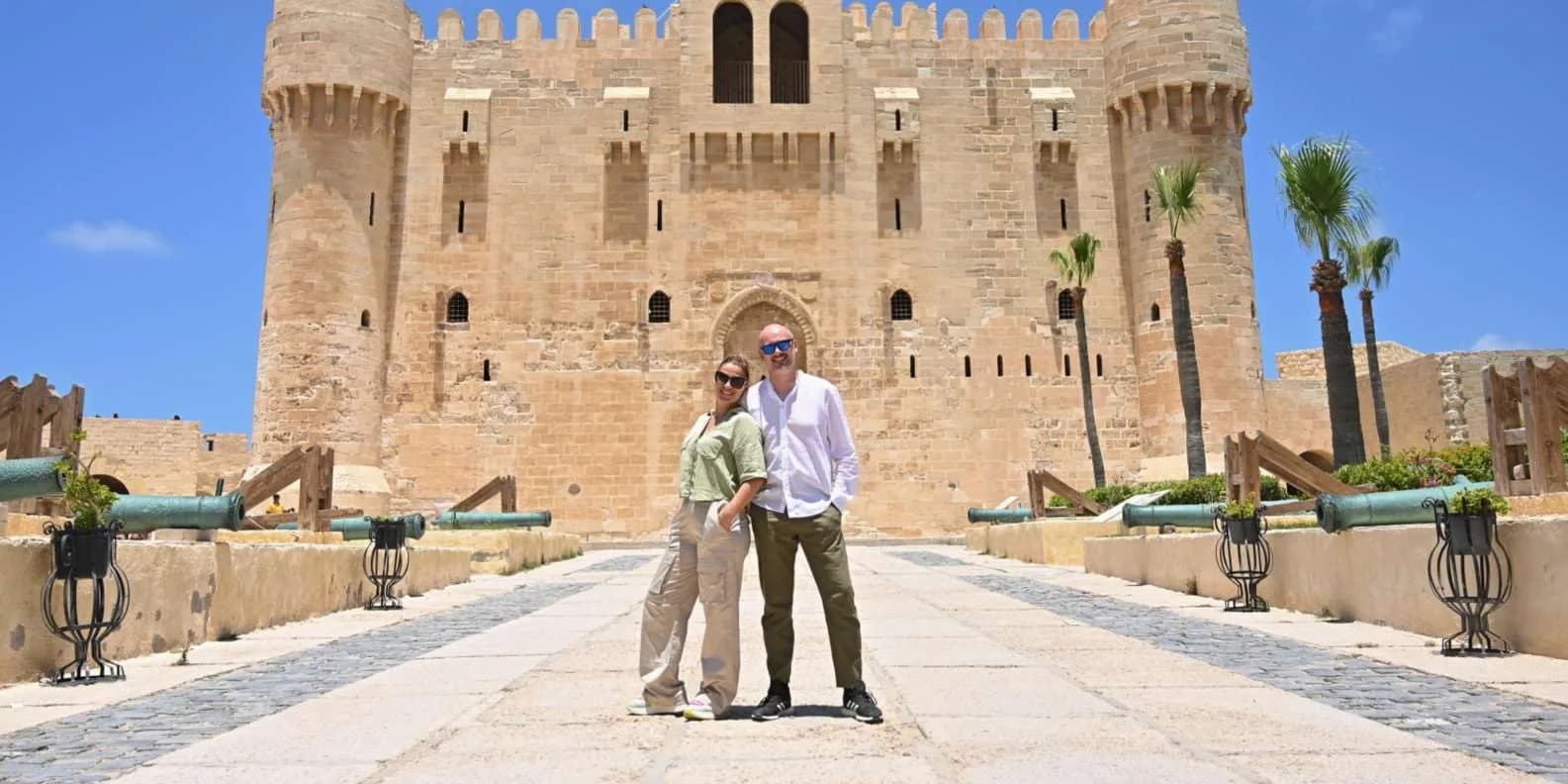
Then there is the desert almost no one budgets time for: the surreal chalk formations of the White Desert, the springs and Berber culture of Siwa Oasis, and quad or 4x4 safaris out of the resort towns. Finally, the Mediterranean coast around Alexandria and the new El Alamein developments offers a different, greener, breezier Egypt. Ancient history, world-class reefs, empty desert and a sea coast, in one trip.
Genuinely incredible value
Egypt has always been affordable; right now it is exceptional. The Egyptian pound has weakened sharply, which means tours, cruises, hotels and restaurants cost far less in hard currency than comparable sights elsewhere. You are paying developing-world prices for genuine wonders of the world. Approximate 2026 prices for the headline experiences:
| Experience | From (per person) | Typical |
|---|---|---|
| Giza Pyramids and Sphinx group tour | 2,200 EGP (about 45 USD) | 4,050 EGP |
| Grand Egyptian Museum entry ticket | 1,450 EGP (about 30 USD) | 2,000 EGP |
| Nile dinner cruise, Cairo | 1,900 EGP (about 39 USD) | 2,600 EGP |
| Red Sea boat day, Hurghada | 1,700 EGP (about 35 USD) | 1,900 EGP |
| Desert quad safari | 720 EGP (about 15 USD) | 1,900 EGP |
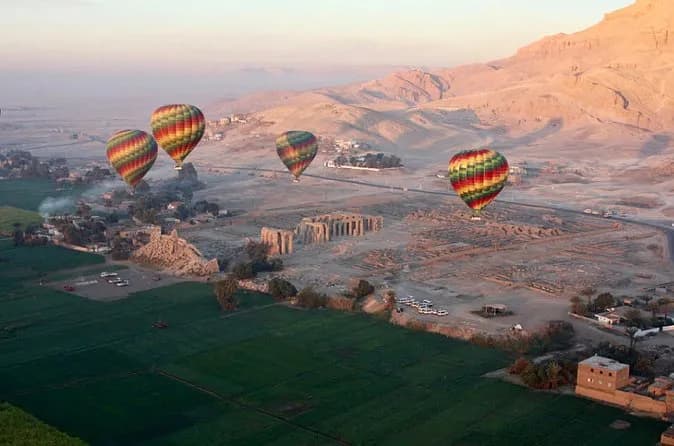
| Luxor sunrise hot-air balloon | 5,400 EGP (about 112 USD) | 7,000 EGP |
| Abu Simbel day trip from Aswan | 3,466 EGP (about 71 USD) | 9,650 EGP |
| 3 to 4 night Nile cruise, full board | 18,000 EGP (about 370 USD) | 22,000 EGP |
Restaurant meals, local transport and site tickets are cheap by international standards, so a mid-range budget stretches unusually far. It is worth being honest about the flip side: the weak pound is a sign of real economic strain for Egyptians, and small tips for guides, drivers and hotel staff go a long way and are genuinely appreciated.
Year-round sun and food worth travelling for
Egypt is warm and sunny almost every day of the year, with temperatures rarely dropping below about 19C even in winter. October to April is the sweet spot for the ancient sites, with comfortable daytime heat for walking Karnak or the Valley of the Kings; February and March are especially reliable in the south. Summer pushes past 40C inland, which is when the Red Sea resorts come into their own. There is effectively no wrong month, only a different best region.
The food is underrated. Koshari, the national dish, layers rice, lentils, pasta and chickpeas under crispy fried onions and a tomato-vinegar sauce for the price of a coffee. Ful medames, slow-cooked fava beans with garlic, lemon and cumin, has been breakfast here since pharaonic times, usually shared as part of a mezze spread with ta'meya (Egyptian falafel), white cheese, olives and warm baladi bread. Eating well in Egypt is easy and cheap, and street food is part of the experience, not a compromise.
Easier to reach and easier to travel than its reputation
Egypt has spent heavily on the machinery of tourism, and it shows. Four new airports have opened since 2014, bringing the national total to 23, including Sphinx International west of Cairo, which puts arrivals close to Giza and the pyramids. Hurghada's capacity has nearly doubled to 13 million passengers a year and Sharm El-Sheikh's has risen to 10 million, with faster terminals and smarter baggage handling. Alexandria and El Alamein on the Mediterranean have expanded too. In the first four months of 2026, Egyptian airports handled 9.4 million passengers, up from 8.8 million a year earlier, and arrivals are tracking a steady climb toward the country's 30-million-tourist goal by 2030.
On the ground, the main tourist corridor covering Cairo, Giza, Luxor, Aswan and the Red Sea resorts is well secured and heavily organised. Domestic flights link Cairo, Luxor, Aswan and the coast in about an hour, English is widely used in the tourism trade, and the guides, cruises and transfers are experienced and reliable. The practical friction that once defined Egyptian travel, from ticketing scrums to confusing transfers, has largely been smoothed out. A guided trip here is genuinely easy to arrange, which matters when you are covering this much ground. As always, check your own government's current travel advice before booking.
Why now, specifically
There is a window here. The GEM opening has created a wave of attention, which means fresh galleries, sharp operations and a country visibly proud of its new landmark, but the very heaviest crowds and the price rises that follow a global museum launch have not fully arrived yet. Visiting in 2026 means seeing the complete Tutankhamun collection early, while the weak pound still makes it extraordinary value, and before the site becomes as busy as its significance deserves. Combine that with new airports, restored temples and a rare four-in-one itinerary, and the case makes itself.
How to structure a 2026 trip
A first visit of ten to twelve days can cover Cairo, Giza and the GEM, a Nile cruise from Luxor to Aswan, and a few days on the Red Sea, without backtracking. Shorter trips of five to seven days focus on Cairo, Giza and Luxor using a quick domestic flight to save a full day of driving. Whatever the length, book the GEM entry and any Nile cruise well ahead, since 2026 demand is high. When you are ready to price and compare tours, cruises and day trips across the country, browse and search experiences here.
A real team available 24/7 to assist you — free
Seif and the team reply on WhatsApp 24/7 — trip questions, custom plans and booking help.
Ask Seif on WhatsAppCommon questions
Why visit Egypt in 2026?
2026 is a standout year because the Grand Egyptian Museum opened in full in November 2025 with Tutankhamun's complete tomb collection displayed together for the first time. Around it, the pyramids and classic sites are well run, new airports have made the country easier to reach, and a weak Egyptian pound makes tours, cruises and hotels exceptional value. It is also an early window, before post-opening crowds fully arrive.
Is the Grand Egyptian Museum worth visiting?
Yes. It is the largest museum on earth dedicated to a single civilisation and the only place to see Tutankhamun's entire collection of more than 5,300 objects together, from the gold mask to the chariots. It sits minutes from the Giza pyramids, so you can pair the two in one day. Entry starts around 1,450 EGP, about 30 USD, and timed tickets are worth booking ahead in 2026.
How much does a trip to Egypt cost in 2026?
Egypt is exceptional value right now because of the weak pound. A Giza pyramids group tour starts around 2,200 EGP, GEM entry around 1,450 EGP, a Cairo Nile dinner cruise around 1,900 EGP, and a 3 to 4 night full-board Nile cruise from about 18,000 EGP per person. Meals, local transport and site tickets are cheap by international standards, so a mid-range budget stretches unusually far.
Can you combine ancient sites, diving and the desert in one trip?
Yes, and that is one of Egypt's biggest draws. A single trip of under two weeks can pair Cairo and the GEM with a Luxor-to-Aswan Nile cruise, a few days diving or snorkelling the Red Sea reefs off Hurghada or Sharm, and optionally a White Desert or Siwa desert excursion. Ancient history, world-class reefs, empty desert and a sea coast all sit within one country.
When is the best time to visit Egypt?
October to April is ideal for the ancient sites, with comfortable daytime temperatures for walking Karnak, the Valley of the Kings and Abu Simbel; February and March are especially reliable in the south. Summer inland can exceed 40C, which is when the Red Sea resorts shine. Egypt is warm and sunny almost year-round, so there is no truly bad month, only a different best region.
Is Egypt safe for tourists in 2026?
The main tourist corridor covering Cairo, Giza, Luxor, Aswan and the Red Sea resorts is well secured and heavily set up for visitors. Domestic flights, Nile cruises and guides are experienced and reliable, and English is widely used in the tourism trade. As with any destination, check your own government's current travel advice before booking and follow local guidance on the ground.
How many days do you need in Egypt?
Ten to twelve days lets a first visit cover Cairo and Giza with the new museum, a Nile cruise from Luxor to Aswan, and a few days on the Red Sea. A shorter five to seven day trip focuses on Cairo, Giza and Luxor, using a one-hour domestic flight to save a full day of driving between the north and south.
How easy is it to get to Egypt now?
Easier than it used to be. Four new airports have opened since 2014, bringing the total to 23, including Sphinx International near the Giza pyramids, while Hurghada and Sharm El-Sheikh have expanded to 13 and 10 million passengers a year. Cairo connects to Europe and the Gulf with short flights, and domestic hops link the main sites in about an hour.
Book it on This is Egypt
Turn this guide into a trip

Egypt's bestsellers
The experiences travelers book most, across the country

Keep reading

Hurghada Diving (2026): Best Sites, Packages & Prices
Diving in Hurghada — the best reefs (Giftun, Careless Reef, Dolphin House) and Abu Nuhas wrecks, Discover Scuba vs PADI courses, season and water temps, and real 2026 prices.
By TiE Editors7 min read

Hurghada Snorkeling Trips (2026): Best Reefs, Prices & How to Choose
Where to snorkel from Hurghada in 2026 — Orange Bay, Giftun, Mahmya, Utopia and Dolphin House — with boat types, marine life, month-by-month sea temperatures, family tips and real prices from 1,000+ bookable trips.
By TiE Editors7 min read

Egypt Tour Prices by Activity (2026): What Each Type Really Costs
What every type of Egypt experience actually costs — from a 1,700 EGP camel ride to a 48,500 EGP Nile cruise — based on 29,710 real bookable tours across seven platforms.
By TiE Editors6 min read