 Photo by Barcex, via Wikimedia Commons, CC BY-SA 3.0
The Great Sphinx of Giza: What to Know Before You Visit
The Great Sphinx explained: its likely builder and dimensions, the truth about the missing nose, where to stand for the best photo, and how to see it on a Giza visit.
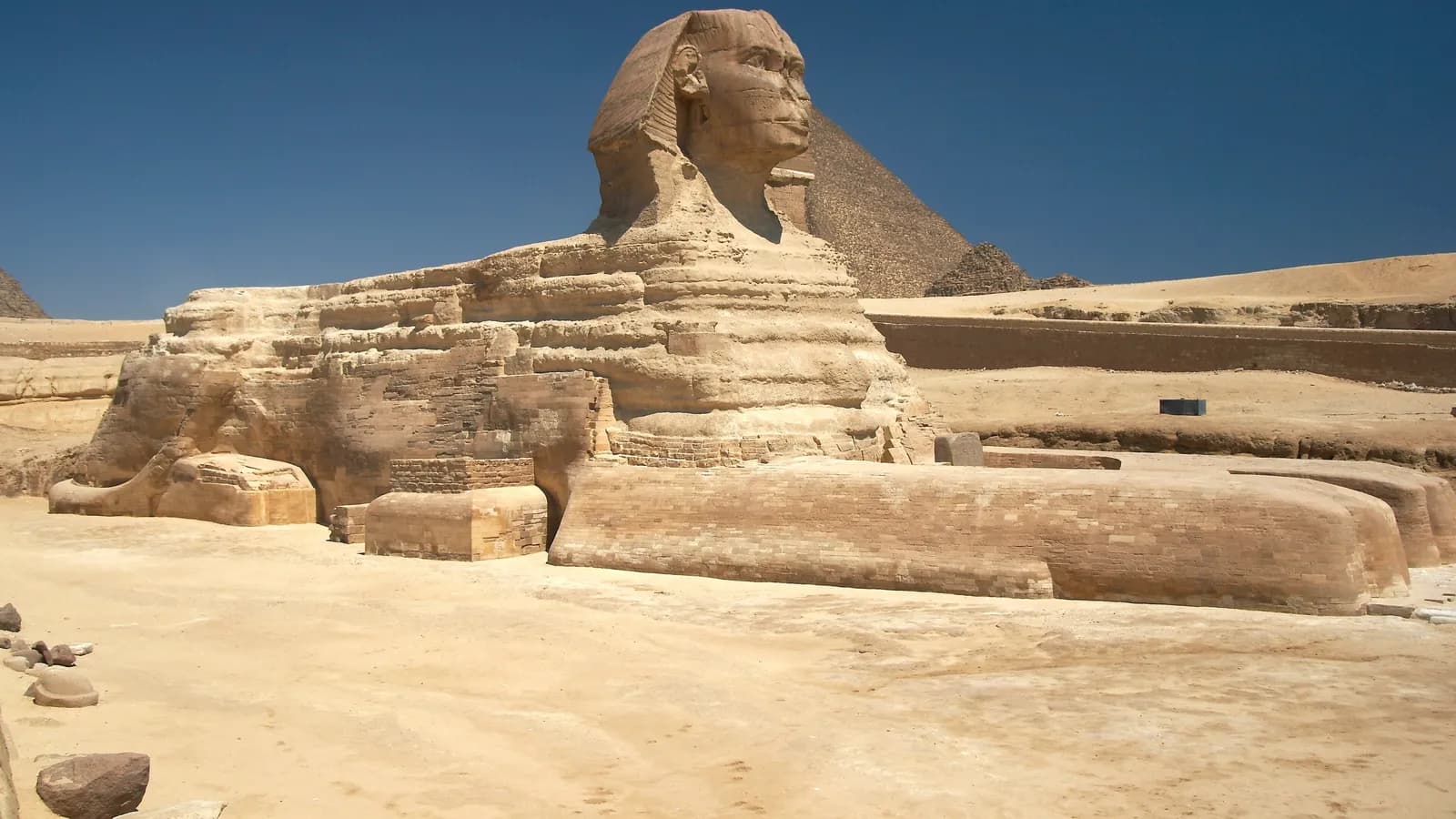
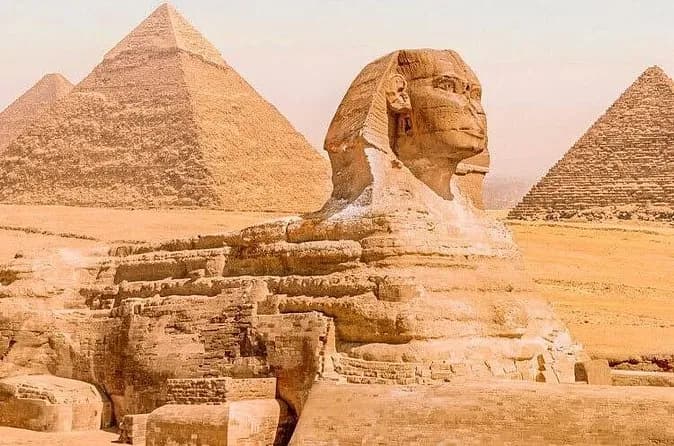
Quick answer: The Great Sphinx of Giza is a lion-bodied, human-faced colossus carved from a single ridge of limestone on the Giza plateau, most likely on the orders of the pharaoh Khafre around 2500 BC. It stands roughly 20 metres (66 feet) high and about 73 metres (240 feet) long, which makes it the largest monolithic statue on Earth. You see it as part of the standard Giza plateau ticket, and the classic view, with Khafre's pyramid rising directly behind that weathered face, is one of the defining images of Egypt.
Most visitors are surprised by two things: how worn and human the face looks up close, and how the Sphinx sits below the level of the surrounding desert, in a quarried hollow archaeologists call the Sphinx enclosure. It is not a freestanding statue dropped onto the sand. It was cut down into the bedrock, using the harder rock for the head and the softer, faster-eroding layers for the body.
What the Sphinx actually is
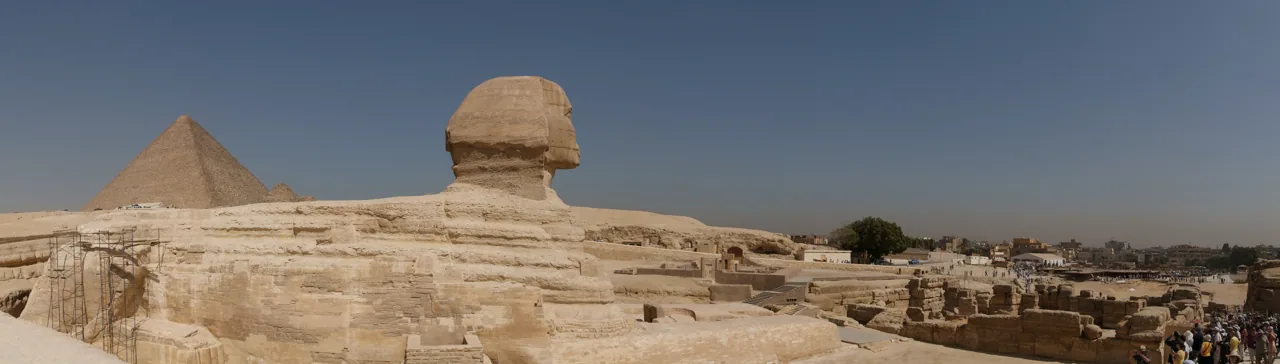 The body is a recumbent lion; the head is a human face wearing the royal nemes headdress, once finished with a false beard (fragments of which sit in the British Museum and Cairo's collections). Traces of red pigment on the face show it was originally painted. The Greeks later attached the name "sphinx" to it, borrowing from their own mythology, but the ancient Egyptians called it Hor-em-akhet, "Horus of the Horizon," and revered it as a solar deity.
Quick facts
| Location | Giza plateau, southeast of the Great Pyramid, ~15 km from central Cairo |
| Likely builder | Pharaoh Khafre (Chephren), 4th Dynasty |
| Age | ~4,500 years (c. 2500 BC) |
| Length | ~73 m (240 ft) |
| Height | ~20 m (66 ft) |
| Width of face | ~4 m (13 ft) |
| Material | Single ridge of Giza limestone (carved in place) |
| Ancient name | Hor-em-akhet ("Horus of the Horizon") |
| What it costs to see | Included in the Giza plateau ticket (~700 EGP / US$15 for non-Egyptian adults, 2026) |
The mysteries and the myths
Who built it, and when
Mainstream Egyptology attributes the Sphinx to Khafre, builder of the second Giza pyramid. The evidence is circumstantial but strong: the Sphinx sits beside Khafre's causeway and valley temple, it was quarried from the same rock, and the proportions of the face broadly match his other statues. Nobody left an inscription saying "Khafre made this," which is why the attribution is "likely" rather than certain, and why debate has never fully closed. Even the 19th-century Baedeker handbook noted that the conjecture "that the builder of the second Pyramid was also the founder of the Sphinx seemed to be confirmed by the discovery of the statue of Chephren in the rock-temple adjoining the Sphinx."
A small number of fringe theories argue for a far older date, often citing water-erosion patterns on the enclosure walls. These claims are not accepted by mainstream archaeologists, who explain the weathering through wind, sand, and the naturally soft limestone. It is worth knowing the debate exists; it is not worth treating it as settled fact.
The missing nose
The most popular story, that Napoleon's soldiers shot the nose off with a cannon, is false. Drawings made before Napoleon arrived in Egypt already show the Sphinx without its nose. The more credible account, from the 15th-century historian al-Maqrizi, blames a Sufi named Muhammad Sa'im al-Dahr, who is said to have defaced it around 1378 AD after seeing locals make offerings to it. Even that is uncertain, since it was recorded decades later. What archaeologists can say from the surviving chisel marks is that the nose was deliberately levered off with tools, not blown away and not simply eroded.
The Dream Stele
Between the Sphinx's paws stands a large granite slab known as the Dream Stele, set up by the pharaoh Thutmose IV around 1400 BC, more than a thousand years after the statue was carved. Its inscription tells how the young prince fell asleep in the shadow of the Sphinx, which by then was buried to the neck in sand. In a dream the Sphinx promised him the throne if he would clear away the sand choking its body. He did, he became king, and the stele records the bargain. It is one of the earliest known accounts of restoring an ancient monument, and it is a reminder that the Sphinx was already "ancient history" to the ancient Egyptians themselves.
Endless burial and repair
For most of its life the Sphinx has been buried up to its shoulders. It was dug out under Thutmose IV, then again by the Romans, and only fully excavated in the 20th century. Modern conservation of the eroding limestone body is ongoing, which is why you may see repaired blockwork along the flanks.
How to see it
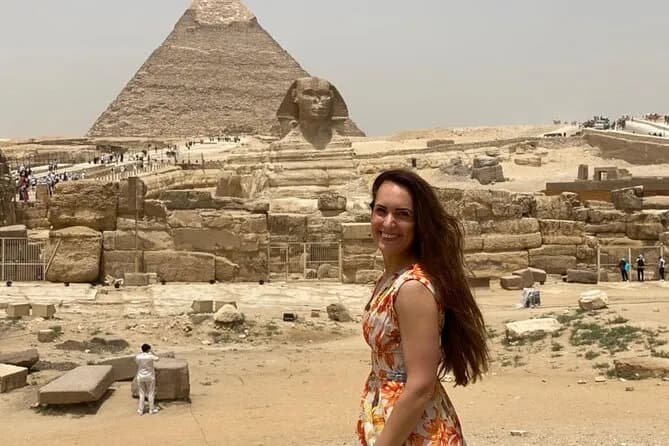
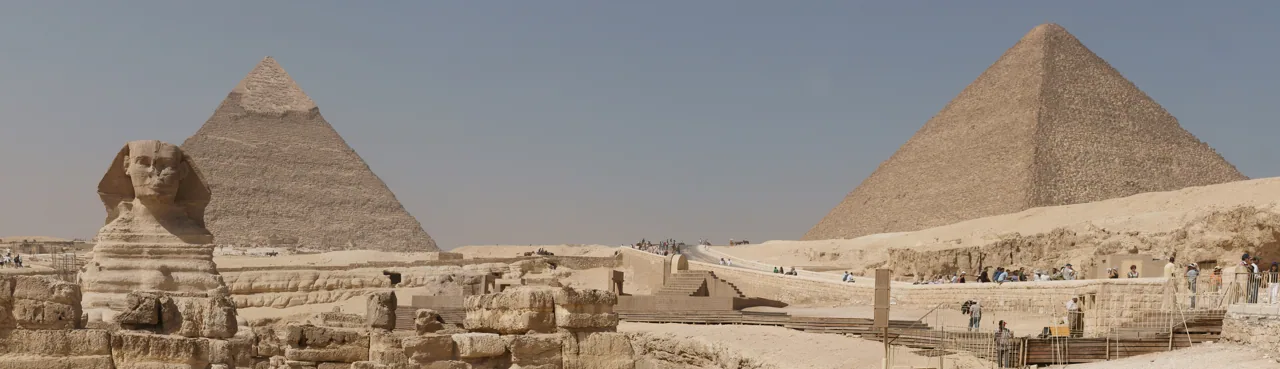 The Sphinx sits within the Giza plateau archaeological zone, so your plateau ticket covers it. You cannot walk up and touch it, and you can't enter the enclosure floor. Instead, there is a raised viewing terrace beside the Valley Temple, roughly level with the Sphinx's paws, which gives you the head-on profile and the pyramid backdrop in one frame. This is where nearly every famous photograph is taken.
For the wider, postcard composition with a pyramid directly behind the Sphinx, walk a little along the plateau to line them up, or ask your guide to position you. A short camel or horse ride around the plateau perimeter also opens up angles you can't get on foot.
Best photo spot and time of day
Go early, right at opening (around 8am), or in the last hour before closing. Early light is soft, the face is lit warmly from the east, and the crowds and haze are thinner. Midday sun flattens the features and washes out the stone. The Valley Temple terrace is the reliable spot; late afternoon gives you golden light on the pyramids behind. For a completely different mood, come back after dark for the show.
The Sound and Light show
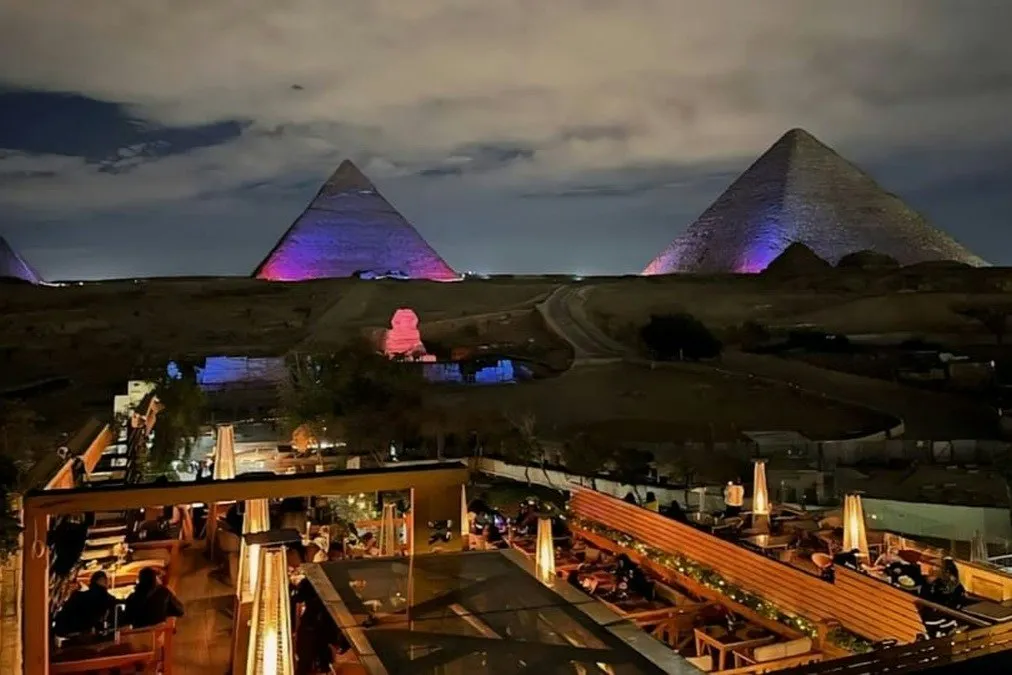
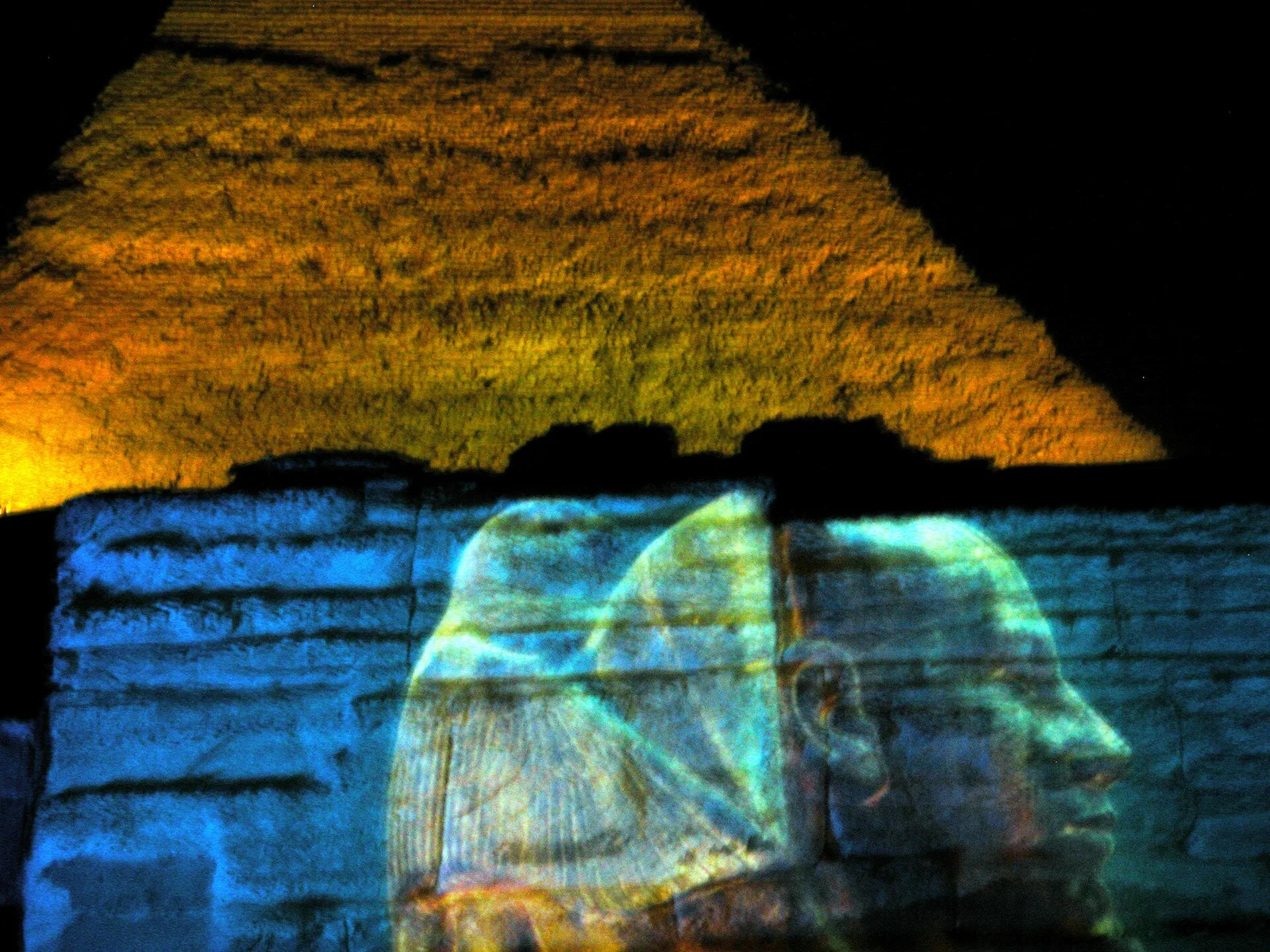 At night the plateau hosts a Sound and Light show: the Sphinx and pyramids are lit with coloured projections while a recorded narration, voiced as the Sphinx, walks you through thousands of years of history. It runs most evenings in several languages on a rotating schedule, so check which language plays on the night you want. Tickets are separate from the daytime plateau ticket (recently around 400 EGP for foreigners, roughly US$9); many visitors book it bundled with transport through a tour. The show lasts about 45 minutes to an hour.
Tickets, hours, and what a Giza visit costs
The plateau is generally open daily from about 8am, closing mid-afternoon to early evening depending on the season; confirm same-day hours, as they shift for Ramadan and holidays. For 2026, the general Giza plateau ticket runs about 700 EGP (~US$15) for non-Egyptian adults, with reduced student rates. That single ticket covers the outdoor areas, the three pyramids from the outside, and the Sphinx. Going inside a pyramid costs extra and is ticketed separately (the interior of Khufu's Great Pyramid is the priciest add-on). Prices are set by the government and change periodically, so confirm at the gate or on the official portal.
As a rule, government site tickets are cheap; the cost of a Giza day is mostly the guide, transport, and any camel or Sound and Light add-ons. A guided half-day tour of the plateau typically lands in the US$40–120 per person range depending on group size and inclusions. See our full Pyramids of Giza guide for interior-access strategy and how to plan the whole plateau.
How it connects to the pyramids and the Grand Egyptian Museum
The Sphinx isn't a separate destination; it's the final stop on the Giza plateau circuit, a few hundred metres downhill from the Great Pyramid. Pair it in the same morning with the pyramids themselves, then head to the Grand Egyptian Museum (GEM), which sits within sight of the plateau and opened fully in November 2025. GEM now holds the complete Tutankhamun collection, the largest in the world, and its glass wall frames the pyramids on the horizon. Doing the plateau at opening and GEM afterwards is the strongest single day in Cairo.
For the wider city, our Things to do in Cairo guide covers Islamic Cairo, the Khan el-Khalili bazaar, and Coptic Cairo. You can also browse guided Giza and Cairo experiences to book a driver-guide who handles tickets and timing for you.
The Sphinx rewards a little patience. Arrive before the buses, stand on the terrace by the Valley Temple, and give the face a proper look. It has watched the desert for four and a half thousand years, and up close, worn nose and all, it still holds a faint, unmistakable smile.
Make the Sphinx and the pyramids the anchor of a smarter day in Cairo. This is Egypt builds custom itineraries around the places you most want to see. Start planning.
Related guides: can you go inside the pyramids?
What's On in Egypt
Events in Giza

Ma Yatloboho El Mostameoun Featuring Mostafa Amar
Cairo Jazz Club 610 · Sheikh Zayed & 6 October

90’S Comedy Show
Cairo Jazz Club 610 · Sheikh Zayed & 6 October

Impulse: Halloween Edition – Mont Rouge
Cairo Jazz Club 610 · Sheikh Zayed & 6 October
A real team available 24/7 to assist you — free
Seif and the team reply on WhatsApp 24/7 — trip questions, custom plans and booking help.
Ask Seif on WhatsAppCommon questions
Who built the Great Sphinx of Giza?
Most Egyptologists credit the pharaoh Khafre (Chephren) of the 4th Dynasty, around 2500 BC. It sits beside his pyramid, causeway, and valley temple. No inscription names the builder outright, so the attribution is highly likely rather than proven, and a small number of fringe theories argue for an older date that mainstream scholars reject.
How big is the Great Sphinx?
It is about 73 metres (240 feet) long and 20 metres (66 feet) high, carved from a single ridge of limestone. That makes it the largest monolithic statue in the world. The face alone is roughly 4 metres wide.
What happened to the Sphinx's nose?
It was deliberately broken off with tools, based on the chisel marks that survive. The popular story that Napoleon's cannons did it is false, because drawings made before Napoleon reached Egypt already show it noseless. A 15th-century account blames a man named Muhammad Sa'im al-Dahr around 1378 AD, though that too is uncertain.
What is the Dream Stele?
A granite slab between the Sphinx's paws, erected by pharaoh Thutmose IV around 1400 BC. Its inscription describes a dream in which the buried Sphinx promised him the throne if he cleared away the sand covering it. It is one of the earliest records of restoring an ancient monument.
Do I need a separate ticket for the Sphinx?
No. The Sphinx is included in the general Giza plateau ticket (about 700 EGP / US$15 for non-Egyptian adults in 2026), which also covers the three pyramids from the outside. Going inside a pyramid costs extra. The nighttime Sound and Light show is ticketed separately.
Can you go up close to or touch the Sphinx?
No. Visitors view it from a raised terrace beside the Valley Temple, roughly level with the paws, and cannot walk onto the enclosure floor or touch the statue. That terrace is also the best photo spot.
When is the best time to see the Sphinx?
Arrive right at opening, around 8am, for soft eastern light, thinner crowds, and less haze, or come in the last hour before closing. Midday sun flattens the features. For a different mood, return after dark for the Sound and Light show.
What is the Sphinx's connection to the Grand Egyptian Museum?
The Grand Egyptian Museum (GEM) sits within sight of the Giza plateau and opened fully in November 2025 with the complete Tutankhamun collection. The strongest Cairo day is the plateau and Sphinx at opening, then GEM afterwards, with the pyramids framed through its glass wall.
How much does a Giza tour including the Sphinx cost?
The government site ticket is cheap; most of the cost is guide, transport, and add-ons. A guided half-day of the plateau typically runs about US$40–120 per person depending on group size and what's included, such as a camel ride or the Sound and Light show.
Book it on This is Egypt
Turn this guide into a trip

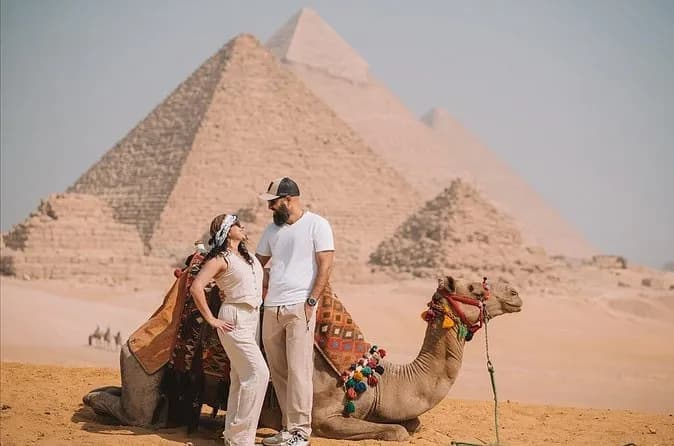
Egypt's bestsellers
The experiences travelers book most, across the country
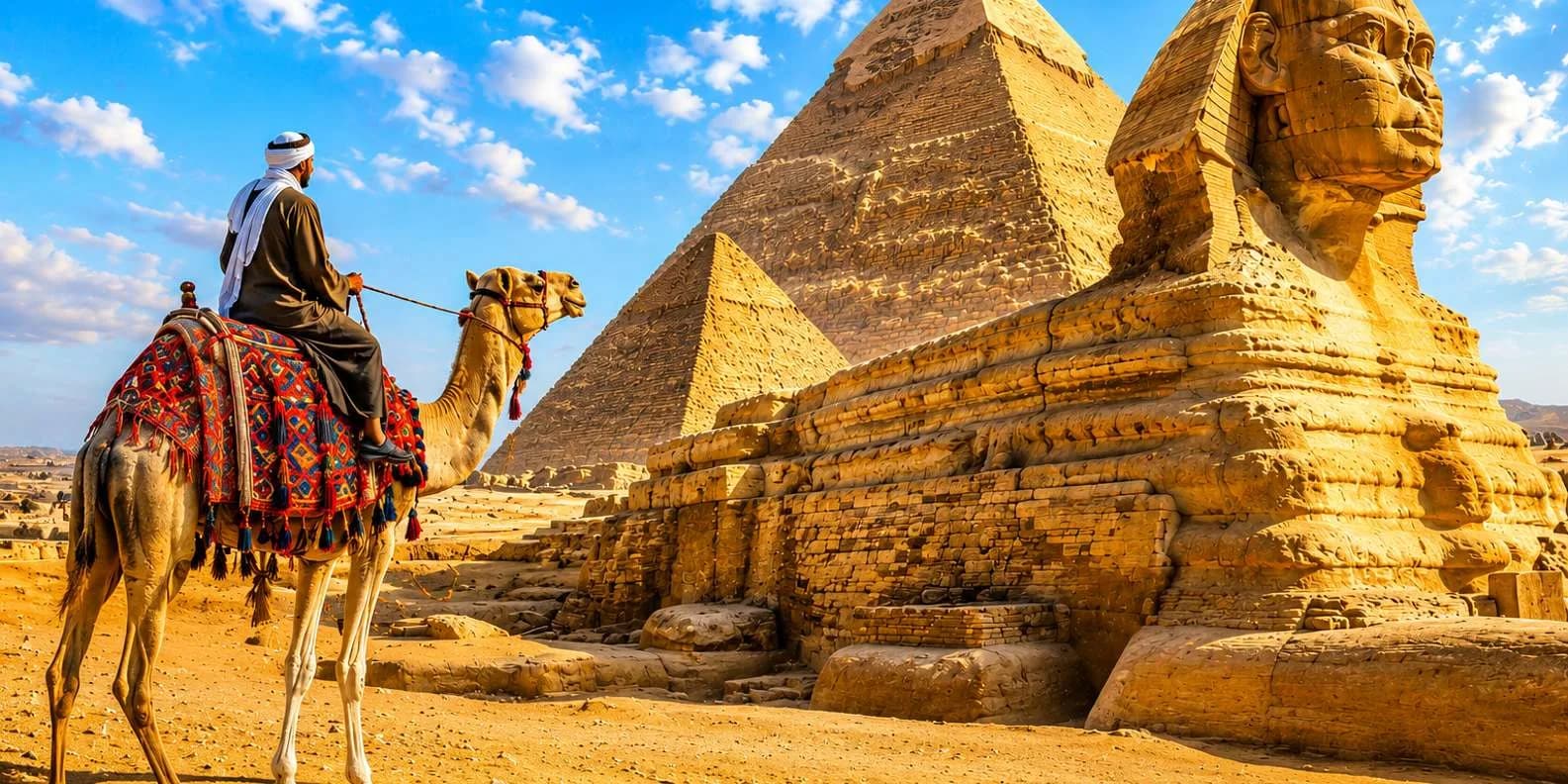

Keep reading
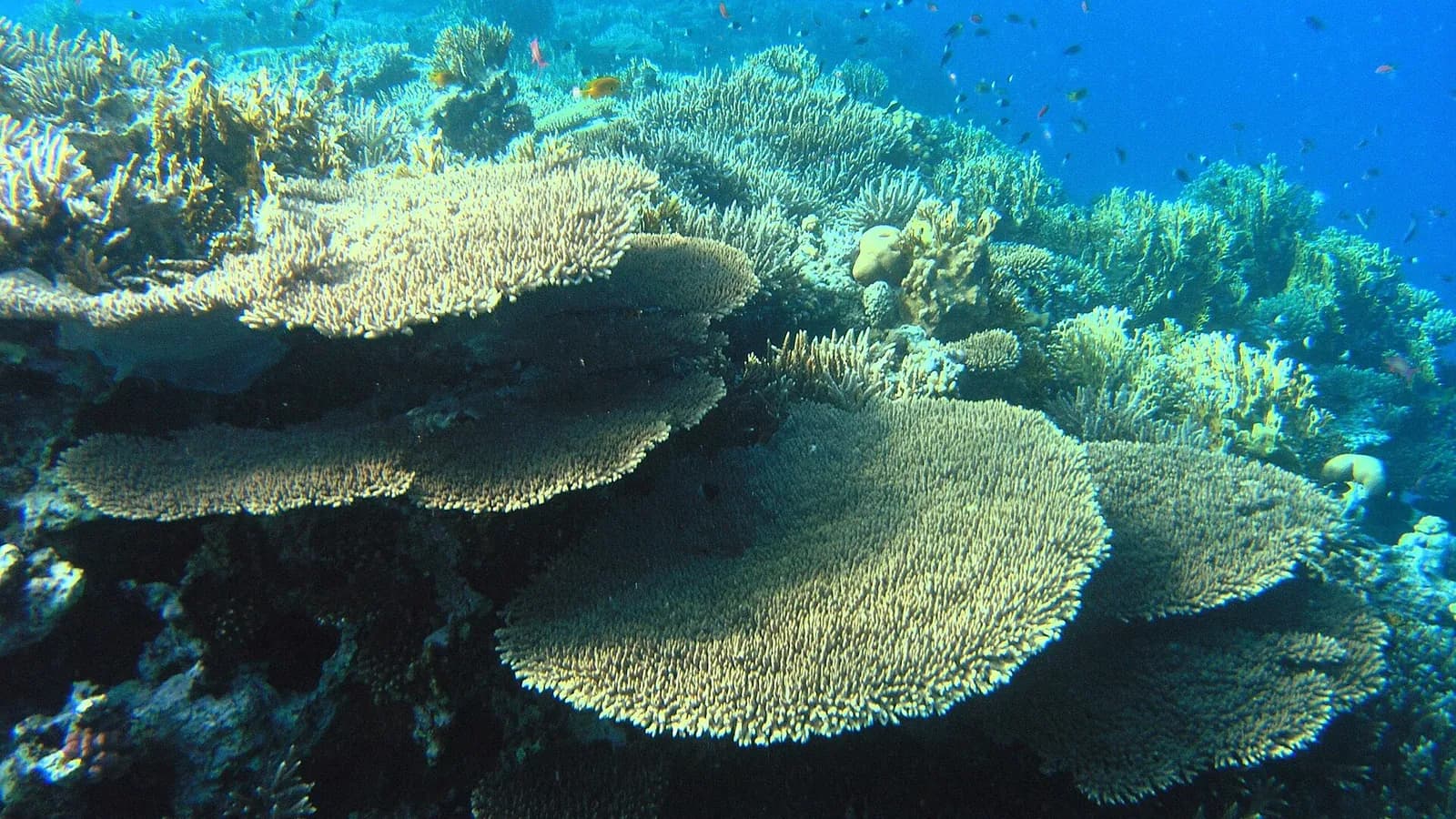
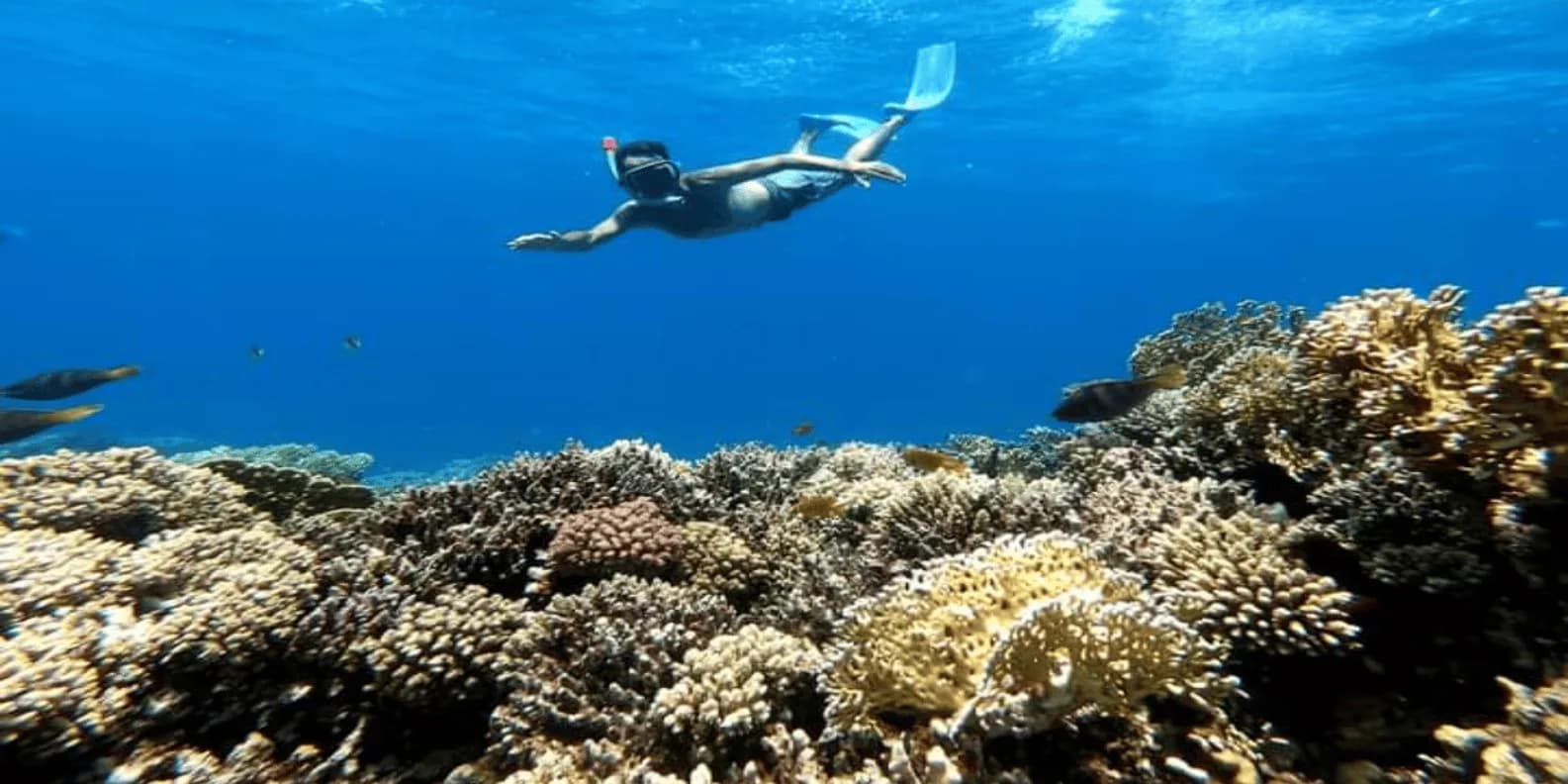
Hurghada Diving (2026): Best Sites, Packages & Prices
Diving in Hurghada — the best reefs (Giftun, Careless Reef, Dolphin House) and Abu Nuhas wrecks, Discover Scuba vs PADI courses, season and water temps, and real 2026 prices.
By TiE Editors7 min read
Hurghada Snorkeling Trips (2026): Best Reefs, Prices & How to Choose
Where to snorkel from Hurghada in 2026 — Orange Bay, Giftun, Mahmya, Utopia and Dolphin House — with boat types, marine life, month-by-month sea temperatures, family tips and real prices from 1,000+ bookable trips.
By TiE Editors7 min read
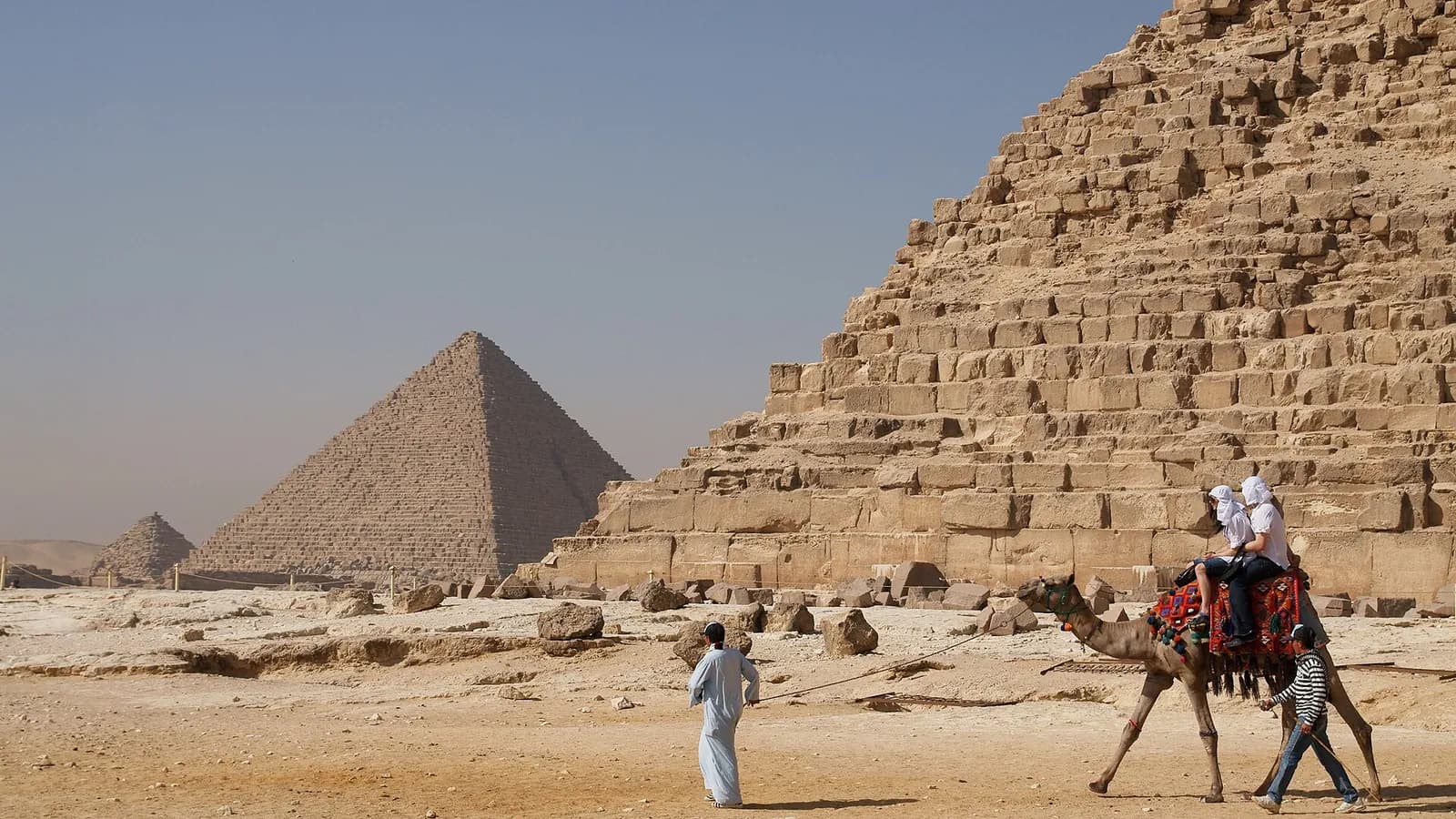
Egypt Tour Prices by Activity (2026): What Each Type Really Costs
What every type of Egypt experience costs — half day, full day or overnight — as a median and a mid-half range in US dollars, from 12,370 live bookable listings.
By TiE Editors6 min read